We Deliver Airguns Directly To Your Door
SKU N/A Category

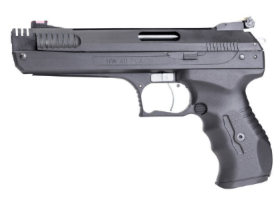
Weihrauch HW40 Pistol

€170.00

The Weihrauch HW40 Pistol is a high quality precision air pistol in a modern design manufactured to the highest standards in Germany.

It features a recoilless action at an entry level price point. Single stroke pneumatic which is quiet and smooth.

Very well balanced with a precision two stage trigger, fibre-optic sights, micrometer sight adjustable for windage and elevation. It has a  dovetail rail for scope use, automatically operated safety lever, pistol grip fits for right and left-handed shooters.

Weihrauch HW40 Pistol Specifications:

  • Calibre – .177
  • Overall length – 240mm
  • Barrel length – 170mm
  • Weight – 0.78kg
  • Velocity – 305fps
  • Ammo Type – Pellet
  • Power Type – Over Lever

Supplied by Hull Cartridge.

Weihrauch HW40 Pistol: Recoilless Precision for Target Practice and Training

Precision air pistol shooting is made accessible by the Weihrauch HW40 Pistol, a single-stroke pneumatic sidearm that is manufactured in Germany to Weihrauch’s established quality standard. Recoilless performance is delivered without CO2 capsules or pre-charged cylinders, because air is compressed by one smooth cocking stroke before each shot. Consequently, consistent velocity, quiet operation, and dependable accuracy at 10 metres are offered to beginners and experienced pistol shooters alike.

A modern polymer frame is combined with a rifled steel barrel so that a compact, well-balanced package of only 240 mm overall length and 0.78 kg is achieved. Furthermore, an ambidextrous grip is moulded so that both left-handed and right-handed shooters are accommodated without extra panels. In addition, fibre-optic open sights and an 11 mm dovetail rail are fitted, therefore iron-sight work or a compact optic can be chosen according to preference.

Design, Balance and Handling of the Weihrauch HW40 Pistol

A contemporary silhouette is presented by the Weihrauch HW40 Pistol, yet traditional Weihrauch workmanship remains evident in the fit of the action and the feel of the trigger. Moreover, the over-lever cocking system is released by a latch beneath the rear sight; thereafter the upper section is lifted, a single pellet is seated in the breech, and the action is closed so that air is compressed for the next shot. As a result, a self-contained power plant is obtained and no external pump or bottle is required.

Balance is deliberately placed so that the pistol sits steadily in the hand during a two-handed or single-handed hold. Likewise, finger grooves and a contoured polymer grip are provided so that a secure purchase is maintained during longer practice sessions. Meanwhile, an automatically operated safety lever is engaged whenever the action is opened, therefore an extra layer of handling security is introduced before the pistol is made ready to fire.

Compact Dimensions That Support Control

Overall length of 240 mm and barrel length of 170 mm are specified by the manufacturer. Consequently, a generous sight radius is retained even though the pistol remains short enough for indoor ranges and backyard plinking. In particular, the modest 0.78 kg weight is welcomed by shooters who prefer a light sidearm that can be held on target without fatigue.

Power Plant, Velocity and Consistency

Pre-compressed air (PCA) is used as the power source. Therefore a recoilless firing cycle is produced and follow-through is not disturbed by spring surge or piston slap. Official catalogue figures list 122 m/s in .177, 115 m/s in .20 and 93 m/s in .22. Independently published chronograph strings have repeatedly shown spreads of only 4–6 fps, so shot-to-shot consistency that supports tight groups is confirmed.

Energy in the region of 2.6 ft-lbs is typically recorded with quality diabolo pellets. Hence the Weihrauch HW40 Pistol is well suited to 10-metre target work, trigger-control drills and close-range pest or plinking use where legal. Furthermore, because each shot is generated by a single cocking stroke, running costs remain limited to pellets alone.

Weihrauch HW40 Pistol .177

Trigger and Safety Arrangements

A two-stage match-style trigger is fitted and a predictable let-off is delivered. Additionally, the first stage can be felt clearly before the second stage breaks, so surprise discharge is reduced. An automatic safety is applied when the action is opened; subsequently the safety must be released before a shot can be fired. Dry-fire practice with the action only partially closed is also possible on many examples, therefore trigger feel can be rehearsed without wasting pellets.

Highlighted Features of the Weihrauch HW40 Pistol

  • Single-stroke pneumatic (PCA) action — recoilless, self-contained power with no CO2 or PCP bottle required
  • Calibres offered — .177 (122 m/s), .20 (115 m/s) and .22 (93 m/s)
  • Weight and size — 0.78 kg and 240 mm overall, 170 mm barrel
  • Ambidextrous polymer grip — comfortable hold for left- and right-handed shooters
  • Two-stage match trigger — crisp, predictable release for better shot control
  • Fibre-optic sights — red front and green rear elements plus micrometer rear sight adjustable for windage and elevation
  • 11 mm dovetail rail — ready for a compact red-dot or low-profile scope
  • Automatic safety lever — engaged whenever the action is opened
  • Rifled barrel — 12-groove rifling for pellet stability at typical pistol distances
  • Quiet, smooth cycle — suitable for garden, indoor range and training use

Practical Use Scenarios and Accuracy Potential

Ten-metre target shooting is the intended primary role, and groups of approximately 3/8 inch centre-to-centre from a rest have been reported with well-chosen pellets. Consequently the Weihrauch HW40 Pistol is frequently selected as a training tool for sight picture, trigger press and breath control. In addition, the recoilless nature of the action allows immediate follow-through to be observed, which is valuable when fundamentals are being refined.

Backyard plinking and informal steel or paper targets at short range are equally well served. Moreover, because the pistol is compact and light, it can be carried easily to the range or stored in a modest case. Likewise, the absence of consumable gas cartridges makes extended practice sessions economical. Nevertheless, local airgun laws, age limits and safe backstops must always be observed; responsible ownership is expected of every user.

Pellet choice remains important. High-quality diabolo pellets in the appropriate calibre are recommended; steel darts, balls or damaged projectiles are not to be used. Subsequently, a short settling-in period with a consistent brand of pellet usually reveals the combination that produces the tightest groups.

Why the Weihrauch HW40 Pistol Continues to Attract Shooters

German manufacturing standards are applied throughout, so durability and repeatable accuracy are expected even at an accessible price point. Furthermore, the combination of recoilless operation, fibre-optic sights, an adjustable two-stage trigger and an ambidextrous grip is rarely found together in a compact single-stroke pistol. As a result, both newcomers who want a forgiving first precision pistol and experienced shooters who need a reliable practice tool are served.

Quiet operation is appreciated where neighbours or indoor facilities must be considered. In the same way, the self-contained power system removes the need to keep spare CO2 bulbs or a charged air bottle on hand. Therefore the Weihrauch HW40 Pistol can be picked up, cocked, loaded and shot whenever a short practice session is desired.

Maintenance is straightforward. Occasional wiping of the exterior, use of quality pellets and adherence to the manufacturer’s lubrication notes for the piston seal (especially on later serial numbers) are normally sufficient. Consequently years of dependable service can be expected when the pistol is treated with ordinary care.

A ready-to-shoot 10-metre air pistol that is balanced, consistent and inclusive of both left- and right-handed users is offered by the Weihrauch HW40 Pistol. Precision compressed air, a match-oriented trigger and fibre-optic sights are brought together in a compact German-made package. When responsible, legal shooting is the goal, this recoilless single-stroke design remains a practical and engaging choice for training, plinking and target work.

Weihrauch HW100X Karbine, Thumbhole PCP Air Rifle, HW35, HW45, HW97K, HW70, HW40, HW30, HW80, HW95, HW98, HW77, HW50S, HW44 and HW90, while explaining differences between PCP, spring piston, underlever, break-barrel, compressed-air rifles and air pistols. It can also incorporate comparison phrases such as Weihrauch HW77 vs HW97, HW77 vs break barrel air rifle, HW77 Green Laminate vs HW97 comparison, and informational searches including what are air rifles, what are air pistols, what is a PCP air rifle, and precision shooting airgun.

For the HW77 specifically, the content can discuss the Weihrauch HW77 air rifle, HW77 Green Laminate rifle, Weihrauch underlever air rifle, HW77 spring piston air rifle, German precision air rifle, Weihrauch HW77 accuracy review, Weihrauch HW77 Green Laminate price and specs, is Weihrauch HW77 good for beginners, air rifle with low recoil, durable air rifle for outdoor use, reliable air rifle for long term use, top rated underlever air rifle, best Weihrauch air rifles, and most accurate air rifle for target shooting.

Broader terminology can also be integrated naturally, including german air rifle, accurate air rifles, compressed air rifles, air rifle makes, spring piston, air pistols, rifles de aire, high quality German airguns, affordable premium air rifle, hw100 airgun, Weihrauch HW100, Weihrauch HW95, Weihrauch HW50S, Weihrauch HW44, Weihrauch HW98, Weihrauch HW70, Weihrauch HW30, HW30S, HW50, HW50 S, HW40, HW44, HW70, HW98, HW100, HW97K, HW97K, HW35 air rifle, HW77 air rifle, Weihrauch English, Weihrauch Englisch, H45, SK X rifles, and air shot gun.

Commercial search expressions such as Weihrauch HW35E for sale, Weihrauch HW77 for sale, buy Weihrauch HW77 Green Laminate online, best price Weihrauch HW77, where to buy Weihrauch HW77, and Weihrauch HW77 in stock can be discussed as examples of common buyer search terminology without directing readers toward acquiring a weapon.

Calibres, FAC Status, Power and Accessories for the Weihrauch HW40 Pistol

Calibre choice, legal classification, muzzle energy and supporting accessories are all considered together when the Weihrauch HW40 Pistol is selected. A single-stroke pneumatic action is employed, therefore power is generated by one cocking stroke rather than by a spring, CO2 capsule or pre-charged cylinder. Consequently, consistent low-energy performance that is suited to 10-metre target work and training is delivered in three factory calibres.

Available Calibres and Official Velocities

Three calibres are produced by Weihrauch for the Weihrauch HW40 Pistol. In .177 (4.5 mm) a catalogue velocity of 122 m/s is stated. In .20 (5.0 mm) 115 m/s is listed. In .22 (5.5 mm) 93 m/s is quoted. Therefore the most common sporting and target option remains .177, while .20 and .22 are offered where a slightly heavier pellet or a different impact signature is preferred at short range.

High-quality diabolo (waisted) pellets are specified by the manufacturer. Steel darts, balls, bolts or damaged projectiles are not approved. As a result, grouping potential is preserved and barrel wear is minimised. Moreover, independently published chronograph strings in .177 have frequently shown spreads of only 4–6 fps, so shot-to-shot consistency that supports tight 10-metre groups is confirmed when a matched pellet is used.

A 170 mm rifled barrel with 12-groove rifling is fitted. Hence pellet spin and stability are obtained even though overall length is kept to 240 mm. In particular, .177 is generally favoured for formal 10-metre practice because a flatter trajectory and a larger choice of match-grade pellets are available. Meanwhile, .20 and .22 can be chosen by shooters who already stock those calibres or who prefer a little more pellet mass at typical pistol distances.

FAC Considerations and Power Output

Muzzle energy in the region of 2.6 ft-lbs (approximately 3.5 J) is typically recorded with standard diabolo pellets. Therefore the Weihrauch HW40 Pistol remains well below the United Kingdom air-pistol threshold of 6 ft-lbs that would require a Firearm Certificate (FAC). In many other jurisdictions the same low energy places the pistol in a category that can be owned without a full firearms licence, provided local age, storage and use rules are observed.

Nevertheless, air-pistol regulations differ from air-rifle rules in several countries. Consequently, age limits, postal restrictions, public-place carriage rules and safe-storage requirements must still be checked before purchase or use. Inclusive, responsible ownership is expected: the pistol is intended for lawful target shooting, training and private-range plinking only. Legal status in any given country is not guaranteed by the manufacturer’s power figures alone; local statutes remain the final authority.

Because energy is modest and the action is recoilless, the Weihrauch HW40 Pistol is frequently described as suitable for beginners as well as for experienced shooters who want a quiet practice tool. Furthermore, no FAC-level power is claimed or required for its designed role. Power is produced solely by pre-compressed air from a single stroke; therefore output stays consistent from shot to shot when the action is fully closed each time.

Quiet operation and the absence of spring recoil further support indoor and garden use where neighbours and noise limits must be respected. Likewise, running costs are limited to pellets, so extended trigger and sight-picture drills remain economical.

Weihrauch HW40 Pistol .177

Accessories That Complement the Weihrauch HW40 Pistol

An 11 mm dovetail rail is machined along the top of the action. Consequently a compact red-dot sight or a low-profile pistol scope can be mounted when open sights are no longer preferred. Fibre-optic open sights (red front element, green rear elements) and a micrometer rear sight adjustable for windage and elevation are already fitted, therefore many owners begin with iron sights and add an optic only later.

Highlighted accessory and support items that are commonly paired with the Weihrauch HW40 Pistol include:

  • Match-grade diabolo pellets in .177, .20 or .22, matched to the barrel for best groups
  • Compact red-dot or low-profile pistol optic mounted on the 11 mm rail
  • Padded pistol case or lockable storage box for transport and safe keeping
  • Pellet pouch or tin for range sessions
  • Barrel-cleaning felt pellets or a suitable pull-through used sparingly
  • Weihrauch or equivalent quality pellets as recommended in the owner’s manual
  • Hearing and eye protection for all users on the range
  • Target stands, paper targets or reactive 10-metre cards for structured practice

An automatic safety is engaged when the action is opened; no extra aftermarket safety device is required for normal use. Dry-fire practice with the action only partially closed is possible on many examples, so trigger feel can be rehearsed without additional tools. In addition, the ambidextrous polymer grip means left-handed and right-handed shooters can share the same pistol without grip swaps.

A flip-style compensator at the muzzle is incorporated to manage residual air. Therefore extra muzzle devices are seldom needed. Sling swivels are not part of the standard design; the compact 0.78 kg pistol is intended to be held rather than slung.

Care accessories remain simple. Occasional exterior wiping and adherence to the factory note on piston-seal lubrication (especially on later serial numbers) are normally sufficient. Subsequently, years of consistent performance can be expected when only approved pellets are used and the cocking stroke is completed fully each time.

Taken together, three factory calibres, sub-FAC energy in typical UK terms, recoilless PCA power and a practical set of sight and storage accessories are offered by the Weihrauch HW40 Pistol. Precision at 10 metres is supported without high power or complex filling gear. When local laws are respected and quality pellets are chosen, a compact German-made training and target pistol that remains inclusive of both left- and right-handed shooters is ready for regular use.

Practical Use Scenarios

Everyday shooting sessions are shaped by a recoilless single-stroke pneumatic action, modest muzzle energy and a compact, ambidextrous layout. Consequently, structured 10-metre work, informal plinking and repeatable training drills can all be completed with the same sidearm. Moreover, because power is generated by one cocking stroke rather than by gas capsules or a pre-charged cylinder, a session can be started as soon as a safe backstop and approved pellets are in place.

A quiet firing cycle is produced each time the action is closed fully and the trigger is released. Therefore neighbours, indoor halls and shared club ranges are less likely to be disturbed. In addition, follow-through can be watched immediately after the shot, since no spring surge or piston slap is present. As a result, sight picture, trigger press and breathing can be refined without the distraction of recoil.

Ten-Metre Target Practice

Formal and informal 10-metre practice remains the most natural role for this compact pistol. Paper cards, reduced-size bullseyes and reactive targets at that distance are commonly used. Groups in the region of a few tenths of an inch from a rest have been reported when a well-matched diabolo pellet is chosen. Hence the pistol is frequently kept on the bench as a dedicated short-range trainer.

A generous sight radius relative to the overall length is retained. Fibre-optic elements at the front and rear are therefore easy to align under hall lighting or in a garden shelter. Meanwhile, the micrometer rear sight can be adjusted for windage and elevation so that zero is confirmed for a chosen pellet and distance. Subsequently, the same zero can be relied upon from session to session if the same ammunition is used.

Standing, two-handed and rested positions can all be practised. Unsupported standing groups will naturally open compared with a rested hold; nevertheless, one-inch class results at about ten yards have been described by testers who were not specialist pistol shots. Consequently, realistic expectations can be set for newcomers while still leaving room for improvement as stance and trigger control are developed.

Trigger Control, Sight Picture and Dry Practice

Fundamentals are isolated more easily when recoil is absent. The first stage of the two-stage trigger can be taken up, the sight picture can be settled, and the second stage can be broken without the pistol jumping. Therefore a clean surprise break can be learned rather than a snatched shot.

Dry practice is possible on many examples when the action is only partially closed. As a result, trigger feel can be rehearsed without firing a pellet. Inclusive use is supported: left-handed and right-handed shooters can share the same grip moulding, so a household or club need not keep separate left- and right-hand pistols for basic drills.

Breathing pauses, hold control and follow-through can be coached in short blocks. Moreover, because each live shot costs only a pellet, high-repetition sessions remain affordable. A typical indoor block might include ten dry presses, ten live shots from a rest, then ten live shots standing. In this way fatigue is limited and attention stays on one skill at a time.

Indoor Ranges, Clubs and Hall Use

Club nights and indoor ranges suit a self-contained pneumatic pistol. No filling bottle, no spare CO2 and no spring-cocking effort beyond a single stroke are required. Consequently the kit list stays small: pistol, pellets, eye protection, targets and a case.

Automatic safety engagement when the action is opened adds a predictable handling step on a busy firing point. The safety must then be released before a shot is fired. Meanwhile, the compact 240 mm length and 0.78 kg weight make the pistol easy to bring to the line and to park in a tray between details.

Quiet report and the absence of heavy recoil also help where several shooters share a hall. Furthermore, 10-metre pistol details can be run beside air-rifle lanes without the same blast or movement that a spring pistol would produce. Inclusive coaching is easier because a new shooter can be shown the cocking, loading and sight picture sequence without fighting a heavy spring.

Garden and Private-Range Plinking

Where local rules allow and a safe, legally appropriate backstop is in place, short-range garden or private-range use is practical. Steel spinners, paper plates and small reactive targets at modest distance can be engaged. Power is modest, so targets must be chosen for that energy level; nevertheless, consistent hits on 40 mm class spinners have been described when a two-handed hold is used.

A complete cocking stroke is required each time. Therefore a rhythm is soon developed: open, load, close, aim, fire. Care is taken so that fingers stay clear of the closing action and of the rear sight during compression. Subsequently the same sequence becomes automatic and attention can return to the target.

Weather has less effect than with CO2 pistols. Output does not fall away in the same way on a cold evening, because air is compressed mechanically for each shot. Hence winter backyard sessions remain usable when a safe backstop and good light are available. Inclusive language applies here as well: every user, regardless of handedness or experience level, is expected to confirm the backstop, the pellet type and the local rules before the first shot.

Training Progressions for New and Experienced Shooters

A simple progression can be followed. First, safe handling and the automatic safety are demonstrated. Next, dry presses are used to learn the two-stage trigger. Then, rested live fire at 10 metres confirms zero and pellet choice. Afterwards, standing two-handed groups are added. Finally, timed but unhurried strings can be introduced if the club format requires them.

Experienced pistol shooters often keep the same compact pneumatic on the bench as a “fundamentals reset.” Because recoil is missing, sloppy trigger work is exposed immediately. Consequently a few strings before a more powerful pistol or rifle session can tighten habits. Likewise, pellet testing is straightforward: five-shot groups from a rest quickly show which diabolo brand the barrel prefers.weihrauch hw90

Officers and instructors who need low-cost repetition of sight alignment and trigger control have also used this class of pistol. Energy is low, report is modest and ammunition cost is limited to pellets. Therefore high-volume dry and live drills can be run without the logistics of centre-fire or even of high-power air rifles.weihrauch hw 30

Session Planning, Fatigue and Consistency

A full cocking stroke does demand some effort. Sessions are therefore planned in short strings rather than in very long unsupported marathons. Balance and the modest weight help, yet grip tension should still be relaxed between shots. As a result, group size is protected and the trigger press stays consistent.weihrauch hw45.weihrauch hw 95.h 45

Chronograph checks, when available, usually show tight velocity spreads when the action is closed fully every time. Incomplete closure reduces the air volume and can open the group. Hence a complete, unhurried cocking stroke is treated as part of the shot process, not as an afterthought.hw 44

Weihrauch HW40 Pistol .177

Highlighted habits that support practical sessions include:

  • A confirmed safe backstop and eye protection before any loading
  • A complete cocking stroke so that velocity stays consistent
  • One pellet brand and weight per zero
  • Short strings with rest between groups
  • Dry presses mixed with live fire to isolate the trigger
  • Adjustment of the rear sight only after a clear group is seen
  • Storage in a padded case with the action uncocked
  • Inclusive coaching so left- and right-handed users follow the same safe sequence

Optics, Open Sights and Changing Light

Open fibre-optic sights are bright in daylight and adequate under typical hall lights. When indoor lighting is poor or when a tighter aiming mark is wanted, a compact red-dot or low-profile optic can be fitted to the 11 mm rail. Cocking clearance must be checked after any mount is fitted, because the upper section lifts to load and to compress air.hw 40

Zero with open sights and zero with an optic will differ. Therefore each sighting system is confirmed separately at the working distance. In changing garden light the fibre-optic inserts remain useful; in a dim club cellar a dot sight may be preferred. Either way, the recoilless cycle keeps the sight picture stable through the shot.hw 98.hw 97k

Travel, Storage and Shared Use

Compact dimensions make transport simple. A modest lockable case holds the pistol, a tin of pellets and a small cleaning kit. No bulky pump or bottle is packed. Shared use within a family or club is helped by the ambidextrous grip: the same pistol can be passed between left- and right-handed users after a safety check.

Storage follows local law. The action is left uncocked, pellets are kept separate where required, and unauthorised access is prevented. Inclusive, responsible practice means every adult user understands the automatic safety, the cocking path and the legal limits that apply in that country.

What a Typical Afternoon Looks Like

A practical afternoon might begin with case unpacking and a visual check. Targets are set at 10 metres. Five dry presses are completed. A five-shot rested group is fired to confirm zero. Two standing groups follow. A different pellet is tried only if the first brand prints poorly. A short plinking string on a spinner finishes the session if the backstop allows it. Finally the pistol is wiped, cased and stored.weihrauch hw80

Throughout, the same qualities are relied upon: recoilless release, consistent low energy, fibre-optic or optic aiming, and a grip that does not favour only one hand. Consequently the session stays focused on shooting rather than on filling gear or on fighting recoil.

Quiet, self-contained and accurate enough for serious 10-metre work, this compact single-stroke pistol supports training, club use and lawful private-range practice. When local regulations are respected and quality diabolo pellets are used, repeatable sessions can be run by beginners and experienced shooters alike, whether the hold is left-handed or right-handed.hw 70
Caliber

.177, .22, .20

Reviews

There are no reviews yet.

Be the first to review “Weihrauch HW40 Pistol”

Related Products

FAQ

  • Spring-Piston (Break-Barrel or Underlever): Cock by compressing a spring. Reliable, no external air source needed, but can have more recoil (“spring twang”) and require technique to shoot accurately.
  • Pre-Charged Pneumatic (PCP): Filled from a scuba tank, compressor, or pump. High power, low recoil, multiple shots per fill. Popular for precision and hunting.
  • CO₂: Powered by disposable cartridges. Good for pistols and semi-auto/repeaters, but performance drops in cold weather.
  • Multi-Pump Pneumatic: Hand-pumped to build pressure. Versatile but requires effort.
  • Gas Ram (Nitro Piston): Uses compressed gas instead of a metal spring. Smoother than traditional springers.

Calibers: Most common are .177 (4.5mm) for speed/flat trajectory and general use, and .22 (5.5mm) for better hunting knockdown power. Larger “big bore” (.25, .30, .357+) exist for hunting bigger game where legal.

Yes, many modern PCP and springers deliver enough energy for small game (rabbits, squirrels, birds) and even larger game in some areas. Muzzle energy (in ft-lbs or joules) matters more than velocity alone. Always match caliber, pellet weight, and energy to the game and check local hunting regs.

Treat every airgun as if it is loaded.

  • Always point the muzzle in a safe direction.
  • Keep your finger off the trigger until ready to shoot.
  • Know your target and what is beyond it (pellets can ricochet or travel far).
  • Wear eye protection.
  • Store unloaded, out of reach of children/untrained users, and ideally locked.
  • Never shoot at hard surfaces or in areas where pellets could escape your property.

Follow these rules strictly—airguns cause real injuries.

Laws differ dramatically by country, state/province, and even city. Always verify current local laws before buying, owning, transporting, or using an airgun. Age restrictions (often 18+) are common.

Examples (summaries only; check official sources):

  • UK: Air rifles ≤12 ft-lbs (16.3 joules) and pistols ≤6 ft-lbs generally do not require a license (FAC needed above that).
  • USA: Varies by state. Some treat powerful airguns as firearms; others do not. Many states now allow big-game hunting with air rifles.
  • Canada: Some airguns classified as firearms if they exceed velocity/energy thresholds.
  • Australia: Often treated as firearms; licensing/registration required in most states.
  • EU/France/Belgium/etc.: Varies; many allow low-power (<20J) guns freely to adults, with higher power needing permits. Germany has strict ~7.5J limits in some contexts.
  • Other countries: Some have no restrictions below certain energies; others ban or heavily regulate them.

Resources: Wikipedia “Air gun laws”, airgun forums, or official government sites. For travel, research transit laws carefully.

Consider:

  • Purpose: Plinking/backyard → lower power springer or CO₂. Hunting/precision → PCP.
  • Budget: Entry-level springers are affordable; PCPs need a fill system (extra cost).
  • .177 vs .22: .177 easier for beginners/targets; .22 better for hunting.
  • Power source: Convenience vs performance.
  • Test pellets in your gun—accuracy varies.

Buy from reputable dealers and consider warranties.

  • Clean barrel periodically (especially if accuracy drops) with patches and appropriate tools/solvents. Avoid over-oiling.
  • Lubricate moving parts and seals with airgun-specific oil (not general gun oil). Springers need piston seal oil occasionally.
  • Check screws, seals for leaks (PCP), and safety mechanisms regularly.
  • Store in a cool, dry place, ideally in a case. Avoid leaving cocked for long periods.

Follow your model’s manual. Basic care extends life significantly.

International shipping may be available for select products. Customers are responsible for understanding and complying with their local import laws and regulations before ordering.

Yes. Customers are required to confirm their order number through WhatsApp or Live Chat before orders are processed and shipped.

If local laws prevent shipment to your area, your order may be canceled and refunded according to our store policy.

Processing typically takes 1–3 business days after payment confirmation. Delivery times vary depending on destination, carrier, and product availability.


  • Wrong pellets for your barrel/caliber.
  • “Death grip” or poor shooting form (especially with springers—let the gun recoil naturally).
  • Loose scopes or mounts.
  • Ignoring safety or local laws.
  • Over-oiling or shooting with obstructions.


Pellets are the most common projectile (lead or lead-free). Match them to your gun, caliber, and purpose—test several brands as accuracy varies by barrel.

  • Domed (Round-Head): Best all-rounder. Excellent accuracy, ballistic coefficient, and energy retention. Ideal for target shooting, field target, and general hunting (e.g., JSB Exact, Air Arms Diabolo Field, H&N Field Target Trophy).
  • Wadcutter (Flat-Head): Clean holes in paper. Best for close-range target/plinking (under 20-25 yards).
  • Hollow Point: Expands on impact for better energy dump. Good for small game hunting (e.g., Predator Polymag, H&N Terminator).
  • Pointed: More penetration, but often less accurate than domed.
  • Slugs: Heavier, more aerodynamic for high-power PCPs at longer ranges (better for big game where legal).

Tips: Heavier pellets in .22/.25 for hunting (better momentum). Lighter in .177 for speed/flat trajectory. Always check head size fit (e.g., 4.51-4.53mm variants).

Muzzle energy (ft-lbs or joules) matters more than velocity. Ethical shots require precise placement (head/heart-lung) within effective range.

Rough Guidelines (adjust for distance, pellet, and local laws):

  • Small game (squirrels, rabbits, birds): 9-20+ FPE, .177/.22.
  • Medium (raccoons, etc.): 25+ FPE, .22/.25 recommended.
  • Larger game: 40-100+ FPE in .30+ calibers (up to big bore for deer/hogs where permitted).

PCPs dominate serious hunting due to power and shot count. Springers/gas rams work well for small game but require skill. Always prioritize clean kills and check seasons/species rules.

  • Barrel Cleaning: Use a pull-through kit or rod with patches. Avoid brushes that could damage rifling. Clean when accuracy drops or after 500-1000 shots.
  • Lubrication: Airgun-specific silicone oil for seals/O-rings (sparingly—excess causes dieseling in springers). Springers may need piston lube periodically.
  • PCP Specific: Check for leaks (soapy water test), monitor regulator/hammer settings, and keep fill systems clean. Don’t exceed rated pressure.
  • General: Tighten stock screws, inspect for wear, store properly. Chronograph shots to track consistency.

Common Issues:

  • Inconsistent velocity → dirty barrel, bad pellets, or seal problems.
  • Spring “twang” → tuning or proper hold.
  • Low power → worn seals or under/over-pumping.

Toggle Content

  • Scopes: Airgun-rated (hold zero under recoil). 3-9x or 4-12x common.
  • Fill Systems: Hand pumps, compressors, or tanks for PCPs.
  • Safety Gear: Eye/ear protection, targets with backstops.
  • Noise: Airguns quieter than firearms, but moderators help further.

Budget Tip: Start with a quality springer (~$150-400) before investing in PCP setup.

Airgunning offers endless depth—from backyard plinking to precision competition and ethical hunting. Prioritize safety, legality, and practice. If you want specifics (e.g., recommendations for a country, budget, hunting small game, or a particular type like PCP vs springer), let me know for more targeted info! Shoot responsibly.

Tuning improves accuracy, reduces noise/recoil, or increases power (within legal limits).

  • Springers: Lighter springs, guides, seals, or custom tuning kits for smoother shot cycle. “V-Mach” or similar professional tunes popular.
  • PCPs: Regulator tuning, hammer spring adjustments, valve work for efficiency and shot count. Some add electronic systems.
  • Accessories: Suppressors (often unregulated on airguns), better triggers, stocks, and scopes.

Caution: Check laws—power increases may reclassify your gun. DIY only if experienced; professional tuners recommended.

You must be at least 18 years old to purchase any airgun or related accessories from our store. By placing an order, you confirm that you meet the legal age requirements in your state or country.

Yes. Orders may require age verification before processing and shipping. In some cases, we may request a valid government-issued ID to confirm eligibility.