We Deliver Airguns Directly To Your Door
SKU N/A Category

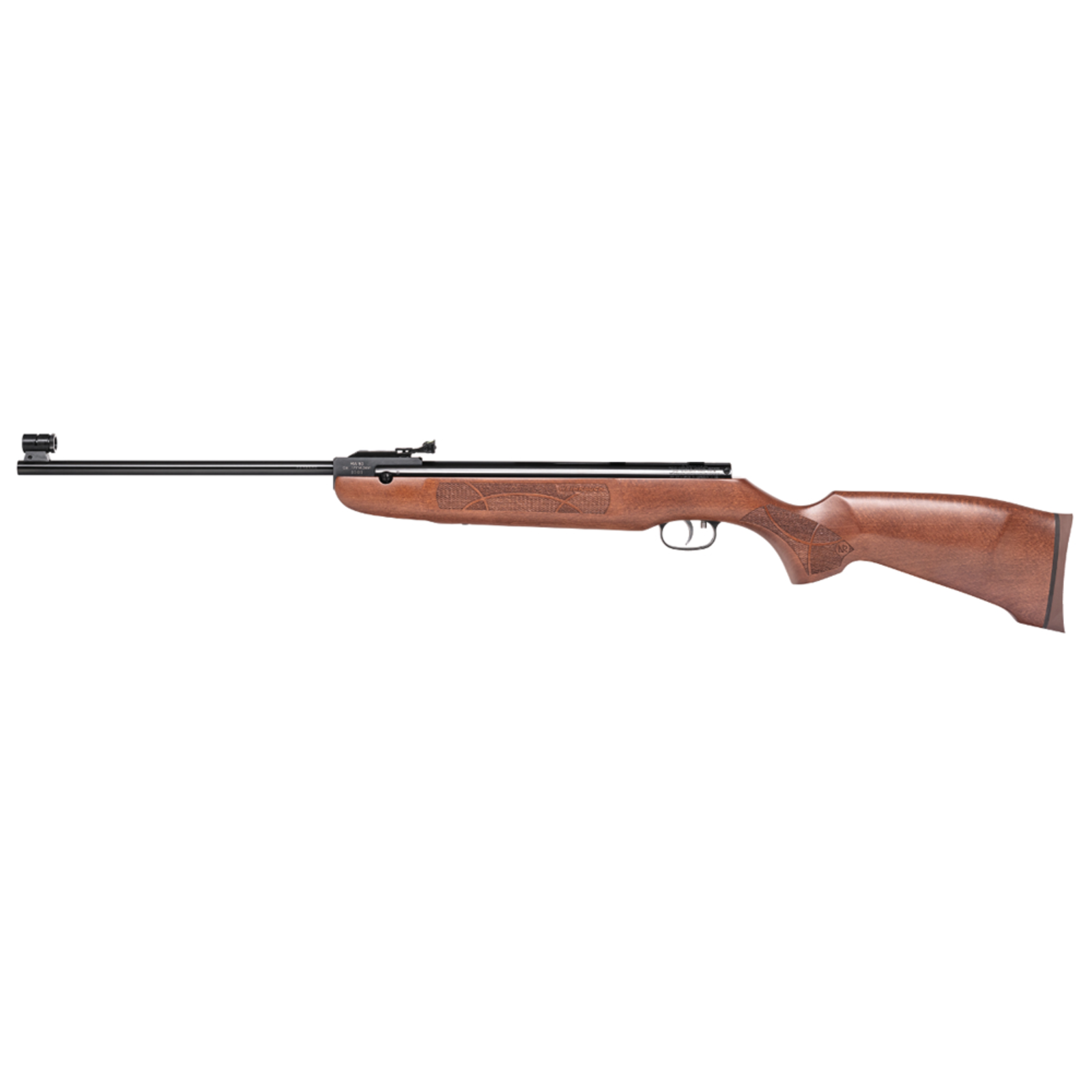
HW50 S Air Rifle

€300.00

Power source: Spring piston
Caliber: 4,5mm (.177) | 5,5mm (.22)
Muzzle energy: 16 joules
Magazine: Single shot
Operating system: Break barrel
Trigger: Rekord trigger
Optics mounting: 11mm dovetail
Barrel length: 395mm
Total length: 1030mm
Weight: 3100gram
Muzzle: Not threaded
Extra:
Accessories: Inserts for front sigth


Precision and Heritage Combined in the HW50 S Air Rifle

Exceptional shooting enjoyment is delivered by the HW50 S Air Rifle through time-tested German engineering. A proven medium-weight sporting and training platform is provided by this classic spring-piston break-barrel design. Solid construction is paired with a powerful piston spring so that consistent accuracy is achieved across leisure and sporting applications. Family-friendly handling is enabled by the balanced, compact layout, while lasting reliability is ensured by Weihrauch’s renowned build quality.

Core Features of the HW50 S Air Rifle

Outstanding performance is supported by a carefully refined feature set. Consequently, both new and experienced shooters are served equally well.

  • A two-stage adjustable Rekord match trigger is fitted so that crisp, predictable release is obtained.
  • An automatic safety is engaged upon cocking, thereby promoting safe handling at all times.
  • A beechwood stock with ambidextrous cheekpiece and checkering on the pistol grip and forearm is supplied, therefore secure and comfortable hold is afforded to right- and left-handed users alike.
  • A globe front sight with interchangeable inserts plus a micrometer rear sight adjustable for windage and elevation is included, so precise open-sight shooting is facilitated.
  • An 11 mm dovetail rail is machined into the receiver, hence optics can be mounted when desired.
  • A rubber buttplate is attached, as a result recoil is cushioned and shoulder comfort is improved during extended sessions.
  • A rifled steel barrel of 395 mm (15.5 in) is employed, thus pellet stability and grouping consistency are enhanced.

Design and Handling Characteristics

A total length of 1,030 mm (40.5 in) and an unscoped weight of 3.10 kg (6.8 lb) are maintained by the HW50 S Air Rifle. Therefore a compact, well-balanced carbine feel is created without sacrificing stability. The long, handy forearm is shaped so that a natural hold is encouraged, while stippling on the grip surfaces is applied so that positive control is retained even in varied conditions. Medium recoil and a relatively quiet report are produced by the spring-piston system; consequently backyard and range use remain neighbor-friendly. Cocking effort of approximately 24 lb is required, yet the short barrel keeps the motion manageable for most adult shooters.

Performance Across Calibers

Two popular calibers are offered so that different shooting preferences can be accommodated. In .177, velocities around 235 m/s (approximately 770–820 fps depending on pellet) are typically recorded, while in .22 velocities of about 180 m/s (roughly 570–650 fps) are commonly achieved. Muzzle energy in the 10–16 joule range (approximately 7.5–12 ft-lbs) is generated, therefore the rifle remains suitable for plinking, target practice, training, and small-pest work where legal. Tight groups at 20–30 yards are regularly produced when quality pellets are selected; moreover, consistency across a 10-shot string is frequently observed. The single-shot break-barrel action is simple and reliable, so maintenance demands stay modest.

Practical Use Scenarios

Versatile application is supported by the HW50 S Air Rifle. Recreational plinking and skill-building sessions are enjoyed by families because the moderate power and excellent trigger make learning enjoyable. Club-range target work and informal competitions are likewise well served. When a compact optic is added, small-game hunting or pest control at modest distances becomes feasible in jurisdictions where such use is permitted. The ambidextrous stock and modest weight allow comfortable use by a wide range of shooters, including those who prefer a lighter springer over heavier magnum models.

Why the HW50 S Air Rifle Stands Out

Decades of refinement are embodied in this model. The Rekord trigger, in particular, is widely regarded as one of the finest factory units available on a spring-piston rifle; as a result shot-to-shot consistency is elevated. Durable steel components and a well-finished wooden stock contribute to heirloom-level longevity. Compared with lighter models such as the HW30 series, extra power and a slightly longer sight radius are gained; compared with heavier rifles such as the HW95 or HW80, easier handling and reduced fatigue are obtained. Thus an ideal “do-all” middleweight springer is created.

Care and Responsible Ownership

Simple maintenance is all that is required. Periodic lubrication of the pivot and a light wipe-down after use keep the action smooth. High-quality pellets should be chosen so that accuracy potential is fully realized. Local airgun laws and safety rules must always be observed; eye protection is recommended and safe backstops must be used. When these practices are followed, years of reliable service can be expected.

The HW50 S Air Rifle therefore represents a thoughtful balance of tradition, precision, and everyday usability. Shooters seeking a well-made, accurate, and enjoyable spring-piston rifle will find that this model meets those needs with quiet competence and lasting quality.

Calibres, FAC Considerations, Power Output and Accessories for the HW50 S Air Rifle

Versatile shooting options are provided by the HW50 S Air Rifle through carefully chosen calibres, measured power levels and a practical accessory ecosystem. Consequently, training, plinking and modest field use can be supported while local regulations are respected. Inclusive language is used throughout so that shooters of different experience levels and jurisdictions are equally considered.

Available Calibres of the HW50 S Air Rifle

Two principal calibres are offered so that different pellet weights and trajectory preferences can be accommodated. In .177 (4.5 mm), a flatter trajectory and higher velocity are typically obtained; therefore target work and precision practice are often favoured. In .22 (5.5 mm), greater pellet mass and energy transfer are delivered, so small-pest or short-range hunting applications (where legally permitted) are better served. A single-shot break-barrel loading system is employed in both versions; as a result, pellet selection remains simple and consistent.

Moreover, a rifled barrel of 395 mm is used in each calibre so that spin stabilisation is achieved. Tight groups at 20–30 yards are frequently recorded when quality match or hunting pellets are chosen. Additionally, the same stock, trigger and sighting arrangement is retained across calibres; hence familiar handling is preserved when a second rifle in the other calibre is later added. Limited-edition or special-stock variants may also be encountered, yet the core calibre choice remains .177 or .22.

FAC Status and Legal Power Context

Legal classification of the HW50 S Air Rifle is determined by muzzle energy and by the laws of the country or region in which it is used. In many markets a factory energy of approximately 10–12 ft-lbs (roughly 13.5–16 joules) is produced; therefore the rifle is commonly sold as a non-FAC air rifle in the United Kingdom when it remains under the 12 ft-lb threshold. In Germany and some other European countries a lower-powered variant (often under 7.5 joules) is supplied so that adult purchase without a firearms licence is permitted. In the United States higher advertised velocities (around 820 fps in .177 with light pellets) are sometimes listed; consequently local state and federal rules must still be verified by the purchaser.

It must be emphasised that power figures vary with pellet weight, spring condition and any aftermarket work. Therefore official factory data and a chronograph check after purchase are recommended. FAC or equivalent licensing is required only when energy exceeds the legal limit of the relevant jurisdiction; as a result, the standard HW50 S Air Rifle is intended to remain within commonly accepted sporting limits when left in factory specification. Responsible owners are expected to confirm current local regulations before purchase or use. Inclusive compliance is encouraged so that every shooter can enjoy the rifle legally and safely.

Power Delivery and Practical Performance

A classic spring-piston powerplant is utilised so that consistent, self-contained shots are produced without the need for external air tanks or CO2. In .177, velocities in the region of 235 m/s (approximately 770–850 fps depending on pellet and market specification) are commonly measured. In .22, velocities around 180 m/s (roughly 570–650 fps) are typical. Muzzle energy generally falls in the 10–16 joule / 7.5–12 ft-lb band; hence a useful but controllable level of performance is obtained.

Furthermore, modest recoil and a medium report are generated, so backyard and club-range sessions remain practical. Cocking effort of about 24 lb is required because of the relatively short barrel; nevertheless the motion remains manageable for most adult users. Shot-to-shot consistency is supported by the Rekord trigger and a well-fitted piston; consequently 10-shot velocity spreads of only a few fps are often recorded with well-chosen pellets. Power is therefore sufficient for training, plinking and close-range pest work, yet remains civilised enough for extended practice without excessive fatigue.

Recommended Accessories and Mounting Options

A comprehensive accessory set can be added so that the HW50 S Air Rifle is tailored to individual needs. An 11 mm dovetail rail is already machined on the receiver; therefore compact scopes, red-dot sights or spirit-level mounts can be fitted when open sights are no longer preferred. Globe front-sight inserts are supplied from the factory, and extra inserts can be obtained so that different lighting or target conditions are matched. A rubber buttplate is fitted as standard; additionally aftermarket pads or recoil reducers may be considered if extra cushioning is desired.

Moreover, a quality sling and swivels can be attached for carry comfort on longer outings. A padded rifle case is recommended for transport and storage so that the beech stock and blued steel are protected. High-grade pellets in the appropriate calibre should be selected; match-grade or premium hunting pellets usually produce the tightest groups. A simple cleaning kit, spring-piston-safe lubricant and a basic chronograph further support long-term accuracy and legal power verification. Inclusive accessory choices allow both new and experienced shooters to equip the rifle according to budget and intended use.

When these calibre, power and accessory options are combined, a flexible and durable platform is created. The HW50 S Air Rifle can therefore be configured for family training, club shooting or modest field work while remaining within typical sporting energy limits. Local laws should always be checked, quality pellets and mounts should be chosen, and regular care should be applied so that reliable performance is maintained for many years.

Weihrauch Air Rifles, PCP Platforms, Spring-Piston Systems, and Related Airgun Terminology

Enthusiasts researching premium German airgun engineering frequently encounter models and search terms such as Weihrauch HW100X Karbine, Thumbhole PCP Air Rifle, hw35, h 45, german air rifle, accurate air rifles, hw97k, hw 70, hw35e for sale, hw40, weihrauch hw30, weihrauch hw80, weihrauch hw 95, hw100, hw 97k, hw35 air rifle, hw50 s, weihrauch hw45, weihrauch english, weihrauch hw98, weihrauch englisch, hw77 air rifle, weihrauch hw50s, compressed air rifles, air rifle makes, spring piston, what are air rifles, weihrauch hw44, air shot gun, sk x rifles, weihrauch hw50, hw30s, hw 30, what are air pistols, hw50, and rifles de aire.

Within the Weihrauch lineup, the Weihrauch HW77 air rifle is widely recognized as a traditional fixed-barrel underlever platform. Related terminology includes HW77 Green Laminate rifle, Weihrauch underlever air rifle, HW77 spring piston air rifle, Weihrauch HW77 for sale, and German precision air rifle. Researchers comparing versions may also encounter phrases such as buy Weihrauch HW77 Green Laminate online, Weihrauch HW77 Green Laminate price and specs, Weihrauch HW77 accuracy review, HW77 Green Laminate vs HW97 comparison, is Weihrauch HW77 good for beginners, precision shooting airgun, high quality German airguns, best price Weihrauch HW77, where to buy Weihrauch HW77, Weihrauch HW77 in stock, affordable premium air rifle, and top rated underlever air rifle.

Technical comparison searches commonly include Weihrauch HW77 vs HW97, HW77 vs break barrel air rifle, best Weihrauch air rifles, most accurate air rifle for target shooting, air rifle with low recoil, durable air rifle for outdoor use, and reliable air rifle for long term use. These phrases generally reflect interest in operating systems, mechanical durability, handling characteristics, consistency, and the differences between fixed-barrel underlever designs, break-barrel rifles, and PCP platforms.

Other Weihrauch-related terminology includes air pistols, hw100 airgun, weihrauch hw95, weihrauch hw 30, weihrauch hw90, hw 44, hw 40, hw 98, and weihrauch hw100. The HW100 family represents the PCP side of Weihrauch’s catalog, while models such as the HW30, HW50, HW80, HW90, HW95, HW97, and HW98 are associated with spring-powered or gas-ram-style sporting airgun platforms depending on the specific model and configuration. By contrast, the HW44 is commonly discussed as a PCP air pistol.

The broader airgun market also includes search terminology connected with alternative PCP manufacturers and modern platforms. Examples include 25 karma, pcp bb gun, karma eq air rifle, karma red panda, panda guns, full auto pcp, karma sls compact, air karma, red panda hat, eq air, karma sls, eq magazine, air pcp, and karma airguns. These terms may refer to specific products, product families, accessories, community terminology, or unrelated search phrases that appear alongside airgun research.

Reximex is another name frequently encountered in PCP discussions. Related search phrases include reximex airguns, reximex rp, reximex throne gen 2, reximex mito, reximex rpa, sbs12, reximex mitos, reximex lieva, reximex accura pcp air rifle, and reximex throne gen2. Model naming can vary slightly between retailers, regions, and search listings, which explains variations such as “Throne Gen 2” and “Throne Gen2” or “Mito” and “Mitos.”

Airgun research also involves understanding velocity and energy. Searches such as fps to joules calculator, fps to ft lbs, and airgun calculator relate to converting projectile velocity and mass into kinetic-energy measurements. These calculations are commonly used for technical comparison, range evaluation, regulatory research, and understanding how different compressed-air or spring-powered platforms perform within their intended specifications.

More general discovery terms can include gunseek and yivli av tüfeği, alongside broader international phrases such as rifles de aire. Because airgun terminology varies considerably between English, German, Spanish, and Turkish-speaking markets, researchers may encounter several different naming conventions for comparable sporting, target, and recreational airgun platforms.

Taken together, terms ranging from Weihrauch HW100X Karbine and Thumbhole PCP Air Rifle to HW77 Green Laminate rifle, spring piston, compressed air rifles, karma airguns, and reximex airguns illustrate the diversity of modern airgun technology. Weihrauch remains particularly associated with German engineering, fixed-barrel underlever rifles, traditional spring-powered designs, precision PCP systems, and air pistols, while Karma and Reximex represent additional names encountered when comparing contemporary PCP platforms and associated airgun technology.

Practical Use Scenarios

Everyday shooting enjoyment is supported by a compact spring-piston sporting rifle when the right setting, pellet and technique are chosen. Consequently, backyard practice, club training, informal competition and carefully planned field work can all be approached with confidence. Inclusive language is used so that new shooters, experienced marksmen, left- and right-handed users, and family groups are equally considered. Local laws, safe backstops and eye protection must always be observed; therefore every scenario below assumes responsible, legal use only.

Backyard and Garden Practice

Quiet, neighbour-friendly sessions are enabled by moderate report and controllable recoil. A paper target or spinner at 10–20 yards is typically set so that fundamentals can be rehearsed without leaving home. An automatic safety is engaged on every cocking stroke; as a result, loading pauses remain calm and deliberate. Open sights with interchangeable front inserts are first employed so that sight picture and trigger control are learned before any optic is added. Moreover, a rubber buttplate cushions the shoulder, therefore longer strings of 20–40 shots can be completed without discomfort.

A stable rest or a simple shooting bench is recommended for the first sessions; subsequently standing and kneeling positions can be introduced. Light-to-medium pellets in the chosen calibre are selected so that grouping consistency is easier to see. Tight clusters at 15 yards are frequently produced once hold and follow-through are settled. Additionally, a pellet trap or thick backstop is placed so that every shot is captured. Family members of different ages can take turns because the ambidextrous stock and modest weight keep handling approachable. Thus regular short sessions become a pleasant habit rather than a chore.

Structured Training and Skill Building

Progressive skill development is supported when a clear practice plan is followed. Dry-fire-style trigger work is not possible on a cocked springer, yet live-fire drills with a focus on one element at a time are highly effective. First, sight alignment and breathing are isolated; next, trigger break and follow-through are emphasised; afterwards, position changes are added. Consequently, measurable improvement is recorded over weeks rather than guessed at.

A 10-metre indoor or garden lane is ideal for beginners. Paper targets with scoring rings are used so that group size and point-of-impact shift can be tracked. Furthermore, a simple log of pellet type, weather and group measurement is kept; as a result, the most consistent ammunition is identified quickly. When groups shrink, distance is increased in small steps to 20 and then 25 yards. Inclusive coaching is encouraged: experienced shooters can stand beside newer ones without crowding the firing line, and left-handed users are accommodated by the two-sided cheekpiece.

Club nights and informal postal matches are also well served. Timed strings of five or ten shots can be fired so that rhythm is developed. Moreover, kneeling and sitting positions from a shooting mat introduce field-target habits without the need for a full competition setup. The two-stage match trigger rewards a clean break; therefore sloppy technique is immediately revealed and can be corrected. Over time, a reliable standing group at 20 yards becomes a realistic goal for most dedicated users.

Informal Competition and Hunter-Field Style Practice

Course-style shooting can be simulated in a safe outdoor space. Knock-down targets or small metal spinners are placed at mixed distances between 15 and 35 yards. Consequently, hold-over, wind reading and position changes are practised in one session. A compact optic on the 11 mm rail may be added once open-sight competence is established; alternatively, the factory iron sights remain sufficient for many club-style events.

A kneeling or sitting shot from natural cover is first rehearsed on the range; subsequently the same position is used in a garden or permission-held field (where legal). Light recoil helps the sight picture stay on target after the shot; therefore second-shot opportunities, when permitted, are easier to take. Inclusive teams—mixed ages and experience levels—can rotate through a simple course so that everyone remains engaged. Scoring can be kept informal: hits on a defined zone or first-round knockdowns are counted. Thus competitive enjoyment is obtained without expensive dedicated equipment.

Legal Pest and Small-Game Applications

Where statutes allow and a safe backstop exists, modest pest control or small-game work can be undertaken. Energy in the typical sporting band is adequate for close-range dispatch of suitable quarry when shot placement is precise. A rest, a known zero and a high-quality pellet are essential; moreover, range estimation must be conservative because trajectory drop increases beyond 25–30 yards.

A scoped setup is often preferred for this role so that a small vital zone can be aimed with certainty. The rifle is zeroed at a practical distance (commonly 20–25 yards) and hold-over marks are confirmed on paper first. Additionally, a sling can be fitted for quiet movement across a permission. Inclusive ethics require that only legal quarry is engaged, that every shot is taken only when a clean kill is probable, and that wounded animals are followed up immediately. Weather, lighting and wind are assessed before the first shot is fired. When these conditions are met, a compact springer remains a discreet and effective tool.

Travel, Camp and Occasional Field Days

Portability is aided by a 40.5-inch overall length and a weight near 6.8 lb unscoped. A padded case protects the wooden stock and blued steel during car journeys or weekend trips. At a campsite or holiday cottage with a safe range, short practice sessions can be fitted between other activities. Consequently, skills are maintained even when a full club visit is not possible.

Open sights allow the rifle to be used immediately if an optic is left at home. Conversely, a low-power compact scope can be left mounted for faster target acquisition. A small tin of proven pellets, a simple cleaning cloth and a torque screwdriver for scope rings complete a travel kit. Inclusive planning includes checking local airgun rules at the destination and confirming that a safe backstop will be available. Thus the same rifle that lives in the garden cupboard can also serve as a reliable companion on short trips.

All-Weather and Seasonal Use

Outdoor shooting in varied conditions is practical when simple precautions are taken. Light rain is tolerated by the steel action and sealed spring cylinder; nevertheless the wooden stock should be wiped dry afterwards so that finish and checkering last. Cold weather stiffens grease slightly; therefore a few settling shots are fired before serious groups are expected. Wind is the greater challenge: .177 pellets drift more than .22 at longer distances, so closer targets or a sheltered lane are chosen on breezy days.

Summer heat can make the barrel warm after long strings; as a result, short pauses are inserted so that point of impact remains stable. Winter gloves reduce feel on the trigger; consequently a thinner liner or a slightly heavier second-stage setting may be preferred. Inclusive practice means sessions are shortened when conditions become uncomfortable, and hydration or warm clothing is planned in advance. The rifle itself remains mechanically simple, so seasonal storage requires only a light oil film and a dry cupboard.

Optics Versus Iron Sights in Daily Use

Two complementary aiming systems are available. Factory open sights with a globe front and adjustable rear are used for fast, lightweight sessions and for teaching sight picture. Inserts can be swapped so that a fine bead or a post is matched to the target. When greater precision at 25–35 yards is wanted, a compact scope is mounted on the dovetail rail. A low-magnification optic with a simple reticle keeps the package balanced and avoids excessive weight.

Parallax and eye relief are set carefully so that a consistent cheek weld is maintained on the ambidextrous comb. Moreover, the same zero can be confirmed with both systems if the scope is removed occasionally. Inclusive choice allows one household member to prefer irons while another uses glass; both can share the same rifle with only a few minutes of adjustment. Trigger quality remains the constant: a clean Rekord break rewards either aiming method.

Pellet Selection and Consistency Drills

Accuracy potential is realised only when suitable pellets are matched to the barrel. Several well-known brands in 7–8.5 grain (.177) or 14–16 grain (.22) weights are tested from a rest at 20 yards. Five-shot groups are measured and the tightest load is adopted for most practice. Furthermore, a second “wind” or “hunting” pellet can be kept for specific tasks. Batch-to-batch variation exists; therefore a new tin is always verified before a match or a field outing.

A consistency drill consists of two warm-up shots followed by a recorded ten-shot string. Velocity spread, if a chronograph is available, and group size are both noted. As a result, spring condition and lubrication needs become visible over months. Inclusive testing means younger or less experienced shooters can participate by calling shots or measuring groups rather than only firing. The process itself becomes part of the enjoyment.

Family and Mixed-Ability Sessions

Shared use is one of the strongest practical strengths of a medium-weight sporting springer. A single rifle can be passed among adults and responsible older teens because the stock fits a wide range of builds and the cocking effort, while noticeable, is not extreme. Clear range rules are agreed first: muzzle direction, loading sequence and cease-fire commands are practised until they are automatic. Consequently, everyone remains safe and engaged.

Shorter sessions with frequent rotation prevent fatigue and keep attention high. Targets of different sizes and distances give each participant an achievable goal. Moreover, a simple reward system—best group of the day, most improved, first spinner down—keeps the mood light. Inclusive language and patience matter: coaching is offered as invitation, not correction. When these habits are established, the rifle becomes a reason to spend time outdoors together rather than a specialist tool used only by one person.

Maintenance Moments Embedded in Use

Practical ownership includes brief care after each outing. The barrel is left uncocked, the exterior is wiped, and the pivot is given a drop of appropriate oil at intervals recommended by the maker. A visual check of stock screws and sight tightness is performed before the next session. Therefore reliability is maintained without workshop visits. Inclusive habits mean every user who borrows the rifle returns it in the same condition.

When the scenarios above are combined—short garden strings, structured drills, occasional course work, legal field use and shared family time—a complete shooting life is supported by one well-made spring-piston rifle. Distances stay realistic, power stays within sporting limits, and enjoyment stays high because the equipment remains simple, accurate and comfortable to live with. Safe, legal and considerate use turns every session into useful practice and lasting satisfaction.
Frequently Asked Questions

Clear answers are provided below so that purchase decisions and day-to-day use can be approached with confidence. Inclusive language is used throughout; consequently new shooters, experienced marksmen, left- and right-handed users and family groups are equally considered. Local laws and safe handling practices must always be observed.

General Suitability and Intended Use

Who is this style of sporting springer intended for?
A wide range of users is served by a medium-weight, break-barrel spring-piston rifle. Family training, backyard practice, club nights and modest field work (where legal) are all supported. Consequently both beginners and well-advanced shooters can obtain useful performance. A compact overall length and an unscoped weight near 6.8 lb keep handling approachable; therefore fatigue is reduced during longer sessions. Inclusive use is further aided by an ambidextrous stock.

Is this platform suitable for younger or smaller-framed shooters?
Responsible older teens and smaller adults can often be accommodated when cocking technique and stance are taught carefully. A cocking effort of approximately 24 lb is required; as a result, adult supervision and a proper hold are essential. The two-sided cheekpiece and moderate recoil help a variety of builds. Nevertheless, individual strength and local age rules must be respected before any shot is fired.

Can one rifle be shared within a household?
Shared use is readily supported. An ambidextrous beech stock with checkering on grip and forearm is fitted; therefore left- and right-handed users can take turns without stock changes. Clear range rules, a common pellet choice and a short handover checklist keep sessions safe and enjoyable. Moreover, open sights allow immediate use if an optic is left off for a particular shooter.

Calibres, Power and Legal Classification

Which calibres are typically offered?
Two principal options are supplied. In .177 a flatter trajectory and higher velocity are usually obtained, so target practice and precision work are often favoured. In .22 greater pellet mass and energy transfer are delivered; consequently short-range pest or small-game use (where permitted) can be considered. A single-shot loading system is employed in both cases. Inclusive choice means a household can later add the second calibre while retaining familiar handling.

How much power is produced, and is a firearms certificate required?
Muzzle energy in the common sporting band of roughly 10–12 ft-lbs (approximately 13.5–16 joules) is typical for many export specifications. In some European markets a lower-powered version under 7.5 joules is supplied so that adult purchase without a licence remains possible. Classification is therefore determined by local law and by the exact factory or aftermarket energy of the individual rifle. Official figures and a chronograph check after purchase are recommended. FAC or equivalent paperwork is needed only when the legal energy limit of the jurisdiction is exceeded. Responsible verification of current rules is expected of every owner.

Does pellet weight change felt power and trajectory?
Yes. Lighter pellets produce higher velocity and a flatter line; heavier pellets retain energy better and may group differently. Consequently a short test of two or three well-known brands at 20 yards is advised. The most consistent load is then adopted for practice and, where legal, field use.

Handling, Trigger and Sights

What trigger is fitted and can it be adjusted?
A two-stage Rekord-style match trigger is installed. Crisp, predictable release is obtained once the second-stage weight and sear engagement are set to the user’s preference. Adjustment screws are provided; therefore a qualified person or the owner following the maker’s guidance can refine the break. Inclusive use is helped because a clean trigger rewards both new and experienced shooters equally.

Are open sights included, and can a scope be added?
A globe front sight with interchangeable inserts and a micrometer rear sight adjustable for windage and elevation are supplied from the factory. Precise iron-sight shooting is therefore possible immediately. An 11 mm dovetail rail is also machined on the receiver; as a result a compact scope or red-dot can be mounted when greater precision at 25–35 yards is desired. Inclusive setups allow one user to prefer irons while another uses glass on the same rifle.

How loud is the report and how noticeable is the recoil?
A medium report and moderate recoil are produced by the spring-piston system. Neighbour-friendly garden use is often practical when a proper backstop is used. Recoil is described as civilised rather than harsh; consequently follow-through remains easier than on many magnum springers. A rubber buttplate further cushions the shoulder.

Is the stock comfortable for long sessions?
A beech stock with a long, handy forearm, stippling on grip and forend, and a rubber buttplate is provided. Balance is generally praised. Moreover, the ambidextrous cheekpiece supports consistent head position from either side. Short pauses during extended strings still help accuracy and comfort.

Accuracy, Range and Practical Performance

What level of accuracy can reasonably be expected?
Tight groups at 15–20 yards are commonly recorded from a rest with a well-matched pellet. At 25–30 yards, careful technique and a known zero still produce useful results for training and informal competition. Open sights or a low-power optic both work; the limiting factor is usually the shooter rather than the barrel. Inclusive practice—measuring groups and keeping a simple log—accelerates improvement for everyone.

What distances are realistic for different tasks?
Garden and 10-metre training are ideal starting points. Club-style target work is comfortable to about 25 yards. Informal hunter-field practice and, where legal, close-range pest work are typically kept inside 30 yards so that trajectory drop and wind drift remain manageable. Conservative range estimation is always recommended.

Does the short barrel affect cocking or velocity?
A barrel length of 15.5 inches keeps overall length compact. Cocking effort is therefore a little more noticeable than on some longer springers of similar power, yet remains within normal adult capability. Velocity and energy stay in the intended sporting band when factory specification is left unchanged.

Maintenance, Pellets and Accessories

How much maintenance is required?
Simple care is sufficient. The rifle is left uncocked after use, the exterior is wiped, and the cocking pivot is given appropriate lubricant at intervals suggested by the manufacturer. Stock screws and sight or scope mounts are checked periodically. Consequently workshop visits remain rare when the rifle is treated considerately. Inclusive habits mean every borrower returns the rifle in the same condition.

Which pellets are recommended?
Premium domed or match pellets in the appropriate weight for the chosen calibre usually produce the best groups. A short ladder test from a rest identifies the preferred tin. Cheap or damaged pellets should be avoided because leading and flyers increase. A dedicated tin for practice and a second tin for “best” work can be kept if desired.

What accessories are most useful?
A padded case, a quality sling, extra front-sight inserts, a compact scope with appropriate rings, a simple cleaning kit and a basic chronograph cover most needs. Inclusive kits can be built gradually so that budget is respected. Scope rings must match the 11 mm rail; torque should be applied evenly.

Can aftermarket springs or kits be fitted?
Power and firing characteristics can be altered by internal work. However, energy may then exceed local legal limits, warranty terms may be affected, and handling can change. Therefore any modification should be undertaken only with full awareness of the law and of the rifle’s original design intent.

Safety, Storage and Ownership

What safety features are built in?
An automatic safety is engaged each time the barrel is cocked. The safety must still be treated as a mechanical aid, not a substitute for muzzle discipline and a verified empty chamber. Eye protection and a safe backstop are required for every shot. Inclusive safety culture means every person on the range understands cease-fire commands before shooting begins.

How should the rifle be stored?
A dry, secure cupboard or cabinet is preferred. The action is left uncocked, and a light protective film is applied if the rifle will stand unused for months. Ammunition is stored separately. Local secure-storage rules, where they exist, must be followed.

Is this a rifle that lasts for many years?
Durable steel components and a well-finished wooden stock are used. With basic care, decades of service are commonly reported for this class of sporting springer. Inclusive ownership includes teaching newer users the same simple maintenance routine so that the rifle remains a household asset rather than a neglected tool.

What should be checked before a first shooting session?
Local legal status and energy limits are confirmed. A safe backstop is prepared. Eye protection is worn. The correct calibre pellets are loaded. Sights or scope are verified. The automatic safety and trigger function are understood. Consequently the first shots can be devoted to enjoyment and learning rather than troubleshooting.

When the answers above are taken together, a clear picture of everyday use is formed. A compact, accurate, moderately powered spring-piston sporting rifle remains a practical companion for training, recreation and carefully planned field work. Laws are respected, quality pellets and mounts are chosen, and simple care is applied so that reliable performance and shared enjoyment are maintained for years.

Caliber

.177, .22

Reviews

There are no reviews yet.

Be the first to review “HW50 S Air Rifle”

Related Products

FAQ

  • Spring-Piston (Break-Barrel or Underlever): Cock by compressing a spring. Reliable, no external air source needed, but can have more recoil (“spring twang”) and require technique to shoot accurately.
  • Pre-Charged Pneumatic (PCP): Filled from a scuba tank, compressor, or pump. High power, low recoil, multiple shots per fill. Popular for precision and hunting.
  • CO₂: Powered by disposable cartridges. Good for pistols and semi-auto/repeaters, but performance drops in cold weather.
  • Multi-Pump Pneumatic: Hand-pumped to build pressure. Versatile but requires effort.
  • Gas Ram (Nitro Piston): Uses compressed gas instead of a metal spring. Smoother than traditional springers.

Calibers: Most common are .177 (4.5mm) for speed/flat trajectory and general use, and .22 (5.5mm) for better hunting knockdown power. Larger “big bore” (.25, .30, .357+) exist for hunting bigger game where legal.

Yes, many modern PCP and springers deliver enough energy for small game (rabbits, squirrels, birds) and even larger game in some areas. Muzzle energy (in ft-lbs or joules) matters more than velocity alone. Always match caliber, pellet weight, and energy to the game and check local hunting regs.

Treat every airgun as if it is loaded.

  • Always point the muzzle in a safe direction.
  • Keep your finger off the trigger until ready to shoot.
  • Know your target and what is beyond it (pellets can ricochet or travel far).
  • Wear eye protection.
  • Store unloaded, out of reach of children/untrained users, and ideally locked.
  • Never shoot at hard surfaces or in areas where pellets could escape your property.

Follow these rules strictly—airguns cause real injuries.

Laws differ dramatically by country, state/province, and even city. Always verify current local laws before buying, owning, transporting, or using an airgun. Age restrictions (often 18+) are common.

Examples (summaries only; check official sources):

  • UK: Air rifles ≤12 ft-lbs (16.3 joules) and pistols ≤6 ft-lbs generally do not require a license (FAC needed above that).
  • USA: Varies by state. Some treat powerful airguns as firearms; others do not. Many states now allow big-game hunting with air rifles.
  • Canada: Some airguns classified as firearms if they exceed velocity/energy thresholds.
  • Australia: Often treated as firearms; licensing/registration required in most states.
  • EU/France/Belgium/etc.: Varies; many allow low-power (<20J) guns freely to adults, with higher power needing permits. Germany has strict ~7.5J limits in some contexts.
  • Other countries: Some have no restrictions below certain energies; others ban or heavily regulate them.

Resources: Wikipedia “Air gun laws”, airgun forums, or official government sites. For travel, research transit laws carefully.

Consider:

  • Purpose: Plinking/backyard → lower power springer or CO₂. Hunting/precision → PCP.
  • Budget: Entry-level springers are affordable; PCPs need a fill system (extra cost).
  • .177 vs .22: .177 easier for beginners/targets; .22 better for hunting.
  • Power source: Convenience vs performance.
  • Test pellets in your gun—accuracy varies.

Buy from reputable dealers and consider warranties.

  • Clean barrel periodically (especially if accuracy drops) with patches and appropriate tools/solvents. Avoid over-oiling.
  • Lubricate moving parts and seals with airgun-specific oil (not general gun oil). Springers need piston seal oil occasionally.
  • Check screws, seals for leaks (PCP), and safety mechanisms regularly.
  • Store in a cool, dry place, ideally in a case. Avoid leaving cocked for long periods.

Follow your model’s manual. Basic care extends life significantly.

International shipping may be available for select products. Customers are responsible for understanding and complying with their local import laws and regulations before ordering.

Yes. Customers are required to confirm their order number through WhatsApp or Live Chat before orders are processed and shipped.

If local laws prevent shipment to your area, your order may be canceled and refunded according to our store policy.

Processing typically takes 1–3 business days after payment confirmation. Delivery times vary depending on destination, carrier, and product availability.


  • Wrong pellets for your barrel/caliber.
  • “Death grip” or poor shooting form (especially with springers—let the gun recoil naturally).
  • Loose scopes or mounts.
  • Ignoring safety or local laws.
  • Over-oiling or shooting with obstructions.


Pellets are the most common projectile (lead or lead-free). Match them to your gun, caliber, and purpose—test several brands as accuracy varies by barrel.

  • Domed (Round-Head): Best all-rounder. Excellent accuracy, ballistic coefficient, and energy retention. Ideal for target shooting, field target, and general hunting (e.g., JSB Exact, Air Arms Diabolo Field, H&N Field Target Trophy).
  • Wadcutter (Flat-Head): Clean holes in paper. Best for close-range target/plinking (under 20-25 yards).
  • Hollow Point: Expands on impact for better energy dump. Good for small game hunting (e.g., Predator Polymag, H&N Terminator).
  • Pointed: More penetration, but often less accurate than domed.
  • Slugs: Heavier, more aerodynamic for high-power PCPs at longer ranges (better for big game where legal).

Tips: Heavier pellets in .22/.25 for hunting (better momentum). Lighter in .177 for speed/flat trajectory. Always check head size fit (e.g., 4.51-4.53mm variants).

Muzzle energy (ft-lbs or joules) matters more than velocity. Ethical shots require precise placement (head/heart-lung) within effective range.

Rough Guidelines (adjust for distance, pellet, and local laws):

  • Small game (squirrels, rabbits, birds): 9-20+ FPE, .177/.22.
  • Medium (raccoons, etc.): 25+ FPE, .22/.25 recommended.
  • Larger game: 40-100+ FPE in .30+ calibers (up to big bore for deer/hogs where permitted).

PCPs dominate serious hunting due to power and shot count. Springers/gas rams work well for small game but require skill. Always prioritize clean kills and check seasons/species rules.

  • Barrel Cleaning: Use a pull-through kit or rod with patches. Avoid brushes that could damage rifling. Clean when accuracy drops or after 500-1000 shots.
  • Lubrication: Airgun-specific silicone oil for seals/O-rings (sparingly—excess causes dieseling in springers). Springers may need piston lube periodically.
  • PCP Specific: Check for leaks (soapy water test), monitor regulator/hammer settings, and keep fill systems clean. Don’t exceed rated pressure.
  • General: Tighten stock screws, inspect for wear, store properly. Chronograph shots to track consistency.

Common Issues:

  • Inconsistent velocity → dirty barrel, bad pellets, or seal problems.
  • Spring “twang” → tuning or proper hold.
  • Low power → worn seals or under/over-pumping.

Toggle Content

  • Scopes: Airgun-rated (hold zero under recoil). 3-9x or 4-12x common.
  • Fill Systems: Hand pumps, compressors, or tanks for PCPs.
  • Safety Gear: Eye/ear protection, targets with backstops.
  • Noise: Airguns quieter than firearms, but moderators help further.

Budget Tip: Start with a quality springer (~$150-400) before investing in PCP setup.

Airgunning offers endless depth—from backyard plinking to precision competition and ethical hunting. Prioritize safety, legality, and practice. If you want specifics (e.g., recommendations for a country, budget, hunting small game, or a particular type like PCP vs springer), let me know for more targeted info! Shoot responsibly.

Tuning improves accuracy, reduces noise/recoil, or increases power (within legal limits).

  • Springers: Lighter springs, guides, seals, or custom tuning kits for smoother shot cycle. “V-Mach” or similar professional tunes popular.
  • PCPs: Regulator tuning, hammer spring adjustments, valve work for efficiency and shot count. Some add electronic systems.
  • Accessories: Suppressors (often unregulated on airguns), better triggers, stocks, and scopes.

Caution: Check laws—power increases may reclassify your gun. DIY only if experienced; professional tuners recommended.

You must be at least 18 years old to purchase any airgun or related accessories from our store. By placing an order, you confirm that you meet the legal age requirements in your state or country.

Yes. Orders may require age verification before processing and shipping. In some cases, we may request a valid government-issued ID to confirm eligibility.