FX Panthera Black 700mm FAC: Precision Built for Dedicated Slug Performance
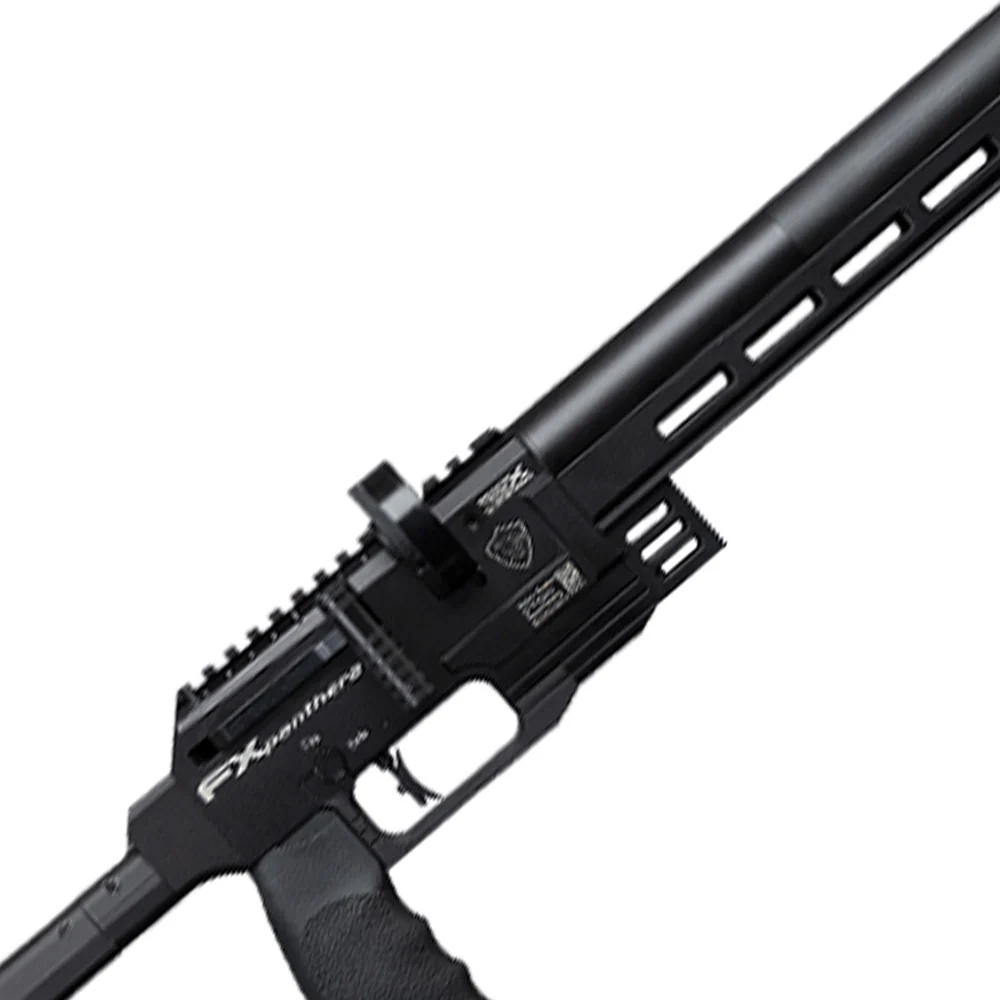
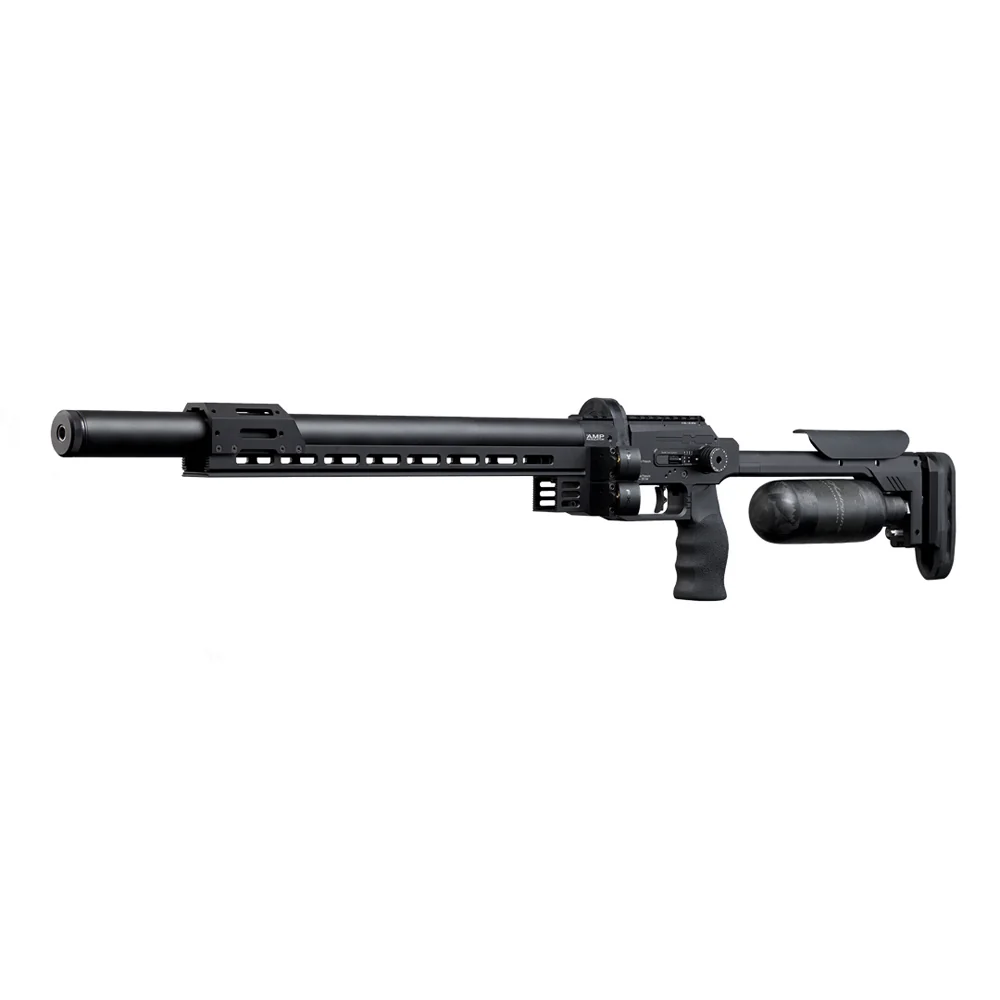
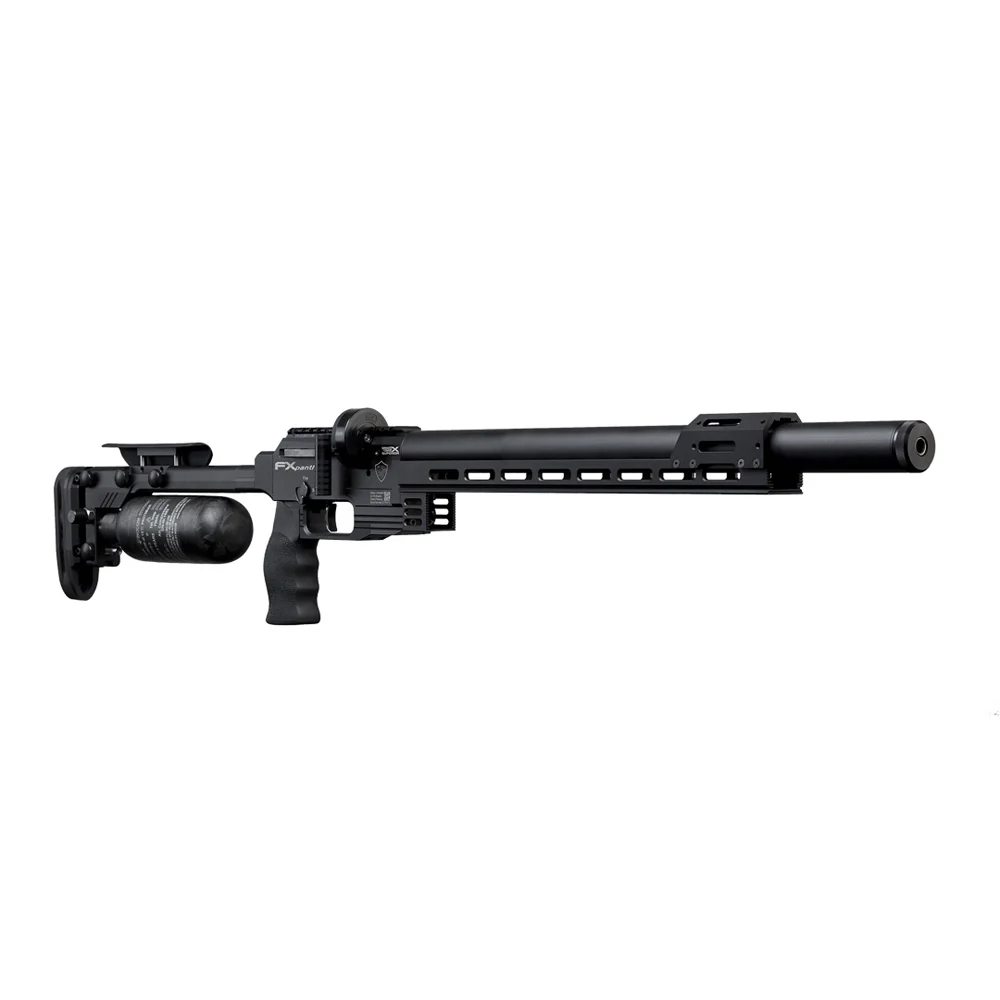
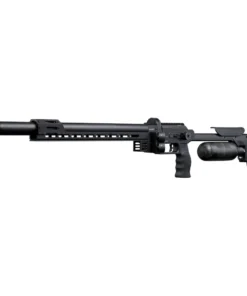
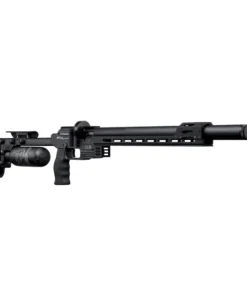
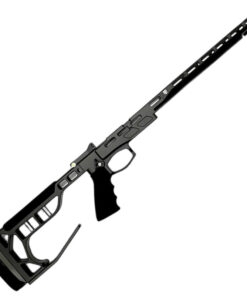
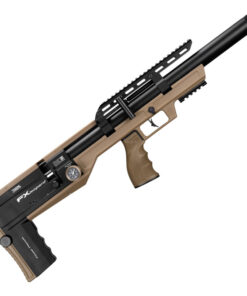
Exceptional long-range capability is delivered by the FX Panthera Black 700mm FAC, a purpose-built PCP platform that has been engineered for competition and field use. Uncompromising slug performance is achieved through a 700 mm Superior Heavy STX barrel, an over-barrel Dynamic Plenum, and a high-power short-impulse valve. Consequently, consistent energy and tight groups are produced when premium slugs are employed. Moreover, an ambidextrous chassis is provided so that every shooter can be accommodated.
Core Architecture of the FX Panthera Black 700mm FAC
A dedicated slug rifle is represented by the FX Panthera Black 700mm FAC. Therefore, a larger Dynamic Block breech is incorporated so that projectiles up to 13 mm in length can be fed. In addition, a deeper magazine lid is fitted to the standard Side-Shot magazine. As a result, longer slugs are seated securely. Furthermore, rigidity is increased because the Dynamic Plenum is wrapped around the barrel itself. Thus, barrel harmonics are reduced and shot-to-shot consistency is improved.
Highlighted features of the FX Panthera Black 700mm FAC include:
- 700 mm Superior Heavy STX barrel liner with carbon-fibre sleeve
- Magnum XL over-barrel Dynamic Plenum for high-volume air delivery
- High-power / short-impulse one-piece valve
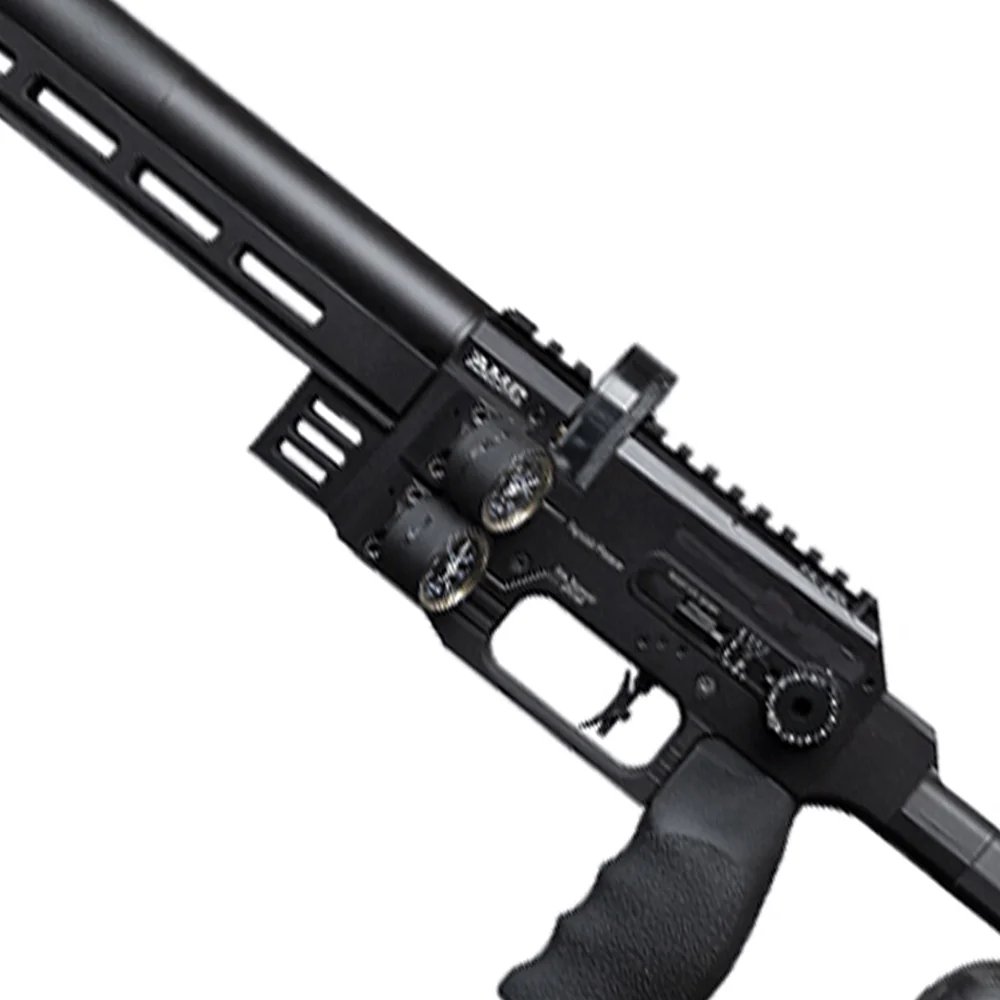
- Externally adjustable AMP MKII regulator
- Quick Tune System for hammer-spring micro and macro adjustment
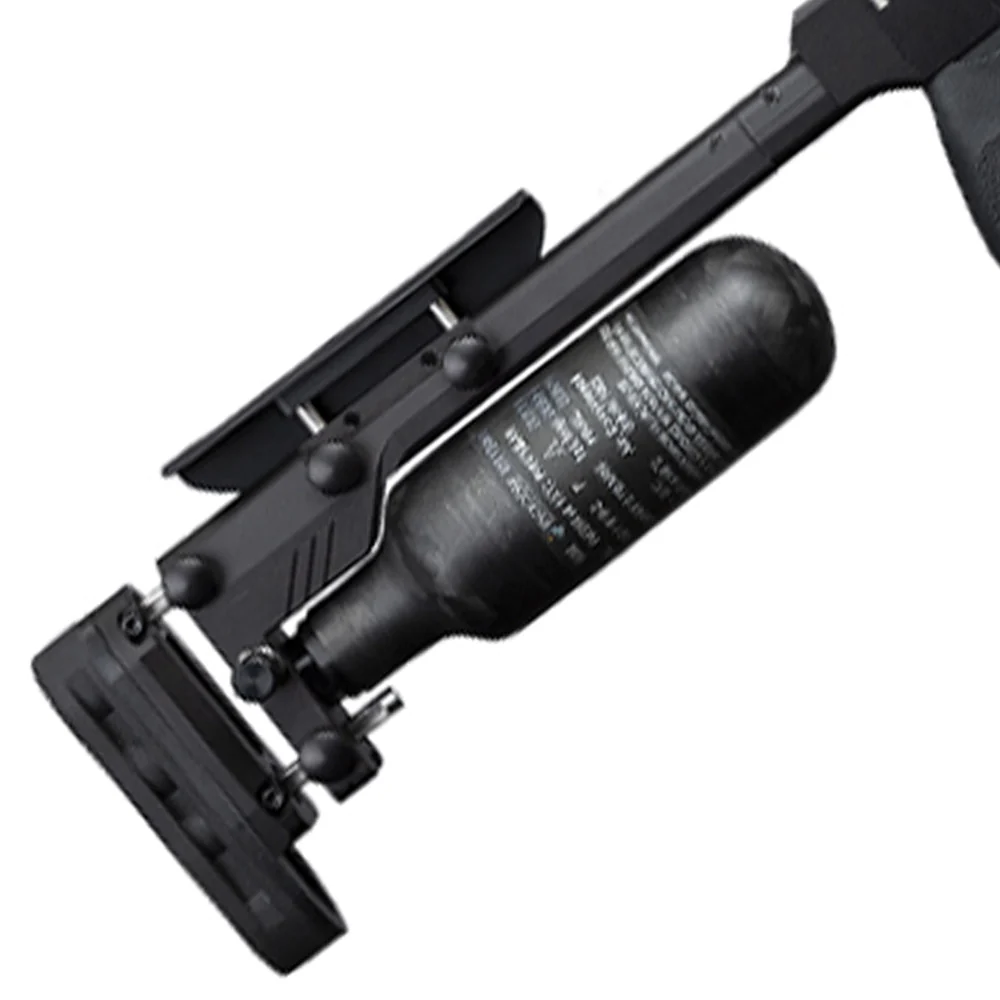
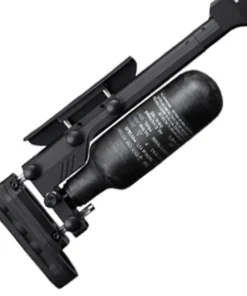
- 300 cc removable carbon-fibre air cylinder filled to 250 bar
- Rear Foster quick-disconnect charging port with dust cap
- Reversible ambidextrous sidelever
- Fully adjustable buttstock, cheek piece and match trigger
- 14.75-inch Arca rail with M-LOK sections and barricade block
- 20 MOA Picatinny optics rail
- Dual angled WIKA gauges for bottle and regulator pressure
- Zero-angle AR-style grip
Through these elements, a stiff, repeatable shooting platform is created.
Calibres, FAC Power and Shot Capacity
Multiple calibres are supported by the FX Panthera Black 700mm FAC so that different disciplines can be served. Specifically, .22, .25 and .30 configurations are commonly specified for FAC use. Maximum published energy figures (tungsten hammer) are reached as follows:
- Up to 96 ft/lbs (.22) with a 40 gr slug at approximately 1040 fps
- Up to 107 ft/lbs (.25) with a 55.5 gr slug at approximately 930 fps
- Up to 150 ft/lbs (.30) with a 70 gr slug at approximately 982 fps
Meanwhile, typical regulated shot counts at around 900 fps are recorded as:
- Approximately 90 shots in .22 with 22 gr hybrid slugs
- Approximately 70 shots in .25 with 26 gr hybrid slugs
- Approximately 40 shots in .30 with 44.5 gr hybrid slugs
Overall length is listed at 1245 mm (49 in) and unladen weight at 3.9 kg (8.55 lb). Therefore, a stable yet portable package is offered for prone, bench and supported positions.
Tuning, Ergonomics and Inclusive Fit
Fine adjustment is enabled by the Quick Tune System and the AMP MKII regulator. Consequently, hammer tension and regulator pressure can be matched to a chosen slug without tools being required in the field. Additionally, the match trigger blade can be rotated, raised or moved in reach. As a result, a comfortable release is obtained by shooters of varying hand size.
An inclusive shooting experience is further supported because the sidelever can be reversed and the cheek piece can be mounted for either-hand use. Likewise, length of pull and pad height can be altered so that a proper fit is achieved. Moreover, external M-LOK weights or internal barrel weights can be added so that balance can be customised for each user.
Practical Use Scenarios
Long-range target work is favoured by the FX Panthera Black 700mm FAC. Therefore, PRS-style stages, benchrest strings and extended-range hunting applications are all well served. Because the over-barrel plenum adds stiffness, low extreme spreads (often cited in the 3–4 fps range in manufacturer testing) can be realised when quality slugs are used. Subsequently, hold-over and wind calls become more predictable.
In the field, the Arca rail allows a bipod or tripod to be attached quickly. Meanwhile, the barricade block aids positional shooting. After a fill, dual gauges can be read without the rifle being rolled, so remaining pressure is monitored easily. Responsible use, local FAC requirements and safe handling practices must always be observed.
Why the FX Panthera Black 700mm FAC Belongs in a Serious Collection
A competition-oriented chassis, a slug-optimised barrel and a high-flow air system are combined in one platform. Hence, the FX Panthera Black 700mm FAC is positioned for shooters who demand repeatable FAC-level performance. Optics, slugs and a quality compressor or tank complete the system. Finally, the rifle can be specified and supported with matching FX accessories so that a fully tailored setup is obtained.
Ready-to-order configurations of the FX Panthera Black 700mm FAC are available for licensed buyers. Legal compliance, safe storage and proper training are required before any FAC air rifle is used.
Calibres, FAC Power and Accessories
A flexible FAC platform is created when several slug-oriented calibres are offered on the same 700 mm action. Consequently, projectile mass, magazine capacity and usable energy can be matched to target work, pest control or hunting where such use is lawfully permitted. Moreover, a deep-lid Side-Shot magazine and an enlarged Dynamic Block breech are fitted so that longer slugs can be fed reliably. Therefore, modern hybrid and monometal projectiles are accommodated without the action being redesigned for each calibre.
Available Calibres and Magazine Capacity
The most commonly specified FAC chamberings are .22 (5.5 mm), .25 (6.35 mm) and .30 (7.62 mm). Meanwhile, a .177 option is listed by the manufacturer for lower-power or training use, yet the 700 mm Superior Heavy STX liner is purpose-built around slug performance in the larger bores. As a result, magazine capacity is reduced as projectile diameter increases:
- Approximately 18 rounds in .22
- Approximately 16 rounds in .25
- Approximately 13 rounds in .30
Additionally, a magazine depth of about 13 mm (0.51 in) is provided so that slugs longer than conventional pellets can be seated. Thus, a single platform can be ordered in the calibre that best suits local game, range rules and FAC conditions. Inclusive practice means that calibre choice is guided by intended use and legal limits rather than by fashion alone.
FAC Context and Responsible Power Settings
A Firearms Certificate (or equivalent national authorisation) is required before this class of rifle may be possessed in many jurisdictions. Consequently, advertised peak energies must be treated as maximum laboratory figures, not as a factory default that is left untouched. Furthermore, regulator pressure and hammer-spring tension can be lowered so that the rifle remains inside the holder’s certified limit. Therefore, a chrono session after any tune change is strongly advised. In addition, secure storage, transport rules and insurance requirements must be observed by every owner, regardless of experience.
Published Power and Velocity Examples
High-power output is produced when the Magnum XL over-barrel plenum, the short-impulse valve and the 700 mm barrel are used together with a tungsten hammer. Published maximum examples are typically quoted as follows:
- Up to approximately 96 ft/lbs (about 130 J) in .22 with a 40 gr slug near 1040 fps
- Up to approximately 107 ft/lbs (about 145 J) in .25 with a 55.5 gr slug near 930 fps
- Up to approximately 150 ft/lbs (about 203 J) in .30 with a 70 gr slug near 982 fps
However, those peaks are reached only after the AMP MKII regulator and Quick Tune hammer are set for maximum flow. Meanwhile, more efficient everyday tunes near 900 fps are often preferred so that shot count and extreme spread can be preserved. Typical manufacturer examples at that velocity include roughly 90 shots in .22 with 22 gr hybrid slugs, 70 shots in .25 with 26 gr slugs, and 40 shots in .30 with 44.5 gr slugs from the 300 cc, 250 bar carbon-fibre cylinder.
Matching Slug Weight to Calibre and Discipline
Heavier slugs are generally favoured in the larger bores when wind drift must be reduced at long range. Consequently, .30 is frequently chosen for maximum energy and sectional density, while .22 is often retained for high shot count and flatter mid-range trajectories. In addition, .25 is widely regarded as a balanced compromise for mixed hunting and target use. Moreover, seating depth, ballistic coefficient and barrel-specific preference should be confirmed on paper before a hunt or match. Inclusive clubs commonly share chrono and group data so that newer FAC holders can avoid expensive trial-and-error.
Accessories That Complete the System
A bare action becomes a complete rifle only when optics, support and consumables are specified correctly. Therefore, the following categories are most often added after purchase.
Optics and mounting
A 20 MOA Picatinny rail is already fitted so that long-range elevation can be used without excessive turret travel. Consequently, a first-focal-plane scope with a mil or MOA reticle is commonly chosen. Furthermore, quality rings or a one-piece mount should be torque-checked so that zero is retained when the rifle is transported.
Support and balance
A 14.75-inch Arca rail with M-LOK sections and a barricade block is built into the forend. As a result, a bipod, tripod or bag rider can be attached quickly. Additionally, internal barrel weights and external M-LOK weights can be combined so that balance is shifted for prone, bench or standing positions.
Air supply and magazines
A rear Foster quick-disconnect and a removable 300 cc cylinder are supplied as standard. Meanwhile, a spare bottle or a dual-bottle kit can be added when long strings are planned. Extra deep-lid magazines should also be carried so that calibre-specific slugs are not mixed under time pressure.
Ammunition and tuning aids
Premium slugs matched to the chosen calibre remain the most important accessory. Moreover, a reliable chronograph, a torque wrench and a set of spare seals support safe, repeatable tunes. Hearing and eye protection must be used by every person on the firing point.
Choosing a Package That Converts Interest into Confidence
Calibre, FAC limit and accessory list should be decided together rather than in isolation. Consequently, a .22 setup with a mid-power regulator setting and a high-shot-count magazine may suit club league nights, while a .30 package with a heavier optic and extra bottle may be preferred for longer field work. Inclusive language applies here as well: every licensed shooter can be served when power is set legally, slugs are matched to the barrel, and support gear is chosen for the positions that will actually be used. A correctly specified combination of calibre, tune and accessories is the shortest path from unboxing to consistent groups.
FX Airguns, PCP Air Rifles, Hatsan Models and Modern Airgun Platforms
Modern airguns cover a wide range of platforms, from a basic pellet gun or BB gun to sophisticated regulated PCP airguns designed for target shooting, sporting applications, and long-range precision. Buyers researching an air rifle and air pistol collection will often encounter manufacturers such as FX and Hatsan because both companies offer extensive selections of air rifles, accessories, configurations, and caliber choices.
FX Airguns Sweden and the FX PCP Rifle Range
FX Airguns has become strongly associated with Swedish airgun engineering. Searches for fx airguns sweden, fx airguns sverige, fxairguns, and fx usa commonly lead enthusiasts toward the manufacturer’s extensive PCP lineup. In the American market, fx airguns usa is another widely searched phrase when people are researching available models, specifications, support, and accessories.
Among fx air rifles, the Impact family remains particularly recognizable. Searches frequently include fx impact, f x impact, fx impact m4, fx m4, impact m4 air rifle, and impact m4 500mm when comparing current configurations. The modular design philosophy associated with the Impact platform has helped make the fx air rifle range popular among shooters who appreciate adjustability and configurable PCP systems.
Earlier generations remain widely researched as well. The fx impact m3, impact m3, fx impact mk3, fx m3, and fx m3 airgun continue to attract attention from owners comparing generations or researching replacement components.
Caliber-specific searches include fx impact m3 .22cal air rifle, fx impact m3 .22cal air rifle. 600mm barrel, and the more general fx impact m3 air rifle. People comparing international pricing may also search fx impact m3 precio, fx impact m3 precio en usa, or fx impact m3 price before checking local regulations, specifications, and availability.
Beyond the Impact series, the FX catalog includes several distinctive designs. The fx leopard and fx leopard airgun are frequently researched alongside fx leopard .22 pcp specs by users interested in specifications and configuration details.
Other notable searches include fx drs, fx drs tactical, fx drs classic, and fx drs pro. These terms reflect interest in the different DRS configurations and their intended shooting styles.
The wider FX family also includes models such as the fx king, fx wildcat, fx panthera, and fx dreamline. Collectively, these platforms demonstrate the variety available to anyone researching a premium pcp air rifle, pellet rifle, or configurable precision air gun.
Some enthusiasts also search fx outdoors when researching outdoor shooting equipment and related products, while marketplaces and information sources such as guns.com may appear during broader online research.
Understanding Pellet Guns and PCP Air Rifles
A traditional pellet gun uses shaped pellets rather than conventional firearm ammunition. The broader term pellet guns can describe spring-powered, CO₂-powered, pneumatic, and PCP platforms.
A PCP air rifle stores compressed air inside a reservoir. This system can provide consistent pressure across multiple shots depending on the rifle’s regulator, reservoir capacity, caliber, and power configuration.
For shooters comparing ammunition sizes, .177 caliber remains one of the most common options. Larger configurations are also available, including the increasingly searched 30 cal air rifle category.
Frequently Asked Questions
What disciplines are best served by this 700 mm FAC platform?
Competition and extended-range field work are both served by a purpose-built slug rifle of this type. Consequently, precision rifle stages, benchrest strings and supported hunting positions can be undertaken with confidence when appropriate slugs and optics are fitted. Moreover, a stiff over-barrel plenum and a long Superior Heavy STX liner are combined so that consistency at distance is favoured. Therefore, hold-over and wind calls become more predictable once a stable zero has been established. In addition, an Arca rail and barricade block are provided so that positional shooting can be practised without extra adapters being required immediately.
Which calibres can be specified and how is magazine capacity arranged?
A range of popular FAC calibres is typically offered so that different projectile weights can be matched to intended use. Specifically, .22, .25 and .30 configurations are most often requested for high-power slug work. Meanwhile, magazine capacity is reduced as calibre increases because a deeper lid is used to accept longer projectiles. As a result, approximately eighteen rounds are commonly carried in .22, sixteen in .25 and thirteen in .30, subject to exact magazine specification. Furthermore, projectiles up to about 13 mm in length can be seated because an enlarged Dynamic Block breech is employed. Thus, modern heavy slugs are accommodated without feeding issues being introduced.
How is FAC power delivered and what energy figures are commonly quoted?
High-power output is produced when a short-impulse valve, a large plenum volume and a 700 mm barrel are used together. Consequently, published maximum figures with a tungsten hammer are often cited in the region of 96 ft/lbs in .22, 107 ft/lbs in .25 and 150 ft/lbs in .30, depending on slug weight and tune. However, those peaks are reached only after regulator pressure and hammer spring are correctly set. Therefore, a lower, more efficient setting is frequently preferred for everyday strings so that shot count and consistency can be preserved. In all cases, local licensing and energy limits must be respected before any FAC rifle is owned or used.
Why is a 700 mm barrel chosen instead of a shorter tube?
Additional dwell time and improved slug stabilisation are obtained when a 700 mm Superior Heavy STX liner is specified. Moreover, a carbon-fibre sleeve is fitted around that liner so that stiffness is increased and harmonic movement is reduced. As a result, long slugs are given a better chance of leaving the muzzle with a consistent spin and velocity. Additionally, the longer shroud and plenum assembly contribute extra rigidity along the barrel axis. Hence, this configuration is favoured when maximum energy and long-range accuracy are the priority, even though overall length and weight are increased compared with 500 mm or 600 mm variants.
How does the Dynamic Plenum improve shot-to-shot consistency?
A regulated volume of air is held around the barrel rather than in a separate block-mounted chamber. Consequently, a large, even supply is available at the valve the instant the trigger is released. Furthermore, the plenum itself acts as a stiffening sleeve, so barrel flex is reduced during the firing cycle. Therefore, extreme spreads on ten-shot strings are often reported as very low when quality slugs and a stable rest are used. In addition, plenum volume can be matched to calibre and power level so that efficiency is not wasted on an oversized or undersized chamber.
What role is played by the AMP MKII regulator?
Incoming bottle pressure is reduced to a chosen working pressure by a single, externally adjustable regulator. Meanwhile, that regulated pressure is displayed on its own angled gauge so that settings can be confirmed at a glance. As a result, the same plenum pressure can be maintained from the first shot to the last usable shot of a fill. Moreover, fine changes can be made in the field without the action being stripped. Thus, different slug weights can be accommodated by a simple regulator adjustment rather than a complete rebuild.
How many shots can reasonably be expected from a 300 cc fill?
Shot count is influenced by calibre, regulator setting, hammer tune and projectile weight. Nevertheless, manufacturer examples at around 900 fps commonly quote approximately ninety shots in .22 with 22 gr hybrid slugs, seventy shots in .25 with 26 gr slugs, and forty shots in .30 with 44.5 gr slugs. Additionally, the 300 cc carbon-fibre cylinder is filled to 250 bar through a rear Foster quick-disconnect. Therefore, a spare cylinder or a dual-bottle kit can be considered when longer sessions are planned. After each fill, both bottle and regulator gauges should be checked so that a safe and efficient starting pressure is confirmed.
Can left-handed shooters be accommodated without a special action?
An ambidextrous layout is provided from the factory. Consequently, the sidelever can be reversed to the left side of the rifle, and the cheek piece can be remounted for either-hand use. Furthermore, length of pull and recoil-pad height can be adjusted so that a proper weld is obtained. In addition, the zero-angle grip follows familiar AR-style geometry that many shooters already know. Hence, a dedicated left-hand action is not required for most users, although individual fit should still be verified before a long match or hunt.
Are pellets or slugs recommended for this platform?
The 600 mm and 700 mm versions are purpose-built around slug performance. Therefore, a Superior Heavy STX liner and a deep magazine lid are fitted so that longer, heavier projectiles can be used. While pellets can be fired, the barrel profile and plenum volume are optimised for slugs. As a result, the tightest groups and highest usable energy are typically recorded when quality slugs of appropriate weight are selected. Moreover, a consistent seating depth and a clean crown should be maintained so that accuracy is not lost.
How is the match trigger adjusted for different shooters?
Reach, height and blade angle can all be altered on the adjustable match trigger. Consequently, a short, crisp second stage can be set for bench work, or a slightly longer first stage can be preferred for field positions. Additionally, a Quick Tune hammer system is provided so that lock time and power can be balanced against trigger feel. Therefore, both competitive and hunting users can be served by the same action. Inclusive language is appropriate here: every shooter benefits when the trigger is fitted to the hand rather than the hand being forced to the trigger.
What mounting options are built into the forend and optics rail?
A 14.75-inch Arca rail with M-LOK sections is integrated into the forend, and a barricade block is placed near the breech. Meanwhile, a 20 MOA Picatinny rail is supplied for optics so that long-range elevation is available without excessive turret travel. Furthermore, internal barrel weights or external M-LOK weights can be added so that balance can be shifted toward the muzzle or the butt as required. Thus, bipods, bags, lights and data devices can be attached without aftermarket chassis work being needed immediately.
How should the rifle be filled and what safety checks are advised?
A rear Foster quick-disconnect is used with a compatible fill whip and a dust cap. First, the bottle gauge should be observed so that the cylinder is not overfilled beyond 250 bar. Next, the regulator gauge should be confirmed after a few settling shots. Additionally, the shroud and crown should be inspected so that no obstruction is present. Responsible ownership also requires that local FAC conditions, secure storage and eye protection are observed at all times. Inclusive practice means that every member of a club or household is trained in the same safe filling routine.
Is the platform suitable for hunting as well as target work?
A competition chassis does not prevent field use. Consequently, the same rigidity and energy that win matches can be applied to ethical pest control or hunting where air rifles are legally permitted. However, overall length of 1245 mm and a weight of about 3.9 kg should be considered when stalking through dense cover. Therefore, a sling, a compact optic and a practical slug load are often chosen for mixed use. After the hunt, the same tune can be returned to a target setting if dual-purpose ownership is desired.
What maintenance interval is typically followed?
Regular cleaning of the barrel, inspection of the o-rings and a check of regulator behaviour are recommended after each intensive session. Moreover, the carbon-fibre cylinder should be treated according to its test date and manufacturer guidance. In addition, the sidelever pivot and magazine lips should be kept free of grit. As a result, feeding reliability and velocity consistency are preserved. Professional service is advised whenever regulator drift, unusual valve noise or a sudden change in shot count is noticed.
Which accessories are most often added after purchase?
A quality high-magnification scope, a bipod or tripod, extra magazines, a spare 300 cc bottle and a set of slugs matched to the chosen calibre are the most common additions. Furthermore, M-LOK weights, a bag rider and a dual-bottle kit can be specified when match stages or long days afield are planned. Therefore, the rifle can be grown into a complete system rather than being used as a bare action. Conversion-focused note: a correctly specified optic and ammunition combination is usually the fastest route to the accuracy this platform is capable of delivering.
How loud is the rifle in typical FAC tunes?
A built-in shroud is fitted, yet FAC energy levels still produce a noticeable report. Consequently, the rifle is often described as medium in loudness rather than whisper-quiet. Additional moderators may be fitted where thread and local law allow. However, the primary design goal remains consistency and power rather than maximum suppression. Inclusive ranges and clubs will still require hearing protection for every person on the firing point.
What should be verified before a first range session?
Fill pressure, regulator setting, magazine seating, scope torque and a safe backstop must all be confirmed. Additionally, a few fouling shots should be fired so that the barrel and plenum settle. Meanwhile, local range rules and FAC paperwork should be carried. Thus, the first session can be devoted to grouping and zero rather than troubleshooting. Every new owner, regardless of experience with other brands, benefits from a methodical start.
Can the rifle be used by newer FAC holders or only by seasoned competitors?
A sophisticated platform is presented, yet the controls remain logical once the gauges and Quick Tune wheel are understood. Therefore, newer FAC holders can be successful if coaching, a rest and quality slugs are provided. At the same time, experienced competitors will find enough adjustment to extract match-winning consistency. Inclusive clubs often pair a new owner with a mentor for the first fills and zeroing sessions so that confidence is built safely.
How is balance customised for prone, bench or standing positions?
Internal weights under the shroud and external M-LOK weights on the forend can be combined. Consequently, the centre of gravity can be moved forward for prone stability or kept more central for offhand work. Furthermore, the adjustable butt pad and cheek piece allow head position to remain consistent when a heavy optic is mounted. As a result, the same rifle can be rebalanced between disciplines without a second chassis being purchased.
What legal points should never be overlooked?
Ownership, transport and use of an FAC air rifle are controlled by national and local law. Therefore, a valid certificate, secure storage and insurance where required must be in place before the rifle is collected. Moreover, energy figures quoted by manufacturers are maximums; the rifle must be set so that it remains within the limits of the holder’s certificate. Inclusive reminder: every shooter shares responsibility for public confidence in the sport, so paperwork and safe handling are part of the product experience, not an afterthought.
Some users accidentally search pallet gun when looking for pellet-powered equipment. Regardless of terminology, specifications such as energy output, caliber, barrel length, intended range, and local legal requirements should always be reviewed before use.
The practical range of air rifle platforms varies significantly. Pellet weight, velocity, environmental conditions, barrel design, optics, and shooter technique can all affect useful range and accuracy.
Hatsan Air Rifle and PCP Platforms
The hatsan air rifle lineup covers traditional spring-powered designs as well as modern PCP systems. Searches such as hatsanusa, hatsan usa, hatsan air guns, and hatsan pcp are commonly used by enthusiasts researching the company’s models.
One of the most recognizable platforms is the hatsan blitz. Search variations include hatsun blitz, hatzan blitz, hatsan blitz full automatic, hatsan blitz 30 cal, and hatsan blitz .30 cal. Specifications and legal classifications can vary by market, so owners should verify the rules applicable in their jurisdiction.
Another frequently researched model is the hatsan model 95, also searched as hatsan mod 95 and mod 95. This traditional air rifle platform remains familiar to shooters interested in conventional stock designs.
The hatsan 125 is another established model, while the hatsan 135 family attracts shooters researching powerful spring-piston platforms. Related searches include hatsan 135 vortex air rifle, hatsan 135 carnivore, and hatsan big bore carnivore rifle.
Hatsan Sortie, BullBoss and Bullpup Designs
Compact and semi-automatic PCP designs form another part of Hatsan’s catalog. The hatsan sortie is commonly researched alongside hatsan sortie tact, hatsan sortie tact semi-auto pcp, and hatsan sortie accessories.
Bullpup enthusiasts may encounter the hatsan bullboss, bullmaster, and hatsan hercules bully. Their compact layouts are designed to reduce overall length while maintaining useful barrel dimensions.
Other PCP models include the hatsan flash, hatsan flashpup qe, and hatsan invader. These rifles provide additional choices for people comparing conventional and bullpup PCP configurations.
Hatsan Hercules, Piledriver and Large-Caliber Platforms
For people researching larger airgun platforms, hatsan hercules and hatsan piledriver often appear in search results. Large-bore air rifles differ considerably from standard .177 and .22 pellet rifles in projectile size, power output, air consumption, and intended application.
The hatsan harpoon is associated with specialized projectile launching, while an arrow launcher represents another distinct air-powered category. Such equipment can be subject to different legal rules depending on location, so local regulations should be checked before ownership or use.
Additional Hatsan Models
The Hatsan catalog extends well beyond its best-known rifles. The hatsan airtact and hatsan airtact air rifle provide another entry point into the brand’s conventional rifle selection.
Other searches include hatsan zada, hatsan neutron star, hatsan factor rc, hatsan velox, and hatsan jet 2. Each platform serves a somewhat different role, making specifications such as caliber, reservoir capacity, operating system, barrel configuration, and overall dimensions important comparison points.
Shoppers researching discounted equipment may also encounter hatsan refurbished listings or broader searches for refurbished air rifles. Condition, warranty coverage, seals, regulators, reservoirs, and service history should be checked carefully when evaluating previously used or factory-refurbished equipment.
Airgun Optics, Pellets and Accessories
Accessories can significantly affect how an air rifle is configured. A compact 4×20 optic may suit basic shooting applications, while more advanced PCP rifles are frequently paired with adjustable optics.
Pellet choice also matters. Products such as h&n field target trophy bleifrei provide an option for shooters specifically researching lead-free projectile designs. Pellet diameter, weight, head size, and barrel compatibility should all be considered when evaluating accuracy.
Terms such as econ ii may also appear when researching airgun-related equipment and accessories. Compatibility should always be verified against the exact manufacturer, model, and specification rather than relying solely on a product name.
Comparing FX and Hatsan Air Guns
FX and Hatsan approach the modern air rifle market from different directions. FX is particularly well known for highly configurable PCP platforms such as the Impact, Panthera, Wildcat, Dreamline, Leopard, DRS, and King. Hatsan, meanwhile, maintains an exceptionally broad range spanning spring-powered rifles, PCP systems, bullpups, semi-automatic platforms, and larger-caliber airguns.
Whether researching an FX Impact M3, FX Impact M4, FX DRS, Hatsan Blitz, Hatsan Sortie, Hatsan Hercules, or another platform, specifications should be compared carefully. Caliber, operating pressure, reservoir capacity, barrel length, projectile compatibility, optics mounting, overall dimensions, energy output, and regional legal requirements can all influence which configuration is appropriate for a particular lawful sporting or target-shooting application.
Practical Use Scenarios
A long-barrel, high-power slug rifle is most useful when the shooting problem is distance, wind and repeatability rather than compact carry. Consequently, the following scenarios describe how such a platform is typically employed after a lawful FAC tune has been established. Inclusive practice is assumed throughout: every licensed shooter, regardless of stature or dominant hand, can apply the same sequence once the stock, lever and cheek piece have been fitted.
Scenario One: Supported Precision at a Club Range
A Saturday league card is often the first serious test after unboxing. Therefore, a stable bench or concrete bench-rest is selected so that shooter error can be separated from rifle behaviour. First, the 300 cc cylinder is filled to the marked working pressure and both gauges are confirmed. Next, a deep-lid magazine is loaded with a single slug weight that has already been chrono-tested. Meanwhile, a first-focal-plane optic on the inclined rail is focused at the intended distance, commonly 80 to 150 yards for initial grouping.
After two fouling shots, a five-shot group is fired from bags. As a result, vertical stringing can be read as a regulator or seating issue, while horizontal scatter is more often wind or trigger timing. Moreover, the Quick Tune wheel and AMP regulator can be nudged in small increments so that extreme spread is tightened without peak energy being chased. Consequently, a usable zero is obtained before the official card is started. Inclusive clubs frequently pair a newer FAC holder with an experienced marker so that gauge reading and fill discipline are learned together.
Scenario Two: Positional Stages and Barricade Work
Precision-rifle style stages reward a stiff forend and a predictable recoil impulse. Therefore, the integral Arca rail is used to lock a bipod or to hook a barricade block against timber or steel. Additionally, M-LOK weights can be added under the shroud so that the muzzle stays down after each shot. When the sidelever is run, the rifle is not lifted off the support; the action is cycled in place so that the sight picture returns quickly.
A typical stage might require ten shots from three positions inside a time limit. Consequently, extra magazines are pre-loaded and staged on the belt or bag. Furthermore, a lower regulator setting than the absolute FAC maximum is often chosen so that shot count lasts the course and the report remains manageable for nearby firing points. After the stage, both gauges are checked again because a long string can reveal whether the plenum volume is still feeding consistently. Inclusive squads rotate coaches so that left-handed and right-handed shooters receive the same positional advice.
Scenario Three: Extended-Range Paper and Steel
Once a short-range zero is trusted, distance is increased in measured steps. First, a dope card is built from 50-yard increments using the same slug lot. Meanwhile, temperature and barometric notes are recorded because FAC-level slugs still respond to air density. As a result, come-ups on the 20 MOA rail remain usable without the turret being wound to its mechanical stop.
At 200 yards and beyond, wind becomes the dominant variable. Therefore, a heavier slug in .25 or .30 is frequently selected so that drift is reduced. In addition, a rear bag or a tripod on the Arca rail is used so that the shooter is not fighting muscle tremor. After each string, the crown and shroud are inspected for debris, because a long session on grass ranges can introduce grit. Consequently, groups that open suddenly are treated as a cleanliness or seating issue before the tune is blamed.



Reviews
There are no reviews yet.