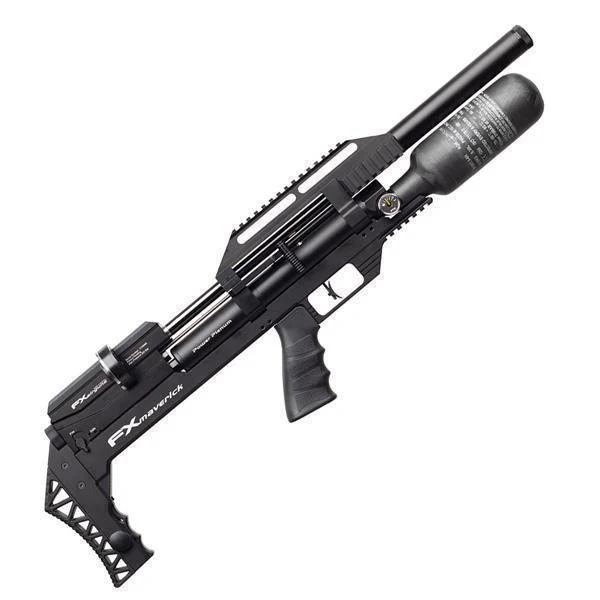
FX Maverick – Advanced PCP Air Rifle Built for Precision and Adaptability
The FX Maverick has been developed for shooters who expect exceptional adjustability, refined engineering, and reliable performance from a modern pre-charged pneumatic platform. Throughout its design, versatility has been prioritized, while the highly regarded technologies associated with FX Airguns have been incorporated into a streamlined and adaptable rifle.
From recreational target shooting to demanding precision sessions, a highly configurable shooting experience can be created with the FX Maverick. Fine adjustments can be made to its operating characteristics, while different configurations can be accommodated without requiring the rifle’s fundamental platform to be changed.
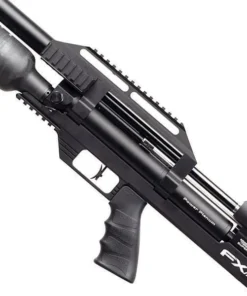
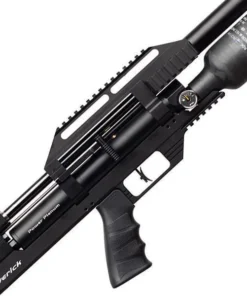
A distinctive tactical appearance has also been combined with a carefully balanced layout. Consequently, the rifle can be comfortably handled while a wide selection of compatible optics and accessories can be installed.
Why the FX Maverick Stands Out
Exceptional flexibility has been engineered into the FX Maverick. Instead of a fixed setup being imposed on the shooter, several performance parameters can be adjusted to suit different pellets, calibres, shooting environments, and regional configurations.
Moreover, FX’s established barrel technology has been incorporated so that precision can be supported across a variety of projectile types. Depending on the exact model and market specification, different barrel lengths and calibre options may be offered.
For shooters who appreciate detailed tuning, considerable flexibility is provided. However, the rifle can also be enjoyed without constant adjustment once an appropriate configuration has been established.
Key FX Maverick Features
Several important characteristics are brought together within the platform:
- Dual-regulator system is incorporated for refined pressure management.
- Externally adjustable power controls are provided on applicable configurations.
- FX Smooth Twist X barrel technology is used for precision-focused performance.
- Interchangeable barrel liner capability is supported within the FX barrel system.
- Large-capacity magazine system is provided for convenient multi-shot operation.
- High-capacity air storage is incorporated depending on the Maverick configuration.
- Picatinny-style accessory mounting areas are provided for compatible equipment.
- Adjustable trigger characteristics are offered for a more personalized shooting feel.
- Ambidextrous-friendly ergonomics are incorporated into the overall design.
- Multiple barrel lengths and configurations may be selected according to market availability.
Dual-Regulator Performance
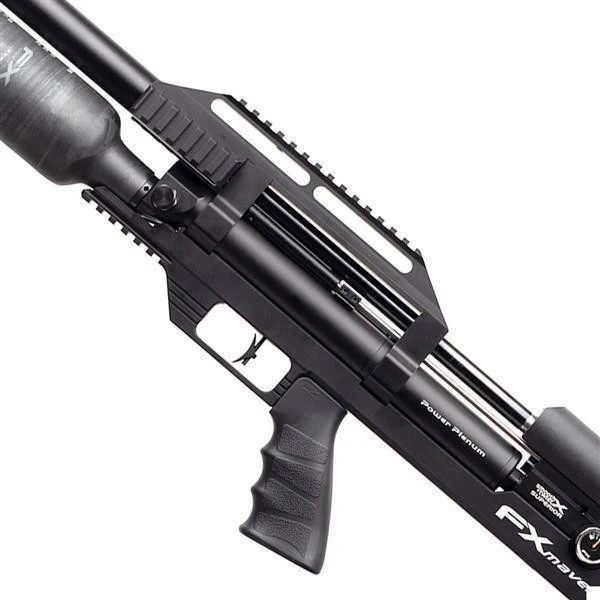
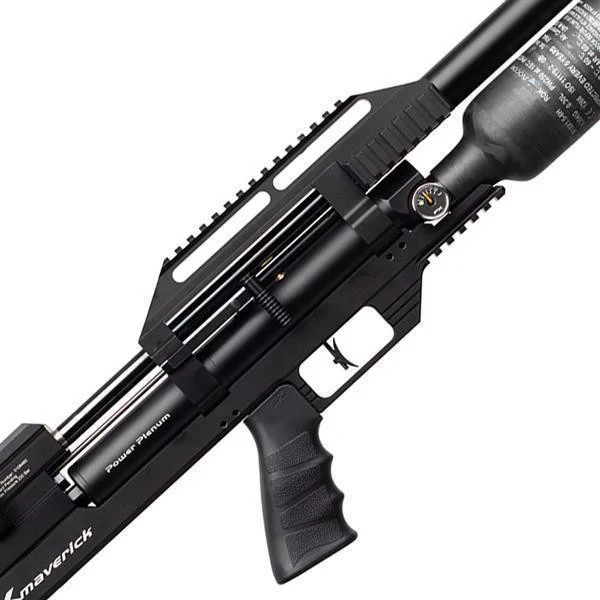
One of the defining features of the FX Maverick is represented by its dual-regulator arrangement. Through this system, air-pressure management is divided into stages before air is delivered to the firing system.
As a result, pressure consistency can be supported more effectively than would normally be expected from a simpler single-stage arrangement. When a suitable tune has been established, repeatability can therefore be maintained throughout a shooting session.
Additionally, unnecessary pressure demands can be reduced when the system has been configured correctly. This approach has been designed around efficiency, consistency, and adjustability rather than a one-setting-fits-all philosophy.
External Adjustability
A substantial level of adjustment has been made accessible to the shooter. Depending on the exact version, hammer-spring settings and other tuning controls can be altered without extensive disassembly.
Consequently, different ammunition preferences can be accommodated more easily. A configuration intended for economical target use can be approached differently from one optimized for another approved shooting application.
Any adjustment should, of course, be carried out in accordance with the manufacturer’s guidance and applicable local laws.
FX Smooth Twist X Barrel System
Accuracy potential is strongly influenced by barrel design, and considerable attention has been given to this area on the FX Maverick.
The FX Smooth Twist X system has been incorporated, allowing compatible barrel liners to be used within the broader FX platform. Because different projectile characteristics may respond differently to barrel specifications, additional flexibility can consequently be provided.
Rather than forcing every shooter into an identical setup, the system has been designed so that an appropriate configuration can be selected for the intended ammunition and shooting discipline.
Designed for Consistency
Stable projectile guidance is supported through the barrel system, while barrel harmonics and airflow can be optimized through appropriate configuration.
Furthermore, the Maverick platform can be paired with quality optics so that its precision capabilities can be used effectively at the range. When suitable ammunition is selected and the rifle is properly configured, consistent grouping can be pursued with confidence.
Practical Ergonomics and Tactical Styling
A modern tactical format has been adopted for the FX Maverick. However, the appearance has not been created purely for visual impact. Practical accessory mounting and shooter adaptability have also been considered throughout the design.
The rifle’s layout allows optics and selected accessories to be positioned according to individual preferences. Additionally, the grip and shoulder interface can be adapted around the needs of different shooters.
Because a balanced shooting position can contribute significantly to repeatable results, the rifle has been developed around stability as well as mechanical performance.
Accessory-Friendly Platform
A variety of shooting accessories can be incorporated into the system where legally permitted and mechanically compatible.
Depending on the chosen setup, the FX Maverick may be paired with:
- Quality telescopic sights
- Suitable scope mounts
- Bipods
- Shooting bags
- Compatible moderators where legally permitted
- Spare magazines
- FX barrel accessories
- Approved filling equipment
- Protective rifle cases
- Maintenance accessories
As a result, a complete shooting system can be assembled around the rifle rather than the shooter being restricted to a single fixed configuration.
High-Capacity Air System
A generous air supply has been incorporated into the Maverick platform. Depending on the exact variant, substantial bottle capacity can be provided so that extended shooting sessions can be supported between fills.
Efficiency can also be influenced by calibre, projectile weight, regulator settings, barrel length, operating pressure, and power configuration. Therefore, an exact shot count should always be interpreted according to the particular setup rather than treated as one universal figure.
Nevertheless, the platform has been designed with extended shooting sessions in mind.
Magazine-Fed Convenience
Multi-shot operation is provided through FX’s magazine system. Consequently, repeated manual loading of individual pellets between every shot is not required.
For range use, this arrangement can make shooting sessions considerably more convenient. A spare magazine can also be carried so that interruptions between strings can be minimized.
Smooth operation is supported when compatible ammunition is correctly loaded and the magazine is maintained appropriately.
Who Is the FX Maverick Designed For?
The FX Maverick can be considered by experienced recreational shooters, precision-oriented enthusiasts, and users who place considerable value on platform adjustability.
Instead of being designed around absolute simplicity, considerable tuning capability has been built into the rifle. Therefore, it can be especially attractive to shooters who enjoy refining their equipment and matching a rifle’s setup to particular ammunition.
At the same time, constant adjustment is not required. Once a reliable configuration has been established, it can simply be maintained and enjoyed.
Different FX Maverick Configurations
Several Maverick versions have been offered across different markets. Depending on availability, distinctions can be made through barrel length, overall dimensions, air capacity, calibre, stock configuration, and permitted energy output.
For that reason, the exact specification of the selected rifle should always be checked before purchase.
Availability may also vary according to national and regional airgun regulations.
Premium Engineering for Serious PCP Enthusiasts
Considerable engineering flexibility has been incorporated into the FX Maverick, while the familiar modular philosophy of FX Airguns has been retained.
Precision-focused barrel technology is provided, extensive adjustability is available, and a large air system has been integrated into a practical tactical platform. Furthermore, compatibility with a broad ecosystem of appropriate accessories allows the rifle to be personalized around different shooting requirements.
For shooters seeking a PCP platform that can be refined instead of simply accepted in one predetermined configuration, the Maverick offers a compelling combination of adaptability and modern engineering.
FX Maverick Product Highlights
- Precision-focused PCP platform
- FX Smooth Twist X barrel technology
- Dual-regulator architecture
- Adjustable performance characteristics
- Large-capacity magazine
- Generous onboard air storage
- Multiple calibre options depending on market
- Different barrel-length configurations available
- Tactical and ergonomic construction
- Optics and accessory compatibility
- Suitable for controlled recreational and precision target use
- Backed by established FX Airguns engineering
Discover the FX Maverick
With the FX Maverick, customization, consistency, and modern PCP engineering are brought together within one versatile platform. Rather than being limited to a rigid factory configuration, shooters are provided with the flexibility needed to build a setup around their preferred shooting style.
Whether precision target work is being enjoyed, equipment configurations are being explored, or a premium adjustable PCP platform is being sought, the Maverick has been engineered to provide a sophisticated shooting experience.
Before purchasing or configuring any version, local airgun legislation, calibre restrictions, licensing requirements, and permitted power limits should always be checked. When used responsibly and within applicable regulations, the FX Maverick can provide a refined and highly adaptable platform for the modern airgun enthusiast.
FX Airguns, PCP Air Rifles, Hatsan Models and Modern Airgun Platforms
Modern airguns cover a wide range of platforms, from a basic pellet gun or BB gun to sophisticated regulated PCP airguns designed for target shooting, sporting applications, and long-range precision. Buyers researching an air rifle and air pistol collection will often encounter manufacturers such as FX and Hatsan because both companies offer extensive selections of air rifles, accessories, configurations, and caliber choices.
FX Airguns Sweden and the FX PCP Rifle Range
FX Airguns has become strongly associated with Swedish airgun engineering. Searches for fx airguns sweden, fx airguns sverige, fxairguns, and fx usa commonly lead enthusiasts toward the manufacturer’s extensive PCP lineup. In the American market, fx airguns usa is another widely searched phrase when people are researching available models, specifications, support, and accessories.
Among fx air rifles, the Impact family remains particularly recognizable. Searches frequently include fx impact, f x impact, fx impact m4, fx m4, impact m4 air rifle, and impact m4 500mm when comparing current configurations. The modular design philosophy associated with the Impact platform has helped make the fx air rifle range popular among shooters who appreciate adjustability and configurable PCP systems.
Earlier generations remain widely researched as well. The fx impact m3, impact m3, fx impact mk3, fx m3, and fx m3 airgun continue to attract attention from owners comparing generations or researching replacement components.
Caliber-specific searches include fx impact m3 .22cal air rifle, fx impact m3 .22cal air rifle. 600mm barrel, and the more general fx impact m3 air rifle. People comparing international pricing may also search fx impact m3 precio, fx impact m3 precio en usa, or fx impact m3 price before checking local regulations, specifications, and availability.
Beyond the Impact series, the FX catalog includes several distinctive designs. The fx leopard and fx leopard airgun are frequently researched alongside fx leopard .22 pcp specs by users interested in specifications and configuration details.
Other notable searches include fx drs, fx drs tactical, fx drs classic, and fx drs pro. These terms reflect interest in the different DRS configurations and their intended shooting styles.
The wider FX family also includes models such as the fx king, fx wildcat, fx panthera, and fx dreamline. Collectively, these platforms demonstrate the variety available to anyone researching a premium pcp air rifle, pellet rifle, or configurable precision air gun.
Some enthusiasts also search fx outdoors when researching outdoor shooting equipment and related products, while marketplaces and information sources such as guns.com may appear during broader online research.
Understanding Pellet Guns and PCP Air Rifles
A traditional pellet gun uses shaped pellets rather than conventional firearm ammunition. The broader term pellet guns can describe spring-powered, CO₂-powered, pneumatic, and PCP platforms.
A PCP air rifle stores compressed air inside a reservoir. This system can provide consistent pressure across multiple shots depending on the rifle’s regulator, reservoir capacity, caliber, and power configuration.
For shooters comparing ammunition sizes, .177 caliber remains one of the most common options. Larger configurations are also available, including the increasingly searched 30 cal air rifle category.
Some users accidentally search pallet gun when looking for pellet-powered equipment. Regardless of terminology, specifications such as energy output, caliber, barrel length, intended range, and local legal requirements should always be reviewed before use.
The practical range of air rifle platforms varies significantly. Pellet weight, velocity, environmental conditions, barrel design, optics, and shooter technique can all affect useful range and accuracy.
Hatsan Air Rifle and PCP Platforms
The hatsan air rifle lineup covers traditional spring-powered designs as well as modern PCP systems. Searches such as hatsanusa, hatsan usa, hatsan air guns, and hatsan pcp are commonly used by enthusiasts researching the company’s models.
One of the most recognizable platforms is the hatsan blitz. Search variations include hatsun blitz, hatzan blitz, hatsan blitz full automatic, hatsan blitz 30 cal, and hatsan blitz .30 cal. Specifications and legal classifications can vary by market, so owners should verify the rules applicable in their jurisdiction.
Another frequently researched model is the hatsan model 95, also searched as hatsan mod 95 and mod 95. This traditional air rifle platform remains familiar to shooters interested in conventional stock designs.
The hatsan 125 is another established model, while the hatsan 135 family attracts shooters researching powerful spring-piston platforms. Related searches include hatsan 135 vortex air rifle, hatsan 135 carnivore, and hatsan big bore carnivore rifle.
Hatsan Sortie, BullBoss and Bullpup Designs
Compact and semi-automatic PCP designs form another part of Hatsan’s catalog. The hatsan sortie is commonly researched alongside hatsan sortie tact, hatsan sortie tact semi-auto pcp, and hatsan sortie accessories.
Bullpup enthusiasts may encounter the hatsan bullboss, bullmaster, and hatsan hercules bully. Their compact layouts are designed to reduce overall length while maintaining useful barrel dimensions.
Other PCP models include the hatsan flash, hatsan flashpup qe, and hatsan invader. These rifles provide additional choices for people comparing conventional and bullpup PCP configurations.
Hatsan Hercules, Piledriver and Large-Caliber Platforms
For people researching larger airgun platforms, hatsan hercules and hatsan piledriver often appear in search results. Large-bore air rifles differ considerably from standard .177 and .22 pellet rifles in projectile size, power output, air consumption, and intended application.
The hatsan harpoon is associated with specialized projectile launching, while an arrow launcher represents another distinct air-powered category. Such equipment can be subject to different legal rules depending on location, so local regulations should be checked before ownership or use.
Additional Hatsan Models
The Hatsan catalog extends well beyond its best-known rifles. The hatsan airtact and hatsan airtact air rifle provide another entry point into the brand’s conventional rifle selection.
Other searches include hatsan zada, hatsan neutron star, hatsan factor rc, hatsan velox, and hatsan jet 2. Each platform serves a somewhat different role, making specifications such as caliber, reservoir capacity, operating system, barrel configuration, and overall dimensions important comparison points.
Shoppers researching discounted equipment may also encounter hatsan refurbished listings or broader searches for refurbished air rifles. Condition, warranty coverage, seals, regulators, reservoirs, and service history should be checked carefully when evaluating previously used or factory-refurbished equipment.
Airgun Optics, Pellets and Accessories
Accessories can significantly affect how an air rifle is configured. A compact 4×20 optic may suit basic shooting applications, while more advanced PCP rifles are frequently paired with adjustable optics.
Pellet choice also matters. Products such as h&n field target trophy bleifrei provide an option for shooters specifically researching lead-free projectile designs. Pellet diameter, weight, head size, and barrel compatibility should all be considered when evaluating accuracy.
Terms such as econ ii may also appear when researching airgun-related equipment and accessories. Compatibility should always be verified against the exact manufacturer, model, and specification rather than relying solely on a product name.
Comparing FX and Hatsan Air Guns
FX and Hatsan approach the modern air rifle market from different directions. FX is particularly well known for highly configurable PCP platforms such as the Impact, Panthera, Wildcat, Dreamline, Leopard, DRS, and King. Hatsan, meanwhile, maintains an exceptionally broad range spanning spring-powered rifles, PCP systems, bullpups, semi-automatic platforms, and larger-caliber airguns.
Whether researching an FX Impact M3, FX Impact M4, FX DRS, Hatsan Blitz, Hatsan Sortie, Hatsan Hercules, or another platform, specifications should be compared carefully. Caliber, operating pressure, reservoir capacity, barrel length, projectile compatibility, optics mounting, overall dimensions, energy output, and regional legal requirements can all influence which configuration is appropriate for a particular lawful sporting or target-shooting application.
FX Maverick Calibres, FAC Power and Accessories
The FX Maverick has been designed around adaptability, and this flexibility is especially noticeable when calibre selection, FAC configurations, power management, and accessories are considered. Rather than forcing every shooter into one configuration, multiple options can be selected according to local legislation, intended use, ammunition preference, and shooting discipline.
FX currently notes that calibre availability varies according to the particular rifle and market. For the Maverick platform, the commonly associated calibre choices are .177, .22, .25, and .30. Therefore, an appropriate configuration can be selected for precision target shooting, recreational use, or other lawful applications.
FX Maverick .177 Calibre
The .177 calibre FX Maverick can be selected when a flatter trajectory, relatively light ammunition, and precision-oriented shooting characteristics are preferred. Because .177 pellets generally travel at comparatively high velocities, this calibre can be particularly appealing for controlled target shooting.
Furthermore, ammunition is widely available in numerous pellet weights and profiles. As a result, different combinations can be tested until a suitable setup is established.
Power output should always be matched to the legal requirements of the country in which the rifle will be used. Consequently, a restricted-power version may be supplied in some jurisdictions, while an FAC-rated configuration may be available elsewhere.
FX Maverick .22 Calibre
Among PCP enthusiasts, .22 calibre is frequently selected because a useful balance between projectile weight, trajectory, efficiency, and air consumption can be achieved.
With the FX Maverick’s adjustable platform, different .22 pellets can be evaluated while an appropriate tune is maintained. In addition, compatible slug-oriented configurations can be explored where legally permitted and where the rifle has been correctly configured.
Because the .22 version can be adapted across multiple shooting styles, it represents one of the platform’s most versatile calibre choices.
FX Maverick .25 Calibre
For shooters seeking a heavier projectile than .22 while retaining useful shot efficiency, .25 calibre can be considered.
Greater projectile mass can be supported, while the Maverick’s regulated pneumatic system allows consistent air delivery to be pursued. Consequently, this calibre is often associated with higher-energy configurations.
Nevertheless, exact output depends strongly on ammunition weight, pressure settings, barrel specification, and the particular rifle configuration. Therefore, one universal power figure should not be assumed for every Maverick.
FX Maverick .30 Calibre
At the larger end of the commonly available Maverick range, .30 calibre provides substantially heavier projectile options.
More air will generally be required for a higher-energy setup. Consequently, shot count can be lower than with smaller calibres when comparable bottle capacity is used.
However, considerable tuning flexibility can still be accessed. When correctly matched to suitable ammunition and configured within legal limits, the .30 Maverick can deliver the stable and consistent performance expected from a premium FX PCP platform.
FX Maverick FAC Power
The term FAC is commonly used in the UK airgun market to describe air rifles operating above the UK’s non-FAC rifle limit. Therefore, an FX Maverick advertised as an FAC version should not simply be interpreted as another trim level. Instead, it indicates that different licensing rules may apply.
Exact legislation varies considerably between countries. Consequently, buyers should confirm their local licensing, possession, transportation, and power-limit requirements before ordering an FAC configuration.
Importantly, the Maverick is a highly adjustable PCP. Power characteristics can be influenced by regulator settings, hammer-spring adjustment, calibre, projectile weight, barrel length, and other configuration variables. Any adjustment should be performed according to FX guidance and within the applicable legal limits.
For buyers comparing different listings, the advertised muzzle energy should therefore be checked rather than assuming that every rifle identified as an FX Maverick FAC produces identical output.
Adjustable Power System
A major attraction of the Maverick platform is its tunability. Instead of relying exclusively on an internal fixed-power setup, externally accessible adjustment systems are provided.
Through appropriate tuning, the rifle can be matched more closely to a particular projectile. However, adjustments should be carried out systematically rather than simply maximizing every setting.
Consistency, accuracy, air efficiency, and legal compliance should be prioritized together.
FX also offers a dedicated Maverick/Wildcat MkIII Slug Power Kit, identified by FX as article number 20396. The kit is intended to modify airflow and hammer characteristics for compatible higher-demand projectile configurations.
Power Depends on the Configuration
Actual muzzle energy cannot responsibly be represented by one figure for every FX Maverick. Several factors must be considered:
- Calibre selected
- Pellet or slug weight
- Barrel length
- Regulator configuration
- Hammer-spring setting
- Valve and airflow configuration
- Local-market power restriction
- Individual ammunition characteristics
For this reason, the specification supplied with the particular rifle should always be used when comparing power levels.
FX Maverick Accessories
A wide accessory ecosystem can be used around the FX Maverick, allowing the rifle to be personalized for different shooting environments.
FX Maverick Magazine
Additional magazines can be useful when longer range sessions are planned. FX currently lists its Mega Magazine as compatible with the Maverick using the original-style lid. The listed capacity is 22 rounds in .177, 18 in .22, 16 in .25, and 13 in .30.
Therefore, spare magazines can be prepared in advance so that shooting sessions can be conducted with fewer interruptions.
Optics and Scope Mounts
A quality riflescope can be installed according to the intended shooting distance and discipline. Suitable mounts should be selected for the rifle’s rail system, while adequate clearance should be maintained around the magazine and action.
Depending on the application, accessories can include:
- Variable-magnification riflescope
- Compatible scope rings or mounts
- Scope level
- Sunshade
- Lens covers
- Rangefinding equipment
Bipods and Shooting Supports
A compatible bipod can also be fitted for supported shooting. Consequently, improved stability can be achieved when the rifle is being used from a bench or supported field position.
Alternatively, front and rear shooting bags can be used where a more traditional support arrangement is preferred.
Barrel and Ammunition Accessories
The FX barrel concept has been developed around interchangeable components and ammunition optimization. Suitable barrel-related components can therefore be selected according to the particular Maverick generation and configuration.
Because FX continuously develops its barrel systems, compatibility should always be checked against the rifle’s exact model and serial specification rather than assuming that every current FX barrel kit fits an older Maverick directly.
Filling Equipment
Because the Maverick is a PCP air rifle, an appropriate high-pressure air source is required.
Common filling accessories include:
- PCP compressor
- High-pressure air cylinder
- Compatible filling hose
- Foster-style filling connector where applicable
- Pressure-rated fittings
- Replacement seals and O-rings
Only equipment rated for the required working pressure should be used.
Maintenance Accessories
Routine maintenance can help keep the rifle operating consistently. Suitable accessories may include approved lubricants, barrel-cleaning equipment, replacement seals, and basic service components.
FX currently lists a dedicated Wildcat MKIII/Maverick service kit, article number 9126, containing commonly required seals and service parts.
Choosing the Right FX Maverick Setup
The ideal FX Maverick calibre, FAC power configuration, and accessory package should ultimately be selected around the shooter’s intended use rather than maximum specifications alone.
A .177 or .22 configuration may suit precision-focused recreational shooting, while .25 and .30 variants can provide access to heavier projectile options where they are appropriate and lawful. Meanwhile, FAC configurations provide greater energy potential but can also involve additional licensing requirements.
By combining the appropriate calibre with quality optics, compatible magazines, reliable filling equipment, stable shooting supports, and manufacturer-approved components, the FX Maverick can be configured as a versatile premium PCP platform while remaining tailored to the needs of its individual user.
Frequently Asked Questions
What type of air rifle is this?
It is a pre-charged pneumatic, or PCP, air rifle that has been designed around adjustability, regulated air delivery, modularity, and precision shooting. Instead of using a spring-powered mechanism, compressed air is stored within the rifle and released in a controlled manner when a shot is fired.
Because regulated air delivery is used, consistent shot-to-shot performance can be supported. Furthermore, a large number of adjustments can be made so the rifle can be adapted to different ammunition types, shooting preferences, and legal power limits.
Which calibres are available?
Several calibre options can be encountered depending on the version and the market in which the rifle is supplied. Common choices include .177, .22, .25, and .30 calibre.
Each calibre provides different characteristics. For example, .177 is generally selected when a flatter trajectory and lighter ammunition are preferred. Meanwhile, .22 provides a useful balance between projectile weight and air efficiency. Heavier projectile options are provided by .25 and .30 calibre versions.
Availability should always be confirmed with the seller because not every calibre is offered in every country or configuration.
Is the rifle available in FAC versions?
Yes, higher-powered configurations may be supplied in markets where they are legally permitted. In the United Kingdom, the term FAC is commonly associated with air rifles that exceed the legal non-FAC energy threshold and therefore require the appropriate Firearm Certificate.
However, regulations differ considerably between countries. Consequently, buyers should confirm their local licensing, possession, transportation, and energy-limit requirements before purchasing.
The exact power specification should also be checked on the individual rifle rather than being assumed from the model name alone.
Can the power be adjusted?
Power-related characteristics can be adjusted on appropriately configured versions. Several variables may influence performance, including hammer-spring tension, regulator settings, barrel configuration, projectile weight, and other system parameters.
Nevertheless, greater power should not automatically be regarded as better performance. Accuracy, efficiency, consistency, and legal compliance should all be considered when a suitable setting is chosen.
Any significant adjustments should be performed in accordance with manufacturer guidance.
What is a dual-regulator system?
A dual-regulator arrangement manages compressed air through two regulated pressure stages before it reaches the firing system.
Through this design, more controlled pressure management can be achieved. As a result, stable performance can be supported over an extended shot string when the rifle is correctly configured.
For shooters interested in tuning, the system can also provide greater flexibility. However, adjustments should be made carefully because changing one setting can affect other aspects of the rifle’s behavior.
Is it suitable for beginners?
It can be used by a responsible beginner who has received appropriate instruction, although the platform is generally more sophisticated than a basic entry-level air rifle.
Many adjustment options are provided, and those controls can initially appear complicated to someone who has never used a regulated PCP system.
For a new shooter, it is usually preferable for the rifle to be left in a stable factory or professionally established configuration while basic shooting technique is learned. More advanced tuning can then be explored gradually.
Is it suitable for experienced shooters?
Yes. Considerable adjustability makes the platform particularly attractive to experienced PCP enthusiasts.
Different ammunition types can be tested, while power characteristics and other settings can be refined within safe and lawful limits. Furthermore, the modular barrel concept and broad accessory compatibility allow the rifle to be adapted to different shooting disciplines.
Experienced shooters who enjoy equipment optimization may therefore appreciate the additional flexibility.
What kind of ammunition can be used?
Appropriate airgun pellets in the correct calibre can be used. Certain configurations may also be compatible with suitable airgun slugs when the barrel and rifle setup are designed for them.
Nevertheless, every projectile will not perform equally well.
Different weights, diameters, profiles, and manufacturing tolerances can produce different results. Consequently, several suitable ammunition options may need to be tested before the most consistent combination is identified.
Only ammunition specifically designed for airguns should be used.
Are pellets or slugs better?
Neither option can universally be described as better because performance depends on the rifle configuration, shooting distance, barrel setup, and intended application.
Traditional diabolo pellets can provide excellent accuracy and are widely used for recreational and precision shooting. Additionally, they can be relatively air-efficient.
Slugs have a different projectile design and may be preferred in certain properly configured higher-energy applications. However, they often require a suitable barrel, appropriate power level, and careful tuning.
Legal requirements should also be considered before selecting ammunition for a particular application.
How accurate is the rifle?
A high level of precision can be achieved when quality ammunition, proper setup, stable shooting technique, and suitable environmental conditions are combined.
However, accuracy cannot be defined by the rifle alone. Pellet selection, barrel cleanliness, optic quality, shooter technique, wind conditions, regulator setup, and equipment stability can all influence group size.
For this reason, ammunition testing is often worthwhile. Once an appropriate projectile has been identified, repeatable results can be pursued more effectively.
What barrel technology is used?
A replaceable-liner barrel concept is incorporated into the platform. Through this approach, certain barrel components can be changed or optimized without requiring an entirely different rifle.
This system has been developed to provide greater flexibility when different projectiles or calibre arrangements are being considered.
Because component compatibility can vary between model generations, barrel lengths, and calibre configurations, the exact part number should always be checked before replacement components are purchased.
Can the calibre be changed?
Calibre conversion may be possible when the correct compatible components are installed.
A conversion can require the appropriate barrel or liner, probe, magazine, and other calibre-specific parts depending on the version.
However, a conversion should not be attempted simply by inserting different ammunition into the rifle. The complete setup must be mechanically compatible and legally permitted.
Manufacturer-approved parts and instructions should therefore be followed.
What accessories can be fitted?
A broad range of compatible accessories can be used depending on the shooting setup.
Common choices include:
- Telescopic sights
- Appropriate scope mounts
- Bipods
- Shooting bags
- Spare magazines
- Gun cases
- Optic covers
- PCP filling equipment
- Cleaning equipment
- Manufacturer-approved replacement parts
- Compatible moderators where legally permitted
Accessories should always be selected according to the rifle’s mounting system and the laws applicable in the shooter’s location.
Does it come with a scope?
A scope is not automatically included with every package. Some retailers sell the rifle by itself, while others create packages containing optics, mounts, filling equipment, or additional accessories.
Therefore, the product listing should be checked carefully before an order is placed.
Purchasers should not assume that accessories shown in promotional photographs are included unless they are specifically listed in the package contents.
What type of scope works well?
A quality airgun-compatible optic can be selected according to the intended shooting distance and discipline.
For recreational range shooting, moderate magnification may be sufficient. In contrast, precision-focused shooting may benefit from additional magnification, adjustable parallax, a suitable reticle, and clearly defined turret adjustments.
The scope should also be installed using compatible mounts and positioned to provide comfortable eye relief.
Can a bipod be fitted?
Yes, an appropriate bipod can generally be installed using a compatible mounting point or accessory interface.
A bipod can be especially useful during supported target shooting because a more stable front support can be achieved.
However, a bipod should be fitted correctly and should not interfere with other components. The mounting hardware should also be checked regularly to ensure that it remains secure.
How is the air cylinder filled?
The air system is filled using appropriately rated high-pressure equipment.
Common options include a PCP compressor or a certified high-pressure air cylinder. A suitable filling hose and the correct connector are also required.
Only clean, dry compressed air should be used. Oxygen, industrial gases, or unsuitable compressed-gas sources should never be substituted.
The manufacturer’s specified maximum fill pressure must also be respected.
Can a hand pump be used?
A compatible high-pressure PCP hand pump may technically be used with some setups. However, filling a large-capacity air reservoir manually can require significant effort.
For regular use, a suitable compressor or high-pressure air cylinder may therefore be more convenient.
Regardless of the filling method, the equipment must be pressure-rated for PCP use and kept clean and properly maintained.
How many shots can be fired from one fill?
Shot count can vary substantially.
Factors such as calibre, projectile weight, barrel length, regulator pressure, hammer setting, reservoir capacity, and selected energy level can all affect air consumption.
For example, a lower-energy setup may generally provide more shots than a higher-energy configuration using a heavy projectile.
Consequently, one universal shot-count figure should not be applied to every rifle. The most accurate estimate will be obtained from the specifications of the exact version being considered.
Does the rifle use a magazine?
Yes, multi-shot magazine operation is supported.
A magazine allows several projectiles to be loaded in advance, which can make range sessions more convenient. Spare magazines can also be useful when longer sessions are planned.
The correct magazine must be selected for the rifle’s calibre and generation.
Can it be loaded one shot at a time?
Depending on the configuration and available accessories, single-shot loading solutions may be used by shooters who prefer manually loading each projectile.
Single-shot loading can be useful during certain types of precision testing because each pellet can be handled individually.
However, compatibility should be confirmed before a single-shot tray or loading accessory is purchased.
Is the trigger adjustable?
Trigger adjustment is available within the design, allowing aspects of trigger feel to be tailored within the manufacturer’s recommended parameters.
A properly adjusted trigger can help provide a predictable release.
Nevertheless, trigger mechanisms are safety-critical components. Excessively light or improperly performed adjustments should be avoided. If significant trigger work is required, professional assistance should be considered.
Is the rifle loud?
Sound level depends on calibre, power configuration, ammunition, barrel length, and other factors.
Higher-energy versions may produce more noticeable discharge noise than restricted-power configurations.
Where legally permitted, compatible sound-moderating equipment may be available. Local regulations should always be checked because moderators can be regulated differently from one jurisdiction to another.
Is regular maintenance required?
Routine maintenance is recommended.
External surfaces should be kept clean and dry, while appropriate attention should be given to seals, fittings, the barrel, and filling components. Only lubricants approved for PCP equipment should be used.
Importantly, excessive lubrication should be avoided because incorrect substances can damage seals or contaminate the high-pressure system.
Major internal servicing should be completed according to manufacturer recommendations.
How should the rifle be stored?
The rifle should be unloaded, depressurized only when specifically required by the manufacturer’s storage guidance, and secured against unauthorized access.
A dry environment should be used, while prolonged exposure to moisture should be avoided.
A suitable gun case or secured storage system can help protect both the rifle and optic. Local laws concerning airgun storage should also be followed.
Is it suitable for target shooting?
Yes. Precision target shooting is one of the applications for which the platform can be configured effectively.
The regulated action, adjustable setup, optics compatibility, and stable shooting format can all support controlled target sessions.
For the best results, appropriate ammunition should be tested and the rifle should be configured consistently rather than frequently altered between shooting sessions.
What should be checked before purchasing?
The exact configuration should be confirmed before an order is finalized.
Buyers should check:
- Calibre
- Barrel length
- Power specification
- Local licensing requirements
- Included magazine
- Air-cylinder configuration
- Included accessories
- Scope compatibility
- Filling connector requirements
- Warranty coverage
- Spare-part availability
By confirming these details before purchase, the correct version can be selected and unexpected compatibility issues can be reduced.
Practical Use Scenarios
A modern adjustable PCP platform becomes especially valuable when it can be adapted to real shooting situations rather than being limited to a single purpose. In practical use, this type of rifle can be configured around range work, precision practice, controlled recreational shooting, equipment testing, and other lawful airgun activities. Because the system combines regulated air delivery, adjustable settings, modular components, and accessory compatibility, different shooting environments can be approached with a setup that feels appropriate rather than compromised.
Precision Target Shooting at the Range
One of the most natural applications is precision target shooting. On a controlled range, consistency is extremely important because small variations in ammunition, pressure, trigger control, or rifle support can affect group size.
A regulated PCP system can be particularly useful in this environment because air is delivered in a more controlled manner from shot to shot. Consequently, once the rifle has been properly configured, the shooter can concentrate more heavily on technique.
During a typical range session, the rifle can be rested on a front bag, bipod, or bench support. A rear bag may also be added when maximum stability is desired. From this position, ammunition testing can be carried out carefully.
Different pellet weights can be compared by firing structured groups under similar conditions. Rather than changing several settings at once, one variable can be adjusted at a time. In this way, useful information can be collected about how a particular projectile performs.
Additionally, a quality optic can be zeroed precisely for the intended distance. Once the zero has been confirmed, repeatability can be evaluated over a longer shooting session.
For users who enjoy technical shooting, this process can become a major part of the experience.
Recreational Backyard Shooting Where Legal
In locations where private-property airgun shooting is lawful and a safe backstop is available, the rifle can also be used for controlled recreational target practice.
This type of environment usually favors a practical and repeatable setup rather than maximum power. A moderate configuration can often provide more than enough performance for paper targets, reactive targets, and basic accuracy exercises.
Before any shooting begins, the area should be inspected carefully. A proper backstop must be capable of stopping the selected ammunition safely, and no people, animals, roads, or neighboring property should be located within the possible line of fire.
Once a safe environment has been established, short practice sessions can be used to improve trigger control, sight alignment, breathing, and follow-through.
Because multi-shot magazines are available, several targets can be engaged without repeatedly loading individual pellets. However, the rifle should still be handled with the same care as any other projectile-firing platform.
Ammunition Testing and Pellet Selection
Another important use scenario involves ammunition testing.
Even high-quality rifles can show noticeable preferences for certain projectile weights, shapes, or manufacturing tolerances. Therefore, several types of suitable ammunition may be tested before a preferred option is selected.
A useful testing session can begin with the rifle being filled to a consistent pressure and allowed to stabilize. Several five-shot or ten-shot groups can then be fired with one ammunition type before another is tested.
Environmental conditions should be kept as consistent as possible.
For example, shooting during strong changing winds can make it difficult to determine whether a wider group was caused by ammunition or by weather. Therefore, calm conditions or an indoor range can be beneficial during detailed testing.
Once a consistent projectile has been identified, future tuning can be based around that ammunition rather than constantly changing variables.
Chronograph Testing and Performance Monitoring
A chronograph can be useful when the rifle is being evaluated for consistency and legal compliance.
By recording projectile velocity, the shooter can observe whether the system is delivering stable performance over a string of shots. Significant velocity variation may indicate that ammunition, pressure settings, seals, fill pressure, or other variables should be checked.
Chronograph testing can also help confirm that a rifle remains within applicable local power limits.
This is particularly important in jurisdictions where airgun energy is regulated.
Instead of relying on assumptions, actual performance can be measured with the chosen projectile. Records can then be maintained so that changes in performance over time can be identified.
For technically minded shooters, a simple shooting log can be very useful. Information such as pellet weight, velocity, fill pressure, group size, weather conditions, and shot count can be recorded after each session.
Over time, this information can reveal patterns that would otherwise be difficult to notice.
Benchrest Shooting
Benchrest-style shooting is another environment where the platform can be used effectively.
In this scenario, maximum stability is normally pursued. The rifle may be supported by a bipod or front rest, while a rear bag is used to control elevation and movement.
The shooter can then focus on small aiming corrections and precise trigger release.
Because movement is reduced, ammunition and rifle performance can be evaluated more clearly than during unsupported shooting.
This makes bench shooting useful not only for competition-style practice but also for zero confirmation, scope testing, and ammunition comparison.
When higher magnification optics are used, parallax should also be adjusted properly for the shooting distance. Incorrect parallax settings can create apparent reticle movement and reduce practical accuracy.
Supported Field-Position Practice
Not every shooting session takes place from a bench.
Supported field positions can therefore be practiced using a bipod, shooting sticks, a bag, or a stable natural support where appropriate and lawful.
The purpose of this type of training is not maximum mechanical precision. Instead, the shooter can learn how body position, support height, trigger control, and breathing affect practical accuracy.
For example, shooting from a seated position with support may feel very different from shooting from a bench.
Likewise, a kneeling or standing position introduces more movement. Practicing these variations can help develop a better understanding of personal shooting technique.
A lighter accessory setup may be preferred when mobility matters, while a heavier bench-oriented configuration may be selected when stability is the priority.
Scope Zeroing and Optic Setup
A new optic should be zeroed before serious use.
The process usually begins at a relatively short, controlled distance so that initial point of impact can be confirmed safely. Once the rifle is striking close to the desired point, the target distance can be increased.
Turret adjustments can then be made until the point of aim and point of impact correspond at the selected zero distance.
Afterward, several confirmation groups should be fired rather than relying on a single shot.
Scope position should also be checked carefully.
Eye relief should remain comfortable, and the reticle should appear level when the rifle is held naturally. Mounting screws should be tightened according to the manufacturer’s recommendations.
Once the optic has been correctly installed, its zero should be checked periodically, especially after transport.
Air Efficiency Testing
PCP users often want to know how many consistent shots can be obtained from one fill.
A practical efficiency test can therefore be performed by filling the rifle to the recommended pressure and recording shots until performance begins to fall outside the preferred range.
The exact result can vary considerably depending on calibre, projectile weight, regulator settings, barrel length, and energy level.
For this reason, published shot counts should be treated as general guidance rather than guaranteed figures for every setup.
A personal test can provide much more useful information.
For example, a shooter may discover that the rifle provides a certain number of highly consistent shots before a refill becomes desirable. Future shooting sessions can then be planned around this known performance window.





Reviews
There are no reviews yet.