Air Arms MPR Sporter – Precision-Driven PCP Air Rifle for Target Shooting
The Air Arms MPR Sporter has been developed for shooters who demand dependable accuracy, refined handling, and competition-inspired performance from a well-balanced pre-charged pneumatic air rifle. Designed with sporting target disciplines in mind, this highly capable rifle combines proven Air Arms engineering with an ergonomic stock, an accurate barrel system, and a highly controllable trigger arrangement.
Whether structured training sessions are being completed, competitive targets are being engaged, or shooting fundamentals are being developed, consistent performance can be achieved with the Air Arms MPR Sporter. Because stability has been prioritized throughout the platform, precise shot placement can be encouraged without making the rifle unnecessarily complicated to operate.
Furthermore, the design makes the rifle particularly attractive to shooters progressing toward more serious target shooting. High-quality construction is provided, while a practical sporting configuration is retained. Consequently, the rifle can be comfortably appreciated by developing shooters and experienced marksmen alike.
Air Arms MPR Sporter Built for Consistent Target Performance
Accuracy is naturally one of the most important considerations when a dedicated target rifle is being selected. With the Air Arms MPR Sporter, a stable shooting platform has been created so that repeatable technique can be developed over time.
A precision barrel system is paired with Air Arms’ established PCP technology, allowing pellets to be delivered consistently toward the target. Because recoil associated with conventional spring-powered rifles is largely eliminated by the pre-charged pneumatic system, sight alignment can be maintained more easily during each shot.
Additionally, a smoother shooting cycle can be experienced. Less movement is transferred through the rifle when it is fired, and therefore greater attention can be given to breathing, trigger control, follow-through, and sight picture.
For competitive and recreational target shooters, those characteristics can make a meaningful difference.
Refined Trigger Control
A quality target rifle must allow the shot to be released without unnecessary disturbance. For that reason, considerable importance has been placed on the trigger system.
A refined trigger arrangement is provided on the Air Arms MPR Sporter, allowing controlled pressure to be applied before each shot is released. As a result, improved consistency can be achieved when correct shooting technique is used.
Rather than fighting against a heavy or unpredictable trigger pull, the shooter can remain focused on the target.
Moreover, consistent trigger operation can assist newer target shooters while their technique is being developed. Experienced users can also appreciate the additional control offered during demanding precision sessions.
Ergonomic Sporter Stock for Better Rifle Control
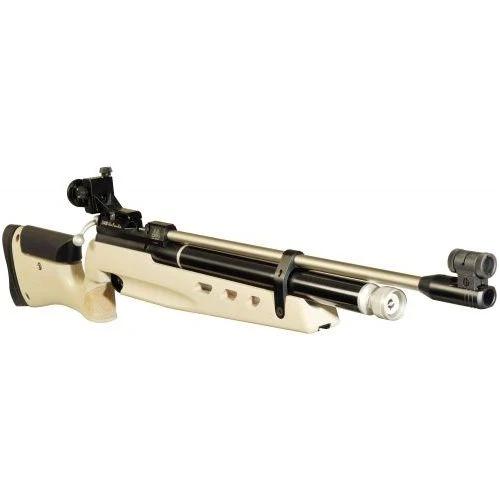
Comfort and stability are closely linked to practical accuracy. Therefore, the stock of the Air Arms MPR Sporter has been shaped to provide a supportive and controlled shooting position.
The rifle can be held naturally while the trigger hand, supporting hand, shoulder, and cheek position are brought into alignment. Consequently, unnecessary movement can be reduced during the aiming process.
Good shooting posture can also be maintained more effectively during longer practice sessions. This becomes particularly valuable when multiple strings are being fired during training or competition.
The sporter-style configuration provides another advantage. Although target-oriented engineering is incorporated, an excessively specialized appearance is avoided. Therefore, a balance between competition performance and conventional rifle handling is achieved.
Designed Around Shooter Stability
Repeatable positioning is essential whenever tight groups are being pursued.
Through careful stock geometry, the Air Arms MPR Sporter allows the rifle to be brought into a familiar position shot after shot. When the same head position, shoulder contact, and grip can be repeated consistently, variations in point of impact can be reduced.
Moreover, greater confidence can gradually be developed because less concentration must be spent correcting awkward rifle positioning.
Instead, attention can remain where it belongs: on the target.
Pre-Charged Pneumatic Efficiency
The PCP operating system is another major strength of the rifle.
Compressed air is stored within the rifle and is used to propel each pellet when the trigger is operated. Because energy delivery can be managed efficiently, smooth firing characteristics are produced.
Unlike traditional spring-powered designs, no large internal spring must suddenly move forward during the firing cycle. Therefore, recoil and mechanical disturbance can be significantly reduced.
As a result, several practical advantages are provided:
- Smooth PCP firing characteristics
- Excellent potential for consistent accuracy
- Reduced firing movement
- Comfortable target-shooting operation
- Reliable shot-to-shot performance
- Competition-inspired handling
- Quality Air Arms construction
- Ergonomic sporter stock design
- Precise trigger control
- Suitable platform for skill development
These qualities make the rifle highly relevant to shooters who value repeatability rather than excessive power.
Air Arms MPR Sporter for Training and Competition
For a target shooter, improvement is normally achieved through repetition. However, meaningful improvement becomes harder when inconsistent equipment is being used.
With the Air Arms MPR Sporter, a dependable platform can be used while fundamentals are refined. Breathing control can be practiced, trigger technique can be improved, and more consistent sight alignment can be developed without excessive mechanical movement interfering with the process.
For this reason, the rifle can be particularly valuable within structured shooting programs.
Beginners who are progressing into formal target disciplines can benefit from its manageable operation. Meanwhile, more experienced shooters can use the rifle for regular training, club-level competition, and precision practice.
Excellent Choice for Clubs and Developing Shooters
A well-designed sporter target rifle must provide performance without becoming unnecessarily difficult to handle.
That balance has been achieved particularly well here.
The Air Arms MPR Sporter can therefore be considered by shooting clubs, competitive juniors where legally appropriate, adult target shooters, instructors, and enthusiasts who want a purpose-built PCP platform.
Because predictable handling is provided, fundamental skills can be developed correctly from an early stage. Furthermore, as the shooter’s ability improves, the rifle can continue to provide the precision required for increasingly demanding targets.
Precision Engineering from Air Arms
Air Arms has established a strong reputation among airgun enthusiasts through careful engineering and attention to manufacturing quality. Those principles are clearly reflected within the MPR Sporter platform.
Individual components have been designed to operate together as a complete precision system.
Instead of concentrating purely on velocity, greater emphasis has been placed on control, consistency, balance, and practical accuracy. Consequently, the rifle feels purpose-built rather than adapted from an unrelated platform.
This distinction can be especially important for shooters who intend to spend significant time practicing target disciplines.
Furthermore, quality manufacturing can contribute to long-term ownership satisfaction. When equipment feels solid, predictable, and carefully engineered, confidence in that equipment can be maintained.
Smooth and Controlled Shooting Experience
One of the most noticeable characteristics of a well-designed PCP rifle is the calm firing cycle.
With the Air Arms MPR Sporter, minimal disruption is produced when the shot is taken. Therefore, the shooter can remain composed throughout the complete firing sequence.
The target can be acquired, breathing can be controlled, pressure can be applied through the trigger, and proper follow-through can then be maintained.
Because fewer unwanted movements must be compensated for, shooting technique can become increasingly repeatable.
Additionally, fatigue can be reduced during extended sessions when the rifle is correctly fitted to the individual shooter.
Why Choose the Air Arms MPR Sporter?
Many air rifles can place pellets accurately. However, a dedicated target-oriented rifle must offer more than basic accuracy.
Balance must be provided.
Trigger control must be predictable.
Handling must remain comfortable.
Shot delivery must remain consistent.
Most importantly, the rifle should allow the shooter to concentrate on technique instead of compensating for the equipment.
These characteristics are brought together effectively within the Air Arms MPR Sporter.
Its PCP operating system encourages a smooth shooting cycle, while the ergonomic stock supports repeatable positioning. Meanwhile, precision-focused construction provides the foundation required for consistent target performance.
Consequently, the rifle represents an excellent option for shooters who want to progress beyond general recreational plinking and begin developing more structured precision-shooting skills.
Air Arms MPR Sporter – A Serious Platform for Precision Shooting
Ultimately, the Air Arms MPR Sporter has been created around one central objective: repeatable accuracy.
Everything from its handling characteristics to its trigger arrangement and PCP operating system contributes toward providing a stable shooting platform.
For target practice, structured training, club shooting, and competitive development, dependable performance can therefore be achieved when the rifle is paired with suitable pellets, correctly adjusted sights or optics, and proper shooting technique.
Moreover, its combination of craftsmanship, practicality, and precision makes it suitable for shooters who expect their equipment to support continued improvement.
Rather than relying on unnecessary complexity, the rifle delivers the qualities that matter most on the firing line: stability, control, consistency, and confidence.
For anyone searching for a refined sporting target PCP rifle backed by respected British airgun engineering, the Air Arms MPR Sporter remains a compelling choice. Precision can be developed, shooting technique can be refined, and every session can be approached with a platform designed specifically around accurate, repeatable performance.
Air Rifles, PCP Systems, Calibers, Target Shooting and Popular Models
The world of air arms, air guns, and precision shooting equipment covers everything from recreational target shooting to sporting applications. For newcomers asking what is an air gun, what is an air rifle, what is air rifle, what is a air rifle, what is a airgun, what is an airgun, or what are airguns, the basic principle is straightforward. An air gun uses compressed gas or air to propel a projectile rather than relying on the combustion system associated with conventional firearms.
Understanding how does an air gun work, how does air gun work, how do air guns work, how does an air rifle work, how does air rifle work, and how do air rifle work can help buyers distinguish between the different operating systems available. Depending on the design, power can be supplied by a spring piston, compressed air cylinder, CO2 cartridge, or another pneumatic mechanism.
PCP Air Rifles and Compressed-Air Systems
One of the most popular categories is the pre-charged pneumatic platform. Searches such as what is a pcp air rifle, what is a pcp airgun, what is pcp air rifle, what is a pcp air gun, what is a pcp rifle, what is pcp rifle, what are pcp air rifles, and what is a pre charged pneumatic air rifle all relate to the same fundamental technology. A PCP rifle stores compressed air inside a reservoir and releases a controlled quantity each time the rifle is fired.
For shoppers researching pcp gun meaning, pcp rifle meaning, or pcp air rifle meaning, PCP simply refers to a pre-charged pneumatic system. Air is normally added using a pcp hand pump, dive cylinder, or pcp air compressor. Consequently, an air compressed gun or air compressor rifle can deliver consistent performance without requiring the shooter to manually compress a spring before every shot.
Some searches also include pcp bb gun, although many PCP platforms are primarily designed around pellets rather than traditional BB ammunition. Understanding the intended ammunition is therefore important before selecting accessories, magazines, or loading equipment.
.177 Caliber, .22 Caliber and Pellet Selection
Caliber choice is one of the most frequently researched subjects among airgun buyers. The .177 caliber remains extremely popular for recreational shooting and precision target applications. Products described as a 177 air rifle, 177 bullet, or even 177 cal darts may appear during searches, although ammunition compatibility always needs to be checked against the manufacturer’s specifications.
Questions including 177 or 22, 177 cal vs 22, 177 caliber vs 22, .177 caliber vs .22, .177 pellet vs .22 pellet, and .22 vs .177 pellet generally focus on differences in projectile size, trajectory, energy, and intended use. A smaller .177 pellet is commonly chosen for paper targets and precision shooting, whereas larger calibers may be selected for applications where additional projectile mass is desired.
Understanding bb gun pellet sizes is equally important because BBs and pellets are not automatically interchangeable. Before purchasing ammunition, shooters should confirm the caliber and projectile type specified for their particular pellet rifle, pellet pistol, or bb gun.
Air Arms Rifles and Popular Models
Among established manufacturers, air arms products remain widely searched by enthusiasts interested in precision PCP and spring-powered platforms. Well-known searches include air arms s510, s510, air arms s410, aa s400, pro sport air arms, prosport air arms, tx 200, and tx200.
Variations such as air arm and airarm are also commonly entered by shoppers searching for the brand. Buyers looking specifically for regulated sporting configurations may encounter the air arms s510 ultimate sporter .177 sub 12, a phrase frequently associated with UK-oriented searches for the S510 platform.
Each Air Arms model has its own action, stock design, power configuration, caliber options, and intended shooting environment. Therefore, specifications should always be checked against the exact version being considered rather than assumed from another model in the same family.
FX Impact M3, FX Maverick and Modern PCP Platforms
Premium PCP research frequently includes the fx maverick and the fx impact m3. Buyers may also search for fx impact mk3, fx m3 airgun, fx m3, impact m3, or fx impact m3 air rifle while comparing generations and configurations.
More specific searches such as fx impact m3 .22cal air rifle. 600mm barrel focus on caliber and barrel-length combinations. Meanwhile, international shoppers may search fx impact m3 precio, fx impact m3 precio en usa, or fx impact m3 price when researching current market pricing.
Because FX platforms can be produced in multiple barrel lengths, calibers, power settings, and regional configurations, buyers should verify the exact specification offered in their country before ordering.
Break-Barrel Air Rifles
Another major category is the break barrel air rifle. Anyone asking what is a break barrel air rifle or what is a break barrel pellet gun is usually referring to a rifle in which the barrel is hinged downward to cock the internal powerplant and expose the breech for loading.
Break-barrel designs remain popular because they can provide a self-contained shooting system without an external compressor or air bottle. Models such as a gamo pellet gun are frequently encountered by buyers exploring this category.
Learning how to load pellet gun equipment properly is particularly important. Pellets should match the manufacturer’s recommended caliber and should be loaded in accordance with the owner’s manual while the rifle is pointed in a safe direction and handled under normal shooting-range safety procedures.
CO2, Pellet Pistols and Other Airgun Types
Not every airgun uses PCP or spring power. A co2 powered pellet rifle, for example, uses replaceable CO2 cartridges as its propellant source. CO2 systems can be found in rifles and handguns intended for recreational shooting, training, and target use.
People researching air pistol uses or general pellet gun uses will encounter equipment intended for target practice, recreational plinking, skills training, competition, and other lawful sporting activities. A pellet pistol can offer a compact platform, while rifles generally provide a longer sight radius and additional stability.
Search terms such as pelet guns are also common misspellings of pellet guns and can still represent useful search intent when website content is designed to answer frequently asked buyer questions naturally.
Target Shooting and Airgun Practice
One of the most established uses of airguns is target shooting with air rifles. Dedicated air guns for target shooting may emphasize accuracy, adjustable stocks, match triggers, regulated air delivery, and compatibility with precision optics.
Likewise, airgun target practice and airgun for target practice are common search topics among people looking for an accessible way to develop shooting fundamentals. Proper backstops, eye protection, safe handling practices, and suitable ranges should always be used.
The practical range of air rifle equipment varies considerably according to caliber, muzzle energy, projectile selection, environmental conditions, and the rifle itself. As a result, buyers should use manufacturer specifications and local range rules rather than assuming that every air rifle performs identically.
Hunting Air Rifles and Appropriate Use
Some shooters research air rifles for hunting, hunting air rifles, best air rifle for hunting, pellet gun for rabbits, or even the informal phrase rats gun when looking for equipment designed for lawful pest-control or hunting applications.
Suitability depends heavily on local law, caliber, projectile energy, quarry species, shot placement requirements, and humane hunting standards. Questions such as can a bb gun kill a fox should therefore not be treated simply as equipment-selection questions. Legal restrictions and animal-welfare requirements should be checked first, and low-powered BB guns are not appropriate substitutes for equipment legally and ethically suitable for a particular species.
Similarly, searches for air rifles for deer hunting and big game hunting with air rifle involve specialized legal and ballistic requirements. Large-bore systems such as a 72 caliber air rifle or products associated with bluegrass big bore illustrate how different big-bore pneumatic platforms can be from conventional small-caliber pellet rifles. Local hunting regulations must determine whether such equipment may legally be used.
Licensing and UK Airgun Regulations
Legal requirements differ considerably by jurisdiction. UK-oriented searches frequently include do you need a licence for air rifle, air rifle certificate uk, and 22 rifle uk license. However, the rules governing air rifles, conventional .22 firearms, certificates, age restrictions, possession, transportation, and power limits are not identical.
Consequently, buyers should confirm current legislation with the relevant licensing authority before purchasing or using any regulated equipment. Particular attention should also be paid to whether a rifle is configured below or above applicable power thresholds.
Sportsman, Gamo and Other Popular Searches
Beyond specialist PCP manufacturers, buyers may encounter products such as the sportsman 900 while comparing recreational air rifles. Searches for a gamo pellet gun are also common because Gamo offers numerous spring-powered and pneumatic models across different price points and configurations.
The broader search for best air guns can include everything from affordable recreational platforms to sophisticated regulated PCP rifles. Rather than treating one design as universally superior, buyers should compare caliber, intended application, weight, stock ergonomics, power source, shot capacity, charging equipment, availability of spare parts, and local legal requirements.
Airgun Safety, Home Use and Responsible Ownership
Searches for air guns for home defense do appear online, but an airgun should not automatically be assumed to be suitable for defensive use. Laws vary significantly, and airguns can cause serious injury. Secure storage, lawful ownership, training, safe handling, and avoidance of unnecessary confrontation remain essential.
Whether someone owns an air rifle, pellet rifle, bb gun, or PCP platform, the equipment should always be treated as capable of causing injury. A secure backstop should be used for recreational shooting, the muzzle should remain pointed in a safe direction, and manufacturer instructions should be followed carefully.
Ultimately, understanding the differences between PCP rifles, break-barrel systems, CO2 equipment, caliber choices, and individual models makes it easier to compare the extensive range of modern airguns. From Air Arms platforms to FX rifles and recreational pellet guns, careful specification checking, responsible handling, lawful use, and suitable ammunition selection remain central to getting the right equipment for the intended purpose.
Air Arms MPR Sporter Calibre, FAC, Power, Recommended Scope and Accessories
The Air Arms MPR Sporter has been designed primarily as a precision target rifle, and its calibre, power level, sighting system, and accessory compatibility all reflect that purpose. Rather than focusing on maximum muzzle energy, the platform has been developed around stability, repeatability, manageable handling, and precise shot placement.
For shooters considering this rifle for structured target practice, club competition, or skill development, understanding its calibre and power configuration is particularly important. Equally, suitable optics and supporting accessories can help the rifle perform at its best while maintaining the balance that makes the MPR Sporter such an effective target platform.
Air Arms MPR Sporter Calibre
The Air Arms MPR Sporter is offered in .177 calibre (4.5 mm). This is the traditional choice for many precision air-rifle disciplines because relatively lightweight pellets can produce a comparatively flat trajectory at normal target distances.
For target shooting, .177 offers several practical advantages. Pellet drop is easier to manage across typical competition ranges, while the smaller pellet diameter allows precise scoring against tightly defined target zones. Additionally, a broad selection of high-quality match and target pellets is available in this calibre.
Because the MPR Sporter has been engineered around controlled target performance, .177 complements the rifle extremely well. Shooters can concentrate on sight alignment, breathing, trigger control, and follow-through without requiring the higher projectile energy associated with field-orientated air rifles.
Air Arms currently lists the MPR Sporter in .177 rather than offering the platform across multiple larger calibres. Consequently, anyone specifically requiring .22 or .25 should consider a different Air Arms platform rather than viewing the MPR Sporter as a multi-calibre rifle.
Air Arms MPR Sporter Power
Power output should be considered in the context of the rifle’s intended purpose.
According to Air Arms, the current MPR Sporter produces approximately 5.15 ft-lb of muzzle energy, or roughly 7 joules. This relatively modest output is intentional because the rifle is primarily configured for precision target shooting rather than maximum-impact field use.
At this energy level, several benefits are provided. A gentle firing cycle is maintained, compressed-air consumption can remain economical, and disturbance during the shot can be kept extremely low. Consequently, the shooter can remain focused on technique and target acquisition.
The official current specification also lists approximately 120 shots per fill, although practical shot count can vary according to fill pressure, pellet choice, environmental conditions, and individual rifle setup.
FAC Considerations
The MPR Sporter should not normally be viewed as an FAC-oriented model.
In the UK, an air rifle generally enters Firearm Certificate territory when its muzzle energy exceeds the applicable statutory threshold. However, the standard MPR Sporter operates considerably below that level, with its approximately 5.15 ft-lb factory specification.
Although older documentation references the broader MPR platform with both approximately 7-joule and 16-joule specifications, the current Air Arms MPR Sporter product listing identifies the Sporter at 5.15 ft-lb. Therefore, buyers should rely on the specification of the particular rifle being purchased rather than assuming every historical MPR configuration is identical.
Local airgun regulations differ considerably between countries and regions. Consequently, licensing, ownership, transport, and permitted power levels should always be verified locally before purchase or use.
Recommended Scope for the Air Arms MPR Sporter
Choosing an appropriate scope can significantly improve the usability of the rifle, particularly when precision practice extends beyond traditional open or aperture-sight shooting.
Because this is a dedicated target-oriented PCP, extremely large hunting optics are usually unnecessary. A compact, clear scope with precise adjustments will generally complement the rifle more effectively.
3-9×40 Target Scope
A quality 3-9×40 scope provides a versatile starting point.
At lower magnification, comfortable target acquisition can be maintained, while 9x magnification provides additional detail for smaller targets. This configuration also avoids adding excessive weight to the rifle.
4-12×40 or 4-12×44 Scope
For shooters who want greater magnification for precision practice, a 4-12×40 or 4-12×44 optic can be particularly suitable.
The additional magnification can make small aiming points easier to resolve while still preserving a practical overall rifle setup.
Adjustable Objective or Side-Focus Optics
An adjustable-objective or side-focus scope can be especially useful when shooting at relatively short air-rifle distances.
Parallax can be corrected for the actual target distance, which is important when small errors in head position could otherwise affect point of aim.
For precision use, features worth prioritising include:
- Clear optical glass
- Repeatable elevation and windage adjustment
- Fine reticle design
- Short-distance parallax adjustment
- Moderate overall weight
- Secure mounting system
- Consistent eye relief
The MPR platform also uses an 11 mm dovetail rail, making compatible air-rifle scope mounts straightforward to source.
Recommended Accessories for the Air Arms MPR Sporter
Suitable accessories should support accuracy and usability without unnecessarily changing the rifle’s target-oriented character.
Quality .177 Target Pellets
Premium .177 pellets should be one of the first priorities.
Different barrels can show preferences for particular pellet weights and head sizes, so several reputable target pellets can be tested before a final choice is made. Consistency should normally be prioritised over simply choosing the heaviest or fastest pellet.
PCP Filling Equipment
Because the MPR Sporter is pre-charged pneumatic, a suitable filling system is required.
Depending on the shooter’s circumstances, this may include a compatible charging cylinder or appropriate PCP hand pump together with the correct Air Arms filling connection.
Clean, dry compressed air should always be used.
11 mm Scope Mounts
Good-quality mounts are essential when an optic is installed.
The rings should correctly match both the rifle’s dovetail rail and the scope-tube diameter. A secure mounting arrangement prevents movement and helps preserve zero during repeated shooting sessions.
Pellet Tray or Storage Case
Organised pellet storage helps protect pellets from deformation and contamination.
Because damaged skirts can negatively affect consistency, pellets should be kept clean and handled carefully.
Rifle Case
A padded rifle case protects the stock, barrel, sights, and mounted optic during lawful transportation and storage.
A well-fitted case is particularly valuable for club shooters regularly travelling between home and the range.
Target Shooting Rest and Mat
For training, a stable rest can help with zero confirmation and pellet testing. Meanwhile, a shooting mat can improve comfort when prone shooting positions are practised.
Cleaning and Maintenance Equipment
Basic airgun-specific maintenance equipment can help preserve the rifle over time. However, excessive barrel cleaning should generally be avoided unless accuracy has deteriorated or contamination is suspected.
With the correct .177 pellets, suitable optic, dependable mounting hardware, filling equipment, and protective accessories, the Air Arms MPR Sporter can be configured as a highly refined precision target package. Its relatively low factory power, smooth PCP operation, and dedicated target geometry make it particularly appropriate for shooters who value control and repeatability above raw muzzle energy.
Frequently Asked Questions
What type of air rifle is this?
This is a pre-charged pneumatic target air rifle designed primarily for precision shooting, structured practice, club use, and sporting competition. Instead of relying on a spring-powered firing mechanism, compressed air is stored within the rifle and released in a controlled manner each time the trigger is operated.
Because the firing cycle is smooth and relatively free from mechanical movement, the shooter can concentrate more effectively on breathing, sight alignment, trigger control, and follow-through. This makes the platform particularly suitable for anyone who values repeatable accuracy and refined handling over high muzzle energy.
Which calibre is available?
The rifle is primarily configured in .177 calibre, also known as 4.5 mm.
This calibre is particularly well suited to target shooting because lightweight pellets can travel with a relatively flat trajectory at conventional air-rifle distances. In addition, a wide selection of precision target pellets is available from established manufacturers.
The smaller pellet diameter is also commonly preferred for paper-target disciplines because precise scoring can be achieved around small aiming points and scoring rings.
Is this rifle designed for hunting?
Its primary role is precision target shooting rather than hunting.
The power level, ergonomic configuration, and overall design philosophy have been developed around controlled shot placement, training, and competitive use. Shooters looking specifically for a more powerful field or hunting platform would generally be better served by a model designed around that purpose.
Local laws should also always be checked before any air rifle is used outside a formal range environment.
How powerful is it?
The standard target configuration operates at a relatively modest muzzle-energy level compared with many sporting PCP rifles.
That lower output is intentional. Less power can support a calm firing cycle, efficient air consumption, minimal disturbance during the shot, and a highly controllable shooting experience.
For target disciplines, consistency is usually more important than maximum velocity. A rifle that releases each shot predictably can help the shooter develop better technique and tighter groups.
Does it require an FAC in the UK?
The standard target configuration is generally below the UK threshold at which a Firearm Certificate becomes necessary for an air rifle.
However, regulations can change, and individual rifles may differ depending on age, specification, or previous modification. Therefore, the actual muzzle energy of the rifle should always be confirmed, and current local legislation should be checked before purchase, ownership, transport, or use.
Buyers outside the UK should follow the airgun laws that apply in their own country or region.
Is it suitable for beginners?
Yes, it can be an excellent option for beginners who are serious about learning correct target-shooting technique.
The smooth firing characteristics make it easier to understand the relationship between body position, sight alignment, breathing, trigger pressure, and follow-through. Because very little recoil is produced, poor technique is less likely to be masked by excessive mechanical movement.
However, beginners should still receive appropriate instruction and supervision, particularly when learning range safety, charging procedures, and correct handling.
Is it suitable for experienced target shooters?
Yes.
More experienced shooters can benefit from the predictable firing cycle, precise trigger control, ergonomic stock design, and repeatable handling. These qualities allow the rifle to remain useful even as the shooter’s technique becomes more advanced.
It can therefore serve as a long-term training platform rather than simply an introductory rifle.
What type of shooting is it best suited for?
It is especially well suited to paper-target shooting, club practice, structured training, precision drills, supported shooting, and other sporting target disciplines.
Its configuration encourages careful shot preparation rather than rapid firing. For this reason, the rifle is most rewarding when accuracy, consistency, and shooting technique are being prioritised.
Is the rifle recoil-free?
No air rifle is completely free from movement, but a PCP system produces dramatically less recoil and mechanical disturbance than a conventional spring-piston rifle.
There is no heavy spring or piston moving rapidly through the action during the firing cycle. As a result, the sight picture can remain much more stable when the shot is released.
This makes it easier to observe follow-through and identify errors in technique.
How many shots can be expected from one fill?
The number of usable shots depends on the rifle’s fill pressure, factory specification, individual setup, pellet choice, temperature, and how the rifle is used.
A target-oriented PCP operating at moderate power can generally offer a generous number of shots because less compressed air is required for each discharge.
For consistent target work, shooters should pay attention not only to total shot count but also to the point at which velocity consistency begins to decline.
What pressure should the rifle be filled to?
The correct charging pressure should always be taken from the manufacturer’s instructions or the markings provided for the specific rifle.
Overfilling a PCP should never be attempted. Excessive pressure can negatively affect performance and may create a safety risk.
Only clean, dry compressed air and suitable PCP charging equipment should be used.
Can a hand pump be used?
Yes, a suitable high-pressure PCP hand pump can generally be used if the correct filling connection is available.
A hand pump can be practical for shooters who do not have access to a diving cylinder or compressor. However, filling can require physical effort, especially when starting from a low cylinder pressure.
Moisture filtration and correct maintenance are important when a hand pump is used regularly.
Can a diving bottle be used?
Yes.
A compatible compressed-air cylinder is often one of the most convenient filling methods for regular target shooters. It allows the rifle to be charged quickly and consistently without the physical effort required by a hand pump.
The cylinder must be rated for the necessary pressure and should be filled by an appropriate authorised provider.
Can a compressor be used?
A PCP-rated high-pressure compressor may be used when it is suitable for breathing-quality or clean dry air applications and is operated according to its instructions.
Moisture and contamination should be carefully controlled. Poor-quality compressed air can introduce water or debris into the rifle’s air system, potentially affecting reliability and internal components.
What pellets should be used?
High-quality .177 target pellets are recommended.
Different barrels can perform differently with specific pellet weights, head sizes, and designs. Therefore, testing several reputable pellet types is often the most reliable way to determine which option produces the smallest and most consistent groups.
Match-grade wadcutter pellets are often suitable for short-range paper targets because they cut clean holes, while domed pellets may be preferred for some longer-range practice.
Should the heaviest pellet be used?
Not necessarily.
Pellet weight should be selected according to accuracy and consistency rather than weight alone. A heavier pellet is not automatically more precise, and a lighter pellet is not automatically better.
The most suitable pellet is usually the one that groups consistently from the individual barrel at the intended shooting distance.
Can a scope be fitted?
Yes.
A compatible scope can be installed using suitable mounts for the rifle’s dovetail rail.
For target work, clarity, parallax control, repeatable adjustments, and a fine reticle are often more important than extreme magnification.
A compact or medium-sized optic can also help preserve the rifle’s balance.
What magnification is recommended?
A moderate magnification range is suitable for most target applications.
Scopes in the 3-9x, 4-12x, or similar range can provide enough magnification for precise aiming while remaining practical and relatively lightweight.
For very small targets, additional magnification may be useful, but excessively large optics can make the rifle heavier and more difficult to balance.
Is adjustable parallax useful?
Yes, particularly for short-range precision shooting.
Parallax error occurs when the target image and reticle are not optically aligned at the same focal distance. If the shooter’s eye position changes, the apparent point of aim can shift.
An adjustable-objective or side-focus scope allows the optic to be corrected for the actual target distance, helping reduce this source of aiming error.
Can aperture sights be used instead of a scope?
Yes.
Traditional target shooters may prefer aperture or diopter sights because they encourage consistent head position and offer a very clean aiming system.
The best sighting method depends on the discipline, competition rules, eyesight, and personal preference of the shooter.
Is the trigger adjustable?
The trigger system is designed to provide refined control and may offer adjustment depending on the exact model and specification.
Any adjustment should be carried out carefully and within the manufacturer’s recommended limits.
An excessively light or incorrectly adjusted trigger can become unsafe, so changes should never be made purely to achieve the lowest possible pull weight.
Is the stock adjustable?
The stock has been shaped around target-style ergonomics and may provide adjustable elements depending on the exact specification.
The goal of adjustment is to help the shooter achieve a natural and repeatable position behind the rifle.
A comfortable cheek position, consistent shoulder contact, relaxed grip, and correct trigger reach can all contribute to better accuracy.
Is it suitable for left-handed shooters?
Suitability depends on the stock configuration and the individual shooter.
Some target stocks are more ambidextrous than others, while certain cheekpieces or palm swells may favour one side.
A left-handed shooter should check the exact stock design before purchase to ensure comfortable operation.
How accurate is it?
Practical accuracy depends on the rifle, pellet choice, sighting system, environmental conditions, and shooter technique.
The platform is designed around precision, so excellent group consistency can be achieved when an appropriate pellet is matched to the barrel and correct shooting fundamentals are used.
However, no responsible accuracy guarantee should be based solely on a claimed group size because real-world results vary considerably.

Does low power reduce accuracy?
Not necessarily.
Accuracy and muzzle energy are separate characteristics.
For target shooting at controlled distances, moderate power can actually be advantageous because it reduces air consumption and supports a calm firing cycle.
As long as the pellet remains stable and the rifle is correctly configured for the intended distance, high muzzle energy is not required for excellent precision.
Is it quiet?
A moderate-power PCP is generally relatively quiet compared with many higher-powered air rifles.
Actual sound level depends on the barrel configuration, power level, pellet, surroundings, and whether any legal sound-moderating equipment is fitted.
Even a comparatively quiet air rifle should still be used in an appropriate environment where safe backstops and noise considerations have been addressed.
Does it need regular cleaning?
Routine care is important, but excessive barrel cleaning is usually unnecessary.
The exterior should be kept dry and clean, while metal surfaces can be lightly protected from corrosion according to the manufacturer’s recommendations.
The barrel should generally be cleaned only when accuracy deteriorates, contamination is suspected, or maintenance guidance specifically recommends it.
How should it be stored?
The rifle should be stored unloaded, secure, dry, and protected from unauthorised access.
A suitable cabinet, case, or secure storage system should be used according to local law.
The rifle should also be protected from excessive humidity because prolonged moisture exposure can damage metal components and wooden stock finishes.
Can it be transported in a padded case?
Yes.
A padded rifle case can help protect the stock, action, barrel, and sighting equipment during lawful transportation.
The rifle should be unloaded and transported in accordance with local legislation and range requirements.
Is it a good choice for club shooting?
Yes, especially where precision target disciplines are practised.
Its predictable operation, modest power, and target-focused design make it well suited to controlled range environments.
For clubs training new shooters, the smooth firing cycle can also be useful because instructors can concentrate on developing correct fundamentals.
Reviews
There are no reviews yet.