Air Arms S510 Carbine Beech – British Engineering, Precision Design and Traditional Craftsmanship
Meta Description: Explore the Air Arms S510 Carbine Beech PCP air rifle, featuring a traditional beech stock, smooth side-lever action, 10-shot magazine and British engineering.
Air Arms S510 Carbine Beech – Product Overview
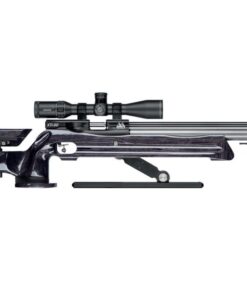
The Air Arms S510 Carbine Beech is a British-manufactured pre-charged pneumatic (PCP) air rifle that combines a traditional hardwood stock with a compact sporting configuration. Developed around the established Air Arms S500-series platform, the S510 incorporates a side-lever mechanism, a precision barrel and an adjustable trigger assembly.
Throughout its design, particular attention has been given to mechanical consistency, ergonomics and material quality. Additionally, the compact carbine format distinguishes this model from longer rifle configurations within the S510 family.
A beechwood stock provides the classic appearance associated with traditional sporting air rifles. Meanwhile, the metal components incorporate contrasting finishes, giving the rifle its recognizable profile.
Available configurations vary according to calibre, power rating, regulation system and national market. Consequently, individual specifications should always be verified against the manufacturer’s product information and the identification details of the specific rifle.
Key Features and Technical Highlights
The Air Arms S510 Carbine Beech incorporates several design elements associated with the S510 platform.
- Manufacturer: Air Arms, United Kingdom.
- Product Model: S510 Carbine Beech.
- Operating System: Pre-charged pneumatic (PCP).
- Action: Side-lever-operated repeating mechanism.
- Stock Material: Traditional beech hardwood.
- Magazine: 10-shot rotary magazine system.
- Barrel: Precision Lothar Walther barrel with a shrouded configuration.
- Trigger: Adjustable two-stage trigger.
- Safety Mechanism: Trigger-mounted manual safety.
- Pressure Monitoring: Integrated pressure gauge on applicable configurations.
- Air Filtration: In-line filtration incorporated into the established S510 design.
- Available Calibres: Commonly .177 (4.5 mm) and .22 (5.5 mm), depending on configuration.
- Design Format: Compact carbine.
- Country of Manufacture: England.
Exact dimensions, weight, filling pressure, muzzle energy and included accessories depend on the variant supplied.
Traditional Beechwood Stock and Exterior Design
Hardwood Construction and Classic Appearance
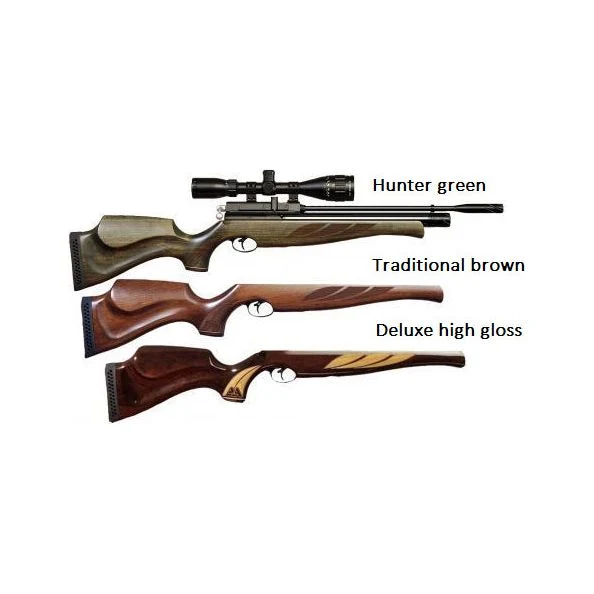
The beechwood stock is a defining feature of this S510 variant. Its natural grain, warm appearance and traditional sporting profile distinguish it from synthetic and alternative hardwood configurations.
Each hardwood stock can display variations in colour and grain pattern. As a result, the appearance of individual rifles may differ slightly from manufacturer photographs.
Furthermore, the stock serves as the main physical interface between the user and the rifle. Its shape contributes to shoulder positioning, grip placement and overall handling characteristics.
The finish should be protected from prolonged moisture exposure, harsh cleaning chemicals and unnecessary abrasion. Appropriate wood-care practices help preserve its appearance over time.
Compact Carbine Configuration
Compared with full-length S510 variants, the carbine configuration is characterized by shorter overall proportions. This format changes the balance and physical dimensions of the rifle without altering its fundamental PCP operating principle.
However, compact dimensions should not be confused with a universal performance advantage. Handling preferences vary according to individual physique, shooting discipline and familiarity with air rifle equipment.
For this reason, dimensions and stock fit remain important considerations when assessing the model’s ergonomics.
Pre-Charged Pneumatic Engineering
Compressed-Air Operating System
The Air Arms S510 Carbine Beech uses a pre-charged pneumatic operating system. Energy is stored in a reservoir containing compressed air, which is released through the firing mechanism during operation.
Unlike spring-piston air rifles, PCP designs do not rely on the movement of a large mainspring and piston to generate compressed air for each discharge.
Consequently, PCP engineering has different mechanical and maintenance characteristics from spring-powered systems.
The S510 incorporates a firing-valve arrangement designed to manage the release of compressed air. Nevertheless, performance is influenced by factors including reservoir pressure, calibre and the specific configuration.
Regulated and Unregulated Variations
Within the wider S510 product family, both regulated and unregulated configurations have been offered.
A regulated system controls the pressure supplied to the firing valve within its operating range. Conversely, an unregulated system relies on the rifle’s valve arrangement and reservoir pressure characteristics.
Neither configuration should be assumed without checking the particular product specification.
Similarly, published shot-count estimates are not interchangeable across different versions, since air capacity, power rating and other design factors affect the number of shots available from a fill.
Side-Lever Mechanism and Magazine System
Mechanical Operation
One recognizable characteristic of the Air Arms S510 Carbine Beech is its side-lever action.
The side-lever arrangement forms part of the rifle’s loading and cocking system. It is integrated into the action assembly and provides a different mechanical layout from traditional bolt-action designs.
Moreover, the S510 platform uses a rotary magazine system with a nominal 10-pellet capacity.
Magazine compatibility should always be checked against the exact calibre and model generation. Damaged or incompatible magazines should not be used, and any mechanical malfunction should be examined by a qualified technician.

Trigger and Safety Features
The adjustable two-stage trigger is another established feature of the S510 series. Its design separates initial trigger movement from the final release stage.
However, trigger adjustment should be approached cautiously and only in accordance with manufacturer guidance.
The rifle also incorporates a manual safety mechanism. Importantly, a mechanical safety is not a substitute for safe handling, secure storage or adherence to established range procedures.
Precision Barrel and Manufacturing Quality
Lothar Walther Barrel Construction
The S510 platform is associated with a precision-manufactured Lothar Walther barrel.
Barrel manufacturing quality contributes to the mechanical consistency of a rifle, although actual accuracy depends on multiple interacting variables. These include ammunition characteristics, environmental conditions, equipment condition and the user.
Additionally, a shrouded barrel contributes to the recognizable exterior design of the S510.
The barrel and shroud should remain free from accidental damage or unauthorized modifications.
British Manufacturing Heritage
Air Arms has a long history of manufacturing sporting air rifles in Britain.
The S510 reflects the company’s established approach to metalworking, component assembly and traditional stock design.
Furthermore, the model belongs to a product family that has evolved through multiple specifications and configurations. Therefore, technical documentation should be matched to the appropriate production version rather than assumed to apply universally.
Maintenance, Inspection and Responsible Storage
General Care Requirements
Like other PCP air rifles, the Air Arms S510 Carbine Beech requires regular condition checks and appropriate maintenance.
External metal surfaces should be kept clean and protected from unnecessary moisture. Likewise, the stock should be examined periodically for cracks, finish deterioration or other physical damage.
Compressed-air components require particular care because they operate under significant pressure. Reservoir inspection, servicing and component replacement should follow the manufacturer’s instructions.
Furthermore, qualified service personnel should assess suspected pressure leaks, valve faults or mechanical problems.
Storage and Transportation
When not in use, the rifle should be stored securely and protected from unauthorized access.
A suitable locked storage arrangement helps reduce the risk of accidental handling. Additionally, ammunition should be stored appropriately, with access restricted in accordance with local requirements.
During transportation, applicable legal requirements must be followed. Rules concerning air rifles vary considerably between countries and regions, including restrictions related to power ratings, licensing and permitted activities.
Frequently Asked Questions
What Is the Air Arms S510 Carbine Beech?
It is a PCP air rifle manufactured by Air Arms in the United Kingdom, combining a compact carbine format with a traditional beechwood stock and side-lever action.
Does the Air Arms S510 Carbine Beech Have a Magazine?
Yes. The S510 platform incorporates a 10-shot rotary magazine system. The exact number of magazines supplied should be confirmed for the individual package.
Is the Beechwood Stock Made from Real Wood?
Yes. Beech is a natural hardwood, and individual stocks can display differences in wood grain, tone and finish.
Is the Air Arms S510 Carbine Beech Regulated?
Regulated and unregulated S510 configurations exist. The regulation system should be verified using the model identification and manufacturer specifications.
What Calibres Are Available?
The standard S510 Carbine family includes .177 and .22 calibre configurations. Availability and legal classifications depend on the particular market.
Does the Rifle Include a Scope?
A scope should not be assumed to be included. Air Arms indicates that optics shown in some product photography are illustrative, so the contents of a particular package must be confirmed separately.
Air Arms S510 Carbine Beech – Final Product Summary
The Air Arms S510 Carbine Beech brings together traditional hardwood styling and established PCP air rifle engineering.
Its distinctive characteristics include a beechwood sporter stock, compact carbine proportions, side-lever action, rotary magazine and adjustable two-stage trigger.
Furthermore, its place within the broader S510 family provides useful context for understanding variations in power, calibre, regulation and equipment configuration.
For accurate product identification, specifications should be checked against the manufacturer’s current documentation and the particular model being described. Responsible handling, qualified maintenance and compliance with applicable regulations remain essential throughout ownership.
Air Arms S510 Carbine Beech – Available Calibres, FAC Power, Recommended Scope and Essential Accessories
Available Calibres – .177 and .22
The Air Arms S510 Carbine Beech is available in two primary calibres: .177 (4.5 mm) and .22 (5.5 mm). Both configurations are supported by the S510 platform, although their ballistic characteristics, ammunition dimensions and available power ratings differ.
.177 Calibre (4.5 mm)
The .177 calibre configuration is characterized by its smaller projectile diameter and compatibility with appropriately sized .177 airgun pellets. Furthermore, this calibre is widely represented in sporting air rifle disciplines, including organized target shooting.
Ammunition weight, pellet design and muzzle energy influence its performance. Consequently, published velocity figures should not be treated as universal across different configurations.
.22 Calibre (5.5 mm)
The .22 calibre configuration accommodates larger-diameter pellets and represents another established option within the Air Arms S510 family.
Compared with .177 ammunition, .22 pellets commonly differ in mass and physical dimensions. Nevertheless, actual ballistic performance is determined by the complete combination of ammunition, rifle configuration and environmental conditions.
Both calibres are manufactured for use with the S510’s magazine and barrel system. Accordingly, only ammunition matching the calibre marked on the individual rifle should be used.
FAC and Non-FAC Power Configurations
The Air Arms S510 Carbine Beech is offered in standard-power and higher-power configurations, subject to model availability and local regulations.
Sub-12 ft/lb Configuration
For the British market, the standard-power configuration is rated below 12 foot-pounds of muzzle energy, equivalent to approximately 16.3 joules.
This classification is associated with the United Kingdom’s legal distinction between certain lower-powered air rifles and firearms-certificate-controlled air rifles.
However, ownership requirements are not identical throughout the United Kingdom, and specific restrictions apply in Scotland and Northern Ireland.
FAC Configuration
FAC stands for Firearms Certificate. Within the UK air rifle market, the term FAC is commonly used to describe air rifles exceeding the relevant certificate-free muzzle-energy threshold.
FAC-rated S510 models are designed with higher muzzle-energy specifications than standard sub-12 ft/lb configurations.
Nevertheless, the exact output cannot be determined from the S510 Carbine Beech name alone. Power ratings vary across product generations, calibres and mechanical specifications.
Manufacturer documentation should therefore be consulted before assigning an exact energy figure to an individual rifle.
Power, Air Capacity and Shot Consistency
The S510 family uses a pre-charged pneumatic system, allowing compressed air to be stored within a dedicated reservoir.
In regulated configurations, pressure delivered to the firing mechanism is controlled by an internal regulator. Meanwhile, unregulated versions use a different pressure-management arrangement.
The number of shots available from a fill varies with the rifle’s configuration, calibre and air consumption.
Air Arms publishes approximate shot-count ranges for selected S510 variants, but these should not be assumed to represent every Carbine Beech model.
Furthermore, compressed-air filling limits must be taken directly from the applicable manufacturer’s manual. The filling pressure specified for one S510 variation should never automatically be applied to another.
Recommended Scope – Optical Compatibility and Selection
The Air Arms S510 Carbine Beech can accommodate compatible optical sights, although the correct mounting arrangement depends on the rifle’s rail configuration.
For conventional S510 sporting models, an 11 mm dovetail-compatible mounting system is commonly associated with the platform.
Important Scope Features to Consider
- Clear optical glass: Helps provide an unobstructed sight picture during authorized sporting activities.
- Adjustable focus: Allows appropriate optical focus for different viewing distances.
- Durable construction: Helps protect the optic against ordinary transport and environmental exposure.
- Weather-resistant housing: Provides additional protection against moisture and dust.
- Reliable manufacturer warranty: Offers reassurance concerning workmanship and product support.
- Compatible mounting hardware: Ensures that the selected optic is suitable for the rifle’s actual mounting interface.
A scope should not be assumed to be included with the rifle unless the product listing explicitly identifies it as part of the package.
Likewise, the rifle’s conventional sporting-stock configuration should not be confused with the S510 Tactical, which incorporates different mounting features.
Recommended Accessories for the Air Arms S510 Carbine Beech
Several maintenance, storage and manufacturer-approved accessories can accompany the S510 Carbine Beech.
Essential Accessories and Equipment
- Protective rifle case: Provides protection from scratches, dust and incidental contact during lawful transportation.
- Lockable storage cabinet: Helps prevent unauthorized access and supports responsible ownership.
- Compatible magazine storage case: Protects rotary magazines from dirt and physical damage.
- Manufacturer-approved filling connector: Provides compatibility with the rifle’s specified compressed-air filling system.
- Clean, dry compressed-air supply: Supports the safe operation of the PCP reservoir when used according to manufacturer instructions.
- Approved cleaning materials: Assist with appropriate exterior care and maintenance.
- Beechwood stock-care products: Help maintain the stock finish when suitable for the particular treatment applied to the wood.
- Protective scope covers: Protect optical lenses from dust and accidental surface contact.
- Owner’s manual: Provides model-specific maintenance, inspection and safety information.
- Protective transport accessories: Help secure equipment and prevent unnecessary movement during transportation.
All compressed-air components should be inspected for compatibility before use. In particular, filling adaptors, hoses and pressure-rated equipment must meet the manufacturer’s specifications.
Scope and Accessories Package Considerations
A complete product listing should clearly distinguish standard manufacturer-supplied items from optional accessories.
Air Arms currently describes the S510 range as being supplied with two 10-shot rotary magazines, although packaging contents should be confirmed for the exact production version.
Additional items such as optical sights, mounts, protective cases, compressed-air equipment and maintenance supplies may be offered separately.
For clarity, product documentation should identify the rifle’s calibre, FAC classification, regulation system and accessory compatibility.
Final Overview – Calibre, Power and Equipment
The Air Arms S510 Carbine Beech combines conventional beechwood styling with the mechanical design of the established S510 PCP platform.
Its .177 and .22 calibre configurations, standard and FAC power categories, and regulated or unregulated variants demonstrate the range of specifications offered within the family.
Additionally, compatible optical equipment, protective storage and appropriate maintenance accessories contribute to a complete ownership setup.
Above all, accurate model identification, manufacturer-approved equipment and compliance with applicable legal requirements remain essential when assessing the rifle and its accessories.
Air Rifles, PCP Systems, Calibers, Target Shooting and Popular Models
The world of air arms, air guns, and precision shooting equipment covers everything from recreational target shooting to sporting applications. For newcomers asking what is an air gun, what is an air rifle, what is air rifle, what is a air rifle, what is a airgun, what is an airgun, or what are airguns, the basic principle is straightforward. An air gun uses compressed gas or air to propel a projectile rather than relying on the combustion system associated with conventional firearms.
Understanding how does an air gun work, how does air gun work, how do air guns work, how does an air rifle work, how does air rifle work, and how do air rifle work can help buyers distinguish between the different operating systems available. Depending on the design, power can be supplied by a spring piston, compressed air cylinder, CO2 cartridge, or another pneumatic mechanism.
PCP Air Rifles and Compressed-Air Systems
One of the most popular categories is the pre-charged pneumatic platform. Searches such as what is a pcp air rifle, what is a pcp airgun, what is pcp air rifle, what is a pcp air gun, what is a pcp rifle, what is pcp rifle, what are pcp air rifles, and what is a pre charged pneumatic air rifle all relate to the same fundamental technology. A PCP rifle stores compressed air inside a reservoir and releases a controlled quantity each time the rifle is fired.
For shoppers researching pcp gun meaning, pcp rifle meaning, or pcp air rifle meaning, PCP simply refers to a pre-charged pneumatic system. Air is normally added using a pcp hand pump, dive cylinder, or pcp air compressor. Consequently, an air compressed gun or air compressor rifle can deliver consistent performance without requiring the shooter to manually compress a spring before every shot.
Some searches also include pcp bb gun, although many PCP platforms are primarily designed around pellets rather than traditional BB ammunition. Understanding the intended ammunition is therefore important before selecting accessories, magazines, or loading equipment.
.177 Caliber, .22 Caliber and Pellet Selection
Caliber choice is one of the most frequently researched subjects among airgun buyers. The .177 caliber remains extremely popular for recreational shooting and precision target applications. Products described as a 177 air rifle, 177 bullet, or even 177 cal darts may appear during searches, although ammunition compatibility always needs to be checked against the manufacturer’s specifications.
Questions including 177 or 22, 177 cal vs 22, 177 caliber vs 22, .177 caliber vs .22, .177 pellet vs .22 pellet, and .22 vs .177 pellet generally focus on differences in projectile size, trajectory, energy, and intended use. A smaller .177 pellet is commonly chosen for paper targets and precision shooting, whereas larger calibers may be selected for applications where additional projectile mass is desired.
Understanding bb gun pellet sizes is equally important because BBs and pellets are not automatically interchangeable. Before purchasing ammunition, shooters should confirm the caliber and projectile type specified for their particular pellet rifle, pellet pistol, or bb gun.
Air Arms Rifles and Popular Models
Among established manufacturers, air arms products remain widely searched by enthusiasts interested in precision PCP and spring-powered platforms. Well-known searches include air arms s510, s510, air arms s410, aa s400, pro sport air arms, prosport air arms, tx 200, and tx200.
Variations such as air arm and airarm are also commonly entered by shoppers searching for the brand. Buyers looking specifically for regulated sporting configurations may encounter the air arms s510 ultimate sporter .177 sub 12, a phrase frequently associated with UK-oriented searches for the S510 platform.
Each Air Arms model has its own action, stock design, power configuration, caliber options, and intended shooting environment. Therefore, specifications should always be checked against the exact version being considered rather than assumed from another model in the same family.
FX Impact M3, FX Maverick and Modern PCP Platforms
Premium PCP research frequently includes the fx maverick and the fx impact m3. Buyers may also search for fx impact mk3, fx m3 airgun, fx m3, impact m3, or fx impact m3 air rifle while comparing generations and configurations.
More specific searches such as fx impact m3 .22cal air rifle. 600mm barrel focus on caliber and barrel-length combinations. Meanwhile, international shoppers may search fx impact m3 precio, fx impact m3 precio en usa, or fx impact m3 price when researching current market pricing.
Because FX platforms can be produced in multiple barrel lengths, calibers, power settings, and regional configurations, buyers should verify the exact specification offered in their country before ordering.
Break-Barrel Air Rifles
Another major category is the break barrel air rifle. Anyone asking what is a break barrel air rifle or what is a break barrel pellet gun is usually referring to a rifle in which the barrel is hinged downward to cock the internal powerplant and expose the breech for loading.
Break-barrel designs remain popular because they can provide a self-contained shooting system without an external compressor or air bottle. Models such as a gamo pellet gun are frequently encountered by buyers exploring this category.
Learning how to load pellet gun equipment properly is particularly important. Pellets should match the manufacturer’s recommended caliber and should be loaded in accordance with the owner’s manual while the rifle is pointed in a safe direction and handled under normal shooting-range safety procedures.
CO2, Pellet Pistols and Other Airgun Types
Not every airgun uses PCP or spring power. A co2 powered pellet rifle, for example, uses replaceable CO2 cartridges as its propellant source. CO2 systems can be found in rifles and handguns intended for recreational shooting, training, and target use.
People researching air pistol uses or general pellet gun uses will encounter equipment intended for target practice, recreational plinking, skills training, competition, and other lawful sporting activities. A pellet pistol can offer a compact platform, while rifles generally provide a longer sight radius and additional stability.
Search terms such as pelet guns are also common misspellings of pellet guns and can still represent useful search intent when website content is designed to answer frequently asked buyer questions naturally.
Target Shooting and Airgun Practice
One of the most established uses of airguns is target shooting with air rifles. Dedicated air guns for target shooting may emphasize accuracy, adjustable stocks, match triggers, regulated air delivery, and compatibility with precision optics.
Likewise, airgun target practice and airgun for target practice are common search topics among people looking for an accessible way to develop shooting fundamentals. Proper backstops, eye protection, safe handling practices, and suitable ranges should always be used.
The practical range of air rifle equipment varies considerably according to caliber, muzzle energy, projectile selection, environmental conditions, and the rifle itself. As a result, buyers should use manufacturer specifications and local range rules rather than assuming that every air rifle performs identically.
Hunting Air Rifles and Appropriate Use
Some shooters research air rifles for hunting, hunting air rifles, best air rifle for hunting, pellet gun for rabbits, or even the informal phrase rats gun when looking for equipment designed for lawful pest-control or hunting applications.
Suitability depends heavily on local law, caliber, projectile energy, quarry species, shot placement requirements, and humane hunting standards. Questions such as can a bb gun kill a fox should therefore not be treated simply as equipment-selection questions. Legal restrictions and animal-welfare requirements should be checked first, and low-powered BB guns are not appropriate substitutes for equipment legally and ethically suitable for a particular species.
Similarly, searches for air rifles for deer hunting and big game hunting with air rifle involve specialized legal and ballistic requirements. Large-bore systems such as a 72 caliber air rifle or products associated with bluegrass big bore illustrate how different big-bore pneumatic platforms can be from conventional small-caliber pellet rifles. Local hunting regulations must determine whether such equipment may legally be used.
Licensing and UK Airgun Regulations
Legal requirements differ considerably by jurisdiction. UK-oriented searches frequently include do you need a licence for air rifle, air rifle certificate uk, and 22 rifle uk license. However, the rules governing air rifles, conventional .22 firearms, certificates, age restrictions, possession, transportation, and power limits are not identical.
Consequently, buyers should confirm current legislation with the relevant licensing authority before purchasing or using any regulated equipment. Particular attention should also be paid to whether a rifle is configured below or above applicable power thresholds.
Sportsman, Gamo and Other Popular Searches
Beyond specialist PCP manufacturers, buyers may encounter products such as the sportsman 900 while comparing recreational air rifles. Searches for a gamo pellet gun are also common because Gamo offers numerous spring-powered and pneumatic models across different price points and configurations.
The broader search for best air guns can include everything from affordable recreational platforms to sophisticated regulated PCP rifles. Rather than treating one design as universally superior, buyers should compare caliber, intended application, weight, stock ergonomics, power source, shot capacity, charging equipment, availability of spare parts, and local legal requirements.
Airgun Safety, Home Use and Responsible Ownership
Searches for air guns for home defense do appear online, but an airgun should not automatically be assumed to be suitable for defensive use. Laws vary significantly, and airguns can cause serious injury. Secure storage, lawful ownership, training, safe handling, and avoidance of unnecessary confrontation remain essential.
Whether someone owns an air rifle, pellet rifle, bb gun, or PCP platform, the equipment should always be treated as capable of causing injury. A secure backstop should be used for recreational shooting, the muzzle should remain pointed in a safe direction, and manufacturer instructions should be followed carefully.
Ultimately, understanding the differences between PCP rifles, break-barrel systems, CO2 equipment, caliber choices, and individual models makes it easier to compare the extensive range of modern airguns. From Air Arms platforms to FX rifles and recreational pellet guns, careful specification checking, responsible handling, lawful use, and suitable ammunition selection remain central to getting the right equipment for the intended purpose.
Frequently Asked Questions (FAQs)
1. What makes this PCP air rifle different from traditional spring-powered models?
This pre-charged pneumatic air rifle operates through a compressed-air system rather than relying on a conventional spring-piston mechanism. As a result, its internal operation differs significantly from that of traditional spring-powered air rifles. Furthermore, its side-lever action, rotary magazine, precision-manufactured barrel, and hardwood stock contribute to its distinctive construction. The overall design combines established sporting rifle engineering with contemporary pneumatic technology. Additionally, its mechanical characteristics and maintenance requirements reflect the specialized nature of PCP equipment. Owners should consult the manufacturer’s documentation for information about the exact configuration.
2. What calibres are available for this rifle?
The standard carbine configuration is commonly available in .177 (4.5 mm) and .22 (5.5 mm). Both calibres are widely recognized in the airgun industry, although their ammunition dimensions, pellet weights, and ballistic characteristics differ. Moreover, availability may depend on the country, authorized distributor, and particular production version. Each rifle is manufactured for a designated calibre, which should be confirmed from its markings and official technical documentation. Importantly, ammunition of a different calibre must never be substituted.
3. What does FAC mean in air rifle specifications?
FAC stands for Firearms Certificate, a term associated with firearms licensing requirements in the United Kingdom. In the context of air rifles, FAC commonly identifies configurations operating above the relevant certificate-free muzzle-energy limit. However, licensing obligations depend on the jurisdiction and applicable legislation. In England and Wales, an air rifle exceeding 12 foot-pounds of muzzle energy generally requires a firearms certificate. Regulations differ in Scotland and Northern Ireland. Therefore, prospective owners should verify the applicable legal requirements before acquiring or possessing any particular configuration.
4. Is this model available in a non-FAC version?
Yes. Standard-power configurations are available within this sporting air rifle family. In England and Wales, non-FAC air rifles are generally associated with muzzle-energy ratings that do not exceed 12 foot-pounds. Nevertheless, the legal classification and ownership requirements can differ depending on location. Furthermore, the manufacturer’s published specifications should be consulted because power ratings, regulator arrangements, and individual model designations may vary. Responsible ownership requires an understanding of both the equipment’s technical characteristics and the laws governing its possession.
5. What type of power system does the rifle use?
A pre-charged pneumatic operating system is incorporated into the rifle’s construction. Compressed air is stored inside a dedicated reservoir and used by the firing mechanism. Unlike a spring-piston system, the PCP arrangement does not depend on a large mechanical spring to compress air during every discharge. Consequently, its operating characteristics and servicing requirements differ from those of conventional spring-powered designs. Moreover, the pressurized components require special care, particularly during inspection, maintenance, storage, and servicing. Manufacturer-approved procedures should always be followed.
6. Does the rifle have a regulated air system?
Regulated and unregulated versions have been offered within the wider product family. A regulated configuration incorporates a mechanism that manages the air pressure delivered to the firing valve. By comparison, an unregulated configuration operates through a different pressure-management arrangement. However, the presence of a regulator should not be assumed from the stock style or general model name alone. Therefore, the exact product identification, serial-number information, and manufacturer’s documentation should be checked when determining whether a particular rifle includes a regulator.
7. What is the magazine capacity?
The rotary magazine system used by this platform has a nominal capacity of 10 pellets. Magazine construction and compatibility are specific to the rifle’s calibre and mechanical configuration. Furthermore, accessories supplied with the rifle may differ according to the production year, distributor, or sales package. The number of magazines included should therefore be confirmed directly from the product listing. Although spare magazines may exist for the platform, their compatibility should be verified against the manufacturer’s specifications before purchase or use.
8. What makes the hardwood stock distinctive?
The hardwood stock provides a traditional sporting appearance characterized by natural grain patterns and warm wood tones. Because wood is a natural material, individual stocks can display slight variations in colour, texture, and grain direction. Additionally, the finish contributes to the stock’s visual appearance while helping protect its surface from normal environmental exposure. Regular external care helps maintain the wood’s condition. Nevertheless, prolonged moisture exposure, unsuitable chemicals, and improper storage can affect its finish and appearance over time.
9. Is the rifle suitable for beginners?
Suitability depends on several factors, including the user’s experience, legal eligibility, access to qualified instruction, and understanding of compressed-air equipment. Although the operating system incorporates familiar sporting rifle features, a PCP air rifle remains a potentially dangerous device requiring responsible handling. Beginners should receive appropriate instruction before handling any air rifle independently. Furthermore, safe storage, awareness of applicable regulations, and the ability to recognize equipment faults are essential responsibilities. Adult supervision and compliance with local age restrictions are particularly important.
10. What type of barrel is used?
The design is associated with a precision-manufactured Lothar Walther barrel, a feature recognized within the manufacturer’s sporting air rifle range. Barrel construction is an important aspect of the rifle’s mechanical design. However, real-world accuracy cannot be attributed to the barrel alone. Equipment condition, ammunition characteristics, environmental conditions, and user technique all influence results. In addition, the barrel assembly should be protected from impact, obstruction, corrosion, and unauthorized alterations. Model-specific care instructions should be obtained from the manufacturer’s documentation.
11. Does the rifle include a telescopic scope?
A telescopic scope is not necessarily included in the standard package. While optical equipment may appear in promotional photographs, those images do not always represent the accessories supplied with the rifle. Consequently, buyers should review the exact package contents rather than assume that illustrated accessories are included. Some versions may be supplied as rifle-only packages, while others may be offered with additional equipment. Furthermore, mounting compatibility should be confirmed before selecting an optic or related hardware.
12. What should be considered when evaluating scope compatibility?
Optical compatibility depends primarily on the rifle’s mounting interface and the specifications of the selected sight. Traditional sporting configurations commonly feature an 11 mm dovetail mounting arrangement, although individual versions should be checked. Additionally, optical clarity, construction quality, weather resistance, warranty coverage, and manufacturer support are relevant considerations. Mounting hardware must be compatible with the particular rifle and optic. Qualified assistance is advisable whenever there is uncertainty about equipment compatibility, especially where unsuitable mounting components could damage equipment.
13. How important is the adjustable trigger system?
The adjustable two-stage trigger is an established design feature of this sporting rifle platform. Its mechanical arrangement distinguishes the preliminary trigger movement from the subsequent release stage. However, trigger systems are safety-critical components, and unauthorized modifications can create dangerous operating conditions. Therefore, adjustments and servicing should follow the manufacturer’s instructions and relevant safety requirements. If the mechanism exhibits irregular movement, unexpected resistance, or other unusual behaviour, the rifle should be inspected by a qualified technician before further use.
14. Does the rifle have a manual safety mechanism?
Yes. The platform incorporates a manual safety arrangement associated with its trigger assembly. This mechanism forms part of the rifle’s overall safety design, but it cannot eliminate every risk associated with improper handling. Furthermore, mechanical devices can malfunction or become damaged. For that reason, a rifle should always be treated as potentially loaded, regardless of the apparent position of its safety control. Responsible handling, secure storage, and adherence to established safety practices remain essential at all times.
15. How many shots are available from a full air reservoir?
The approximate number of shots depends on several variables, including calibre, power classification, reservoir capacity, regulator configuration, and the particular production version. Consequently, a single shot-count figure cannot accurately describe every configuration. Manufacturer-published performance estimates are generally based on specified operating conditions and should be interpreted accordingly. In addition, actual results may differ because of equipment condition and environmental factors. Buyers should consult the technical documentation associated with the precise model when reviewing reservoir capacity and published performance figures.
16. What maintenance does the rifle require?
Routine maintenance includes external inspection, appropriate cleaning, stock care, and periodic examination of accessible components for signs of damage or deterioration. Furthermore, compressed-air assemblies require special attention because they operate under substantial pressure. Suspected leaks, damaged fittings, unusual mechanical sounds, and pressure-related faults should be evaluated by qualified personnel. Owners should avoid dismantling pressurized components or substituting unsuitable replacement parts. Regular attention to storage conditions and the manufacturer’s servicing recommendations can help preserve the equipment’s general condition.
17. How should the wooden stock be maintained?
The wooden stock should be protected from excessive moisture, prolonged direct sunlight, abrasive materials, and unsuitable cleaning solutions. A soft, dry cloth is generally appropriate for removing ordinary surface dust. However, cleaning and conditioning products must be suitable for the particular finish applied to the stock. Excessive polishing or the use of aggressive solvents can damage its appearance. Additionally, the rifle should be stored in an environment where extreme humidity and sudden temperature changes are minimized. Appropriate care helps preserve the stock’s natural appearance over time.
18. What accessories are commonly associated with this model?
Commonly associated equipment includes protective rifle cases, secure storage cabinets, compatible rotary magazines, optical accessories, lens covers, manufacturer-approved maintenance supplies, and appropriate compressed-air servicing equipment. Nevertheless, accessory availability and compatibility vary between model generations and markets. Items shown in photographs should not automatically be treated as standard package contents. Furthermore, pressurized accessories require particular attention to manufacturer specifications and pressure ratings. The correct equipment documentation should always be consulted before connecting, replacing, or servicing any compressed-air component.
19. How should the rifle be stored when it is not being used?
Secure storage is an essential responsibility of ownership. The rifle should be placed in an appropriate locked cabinet or comparable secure arrangement that prevents unauthorized access. Additionally, ammunition should be stored responsibly, and access restrictions should comply with the requirements of the relevant jurisdiction. A dry, clean environment helps reduce unnecessary exposure to moisture and corrosion. Furthermore, children and unauthorized individuals must not have access to the equipment. Local rules concerning storage, transportation, and ownership should always be observed.
20. Is the rifle manufactured in the United Kingdom?
Yes. The manufacturer is based in England and is associated with British air rifle engineering and manufacturing. The model belongs to a long-established sporting air rifle product family incorporating machined metal components, pneumatic technology, and traditional stock construction. Nevertheless, the country of manufacture should not be confused with the origin of every individual component or accessory. Furthermore, the technical specifications may evolve between production generations. Official manufacturer records remain the appropriate reference for confirming specific production details.
21. What should be checked when inspecting a previously owned rifle?
A previously owned rifle should be examined for visible damage, corrosion, stock cracks, damaged fittings, missing components, and evidence of unauthorized alterations. Documentation relating to its maintenance and previous servicing can also be valuable. However, visual inspection alone cannot establish the condition of internal pressure components or mechanical assemblies. Accordingly, a qualified technician should evaluate the equipment when its service history is incomplete or its condition is uncertain. Legal ownership and transfer requirements should also be confirmed before any transaction takes place.
22. How does the carbine configuration differ from a full-length sporting model?
A carbine configuration generally features shorter overall proportions than a corresponding full-length rifle. Consequently, differences may be observed in total length, weight distribution, reservoir arrangement, and physical balance. However, these characteristics depend on the actual models being compared. A compact design should not automatically be interpreted as providing greater accuracy or superior performance. Furthermore, individual comfort depends on factors such as stock dimensions, personal physique, and familiarity with sporting equipment. Manufacturer specifications offer the most reliable basis for comparing configurations.
23. What factors affect long-term reliability?
Long-term mechanical reliability is influenced by maintenance practices, environmental exposure, component condition, manufacturing quality, and adherence to approved servicing procedures. Additionally, compressed-air equipment must be maintained within its specified operating requirements. Improper repairs, unauthorized alterations, unsuitable replacement parts, and poor storage conditions can compromise safety and functionality. For this reason, suspected faults should be investigated before further use. Maintaining documentation of professional servicing can also assist with identifying the equipment’s maintenance history and condition.
24. Why is the manufacturer’s documentation important?
Official documentation provides information that general product descriptions may not cover accurately. For example, model-specific instructions can identify the appropriate operating limits, safety precautions, inspection requirements, and compatible components. Furthermore, differences between production versions may affect the relevance of older manuals or third-party information. Using documentation associated with the correct model helps avoid confusion about specifications. Where uncertainty remains, the manufacturer or an authorized service representative should be contacted for clarification rather than relying on assumptions.
25. What should prospective owners understand before acquiring this rifle?
Prospective owners should understand the rifle’s calibre, power classification, operating system, physical specifications, maintenance requirements, and applicable legal restrictions. Additionally, appropriate storage arrangements and access to qualified servicing should be considered essential ownership responsibilities. Because national and regional airgun regulations vary, the legal status of a particular configuration must be verified within the relevant jurisdiction. Ultimately, accurate product identification, responsible handling, and adherence to manufacturer instructions provide the foundation for safe, informed ownership of this type of sporting equipment.

Reviews
There are no reviews yet.