Lee Enfield Sentry Rifle – A Classic Piece of British Military History
The Lee Enfield rifle represents an important chapter in the history of British military firearms. Recognised for its distinctive historical design and long association with military service, the Lee Enfield family has maintained considerable interest among collectors, historians and enthusiasts of historical military equipment.
The Lee Enfield Sentry Rifle is a subject of particular interest for individuals researching traditional military firearms and their historical development. Its heritage reflects an era when mechanical engineering, manufacturing craftsmanship and standardised military equipment played significant roles in military history.
Moreover, its recognisable historical appearance makes it an interesting subject for military collections, historical displays and educational research.
Historical Heritage and Background
The Lee Enfield name is associated with generations of British military history. Its development reflects the changing requirements of military institutions during the late nineteenth and twentieth centuries.
Throughout its history, the Lee Enfield family became associated with several important periods of military development. Consequently, surviving examples are frequently examined by collectors interested in historical manufacturing techniques, military markings and period-specific design characteristics.
Furthermore, different production periods and historical variations provide opportunities for further research. Collectors may find differences in markings, finishes, manufacturing details and documented service histories.
Traditional Engineering and Manufacturing Heritage
Historical Lee Enfield examples provide an opportunity to appreciate traditional mechanical engineering and manufacturing practices.
Their construction reflects the manufacturing standards and industrial capabilities of the period in which individual examples were produced.
Additionally, original markings and manufacturing documentation can provide valuable information about an individual rifle’s background.
For collectors, authenticity and provenance are particularly important considerations. Therefore, historical records, professional inspection and accurate identification should be prioritised when documenting an example.
Collector Interest and Historical Preservation
The Lee Enfield family continues to attract attention from military historians and collectors worldwide.
Several factors contribute to this continuing historical interest:
- Historical significance: Its association with important periods of British military history.
- Manufacturing heritage: An example of traditional industrial engineering.
- Historical variations: Differences between production periods and documented models.
- Collector documentation: Interest in original markings, provenance and historical records.
- Display potential: Relevance to educational collections and military-history exhibitions.
Condition and Authenticity Assessment
When examining a historical Lee Enfield example, its condition should be documented carefully.
Originality, visible wear, corrosion, previous restoration and replacement components can influence its historical significance.
A qualified firearms professional should conduct any necessary safety and mechanical inspection. Furthermore, collectors should request accurate documentation rather than relying exclusively on photographs or verbal descriptions.
Responsible Ownership and Legal Considerations
Historical firearms are subject to different legal requirements depending on their classification and the jurisdiction in which they are owned.
Accordingly, prospective collectors should establish whether an example is classified as an antique, firearm, deactivated firearm or another regulated category.
Applicable licensing, registration, transportation, storage and transfer requirements should be confirmed with the relevant authorities before any transaction.
Safe storage and responsible handling should always remain priorities.
Conclusion
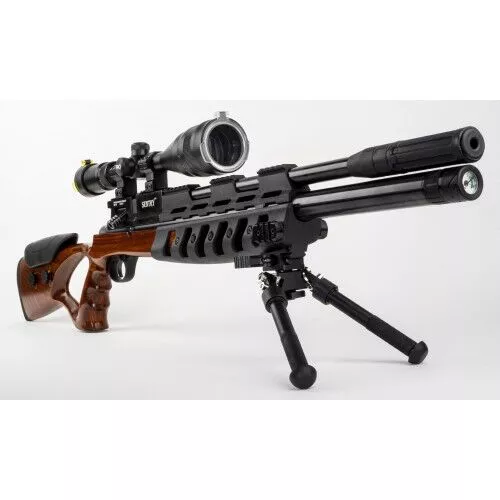
The Lee Enfield Sentry Rifle represents an interesting subject within the wider history of British military firearms. Its historical associations, traditional manufacturing heritage and collector interest make it relevant to military-history research and preservation.
For collectors, accurate identification, documented provenance, professional condition assessment and compliance with applicable regulations are essential when evaluating historical examples.
Calibre, FAC Classification, Power, Optics and Accessories – Lee Enfield Sentry Rifle
1. Calibre and Ammunition Identification
Calibre identification is an important part of researching any historical Lee Enfield example. Different models and production variations may have different original chamberings. Therefore, the exact designation should be established before any technical information is published.
Collectors should avoid assuming that every example shares identical specifications. Original markings, manufacturer documentation and professional identification records provide more reliable information.
Where the historical designation is uncertain, the calibre should be listed as unverified until confirmed by a qualified firearms professional. Ammunition compatibility must never be inferred from appearance or general family resemblance.
2. FAC Classification and Legal Requirements
FAC stands for Firearm Certificate in the United Kingdom. It is associated with the licensing framework administered by the relevant authorities.
The legal classification of a historical firearm depends on several factors, including its configuration, condition, chambering and applicable legislation.
A Lee Enfield example should not automatically be described as FAC-required or exempt without establishing its exact legal status.
Before ownership or transfer, prospective owners should verify:
- Applicable firearm licensing requirements.
- Whether the specific example is classified as a regulated firearm.
- Any registration or transfer obligations.
- Restrictions relating to possession and transportation.
- Requirements for secure storage.
- Relevant import and export permissions.
International buyers should also confirm the regulations governing both the exporting and importing countries.
3. Power and Technical Classification
Unlike many modern sporting airguns, historical firearms are not generally described using the same standardised airgun power-rating terminology.
Consequently, specifications should not be presented using unsupported energy figures or assumptions.
Any published technical information should be supported by manufacturer documentation or an appropriate professional assessment.
For historical research, it is useful to distinguish between original manufacturing specifications, present-day condition and subsequent modifications.
These distinctions help prevent inaccurate product information and provide readers with a clearer understanding of the individual example.
4. Optical Equipment and Historical Compatibility
Optical equipment should be considered in the context of historical preservation and the originality of the individual example.
Some collectors prefer maintaining the original appearance of historical equipment. Others may document later modifications as part of an item’s ownership and restoration history.
For display and historical research, non-functional optical replicas and appropriately documented historical accessories may be considered where legally permitted.
Any proposed modification to an original firearm should be reviewed by a qualified professional to avoid damaging historical materials or affecting its legal classification.
5. Accessories and Historical Components
Accessories associated with historical military equipment can be relevant to understanding its manufacturing and service history.
However, components should be identified accurately rather than assumed to be original or compatible.
Items that may be relevant to historical documentation and preservation include:
- Original manufacturer documentation.
- Historical identification and reference materials.
- Period photographs and archival records.
- Display supports designed for secure museum presentation.
- Protective storage cases suitable for historical collections.
- Condition-report documentation.
- Non-functional display reproductions where legally permitted.
- Conservation materials recommended by qualified specialists.
The originality and provenance of any accompanying item should be independently established.
6. Condition, Authenticity and Professional Assessment
Before publishing technical specifications, the exact model and historical configuration should be verified.
A professional assessment can help establish whether the example retains its original identifying features and whether subsequent alterations have occurred.
Furthermore, documentation should distinguish between verified historical characteristics and details that remain uncertain.
This approach is particularly important for online product listings, where inaccurate technical descriptions can create misunderstandings.
7. Responsible Ownership and Preservation
Historical firearms require appropriate legal oversight, secure storage and responsible preservation.
Collectors should consult relevant authorities regarding licensing, classification and transportation. Additionally, any inspection or conservation work should be entrusted to appropriately qualified professionals.
Ultimately, accurate identification and documented historical information provide the strongest foundation for a reliable description of this historically significant firearm.
Falcon Scope, Falcon Optics, Element Titan 3-18×50 and Precision Rifle Optics: Complete Buying Guide
Discover Falcon Scope Technology and Modern Precision Optics
Choosing the right falcon scope can transform the viewing experience for target shooters, outdoor enthusiasts, and precision optics users. Modern optical technology combines high-quality glass, adjustable magnification, durable construction, and advanced reticle systems to support clear observation across different distances.
Whether researching falcon optics, falcon optical, falcon vision, or falcon tactical equipment, understanding individual product specifications remains essential. Different optic companies manufacture equipment for competitive target shooting, hunting, observation, thermal imaging, and specialist applications.
The Falcon Optical Systems product range includes competition-oriented riflescopes, while other manufacturers offer digital and thermal solutions. Consequently, buyers should distinguish traditional optical scopes from electronic observation equipment before comparing features.
Falcon Optics and Popular Optical Configurations
Falcon Optical Systems produces riflescopes designed for demanding precision applications. Its competition-oriented products include high-magnification options featuring specialized turret adjustments and optical systems.
Popular search terms include:
- falcon 10×50 and 10 x50 configurations for fixed-magnification optical research.
- falcon xl and falcon sp for model identification and compatibility searches.
- falcon 40 and 30 falcon when researching unidentified Falcon-related equipment.
- falcon claw and falconclaw for accessories or products requiring brand verification.
- tactical falcon and falcon arm when comparing tactical accessories and related equipment.
- falcon receiver when identifying device-specific components.
- falcon scanner and falcon thermal for electronic observation equipment.
Because similarly named products may belong to unrelated manufacturers, confirming the exact model is always recommended.
Understanding Rifle Scope Magnification and Objective Lens Sizes
Comparing 3-18×50, 4.5-18 and High-Magnification Scopes
Optical magnification determines how large a distant subject appears through a scope. For example, 3-18 magnification provides an adjustable viewing range suitable for diverse observation and sporting applications.
Searches for 3×18, 3×18 scope, 3-18 scopes, and 3:18 often relate to variable-magnification optics. Meanwhile, 4.5 x 18, 4.5 18, 4x-18, and 18 scope reflect interest in alternative magnification ranges.
Consumers comparing nightforce 3-18 equipment with the best 3-18 scopes should examine optical clarity, adjustment consistency, weight, eye relief, and warranty coverage.
Similarly, numerical searches such as 18x-4, 60x 3 50x 5, 3/5/25, and 3 5 25 should be checked against manufacturer specifications rather than interpreted automatically as verified optical configurations.
Understanding 50mm and 60mm Objective Lenses
An objective lens collects incoming light and contributes to image brightness and resolution. Common measurements include 50mm and 60mm, although overall image quality depends on glass composition, coatings, magnification, and environmental conditions.
Buyers sometimes search for how big is 50 x 60 or what size is 50 x 60. These measurements require context because 50 x 60 could describe physical dimensions rather than magnification.
Other numerical search variations include 25 x .50, 500 x 50, 500×60, 510 50, 50×0, 36x 50, 1/4×40, .25×50, 800 x 50, 60 x50, .50 x 10, 50x.05, 7.5 x 50, 50x 05, .25 x 50, 50 600, and 1050 x 5.
Furthermore, searches such as 10:50, scope50, and xoi50.com may represent alternative notation, incomplete model references, or unrelated websites. Therefore, these strings should never substitute for documented optical specifications.
Element Titan 3-18×50: Premium Optical Performance
Why the Element Titan 3-18×50 Deserves Attention
The element titan 3-18×50 is a versatile first-focal-plane riflescope designed around a broad magnification range and precision adjustment system.
Also searched as element titan 3 18×50, this model combines a 34mm main tube, 50mm objective lens, illuminated reticle, and adjustable parallax.
Its notable features include:
- 3-18x magnification: Supports flexible viewing across different distances.
- 50mm objective: Provides substantial light-gathering area.
- 34mm main tube: Accommodates a wide internal adjustment range.
- First-focal-plane reticle: Maintains consistent angular subtensions throughout magnification changes.
- Precision turrets: Support repeatable elevation and windage adjustments.
- HD glass: Helps minimize optical distortion and improve image definition.
- Weather-resistant construction: Supports operation in challenging outdoor conditions.
The manufacturer’s published specifications include 150 MOA of elevation adjustment, a mechanical zero-stop, and parallax adjustment beginning at 10 yards.
Consequently, this optic is worth considering when comparing premium variable-magnification scopes. Element Optics official specifications.
Chromatic Aberration and Optical Image Quality
Understanding chromatic aberration scope performance helps buyers evaluate image sharpness. Chromatic aberration appears as unwanted colored fringes around contrasting objects.
High-quality glass and effective lens coatings can reduce these imperfections, improving visual definition.
Likewise, users researching element ll should verify whether the search refers to a specific product generation, model designation, or accessory.
Falcon Thermal Imaging, Red Dot Optics and Electronic Sensors
Advanced Falcon Vision and Thermal Observation
Modern thermal equipment detects infrared radiation rather than depending entirely on visible light.
For users exploring falcon thermal, this distinction is important because thermal imaging and conventional optical magnification serve different purposes.
Some searches also mention elbit falcon and elbit falcon red dot. However, the precise manufacturer and model must be established before making compatibility or performance claims.
Additionally, falcon sensor manual searches generally indicate a need for operating instructions, sensor calibration information, maintenance guidance, or technical support.
Related search terms such as falke optics and optical camp may point toward alternative optic brands or specialist optical applications.
Even accessories marketed under unrelated product categories, including the falconeye patriot convertible bluetooth headset, require independent compatibility checks.
How Far Can a Falcon See?
The question how far can a falcon see can refer either to the bird’s remarkable natural eyesight or the observation distance of an optical device.
For riflescopes, useful viewing distance depends on magnification, atmospheric clarity, objective lens performance, and the size of the observed subject. No universal distance rating applies to every Falcon-branded device.
Rifle Rangefinders and Advanced Distance-Measuring Technology
Choosing a Rifle Rangefinder and Integrated Optics
A rifle rangefinder measures distance using optical or electronic technology. Modern laser devices can provide fast measurements and improve distance awareness in sporting and observation environments.
Common product searches include rifle range finder, laser range finder for rifle, rangefinder scope for rifle, and rangefinding rifle scope.
Additionally, scopes with rangefinders built in combine observation and distance measurement within a single optical platform.
A picatinny mounted rangefinder, sometimes described as a picatinny range finder, uses a compatible rail interface for attachment.
Other configurations include a weapon mounted range finder, while the abbreviation wmlrf commonly refers to a weapon-mounted laser rangefinder.
Electronic Ballistic Calculators and Distance Systems
A weapon mounted ballistic calculator can combine measured distance with programmed ballistic information, depending on its design.
Products associated with arken wmlrf searches include Arken’s weapon-mounted ranging equipment. Its TargetLock TL3000 incorporates laser-ranging and ballistic calculation capabilities. Arken Optics official product information.
Meanwhile, element rf searches may relate to Element Optics rangefinding products. Buyers should confirm the exact model, intended purpose, and accessories before purchasing.
Rifle Scope Mounts, Rings and Precision Accessories
Understanding Picatinny and Dovetail Scope Mounts
Choosing the correct mounting system is essential for secure installation and optical alignment.
A dovetail scope mount connects compatible optics to a dovetail-style rail, while dovetail rings provide alternative mounting arrangements.
Similarly, dovetail scope mounts and 30mm dovetail scope rings must match both the optic tube diameter and rail dimensions.
For Picatinny systems, popular options include picatinny scope mounts, picatinny scope rings, 30mm scope mount picatinny, and 30mm picatinny scope rings.
Buyers should confirm tube size, ring height, rail compatibility, and appropriate installation specifications.
Diving Board Mounts and Scope Accessories
Specialist mounting configurations include a 34mm diving board mount, 34mm scope mount with diving board, diving board scope mount, and 30mm diving board mount.
A scope diving board generally describes an elevated accessory mounting platform integrated with or attached to a compatible optical mounting system.
An element mount may provide a manufacturer-specific mounting solution, while a turret wheel can assist with handling or adjustment on compatible scopes.
Protective Covers for Optical Equipment
Protecting lenses helps preserve optical performance during transportation and storage.
Popular protective accessories include:
- tenebraex scope caps for compatible objective and ocular lenses.
- tenebraex scope covers for additional lens protection.
- allen neoprene scope cover for cushioning and shielding an optic during storage or transport.
Choosing the Right Falcon Scope and Optical Accessories
Selecting an effective optical system requires more than comparing magnification numbers. Glass quality, mechanical reliability, reticle design, mounting compatibility, environmental resistance, and manufacturer support all influence long-term satisfaction.
Whether researching Falcon optics, Element Titan models, advanced rangefinding technology, or protective accessories, prioritize verified product specifications over ambiguous search terminology.
For the best purchasing experience, compare authentic manufacturer documentation, confirm compatibility, and choose equipment suited to your intended sporting or observation application.
Frequently Asked Questions
1. What is the historical significance of the Lee Enfield?
The Lee Enfield holds an important place in British military history. Its development and historical use reflect major changes in military engineering, manufacturing and equipment standardisation. Different versions were associated with different periods, making the wider family an important subject for military historians and collectors.
2. Why are historical Lee Enfield examples popular with collectors?
Collectors are often interested in their historical associations, manufacturing heritage, original markings and documented provenance. Additionally, surviving examples can provide insight into the industrial and military history of their production periods.
3. How can the authenticity of a historical example be assessed?
Authenticity should be established through professional examination, reliable historical documentation and comparison with recognised reference materials. Original markings, manufacturing records and documented ownership history can all contribute to an accurate assessment.
4. What information should accompany a historical example?
Useful documentation includes its identification details, known production history, previous ownership records, restoration information and any available professional inspection reports. Such records help establish provenance and provide greater transparency for collectors.
5. Does the condition affect historical collector interest?
Yes. Originality, preservation quality, corrosion, restoration and replacement components can influence historical and collector interest. However, condition should always be considered alongside provenance and historical significance rather than as an isolated factor.
6. What is provenance?
Provenance refers to the documented history of an individual item. For historical firearms, it may include previous ownership, institutional records, manufacturing documentation and other credible historical references.
7. Are all Lee Enfield examples identical?
No. The wider family includes different historical models, production periods and variations. Consequently, individual examples should be identified using their documented markings and professional assessment rather than assumptions based on general appearance.
8. Why are original markings important?
Original markings can provide clues about manufacturing history, identification and historical context. Nevertheless, markings should be interpreted carefully because restoration, refinishing and subsequent alterations can affect their appearance.
9. Can a historical example have replacement components?
Yes. Some surviving examples may have undergone maintenance, restoration or component replacement during their lifetime. Such changes should be accurately documented because they can affect originality and historical interpretation.
10. What should collectors look for when researching one?
Collectors should prioritise reliable historical references, identification records, provenance and independent professional assessments. Additionally, they should distinguish verified information from assumptions or unsupported descriptions.
11. How should historical examples be preserved?
Preservation should be undertaken by qualified professionals familiar with historical firearms. Appropriate environmental conditions, secure storage and documented conservation practices can help protect historical materials from deterioration.
12. Can corrosion affect historical significance?
Corrosion can affect the physical condition and preservation of historical objects. Its significance depends on the extent of deterioration and whether original historical features have been affected. A professional conservation assessment is recommended.
13. Is restoration always beneficial?
Not necessarily. Restoration can improve presentation, but excessive intervention may remove original finishes, markings or historical evidence. Conservation professionals generally consider the importance of retaining original materials before recommending restoration.
14. What is the difference between restoration and conservation?
Restoration generally involves returning an object towards an earlier documented appearance. Conservation, on the other hand, focuses on stabilising and protecting existing materials while minimising unnecessary intervention.
15. Are historical firearms suitable for museum displays?
They may be suitable for appropriately managed historical exhibitions. However, display decisions should account for legal classification, security, professional safety assessments and suitable conservation conditions.
16. Can photographs establish the complete condition of an example?
No. Photographs can provide useful visual documentation, but they cannot establish every aspect of authenticity, mechanical condition or historical originality. An independent professional examination is necessary where appropriate.
17. Why is professional identification important?
Professional identification helps prevent confusion between different historical variations. It also supports accurate cataloguing, responsible documentation and more reliable historical research.
18. What should buyers know about legal ownership?
Requirements differ between countries and may depend on the item’s classification, condition and intended use. Prospective owners should consult the relevant licensing and regulatory authorities before purchasing, transferring or transporting any firearm.
19. Are deactivated examples subject to the same regulations everywhere?
No. Deactivation standards and legal classifications differ between jurisdictions. Documentation confirming the applicable deactivation standard should be obtained and independently verified where necessary.
20. Can historical firearms be transported internationally?
International transportation may involve export permissions, import authorisations, customs documentation and carrier restrictions. Requirements should be confirmed with the authorities in both the exporting and receiving countries before transportation is arranged.
21. Why is secure storage important?
Secure storage helps prevent unauthorised access, theft and accidental incidents. Storage arrangements should comply with the applicable laws and any additional requirements imposed by the relevant authorities.
22. What makes historical military equipment valuable to researchers?
Historical military equipment provides physical evidence of manufacturing practices, institutional requirements and technological development. When supported by reliable documentation, individual objects can contribute to broader historical research.
23. How should collectors document an acquisition?
A responsible record should include the item’s identification, acquisition date, available provenance, condition report, supporting photographs and relevant legal documentation. Keeping these records together improves transparency and long-term collection management.
24. Should an example be professionally inspected before acquisition?
Yes. An independent assessment can help establish its condition, authenticity and legal classification. This is particularly important when the item’s documentation is incomplete or its historical identity is uncertain.
25. What is the best way to research its manufacturing history?
Consult recognised military-history publications, archival material, museum collections and specialist historical references. Cross-checking information across several credible sources helps reduce identification errors.
26. Can historical markings be altered over time?
Yes. Previous restoration, refinishing, corrosion and other interventions may affect the appearance of markings. Therefore, their interpretation should be based on professional examination and reliable historical references.
27. Why is originality important to collectors?
Original materials and documented historical features can provide valuable evidence about an object’s past. However, originality should be assessed carefully, since an apparently unchanged appearance does not independently establish authenticity.
28. How can collectors avoid misleading historical descriptions?
They should request clear identification records, verify historical claims against credible sources and avoid accepting unsupported statements about production dates, service history or originality.500x 50
29. Is historical preservation different from ordinary maintenance?
Yes. Historical preservation focuses on protecting original materials and retaining historical evidence. Ordinary maintenance may have different objectives and should not be undertaken without considering the item’s historical and legal status.
30. What should be considered before adding one to a collection?
Collectors should consider authenticity, provenance, physical condition, historical documentation, storage requirements and legal ownership restrictions. An informed decision should be based on independently verified information rather than appearance alone.
Final Thoughts
Historical military firearms are important cultural and industrial artefacts. Their value to collectors and researchers is strengthened by accurate identification, responsible preservation and reliable documentation.
Whether an example is being studied for historical research, considered for a collection or evaluated for an exhibition, professional assessment and compliance with applicable regulations should remain central priorities.
Practical Use Scenarios – Lee Enfield Sentry Rifle
1. Historical Military Collections
One of the most relevant applications of a historical Lee Enfield example is its inclusion in a military-history collection. Its association with British military heritage makes it an interesting subject for collectors researching the development of historical firearms.
Within a private collection, it can help illustrate changes in manufacturing methods, military equipment and industrial design. Furthermore, its historical background provides opportunities to explore the relationship between engineering developments and the changing requirements of military institutions.
Collectors may also compare different documented examples to understand variations in production periods, markings and historical configurations.
However, accurate identification should always be prioritised. A collection becomes more informative when every item is supported by reliable historical documentation.
2. Museum and Educational Exhibitions
Historical examples can contribute to educational exhibitions exploring military history and technological development.
Museums may use such objects to explain manufacturing heritage, historical events and the evolution of military equipment. Additionally, accompanying photographs, archival records and explanatory panels can help visitors understand the historical context.
A properly organised exhibition should include:
- Historical background and manufacturing information.
- Verified identification details.
- Available provenance records.
- Conservation and restoration information.
- Appropriate safety and security arrangements.
- Relevant historical photographs and references.
These elements allow visitors to learn about historical technology without presenting the object as a modern sporting product.
3. Historical Research and Academic Studies
Another practical application involves academic research. Students, historians and researchers may examine historical firearms as physical evidence of industrial development and military history.
Research can cover manufacturing standards, historical production systems, institutional requirements and changes in equipment design.
For example, a comparative study might examine how different historical production periods influenced manufacturing practices. Similarly, archival research can help establish how particular examples were documented during their historical service.
Reliable sources should always be consulted before conclusions are drawn. In addition, researchers should distinguish between verified historical evidence and later interpretations.
4. Private Historical Displays
A documented historical example may also form part of a private historical display.
Collectors can create dedicated displays focusing on British military history, traditional engineering or the evolution of historical equipment.
The surrounding presentation can include historical photographs, identification documents and explanatory information. Consequently, the display becomes more informative than an isolated object.
Secure presentation is essential. Storage and display arrangements should comply with applicable firearm regulations, with appropriate professional advice obtained before an example is exhibited.
5. Military History Education
Historical objects can make educational discussions more engaging because they provide tangible connections to events and technological developments.
Teachers, researchers and military-history enthusiasts may use documented examples to explain the relationship between industrial manufacturing and military institutions.
For instance, a classroom presentation could explore how manufacturing standardisation influenced equipment production during the twentieth century.
Furthermore, historical comparisons can introduce students to topics such as industrial capacity, engineering materials, historical preservation and archival research.
The emphasis should remain on historical understanding rather than practical weapon operation.
6. Archival Documentation and Digital Cataloguing
Digital cataloguing offers another useful application.
Collectors and institutions can create digital records containing identification details, historical references, ownership documentation and condition reports.
High-quality photographs may also be included to document visible markings and existing preservation conditions.
A structured digital catalogue can contain:
- Collection identification number.
- Verified historical designation.
- Available manufacturing information.
- Provenance and ownership records.
- Current condition assessment.
- Restoration and conservation history.
- Relevant legal documentation.
This approach makes collection management more transparent. Moreover, digital records can support future historical research and institutional collaboration.
7. Historical Photography and Documentation
Historical photography can be used to document the appearance and preservation condition of an individual example.
For collectors, photographs provide a visual record that can be compared with earlier documentation. Museums may also use photography for educational publications and digital exhibitions.
A responsible photographic presentation should accurately represent the object’s condition. Any visible restoration, replacement components or significant alterations should be disclosed.
Additionally, photographs should not be manipulated in ways that misrepresent authenticity, condition or historical provenance.
8. Conservation and Long-Term Preservation
Preservation is particularly important when dealing with historical objects.
Over time, environmental conditions and unsuitable storage may contribute to deterioration. Therefore, collectors should seek professional conservation advice and maintain appropriate storage arrangements.
Conservation records should document the condition of an item before and after any approved intervention.
Importantly, historical preservation should not automatically involve returning an object to a supposedly original appearance. Retaining genuine historical evidence can be more valuable than unnecessary cosmetic restoration.
9. Historical Manufacturing Comparisons
A documented example can be included in comparative research examining historical manufacturing techniques.
Researchers may investigate how industrial processes, production standards and material selection changed across different periods.
Comparative studies can also demonstrate the importance of quality control and standardised production within historical manufacturing systems.
Such research provides broader insight into the industrial environment in which military equipment was developed.
10. Collectors’ Historical Reference Libraries
Historical firearms can be studied alongside specialist publications, archival documents and museum references.
A well-organised reference library allows collectors to understand the historical context of individual examples.
Books, academic publications, manufacturer records and credible historical archives can provide useful supporting information.
Moreover, keeping references together with collection records makes future verification considerably easier.
11. Heritage Exhibitions and Public Awareness
Historical exhibitions can help communities understand the cultural and industrial heritage associated with military equipment.
A carefully prepared exhibition can explain historical events, manufacturing development and preservation challenges.
Additionally, visitors can explore how historical objects contribute to wider discussions about industrial history and technological change.
Responsible exhibition practices should include secure display arrangements, accurate descriptions and compliance with applicable regulations.
12. Responsible Collection Management
A historical collection requires consistent organisation.
Collectors should maintain accurate acquisition records, preserve relevant documentation and periodically review the condition of their objects.
Where an item’s legal classification is uncertain, professional advice should be obtained rather than relying on informal descriptions.
Likewise, any movement, transfer or international transportation should be arranged only after the relevant legal requirements have been confirmed.
13. Historical Publications and Documentary Projects
Documentary creators and historical writers may use documented examples as reference material when discussing British military heritage.
Such projects can explore manufacturing history, historical developments and the significance of preserved military artefacts.
Supporting photographs and archival references can improve the quality of educational content.
However, historical claims should be verified, particularly when discussing manufacturing dates, previous ownership or specific service associations.
14. Conclusion: A Subject of Historical and Collecting Interest
The Lee Enfield Sentry Rifle provides an interesting subject for historical collecting, educational research and military-heritage preservation.
Its relevance extends beyond its physical appearance. Its historical associations, manufacturing background and documented variations can contribute to a broader understanding of British military and industrial history.
For collectors and researchers, accurate identification, reliable provenance, professional conservation and responsible legal compliance remain essential.
Ultimately, its most meaningful contemporary role can be found in historical education, responsible preservation and the continued study of military engineering heritage.

Reviews
There are no reviews yet.