BSA Meteor Super Spring Air Rifle – Classic British Engineering, Reliable Performance & Timeless Design
BSA Meteor Super Spring Air Rifle – Overview
The BSA Meteor Super Spring Air Rifle has been developed around the established engineering heritage of British Small Arms (BSA), a manufacturer widely associated with traditional airgun production. Through its spring-powered mechanism, classic wooden stock, and carefully engineered barrel, a familiar combination of mechanical simplicity and traditional craftsmanship has been preserved.
Furthermore, the design has been shaped by the requirements of recreational target shooting, where consistency, manageable handling, and straightforward maintenance are valued. Unlike pre-charged pneumatic alternatives, the operating mechanism is powered by a mechanical mainspring, and external compressed-air equipment is not required.
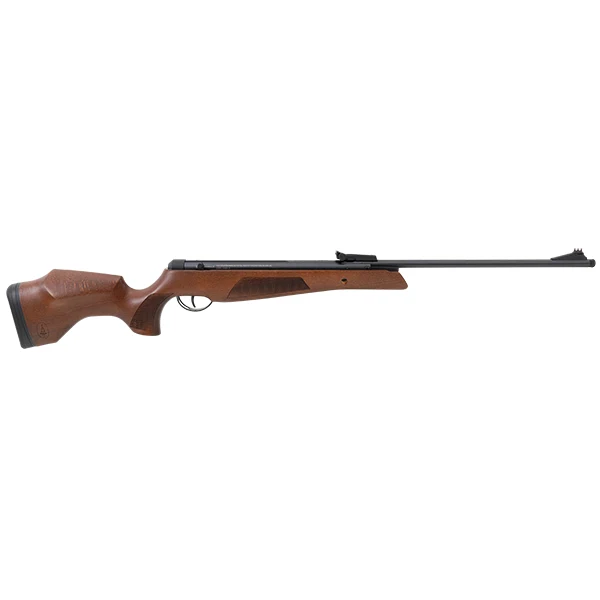
Additionally, the model has been distinguished by its traditional appearance, with modern manufacturing features being incorporated into a familiar break-barrel configuration. A beech stock, a cold-hammer-forged barrel, and an adjustable two-stage trigger have been combined to create a recognisable spring-powered platform.
As a result, the characteristics associated with traditional spring air rifles have been maintained while contemporary production methods have been introduced.
Key Features and Technical Specifications
Several recognised features have been incorporated into this model, with particular attention having been given to mechanical construction and handling characteristics.
Product Highlights
- Manufacturer: BSA Guns
- Model: Meteor Super
- Power System: Spring-piston mechanism
- Action Type: Break-barrel, single-shot operation
- Available Calibres: .177 (4.5 mm) and .22 (5.5 mm)
- Barrel: Cold-hammer-forged steel barrel
- Stock Material: Minelli beech wood
- Trigger System: Adjustable two-stage trigger
- Safety Mechanism: Manual safety catch
- Approximate Weight: 3 kg
- Operating Principle: Mechanical spring and piston
- External Air Supply: Not required
- Primary Application: Recreational target shooting in approved environments
- Maintenance: Periodic inspection and manufacturer-approved servicing
Specifications are associated with the modern Meteor Super configuration. Variations may be found between production generations and regional models.
Traditional British Engineering and Manufacturing Heritage
A Recognised History of Airgun Development
Since the introduction of the original Meteor family in 1959, the name has been associated with generations of BSA air rifles. Throughout this history, numerous mechanical and cosmetic developments have been introduced.
Nevertheless, the fundamental characteristics of the traditional spring-powered design have been retained.
Moreover, the brand’s historical association with Birmingham manufacturing has been reflected in the model’s design identity. Familiar engineering principles have been incorporated alongside contemporary manufacturing methods.
Consequently, the Meteor name has remained recognisable among enthusiasts of traditional British airguns.
Cold-Hammer-Forged Barrel Construction
An important component of the modern design is provided by the cold-hammer-forged steel barrel.
During manufacture, the barrel’s internal characteristics are formed through a controlled metalworking process. Through this method, the rifling is produced as part of the barrel-manufacturing operation.
Furthermore, barrel quality has traditionally been regarded as an important characteristic of BSA airgun manufacturing.
Although individual performance is influenced by maintenance, ammunition consistency, and the condition of the mechanism, the use of a forged barrel remains a notable construction feature.
Spring-Piston Mechanism and Mechanical Design
Traditional Break-Barrel Construction
The rifle has been designed around a spring-piston power system, through which compressed air is generated mechanically.
Unlike pneumatic systems that depend on separately stored high-pressure air, the required energy is stored within a mechanical spring.
Therefore, filling cylinders, charging bottles, and external compressors are not needed for ordinary operation.
Additionally, a relatively uncomplicated mechanical layout has been retained. The spring, piston, compression chamber, and associated internal components are housed within the action.
As a result, the familiar characteristics of a traditional spring-powered air rifle have been preserved.
Mechanical Durability and Long-Term Ownership
With suitable maintenance, the mechanical components are intended to provide an extended service life.
However, normal wear should be expected over time, particularly where moving components, seals, and springs are concerned.
For this reason, periodic professional inspection is recommended.
Furthermore, internal modifications and repairs should be performed only by suitably qualified personnel, according to the manufacturer’s instructions.
Beech Wood Stock and Traditional Styling
Minelli Wooden Stock Construction
A distinctive visual feature is provided by the Minelli beech stock.
Through the use of natural timber, a traditional appearance has been achieved, while the mechanical action has been supported by a shaped wooden structure.
Additionally, the natural grain of the beech wood gives individual stocks subtle variations in appearance.
The stock has been designed to complement the rifle’s traditional profile, and the overall configuration has been kept familiar to enthusiasts of classic sporting air rifles.
Balance, Weight and External Finish
At approximately 3 kg, the modern model has been given a substantial yet conventional weight for a spring-powered air rifle.
Its weight is distributed between the barrel, action, and wooden stock.
Furthermore, the external metalwork has been integrated with the timber components to create a conventional sporting appearance.
Nevertheless, some variation in balance and finish may be encountered between individual examples and production versions.
Adjustable Two-Stage Trigger and Manual Safety
Two-Stage Trigger Assembly
A two-stage adjustable trigger has been incorporated into the modern configuration.
Through this design, the trigger mechanism is divided into two distinct stages of movement.
The adjustment characteristics are determined by the manufacturer’s approved specification, and any servicing should be undertaken according to the relevant manual.
Furthermore, the mechanism should be inspected periodically for proper functioning and signs of wear.
Integrated Safety Features
A manual safety catch has also been included as part of the mechanical design.
However, the presence of a safety mechanism should never be regarded as a substitute for responsible handling.
Accordingly, the rifle should always be treated as loaded until its condition has been positively verified.
When the equipment is not being used, it should be unloaded, secured, and stored away from unauthorised access.
Maintenance, Storage and Care
Routine Exterior Maintenance
For the condition of the exterior surfaces to be preserved, suitable maintenance procedures should be followed.
After authorised use, exposed surfaces may be inspected for moisture, corrosion, and accidental damage.
Furthermore, the wooden stock should be protected against prolonged exposure to excessive humidity, direct heat, and unsuitable cleaning chemicals.
Only cleaning materials and lubricants approved for the equipment should be used.
Long-Term Storage Considerations
During storage, the equipment should be kept unloaded and secured in an appropriate locked cabinet or other compliant storage arrangement.
Additionally, the storage environment should be kept reasonably dry to reduce the likelihood of corrosion.
Where mechanical deterioration, unusual wear, or damage has been identified, professional inspection should be arranged before further use.
Consequently, long-term condition can be supported through careful storage, regular inspection, and adherence to manufacturer guidance.
A Classic Spring-Powered Air Rifle Design
Through the BSA Meteor Super Spring Air Rifle, the long-established Meteor design tradition has been continued in a modern spring-powered configuration.
Its characteristic beech stock, cold-hammer-forged barrel, two-stage trigger, and break-barrel mechanism have been brought together within a conventional sporting airgun design.
Moreover, the absence of an external compressed-air supply has distinguished its operating principle from PCP alternatives.
With its recognised heritage and traditional construction, the model remains a notable example of the mechanical spring-powered air rifle category.
Ultimately, its characteristics are best understood through its engineering background, established design principles, manufacturer specifications, and the importance of responsible ownership.
Gamo Air Rifles, PCP Airguns, Pellet Pistols and Modern Airgun Systems
Choosing the right gamo air rifle depends on how the rifle will be used, the preferred caliber, the powerplant, and the shooter’s experience level. Gamo produces a broad range of recreational, target, and sporting airguns, so buyers searching for a gamo pellet gun, gamo air rifles, or a traditional gamo pellet rifle can compare several operating systems before deciding which configuration best fits their needs.
One of the most familiar designs is the break barrel air rifle. This platform remains popular because it combines straightforward operation with a self-contained powerplant. Shooters comparing high powered air rifles or a high power air rifle should consider much more than headline velocity. Pellet weight, caliber, barrel length, trigger quality, consistency, and shooting conditions all affect practical performance.
Models chambered as a gamo 177 configuration are frequently selected for target shooting and recreational use because .177 pellets generally offer a flatter trajectory than heavier calibers. Likewise, a gamo break barrel rifle provides the simplicity many shooters want without the need for a separate compressed-air charging system.
Break-Barrel Rifles and Pistols
People researching the best air rifles frequently encounter spring-powered and gas-piston break-barrel platforms. Search terms such as brake barrel bb gun are also common, although pellet rifles and BB guns are technically different categories and may use different ammunition and barrel designs.
Compact airguns include the break barrel pellet pistol, break barrel air pistol, and break barrel pistol. Larger-caliber searches may include a 22 caliber break barrel air pistol, while buyers may also look for a break action pellet pistol, the best break barrel pellet pistol, or a 22 pellet pistol for recreational shooting.
Power-oriented shoppers sometimes search for the most powerful break barrel pellet gun. However, raw velocity should never be the only specification considered. Accuracy, appropriate ammunition, safe handling, and local laws are equally important. A phrase such as bee bee gun pistol may be used informally by shoppers, but users should confirm whether a particular handgun actually fires steel BBs, lead pellets, or another compatible projectile.
Gamo Swarm Multi-Shot Air Rifles
Gamo’s magazine-fed break-barrel systems have helped popularize multi-shot operation in a category that historically required a pellet to be loaded manually after every shot.
The gamo swarm magnum 10x gen3i is closely associated with this concept, while searches for the gamo swarm magnum, gamo swarm maxxim gen 3, and swarm magnum gen3i reflect interest in different Swarm generations and configurations. Another commonly researched model is the gamo swarm magnum pro 10x gen3i.
The broader gamo magnum gen3i category appeals to shooters who want high-energy break-barrel performance together with magazine-fed convenience. Gamo’s multi-shot technology is also frequently found through searches for gamo 10x, multi shot pellet gun, gamo swarm, gamo swarm 10x, and pellet gun with magazine.
A magazine system can make repeated target sessions more convenient because pellets can be prepared before shooting begins. Nevertheless, users should always verify magazine compatibility, pellet length, pellet diameter, and model generation before ordering replacements.
Gamo Arrow PCP Air Rifles
Shooters interested in pre-charged pneumatic technology may encounter the gamo arrow range. The gamo arrow pcp combines a PCP powerplant with a lightweight sporting format, while the full term gamo arrow pcp air rifle is commonly used when comparing it with conventional spring or gas-piston rifles.
Related searches include pcp arrow guns, arrow rifle, pcp arrow gun, arrow rifles, and arrow air rifle. These phrases generally reflect interest in compact PCP-style sporting rifles rather than traditional break-barrel platforms.
Caliber-specific buyers may search for a gamo arrow .22, while the gamo arrow classic may appeal to shooters looking for another Arrow-series configuration.
PCP technology uses stored compressed air rather than relying on a spring or piston being compressed for each shot. This can produce a smooth firing cycle, reduced mechanical movement, and consistent shot-to-shot performance when the rifle is properly filled and maintained.
Understanding PCP Airguns
A pcp air rifle uses a reservoir filled with high-pressure air. PCP stands for precharged pneumatic, and the technology is widely used in modern sporting and precision airguns.
Searches for pcp air rifles, pcp rifle, pcp guns, pcp rifles, and pcp air gun generally refer to this same basic operating principle. Some buyers describe the platform as an air rifle compressed air system, while others search for a pcp pellet rifle or use the reversed phrase rifle pcp.
PCP rifles usually require additional filling equipment such as a suitable hand pump, compressor, or certified high-pressure cylinder. Users should follow the manufacturer’s recommended fill pressure because overfilling a reservoir can be unsafe and may also reduce performance.
Gas-Piston and Lever-Operated Airguns
A common beginner question is what is a gas piston air rifle. Instead of using a traditional coiled steel spring, a gas-piston system compresses gas inside a sealed cylinder. When the trigger is released, the piston moves rapidly and compresses air behind the pellet.
Other mechanical airgun designs include under lever air rifles, the singular underlever air rifle, and the alternative spelling under lever air rifle. In these designs, a separate lever positioned beneath the barrel is used to cock the mechanism.
Shooters may also research a side lever air gun or side lever air rifle, where the cocking lever operates from the side of the receiver. These fixed-barrel layouts can provide a different shooting experience compared with conventional break-barrel systems.
Search terms such as lever action pellet gun, air gun thumb lever, and lever action air rifle can refer to several different mechanisms, so buyers should check the specific manufacturer’s action type rather than assuming every lever-operated airgun works identically.
Gamo Shadow and High-Velocity Searches
Long-running Gamo product lines continue to generate searches including gamo shadow 1000, shadow 1000 gamo, and gamo 1000 shadow. Another associated search phrase is 1000/4.5, which is often used by shoppers researching 4.5 mm or .177-class air rifles.
Velocity-focused buyers may also search for a gamo 1800 fps air rifle. Advertised velocity can vary according to pellet composition and weight, so actual shooting performance may differ when standard lead pellets are used.
Likewise, shoppers researching gamo 1800 fps air rifle price should compare the exact model number, caliber, powerplant, bundled optic, warranty, and regional specification rather than relying solely on a velocity figure.
Other unusual search terms such as shotgun pellet gun may describe an airgun with styling inspired by a shotgun rather than a conventional pellet rifle. Searches for pellet guns that can kill should be approached from a safety perspective: airguns are not toys, and even relatively modest-powered models can cause severe or fatal injuries. Every airgun should therefore be handled with the same disciplined muzzle and trigger control expected of potentially dangerous sporting equipment.
Air Pistols, Pellet Pistols and CO2 Systems
The air pistol category includes many different operating systems, and modern air pistols may use springs, gas pistons, CO2 cartridges, or pre-charged pneumatic reservoirs.
For pellet-firing handguns, common searches include pellet pistols, pellet pistol, pistol pellet gun, pellet handgun, pellet gun pistol, pellet gun pistols, pistol air, and air pellet pistol.
CO2-powered handguns form another major category. A co2 pistol typically uses a disposable carbon-dioxide cartridge to propel BBs or pellets. Buyers may also search for pistol co2, co2 pistols, or the commonly mistyped c02 pistol.
Related searches include co2 air pistols, co2 gun, c02 guns, guns co2, and co 2 gen. Regardless of spelling, the key consideration is ammunition compatibility and the correct cartridge type specified by the manufacturer.
CO2 performance can be affected by ambient temperature because pressure changes as the cartridge becomes warmer or colder. For that reason, shooters should expect some variation in velocity during different environmental conditions.
Target Shooting and 10-Meter Airgun Use
Precision shooting requires appropriate targets and a safe backstop. A 10m rifle is generally associated with structured 10-meter air-rifle shooting, where accuracy, repeatability, shooting position, and trigger control are emphasized.
Recreational shooters may use pellet gun targets, while rifle users commonly search for air rifle targets, targets for air rifle, and airgun targets. The term air gun targets is another broad variation covering both rifle and pistol applications.
Dedicated practice setups can include air rifle shooting targets and airgun shooting targets designed to provide clear aiming points and easy scoring. Depending on the shooting discipline, an air rifle target may use small scoring rings intended for precision practice.
Handgun shooters may choose air pistol targets, whereas a pellet rifle target should be paired with a backstop capable of safely containing the pellets used by the particular rifle.
Airgun Cleaning and Maintenance
Regular airgun maintenance helps preserve reliability, accuracy, and safe function. Although airguns generally require less bore cleaning than many powder-burning firearms, seals, external metalwork, fasteners, magazines, and moving components still need periodic inspection.
A pellet rifle cleaning kit can contain cleaning rods, pull-through systems, suitable patches, and other airgun-safe tools. Likewise, a pellet gun cleaning kit can help remove accumulated debris when cleaning is genuinely required.
Proper air gun maintenance also involves checking stock screws, inspecting seals, keeping optics securely mounted, and following the manufacturer’s lubrication guidance. Excessive oil should be avoided because unsuitable lubricants can damage seals or cause unwanted combustion inside some spring-piston airguns.
For PCP equipment, reservoir condition, fill fittings, O-rings, and pressure gauges should also be inspected periodically. Magazine-fed models should be kept clean so pellets feed smoothly without deformation.
Ultimately, the best choice depends on the intended use. A traditional break-barrel rifle offers simplicity, a Gamo Swarm platform adds multi-shot convenience, and a PCP system provides a smoother firing cycle with an external filling requirement. Comparing caliber, powerplant, ergonomics, ammunition, maintenance demands, and safe target equipment makes it much easier to select an airgun that delivers dependable performance for responsible recreational or target shooting.
Practical Use Scenarios and Everyday Applications
1. Recreational Target Shooting in Controlled Environments
Recreational target shooting has long been recognised as an activity through which concentration, discipline, and responsible equipment handling can be developed. In properly authorised shooting environments, traditional spring-powered equipment can be used for organised target practice and supervised recreational sessions.
Furthermore, structured target activities can be enjoyed by participants with different levels of experience, provided that appropriate instruction and supervision are supplied.
For greater safety, shooting activities should be conducted at approved ranges where suitable backstops, clearly marked boundaries, and established safety procedures are provided.
Additionally, the equipment should be inspected before participation to ensure that its mechanical condition is appropriate.
During these sessions, emphasis can be placed on understanding range commands, recognising safety procedures, and maintaining responsible conduct.
Consequently, recreational target shooting can be approached as an organised sporting activity rather than an informal or uncontrolled exercise.
2. Supervised Introduction to Traditional Airgun Sports
For individuals being introduced to recreational shooting sports, supervised familiarisation may be provided through qualified instructors and approved clubs.
Initially, the basic components of traditional spring-powered equipment can be identified and explained. Particular attention can be given to its mechanical construction, safety systems, and storage requirements.
Moreover, the historical development of spring-piston technology can be introduced as part of broader sporting education.
In instructional environments, participants can be taught how safety procedures are established and why they must be followed consistently.
Furthermore, protective eyewear and other range-specific safety equipment should be provided wherever required.
A suitable learning environment should be selected according to the participant’s age, experience, physical capability, and applicable legal requirements.
As a result, the introduction to recreational shooting can be structured around knowledge, responsibility, and professional supervision.
3. Organised Club Activities and Sporting Participation
Membership in an established recreational shooting club can provide access to supervised facilities, scheduled activities, and recognised safety standards.
Within these environments, traditional sporting equipment may be incorporated into suitable club activities where permitted by the organisers.
Additionally, participants may be introduced to established sporting rules, equipment classifications, and formal range procedures.
The social aspects of club participation should also be recognised. Through organised meetings and scheduled events, shared interests can be explored among individuals who appreciate traditional engineering and recreational sports.
Furthermore, club membership may provide opportunities for equipment discussions and manufacturer-led educational activities.
Any equipment used during club sessions should be assessed for compliance with the venue’s rules and local regulations.
Consequently, participation can be supported through structured oversight and a clear understanding of individual responsibilities.
4. Mechanical Engineering Education and Demonstrations
Traditional spring-piston technology can be studied as an example of mechanical energy storage and pneumatic principles.
During supervised educational demonstrations, the relationship between stored mechanical energy, moving components, and compressed air can be explained without requiring operational firing.
For example, the concept of potential energy can be introduced through diagrams and manufacturer-approved technical illustrations.
Furthermore, the roles of a mainspring, piston, compression chamber, and barrel can be examined from an engineering perspective.
Through these explanations, mechanical design principles can be connected with broader subjects such as materials science, friction, manufacturing tolerances, and component durability.
Additionally, comparisons can be made between traditional spring-powered systems and modern compressed-air technologies.
However, internal disassembly should be reserved for qualified technicians, since compressed springs and other mechanical components may retain hazardous energy.
Therefore, classroom demonstrations should prioritise diagrams, inert components, and professionally prepared teaching materials.
5. Historical Airgun Collection and Heritage Appreciation
The development of British sporting equipment has been shaped by generations of mechanical innovation and changing manufacturing practices.
Within historical collections, examples of traditional spring-powered designs may be preserved to illustrate the evolution of recreational sporting technology.
Furthermore, changes in stock materials, barrel manufacturing, trigger assemblies, and external finishes can be documented.
When historical examples are displayed, the condition and originality of individual components should be carefully recorded.
Additionally, original packaging, instruction manuals, manufacturer literature, and production documentation may be preserved alongside the equipment.
Through these supporting materials, its place within the broader history of sporting manufacture can be better understood.
For collectors, particular interest may be found in production variations, factory markings, and the relationship between early and contemporary models.
However, historical or collectible status does not remove the need for compliant storage and lawful ownership.
As a result, heritage appreciation can be combined with responsible collection management.
6. Equipment Familiarisation and Safety Education
Safe equipment familiarisation should be conducted in environments where supervision and appropriate safety systems are available.
During an introductory session, participants may be shown how external components are identified, how safety information is interpreted, and how manufacturer instructions are organised.
Furthermore, the importance of recognising mechanical defects can be discussed.
For instance, visible corrosion, damaged wooden components, loose fittings, and signs of improper modification should be treated as potential maintenance concerns.
Where any uncertainty exists about the equipment’s condition, use should be suspended until a qualified professional has completed an inspection.
Additionally, participants should be educated about the limitations of mechanical safety devices.
A manual safety catch should never be treated as a guarantee against accidental discharge.
Therefore, safe direction, secure handling, and positive verification of an unloaded condition remain essential principles.
7. Responsible Equipment Ownership at Home
Responsible ownership extends beyond recreational use and includes storage, maintenance documentation, and protection against unauthorised access.
When the equipment is kept at home, a suitable locked storage arrangement should be provided according to applicable legal requirements.
Furthermore, access should be restricted to authorised individuals.
Where children or other unauthorised persons may be present, additional safeguards should be considered.
The storage area should also be protected against excessive moisture and environmental conditions that could accelerate deterioration.
Additionally, manufacturer instructions should be retained for future reference.
A basic ownership record may include the model designation, serial number, purchase date, inspection history, and relevant servicing information.
Through this documentation, maintenance requirements can be tracked and ownership details can be preserved.
Consequently, long-term possession can be managed with greater accountability.
8. Routine Maintenance and Condition Monitoring
Regular condition monitoring is an important aspect of maintaining traditional mechanical sporting equipment.
Before routine cleaning or inspection, the equipment should be verified as unloaded and placed in a safe condition according to the manufacturer’s instructions.
Subsequently, accessible exterior surfaces may be examined for corrosion, moisture, wear, and visible damage.
Furthermore, the wooden stock should be assessed for cracking, surface deterioration, or signs of prolonged exposure to unsuitable environmental conditions.
Where appropriate, manufacturer-approved protective products may be applied to compatible exterior materials.
However, unsuitable lubricants and excessive cleaning chemicals should be avoided.
Internal spring assemblies, trigger mechanisms, and compressed mechanical components should not be dismantled without the necessary qualifications.
When repairs are required, assistance should be obtained from an authorised service provider or qualified airgun technician.
As a result, routine care can be performed without introducing unnecessary mechanical risks.
9. Long-Term Storage and Seasonal Equipment Care
Periods of inactivity are common for sporting equipment, particularly where recreational activities are conducted seasonally.
During extended storage, suitable environmental conditions should be maintained to help preserve metal and wooden components.
For example, excessive humidity should be avoided because corrosion and timber deterioration may otherwise occur.
Furthermore, prolonged exposure to direct sunlight and high temperatures should be minimised.
The equipment should be stored unloaded, secured against unauthorised access, and protected from accidental damage.
Additionally, manufacturer-recommended inspection intervals should be observed.
Where long-term storage has occurred, professional assessment may be appropriate before the equipment is returned to recreational service.
Through these precautions, mechanical deterioration may be identified before additional damage develops.
Consequently, the condition of the equipment can be better preserved throughout periods of non-use.
10. Appreciation of Traditional Wooden Stock Design
Natural wood has been used extensively in sporting equipment manufacturing because of its appearance, workability, and established historical association with traditional designs.
Within a classic sporting configuration, a beech stock can provide a distinctive appearance through its natural grain and finish.
Furthermore, variations in wood colour and grain patterns may be observed between individual examples.
For enthusiasts of traditional craftsmanship, the shaping and finishing of wooden components can be appreciated as part of the manufacturing process.
Additionally, comparisons may be made between natural wooden stocks and modern synthetic alternatives.
The differences can be considered in terms of appearance, environmental sensitivity, maintenance requirements, and historical design.
However, wooden components should be protected from excessive moisture, impact damage, and inappropriate treatment.
Through careful preservation, the external appearance of traditional sporting equipment can be maintained.
11. Manufacturer Documentation and Product Familiarisation
Official technical documentation provides an important foundation for responsible equipment ownership.
Through the manufacturer’s manual, information about model identification, approved maintenance procedures, safety requirements, and technical specifications can be obtained.
Furthermore, the correct documentation should be matched to the exact production version.
This distinction is particularly important where a longstanding model family has undergone several design changes.
For example, differences may exist between historical production examples and modern configurations.
Accordingly, specifications should not be assumed to apply universally to every generation.
Where documentation is missing, assistance may be requested from the manufacturer or an authorised service representative.
Additionally, records of previous professional servicing should be retained.
Consequently, ownership decisions can be supported by verified technical information rather than assumptions.
12. Supervised Sporting Events and Community Education
Organised sporting events may provide opportunities for participants to learn about traditional equipment within established safety frameworks.
During suitable club exhibitions, mechanical features, historical developments, and manufacturer information can be presented.
Furthermore, educational discussions may cover differences between spring-piston, gas-ram, and pre-charged pneumatic technologies.
These comparisons can be made through approved demonstrations, diagrams, and technical literature.
Additionally, experienced club representatives may explain equipment classifications and applicable range regulations.
For visitors who are unfamiliar with the sport, such activities can offer a structured introduction to its history and governance.
However, any live shooting demonstrations should be restricted to appropriate authorised facilities and supervised by qualified personnel.
As a result, sporting exhibitions can promote informed participation and responsible appreciation of established mechanical designs.
13. Pre-Owned Equipment Assessment and Ownership Transfers
When traditional mechanical sporting equipment is being assessed for lawful transfer, its condition and documentation should be carefully reviewed.
Initially, the manufacturer, model designation, production markings, and serial number should be identified.
Furthermore, the external condition of the barrel, stock, action, and visible fittings should be documented.
Where the previous maintenance history is unknown, professional inspection should be considered.
Additionally, any evidence of unauthorised modification, severe wear, or structural damage should be treated as a reason for further assessment.
The applicable transfer, licensing, and age-verification requirements must also be observed.
For collectors and existing owners, detailed records may be useful when equipment is insured, valued, or transferred through lawful channels.
Consequently, ownership changes can be supported by clear documentation and appropriate safety checks.
14. Understanding Mechanical Longevity and Service Requirements
Mechanical longevity is influenced by materials, manufacturing quality, environmental exposure, frequency of use, and maintenance history.
In a traditional spring-powered mechanism, several components are subjected to repeated mechanical loading.
Over time, springs, seals, and other serviceable components may experience normal wear.
Furthermore, corrosion or unsuitable lubrication may contribute to deterioration.
For this reason, regular inspection and compliance with manufacturer servicing guidance are important.
Where unusual mechanical behaviour is observed, the equipment should be removed from service until it has been assessed.
Additionally, maintenance records can be used to identify recurring concerns and document completed repairs.
Through responsible maintenance and appropriate professional support, the serviceable condition of the equipment may be preserved for an extended period.
Conclusion: Practical Value Through Responsible Sporting Ownership
Traditional spring-powered sporting equipment can serve several legitimate purposes within appropriately regulated environments.
Its mechanical construction may be appreciated through educational study, supervised recreational target activities, historical collections, club exhibitions, and responsible equipment ownership.
Furthermore, the preservation of wooden components, attention to mechanical condition, and use of manufacturer-approved servicing procedures can contribute to long-term care.
Above all, safe handling, compliant storage, qualified supervision, and observance of local regulations should be prioritised.
Through these principles, traditional sporting heritage can be appreciated while appropriate standards of safety, maintenance, and responsibility are maintained.



Reviews
There are no reviews yet.