We Deliver Airguns Directly To Your Door

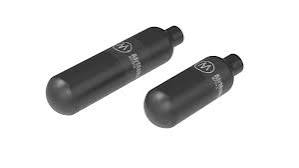
AirMaks Arms Carbon Fibre Wrapped Air Cylinder

€400.00

AirMaks Arms Carbon Fibre Wrapped Air Cylinder (Internal M18x1.5 Thread) 700cc – Lightweight High-Capacity PCP Air Reservoir

AirMaks Arms Carbon Fibre Wrapped Air Cylinder 700cc – Premium Air Storage for PCP Air Rifles

The AirMaks Arms Carbon Fibre Wrapped Air Cylinder (Internal M18x1.5 Thread) 700cc has been designed as a high-capacity compressed-air reservoir for compatible pre-charged pneumatic (PCP) air rifles. Through its advanced carbon fibre wrapping, impressive 700cc air capacity, and precisely specified internal M18x1.5 threaded connection, a practical balance between lightweight construction, air storage, and durability has been achieved.

Furthermore, dependable compressed-air storage has been recognised as an essential consideration for PCP shooting equipment. With this premium reservoir, a generous supply of compressed air can be maintained within a compact, purpose-built component.

Unlike conventional heavy-duty storage solutions, weight-conscious construction has been prioritised through the use of carbon fibre reinforcement. Consequently, the cylinder can be considered by shooting enthusiasts who value comfortable equipment handling and reliable air storage during extended range sessions.

Additionally, a maximum filling pressure of 300 bar has been specified for this 700cc model, subject to the cylinder’s markings and the manufacturer’s operating instructions.

Balistas.fr
+1

Key Features and Product Highlights

  • Brand: AirMaks Arms, a Czech manufacturer of PCP airgun equipment.

  • Product Type: Carbon fibre wrapped compressed-air cylinder.

  • Air Capacity: 700cc (700cm³ / 0.7 litres).

  • Maximum Filling Pressure: 300 bar, approximately 4,351 PSI.

  • Thread Specification: Internal M18x1.5 connection.

  • Construction: Carbon fibre wrapped pressure reservoir.

  • Application: Replacement air storage for compatible PCP air rifles.

  • Weight-Conscious Design: A favourable strength-to-weight ratio is supported through composite construction.

  • Extended Air Storage: Greater reservoir volume is provided compared with smaller 300cc and 480cc alternatives.

  • Manufacturer Part Reference: AMCYL-700, as listed by an AirMaks parts supplier.

  • Compatibility: Specific rifle and adapter compatibility must be verified before installation.

ant supplies home page
+2

Advanced Carbon Fibre Construction for Strength and Reduced Weight

Lightweight Composite Engineering

Significant attention has been given to material efficiency in the construction of the AirMaks Arms Carbon Fibre Wrapped Air Cylinder 700cc.

Through carbon fibre reinforcement, a favourable strength-to-weight relationship has been achieved compared with many traditionally constructed pressure reservoirs. As a result, a substantial compressed-air capacity can be accommodated without relying exclusively on heavy structural materials.

Moreover, carbon fibre has been widely valued in high-pressure composite cylinder engineering because of its exceptional tensile properties.

For suitable PCP rifle configurations, additional air storage can therefore be provided through a component designed with weight management in mind.

Equally importantly, comfortable rifle balance may be supported when the cylinder has been correctly matched to the intended platform. Nevertheless, the final handling characteristics will be determined by the rifle’s overall configuration and the cylinder’s installed position.

Durable Construction for Regular PCP Use

The exterior wrapping has been developed to provide structural reinforcement during approved high-pressure operation.

Furthermore, the demands associated with repeated compressed-air filling have been considered through the cylinder’s dedicated pressure-vessel design.

Rather than being treated as an ordinary accessory, the reservoir should be recognised as a specialised pressure-containing component.

Accordingly, regular inspection, correct handling, and compliance with the manufacturer’s service-life and testing requirements must be prioritised.

Although durability has been emphasised through its composite design, protection against impacts, excessive heat, and abrasive damage must still be maintained.

700cc High-Capacity Air Storage for Extended Shooting Sessions

Increased Air Volume and Practical Convenience

A substantial 700cc internal capacity has been incorporated into this AirMaks Arms carbon fibre cylinder.

Consequently, a greater volume of compressed air can be accommodated than in smaller reservoirs operated under comparable conditions.

For compatible rifles, fewer interruptions for refilling may therefore be experienced during range practice or other lawful shooting activities.

In addition, a more convenient shooting routine can be supported when a suitably sized cylinder has been selected.

However, an exact shot count cannot be guaranteed through reservoir capacity alone. Actual results will be influenced by regulator settings, calibre, operating pressure, air consumption, and rifle configuration.Carbon Air Cylinder M18x1,5 300 bar for AirMaks

Efficient Air Storage for Compatible PCP Platforms

Through its 300-bar maximum filling specification, considerable compressed-air storage capacity has been provided within the 700cc reservoir.

At the same time, the cylinder’s actual operating pressure must always be limited according to the complete rifle system’s approved specifications.

Furthermore, compatibility with regulators, bottle adapters, and associated fittings must be established before the component is installed.

Where a suitable system has been approved, dependable air storage can be maintained without unnecessary equipment complexity.

Internal M18x1.5 Thread – Secure and Precise Connection

Purpose-Specified Thread Compatibility

An internal M18x1.5 threaded neck has been incorporated into the AirMaks Arms Carbon Fibre Wrapped Air Cylinder 700cc.

Through this metric thread specification, compatibility can be assessed against appropriate AirMaks bottle adapters and rifle assemblies.

Nevertheless, correct thread dimensions alone must not be considered proof of complete compatibility.

Additional factors, including sealing arrangements, adapter construction, pressure ratings, and valve configuration, must also be verified.

Importantly, installation should be completed by an appropriately qualified technician following the specific AirMaks instructions.

Reliable Connection and System Integration

A suitable mechanical interface can be established when correctly approved fittings have been selected.

Moreover, proper sealing performance can be supported through the use of manufacturer-specified components.

Because high-pressure compressed air has been involved, inappropriate adapters or modified fittings must never be substituted.

Before any reservoir replacement, the complete assembly must be safely depressurised in accordance with the applicable manufacturer’s procedure.

Designed for Replacement and Equipment Maintenance

A Practical Replacement for Compatible AirMaks Systems

The AirMaks Arms 700cc carbon fibre cylinder has been offered as a replacement component for PCP air rifles manufactured by AirMaks Arms.

Accordingly, it may be considered when an existing reservoir has reached its approved replacement interval or when an authorised configuration requires this particular capacity.

Furthermore, replacement decisions should be based on the rifle’s model-specific technical documentation rather than appearance alone.

Although AirMaks rifle families such as the Katran and Krait may use bottle-based arrangements, direct compatibility with this exact 700cc cylinder must be confirmed for the individual model and adapter.

Professional Installation and Maintenance

For safe operation, all installation procedures should be carried out in accordance with recognised pressure-equipment practices.

Before fitting, inspection of the cylinder’s exterior condition, certification markings, and connection interface should be completed by a qualified professional.

Additionally, manufacturer-approved seals and adapters should be used wherever replacement components are required.

If damage, unusual wear, or uncertain certification status has been identified, the cylinder should be removed from service until professional assessment has been completed.

Why Choose the AirMaks Arms Carbon Fibre Wrapped Air Cylinder 700cc?

Premium Features for Demanding PCP Equipment Owners

Several practical advantages have been combined within this high-capacity compressed-air reservoir.

Firstly, a generous 700cc capacity has been provided for compatible rifles requiring substantial compressed-air storage.

Secondly, weight-conscious construction has been supported by carbon fibre wrapping.

Furthermore, a recognised internal M18x1.5 thread specification has been incorporated for use with correctly matched fittings.

In addition, the product has been supplied under the AirMaks Arms name, allowing appropriate replacement parts to be identified through established manufacturer and dealer listings.

Ultimately, an attractive combination of capacity, material efficiency, and specialised engineering has been presented.

A Valuable Component for Long-Term PCP Equipment Care

Greater flexibility in equipment maintenance can be achieved when authentic, correctly specified replacement components have been selected.

Likewise, unnecessary compatibility problems may be avoided through careful verification of the reservoir’s technical requirements before purchase.

For owners seeking a premium replacement cylinder, this 700cc carbon fibre option deserves consideration where approval for the intended rifle has been established.

Technical Specifications

Specification Product Details
Product name AirMaks Arms Carbon Fibre Wrapped Air Cylinder
Manufacturer AirMaks Arms
Reservoir capacity 700cc / 0.7L
Material Carbon fibre wrapped composite
Maximum filling pressure 300 bar
Thread type Internal M18x1.5
Product reference AMCYL-700
Equipment category PCP airgun replacement parts
Primary function High-pressure compressed-air storage
Compatibility Approved AirMaks rifle and adapter assemblies
Included component 700cc carbon fibre cylinder
ant-supplies.uk
+2

AirMaks Arms 700cc Carbon Fibre Air Cylinder – A Premium Choice for PCP Air Storage

The AirMaks Arms Carbon Fibre Wrapped Air Cylinder (Internal M18x1.5 Thread) 700cc has been developed to provide a substantial air-storage solution within a weight-conscious composite structure.

Through its 700cc capacity, 300-bar maximum filling specification, and precisely identified threaded connection, essential characteristics required for compatible PCP equipment have been brought together.

Moreover, practical replacement requirements have been addressed through the availability of this specialised AirMaks Arms component.

For customers seeking a high-capacity carbon fibre air reservoir, an excellent option has been presented, provided that model compatibility, pressure ratings, installation requirements, and certification details have been verified.

Choose the AirMaks Arms 700cc Carbon Fibre Wrapped Air Cylinder for a carefully specified replacement reservoir designed around lightweight construction, substantial air capacity, and approved high-pressure PCP applications.Carbon Air Cylinder M18x1,5 300 bar for AirMaks

AirMaks Arms Carbon Fibre Wrapped Air Cylinder 700cc – Calibres, FAC Regulations, Power, Recommended Scopes and Accessories

Understanding Calibre Compatibility with the AirMaks Arms 700cc Carbon Fibre Cylinder

The AirMaks Arms Carbon Fibre Wrapped Air Cylinder (Internal M18x1.5 Thread) 700cc has been designed to provide high-capacity compressed-air storage for compatible pre-charged pneumatic (PCP) air rifles. Although this component has not been manufactured as a complete rifle, its reservoir capacity can be considered when selecting replacement air storage for different PCP configurations.

Furthermore, compatibility must be established through the rifle’s approved cylinder interface, pressure specifications, and manufacturer documentation rather than calibre alone.

.177 Calibre (4.5mm) – Target Shooting and Precision Applications

The .177 calibre has been widely adopted for recreational target shooting and competitive airgun disciplines. Consequently, compatible PCP rifles chambered in this calibre may be equipped with appropriately approved air reservoirs.

Through the 700cc capacity, substantial compressed-air storage can be made available for suitable rifle systems.

Moreover, relatively low air consumption may be experienced in some lower-powered configurations, although actual efficiency will depend on the rifle’s operating characteristics.

.22 Calibre (5.5mm) – Versatile Recreational Shooting

Considerable popularity has also been achieved by .22 calibre PCP air rifles.

Within suitable rifle configurations, the cylinder’s generous reservoir capacity may be appreciated during extended shooting sessions.

Additionally, compatibility with an authorised AirMaks bottle adapter must be confirmed before installation.

Because the cylinder itself has no barrel or chamber, no particular calibre has been assigned to the reservoir.

.25 Calibre (6.35mm) and Larger Calibre Applications

Higher-energy PCP rifle configurations are sometimes offered in .25 calibre and other larger calibres.

For such equipment, a larger compressed-air reservoir may be specified by the manufacturer.

Nevertheless, greater cylinder capacity must not be interpreted as confirmation of compatibility with every high-power rifle.

Instead, the complete system’s pressure limits, connection requirements, and approved configuration must be verified individually.

FAC Regulations and Legal Considerations

Understanding FAC and Non-FAC PCP Air Rifles

In England and Wales, an air rifle capable of producing more than 12 ft-lb of muzzle energy generally requires a Firearm Certificate (FAC).

Meanwhile, rifles that do not exceed this threshold may be possessed without an FAC, subject to other legal requirements.

Different licensing arrangements apply in Scotland, while Northern Ireland and international jurisdictions have their own requirements.

Metropolitan Police
+1

Importantly, the AirMaks Arms 700cc cylinder is a compressed-air storage component rather than a complete air rifle.

Therefore, the cylinder’s 300-bar pressure rating must not be confused with muzzle energy or FAC classification.

FAC Compliance for Replacement Components

Appropriate documentation should be examined before a replacement cylinder has been purchased or installed.

Furthermore, the rifle’s existing legal classification must be respected throughout servicing and maintenance.

Where professional installation has been required, a qualified airgun technician should be consulted.

Any alteration affecting the rifle’s certified configuration should be assessed against the applicable regulations.

Power and Pressure Specifications

700cc Air Capacity and Maximum Filling Pressure

A substantial internal volume of 700cc has been provided by this carbon fibre wrapped reservoir.

Additionally, a maximum filling pressure of 300 bar is commonly specified for this product variant, although the cylinder markings and manufacturer documentation must be checked before use.

The following technical characteristics should be distinguished:

  • Air Capacity: 700cc or 0.7 litres.

  • Thread Connection: Internal M18x1.5.

  • Maximum Filling Pressure: 300 bar, subject to verified manufacturer specifications.

  • Power Source: Stored compressed air.

  • Muzzle Energy: Determined by the complete rifle, not the cylinder.

  • Shot Count: Dependent on rifle configuration and operating conditions.

  • Pressure Compatibility: Limited by the lowest-rated component in the approved assembly.

Does a Larger Air Cylinder Increase Rifle Power?

A direct increase in muzzle energy cannot be assumed simply because a larger reservoir has been fitted.

Instead, additional air-storage capacity may be provided without any change to the rifle’s established operating power.

Furthermore, actual performance will remain dependent on the complete PCP mechanism.

For this reason, the manufacturer’s approved pressure and installation specifications should always be followed.

Recommended Scopes for Compatible AirMaks PCP Air Rifles

Hawke Vantage 3-9×40 Riflescope

The Hawke Vantage 3-9×40 may be considered for recreational target shooting when an appropriate mounting arrangement has been provided.

Through its variable magnification, different target distances can be accommodated.

Moreover, comfortable viewing and uncomplicated adjustment have been prioritised within this general-purpose optic category.

Element Optics Helix 4-16×44 Riflescope

For enthusiasts seeking additional magnification, the Element Optics Helix 4-16×44 represents another potential option.

Its optical specifications may be appreciated during controlled range sessions and precision-oriented recreational activities.

However, rifle-specific mounting compatibility must be checked before purchase.

MTC Optics and Nikko Stirling Alternatives

Selected MTC Optics and Nikko Stirling riflescopes may also be considered for compatible PCP platforms.

Nevertheless, the scope selection should be determined by the intended shooting discipline, rifle mounting system, eye relief, and personal viewing preferences.

Important: These scopes are suggested for compatible rifles, not for attachment to the standalone air cylinder.

Recommended Accessories for the 700cc Carbon Fibre Air Cylinder

Essential PCP Maintenance and Storage Accessories

The following products may be considered alongside the AirMaks Arms cylinder:

  • Manufacturer-Approved Bottle Adapter: Correct mechanical compatibility can be maintained through an officially specified fitting.

  • Compatible PCP Filling Equipment: Appropriate compressed-air filling equipment should be selected according to manufacturer instructions.

  • Certified Air Pressure Gauge: Reservoir pressure can be monitored using correctly rated equipment.

  • Approved Replacement Seals: Suitable replacement seals should be obtained through authorised suppliers.

  • Protective Cylinder Cover: External surface protection may be provided during normal storage and transportation.

  • Padded Rifle Case: Additional protection can be provided for a compatible assembled rifle.

  • Professional Inspection Services: Cylinder condition and continued service eligibility can be assessed.

  • Manufacturer Documentation: Approved installation procedures, inspection intervals, and service-life limitations can be confirmed.

Why Choose the AirMaks Arms 700cc Carbon Fibre Cylinder?

Through its substantial air-storage capacity, carbon fibre construction, and specified internal M18x1.5 threaded connection, a specialised replacement component has been made available for approved PCP configurations.

Furthermore, practical benefits may be obtained through reduced reservoir weight compared with certain conventional alternatives.

For owners of compatible AirMaks Arms rifles, long-term equipment maintenance can be supported through the selection of correctly specified replacement parts.

Ultimately, the AirMaks Arms Carbon Fibre Wrapped Air Cylinder 700cc offers a premium air-storage option where high capacity, component compatibility, pressure safety, and dependable construction have been prioritised.

Before purchase, compatibility with the exact rifle model, approved filling pressure, and required connection components should be verified

Brocock BRK and Benjamin Air Rifles: Complete Guide to PCP Technology, Precision, Calibres and Accessories

Discover the Engineering Behind Brocock Airguns and Benjamin Air Rifles

Modern airgun technology has transformed recreational target shooting, competitive marksmanship, and precision air-powered sporting equipment. Today, manufacturers combine advanced pneumatic systems, ergonomic construction, and innovative engineering to produce dependable shooting platforms. Among the established names in this industry, brocock ltd and Benjamin continue to attract attention from enthusiasts seeking technical sophistication and reliable performance.

The evolution of brocock airguns reflects a strong emphasis on compact designs, efficient compressed-air systems, and consistent shot delivery. Similarly, the Benjamin product range offers numerous configurations, from traditional pellet rifles to specialized pneumatic platforms.

Whether researching a compressed air rifle, comparing a conventional pellet gun, or exploring advanced sporting equipment, understanding the available technologies helps buyers make informed decisions.

Brocock BRK Air Rifles: Innovation and Precision Engineering

Brocock Sniper XR and BRK Sniper XR

The brocock sniper xr represents an important development in regulated pneumatic rifle engineering. Featuring a semi-bullpup configuration, adjustable ergonomics, and a sidelever operating system, this model emphasizes handling convenience and mechanical consistency.

Additionally, the brk sniper xr incorporates a regulated air-delivery system designed to reduce variations between successive shots. Its adjustable stock components provide flexibility for different shooting positions.

For enthusiasts researching the .25 caliber brocock sniper xr, calibre selection deserves particular attention. The larger pellet diameter offers different projectile characteristics compared with smaller calibres, while energy output and shot capacity depend on the specific configuration.

The sniper xr also offers an example of how modern engineering combines compact dimensions with adjustable controls.

Brocock Commander XR and BRK Commander

Another noteworthy platform is the brocock commander xr, which combines a tactical-inspired stock configuration with pneumatic engineering.

The brocock commander has attracted interest from enthusiasts who appreciate adjustable furniture, modular features, and consistent operation.

Similarly, buyers researching brk ghost and Commander models often compare ergonomics, overall dimensions, available calibres, and compatible accessories.

Searches for brocock commander xr price should be evaluated using current retailer listings because pricing varies according to country, configuration, condition, and included equipment.

BRK Ghost Air Rifle: Modern Design and Customization

The brk ghost air rifle represents a distinctive approach to modern PCP rifle design. Its bullpup layout places major operating components within a compact overall configuration while retaining a full-length barrel arrangement appropriate to the model.

Furthermore, the BRK Ghost offers adjustable ergonomic components and a mechanical design intended to support controlled operation.

Owners researching ghost accessories should pay attention to manufacturer compatibility, factory specifications, and approved replacement components.

A replacement ghost handle, for example, should be checked against the exact model and production variant before purchase.

Likewise, a magpul sl k buttpad is a product-specific accessory reference rather than a guarantee of compatibility with every rifle stock.

Pathfinder XR and Compact BRK Models

The pathfinder xr offers another example of the manufacturer’s emphasis on compact pneumatic platforms.

Buyers researching the brk pathfinder, brk pathfinder xr, or general pathfinder air rifle specifications should compare verified product dimensions, stock arrangements, and applicable power ratings.

The brk concept xr is another model worth examining when comparing compact sporting rifles.

While these designs share elements of the manufacturer’s engineering philosophy, each has its own configuration and intended handling characteristics.

For anyone comparing several platforms, factors such as overall weight, trigger characteristics, stock adjustment, and service support are more useful than appearance alone.

What Are PCP Air Rifles and How Do They Work?

New enthusiasts frequently ask, what are pcp air rifles?

The abbreviation PCP means precharged pneumatic, referring to an air-powered system that stores compressed air in a pressurized cylinder or reservoir.

Consequently, understanding pcp rifle meaning helps explain the operating principles behind modern pneumatic sporting rifles.

Other common searches include what does pcp mean in air rifles, what is pcp air rifle, what is a pcp air rifle, and what is a pre charged pneumatic air rifle.

All describe the same general operating technology.

Likewise, what is a pcp air gun and pcp air rifle meaning refer to compressed-air propulsion rather than spring-powered or carbon-dioxide systems.

A pcp rifle stores energy before firing, whereas a break barrel pellet gun typically compresses a spring or gas ram through a cocking action.

This distinction also explains why a pneumatic gun, gun pneumatic, and pneumatic weapons may refer to several different mechanisms, depending on the context.

Modern pcp air rifles often feature pressure regulators, adjustable triggers, and specialized magazines. Nevertheless, operating pressure, energy output, and maintenance requirements vary substantially between models.

Essential Accessories and Equipment Compatibility

Properly selected accessories contribute to equipment suitability and long-term maintenance.

For example, the 0db moderator and 0 db moderator are search variations referring to a sound-moderating accessory. Actual sound reduction depends on the individual device, rifle configuration, and applicable legal requirements.

Meanwhile, a pcp o ring kit may contain replacement seals for specified components. Seal dimensions, materials, and pressure ratings must match the manufacturer’s requirements.

Optics are another consideration. A buyer researching how to connect scope equipment should first confirm the mounting-rail standard and the compatibility of the selected mounting system.

The mtc copperhead 4 16×44 is one example of an optical sight that may appear in airgun accessory searches.

Separately, what does prc stand for in guns is a terminology question commonly encountered during broader firearm research. PRC often refers to Precision Rifle Cartridge, which is distinct from PCP pneumatic technology.

Some searches also include bro air, a broad term that may appear alongside BRK and Brocock product research without identifying a specific manufacturer model.

Benjamin Air Rifles: Traditional Performance and Modern Pneumatic Technology

Benjamin Marauder and Popular PCP Models

The benjamin air rifle range encompasses numerous designs developed for different shooting preferences. From conventional air pellet gun platforms to specialized pneumatic systems, the manufacturer offers equipment for recreational and sporting applications.

Among its recognized products, the benjamin marauder has established a strong presence in PCP airgun discussions.

The benjamin marauder pcp and benjamin marauder pcp air rifle are associated with regulated or unregulated configurations, depending on model and generation. Similarly, the benjamin marauder air rifle is frequently considered by enthusiasts researching accurate pneumatic equipment.

Buyers comparing the benjamin marauder .25, benjamin marauder 22, and benjamin marauder regulated variants should verify the exact specifications rather than assume identical performance.

The benjamin marauder pistol provides another distinct option for enthusiasts interested in compact air-powered platforms.

Additionally, searches for benjamin pellet, benjamin pellet gun, and benjamin air pistol reflect the manufacturer’s broader presence in the sporting airgun market.

For owners of older equipment, benjamin air rifle repair should involve model identification, manufacturer-approved parts, and qualified servicing of pressurized components.

Benjamin Bulldog and Big-Bore Airguns

The benjamin bulldog is associated with the development of larger-calibre PCP platforms.

In particular, the benjamin bulldog 457 belongs to the big-bore category, while the bulldog 357 represents another calibre designation within the family.

Those researching benjamin bulldog 457 20 joules should distinguish search terminology from verified factory specifications, since this phrase does not establish an official 20-joule configuration.

More broadly, big bore air guns differ from conventional small-calibre pellet rifles in projectile dimensions, pressure-system requirements, and applicable regulations.

A hunting air rifle or hunting pellet gun must also be evaluated according to local laws, permitted activities, and the manufacturer’s intended application.

Benjamin Trail, Prowler and Break-Barrel Models

Traditional spring and gas-piston airguns remain popular alongside pneumatic equipment.

The benjamin prowler and benjamin trail np are examples associated with conventional sporting air-rifle designs.

Likewise, the benjamin np trail xl and benjamin air rifle 22 break barrel appear frequently in searches involving gas-piston technology.

The phrase benjamin break may also describe general interest in the manufacturer’s break-barrel products.

Enthusiasts comparing a benjamin 22 caliber pellet rifle with PCP alternatives should consider the differences in cocking mechanism, maintenance, recoil behavior, and operating requirements.

Benjamin Airbow Technology and Arrow-Launching Systems

The benjamin airbow belongs to a specialized category that uses compressed air to propel compatible arrows rather than conventional pellets.

Also called an air bow, airbow, arrow gun, air bow rifle, or air bow gun, this equipment differs substantially from standard pellet platforms.

The benjamin pioneer airbow helped establish the manufacturer’s presence in this category.

More recent searches for benjamin airbow m600, benjamin m600 airbow, and the general benjamin bow category reflect interest in advanced arrow-launching technology.

An airbow rifle may also be compared with an air powered crossbow, although their propulsion mechanisms and equipment requirements are different.

The M600 is a distinct PCP-powered arrow launcher with manufacturer-specific arrows and components.

Benjamin Airguns
+1


Understanding Pellet Gun Calibres and Power Ratings

Airgun buyers frequently compare .177 pellet guns, 177 pellet guns, a 22 pellet gun, and a .25 pcp air rifle.

Each calibre has its own projectile characteristics, compatible ammunition, and model-specific performance limits.

Similarly, searches for a high powered pellet gun, high power pellet gun, or pellet rifle 1500 fps should be assessed carefully. Advertised velocity alone does not establish accuracy, suitability, or energy output.

A bolt action pellet gun describes a particular loading or cycling arrangement rather than a specific power system.

Other familiar categories include the bb gun rifle, air gun rifle, airrifle, and the broader grouping of air rifle and air pistol equipment.

In comparison, co2 pellet guns use carbon dioxide cartridges, while PCP platforms rely on stored high-pressure air.

The search term m357 may refer to different products and requires model confirmation before any technical comparison.

Choosing the Right Airgun and Understanding Online Availability

Buyers asking can i buy air rifles online should first investigate local restrictions, age requirements, licensing obligations, and shipping regulations.

Rules vary significantly by jurisdiction, especially for higher-powered equipment and specialized arrow-launching platforms.

Whether comparing benjamin air rifles or modern BRK sporting platforms, reliable model specifications, lawful ownership, and qualified maintenance remain essential considerations.

The Brocock product family includes established Sniper XR, Commander XR, Pathfinder XR, Concept XR, and Ghost designs, while the manufacturer’s newer range includes updated XR2 variants.

Brocock
+2


Ultimately, selecting appropriate air-powered sporting equipment involves balancing ergonomics, engineering quality, compatible accessories, and long-term support. Understanding the distinctions between compressed-air systems, gas-piston mechanisms, and specialized arrow platforms makes product comparisons clearer and more informative.

A well-informed buying decision begins with accurate technical information, clearly identified models, and responsible equipment ownership.

Frequently Asked Questions (FAQs)

General Product Information and Features

1. What is the main purpose of this compressed-air reservoir?

This specialised pressure vessel has been designed to store compressed air for compatible pre-charged pneumatic (PCP) air rifles. Unlike traditional spring-powered airguns, PCP systems rely on stored compressed air to operate their firing mechanisms.

Consequently, an appropriate reservoir is essential for maintaining the air supply required by the rifle. Furthermore, a larger storage capacity may support extended shooting sessions by reducing the frequency of refilling, depending on the rifle’s operating characteristics.

2. What are the benefits of carbon fibre construction?

Several advantages have been associated with carbon fibre reinforced pressure vessels, particularly where structural strength and weight management are important.

Firstly, a favourable strength-to-weight ratio can be achieved through suitable composite engineering. Additionally, considerable compressed-air capacity can be accommodated without relying entirely on heavier conventional materials.

However, carbon fibre construction should not be interpreted as protection against every form of damage. Proper handling, periodic inspection, and compliance with manufacturer instructions must still be maintained.

3. Is a 700cc reservoir considered a large capacity?

Yes. A capacity of 700 cubic centimetres, equivalent to 0.7 litres, is considered substantial for a rifle-mounted PCP compressed-air reservoir.

Compared with smaller reservoirs, additional air storage can be provided when equivalent filling and operating conditions have been established.

Nevertheless, the actual benefit will depend on the rifle’s air consumption and approved configuration. For this reason, capacity should be evaluated alongside compatibility, weight, dimensions, and pressure requirements.

4. Can this reservoir be used with different PCP rifle brands?

Compatibility cannot be guaranteed solely because two rifles use compressed air.

Although similar-looking reservoirs may be offered by different manufacturers, variations in thread dimensions, sealing surfaces, adapters, and working pressures can prevent safe interchangeability.

Therefore, the exact rifle model and manufacturer-approved connection components must be verified before replacement.

Where uncertainty exists, confirmation should be obtained from the rifle manufacturer or an authorised service technician.

5. Is this product a complete air rifle?

No. This component is a compressed-air storage reservoir rather than a complete firing system.

Accordingly, a barrel, trigger mechanism, stock, magazine, and other essential rifle components are not provided as part of the reservoir itself.

Instead, compressed air is stored for use by a separate, compatible PCP rifle assembly.

Before purchasing, the distinction between a replacement reservoir and a complete rifle package should be understood.

Technical Specifications and Compatibility

6. What does the 700cc capacity represent?

The stated capacity refers to the internal volume available for compressed-air storage.

Specifically, 700cc is equivalent to 700 millilitres or 0.7 litres of internal volume.

However, this measurement should not be confused with the quantity of air available at atmospheric pressure after compression.

Actual usable air supply will be influenced by the filling pressure, operating pressure range, and characteristics of the connected rifle.

7. What does an internal M18x1.5 connection mean?

This designation describes a metric threaded interface. The nominal thread diameter is 18 millimetres, while the thread pitch is 1.5 millimetres.

Furthermore, an internal connection indicates that the threads are located within the relevant opening.

Although this specification is important for compatibility, matching thread dimensions alone does not establish safe interchangeability.

Other requirements, including sealing geometry, pressure ratings, and approved adapter design, must also be satisfied.

8. What is the maximum permitted filling pressure?

A maximum filling pressure of 300 bar has been specified for this product variant in supplier information.

Nevertheless, the markings on the actual cylinder and the manufacturer’s official instructions must be checked before operation.

In addition, a lower limit may apply to the complete rifle assembly or associated filling equipment.

The lowest applicable pressure limit must always be respected. Overfilling can create a serious safety hazard and must be avoided.

9. Does the reservoir control the rifle’s muzzle energy?

No. Muzzle energy is determined by the complete rifle’s operating system rather than reservoir capacity alone.

Although compressed air is supplied by the reservoir, the rifle’s internal mechanism governs how that air is used.

Consequently, a larger storage volume should not automatically be associated with greater muzzle energy or higher projectile velocity.

Any changes affecting the rifle’s power classification should be evaluated according to manufacturer requirements and applicable laws.

10. How can compatibility with a particular rifle be confirmed?

Confirmation should be obtained through model-specific manufacturer documentation or an authorised dealer.

The reservoir’s dimensions, threaded interface, pressure rating, and approved fittings must all be considered.

Furthermore, differences between model generations may affect compatibility even when rifles have similar appearances.

For dependable results, professional verification is recommended before purchase or installation.

Performance, Air Efficiency and Practical Applications

11. Will a larger reservoir provide more shots per fill?

Additional shots may be obtained when a larger reservoir has been approved for use with a particular rifle.

However, the actual number of shots will depend on several factors, including operating pressure, calibre, air consumption, and regulator characteristics.

Furthermore, consistent performance cannot be guaranteed simply through increased storage volume.

For accurate expectations, manufacturer-provided performance information should be consulted. Where reliable published figures are unavailable, estimates should not be treated as guaranteed results.

12. Is this component suitable for recreational target shooting?

Yes, an appropriate compressed-air reservoir may be used as part of a compatible PCP rifle intended for recreational target shooting.

Through dependable air storage, the rifle’s normal operating requirements can be supported during range activities.

Additionally, extended sessions may become more convenient where reduced filling frequency is achieved.

Nevertheless, the complete rifle must remain within its approved operating specifications, and the reservoir must be maintained according to the manufacturer’s recommendations.

13. Does the cylinder improve shooting accuracy?

Accuracy improvements should not be attributed directly to reservoir capacity.

Instead, accuracy is influenced by numerous aspects of the complete rifle, including mechanical condition, ammunition consistency, optics, and environmental conditions.

A correctly functioning air-storage system contributes to the rifle’s intended operation, but improved accuracy cannot be guaranteed through a reservoir replacement.

Therefore, performance claims should be evaluated using verified manufacturer information rather than assumptions.

14. Is the reservoir suitable for extended shooting sessions?

Extended sessions may be supported through the additional air volume available within a larger reservoir.

For compatible equipment, fewer filling interruptions may consequently be experienced.

However, practical performance will vary according to the rifle’s operating requirements.

Furthermore, the increased physical dimensions and installed weight should be considered when selecting equipment intended for prolonged use.Carbon Air Cylinder M18x1,5 300 bar for AirMaks

Filling, Maintenance and Safety

15. What type of compressed air should be used?

Clean, dry, breathable-quality compressed air that meets the manufacturer’s requirements should be used.

Suitable filling equipment must also be approved for the reservoir’s intended pressure range.

Importantly, oxygen, flammable gases, and unapproved gas mixtures must never be introduced.

Contamination by moisture or unsuitable substances can compromise pressure-system safety. Therefore, appropriate filtration, equipment maintenance, and professional filling practices should be prioritised.

16. Can an ordinary household air compressor be used?

No. Most household air compressors have not been designed to provide the high pressures required by PCP equipment.

Additionally, unsuitable compressors may introduce moisture, oil contamination, or other unwanted substances.

Only properly rated high-pressure filling equipment should be considered.

Before use, all filling equipment and associated connections should be checked against the manufacturer’s approved specifications.

17. How frequently should the reservoir be inspected?

Inspection intervals should be determined according to the manufacturer’s instructions, applicable pressure-vessel standards, and any certification requirements.

Before use, visible damage, unusual marks, and deterioration should be assessed.

Furthermore, periodic professional examinations may be required depending on the cylinder’s approval and jurisdiction.

Because the component stores highly compressed air, uncertainty about its condition should always be treated seriously.

18. How should the reservoir be stored when not in use?

Storage should take place in a clean, dry environment away from excessive heat, direct sunlight, and damaging chemicals.

Additionally, suitable protection should be provided against accidental impacts and abrasive contact.

The manufacturer’s recommended storage pressure and handling procedures should be followed.

Unnecessary exposure to extreme temperatures should be avoided because pressure conditions and material performance may be affected.

19. What should be done if external damage is discovered?

Use should be discontinued immediately when significant damage, deep scratches, exposed fibres, unusual swelling, or suspected structural deterioration has been identified.

The reservoir should not be repaired through adhesives, sanding, drilling, or other unauthorised modifications.

Instead, assessment should be carried out by the manufacturer or an appropriately qualified pressure-equipment specialist.

Where damage has compromised certification or structural integrity, replacement may be necessary.

20. Can the reservoir be repaired if it develops a leak?

The appropriate response depends on the location and cause of the leak.

Nevertheless, high-pressure components should never be dismantled or repaired by an unqualified individual.

A suspected leak should be investigated by an authorised technician using approved service procedures.

If damage has been identified in the pressure-containing structure, continued use must not be attempted.

Installation, Accessories and Legal Requirements

21. Is professional installation recommended?

Yes. Professional installation is strongly recommended because high-pressure connections require correct component selection and safe handling.

Furthermore, manufacturer-approved fittings and seals must be used.

Incorrect installation may result in leakage, component damage, or dangerous pressure release.

For these reasons, technical assessment should be completed before the reservoir is introduced into service.

22. Are additional adapters or fittings required?

Additional components may be required depending on the intended rifle and the supplied product configuration.

However, suitable fittings cannot be identified through reservoir capacity or thread dimensions alone.

Compatibility must be confirmed through the manufacturer’s approved parts information.

Customers should also verify whether the necessary accessories are included in the purchase or supplied separately.

23. Does purchasing a replacement reservoir require a firearms certificate?

Legal requirements depend on the jurisdiction and the nature of the equipment involved.

In England and Wales, for example, rifles exceeding the applicable air-rifle muzzle-energy threshold are generally subject to firearm certification requirements.

However, a replacement pressure vessel should not automatically be classified in the same manner as a complete rifle.

Local legislation, import restrictions, and component-specific requirements should therefore be verified before purchasing.

24. Can the reservoir be transported internationally?

International transportation may be subject to restrictions concerning compressed-gas pressure vessels.

Airlines, freight companies, customs authorities, and destination-country regulations may impose different requirements.

Furthermore, an empty or depressurised cylinder may still be subject to documentation or transport restrictions.

Before shipment, confirmation should be obtained from the carrier and applicable regulatory authorities.

25. What should be checked before purchasing?

Several important considerations should be reviewed before an order has been placed.

First, the exact rifle model and approved connection specifications should be confirmed.

Next, the pressure rating, physical dimensions, certification status, and product condition should be examined.

Additionally, the inclusion of adapters, seals, or protective accessories should be verified with the supplier.

Finally, warranty coverage and the availability of authorised technical support should be considered.

Through these checks, a more informed purchasing decision can be made, while unnecessary compatibility problems and potential safety risks may be reduced.

Final FAQs: Long-Term Ownership and Reliability

26. How long can a composite pressure reservoir remain in service?

The permitted service life depends on the cylinder’s design, certification, manufacturing date, and applicable standards.

Some composite pressure vessels are assigned a fixed service life, while others may have different inspection and retirement requirements.

Therefore, no universal expiry period should be assumed.

The cylinder’s original markings and official documentation should be used to establish its service eligibility.Carbon Air Cylinder M18x1,5 300 bar for AirMaks

27. Is regular maintenance necessary even when the reservoir appears undamaged?

Yes. Routine inspection remains important even when no obvious external defects have been observed.

Certain problems may not be immediately visible during ordinary handling.

Consequently, the manufacturer’s maintenance schedule should be followed, and professional assessment should be obtained whenever unusual conditions are suspected.

28. Why is manufacturer-approved equipment important?

Manufacturer-approved equipment has been selected or evaluated for compatibility with specified systems.

Through the use of correctly rated components, unnecessary connection problems and avoidable safety risks may be reduced.

By contrast, visually similar aftermarket fittings should not automatically be regarded as interchangeable.

For long-term reliability, verified specifications and authorised technical guidance should remain central to every maintenance decision.

29. Can the reservoir be transferred between different compatible rifles?

Transferability may be possible only where the manufacturer has explicitly approved the same reservoir and associated fittings for both systems.

Even when connection specifications appear identical, differences in pressure limits, mounting arrangements, and sealing systems must be considered.

Professional confirmation should therefore be obtained before any transfer.

30. What makes a high-quality replacement reservoir a worthwhile investment?

A high-quality replacement reservoir can contribute to dependable equipment maintenance when it has been correctly matched to the intended rifle.

Through appropriate materials, verified pressure ratings, and manufacturer-approved construction, reliable compressed-air storage can be supported.

Furthermore, long-term value may be achieved through proper care, regular inspection, and compliance with service-life requirements.

Ultimately, priority should be given to compatibility, certified pressure safety, structural condition, and reliable manufacturer support rather than capacity alone.
Reviews

There are no reviews yet.

Be the first to review “AirMaks Arms Carbon Fibre Wrapped Air Cylinder”

Related Products

FAQ

  • Spring-Piston (Break-Barrel or Underlever): Cock by compressing a spring. Reliable, no external air source needed, but can have more recoil (“spring twang”) and require technique to shoot accurately.
  • Pre-Charged Pneumatic (PCP): Filled from a scuba tank, compressor, or pump. High power, low recoil, multiple shots per fill. Popular for precision and hunting.
  • COâ‚‚: Powered by disposable cartridges. Good for pistols and semi-auto/repeaters, but performance drops in cold weather.
  • Multi-Pump Pneumatic: Hand-pumped to build pressure. Versatile but requires effort.
  • Gas Ram (Nitro Piston): Uses compressed gas instead of a metal spring. Smoother than traditional springers.

Calibers: Most common are .177 (4.5mm) for speed/flat trajectory and general use, and .22 (5.5mm) for better hunting knockdown power. Larger “big bore” (.25, .30, .357+) exist for hunting bigger game where legal.

Yes, many modern PCP and springers deliver enough energy for small game (rabbits, squirrels, birds) and even larger game in some areas. Muzzle energy (in ft-lbs or joules) matters more than velocity alone. Always match caliber, pellet weight, and energy to the game and check local hunting regs.

Treat every airgun as if it is loaded.

  • Always point the muzzle in a safe direction.
  • Keep your finger off the trigger until ready to shoot.
  • Know your target and what is beyond it (pellets can ricochet or travel far).
  • Wear eye protection.
  • Store unloaded, out of reach of children/untrained users, and ideally locked.
  • Never shoot at hard surfaces or in areas where pellets could escape your property.

Follow these rules strictly—airguns cause real injuries.

Laws differ dramatically by country, state/province, and even city. Always verify current local laws before buying, owning, transporting, or using an airgun. Age restrictions (often 18+) are common.

Examples (summaries only; check official sources):

  • UK: Air rifles ≤12 ft-lbs (16.3 joules) and pistols ≤6 ft-lbs generally do not require a license (FAC needed above that).
  • USA: Varies by state. Some treat powerful airguns as firearms; others do not. Many states now allow big-game hunting with air rifles.
  • Canada: Some airguns classified as firearms if they exceed velocity/energy thresholds.
  • Australia: Often treated as firearms; licensing/registration required in most states.
  • EU/France/Belgium/etc.: Varies; many allow low-power (<20J) guns freely to adults, with higher power needing permits. Germany has strict ~7.5J limits in some contexts.
  • Other countries: Some have no restrictions below certain energies; others ban or heavily regulate them.

Resources: Wikipedia “Air gun laws”, airgun forums, or official government sites. For travel, research transit laws carefully.

Consider:

  • Purpose: Plinking/backyard → lower power springer or COâ‚‚. Hunting/precision → PCP.
  • Budget: Entry-level springers are affordable; PCPs need a fill system (extra cost).
  • .177 vs .22: .177 easier for beginners/targets; .22 better for hunting.
  • Power source: Convenience vs performance.
  • Test pellets in your gun—accuracy varies.

Buy from reputable dealers and consider warranties.

  • Clean barrel periodically (especially if accuracy drops) with patches and appropriate tools/solvents. Avoid over-oiling.
  • Lubricate moving parts and seals with airgun-specific oil (not general gun oil). Springers need piston seal oil occasionally.
  • Check screws, seals for leaks (PCP), and safety mechanisms regularly.
  • Store in a cool, dry place, ideally in a case. Avoid leaving cocked for long periods.

Follow your model’s manual. Basic care extends life significantly.

International shipping may be available for select products. Customers are responsible for understanding and complying with their local import laws and regulations before ordering.

Yes. Customers are required to confirm their order number through WhatsApp or Live Chat before orders are processed and shipped.

If local laws prevent shipment to your area, your order may be canceled and refunded according to our store policy.

Processing typically takes 1–3 business days after payment confirmation. Delivery times vary depending on destination, carrier, and product availability.


  • Wrong pellets for your barrel/caliber.
  • “Death grip” or poor shooting form (especially with springers—let the gun recoil naturally).
  • Loose scopes or mounts.
  • Ignoring safety or local laws.
  • Over-oiling or shooting with obstructions.


Pellets are the most common projectile (lead or lead-free). Match them to your gun, caliber, and purpose—test several brands as accuracy varies by barrel.

  • Domed (Round-Head): Best all-rounder. Excellent accuracy, ballistic coefficient, and energy retention. Ideal for target shooting, field target, and general hunting (e.g., JSB Exact, Air Arms Diabolo Field, H&N Field Target Trophy).
  • Wadcutter (Flat-Head): Clean holes in paper. Best for close-range target/plinking (under 20-25 yards).
  • Hollow Point: Expands on impact for better energy dump. Good for small game hunting (e.g., Predator Polymag, H&N Terminator).
  • Pointed: More penetration, but often less accurate than domed.
  • Slugs: Heavier, more aerodynamic for high-power PCPs at longer ranges (better for big game where legal).

Tips: Heavier pellets in .22/.25 for hunting (better momentum). Lighter in .177 for speed/flat trajectory. Always check head size fit (e.g., 4.51-4.53mm variants).

Muzzle energy (ft-lbs or joules) matters more than velocity. Ethical shots require precise placement (head/heart-lung) within effective range.

Rough Guidelines (adjust for distance, pellet, and local laws):

  • Small game (squirrels, rabbits, birds): 9-20+ FPE, .177/.22.
  • Medium (raccoons, etc.): 25+ FPE, .22/.25 recommended.
  • Larger game: 40-100+ FPE in .30+ calibers (up to big bore for deer/hogs where permitted).

PCPs dominate serious hunting due to power and shot count. Springers/gas rams work well for small game but require skill. Always prioritize clean kills and check seasons/species rules.

  • Barrel Cleaning: Use a pull-through kit or rod with patches. Avoid brushes that could damage rifling. Clean when accuracy drops or after 500-1000 shots.
  • Lubrication: Airgun-specific silicone oil for seals/O-rings (sparingly—excess causes dieseling in springers). Springers may need piston lube periodically.
  • PCP Specific: Check for leaks (soapy water test), monitor regulator/hammer settings, and keep fill systems clean. Don’t exceed rated pressure.
  • General: Tighten stock screws, inspect for wear, store properly. Chronograph shots to track consistency.

Common Issues:

  • Inconsistent velocity → dirty barrel, bad pellets, or seal problems.
  • Spring “twang” → tuning or proper hold.
  • Low power → worn seals or under/over-pumping.

Toggle Content

  • Scopes: Airgun-rated (hold zero under recoil). 3-9x or 4-12x common.
  • Fill Systems: Hand pumps, compressors, or tanks for PCPs.
  • Safety Gear: Eye/ear protection, targets with backstops.
  • Noise: Airguns quieter than firearms, but moderators help further.

Budget Tip: Start with a quality springer (~$150-400) before investing in PCP setup.

Airgunning offers endless depth—from backyard plinking to precision competition and ethical hunting. Prioritize safety, legality, and practice. If you want specifics (e.g., recommendations for a country, budget, hunting small game, or a particular type like PCP vs springer), let me know for more targeted info! Shoot responsibly.

Tuning improves accuracy, reduces noise/recoil, or increases power (within legal limits).

  • Springers: Lighter springs, guides, seals, or custom tuning kits for smoother shot cycle. “V-Mach” or similar professional tunes popular.
  • PCPs: Regulator tuning, hammer spring adjustments, valve work for efficiency and shot count. Some add electronic systems.
  • Accessories: Suppressors (often unregulated on airguns), better triggers, stocks, and scopes.

Caution: Check laws—power increases may reclassify your gun. DIY only if experienced; professional tuners recommended.

You must be at least 18 years old to purchase any airgun or related accessories from our store. By placing an order, you confirm that you meet the legal age requirements in your state or country.

Yes. Orders may require age verification before processing and shipping. In some cases, we may request a valid government-issued ID to confirm eligibility.

Â