We Deliver Airguns Directly To Your Door
SKU N/A Category

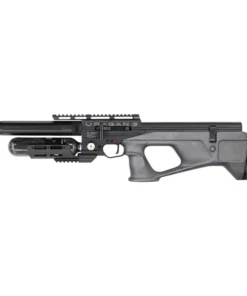
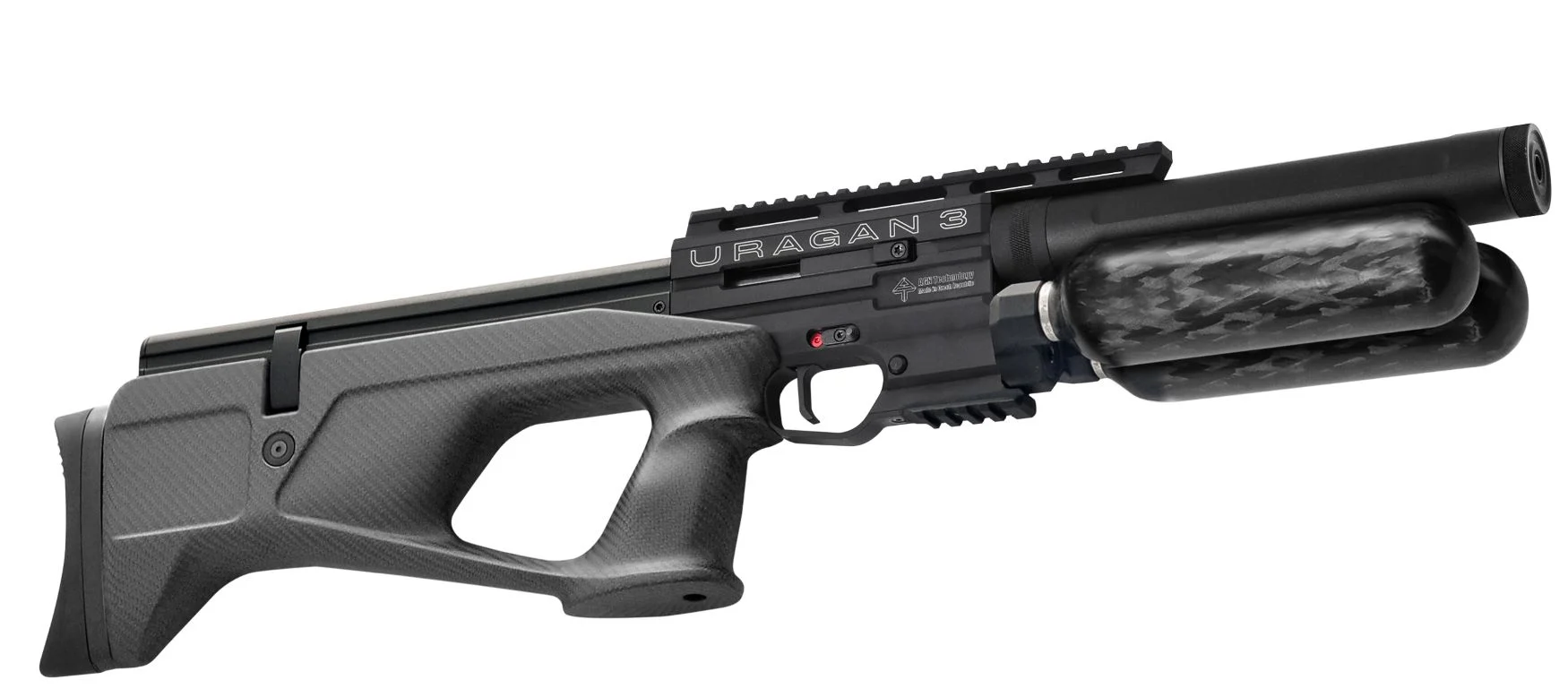
AGT Uragan 3 Prince PCP Air Rifle

Price range: €2,226.00 through €2,680.00

Developed from the Uragan 2 (meaning hurricane), the AGT Uragan 3 Prince has an excellent rear-biased balance and operation. The CZ-made barrel features a new sound moderator and offers stunning accuracy.

A crisp, adjustable trigger and fully ambidextrous biathlon-style side lever cocking system make hitting the target easy for any shooter. The Uragan 3 has a longer top weaver rail and a new shape for the trigger guard and has also undergone significant internal changes compared with the Uragan 2 which include:

  • The design of crucial components such as the trigger and firing mechanism, the firing valve assembly, and other internal components has been significantly changed and improved.
  • The installation of the power plenum, with an unthreaded fixation, greatly simplifies regular maintenance, dismantling, and reassembly of the Uragan 3.
  • A new air pressure regulator ensures consistent performance, even under extremely high pressure.
  • A new solution for the firing valve assembly improves the valve’s durability and accessibility (no need to dismantle the entire rifle to access the firing valve).
  • A new hammer, a stronger hammer spring, and the new Tighter screw that regulates spring tension.
  • Finally, a depinger has been added to make the Uragan 3 even quieter than its predecessors.


AGT Uragan 3 Prince Specifications:

Barrel Length: 400mm
Air Tank Volume: 500cm3
Overall Length:600mm
Weight (Unscoped): 3kg
Magazine Capacity: .177 -15 Shots     .22 – 12 Shots
Shots Per Fill: .177 – 150       .22 – 110


Included with this Rifle 

  • 2 magazines
  • Weaver/Picatinny scope rail
  • Fill probe
  • 3 year warranty

AGT Uragan 3 Prince PCP Air Rifle

Precision, compact power, and session-long consistency are delivered by the AGT Uragan 3 Prince. Quiet field work, range sessions, and measured hunting setups are supported by a regulated Czech bullpup that has been refined for reliability, easy service, and balanced handling.

Why the AGT Uragan 3 Prince Is Chosen

A shorter overall footprint is combined with a high-capacity air system so that more shots are stored in a compact package. Consequently, carry weight is kept manageable while fill intervals are extended. Moreover, rear-biased balance is used so that the rifle is held steadily from unsupported positions. In addition, an ambidextrous layout is provided so that left- and right-handed shooters are accommodated without extra parts.

Core advantages at a glance

  • Compact bullpup layout is used so that a 400 mm CZ barrel is housed in an overall length of about 600 mm.
  • 500 cc air capacity is supplied so that long strings are supported from a 300 bar fill.
  • Regulated output is maintained so that velocity stay is tightened across the working pressure band.
  • Biathlon side lever is fitted and can be swapped from one side to the other without special tools.
  • 20 MOA Weaver / Picatinny rail (about 225 mm) is provided so that optics and night-vision add-ons are mounted securely.
  • Integrated depinger and shrouded barrel are employed so that report is reduced; an extra moderator can still be added.
  • Improved firing valve, power plenum, regulator, and hammer system are incorporated so that service is simplified and consistency is raised.
  • Magazine capacity of 15 (.177), 12 (.22), and 10 (.25) is offered, with typical shot counts near 150 in .177 and 110 in .22 (power and pellet dependent).
  • Stock choices including synthetic, laminate, walnut, and carbon-style finishes are available so that weather and preference are matched.

Design and Handling of the AGT Uragan 3 Prince

A bullpup architecture is used so that barrel length is preserved while overall size is reduced. Therefore, movement through cover, vehicles, and tight stands is made easier. Meanwhile, mass of about 3.0–3.1 kg (unscoped) is distributed toward the rear so that muzzle rise is limited and follow-through is steadied.

An adjustable two-stage trigger is included so that first-stage take-up and second-stage break can be set for the shooter. Likewise, a manual safety is placed for positive engagement. Furthermore, a pressure gauge is fitted so that remaining air is checked before a session is started. As a result, unexpected mid-string drop-off is avoided when fills are managed correctly.

Because the biathlon lever is reversible, the same rifle is shared across a household or club without a second action. Equally important, magazine insertion from the rear is kept flush so that snag points are reduced and ambidextrous use is preserved.

Accuracy, Power System, and Quiet Operation

A CZ barrel made in the Czech Republic is specified with a 1:17.7 twist in common smallbore calibers so that pellet stability is supported. Consequently, groups at typical airgun distances are tightened when quality ammunition and a stable rest are used. In parallel, an optimized power plenum is employed so that air delivery to the valve is smoothed.

A new air-pressure regulator is installed so that output remains consistent even when cylinder pressure is still high after a fill. Additionally, an upgraded hammer and stronger hammer spring, together with a finer tension adjustment, are used so that ignition is repeatable. At the same time, a redesigned firing-valve assembly is adopted so that durability is improved and the valve can be reached without full rifle strip-down.

Quiet shooting is aided by the shroud and integrated depinger. Nevertheless, extra sound-moderator mounting is still permitted where local rules allow. Therefore, backyard zeroing, pest work near buildings, and formal range use can all be approached with more discretion.

Legal power limits must always be observed. Accordingly, FAC or high-power configurations, where offered, should be confirmed against local law before purchase and use. Responsible ownership, safe storage, and correct backstops remain essential for every shooter.

Calibres, Capacity, and Accessories

.177 is typically selected when flatter trajectory and higher shot count are preferred for targets and small pest work. Conversely, .22 is often chosen when impact energy and wind resistance are prioritized. Where available, .25 is reserved for larger quarry within ethical range and legal power.

Typical published figures for the AGT Uragan 3 Prince

  • Barrel length: 400 mm
  • Air tank volume: 500 cc
  • Maximum fill: 300 bar
  • Overall length: approximately 600 mm
  • Unscoped weight: approximately 3.0–3.1 kg
  • Magazine: 15 / 12 / 10 rounds (.177 / .22 / .25)
  • Approximate shots per fill: ~150 (.177) / ~110 (.22) — actual count varies with power setting, pellet weight, and temperature

Two magazines and a fill probe are commonly supplied. A multi-year manufacturer warranty is frequently included by retailers. Optics are not usually boxed with the rifle, so a quality scope on the 20 MOA rail is recommended before first use.

Accessory rails and KeyMod / Picatinny space on related Uragan 3 models allow bipods, lights, and slings to be added. Extra magazines, a quality compressor or bottle, and a padded case complete a practical field kit.

Practical Use Scenarios

Field positions are supported by the short length and rear balance. Therefore, a stable hold is easier to find from a kneel, a truck window, or a hide. Meanwhile, the high shot count of the Prince layout means a morning of zero confirmation plus a full pest circuit can often be completed on one fill when power is kept moderate.

On the range, the regulated platform is used so that string-to-string velocity scatter is reduced. Consequently, holdover charts stay valid for longer. Afterward, the simplified valve and plenum design means routine cleaning and inspection can be completed without a workshop strip.

HFT-style courses and informal paper punching both benefit from the crisp trigger and quiet report. Inclusive club use is supported because the lever side can be changed and the stock options cover weather and aesthetics.

Buying and Ownership Notes

Local airgun law, age limits, and transport rules must be checked before an order is placed. Shipping of PCP rifles is handled only through compliant channels. Safe storage, eye protection, and a proper backstop are required every time the rifle is charged.

When the AGT Uragan 3 Prince is specified, a compact regulated bullpup with a 500 cc reserve, CZ barrel, reversible side lever, and service-friendly internals is obtained. Precision sessions, ethical pest control, and all-day range work are therefore supported from one well-balanced platform.

Calibres, FAC, Power and Accessories for the AGT Uragan 3 Prince

Calibre choice, legal power class, and supporting accessories are matched to the intended use of the AGT Uragan 3 Prince. Consequently, trajectory, impact, shot count, and quiet handling can be balanced before an order is placed. Moreover, inclusive shooting is supported because left- and right-handed users, shared household rifles, and mixed target-and-field roles are all accommodated by the same compact regulated platform.

How Calibre Is Selected on the AGT Uragan 3 Prince

.177 is typically specified when a flatter path and a higher pellet count per fill are required. Therefore, paper, spinners, and small pest work at moderate range are often served well by this chambering. In addition, magazine capacity of 15 rounds is provided in .177, while approximately 150 regulated shots per 300 bar fill are commonly quoted when power is kept near legal sporting levels.

.22 is frequently preferred when wind drift and on-target energy are given more weight. As a result, rabbits and similar quarry at ethical distances are more readily addressed, provided local law and a safe backstop are observed. Meanwhile, a 12-shot magazine is used, and around 110 shots per fill are typically expected under similar conditions.

.25 is offered on many Uragan 3 family listings when a heavier projectile is wanted. Accordingly, larger pests and closer-range hunting roles may be considered where power, licence status, and humane range allow. Magazine capacity is usually reduced to 10 rounds, and shot count falls compared with the smaller bores. .30 is more often associated with longer-barrel Uragan 3 variants than with the compact Prince tube; availability should therefore be confirmed with the retailer before a special-order assumption is made.

Twist of 1:17.7 is listed for the common smallbore CZ barrels. Consequently, standard diabolo pellets are stabilised when quality ammunition is selected. Slug use, where legally permitted and mechanically suitable, should still be verified against barrel length, power setting, and manufacturer guidance.

FAC Status and Power Output

UK-legal sporting power is commonly supplied near 10.8–11.8 ft-lbs so that an FAC is not required for that configuration. Nevertheless, muzzle energy must always be measured on the individual rifle after any service or power change. Therefore, a chronograph check with the intended pellet is recommended before the rifle is treated as confirmed sub-12.

FAC or high-power versions of AGT platforms are listed by some dealers for licensed owners. In those cases, higher energy, different regulators settings, and altered shot counts may be applied. Consequently, certificate conditions, transport rules, and storage requirements must be followed in full. Export and import of high-power airguns are restricted in many countries; compliance is the buyer’s responsibility.

Fill pressure of 300 bar is specified for the 500 cc system. Working pressure after the regulator is designed to stay consistent across a useful band so that velocity scatter is reduced. Power is not a substitute for shot placement. Ethical range, adequate pellet weight, and a known zero remain essential for every user.

Quiet operation is aided by the shroud and integrated depinger. Even so, additional moderation is permitted only where threading, local law, and safe use allow. Indoor ranges, suburban gardens, and farmland each impose different noise and neighbour expectations; those limits should be respected.

Accessories That Complete the AGT Uragan 3 Prince

A 20 MOA Weaver / Picatinny top rail of about 225 mm is fitted so that compact and full-size optics can be mounted with extra elevation for longer holdovers. Night-vision and thermal add-ons are therefore easier to align than on a short, flat rail. A quality scope, correctly torqued rings, and a confirmed zero at the primary hunting or target distance should be treated as part of the working rifle rather than optional extras.

Two magazines and a fill probe are commonly included in the box. Extra magazines are strongly advised so that a second load is ready while the first is replenished. A padded case, barrel-cleaning kit suitable for PCP barrels, and a dedicated fill whip or compressor complete a practical kit.

Bipods, slings, and lights can be added where lower Picatinny or KeyMod-style space is present on the specific stock. An adjustable butt pad, already part of the design language of the Uragan 3 family, should be set so that eye relief and comb height match the chosen optic. Eye and hearing protection, a safe backstop, and a lockable cabinet are not optional accessories; they are required for responsible ownership.

A 300 bar bottle or a suitable electric compressor is needed to use the 500 cc reserve. Over-fill must be avoided. Moisture should be kept out of the air path. Regulator and gauge readings should be checked before each session so that a low cylinder is not mistaken for a regulator fault.

Warranty cover of up to three years is frequently offered by authorised sellers when the rifle is used as intended. Aftermarket power kits, unapproved valve work, or dry-firing practices can void that protection. Service should be left to competent PCP technicians when seals or the firing valve require attention—the improved valve layout is intended to make that work simpler, not to encourage unskilled dismantling.

Matching Package to Purpose

Target and club use are usually best served by .177, sub-12 power, a mid-range optic, and spare magazines. Mixed pest and range duty often points to .22 with the same legal power class, a slightly more robust scope, and a bipod. FAC packages, where lawfully owned, should be built around a confirmed energy figure, appropriate projectile, and extra moderation only if permitted.

Inclusive use is supported because the biathlon lever can be swapped without special tools and because stock finishes (synthetic, laminate, walnut, and carbon-style options) can be chosen for weather and handling preference. Shared rifles in a family or club are therefore easier to set up correctly for each shooter.

When calibre, legal power, and accessories are specified together, the AGT Uragan 3 Prince is turned from a compact action into a complete, consistent tool. Trajectory, shot count, and mounting space can then be predicted, and the first range session can be spent on zero and hold rather than on missing parts.

Practical Use Scenarios

Compact length, rear-biased balance, and a regulated high-capacity cylinder are used so that one rifle can cover several roles without a second action being packed. Consequently, a morning of paper work, an afternoon of farm permission, and a quiet evening zero check can be completed from the same fill when power and pellet are chosen with care. Inclusive use is supported throughout: left- and right-handed shooters, shared household rifles, and mixed experience levels are accommodated because the side lever can be swapped and the stock can be set to the optic in use.

Zeroing and First Range Session

A solid bench or a bipod on even ground is selected first so that the optic is confirmed before any field shot is taken. Therefore, a known-distance target at the primary working range—often 25 to 35 metres for legal-limit pest work—is used as the initial zero. Meanwhile, a second card at 40 or 50 metres is kept ready so that holdover is recorded rather than guessed later.

Chronograph readings are taken after the cylinder has been filled to the stated maximum and allowed a brief settle. As a result, velocity scatter across a magazine can be seen before a hold chart is trusted. Additionally, two magazines are loaded in advance so that the string is not broken while pellets are thumbed into a single drum. Eye protection is worn by everyone on the line. A safe backstop of suitable density is confirmed before the first pellet is released.

Quiet report from the shroud and depinger is helpful on club ranges where multiple lanes are occupied. Nevertheless, range commands and muzzle discipline are observed without exception. After the session, residual pressure is noted on the gauge so that the next outing is not started on a half-empty reserve.

Small-Pest Work on Permission Ground

Short overall length is used when movement through gates, along hedge bottoms, and beside outbuildings is required. Consequently, the muzzle is less likely to snag while a safe angle is found. Rear weight bias helps the rifle stay on the shoulder during a slow kneel or a rest over a gate rail. Inclusive field craft is practised by waiting for a clear backstop, identifying the quarry, and declining the shot when livestock, glass, or a public path sits behind the target.

.177 is often carried when a flatter path and more shots per fill are wanted for rats and similar small pests at modest distance. Conversely, .22 is chosen when a bit more on-target energy is preferred for rabbits at ethical range. In either case, pellet weight and legal power must match the job; energy on paper is not a substitute for placement.

A second magazine is kept in a pocket so that a follow-up is available without a noisy rummage. Lights, if fitted on accessory rail space, are kept off until the shot is committed, so that night vision of the shooter is preserved and disturbance is limited. After the permission is finished, the rifle is unloaded, the magazine is removed, and the action is shown clear before it is cased for the vehicle.

Woodland Edges, High Seats, and Vehicle Rests

A compact bullpup is easier to bring on aim from a high seat or a truck window because barrel length is retained while overall size is reduced. Therefore, the forend can be settled on a rolled jacket or a window bag without the muzzle protruding awkwardly. Transition from sitting to a braced kneeling position is made smoother when the balance point sits closer to the body.

Wind at woodland edges is read before the shot. Hold is adjusted from the notes taken on the range rather than from hope. Where a thermal or night-vision add-on is lawfully used, the long 20 MOA rail gives room for the extra tube and still leaves eye relief workable. Batteries and lens caps are checked in daylight so that a cold evening is not spent hunting for a spare cell.

Shared permissions benefit from an ambidextrous lever. After one shooter finishes a sit, the lever side can be changed without tools so that the next person is not forced into an awkward cocking motion. Inclusive parties treat this as normal setup, not a special favour.

Club Nights, HFT-Style Practice, and Paper Punching

Regulated output is relied upon so that a holdover card remains valid from the first magazine to the last usable shots on the fill. Consequently, positional practice—kneeling, sitting, and supported standing—can be repeated without stopping to guess whether the last pellet was slow. A crisp two-stage trigger, once set, is left alone during a match-style string so that break weight is familiar.

Positional slings and bipods are added only where rail space and club rules allow. Many courses reward a short rifle that can be threaded through a hoop or a low gap; the reduced overall length is used for that reason. Quiet cycling of the side lever helps neighbouring lanes. Magazines are loaded identically each time so that indexing errors are reduced.

Newer shooters in a family or club can be coached on the same rifle because the stock finish options include weatherproof synthetic as well as timber or laminate. Instruction is given with the muzzle downrange, finger off the trigger, and the safety used until the target is addressed. Inclusive language on the line keeps the focus on process rather than on who “owns” the kit.

Travel, Days Away, and Multi-Site Outings

A 500 cc reserve at 300 bar is intended to stretch a full day when power is kept moderate. Therefore, a farm in the morning and a range in the afternoon can often be covered without a bottle stop, provided shot count is watched on the gauge. A compact case is chosen so that the rifle, two magazines, pellets, probe, and a small cleaning kit travel as one package.

Fills on the road are taken only from dry, in-date air sources. Moisture in the cylinder is avoided. Over-fill is never risked. After a long drive, the zero is confirmed with a few shots at a known card before any live quarry is approached; bumps and temperature changes can move a group enough to matter.

Public transport and airline rules for PCP airguns vary widely. Local law, locked cases, and declared transport are followed. Where a rifle cannot legally travel, it is left secured at home. No scenario on this page is a reason to skip those rules.

Weather, Clothing, and All-Day Comfort

Cold mornings thicken grease and can change felt trigger weight slightly. A glove-friendly trigger guard on this generation is used so that a winter glove still finds the blade. Wet days favour a synthetic stock that is wiped and put away without a timber-care routine. Laminate and walnut remain excellent in dry storage and on the club wall; they are simply given more attention after rain.

Diana, Bintac, AEA and Hatsan Airguns: Rifles, Pistols, PCPs and Accessories

For shooters comparing trusted platforms, the Diana range remains a major point of interest. Searches such as diana air rifle, diana air rifles, air rifle diana, rws diana air rifle, rws diana, diana rws, and diana r reflect the continued popularity of classic airgun designs. Well-known spring-powered choices include the diana 34, diana model 34, diana rws 34, rws diana 34, diana r34, and diana 34 air rifle. Shooters interested in the updated modular platform may also search for diana 34 ems or diana 34 ems fiber optic sights.

Other established models continue to attract enthusiasts, including the diana 35, diana 48, diana mod 48, rws diana model 48, diana 54, diana 350 magnum, diana 350 magnum air rifle, 350 magnum diana, and diana rws 460 magnum. These rifles appeal to buyers comparing traditional spring-piston construction, power, accuracy, build quality, and different configurations for recreational or sporting use.

Diana PCP Air Rifles, Pistols and Accessories

The Diana catalog also includes PCP, CO2, and pistol-format options suited to different shooting preferences. Popular searches include diana r22, diana 2, diana 250, diana two fifty, diana 250 air rifle, diana stormrider, diana outlaw gen 2, diana airbug, diana bandit black, diana lp8, lp8 diana, diana air pistol, and diana pellet gun.

Owners looking to maintain, repair, or customize certain platforms may also search for diana chaser accessories and diana chaser parts. For target shooting and recreational plinking, a 4.5mm air gun remains a common caliber choice. Meanwhile, hunting diana searches often focus on Diana rifles suited to lawful pest-control or hunting applications where airgun use is permitted.

The term nerf diana can occasionally appear alongside Diana-related search traffic, although it represents a different product category and should not be confused with traditional pellet rifles or air pistols.

Bintac and AEA PCP Airguns

Big-bore and tactical PCP enthusiasts frequently compare Diana products with Bintac and AEA platforms. Popular searches include bintac aea harpoon, aea harpoon air gun, bintac t9 full auto, bintac t9 price, bintac mcar 457, aea terminator, and aea megalodon for sale.

Other related searches include airgun shotgun, automatic air gun, air powered 50 cal rifle, and zeus 72 cal air rifle price. Shooters setting up high-pressure PCP equipment may also research an air tank for pcp airguns or anti air tanks while comparing suitable filling equipment and accessories.

The broader phrase bee bee gun rifle may also be used by new shooters searching for BB rifles, pellet rifles, and other recreational air-powered platforms.

Hatsan Air Rifles and PCP Platforms

Hatsan remains another widely searched manufacturer across spring-piston, PCP, semi-automatic, and big-bore categories. General searches such as hatsan air rifle, hatsan air guns, hatsan pcp, hatsanusa, hatsan usa, air rifle, air rifles, and airguns cover a broad selection of products.

Break-barrel shoppers frequently compare the hatsan model 95, hatsan mod 95, mod 95, hatsan 125, hatsan 135, hatsan 135 vortex air rifle, hatsan 135 carnivore, hatsan zada, and hatsan airtact air rifle. The related search hatsan airtact is also common among buyers researching lightweight and affordable break-barrel rifles.

Customers searching for discounted or previously owned products may also use the phrase hatsan refurbished while comparing factory-refurbished or pre-owned Hatsan models.

Hatsan PCP and Big-Bore Airguns

For PCP enthusiasts, popular searches include hatsan flash, hatsan flashpup qe, hatsan bullboss, hatsan hercules, hatsan hercules bully, hatsan invader, hatsan factor rc, hatsan neutron star, hatsan harpoon, hatsan piledriver, and hatsan big bore carnivore rifle.

These searches cover everything from compact PCP rifles to powerful large-caliber platforms. Buyers can compare factors such as air capacity, operating pressure, caliber, barrel configuration, magazine capacity, stock design, overall weight, and intended use before selecting a suitable platform.

Hatsan Blitz, Sortie and Semi-Automatic Models

Shooters interested in rapid-fire PCP platforms frequently search for hatsan sortie, hatsan sortie tact, hatsan sortie tact semi-auto pcp, and hatsan sortie accessories. The Hatsan Blitz family also generates searches including hatsan blitz, hatsun blitz, hatsan blitz full automatic, and hatsan blitz 30 cal.

Compact PCP pistol and carbine shoppers may also research the hatsan velox and hatsan jet 2, providing additional choices for shooters who prefer smaller platforms.

Airgun Optics, Pellets and Accessories

Accessories, optics, ammunition, and filling equipment are important parts of a complete airgun setup. A basic 4×20 optic may suit certain entry-level rifles, while ammunition such as h&n field target trophy bleifrei can appeal to shooters specifically searching for lead-free pellets.

The search phrase econ ii may also appear alongside airgun-related product research depending on the equipment, accessory, or platform being compared.

Whether the goal involves target shooting, recreational plinking, collecting, pest control, or lawful hunting, the wide selection of Diana, AEA, Bintac, and Hatsan platforms gives shooters numerous choices. Comparing the correct caliber, rifle type, filling system, optics, pellets, accessories, and replacement parts can help buyers identify equipment that best matches their intended application.

An adjustable butt pad is set so that the same optic height works with a light summer shirt and a winter jacket. Inclusive fit matters: a shorter-stature shooter and a taller partner should each take a minute to set length of pull rather than endure a poor mount. Recoil is low on a legal-limit PCP, yet follow-through is still practised so that the last millimetre of aim is not thrown as the valve opens.

Night, Thermal Add-Ons, and Discretion

Where night shooting is lawful and the landowner has given clear permission, the extended top rail is used for clip-on or dedicated night optics. Extra elevation from the 20 MOA rail helps when the primary zero was set in daylight with a conventional scope. Batteries are carried in a pocket, not left as a single set inside the unit.

Discretion is maintained by the shroud and depinger, but “quiet” is not silent. Neighbours, livestock, and roosting birds still deserve consideration. Shots are taken only when the backstop is certain in the dark. A lamp on a lower rail, if used, is angled so that it does not blind the shooter or sweep a road.

Between Sessions: Checks That Keep the Rifle Ready

After each outing the gauge is read, the magazine is emptied, and the barrel is checked for debris. A dry patch is preferred over heavy oil in a PCP bore. Seals are inspected visually; any hiss at the fill port is investigated before the next 300 bar charge is applied. The reversible lever screws are confirmed snug after a swap so that the handle does not loosen in the field.

Pellets are stored by head size once a preferred lot is found. Mixing tins mid-zero is avoided. A simple log of fill pressure, pellet, and group size turns later sessions into refinement instead of guesswork. Inclusive clubs share that log so that a borrowed rifle is not a mystery.

Building a Day Around One Fill

A practical sequence is often used. First, a brief confirmation card is shot at the home zero distance. Next, positional practice or a short permission walk is completed. Afterward, remaining air is checked. If the gauge still shows a healthy working band, a second site can be added. If the needle has dropped toward the lower useful pressure, the rifle is refilled before more shots are expected to stay on the original chart.

This rhythm suits mixed households: one person may prefer paper, another pest work. Because the action is ambidextrous and the magazines are quick to swap, the same compact rifle is handed across without a second zero if the optic and pellet remain unchanged. Conversion from “range toy” to “working tool” is then a matter of permission, pellet, and discipline—not a second purchase.

Safe storage ends every scenario. Cased, locked, and separate from pellets, the rifle is put away so that the next outing starts from a known, legal, and ready state. Practical use is only as good as the habits that surround it.

Frequently Asked Questions

Answers below are written so that calibre, legal power, filling, optics, and day-to-day handling can be planned before a compact regulated bullpup is ordered. Inclusive use is assumed throughout: left- and right-handed shooters, shared household rifles, and mixed target-and-field roles are treated as normal. Local law always overrides a general reply. Consequently, licence status, transport rules, and storage duties must be checked in the country where the rifle will be kept.

What barrel length and overall size should be expected?

A 400 mm Czech barrel is housed in a bullpup layout so that overall length stays near 600 mm. Therefore, movement through vehicles, hides, and tight stands is easier than with a full-length sporter of similar barrel. Unscoped mass is typically quoted around 3.0–3.1 kg. Balance is biased toward the rear so that the muzzle is steadied in unsupported positions. Extra length appears only when a second moderator is added on the provided thread, where local rules allow that fitting.

Which calibres are normally offered, and how should one be chosen?

.177 is usually selected when a flatter trajectory and a higher shot count are wanted for paper, spinners, and small pests at moderate distance. A 15-round magazine is typical, and around 150 regulated shots per fill are often cited at sporting power. .22 is preferred when wind drift and on-target energy are given more weight; a 12-round magazine and roughly 110 shots per fill are commonly listed. .25 appears on many family listings when a heavier pellet is required, with magazine capacity usually falling to 10 rounds. .30 is more often associated with longer-barrel siblings than with this compact tube, so availability should be confirmed rather than assumed.

Pellet choice still decides group size. Head size, skirt, and weight should be tested on a chronograph and a card. Mixed tins after a zero are avoided so that the hold chart remains valid.

Is an FAC required?

Many examples are supplied near 10.8–11.8 ft-lbs so that UK-style sporting limits can be met without a firearms certificate. Nevertheless, muzzle energy must be measured on the individual rifle with the intended pellet. Factory markings are not a substitute for a chronograph after travel, service, or a power adjustment. High-power or FAC configurations are listed by some dealers for licensed owners only. Certificate conditions, secure storage, and lawful transport then apply in full. Import and export of high-energy airguns are restricted in many places; compliance remains the owner’s duty.

How is consistency maintained across a fill?

A 500 cc cylinder is filled to 300 bar. A regulator is used so that valve pressure stays in a useful band while cylinder pressure falls. An upgraded hammer, refined spring tension, and a revised firing valve are combined with an optimised plenum so that velocity scatter is reduced. A depinger and shroud lower report. Shot counts quoted in brochures assume a given power and pellet; cold weather, heavy slugs, and higher energy settings all shorten the string. The onboard gauge is read before a session so that a low cylinder is not blamed on the regulator.

Stock

Red Laminate, Green Laminate, Walnut, Synthetic, Carbon

caliber

.177, .22, .25

Reviews

There are no reviews yet.

Be the first to review “AGT Uragan 3 Prince PCP Air Rifle”

FAQ

  • Spring-Piston (Break-Barrel or Underlever): Cock by compressing a spring. Reliable, no external air source needed, but can have more recoil (“spring twang”) and require technique to shoot accurately.
  • Pre-Charged Pneumatic (PCP): Filled from a scuba tank, compressor, or pump. High power, low recoil, multiple shots per fill. Popular for precision and hunting.
  • CO₂: Powered by disposable cartridges. Good for pistols and semi-auto/repeaters, but performance drops in cold weather.
  • Multi-Pump Pneumatic: Hand-pumped to build pressure. Versatile but requires effort.
  • Gas Ram (Nitro Piston): Uses compressed gas instead of a metal spring. Smoother than traditional springers.

Calibers: Most common are .177 (4.5mm) for speed/flat trajectory and general use, and .22 (5.5mm) for better hunting knockdown power. Larger “big bore” (.25, .30, .357+) exist for hunting bigger game where legal.

Yes, many modern PCP and springers deliver enough energy for small game (rabbits, squirrels, birds) and even larger game in some areas. Muzzle energy (in ft-lbs or joules) matters more than velocity alone. Always match caliber, pellet weight, and energy to the game and check local hunting regs.

Treat every airgun as if it is loaded.

  • Always point the muzzle in a safe direction.
  • Keep your finger off the trigger until ready to shoot.
  • Know your target and what is beyond it (pellets can ricochet or travel far).
  • Wear eye protection.
  • Store unloaded, out of reach of children/untrained users, and ideally locked.
  • Never shoot at hard surfaces or in areas where pellets could escape your property.

Follow these rules strictly—airguns cause real injuries.

Laws differ dramatically by country, state/province, and even city. Always verify current local laws before buying, owning, transporting, or using an airgun. Age restrictions (often 18+) are common.

Examples (summaries only; check official sources):

  • UK: Air rifles ≤12 ft-lbs (16.3 joules) and pistols ≤6 ft-lbs generally do not require a license (FAC needed above that).
  • USA: Varies by state. Some treat powerful airguns as firearms; others do not. Many states now allow big-game hunting with air rifles.
  • Canada: Some airguns classified as firearms if they exceed velocity/energy thresholds.
  • Australia: Often treated as firearms; licensing/registration required in most states.
  • EU/France/Belgium/etc.: Varies; many allow low-power (<20J) guns freely to adults, with higher power needing permits. Germany has strict ~7.5J limits in some contexts.
  • Other countries: Some have no restrictions below certain energies; others ban or heavily regulate them.

Resources: Wikipedia “Air gun laws”, airgun forums, or official government sites. For travel, research transit laws carefully.

Consider:

  • Purpose: Plinking/backyard → lower power springer or CO₂. Hunting/precision → PCP.
  • Budget: Entry-level springers are affordable; PCPs need a fill system (extra cost).
  • .177 vs .22: .177 easier for beginners/targets; .22 better for hunting.
  • Power source: Convenience vs performance.
  • Test pellets in your gun—accuracy varies.

Buy from reputable dealers and consider warranties.

  • Clean barrel periodically (especially if accuracy drops) with patches and appropriate tools/solvents. Avoid over-oiling.
  • Lubricate moving parts and seals with airgun-specific oil (not general gun oil). Springers need piston seal oil occasionally.
  • Check screws, seals for leaks (PCP), and safety mechanisms regularly.
  • Store in a cool, dry place, ideally in a case. Avoid leaving cocked for long periods.

Follow your model’s manual. Basic care extends life significantly.

International shipping may be available for select products. Customers are responsible for understanding and complying with their local import laws and regulations before ordering.

Yes. Customers are required to confirm their order number through WhatsApp or Live Chat before orders are processed and shipped.

If local laws prevent shipment to your area, your order may be canceled and refunded according to our store policy.

Processing typically takes 1–3 business days after payment confirmation. Delivery times vary depending on destination, carrier, and product availability.


  • Wrong pellets for your barrel/caliber.
  • “Death grip” or poor shooting form (especially with springers—let the gun recoil naturally).
  • Loose scopes or mounts.
  • Ignoring safety or local laws.
  • Over-oiling or shooting with obstructions.


Pellets are the most common projectile (lead or lead-free). Match them to your gun, caliber, and purpose—test several brands as accuracy varies by barrel.

  • Domed (Round-Head): Best all-rounder. Excellent accuracy, ballistic coefficient, and energy retention. Ideal for target shooting, field target, and general hunting (e.g., JSB Exact, Air Arms Diabolo Field, H&N Field Target Trophy).
  • Wadcutter (Flat-Head): Clean holes in paper. Best for close-range target/plinking (under 20-25 yards).
  • Hollow Point: Expands on impact for better energy dump. Good for small game hunting (e.g., Predator Polymag, H&N Terminator).
  • Pointed: More penetration, but often less accurate than domed.
  • Slugs: Heavier, more aerodynamic for high-power PCPs at longer ranges (better for big game where legal).

Tips: Heavier pellets in .22/.25 for hunting (better momentum). Lighter in .177 for speed/flat trajectory. Always check head size fit (e.g., 4.51-4.53mm variants).

Muzzle energy (ft-lbs or joules) matters more than velocity. Ethical shots require precise placement (head/heart-lung) within effective range.

Rough Guidelines (adjust for distance, pellet, and local laws):

  • Small game (squirrels, rabbits, birds): 9-20+ FPE, .177/.22.
  • Medium (raccoons, etc.): 25+ FPE, .22/.25 recommended.
  • Larger game: 40-100+ FPE in .30+ calibers (up to big bore for deer/hogs where permitted).

PCPs dominate serious hunting due to power and shot count. Springers/gas rams work well for small game but require skill. Always prioritize clean kills and check seasons/species rules.

  • Barrel Cleaning: Use a pull-through kit or rod with patches. Avoid brushes that could damage rifling. Clean when accuracy drops or after 500-1000 shots.
  • Lubrication: Airgun-specific silicone oil for seals/O-rings (sparingly—excess causes dieseling in springers). Springers may need piston lube periodically.
  • PCP Specific: Check for leaks (soapy water test), monitor regulator/hammer settings, and keep fill systems clean. Don’t exceed rated pressure.
  • General: Tighten stock screws, inspect for wear, store properly. Chronograph shots to track consistency.

Common Issues:

  • Inconsistent velocity → dirty barrel, bad pellets, or seal problems.
  • Spring “twang” → tuning or proper hold.
  • Low power → worn seals or under/over-pumping.

Toggle Content

  • Scopes: Airgun-rated (hold zero under recoil). 3-9x or 4-12x common.
  • Fill Systems: Hand pumps, compressors, or tanks for PCPs.
  • Safety Gear: Eye/ear protection, targets with backstops.
  • Noise: Airguns quieter than firearms, but moderators help further.

Budget Tip: Start with a quality springer (~$150-400) before investing in PCP setup.

Airgunning offers endless depth—from backyard plinking to precision competition and ethical hunting. Prioritize safety, legality, and practice. If you want specifics (e.g., recommendations for a country, budget, hunting small game, or a particular type like PCP vs springer), let me know for more targeted info! Shoot responsibly.

Tuning improves accuracy, reduces noise/recoil, or increases power (within legal limits).

  • Springers: Lighter springs, guides, seals, or custom tuning kits for smoother shot cycle. “V-Mach” or similar professional tunes popular.
  • PCPs: Regulator tuning, hammer spring adjustments, valve work for efficiency and shot count. Some add electronic systems.
  • Accessories: Suppressors (often unregulated on airguns), better triggers, stocks, and scopes.

Caution: Check laws—power increases may reclassify your gun. DIY only if experienced; professional tuners recommended.

You must be at least 18 years old to purchase any airgun or related accessories from our store. By placing an order, you confirm that you meet the legal age requirements in your state or country.

Yes. Orders may require age verification before processing and shipping. In some cases, we may request a valid government-issued ID to confirm eligibility.