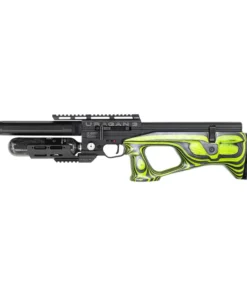
AGT Uragan Compact Synthetic: Compact PCP Precision Built for Everyday Control
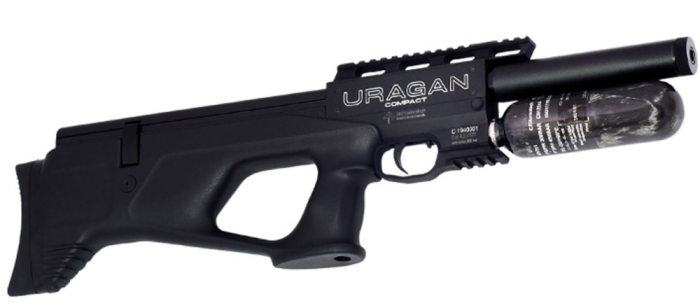
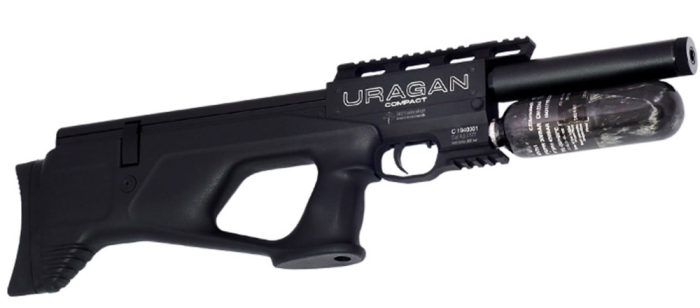
Exceptional handling in a short bullpup layout is delivered by the AGT Uragan Compact Synthetic. Lightweight synthetic architecture is combined with a regulated PCP system so that consistent power, quiet operation, and field-ready mobility are provided for target work, pest control, and recreational precision shooting. Inclusive design is emphasized throughout, so that left- and right-handed shooters are equally supported by a swappable biathlon-style side lever and an ambidextrous thumbhole stock.
Compact Bullpup Architecture That Stays Balanced
A rear-biased center of gravity is created by the bullpup configuration of the AGT Uragan Compact Synthetic. Overall length is kept near 620 mm while a 360 mm cold-hammer-forged CZ barrel is retained inside the chassis. As a result, maneuverability in hides, vehicles, and tight ranges is improved without the barrel being shortened to a point where accuracy is sacrificed.
Weather-resistant synthetic material is used for the stock so that weight is held around 2.9 kg unscoped. Consequently, fatigue during longer sessions is reduced. Vertical adjustment is offered by the rubber butt pad; therefore a stable cheek weld can be achieved by shooters of different builds. Moreover, a glove-friendly trigger area is provided so that cold-weather use remains practical.
Why Compact Length Matters in Real Use
Follow-up shots from improvised positions are made easier because the action sits closer to the shoulder. Additionally, transport and storage are simplified by the short envelope. Meanwhile, a threaded muzzle (typically M14) is retained so that an external moderator can be fitted when extra sound reduction is required.
Regulated PCP Power and Shot Consistency
A 210 cm³ high-pressure cylinder is charged to 300 bar so that a useful shot string is produced from a small bottle. Regulation is applied so that velocity variation is minimized across the usable pressure curve. Accordingly, groups remain predictable after the first shots have been fired.
Magazine capacity is arranged as 15 rounds in .177 and 12 rounds in .22. Therefore extended strings can be completed before a reload is needed. Typical factory-oriented shot counts of about 130 in .177 and about 90 in .22 are quoted by retailers; actual yield is influenced by pellet weight, tune, and local power limits.
Highlighted performance and listing points for the AGT Uragan Compact Synthetic include:
- Compact bullpup length of approximately 620 mm for confined-space handling
- 360 mm CZ cold-hammer-forged barrel for consistent pellet spin and grouping
- 210 cm³ cylinder filled to 300 bar for a practical shot count in a light package
- Regulated PCP system so that shot-to-shot velocity is kept stable
- 15-shot .177 / 12-shot .22 rotary magazines that sit flush when inserted
- Ambidextrous biathlon side lever that can be swapped left or right
- Two-stage adjustable trigger for a cleaner break
- Weaver / Picatinny rails top and bottom for optics and bipods
- Threaded muzzle ready for a moderator plus integrated shroud quieting
- Adjustable butt pad and synthetic thumbhole stock for inclusive fit
- Approximate unscoped weight of 2.9 kg for all-day carry
Furthermore, a manual sliding safety is positioned for quick access. In addition, a pressure gauge is commonly fitted so that remaining air can be checked before a session is started.
Calibres, Power, and Legal Fit
.177 is favoured when flatter trajectory and high pellet counts are required for paper and small pests. Conversely, .22 is preferred when extra downrange energy is needed for larger quarry within legal limits. FAC and sub-12 ft-lb configurations are supplied according to market; therefore local airgun laws must be confirmed before purchase and use. Inclusive language applies here as well: responsible ownership is expected of every shooter, regardless of experience level.
Ergonomics, Rails, and Accessory Readiness
Optics mounting is simplified by a top Weaver / Picatinny rail, often with a modest cant so that long-range holdover is reduced. Meanwhile, a lower rail on the bottle cradle allows a bipod or grip to be attached. As a result, the AGT Uragan Compact Synthetic can be configured for bench, field, or supported hunting positions without extra adapters in most cases.
Smooth cycling is produced by the side lever. Subsequently, the magazine is seated fully inside the action so that snag points are reduced in brush or clothing. Quiet operation is supported by the barrel shroud; additionally, an optional silencer can be threaded on when the environment demands lower report.
Practical Field and Range Scenarios
Supported shots from a vehicle window or hide are made more comfortable because barrel length is preserved inside a short overall package. Likewise, plinking and club practice remain enjoyable because recoil is negligible and the trigger can be tuned. Pest routes around outbuildings are covered efficiently when the rifle is carried slung; the synthetic stock is easily wiped after wet weather.
Maintenance is kept straightforward: a fill probe is used for charging, magazines are rotated for cleaning, and the regulated valve reduces the need for constant power tinkering. Still, pellets of consistent quality should be selected, and the barrel should be cleaned on a sensible schedule so that accuracy is preserved.
Conversion-Focused Reasons to Choose This Platform
Value is concentrated where it is felt on the range: short handling, regulated consistency, CZ barrel quality, and ambidextrous controls. Therefore the AGT Uragan Compact Synthetic is positioned as a ready-to-scope bullpup rather than a project rifle. Included extras commonly listed by dealers—spare magazines, fill probe, and a case or bag—mean that shooting can begin after a scope and pellets have been added.
Quiet, compact, and inclusive design is offered without a heavy laminate chassis. Consequently, new shooters and experienced users alike can share the same platform. Legal compliance, safe muzzle discipline, and correct storage remain the shooter’s responsibility; the rifle itself is engineered so that those habits are easier to keep.
When a lightweight Czech PCP bullpup with a proven 210 cc / 300 bar layout is required, the AGT Uragan Compact Synthetic is specified to deliver regulated strings, rail space, and a stock that fits a wide range of hands and shoulders. Precision is not promised by marketing alone—it is supported by a hammer-forged barrel, a regulator, and an action that can be run from either side.

Calibres, FAC Power Levels, and Accessories for the AGT Uragan Compact Synthetic
Calibre choice, legal power setting, and supporting accessories are arranged around the same compact regulated platform so that the AGT Uragan Compact Synthetic can be specified for paper, pest work, or licensed higher-energy use. Inclusive fit is retained across options because the ambidextrous side lever and synthetic thumbhole stock are not changed when calibre or power band is selected. Consequently, one chassis can serve club shooters, field users, and FAC holders once local rules have been confirmed.
Calibre Options and How Each Is Typically Used
Two primary calibres are offered on most AGT Uragan Compact Synthetic listings: 4.5 mm (.177) and 5.5 mm (.22). A 15-shot rotary magazine is supplied in .177, while a 12-shot magazine is supplied in .22. Therefore magazine capacity is matched to pellet diameter rather than being forced into a single drum size.
A flatter trajectory and a higher pellet count per fill are associated with .177. As a result, that calibre is frequently selected for zeroing, HFT-style practice, and small-pest work where precise placement is valued over raw impact. Conversely, greater sectional density and downrange energy are associated with .22. Accordingly, that calibre is often preferred when slightly larger quarry is taken within legal limits or when wind drift must be reduced at modest field distances.
Retail velocity figures vary by tune and market. In one commonly published EU specification, approximately 270 m/s is quoted in .177 and approximately 250 m/s in .22, with example energies near 20 J and 32 J respectively. In higher-output listings, velocities approaching the mid-800s fps in .177 and low-800s fps in .22 are described for FAC-oriented setups. Therefore printed numbers should be treated as configuration-dependent rather than as a single factory promise.
Pellet selection remains decisive. Lightweight match pellets are usually favoured in .177 for grouping; heavier hunting designs are more often chosen in .22 so that energy is retained on target. Moreover, slug use is discussed by some tuners on FAC examples, yet barrel twist and magazine feed must be verified before slugs are assumed to run reliably.
Highlighted calibre points for the AGT Uragan Compact Synthetic:
- .177 (4.5 mm) — 15-shot magazine, flatter path, high shot count for targets and small pests
- .22 (5.5 mm) — 12-shot magazine, stronger impact for legal field use
- Regulated PCP delivery so that both calibres stay consistent through the usable pressure band
- CZ 360 mm hammer-forged barrel shared across calibres for grouping potential
- Market-specific power (sub-12 or FAC) applied independently of stock colour
FAC, Sub-12 Power, and Legal Responsibility
Power is not a single fixed figure on the AGT Uragan Compact Synthetic. Instead, output is set to the destination market. In the United Kingdom, sub-12 ft-lb examples are supplied so that no firearm certificate is required for lawful possession by eligible adults. Meanwhile, FAC variants are prepared where higher energy is permitted and a certificate is held.
A 300 bar fill and a 210 cm³ cylinder remain the usual air source in both bands. Regulation is retained so that shot-to-shot speed is stabilised even when hammer spring and valve timing have been altered for FAC. Shot count, however, is reduced as energy is raised, because more air is used per discharge. Typical compact-class strings near 130 shots in .177 and near 90 shots in .22 are associated with moderate factory tunes; FAC strings are shorter and must be confirmed on a chronograph after setup.
Inclusive language applies to the legal side as well. Licensed and unlicensed users are both expected to verify local airgun law, transport rules, and permitted quarry before the rifle is used. Energy stamps, dealer paperwork, and any restrictor devices must not be altered except by a qualified technician where the law allows. Safety catch use, muzzle control, and secure storage are required of every owner.
Where FAC is specified, a two-stage trigger and a swappable side lever still support precise follow-up shots. Nevertheless, extra caution is required because report, pellet flight, and backstop needs all increase with power. A moderator is therefore more often fitted on FAC examples, and a stronger backstop is recommended on private land.
Accessories That Complete the Compact Platform
Factory and aftermarket accessories are designed around rails, threads, and the probe-fill system already present on the AGT Uragan Compact Synthetic. A top Weaver/Picatinny rail is provided for a compact or mid-tube scope; a lower rail on the bottle cradle is provided for a bipod or short grip. Consequently, a hunting or bench layout can be built without a custom chassis.
A threaded muzzle (commonly M14 class) accepts an external silencer after the thread protector has been removed. Combined with the barrel shroud, additional moderation is thereby achieved for backyard and permission work. Two magazines are frequently included so that one can be loaded while the other is in the action. A fill probe (and often a short charging kit) is supplied so that a 300 bar source can be connected without a permanently fitted Foster fitting in every market.
Useful accessory groupings are highlighted below:
- Optics — compact 3–12× or 4–16× airgun-rated scopes on the top rail; bubble levels and one-piece mounts preferred on a short bullpup
- Sound reduction — shroud plus optional moderator matched to the muzzle thread
- Support — compact bipod on the lower rail; rear bag for bench sessions
- Air supply — 300 bar probe, whip, and a compressor or bottle rated for the cylinder
- Magazines and pellets — spare rotary mags in the chosen calibre; consistent-weight pellets for the regulator
- Carry and care — padded case, barrel wipes, and a simple cleaning kit
- FAC extras — chronograph checks, stronger slings, and land-appropriate backstops
Furthermore, night-vision or thermal add-ons can be considered on the top rail when pest control after dark is legal. Weight should still be watched, because the advantage of the 2.9 kg synthetic compact is lost if an oversized optic and heavy moderator are stacked without need.
Conversion is supported when accessories are chosen to match the job rather than to fill every rail slot. A modest scope, a spare magazine, a moderator, and a reliable 300 bar fill source turn the AGT Uragan Compact Synthetic into a complete field rifle. Calibre, FAC or sub-12 power, and those few add-ons should be decided together so that legal limits, pellet flight, and handling stay aligned from the first fill to the last regulated shot.

Diana, Bintac, AEA and Hatsan Airguns: Rifles, Pistols, PCPs and Accessories
For shooters comparing trusted platforms, the Diana range remains a major point of interest. Searches such as diana air rifle, diana air rifles, air rifle diana, rws diana air rifle, rws diana, diana rws, and diana r reflect the continued popularity of classic airgun designs. Well-known spring-powered choices include the diana 34, diana model 34, diana rws 34, rws diana 34, diana r34, and diana 34 air rifle. Shooters interested in the updated modular platform may also search for diana 34 ems or diana 34 ems fiber optic sights.
Other established models continue to attract enthusiasts, including the diana 35, diana 48, diana mod 48, rws diana model 48, diana 54, diana 350 magnum, diana 350 magnum air rifle, 350 magnum diana, and diana rws 460 magnum. These rifles appeal to buyers comparing traditional spring-piston construction, power, accuracy, build quality, and different configurations for recreational or sporting use.
Diana PCP Air Rifles, Pistols and Accessories
The Diana catalog also includes PCP, CO2, and pistol-format options suited to different shooting preferences. Popular searches include diana r22, diana 2, diana 250, diana two fifty, diana 250 air rifle, diana stormrider, diana outlaw gen 2, diana airbug, diana bandit black, diana lp8, lp8 diana, diana air pistol, and diana pellet gun.
Owners looking to maintain, repair, or customize certain platforms may also search for diana chaser accessories and diana chaser parts. For target shooting and recreational plinking, a 4.5mm air gun remains a common caliber choice. Meanwhile, hunting diana searches often focus on Diana rifles suited to lawful pest-control or hunting applications where airgun use is permitted.
The term nerf diana can occasionally appear alongside Diana-related search traffic, although it represents a different product category and should not be confused with traditional pellet rifles or air pistols.
Bintac and AEA PCP Airguns
Big-bore and tactical PCP enthusiasts frequently compare Diana products with Bintac and AEA platforms. Popular searches include bintac aea harpoon, aea harpoon air gun, bintac t9 full auto, bintac t9 price, bintac mcar 457, aea terminator, and aea megalodon for sale.
Other related searches include airgun shotgun, automatic air gun, air powered 50 cal rifle, and zeus 72 cal air rifle price. Shooters setting up high-pressure PCP equipment may also research an air tank for pcp airguns or anti air tanks while comparing suitable filling equipment and accessories.
The broader phrase bee bee gun rifle may also be used by new shooters searching for BB rifles, pellet rifles, and other recreational air-powered platforms.
Hatsan Air Rifles and PCP Platforms
Hatsan remains another widely searched manufacturer across spring-piston, PCP, semi-automatic, and big-bore categories. General searches such as hatsan air rifle, hatsan air guns, hatsan pcp, hatsanusa, hatsan usa, air rifle, air rifles, and airguns cover a broad selection of products.
Break-barrel shoppers frequently compare the hatsan model 95, hatsan mod 95, mod 95, hatsan 125, hatsan 135, hatsan 135 vortex air rifle, hatsan 135 carnivore, hatsan zada, and hatsan airtact air rifle. The related search hatsan airtact is also common among buyers researching lightweight and affordable break-barrel rifles.
Customers searching for discounted or previously owned products may also use the phrase hatsan refurbished while comparing factory-refurbished or pre-owned Hatsan models.
Hatsan PCP and Big-Bore Airguns
For PCP enthusiasts, popular searches include hatsan flash, hatsan flashpup qe, hatsan bullboss, hatsan hercules, hatsan hercules bully, hatsan invader, hatsan factor rc, hatsan neutron star, hatsan harpoon, hatsan piledriver, and hatsan big bore carnivore rifle.
These searches cover everything from compact PCP rifles to powerful large-caliber platforms. Buyers can compare factors such as air capacity, operating pressure, caliber, barrel configuration, magazine capacity, stock design, overall weight, and intended use before selecting a suitable platform.
Hatsan Blitz, Sortie and Semi-Automatic Models
Shooters interested in rapid-fire PCP platforms frequently search for hatsan sortie, hatsan sortie tact, hatsan sortie tact semi-auto pcp, and hatsan sortie accessories. The Hatsan Blitz family also generates searches including hatsan blitz, hatsun blitz, hatsan blitz full automatic, and hatsan blitz 30 cal.
Compact PCP pistol and carbine shoppers may also research the hatsan velox and hatsan jet 2, providing additional choices for shooters who prefer smaller platforms.
Airgun Optics, Pellets and Accessories
Accessories, optics, ammunition, and filling equipment are important parts of a complete airgun setup. A basic 4×20 optic may suit certain entry-level rifles, while ammunition such as h&n field target trophy bleifrei can appeal to shooters specifically searching for lead-free pellets.
The search phrase econ ii may also appear alongside airgun-related product research depending on the equipment, accessory, or platform being compared.
Whether the goal involves target shooting, recreational plinking, collecting, pest control, or lawful hunting, the wide selection of Diana, AEA, Bintac, and Hatsan platforms gives shooters numerous choices. Comparing the correct caliber, rifle type, filling system, optics, pellets, accessories, and replacement parts can help buyers identify equipment that best matches their intended application.
Practical Use Scenarios in the Field, on the Range, and Around the Holding
Everyday shooting is shaped less by brochure figures than by how a short, regulated bullpup is carried, mounted, and fired when time, weather, and space are limited. Compact length, rear-biased balance, and a weather-tolerant synthetic stock are therefore put to work in hides, farm buildings, club lanes, and vehicle-based permissions. Inclusive handling is assumed throughout: left- and right-handed users are accommodated by a side lever that can be swapped and by a thumbhole that does not favour one shoulder only. Legal limits, safe backstops, and landowner permission remain the foundation of every scenario described below.
Dawn Permissions Around Outbuildings and Yard Edges
Quiet movement along sheds, grain stores, and orchard margins is made easier when overall length stays short. A slung rifle can be brought to the shoulder in a doorway without the muzzle being driven into lintels or hanging tack. Consequently, first-light pest work around buildings is completed with less disturbance to livestock and neighbours.
Supported shots from a window ledge or feed-bin rail are stabilised by the rear-heavy bullpup layout. The forend can be rested without a long barrel overhanging the support. Meanwhile, a compact optic stays inside the profile so that it is not knocked when the shooter turns in a narrow passage. Follow-up shots are cycled with the side lever close to the face; magazines that sit flush reduce snags on clothing and netting.
Pellet choice is matched to distance. At typical yard ranges, a consistent mid-weight pellet is preferred so that point of impact is not chased after every string. Regulation helps keep the first and last shots of a short session aligned when the cylinder is not being emptied in one sitting. After the permission is finished, the synthetic stock is wiped of dew and dust; no oil-hungry laminate surface is left to mark vehicle seats.
Highlighted yard-and-building habits:
- Short presentation through doors, hides, and vehicle windows
- Resting the forend on sills without excess barrel past the support
- Flush magazines to limit snags in coats and mesh
- Quiet shroud-plus-moderator use where neighbours are close
- Quick wipe-down after wet grass and dusty barns
Vehicle-Based Routes and Mobile Pest Circuits
Farm tracks and estate lanes are often worked from a stopped vehicle. A compact bullpup is lifted from a rack or case and aligned on a window bag with less risk of the muzzle striking the door frame. As a result, the shooter remains seated, the engine can be switched off, and the shot is taken without a long walk that would flush quarry.
Wind through an open window is managed by a firm hold and a two-stage trigger that can be set for a clean break. Safety discipline is unchanged: the muzzle is kept outside the cabin until the shot is intended, and the action is left uncocked while the vehicle is moving. Inclusive practice still applies—either shoulder can be used if the seat and window height demand a change of side, provided the lever has been set for that hand.
After several stops, fatigue is limited by the modest unscoped mass. A sling is used between stands so that hands stay free for gates. Air pressure is checked on the gauge before the next lay-by; a 300 bar fill is not assumed to last an entire day if FAC-level energy is in use. Spare magazines are kept in a pocket rather than loose in the footwell.
Club Range Sessions, Zeroing, and Group Work
Paper and reactive targets reward a stable hold and a predictable regulator. A bench or prone mat is used so that the short chassis is supported at the forend and the butt pad is settled into the shoulder. Vertical pad adjustment is used until the optic sits without neck strain. Therefore longer zeroing sessions remain comfortable for a wider range of body sizes.
Group testing is conducted in short strings so that barrel heat and shooter fatigue are separated from true mechanical variation. The same pellet lot is kept for the whole card. Distance markers at 20, 30, and 50 metres are used first; only then are longer club distances attempted if the power band and optic allow a clear aim point.
Trigger work is practised dry and live. First-stage take-up is felt, then the break is executed without disturbing the bag. Side-lever cycling is kept smooth so that the head is not lifted from the stock. Magazines are rotated: one is fired while the second is loaded at the bench, reducing downtime between cards.
Range etiquette is observed by every participant. Muzzles stay downrange, actions are shown clear when people go forward, and high-power FAC examples are only used where the club and backstop permit that energy. Inclusive coaching is easier on a platform that can be swapped from right- to left-side lever for a guest shooter without a different rifle being drawn from the rack.
Hide, High Seat, and Constrained Field Positions
Netting hides and compact high seats punish long barrels. A bullpup that keeps barrel length inside a short envelope can be sat upright, swung through a narrow port, and withdrawn without tearing mesh. The lower rail accepts a small bipod when the seat shelf is uneven; alternatively, a jacketed forend rest is used so that the bottle cradle is not marked.
Cold mornings favour a glove-friendly trigger guard. Layers are worn without the comb being raised so high that a cheek weld is lost. Breath is timed between gusts. Because report is already reduced by the shroud, an extra moderator is added only when the hide sits close to public paths and local rules allow that extra length.
Follow-up opportunities on moving pests are limited. The first shot is prepared as the only shot. If a second is required, the lever is run without the rifle being lifted off the rest. Empty magazines are swapped by feel so that the head does not leave the optic.
Weather, Carry, and End-of-Day Care
Rain and mud are expected on working land. A synthetic stock is rinsed and dried; water is kept out of the muzzle and fill port. After a wet circuit, the rifle is stood muzzle-down only long enough for the exterior to drain, then stored dry. Seals and the probe connection are inspected before the next 300 bar fill.
Heat in a vehicle is avoided. Cases are not left on dashboards. Optics are checked for shift after rough tracks. Inclusive sharing of one rifle among family or club members is simpler when the stock can be wiped and the lever swapped rather than a second chassis being bought.
Transport follows local law. A locked case, separate pellets, and any certificate paperwork travel together. The compact length fits estate cars and lockers that reject full-length sporters. Upon arrival, a brief function check is made: safety movement, lever stroke, magazine seating, and a confirmation that the thread protector or moderator is tight.
Matching the Session to Power Band and Pellet
Sub-legal-limit setups are used for club paper and close pest work where maximum energy is neither required nor permitted. Higher licensed output is reserved for appropriate quarry, distance, and backstop. Chronograph checks after travel or a knock confirm that the regulator and valve have not drifted. Pellets that grouped last month are not assumed to group after a barrel clean or a change of lot.
Accessories stay minimal on mobile days: optic, two magazines, moderator if needed, probe, and a small kit. Extra rails are left empty so that snag weight is not added. Night-legal permissions, where allowed, use a lamp or compact digital add-on only after balance has been tested on the bag; a top-heavy night setup cancels the benefit of a light synthetic bullpup.

Practical success is measured by calm first shots, legal compliance, and a rifle that is still pleasant to carry at dusk. Short handling, regulated consistency, and an ambidextrous stock are used so that the same compact PCP can cover a yard edge at dawn, a club card at noon, and a hide at last light—provided the shooter, the land, and the power setting remain aligned.
Frequently Asked Questions for Everyday Ownership and Use
Clear answers are provided below so that calibre choice, legal power, filling, accessories, and field habits can be planned before the first session. Inclusive language is used throughout: left- and right-handed shooters, new owners, and experienced users are addressed on equal terms. Local law always takes priority over general guidance. The model name is omitted here by request; questions refer to this compact regulated synthetic bullpup PCP as “the rifle.”
Power, Law, and Calibre
Is a firearm certificate required?
Requirement is determined by local energy limits and national law. In markets where a sub-12 ft-lb limit applies, a certificate is not needed for eligible adult possession when the rifle is supplied in that band. Where higher output is fitted, a certificate (or equivalent licence) is required before the rifle is purchased, stored, or used. Confirmation should be obtained from the selling dealer and from current legislation, because rules differ by country and sometimes by region.
Which calibre should be chosen first?
.177 is generally selected when a flatter trajectory and a higher pellet count are wanted for paper and small pests. .22 is generally selected when extra on-target energy and reduced wind drift are wanted at typical field distances. Magazine capacity is usually 15 rounds in .177 and 12 rounds in .22. Both calibres share the same short chassis, rails, and swappable side lever.
How much does output change between club and licensed setups?
Output is set at supply. Club-legal examples are held within the local unlicensed ceiling. Licensed examples are tuned higher, so more air is used per shot and the usable string is shortened. Published velocities and energies vary by market listing; a chronograph check after delivery is recommended so that the actual tune is known.
Can slugs be used instead of pellets?
Slug use depends on twist rate, magazine feed, and power band. Some licensed setups are discussed with heavier projectiles, yet reliable feed and grouping are not guaranteed on every example. Testing with the intended magazine and a safe backstop should be completed before slugs are adopted as standard ammunition.
Highlighted legal and calibre reminders:
- Energy band must match the destination country’s rules
- Certificate status must be confirmed before a high-power example is ordered
- .177 favours trajectory and shot count; .22 favours impact at field ranges
- Chronograph results override brochure figures after shipping
- Quarry, land permission, and backstop remain the shooter’s duty
Filling, Shot Count, and Consistency
What fill pressure is used?
A 300 bar maximum fill is the usual specification for the compact carbon-fibre-class cylinder (commonly about 210 cm³ on this short model). Overfilling above the marked limit is never permitted. A compatible probe and a gauge on both the rifle and the charging source should be used.
How many shots can be expected from one fill?
Moderate factory-oriented strings near 130 shots in .177 and near 90 shots in .22 are often quoted for this compact regulated layout. Actual yield falls when energy is raised, when heavy pellets are used, or when shooting continues below the regulator’s sweet range. A written note of start pressure and shot number helps future sessions stay predictable.
Why does a regulator matter on a small bottle?
Regulation holds working pressure more stable as the cylinder empties. Therefore group size is less likely to walk as the gauge needle drops. Consistency is still affected by pellet lot, barrel condition, and trigger technique; the regulator reduces one variable rather than removing all of them.
How should the rifle be charged safely?
The probe is inserted only when both sides are depressurised at the connector according to the charger instructions. The rifle is pointed in a safe direction. Fill rate is kept moderate so that heat build-up is limited. After the target pressure is reached, the line is vented before the probe is withdrawn. Dust caps are replaced on the port.
Handling, Stock, and Left- or Right-Handed Use
Can the side lever be moved to the other side?
Yes. A biathlon-style lever is designed to be swapped so that left- and right-handed shooters can cycle the action without a different rifle being required. The change should be made with the rifle unloaded, following the maker’s fastener sequence. After the swap, function is checked: full stroke, magazine feed, and safety movement.
Is the stock only for one body size?
A synthetic thumbhole with an adjustable butt pad is intended to cover a range of shoulder heights and jacket thicknesses. Perfect fit for every torso cannot be claimed, yet vertical pad movement and the compact length help more users reach a usable cheek weld than a fixed long sporter often allows.
Is the rifle heavy to carry all day?
Unscoped mass is typically near 2.9 kg. An optic, moderator, and bipod add weight. For mobile pest routes the advantage remains the short overall length (about 620 mm class) more than an ultra-light feel. A sling is advised between stands.
Can gloves be used in winter?
A trigger guard with reasonable space is provided on later compact patterns so that gloved operation is practical. Trigger weight should still be confirmed; a very light match setting is less suitable with thick gloves.
Optics, Moderators, and Other Accessories
What scope length suits this bullpup?
Compact or mid-tube airgun-rated scopes are preferred because eye relief sits closer to the action than on a conventional rifle. One-piece mounts on the top Weaver/Picatinny rail reduce shift. Excessive objective size can unbalance the short chassis and snag in hides.
Is a silencer required?
A shrouded barrel already reduces report. An external moderator on the muzzle thread is added when neighbours, livestock, or hide work demand extra quiet. Thread type must be matched (commonly M14-class on this family). The protector ring is refitted when the moderator is removed so that the crown stays guarded.
Where is a bipod attached?
A lower rail on the bottle cradle is the usual point. A compact bipod is chosen so that the rifle still sits level in a vehicle window or on a hide shelf. Heavy tactical pods cancel the point of a lightweight synthetic compact.
Which accessories are worth buying first?
A suitable scope, a spare magazine, a correct fill probe and 300 bar source, and—if needed—a moderator cover most first-year use. Cases, slings, and cleaning gear follow. Rails should not be filled “because they exist.”
Highlighted accessory priorities:
- Airgun-rated optic with workable eye relief on a short action
- Spare rotary magazine in the chosen calibre
- 300 bar charging kit matched to the probe
- Moderator only when extra quiet is required and legal
- Compact bipod or window bag rather than oversized furniture
- Padded case that fits the short overall length
Accuracy, Maintenance, and Storage
What groups should be expected?
Group size depends on pellet, zero distance, rest, and shooter. Near-hole clusters at 20–30 metres are commonly reported when a consistent pellet is used from a bag. Longer distances demand a known zero, stable hold, and legal energy sufficient for a readable aim point. The hammer-forged barrel supports accuracy; it does not replace technique.
How often should the barrel be cleaned?
Cleaning is done when groups open or after a known dirty session, not on a rigid daily ritual that can wear the crown. Felt pellets or a proper rod from the breech end (where design allows) are preferred over improvised tools. Oil is kept out of the transfer port.
What routine checks are recommended?
Before a session: safety function, lever travel, magazine seating, gauge reading, and muzzle thread tightness. After rough transport: optic return-to-zero on a short card. Periodically: probe O-rings, stock fasteners, and butt-pad screws.
How should the rifle be stored?
A dry, locked cabinet is used. The cylinder is not left at maximum pressure for months if the maker advises a lower storage fill; dealer guidance should be followed. Pellets and the charging bottle are stored separately from the locked rifle where local rules require it. Children and unauthorised adults must not have access.
Field Use, Transport, and Sharing the Rifle
Is this layout suitable for vehicle windows and hides?
Yes. Short overall length is the main practical advantage. The muzzle is less likely to strike door frames and hide ports. The rear-biased balance helps a seated shot. A window bag or small bipod completes the rest.
Can two people share one rifle at a club?
Sharing is practical because the lever can be swapped and the pad adjusted. Inclusive coaching is easier when a guest shooter is not forced onto the “wrong” side. Rules of the range still apply: one person on the firing point, actions clear when anyone moves forward.
What should be carried on a mobile pest day?
Rifle in a legal case or slip as local law requires, two magazines, a tin of the zeroed pellet, moderator if used, probe only if a refill is planned, and permission documents. Night equipment is added only where lighting or digital aiming aids are lawful.
Why do first shots after transport sometimes land off?
Mounts, moderator tightness, and temperature can shift zero slightly. A single confirmation shot into a safe bank is good practice before pest work begins. Blaming the regulator first is less useful than checking screws and pellet lot.
When should a technician be consulted?
Loss of power, leaking at the probe or gauge, a safety that will not engage, or a magazine that will not index are reasons to stop shooting. Home “tuning” of valves on a certified energy rifle can take the example outside the law. A qualified airgun technician is the correct next step.
Responsible use is the short version of every answer above. Calibre, power band, fill discipline, and a few well-chosen accessories determine whether the compact regulated bullpup stays pleasant and legal from the first dawn permission to the last card of the season. Questions that remain after this list should be taken to the supplying dealer with the rifle’s actual specification sheet in hand, because market tunes and included kits are not identical worldwide.

Reviews
There are no reviews yet.