Air Arms Pro-Sport Walnut – Premium Spring-Powered Air Rifle with Precision Engineering and Classic Walnut Design
Air Arms Pro-Sport Walnut – Exceptional Accuracy, Elegant Craftsmanship, and Refined Shooting Performance
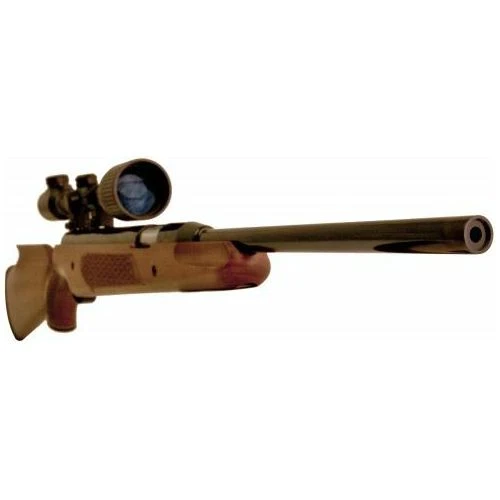
The Air Arms Pro-Sport Walnut is widely recognised as a premium British-engineered spring-powered air rifle, combining traditional walnut craftsmanship with advanced mechanical design. Exceptional attention has been given to its appearance, internal engineering, and handling characteristics. Furthermore, outstanding shooting consistency is supported by a precision Lothar Walther barrel, while the distinctive concealed underlever mechanism has been incorporated to preserve its elegant sporting profile.
Unlike conventional spring-powered designs, an exceptionally refined mechanical arrangement has been integrated into this model. As a result, friction is reduced through synthetic bearing components, while a controlled firing cycle is supported by carefully engineered internal mechanisms.
Additionally, the beautifully finished walnut stock has been shaped to provide comfortable handling and dependable support. Every visible detail has been considered, from the carefully formed cheekpiece to the distinctive checkering patterns.
Whether traditional craftsmanship or mechanical sophistication is appreciated, a distinctive combination of both is presented through this established British air rifle.
Premium Walnut Stock and Traditional British Craftsmanship
Beautifully Finished Natural Walnut Construction
A sophisticated appearance is provided by the premium walnut stock, which is distinguished by attractive natural grain patterns and a carefully finished surface. Furthermore, each wooden stock is characterised by individual grain variations, ensuring that a unique visual character is displayed.
The stock is produced with ergonomic considerations in mind. Consequently, a comfortable shooting position is supported by its carefully designed contours, while a secure grip is encouraged by its textured checkering.
In addition, a traditional sporting appearance is maintained through the balanced proportions of the stock and action.
Ergonomic Cheekpiece and Comfortable Handling
Improved head positioning is supported by the raised Monte Carlo-style cheekpiece. Moreover, natural alignment with a compatible optical sight is encouraged by the carefully shaped stock.
Comfort has also been considered throughout the design. Accordingly, the rifle’s substantial construction is complemented by an ergonomic gripping surface and a shaped shoulder contact area.
For extended recreational target sessions, consistent positioning can be supported through the combination of carefully selected materials and balanced stock geometry.
Advanced Underlever Spring-Piston Engineering
Concealed Underlever Mechanism
One of the most recognisable characteristics of the Air Arms Pro-Sport Walnut is provided by its recessed underlever cocking system.
Rather than being positioned visibly beneath the barrel, the cocking lever is integrated into the underside of the stock. Consequently, a streamlined appearance is maintained, while the traditional sporting profile is preserved.
Furthermore, the system is supported by precision-engineered internal components, allowing its mechanical operation to remain controlled and consistent.
The design is particularly distinguished by its unusual integration of functional engineering and traditional woodwork.
Smooth Spring-Powered Operation
A refined operating cycle is supported by the rifle’s spring-piston mechanism, while unnecessary friction is reduced through the incorporation of synthetic bearings.
Additionally, consistent mechanical movement is encouraged by its carefully constructed compression system.
Unlike pre-charged pneumatic equipment, no external compressed-air cylinder or charging compressor is required for normal operation. Instead, the necessary energy is stored mechanically within the spring-powered action.
As a result, a self-contained operating arrangement is provided without dependence on external filling equipment.
Precision Lothar Walther Barrel and Consistent Accuracy
Match-Grade Barrel Engineering
High manufacturing standards are represented by the precision Lothar Walther barrel incorporated into the design.
The barrel is manufactured with carefully controlled internal dimensions, while consistent pellet guidance is supported by its rifled construction.
Moreover, dependable mechanical alignment is promoted through the fixed-barrel configuration, which is widely appreciated in precision-oriented spring-powered air rifles.
For organised target shooting and recreational marksmanship, repeatable performance is an important characteristic.
Controlled Mechanical Performance
Consistency is supported by the integration of precision barrel construction and a refined spring-piston system.
Furthermore, mechanical stability is promoted by the rifle’s substantial action and carefully designed internal components.
Although actual accuracy is influenced by ammunition, environmental conditions, equipment condition, and operator technique, the engineering foundation has been developed with repeatability in mind.
Therefore, the rifle is recognised for its precision-focused design rather than appearance alone.

Adjustable Two-Stage Trigger System
Air Arms CD Trigger Technology
A refined trigger arrangement is provided through the Air Arms CD two-stage trigger system.
The mechanism has been engineered to deliver a clearly defined two-stage operating characteristic. Furthermore, adjustment provisions have been incorporated to accommodate appropriate individual preferences.
A distinctive gold-coloured trigger blade is also featured, complementing the premium character of the rifle.
Nevertheless, trigger adjustments should only be performed in accordance with the manufacturer’s instructions, since inappropriate settings can compromise safety.
Refined Trigger Construction
Predictable operation is supported by carefully manufactured trigger components, while controlled mechanical engagement is maintained through the internal mechanism.
Moreover, the trigger unit is complemented by an automatic safety arrangement.
As with all air rifles, safe handling practices must always be followed, regardless of the presence of mechanical safety devices.
Air Arms Pro-Sport Walnut – Highlighted Features and Specifications
The following characteristics are associated with the manufacturer’s Pro-Sport range:
- Premium walnut stock: Natural wood grain and traditional sporting craftsmanship are featured.
- Spring-piston operation: A self-contained mechanical power system is provided.
- Concealed underlever: A distinctive recessed cocking mechanism is incorporated.
- Lothar Walther barrel: Precision rifled barrel engineering is included.
- Two-stage CD trigger: An adjustable trigger mechanism is fitted.
- Synthetic bearings: Reduced internal friction and smoother operation are supported.
- Automatic safety: An additional mechanical safety feature is incorporated.
- Anti-bear-trap mechanism: Protection against unintended closure of the loading mechanism is provided.
- Calibre options: .177 (4.5 mm) and .22 (5.5 mm) variants are offered.
- Power configurations: Sub-12 ft-lb and higher-power variants are listed for applicable markets.
- Walnut furniture: Premium wooden construction is complemented by textured checkering.
- Scope compatibility: An integrated mounting rail is provided for suitable optics.
Exact dimensions, weight, power output, and included accessories should be confirmed for the specific production version and market.
Durable Construction and Long-Term Ownership
Quality Materials and Precision Manufacturing
Long-term mechanical reliability is supported by the use of carefully selected materials and established engineering practices.
Furthermore, the action has been constructed around durable metal components, while the walnut stock provides a traditional exterior finish.
The relationship between mechanical construction and aesthetic design has been carefully considered, ensuring that neither characteristic is overlooked.
Maintenance and Responsible Storage
Long-term condition can be supported through regular inspection, appropriate cleaning, and adherence to the manufacturer’s maintenance guidance.
In addition, the walnut finish should be protected from excessive moisture, while prolonged exposure to unsuitable environmental conditions should be avoided.
Professional servicing is recommended whenever internal mechanical attention is required.
For responsible ownership, secure storage and compliance with applicable firearms and airgun regulations are essential.
Why the Air Arms Pro-Sport Walnut Is Distinguished
A Combination of Tradition and Innovation
British airgun manufacturing heritage is reflected throughout the design, while modern precision-engineering principles are incorporated into its mechanical construction.
The walnut stock provides a timeless appearance, whereas the concealed underlever contributes a distinctive technical identity.
Moreover, the precision barrel, synthetic bearing system, and adjustable trigger demonstrate the engineering attention associated with the Pro-Sport platform.
Recognised Spring-Powered Engineering
Among premium sporting air rifles, the model is frequently recognised for its unusual combination of refined mechanical operation and traditional styling.
Rather than relying on external compressed-air equipment, a self-contained spring-powered system is used. Consequently, a classic operating concept is preserved within a sophisticated modern design.
Conclusion – Air Arms Pro-Sport Walnut
The Air Arms Pro-Sport Walnut is distinguished by its carefully engineered spring-piston action, beautiful natural walnut stock, concealed underlever, and precision barrel construction.
Furthermore, its adjustable two-stage trigger, carefully designed ergonomics, and refined internal components demonstrate a consistent emphasis on manufacturing quality.
Ultimately, traditional British craftsmanship and modern mechanical engineering are brought together in a distinctive sporting air rifle, with precision, appearance, and enduring design all represented in one established platform.
Frequently Asked Questions (FAQs)
1. What makes this spring-powered rifle different from other traditional air rifles?
A distinctive combination of precision engineering, traditional craftsmanship, and mechanical refinement is provided through its carefully developed construction. Unlike many conventional spring-powered designs, a concealed underlever mechanism is incorporated into the stock, allowing a streamlined appearance to be maintained. Furthermore, internal friction is reduced through the integration of synthetic bearing components, while consistent mechanical movement is supported by a precisely manufactured compression system.
Additionally, an elegant sporting appearance is achieved through the use of premium wooden furniture and carefully finished metal components. Consequently, both mechanical sophistication and traditional aesthetics are represented in a single design.
2. Is the rifle suitable for beginners?
A high standard of engineering and reliable mechanical construction is provided, although the relatively substantial weight and spring-powered operating characteristics may require some familiarisation.
For beginners, supervised training and professional instruction are recommended before independent participation in target shooting activities. Furthermore, safe handling procedures should always be understood, while appropriate eye protection and a suitable shooting environment should be provided.
A lighter introductory model may be more comfortable for some new participants. Nevertheless, the quality of construction and refined trigger system can be appreciated by responsible enthusiasts with different levels of experience.
3. What type of power system is used?
A traditional spring-piston power system is incorporated into the internal action. Energy is stored mechanically when the cocking mechanism is operated, and that energy is subsequently released through the compression system during firing.
Unlike compressed-air-powered alternatives, external filling bottles, electric compressors, and manual charging pumps are not required for normal operation.
Furthermore, a self-contained design is provided, allowing the equipment to function independently of external air supplies. However, regular maintenance and proper mechanical inspection are still recommended to preserve its operating condition.
4. Is an external air compressor required?
No external compressor is required because compressed air is generated internally through the spring-piston mechanism during operation.
Consequently, additional filling equipment is unnecessary, and the inconvenience associated with maintaining external pressure supplies is avoided.
Moreover, the self-contained power system is particularly appreciated by enthusiasts who prefer traditional mechanical equipment. Nevertheless, manufacturer-approved lubrication, routine inspection, and appropriate storage remain important for dependable long-term operation.
5. How accurate is the precision barrel?
A high level of manufacturing consistency is supported by the carefully produced rifled barrel. Precision machining is used to maintain controlled internal dimensions, while stable projectile guidance is encouraged through the barrel’s construction.
However, practical accuracy is influenced by several variables, including ammunition consistency, environmental conditions, equipment maintenance, and individual proficiency.
Furthermore, no universal accuracy figure can be guaranteed under every shooting condition. For reliable performance assessment, controlled testing should be conducted in a suitable environment under qualified supervision.
6. What are the benefits of a fixed-barrel design?
Consistent barrel alignment is supported by the fixed-barrel construction, since repeated movement of the barrel assembly is avoided during the cocking process.
Additionally, fewer alignment changes may be introduced compared with certain hinged-barrel arrangements. As a result, a stable mechanical foundation is provided for precision-oriented shooting.
Nevertheless, overall performance continues to depend on the condition of the internal components, the quality of compatible ammunition, and the maintenance of the equipment.
The fixed-barrel arrangement is therefore regarded as an important engineering characteristic rather than an automatic guarantee of superior results.
7. Why is natural walnut used for the stock?
Natural walnut is appreciated for its attractive grain patterns, traditional appearance, and established use in premium sporting equipment.
A distinctive finish is provided by the natural variations in the wood, meaning that individual stocks may display different colours and grain characteristics.
Furthermore, a carefully shaped wooden stock provides substantial structural support while contributing to the overall balance of the equipment.
With appropriate care, the appearance of the material can be preserved for many years. However, excessive moisture, prolonged exposure to direct sunlight, and unsuitable storage conditions should be avoided.
8. Is the wooden stock comfortable for extended use?
Comfortable handling is supported by the carefully shaped grip, raised cheekpiece, and contoured shoulder contact area.
Moreover, textured gripping surfaces are incorporated to provide a secure and controlled hold during normal sporting activities.
Although the stock is designed with ergonomics in mind, individual comfort may vary according to body proportions, personal preferences, and physical capabilities.
Therefore, professional fitting advice can be beneficial, particularly when extended target sessions are anticipated.
9. Does the rifle produce significant recoil?
Some recoil and mechanical vibration are associated with spring-piston operation because internal components move rapidly during the firing cycle.
However, a refined mechanical arrangement is incorporated to support smoother operation and reduce unnecessary friction.
The amount of perceived movement may vary according to the power configuration, equipment condition, and individual sensitivity.
Furthermore, a controlled shooting experience is supported by appropriate maintenance and the use of manufacturer-approved components. Any unusual vibration, harsh mechanical noise, or sudden change in operation should be assessed by a qualified technician.
10. Is a safety mechanism included?
An automatic safety mechanism is incorporated into the design, providing an additional mechanical safeguard during normal operation.
Furthermore, an anti-bear-trap mechanism is included to help reduce the risk of unintended closure of the loading system.
Nevertheless, mechanical safety devices should never be regarded as substitutes for responsible handling.
The equipment must always be treated as potentially loaded, while the muzzle must be directed in a safe direction. In addition, secure storage and appropriate supervision should be maintained whenever necessary.
11. Can an optical sight be fitted?
A mounting rail is provided for the installation of compatible optical equipment.
Different sighting accessories may be accommodated when suitable mounting hardware is selected. However, compatibility should be confirmed before any accessory is purchased.
Furthermore, equipment designed to withstand the bidirectional recoil characteristics of spring-powered actions should be considered.
Professional installation may also be beneficial where correct fitment or manufacturer warranty requirements are concerned.
12. Are open sights included as standard?
The standard sporting configuration is generally supplied without conventional open sights, since an optical sighting arrangement is usually intended.
However, supplied equipment may differ according to the production version, distributor, and market.
Therefore, the manufacturer’s specification and the individual product listing should be checked before purchase.
Additionally, any included mounting accessories should be verified separately, because a compatible sight and mounting rings may need to be obtained independently.
13. What maintenance is required?
Regular external cleaning, visual inspection, and appropriate storage are recommended to maintain the equipment in satisfactory condition.
The wooden surfaces should be cleaned using suitable care products, while exposed metal components should be protected from unnecessary moisture and corrosion.
Furthermore, the manufacturer’s recommendations should be followed regarding barrel care, lubrication, and servicing intervals.
Internal disassembly should be reserved for appropriately trained professionals because significant mechanical energy can remain stored within spring-powered mechanisms.
Unauthorized modifications may also compromise safety, operating consistency, and warranty coverage.
14. How should the wooden stock be cleaned?
A soft, dry cloth is generally recommended for removing loose dust and surface contamination.
When additional cleaning is necessary, products suitable for the specific wood finish should be selected in accordance with manufacturer guidance.
Excessive water exposure should be avoided, while aggressive household cleaning chemicals should not be applied.
Furthermore, the stock should be allowed to remain in a stable environment where significant humidity fluctuations are minimised.
By following appropriate care procedures, the natural appearance and surface finish can be preserved over an extended period.
15. Is the equipment suitable for left-handed users?
The suitability of the standard stock for left-handed handling depends on its exact configuration and the individual’s requirements.
Certain stock features may have been shaped primarily with right-handed ergonomics in mind.
Consequently, users requiring a dedicated left-handed configuration should verify availability directly with an authorised distributor.
Additionally, the location of operating controls and the shape of the cheekpiece should be considered before a purchase decision is made.
A professional fitting assessment may be useful where individual handling requirements are particularly important.
16. How heavy is the rifle?
A substantial construction is associated with this premium spring-powered design, with the manufacturer’s commonly published weight being approximately 4.1 kg without additional accessories.
However, the complete equipment weight may increase when compatible optical sights and mounting components are installed.
Furthermore, minor specification differences may exist between production versions.
For this reason, the exact weight should be verified against the technical information supplied with the individual model.
The relatively substantial construction may provide a stable feel, although comfort and suitability should be assessed according to individual physical requirements.
17. What is the difference between .177 and .22 versions?
Different projectile diameters are provided through the two commonly available calibre configurations.
The .177 configuration uses 4.5 mm ammunition, whereas the .22 configuration uses 5.5 mm ammunition.
Furthermore, compatible ammunition must always correspond precisely with the calibre specified on the equipment.
Performance characteristics may vary between configurations, and the relevant legal requirements may also differ by jurisdiction.
Selection should therefore be based on lawful sporting requirements, manufacturer specifications, and appropriate professional guidance rather than generalised performance claims.
18. Are different power configurations available?
Different power configurations may be supplied depending on the destination market and applicable legal requirements.
For example, versions intended for markets with sub-12 ft-lb limits may differ from configurations produced for jurisdictions where higher power is legally permitted.
Furthermore, licensing requirements may apply even when an air-powered product is not classified in the same manner as a conventional firearm.
Local legislation should always be verified before ownership, purchase, transportation, or use.
Unauthorized power modifications should be avoided because legal compliance, equipment safety, and mechanical reliability may be affected.
19. Can the rifle be used for competitive target shooting?
Participation in suitable target-shooting disciplines may be possible where the equipment complies with the relevant competition rules.
However, eligibility depends on the specific event, permitted equipment classes, power restrictions, and other technical regulations.
Furthermore, different organisations may establish different requirements for spring-powered sporting equipment.
Before registration, the applicable competition regulations should be reviewed and any necessary equipment inspection should be arranged.
Qualified instruction and supervised practice are also recommended for individuals seeking to participate in organised sporting activities.
20. What accessories are recommended for responsible ownership?
Several accessories may support safe storage, proper maintenance, and lawful sporting use.
A secure locking storage cabinet or approved gun safe may be considered, while protective transport cases can help prevent damage during authorised movement.
Furthermore, suitable eye protection, manufacturer-approved maintenance products, and compatible replacement parts may contribute to responsible ownership.
Any optical accessories should be verified for correct fitment and suitability.
Nevertheless, purchasing decisions should be guided by actual requirements rather than unnecessary additional equipment.
21. How should the equipment be stored when not in use?
Secure storage should be prioritised whenever the equipment is not being used.
The rifle should be unloaded and placed in a locked cabinet or appropriate security enclosure, with access restricted to authorised individuals.
Additionally, ammunition should be stored securely in accordance with applicable local requirements.
Excessive humidity should be avoided because corrosion and wood deterioration may occur under unsuitable conditions.
A stable, dry environment is generally recommended, while periodic external inspection can help identify potential maintenance concerns.
22. Is the equipment manufactured in the United Kingdom?
British engineering and manufacturing heritage are central characteristics of the product range.
The manufacturer is associated with established airgun production in England, where considerable attention is given to mechanical precision and material quality.
Furthermore, traditional stock styling is combined with modern production methods to achieve a distinctive appearance.
Nevertheless, component sourcing and manufacturing processes may evolve over time.
Country-of-origin details for a particular production unit should therefore be confirmed through official product documentation where necessary.
23. How durable is the internal spring mechanism?
Long-term operation is supported by carefully manufactured mechanical components and the integration of friction-reducing materials.
However, no spring-powered mechanism should be regarded as completely maintenance-free.
Wear may occur through normal use, while inappropriate handling or unapproved modifications may accelerate mechanical deterioration.
Additionally, performance consistency can be affected by component condition, environmental exposure, and servicing history.
Professional inspection is recommended whenever unusual operating characteristics become apparent.
Through appropriate maintenance and responsible ownership, the serviceable condition of the mechanism may be preserved for an extended period.
24. Does the rifle require batteries or electronic components?
No batteries are required for the fundamental spring-powered operating mechanism.
Mechanical energy is stored and released through the internal spring-piston assembly, meaning that normal operation does not depend on electronic charging systems.
However, optional accessories such as illuminated optical sights may require separate batteries.
Consequently, the power requirements of additional equipment should be checked independently.
The self-contained mechanical construction remains one of the defining characteristics of this traditional sporting platform.
25. Why is this model considered a premium sporting air rifle?
Premium recognition is supported by the combination of refined mechanical engineering, carefully selected materials, and distinctive traditional styling.
A precision barrel is incorporated, while a sophisticated concealed underlever mechanism is integrated into the stock.
Furthermore, the adjustable trigger, synthetic bearing arrangement, and attractive wooden furniture demonstrate considerable attention to individual components.
Manufacturing quality is also reflected in the carefully finished metalwork and the relationship between the action and stock.
Ultimately, a distinctive balance of appearance, mechanical refinement, and traditional craftsmanship is provided, making the design particularly noteworthy among established spring-powered sporting platforms.
Air Rifles, PCP Systems, Calibers, Target Shooting and Popular Models
The world of air arms, air guns, and precision shooting equipment covers everything from recreational target shooting to sporting applications. For newcomers asking what is an air gun, what is an air rifle, what is air rifle, what is a air rifle, what is a airgun, what is an airgun, or what are airguns, the basic principle is straightforward. An air gun uses compressed gas or air to propel a projectile rather than relying on the combustion system associated with conventional firearms.
Understanding how does an air gun work, how does air gun work, how do air guns work, how does an air rifle work, how does air rifle work, and how do air rifle work can help buyers distinguish between the different operating systems available. Depending on the design, power can be supplied by a spring piston, compressed air cylinder, CO2 cartridge, or another pneumatic mechanism.
PCP Air Rifles and Compressed-Air Systems
One of the most popular categories is the pre-charged pneumatic platform. Searches such as what is a pcp air rifle, what is a pcp airgun, what is pcp air rifle, what is a pcp air gun, what is a pcp rifle, what is pcp rifle, what are pcp air rifles, and what is a pre charged pneumatic air rifle all relate to the same fundamental technology. A PCP rifle stores compressed air inside a reservoir and releases a controlled quantity each time the rifle is fired.
For shoppers researching pcp gun meaning, pcp rifle meaning, or pcp air rifle meaning, PCP simply refers to a pre-charged pneumatic system. Air is normally added using a pcp hand pump, dive cylinder, or pcp air compressor. Consequently, an air compressed gun or air compressor rifle can deliver consistent performance without requiring the shooter to manually compress a spring before every shot.
Some searches also include pcp bb gun, although many PCP platforms are primarily designed around pellets rather than traditional BB ammunition. Understanding the intended ammunition is therefore important before selecting accessories, magazines, or loading equipment.
.177 Caliber, .22 Caliber and Pellet Selection
Caliber choice is one of the most frequently researched subjects among airgun buyers. The .177 caliber remains extremely popular for recreational shooting and precision target applications. Products described as a 177 air rifle, 177 bullet, or even 177 cal darts may appear during searches, although ammunition compatibility always needs to be checked against the manufacturer’s specifications.
Questions including 177 or 22, 177 cal vs 22, 177 caliber vs 22, .177 caliber vs .22, .177 pellet vs .22 pellet, and .22 vs .177 pellet generally focus on differences in projectile size, trajectory, energy, and intended use. A smaller .177 pellet is commonly chosen for paper targets and precision shooting, whereas larger calibers may be selected for applications where additional projectile mass is desired.
Understanding bb gun pellet sizes is equally important because BBs and pellets are not automatically interchangeable. Before purchasing ammunition, shooters should confirm the caliber and projectile type specified for their particular pellet rifle, pellet pistol, or bb gun.
Air Arms Rifles and Popular Models
Among established manufacturers, air arms products remain widely searched by enthusiasts interested in precision PCP and spring-powered platforms. Well-known searches include air arms s510, s510, air arms s410, aa s400, pro sport air arms, prosport air arms, tx 200, and tx200.
Variations such as air arm and airarm are also commonly entered by shoppers searching for the brand. Buyers looking specifically for regulated sporting configurations may encounter the air arms s510 ultimate sporter .177 sub 12, a phrase frequently associated with UK-oriented searches for the S510 platform.
Each Air Arms model has its own action, stock design, power configuration, caliber options, and intended shooting environment. Therefore, specifications should always be checked against the exact version being considered rather than assumed from another model in the same family.
FX Impact M3, FX Maverick and Modern PCP Platforms
Premium PCP research frequently includes the fx maverick and the fx impact m3. Buyers may also search for fx impact mk3, fx m3 airgun, fx m3, impact m3, or fx impact m3 air rifle while comparing generations and configurations.
More specific searches such as fx impact m3 .22cal air rifle. 600mm barrel focus on caliber and barrel-length combinations. Meanwhile, international shoppers may search fx impact m3 precio, fx impact m3 precio en usa, or fx impact m3 price when researching current market pricing.
Because FX platforms can be produced in multiple barrel lengths, calibers, power settings, and regional configurations, buyers should verify the exact specification offered in their country before ordering.
Break-Barrel Air Rifles
Another major category is the break barrel air rifle. Anyone asking what is a break barrel air rifle or what is a break barrel pellet gun is usually referring to a rifle in which the barrel is hinged downward to cock the internal powerplant and expose the breech for loading.
Break-barrel designs remain popular because they can provide a self-contained shooting system without an external compressor or air bottle. Models such as a gamo pellet gun are frequently encountered by buyers exploring this category.
Learning how to load pellet gun equipment properly is particularly important. Pellets should match the manufacturer’s recommended caliber and should be loaded in accordance with the owner’s manual while the rifle is pointed in a safe direction and handled under normal shooting-range safety procedures.
CO2, Pellet Pistols and Other Airgun Types
Not every airgun uses PCP or spring power. A co2 powered pellet rifle, for example, uses replaceable CO2 cartridges as its propellant source. CO2 systems can be found in rifles and handguns intended for recreational shooting, training, and target use.
People researching air pistol uses or general pellet gun uses will encounter equipment intended for target practice, recreational plinking, skills training, competition, and other lawful sporting activities. A pellet pistol can offer a compact platform, while rifles generally provide a longer sight radius and additional stability.
Search terms such as pelet guns are also common misspellings of pellet guns and can still represent useful search intent when website content is designed to answer frequently asked buyer questions naturally.
Target Shooting and Airgun Practice
One of the most established uses of airguns is target shooting with air rifles. Dedicated air guns for target shooting may emphasize accuracy, adjustable stocks, match triggers, regulated air delivery, and compatibility with precision optics.
Likewise, airgun target practice and airgun for target practice are common search topics among people looking for an accessible way to develop shooting fundamentals. Proper backstops, eye protection, safe handling practices, and suitable ranges should always be used.
The practical range of air rifle equipment varies considerably according to caliber, muzzle energy, projectile selection, environmental conditions, and the rifle itself. As a result, buyers should use manufacturer specifications and local range rules rather than assuming that every air rifle performs identically.
Hunting Air Rifles and Appropriate Use
Some shooters research air rifles for hunting, hunting air rifles, best air rifle for hunting, pellet gun for rabbits, or even the informal phrase rats gun when looking for equipment designed for lawful pest-control or hunting applications.
Suitability depends heavily on local law, caliber, projectile energy, quarry species, shot placement requirements, and humane hunting standards. Questions such as can a bb gun kill a fox should therefore not be treated simply as equipment-selection questions. Legal restrictions and animal-welfare requirements should be checked first, and low-powered BB guns are not appropriate substitutes for equipment legally and ethically suitable for a particular species.
Similarly, searches for air rifles for deer hunting and big game hunting with air rifle involve specialized legal and ballistic requirements. Large-bore systems such as a 72 caliber air rifle or products associated with bluegrass big bore illustrate how different big-bore pneumatic platforms can be from conventional small-caliber pellet rifles. Local hunting regulations must determine whether such equipment may legally be used.
Licensing and UK Airgun Regulations
Legal requirements differ considerably by jurisdiction. UK-oriented searches frequently include do you need a licence for air rifle, air rifle certificate uk, and 22 rifle uk license. However, the rules governing air rifles, conventional .22 firearms, certificates, age restrictions, possession, transportation, and power limits are not identical.
Consequently, buyers should confirm current legislation with the relevant licensing authority before purchasing or using any regulated equipment. Particular attention should also be paid to whether a rifle is configured below or above applicable power thresholds.
Sportsman, Gamo and Other Popular Searches
Beyond specialist PCP manufacturers, buyers may encounter products such as the sportsman 900 while comparing recreational air rifles. Searches for a gamo pellet gun are also common because Gamo offers numerous spring-powered and pneumatic models across different price points and configurations.
The broader search for best air guns can include everything from affordable recreational platforms to sophisticated regulated PCP rifles. Rather than treating one design as universally superior, buyers should compare caliber, intended application, weight, stock ergonomics, power source, shot capacity, charging equipment, availability of spare parts, and local legal requirements.
Airgun Safety, Home Use and Responsible Ownership
Searches for air guns for home defense do appear online, but an airgun should not automatically be assumed to be suitable for defensive use. Laws vary significantly, and airguns can cause serious injury. Secure storage, lawful ownership, training, safe handling, and avoidance of unnecessary confrontation remain essential.
Whether someone owns an air rifle, pellet rifle, bb gun, or PCP platform, the equipment should always be treated as capable of causing injury. A secure backstop should be used for recreational shooting, the muzzle should remain pointed in a safe direction, and manufacturer instructions should be followed carefully.
Ultimately, understanding the differences between PCP rifles, break-barrel systems, CO2 equipment, caliber choices, and individual models makes it easier to compare the extensive range of modern airguns. From Air Arms platforms to FX rifles and recreational pellet guns, careful specification checking, responsible handling, lawful use, and suitable ammunition selection remain central to getting the right equipment for the intended purpose.

Reviews
There are no reviews yet.