Air Arms TX200 Hunter Carbine Walnut – Premium British Spring-Powered Air Rifle with Exceptional Precision and Classic Walnut Finish
Air Arms TX200 Hunter Carbine Walnut – A Perfect Combination of British Engineering, Precision, and Traditional Craftsmanship
The Air Arms TX200 Hunter Carbine Walnut has been widely recognised as a premium spring-powered air rifle, distinguished by its exceptional engineering, elegant walnut stock, and refined mechanical construction. Designed and manufactured in Britain, this compact version of the celebrated TX200 series has been developed for enthusiasts who appreciate consistent performance, craftsmanship, and traditional sporting-rifle styling.
Moreover, an impressive reputation has been established through the TX200 platform’s long association with competitive target shooting. Its sophisticated internal components have been carefully engineered, while the Hunter Carbine configuration has been introduced to provide a shorter alternative to the full-length TX200.
Premium Walnut Stock and Traditional British Craftsmanship
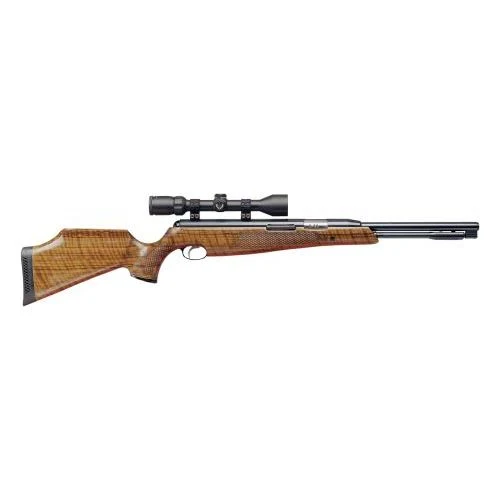
A beautifully finished walnut stock has been incorporated into the design, giving the rifle a distinctive appearance characterised by natural wood grain, warm colouring, and classic sporting elegance.
Additionally, comfortable handling has been supported through an ergonomically shaped stock, while secure contact has been encouraged by carefully positioned checkering.
Unlike synthetic alternatives, each natural walnut stock can display individual grain patterns. Consequently, a distinctive appearance is provided without compromising the established TX200 design.
Furthermore, a traditional sporting profile has been preserved, allowing modern mechanical engineering to be complemented by timeless exterior styling.
Compact Hunter Carbine Design for Improved Handling
A shorter configuration has been developed for the Hunter Carbine, allowing a more compact overall profile to be achieved than with the standard TX200.
Nevertheless, the established spring-piston operating system has been retained, ensuring that the mechanical character of the original platform is preserved.
Through its shortened dimensions, the model has been given a distinctive sporting appearance. However, its solid steel construction and substantial walnut stock mean that it should still be regarded as a relatively heavy, traditionally engineered air rifle.
Advanced Engineering and Precision-Made Components
High-Quality Lothar Walther Barrel
A precision-engineered Lothar Walther barrel has been incorporated into the TX200 platform. Furthermore, its fixed-barrel configuration has been designed to maintain consistent mechanical alignment.
As a result, an important foundation for repeatable target-shooting performance has been established.
In addition, the barrel assembly has been integrated into the rifle’s refined exterior profile, allowing functional engineering and elegant styling to be combined.
Refined Spring-Piston Power System
A self-contained spring-piston mechanism has been incorporated, eliminating the need for an external compressed-air cylinder, charging pump, or separate air reservoir.
Consequently, routine ownership has been simplified when compared with pneumatic systems that depend on external filling equipment.
Moreover, carefully engineered internal components have been used to support a refined mechanical operating cycle.
Although the rifle has been designed for dependable performance, its condition, maintenance history, and correct servicing must still be considered when long-term reliability is evaluated.
Adjustable Two-Stage Trigger
A sophisticated two-stage trigger mechanism has been installed to provide a refined sporting-rifle control system.
Additionally, adjustable trigger characteristics have been included as part of the manufacturer’s established TX200 design.
This feature has contributed to the model’s reputation among experienced sporting and recreational target-shooting enthusiasts.
Nevertheless, trigger inspection, adjustment, and servicing should always be performed according to manufacturer instructions and applicable safety requirements.
Key Features of the Air Arms TX200 Hunter Carbine Walnut
The following features have been incorporated into the established Hunter Carbine configuration:
- Premium walnut stock: A traditional natural-wood finish has been provided for classic sporting aesthetics.
- British manufacturing: The rifle has been produced within Air Arms’ established British engineering tradition.
- Compact carbine construction: A shorter overall configuration has been developed compared with the standard TX200.
- Underlever spring-piston action: A self-contained mechanical power system has been incorporated.
- Lothar Walther barrel: Precision barrel engineering has been used throughout the platform.
- Adjustable two-stage trigger: A refined trigger assembly has been fitted.
- Automatic safety mechanism: An automatic safety feature has been incorporated into the trigger system.
- Secondary anti-bear-trap mechanism: Additional mechanical protection has been integrated into the cocking system.
- Single-shot configuration: Individual pellet loading has been specified.
- Optics mounting provision: A machined scope rail has been supplied for compatible mounting equipment.
- Multiple calibre configurations: Both .177 and .22 variants have been offered, subject to market availability.
- Integrated sound-moderating design: Built-in moderation has been provided on applicable regional configurations.
Technical Specifications and Product Information
| Specification |
Details |
| Manufacturer |
Air Arms |
| Model |
TX200 Hunter Carbine |
| Stock material |
Natural walnut |
| Country of manufacture |
United Kingdom |
| Operating mechanism |
Underlever spring-piston |
| Available calibres |
.177 (4.5 mm), .22 (5.5 mm) |
| Loading system |
Single-shot sliding breech |
| Barrel |
Lothar Walther precision barrel |
| Trigger |
Adjustable two-stage |
| Safety |
Automatic safety and anti-bear-trap |
| Overall length |
Approximately 995 mm |
| Barrel length |
Approximately 319 mm |
| Walnut version weight |
Approximately 3.8 kg |
| Sight arrangement |
Scope mounting provision; no standard open sights |
| Power configurations |
Market-dependent, including sub-12 ft-lb and FAC-rated variants |
Specifications may vary by production year, destination market, and exact configuration. Power classification and ownership requirements must be verified locally.
Premium Construction and Long-Term Ownership
Durable Metalwork and Refined Finishing
Carefully finished metal components have been combined with a traditional wooden stock to establish a premium appearance.
Furthermore, the underlying mechanism has been developed around established spring-powered engineering principles.
Through appropriate inspection and maintenance, the exterior finish and mechanical condition can be preserved over extended ownership.
Nevertheless, protection against moisture, unsuitable storage conditions, and unnecessary mechanical wear remains essential.
Practical Maintenance and Responsible Storage
Regular external cleaning has been recommended to preserve the condition of the walnut and metal surfaces.
Additionally, manufacturer-approved servicing procedures should be followed whenever mechanical inspection or component replacement is required.
For safety, the rifle should always be treated as capable of firing, and secure storage should be maintained when it is not being used.
Importantly, local regulations regarding possession, transport, and authorised shooting locations must be observed.
A Distinguished Choice for Traditional Air Rifle Enthusiasts
The Air Arms TX200 Hunter Carbine Walnut has earned recognition through its combination of premium construction, refined mechanical design, and distinctive British sporting heritage.
Furthermore, its compact configuration has been combined with many of the features associated with the established TX200 platform.
For recreational target shooting and appreciation of precision engineering, a traditional alternative to modern compressed-air systems has been provided.
Ultimately, an appealing balance of craftsmanship, mechanical independence, and classic styling has been achieved. With its natural walnut finish, carefully engineered action, and longstanding reputation, the Air Arms TX200 Hunter Carbine Walnut remains a noteworthy example of premium British spring-powered air rifle design.
Air Arms TX200 Hunter Carbine Walnut – Calibres, FAC Power, Scope Compatibility and Essential Accessories
The Air Arms TX200 Hunter Carbine Walnut has been developed around a sophisticated spring-piston operating system, combining traditional British engineering with established sporting-rifle technology. Furthermore, different calibre configurations have been offered to accommodate recreational target shooting, competitive disciplines, and other legally authorised sporting applications.
In addition, carefully engineered components have been incorporated to support dependable operation, while an extensive selection of compatible accessories can be considered for protection, maintenance, and convenient ownership.
Available Calibres and Their Characteristics
.177 Calibre (4.5 mm) – Precision and Target Shooting
The .177 calibre configuration has been widely recognised throughout recreational and competitive air rifle shooting.
Its smaller projectile diameter has been associated with a relatively flat trajectory, particularly when compared with heavier .22 pellets operating at comparable muzzle energy.
Moreover, the calibre has been adopted across numerous established target-shooting disciplines, where consistent equipment performance and standardised scoring systems are valued.
For enthusiasts interested in organised target activities, a familiar and widely supported calibre has therefore been provided.
Additionally, an extensive range of commercially manufactured .177 pellets is available, although compatibility and suitability must always be confirmed against the manufacturer’s instructions.
.22 Calibre (5.5 mm) – Traditional Sporting Characteristics
Alternatively, the .22 configuration has been offered for enthusiasts who prefer the characteristics of a larger-diameter pellet.
Heavier projectiles are commonly associated with this calibre, while different velocity and trajectory characteristics can be expected depending on ammunition weight and the rifle’s approved power configuration.
Furthermore, considerable attention has been given to .22 air rifles throughout the history of British sporting equipment.
Although both calibres have been incorporated into the TX200 family, the appropriate choice should be determined by the intended lawful activity, applicable regulations, and manufacturer specifications.
Calibre Comparison
| Feature |
.177 calibre |
.22 calibre |
| Metric diameter |
4.5 mm |
5.5 mm |
| Common pellet characteristic |
Smaller and generally lighter |
Larger and generally heavier |
| Common sporting association |
Target and competition shooting |
Traditional sporting applications |
| Ammunition availability |
Widely available |
Widely available |
| Platform compatibility |
Manufacturer-supported variants |
Manufacturer-supported variants |
FAC Power and Muzzle Energy Configurations
Standard Sub-12 ft-lb Configuration
A sub-12 ft-lb configuration has traditionally been offered within the British TX200 range, subject to individual model specifications and market availability.
In the United Kingdom, this muzzle-energy category has particular legal significance for air rifle classification in England and Wales. However, the rules applicable in Scotland, Northern Ireland, and other jurisdictions differ.
Furthermore, the actual muzzle energy of an individual rifle can vary according to its configuration, condition, and ammunition.
Consequently, manufacturer’s documentation and appropriate testing are required whenever legal power compliance must be established.
FAC-Rated and Higher-Power Versions
Historically, FAC-rated configurations have also been documented within the TX200 Hunter Carbine range. These versions are subject to additional licensing requirements in the United Kingdom and may be restricted or classified differently in other markets.
Unlike the conventional sub-12 ft-lb category, higher-powered variants must be evaluated against their specific certification and technical documentation.
Importantly, the term FAC refers to a firearms certificate rather than a universal power specification. Therefore, an FAC designation should not be interpreted as confirmation of one exact muzzle-energy figure.
Any servicing or alteration affecting the rifle’s power output should be entrusted to appropriately qualified professionals and undertaken only where legally permitted.
Understanding Spring-Piston Power Delivery
A mechanical mainspring and piston assembly have been incorporated into the rifle’s self-contained power system.
Therefore, external charging cylinders, compressed-air pumps, and pneumatic filling equipment have been eliminated from normal operation.
In addition, the rifle has been designed around a fixed-barrel, underlever mechanism, allowing a traditional operating arrangement to be maintained.
However, the operating cycle remains mechanically different from that of a pre-charged pneumatic rifle, and those differences should be considered when assessing ownership preferences.
Recommended Scope Characteristics and Optical Compatibility
Spring-Air-Rifle-Rated Telescopic Scopes
The TX200 Hunter Carbine has been supplied with a dovetail scope-mounting rail, providing compatibility with appropriately specified optical mounting equipment.
Nevertheless, an important distinction must be made between optics intended for spring-piston rifles and those designed exclusively for other firearm or airgun systems.
Because spring-piston rifles generate a distinctive two-direction recoil impulse, a scope specifically rated for spring-airgun use should be selected.
Suitable Scope Specifications
For general recreational target activities, scopes incorporating the following features may be considered:
- Variable magnification: A conventional 3–9× or 4–12× specification may be evaluated.
- Adjustable objective or parallax adjustment: Close-range focusing compatibility should be confirmed.
- Clear optical elements: Suitable lens coatings and reliable image clarity should be prioritised.
- Spring-piston recoil rating: Compatibility should be verified directly with the scope manufacturer.
- Appropriate eye relief: Comfortable and safe viewing should be considered.
- Compatible mounting system: The manufacturer’s specified dovetail dimensions must be respected.
- Weather-resistant construction: Exterior durability can provide additional convenience during lawful outdoor use.
No telescopic sight should be assumed to be included unless the individual product listing explicitly confirms its presence.
Recommended Accessories and Maintenance Equipment
Protective Rifle Case and Storage Equipment
A properly sized padded rifle case is recommended to protect the walnut stock and finished metal surfaces during lawful transportation.
Additionally, a secure, lockable storage cabinet should be considered according to local firearm-storage requirements.
Walnut Stock Care Products
Natural walnut requires appropriate care to preserve its appearance. Consequently, manufacturer-approved wood-care products may be selected where suitable for the particular stock finish.
Harsh solvents and excessive moisture should be avoided, while regular visual inspection should be maintained.
Cleaning and Inspection Accessories
Basic maintenance equipment may include:
- A manufacturer-approved air rifle cleaning kit.
- Soft microfiber cleaning cloths.
- Suitable exterior metal-care products.
- Non-abrasive walnut stock maintenance supplies.
- A protective rifle mat for routine external inspection.
- Approved storage accessories and safety equipment.
- The official manufacturer’s instruction manual.
Long-Term Value and Ownership Considerations
Through its compact Hunter Carbine construction, premium walnut finish, and traditional mechanical operation, the Air Arms TX200 platform has become associated with long-established British sporting craftsmanship.
Moreover, calibre availability and documented power configurations have provided different options for regulated markets.
Ultimately, the Air Arms TX200 Hunter Carbine Walnut is distinguished by its carefully engineered spring-powered mechanism, classic wooden construction, and compatibility with appropriately specified optical and maintenance accessories. For responsible enthusiasts, its combination of established design and premium materials represents an enduring example of traditional British air rifle engineering.
Frequently Asked Questions (FAQs)
1. What makes this British spring-powered air rifle different from other models?
A distinctive combination of traditional craftsmanship, precision engineering, and mechanical reliability has been incorporated into this British-made sporting rifle. Unlike many conventional break-barrel designs, an underlever operating mechanism has been selected, allowing a fixed-barrel arrangement to be maintained.
Furthermore, a premium natural walnut stock has been combined with carefully finished metal components to establish an elegant appearance. A refined two-stage trigger mechanism has also been provided, contributing to the rifle’s established reputation among recreational and competitive target-shooting enthusiasts.
Additionally, external compressed-air filling equipment has been eliminated through the self-contained spring-piston system. Consequently, a traditionally engineered alternative to pneumatic air rifles has been made available.
2. Is this rifle suitable for beginners?
Although the rifle has been appreciated by experienced enthusiasts, its relatively substantial weight and underlever operating arrangement should be considered by beginners.
A responsible introduction to air rifle handling should always be provided through qualified instruction and appropriate supervision. Moreover, safe handling procedures, local laws, and manufacturer recommendations must be understood before any shooting activity is undertaken.
Because the rifle incorporates a powerful mechanical spring system, additional attention should be given to safe handling and the operation of its loading mechanism.
For newcomers, proper safety training and professional guidance are strongly recommended.
3. Which calibres are available?
Two principal calibre configurations have traditionally been offered: .177 (4.5 mm) and .22 (5.5 mm).
The smaller calibre has been widely associated with recreational and competitive target shooting, while the larger configuration has also been popular within traditional sporting-air-rifle applications.
However, availability may vary according to the country, production period, and specific retailer inventory.
Furthermore, each version has its own projectile characteristics, so manufacturer-approved ammunition should always be selected.
4. What is the difference between the .177 and .22 versions?
The primary distinction is established by the diameter and typical weight of the pellets used.
A smaller, generally lighter projectile is associated with the .177 configuration. Conversely, a larger and generally heavier projectile is associated with the .22 alternative.
Although both versions are based on the same established mechanical platform, differences in projectile velocity and trajectory may be observed.
Importantly, neither calibre should automatically be considered universally superior. Each has been developed for different sporting preferences and equipment requirements.
5. How does the underlever mechanism work?
A fixed-barrel spring-piston system has been incorporated into the design. Instead of using a hinged barrel, a separate underlever arrangement has been provided as part of the rifle’s mechanical cocking system.
The operating components have been engineered to compress the internal spring and prepare the mechanism for its next firing cycle.
Furthermore, a sliding breech arrangement has been incorporated for single-shot pellet loading.
Because moving components are involved, all handling must be performed strictly according to the manufacturer’s instructions. Fingers must never be placed within potentially hazardous moving assemblies without following the prescribed safety procedure.
6. Does this model require a compressed-air pump or charging cylinder?
No external compressed-air filling equipment is required during normal operation.
Unlike pre-charged pneumatic systems, a self-contained mechanical spring and piston assembly has been used to generate the operating pressure.
Consequently, additional equipment such as high-pressure filling bottles, PCP compressors, and charging hoses has been eliminated from the basic operating requirements.
Nevertheless, routine maintenance, safe storage, and inspection remain essential for dependable ownership.
7. Is the walnut stock made from genuine natural wood?
Yes. A genuine walnut stock has been offered as part of the premium configuration.
Natural grain patterns, colour variations, and individual wood characteristics may be present. Consequently, each stock can display a slightly different appearance.
Furthermore, walnut has traditionally been valued for its combination of sporting heritage, natural beauty, and established use in premium rifle manufacturing.
Appropriate wood care should be provided to preserve its appearance. Excessive moisture, aggressive cleaning chemicals, and unsuitable storage environments should therefore be avoided.
8. Is the rifle fitted with an adjustable trigger?
A two-stage adjustable trigger mechanism has been incorporated into the established design.
This arrangement has been recognised as one of the important features associated with the manufacturer’s premium spring-powered range.
Additionally, carefully engineered trigger components have been selected to provide a refined mechanical system.
However, trigger adjustments should not be attempted without adequate technical knowledge. Any maintenance or adjustment should be performed according to official instructions or entrusted to a qualified gunsmith.
9. Does the rifle include an automatic safety system?
An automatic safety mechanism has been incorporated into the trigger assembly.
Furthermore, an additional anti-bear-trap mechanism has been included as part of the underlever loading system.
These features have been introduced to provide important mechanical safeguards during normal operation.
Nevertheless, no mechanical safety device should be treated as a replacement for responsible handling. Every air rifle must be handled as though it could discharge unexpectedly, and all manufacturer-prescribed precautions should always be followed.
10. What is meant by a fixed-barrel design?
A fixed-barrel design means that the barrel remains stationary rather than being hinged downward as part of the cocking system.
In this configuration, the underlever mechanism has been separated from the barrel itself.
Consequently, an established mechanical arrangement has been provided for the rifle’s spring-piston action.
This construction has contributed to the model’s reputation among enthusiasts who appreciate traditional engineering, substantial construction, and consistent mechanical alignment.
11. Can a telescopic scope be fitted?
Yes. A dovetail mounting rail has been incorporated to accommodate compatible optical equipment.
However, the selected scope must be suitable for spring-piston air rifle recoil, which differs from that experienced with some other shooting platforms.
Additionally, appropriate mount compatibility should be verified before any equipment is purchased.
A scope should not be assumed to be included as standard, since package contents may vary among retailers and product configurations.
12. Are open sights supplied as standard?
The established configuration has generally been supplied without conventional open sights.
Instead, a mounting provision for compatible telescopic optics has been included.
Therefore, the contents of an individual retail package should be checked carefully before purchase.
Any advertised accessories, including optical sights, mounts, protective cases, or maintenance products, should be confirmed against the actual seller’s product listing.
JTS Airguns, Airacuda, Kral Arms, Reximex and PCP Air Rifle Guide
The modern PCP market covers a broad range of platforms, calibers, accessories, and shooting styles, with JTS airguns becoming increasingly visible among enthusiasts searching for performance-focused pneumatic rifles. Popular searches include JTS Airacuda, JTS Airacuda Max, Airacuda, JTS Aircuda, Airacuda Max, and JTS Aircuda Max, reflecting strong interest in this family of regulated PCP rifles. Shooters researching ammunition also commonly look for JTS pellets, while those comparing compact or alternative platforms may search for the JTS Airstryke, JTS Airstryke Carbine, and other JTS guns.
Caliber-specific searches are equally important. Terms such as JTS Airacuda 25 and JTS Airacuda Max 30 cal are frequently used by buyers comparing configurations and specifications. Other searches connected with the wider brand ecosystem include JTS firearms, JTS Group, JT guns blog, field supply airguns, Trenier Outdoors, TSC air, QTS 11, JPC 100, lindstradt air gun, tom air gun, and even broader or less directly related searches such as JROTC air rifle and jschlatt gun.
JTS Airacuda and Airstryke Searches
The JTS Airacuda platform attracts attention because many shooters compare it with other PCP rifles in similar price and performance categories. Search variations such as JTS Aircuda, JTS Aircuda Max, Airacuda, and Airacuda Max are commonly entered by users who may spell or abbreviate the product name differently. Meanwhile, the JTS Airstryke and JTS Airstryke Carbine expand the range of search intent toward compact PCP configurations.
Ammunition research often accompanies rifle research, which explains searches for JTS pellets alongside rifle model queries. Buyers may compare pellet weights, caliber compatibility, accuracy characteristics, and intended target use before selecting ammunition appropriate for their particular air rifle.
Hatsan PCP and Semi-Auto Searches
Another major group of related search terms concerns Hatsan products. These include Hatsan Sortie Tact semi-auto PCP, Hatsan Sortie, Hatsan Sortie Tact, Hatsan Jet, and Hatsan Jet 3. These searches often appear when enthusiasts compare compact PCP systems, semi-automatic platforms, and portable airgun designs.
Because buyers frequently research several brands during the same shopping session, JTS products may be compared with Hatsan, Kral Arms, Reximex, and other manufacturers before a final model is selected.
Kral Arms and Kral Puncher PCP Air Rifles
Kral Arms has a substantial presence in airgun searches, particularly among users researching PCP rifles. Search variations include KRQL, Kral NP 02, Kral Puncher, Kral Breaker Puncher, Kral Puncher K, Puncher Mega, Shadow Puncher, and Puncher Auto. These terms represent different model families as well as spelling variations entered by customers searching online.
Other Kral-related search phrases include Kral pump, Kral airguns, Krale airguns, Krale wholesale, KR9, KR9 rifle, KR-101, NP500, Bigmax, Raptor S, Dazzle S, EmpireX, TacticalX, Tactical Tundra, Rutundra, ST 500, and ST-500.
Search behavior does not always follow official product naming. As a result, visitors may also enter variants such as kr al, kiral, kroll firearms, kar gun, k gun, kora gun, aram gun, and akr gun while looking for rifles, parts, manufacturers, or related shooting equipment.
International searches can introduce additional terminology. Examples include الكرال, av tüfeği, and tabancalar, which may appear alongside English-language product and category searches.
PCP Air Rifles and Related Search Terms
Broad-category phrases remain important for users who have not yet selected a specific brand. These include PCP air rifles, PCP rifles, PCP air gun, air rifle PCP, rifle PCP, and rifles PCP 5.5. These phrases can lead shoppers toward a wider selection before they narrow their choice to a particular manufacturer or model.
Users comparing platforms may also search for terms such as muskrat gun, kalibre pistol, kahr firearms, and king arms FAL. Because several of these phrases refer to different product categories or manufacturers, specifications and legal classifications should always be checked individually rather than assuming that similarly worded searches describe the same type of equipment.
Reximex Airguns and PCP Models
Reximex airguns represent another important category within PCP search traffic. Common product searches include Reximex RP, Reximex Throne Gen 2, Reximex Mito, Reximex Mitos, Reximex RPA, and Reximex Lieva. These searches often come from shooters comparing configurations, ergonomics, caliber choices, air-cylinder capacity, and other factory specifications.
Reximex products may be compared directly with JTS, Kral, Hatsan, and other PCP manufacturers. Consequently, a shopper researching the JTS Airacuda Max may also investigate a Reximex Throne Gen 2, Kral Puncher, Kral NP 02, or another PCP rifle before deciding which configuration best suits their intended lawful sporting or target use.
Shotgun and Firearm-Related Search Variations
Some search phrases in this wider keyword group refer to firearm platforms rather than PCP airguns. Examples include 223 rifle, 223 guns, 223 arma, 410 shotgun semi auto magazine fed, inertia shotguns, K12 shotgun, KP12, A12 shotgun, XM shotgun, shotgun XM, Krieg shotgun, and SBS12.
Accessory-oriented searches include JTS X12PT shotgun accessories and JTS shotgun accessories. Users entering these terms may be looking for product compatibility information, replacement components, or manufacturer-specific accessories.
Other broader firearm-related search phrases include rifle cal 22 semiautomatico and Kahr firearms. Because legal definitions, licensing requirements, permitted calibers, magazine rules, and ownership regulations differ by jurisdiction, users should verify the rules applicable in their location before purchasing or possessing regulated equipment.
Additional Model and Brand Searches
The wider search ecosystem includes terms such as Ekinoks, King Arms FAL, Raptor S, EmpireX, Bigmax, and TacticalX. Although some searches overlap semantically, each unique term can represent a distinct user query and should therefore be handled with product-specific information where appropriate.
For customers specifically researching PCP equipment, the strongest relevance remains around JTS Airguns, JTS Airacuda, JTS Airacuda Max, JTS Airstryke, Kral Arms, Kral Puncher, Kral Breaker Puncher, Kral NP 02, Reximex Airguns, Reximex Throne Gen 2, Reximex Mito, and related PCP air rifles. Clear specifications, accurate model identification, compatible ammunition information, and transparent product descriptions help visitors distinguish among these different platforms without confusing unrelated product categories.
13. Is an FAC-rated version available?
Higher-powered FAC-rated configurations have historically been offered within the broader product range, depending on the specific model and market.
However, availability should not be assumed for every production year or destination country.
In the United Kingdom, an appropriate firearms certificate may be required for rifles exceeding the relevant statutory muzzle-energy threshold.
Furthermore, regulations differ internationally, so local licensing rules must be verified before acquisition or possession.
14. What does FAC mean?
FAC stands for Firearms Certificate.
Within the British airgun market, the expression is frequently associated with air rifles that fall within categories requiring firearms certification.
Nevertheless, the abbreviation does not identify one universal muzzle-energy rating.
The legal classification of an individual rifle depends on its actual specifications and the jurisdiction in which it is possessed.
Therefore, appropriate regulatory guidance should be obtained whenever ownership requirements are uncertain.
15. How much does the rifle weigh?
The walnut Hunter Carbine configuration has commonly been specified at approximately 3.8 kilograms, although small differences may occur between production versions.
Its substantial weight has been influenced by the steel mechanical assembly and traditional hardwood stock.
Consequently, handling characteristics may differ from those of lightweight synthetic-stock sporting rifles.
For this reason, overall weight should be considered when evaluating comfort, storage requirements, and suitability for supervised target activities.
6. What is the difference between the standard model and the Hunter Carbine?
The principal difference has been established through the overall dimensions and barrel configuration.
A longer profile has been retained on the standard model, while a shorter barrel assembly has been incorporated into the carbine version.
Consequently, a more compact appearance has been achieved without abandoning the established underlever operating system.
Although many mechanical characteristics are shared, slight differences in weight distribution and cocking characteristics may be noticed.
Both versions have been developed around the manufacturer’s established spring-powered engineering platform.
17. Is a sound moderator included?
An integrated sound-moderating arrangement has been incorporated into the established TX200 design, although details can vary between specific versions and markets.
Nevertheless, complete silence should never be expected from a spring-piston air rifle. Mechanical noise generated by the internal spring and piston cannot be eliminated through muzzle moderation alone.
Furthermore, local restrictions concerning sound-moderating equipment must be considered.
Any additional equipment should be assessed for legal compliance and manufacturer compatibility.
18. What maintenance is required?
Routine exterior cleaning has been recommended to preserve the condition of the metalwork and natural walnut stock.
Following each authorised shooting session, the exterior should be inspected for visible moisture, accumulated dirt, and signs of damage.
Additionally, manufacturer-approved cleaning materials should be used rather than aggressive household chemicals.
Internal mechanical servicing should be entrusted to qualified professionals, particularly when spring-loaded components are involved.
For long-term preservation, dry storage conditions and periodic professional inspection should be maintained.
19. Can the rifle be stored for extended periods?
Extended storage is possible when appropriate precautions have been taken.
Before storage, the rifle should be confirmed unloaded and uncocked in accordance with its official instruction manual.
Furthermore, a secure and dry storage environment should be provided to protect both the mechanical components and walnut stock.
Excessive humidity should be avoided because corrosion and wood deterioration may otherwise develop.
Where children or unauthorised individuals may be present, suitable locked storage arrangements are especially important.
20. What should be checked before purchasing a pre-owned example?
Several important factors should be evaluated when a second-hand rifle is being considered.
The condition of the walnut stock, exterior metalwork, loading assembly, and visible mechanical components should be examined by a competent professional.
Additionally, the serial number and available ownership documentation should be verified.
Signs of unauthorised modification, damaged components, or inappropriate repairs should be investigated before purchase.
Where possible, a qualified dealer or gunsmith should be consulted to establish whether the rifle remains in safe, manufacturer-compliant condition.
21. Are replacement parts and servicing options available?
Replacement components and professional servicing may be available through authorised dealers, qualified gunsmiths, and established specialist suppliers.
However, availability can depend on the production generation and exact component required.
Original manufacturer-approved replacement parts should be prioritised wherever possible.
Furthermore, internal mechanical work should not be attempted without appropriate qualifications because stored spring energy can present significant hazards.
Professional servicing provides an opportunity for wear, deterioration, and mechanical safety to be assessed.
22. How should the walnut stock be protected?
A soft, clean cloth should be used to remove ordinary dust and surface contamination.
Additionally, the stock should be protected from prolonged exposure to rain, excessive humidity, and direct heat.
Appropriate wood-care products may be considered after the existing stock finish has been identified.
Importantly, excessive polishing and incompatible chemical treatments should be avoided because natural wood finishes can be damaged.
With suitable care, the stock’s distinctive grain pattern and traditional appearance can be preserved for many years.
23. Is this model appropriate for organised target-shooting activities?
The wider TX200 platform has been widely recognised within spring-powered target-shooting communities.
Its fixed-barrel arrangement, precision-manufactured components, and adjustable two-stage trigger have contributed to that reputation.
However, suitability for a particular competition must be determined by the relevant sporting organisation’s equipment regulations.
Calibre restrictions, muzzle-energy limits, permitted accessories, and other technical requirements may differ between disciplines.
Consequently, competition eligibility should be confirmed with the event organiser before participation.
24. Does the rifle come with a manufacturer’s warranty?
Warranty coverage can be provided through the manufacturer or an authorised retailer, depending on the country of purchase and applicable terms.
Nevertheless, the length and conditions of coverage should not be assumed.
Proof of purchase, serial-number information, and compliance with recommended maintenance requirements may be requested when warranty assistance is sought.
Furthermore, unauthorised disassembly or modification can affect warranty eligibility.
For this reason, the applicable warranty documentation should always be reviewed before purchasing.
25. Why has this model remained popular among air rifle enthusiasts?
Its reputation has been supported by a combination of British manufacturing heritage, premium materials, and established mechanical engineering.
A natural walnut stock has been paired with traditional metal construction, while a self-contained spring-piston power system has been retained.
Furthermore, the fixed-barrel arrangement and refined trigger design have contributed to its recognition within sporting communities.
Unlike equipment that requires compressed-air filling accessories, normal operation has been made independent of external charging systems.
Ultimately, long-standing interest has been maintained through classic styling, respected craftsmanship, and a distinctive traditional shooting experience.
Practical Use Scenarios – Real-World Applications, Handling Experience, and Everyday Performance
A premium spring-powered air rifle has been designed to provide a traditional shooting experience through carefully engineered mechanical components, a beautifully finished wooden stock, and a self-contained operating system. Furthermore, its combination of precision manufacturing, balanced construction, and established British craftsmanship has made it particularly appealing to enthusiasts who value dependable sporting equipment.
Whether recreational target shooting, supervised training, competitive participation, or long-term collection ownership is being considered, several practical applications can be explored. Each scenario presents different requirements, while appropriate safety procedures, legal compliance, and responsible equipment management must always be maintained.
1. Recreational Target Shooting at an Approved Range
Enjoying Structured Shooting Sessions
Recreational target shooting represents one of the most established applications for a traditional spring-powered sporting rifle. Within a properly supervised shooting facility, designated paper targets can be used to provide an organised and measurable sporting experience.
Moreover, a fixed-barrel operating arrangement has been incorporated into the rifle’s construction, while carefully manufactured mechanical components have been selected to support consistent operation.
For enthusiasts who enjoy mechanical equipment, the traditional underlever action provides a distinctive alternative to pre-charged pneumatic systems.
Additionally, the natural wooden stock contributes to a classic appearance that is often appreciated at established sporting clubs.
Before participation, the facility’s operating procedures should be reviewed, and appropriate eye protection should be worn.
Benefits of Organised Range Environments
A controlled shooting facility provides several important advantages. Suitable backstops are installed, designated firing areas are established, and clear safety procedures are enforced.
Furthermore, experienced range officers may be available to supervise activities and answer questions about authorised equipment.
Consequently, new participants can become familiar with sporting-rifle ownership in an environment where safety and responsible conduct are prioritised.
Importantly, only targets and activities permitted by the facility should be used.
2. Competitive Target Shooting and Sporting Club Participation
Exploring Organised Competition
Spring-powered air rifles have maintained an established presence within several recreational and competitive shooting disciplines.
Because equipment classifications differ between sporting organisations, participation requirements should always be verified before an event.
A traditional fixed-barrel rifle may be eligible for particular spring-powered categories, provided all relevant rules have been satisfied.
Furthermore, an adjustable two-stage trigger mechanism has been incorporated into the platform, contributing to its reputation among enthusiasts who appreciate refined sporting equipment.
Nevertheless, competition suitability cannot be established solely from the manufacturer’s reputation. The exact calibre, power classification, equipment condition, and accessories must also be considered.
Participating in Club Activities
Local shooting clubs frequently provide opportunities for supervised practice, organised competitions, and responsible equipment education.
Additionally, membership may provide access to designated facilities and qualified instructors.
An established sporting community can also offer guidance regarding lawful transportation, maintenance services, and equipment storage.
For individuals interested in regular participation, club regulations and applicable licensing requirements should be reviewed.
3. Supervised Air Rifle Education and Safety Training
Introducing Responsible Equipment Handling
Under the supervision of qualified instructors, sporting air rifles can be incorporated into structured education programmes where legally permitted.
However, the substantial weight and spring-powered operating mechanism must be considered before suitability for an individual participant is determined.
A responsible training programme should prioritise muzzle awareness, secure handling, safe storage, and an understanding of the equipment’s mechanical hazards.
Furthermore, all participants should be taught that safety devices do not eliminate the need for careful handling.
The underlever and loading mechanism must be treated with particular caution because moving mechanical components can present injury risks.
Learning About Traditional Mechanical Engineering
Beyond practical sporting activities, the internal operating principles provide an educational example of mechanical energy storage and controlled energy release.
The spring-piston system can be discussed alongside other mechanical technologies to illustrate fundamental engineering concepts.
Additionally, the fixed-barrel arrangement offers an opportunity to examine the relationship between traditional design and modern precision manufacturing.
For educational demonstrations, unloaded equipment or non-functional training examples should be preferred whenever possible.
4. Traditional Sporting Rifle Collection and Display
Appreciating British Manufacturing Heritage
Collectors often value sporting equipment for its design history, craftsmanship, and association with established manufacturers.
A premium walnut stock and carefully finished metal components contribute to an appearance that reflects traditional British sporting-rifle construction.
Furthermore, the underlever spring-piston design represents a recognised category within the development of modern sporting air rifles.
For collectors interested in mechanical history, the combination of natural materials and precision-manufactured components can provide considerable appeal.
Different production generations, stock finishes, and market configurations may also be of historical interest.
Responsible Collection Storage
Secure storage remains essential even when a rifle is acquired primarily for collection rather than regular shooting.
A suitable locked cabinet should be provided, and local possession requirements must be observed.
Moreover, humidity control should be considered because both natural wood and finished steel can be affected by unsuitable environmental conditions.
Documentation, purchase records, and manufacturer manuals should be preserved whenever available.
These materials can support future servicing, ownership verification, and historical identification.
5. Outdoor Sporting Activities at Authorised Facilities
Recreational Use in Controlled Outdoor Environments
Outdoor shooting facilities can provide a different recreational experience from indoor ranges.
Natural lighting, changing weather conditions, and larger designated sporting areas may be encountered.
However, environmental factors must always be considered, particularly where visibility, wind, rain, or changing ground conditions could affect safety.
Participation should be limited to authorised activities within locations where suitable backstops and appropriate supervision have been established.
Furthermore, all relevant property permissions and local regulations must be respected.
Equipment Protection During Outdoor Sessions
A padded protective case is recommended when the rifle is transported between approved locations.
Additionally, the walnut stock and exterior metalwork should be protected from prolonged rain exposure.
After an outdoor session, external surfaces should be inspected for moisture and visible contamination.
Manufacturer-approved cleaning products may then be used where appropriate.
Consequently, the appearance and condition of the equipment can be preserved without unnecessary exposure to aggressive chemicals or unsuitable maintenance procedures.
6. Comparing Traditional Spring-Powered and PCP Ownership
Understanding Equipment Independence
One of the most practical distinctions between traditional spring-powered equipment and pre-charged pneumatic alternatives involves their supporting equipment requirements.
A mechanical spring-piston system has been incorporated into this design, meaning that no separate compressed-air filling source is required for normal operation.
By contrast, PCP rifles generally depend on high-pressure air supplies and compatible charging equipment.
For enthusiasts who appreciate self-contained mechanical systems, this difference can represent an important ownership consideration.
Nevertheless, spring-powered systems retain their own maintenance requirements and mechanical characteristics.
Evaluating Long-Term Ownership Requirements
Before selecting sporting equipment, ongoing maintenance, available servicing facilities, storage arrangements, and local regulatory requirements should be assessed.
Additionally, the availability of manufacturer-approved replacement parts may influence long-term ownership decisions.
A mechanically operated rifle can offer independence from external charging equipment, but its internal components must still be maintained properly.
Professional inspections should therefore be considered whenever unusual mechanical behaviour or visible deterioration is observed.




Reviews
There are no reviews yet.