Frequently Asked Questions
What materials are used in the construction of this adjustable rifle stock, and how do they contribute to long-term reliability?
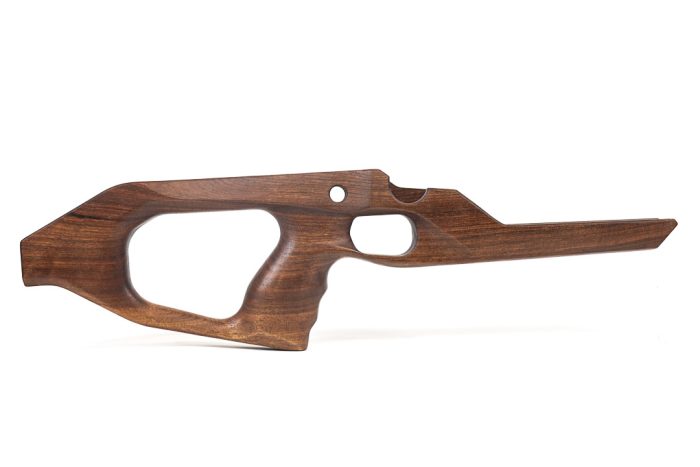
High-quality wood laminates and solid walnut options are carefully selected so that strength and visual appeal are balanced effectively. Multiple layers are bonded under controlled pressure in the laminate versions, creating a material that resists warping, cracking, and moisture absorption far better than traditional single-piece timber. Consequently, dimensional stability is maintained across changing temperatures and humidity levels commonly encountered during outdoor use. Solid walnut alternatives are finished with protective coatings that enhance grain visibility while adding an extra barrier against everyday wear. In addition, the hardware components—adjustment screws, mounting bolts, and retention plates—are manufactured from corrosion-resistant alloys. Therefore, repeated cycles of lengthening, raising, or tilting the various elements produce minimal play or loosening over time. Inclusive design considerations ensure that the surface textures remain comfortable for extended contact with different skin types and clothing materials. Overall, the combination of these materials delivers a stock that retains its precise fit characteristics for many seasons of regular range and field activity.
How is length of pull modified, and what range of adjustment can reasonably be expected?
Length of pull is modified through a pair of accessible screws located at the rear of the assembly. Once the screws are loosened, the butt section can be extended or retracted smoothly along guided channels until the desired measurement is reached. Typical travel covers a useful span that accommodates both shorter and longer arm lengths, allowing comfortable shouldering for a wide variety of body proportions. After the preferred position is selected, the screws are retightened to lock the setting securely. Moreover, the mechanism is engineered so that fine increments are possible, enabling shooters to experiment in small steps until perfect alignment with the trigger and optic is achieved. Transitioning between different clothing layers or seasonal gear is therefore simplified, because a quick readjustment restores the ideal fit without tools beyond a basic Allen key. Inclusive language and design principles ensure that the process remains straightforward for users of all experience levels, whether they prefer standing, kneeling, or prone positions. As a result, consistent cheek-to-stock contact and natural point of aim become repeatable from session to session.
Can the cheek piece be adjusted for both height and angle, and why does this matter for accuracy?
Height and angle of the cheek piece are adjusted independently through a system of flat-head screws mounted on dedicated brackets. Raising or lowering both screws equally changes vertical position, while loosening one screw relative to the other introduces controlled cant. Horizontal sliding is also available on certain configurations, permitting forward or rearward movement so that eye relief can be fine-tuned for different scopes. Because proper cheek weld is established this way, the shooter’s eye is brought into consistent alignment with the optical axis every time the rifle is mounted. Consequently, parallax errors are reduced and sight picture acquisition becomes faster and more repeatable. Furthermore, the ability to tilt the cheek piece compensates for variations in facial structure and preferred head posture, making the platform genuinely inclusive for a broad range of users. In competitive environments or when precise shot placement is required at longer distances, these small refinements translate into tighter groups and greater confidence under pressure. The adjustment hardware is designed to hold its setting firmly once tightened, so vibration from repeated cycling does not gradually alter the chosen geometry.
Is the design truly ambidextrous, and how are left-handed users supported?
Ambidextrous functionality is built into the overall architecture from the outset. The grip interface, safety relocation capability, and side-lever orientation can all be configured for either dominant hand without requiring a separate left-hand model. Mounting points and clearance around the action remain symmetrical, so controls fall naturally under the thumb or fingers regardless of which shoulder is used. Inclusive design practices ensure that reach distances and lever efforts feel balanced for both left- and right-handed shooters. Moreover, the adjustable elements—length of pull, cheek piece, and butt pad—operate identically from either side. Therefore, a single stock serves the entire user community effectively, eliminating the frustration of limited aftermarket options that sometimes face left-handed individuals. Transitioning the rifle between family members or club mates of differing handedness becomes simple and quick. In addition, the absence of pronounced right-hand bias in the contouring prevents pressure points or awkward wrist angles for those who shoot from the left shoulder.
How much additional weight is introduced after installation, and does the balance of the complete rifle change noticeably?
A modest increase of approximately 260 grams is typical once the original components are removed and the new stock is fitted. Because the added mass is distributed primarily toward the rear, the overall center of gravity remains close to the original location. Consequently, the compact and pointable character of the bullpup platform is preserved rather than compromised. Many users report that the slight extra weight actually improves steadiness during unsupported aiming, particularly when a scope and moderator are already mounted. Furthermore, the denser material of the wood or laminate versions dampens residual vibration more effectively than the lighter alloy alternative, contributing to a more settled feel on target. Inclusive testing across different body sizes has confirmed that the change remains comfortable for extended carry and does not create fatigue during long sessions. Balance can still be fine-tuned further by accessory placement on the available Picatinny rails if desired.
What tools are required for installation, and how long does the process usually take?
Only a small set of common tools is needed: a 2.5 mm Allen key, a 5 mm Allen key, and an E10 driver. The sequence begins with removal of the valve cover, pistol grip, trigger-guard rail, and safety toggle. Once these parts are set aside, the original assembly can be withdrawn and the new stock positioned. Securing is accomplished with a single primary bolt, after which the revised safety components are inserted and retained. Most individuals complete the entire swap within twenty to thirty minutes on the first attempt. Clear visual guidance is available, reducing the chance of incorrect orientation. Because no permanent alterations are made to the action, the original configuration can be restored later if preferred. Inclusive instructions avoid specialized jargon so that even those with limited mechanical experience can follow the steps successfully. After installation, a quick function check of the safety, side lever, and trigger confirms that everything operates as intended.
Does fitting this stock affect the rifle’s regulated performance, shot count, or velocity consistency?
No measurable change occurs to the internal air system, regulator behavior, or hammer spring characteristics. The stock interfaces only with the external chassis and does not interact with the plenum, valve, or cylinder. Therefore, fill pressure limits, shot-to-shot velocity variation, and total usable shots per charge remain identical to the factory specification. External velocity adjustment wheels and regulator dials continue to function exactly as before. In addition, the side-lever cocking effort and magazine insertion path are unaltered. Many owners note that the improved ergonomics allow them to hold steadier, which can indirectly produce better practical accuracy even though the mechanical ballistics are unchanged. Inclusive design ensures that all original adjustment ranges stay fully accessible after the swap.
Are multiple color and finish options offered, and how durable are the surface treatments?
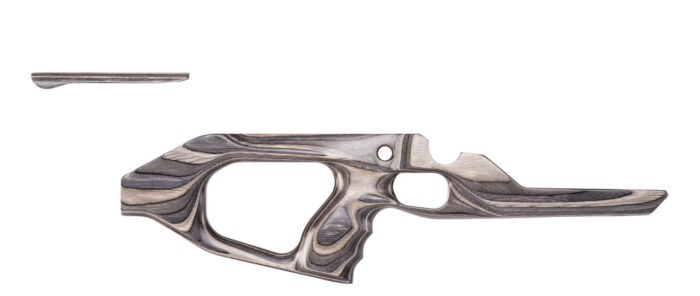
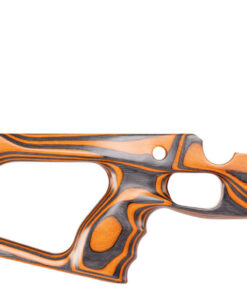
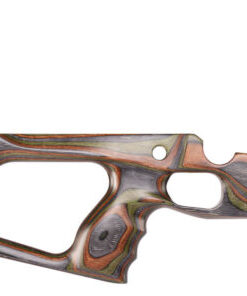
A selection of laminate colorways—including orange, grey, red, brown-grey, and forest—is available alongside classic solid walnut. Each laminate is produced with consistent layering so that color penetration remains uniform throughout the thickness. Protective finishes are applied to resist scuffs, oil, and mild solvents commonly used during cleaning. Solid walnut receives an oil or lacquer treatment that highlights natural grain while providing similar protection. Because the materials are inherently dense, surface damage tends to remain superficial and can often be refreshed with light sanding and re-oiling if required. Inclusive aesthetic choices allow shooters to match personal preference or local terrain without sacrificing structural integrity. Transitioning between different visual styles is therefore possible simply by selecting the preferred variant at the time of purchase.
Can the original alloy stock be reinstalled later, and is any part of the process irreversible?
Full reversibility is maintained. All original components are retained during the initial swap, and the mounting geometry is unchanged. Reinstallation follows the reverse of the fitting sequence and restores the rifle to its factory appearance and weight. No holes are drilled, no material is permanently removed from the action, and no adhesives are required. Consequently, owners who wish to experiment with the wood or laminate version can do so without long-term commitment. Inclusive ownership philosophy recognizes that preferences may evolve, so the design deliberately supports easy return to the starting configuration.
How does the adjustable butt pad improve comfort during prolonged sessions?
Vertical travel of the butt pad is controlled by a dedicated screw or sliding interface that allows the pad to be raised or lowered across a useful range. Once positioned, the pad presents a larger, more contoured contact surface against the shoulder. Recoil energy is therefore distributed more evenly, reducing localized pressure points. In addition, the ability to match pad height to individual clavicle position helps maintain a natural head posture, minimizing neck strain. Inclusive testing with shooters of varying shoulder widths and muscle mass has confirmed that the adjustment range covers the majority of adult physiques. During multi-hour practice or competition days, the cumulative reduction in discomfort translates into sustained concentration and more consistent shot execution.
What maintenance is recommended to keep the adjustment mechanisms operating smoothly?
Periodic inspection and light lubrication of the moving interfaces are advised. After every few range sessions, the length-of-pull screws, cheek-piece bolts, and butt-pad fasteners should be checked for proper torque. A small amount of quality gun oil or dry lubricant applied to the sliding surfaces prevents binding caused by dust or residue. The wood or laminate exterior benefits from occasional wiping with a soft cloth to remove fingerprints and environmental deposits. Inclusive care instructions emphasize that no specialized products beyond ordinary firearm maintenance supplies are required. When these simple habits are followed, the mechanisms retain their smooth travel and secure locking characteristics for the life of the stock.
Is professional fitting necessary, or can the average owner complete the upgrade independently?
The majority of owners successfully complete the installation themselves using only the basic tools already listed. Illustrated guidance and sequential photographs make each step unambiguous. However, individuals who prefer not to perform the work personally can request assistance from a qualified gunsmith or the original retailer. Because the procedure is non-permanent and mechanically straightforward, confidence is high that either route produces an identical, fully functional result. Inclusive support resources are written so that both experienced and first-time upgraders feel equally capable.
How does improved ergonomics influence practical accuracy in real-world conditions?
When length of pull, cheek height, and butt-pad position are optimized, muscle tension is reduced and natural point of aim becomes more repeatable. The shooter can therefore settle into position more quickly and hold steadier throughout the aiming cycle. Consequently, group sizes often tighten even when the mechanical precision of the barrel and regulator remains unchanged. In windy conditions or when shooting from improvised rests, the enhanced contact surfaces provide additional stability. Inclusive design ensures these benefits are available equally to competitors, recreational shooters, and those engaged in pest management. Over time, the cumulative effect is greater confidence and more enjoyable sessions behind the rifle.
What should be considered when selecting among the available finish options?
Climate, intended use, and personal aesthetic preference are the primary factors. Laminates offer superior dimensional stability in humid or rapidly changing environments, while solid walnut provides a classic appearance that many find appealing for traditional presentations. Darker colorways tend to show less visible wear in field conditions, whereas brighter laminates can aid quick visual identification among multiple rifles. Inclusive choice architecture means that no performance penalty is attached to any particular finish; structural strength and adjustment range remain consistent across the range. Once the preferred appearance is selected, the functional advantages of the adjustable architecture are enjoyed regardless of color.
Premium PCP Air Rifles, Competition Platforms, and Pest-Control Airgun Guide
Modern airgun enthusiasts are increasingly comparing compact PCP platforms, electronically controlled competition rifles, regulated hunting airguns, and specialist target systems before choosing the right equipment. Searches for airmaks krait, air max krait, airmaks katran, airmaks katran .22, katran air rifle, katran, airmaks, airmak, airma, air marks, air arm, airrams, arm max, max arms, max air gun, gunmax, mav max, uramax, akatran, katran llc, krayt30, and even less conventional terms such as airmaxsex often come from buyers researching manufacturers, model names, alternative spellings, and high-performance PCP platforms.
Among European brands, AirMaks has attracted particular attention from shooters researching lightweight and adaptable PCP systems. The airmaks krait is frequently associated with compact PCP design, while the alternative search phrase air max krait is commonly used by shoppers trying to locate information about the same product family. Buyers looking specifically for calibre information may search airmaks krait .22 official, whereas others compare the Krait platform with the airmaks katran, airmaks katran .22, or simply search for a katran air rifle. Because product names are sometimes entered differently, terms such as akatran, airmak, airma, air marks, and krayt30 can also appear during broader airgun research.
Understanding PCP Technology and Compressed-Air Rifles
One common question from new buyers is what does pcp air rifle mean. PCP stands for pre-charged pneumatic, referring to an airgun that stores compressed air in an onboard cylinder or reservoir. In European-language searches, the phrase komprimiran zrak is also associated with compressed air. Unlike traditional spring-powered systems or certain airrams, a PCP rifle relies on stored compressed air to provide repeatable firing cycles.
This operating principle has helped create an increasingly sophisticated category of regulated PCP airgun products. Pressure regulation can support more uniform shot-to-shot performance, which is especially valuable when a shooter is evaluating a precision air rifle, high accuracy airgun, competition air rifle, or consistent velocity air rifle. As technology develops, manufacturers continue to combine mechanical regulation with electronics, adjustable controls, ergonomic stocks, precision barrels, and increasingly advanced air-management systems.
People researching air gun makers and czech gun manufacturers may encounter a broad spectrum of European engineering approaches. Search phrases such as airmaks, airmaks krait, airmaks katran, katran llc, max arms, gunmax, and arm max reflect how buyers often compare company names, model families, distributors, and regional terminology when exploring premium PCP equipment.
Daystate Red Wolf Grand Prix Air Rifle
At the competition-focused end of the market, the Daystate Red Wolf Grand Prix air rifle represents the type of specialist PCP platform sought by shooters who prioritize consistency, adjustability, and precision. The Daystate Red Wolf Grand Prix PCP rifle belongs to a category where electronic control and sophisticated air management can play a central role in overall performance.
A typical Daystate Red Wolf Grand Prix review focuses on how the system is configured for precision shooting, its electronic architecture, ergonomics, adjustability, and the overall quality associated with a high-end PCP rifle. Buyers researching Daystate Red Wolf Grand Prix accuracy, Daystate Red Wolf Grand Prix performance, or a Daystate Red Wolf Grand Prix accuracy test are generally trying to understand how reliably the rifle can deliver repeatable results under controlled target conditions.
The model can also be described as an electronic air rifle, a programmable air rifle, and an advanced shooting system designed around precision-oriented performance. These characteristics make it relevant to buyers searching for a premium air rifle design, competition air rifle, precision air rifle, or high accuracy airgun.
Interest in Daystate Red Wolf Grand Prix adjustable power settings also reflects the demand for platforms that can be configured for different authorized shooting disciplines and environments. Consequently, searches such as Daystate Red Wolf Grand Prix for target shooting and Daystate Red Wolf Grand Prix for competition shooting are especially relevant to enthusiasts interested in formal target applications.
What Is Daystate Red Wolf Grand Prix and How Does It Work?
For shoppers asking what is Daystate Red Wolf Grand Prix, the simplest explanation is that it is a premium PCP platform developed around electronic shot management and precision-focused engineering. When researching how does Daystate Red Wolf Grand Prix work, buyers commonly encounter discussions involving compressed-air storage, regulated pressure, electronic control, adjustable settings, and carefully engineered firing characteristics.
A detailed Daystate Red Wolf Grand Prix guide should therefore consider more than raw power. Important factors include balance, trigger characteristics, stock geometry, repeatability, air efficiency, electronic management, user adjustment, maintenance requirements, and the discipline for which the rifle will be used.
Likewise, shoppers searching Daystate Red Wolf Grand Prix features explained generally want to understand the practical purpose of its technology rather than simply reading a list of components. The corresponding Daystate Red Wolf Grand Prix benefits may include greater configuration flexibility, refined shot consistency, competition-oriented ergonomics, and the high level of finish expected from a premium PCP system.
Daystate Red Wolf Grand Prix Price and Buying Considerations
Searches for Daystate Red Wolf Grand Prix price, buy Daystate Red Wolf Grand Prix, buy Daystate Red Wolf Grand Prix online, and Daystate Red Wolf Grand Prix for sale near me indicate strong buyer intent. Because regulations governing airguns differ between jurisdictions, buyers should always verify applicable age restrictions, licensing requirements, power limits, transport rules, storage requirements, and dealer policies before completing a purchase.
Similarly, searches for Daystate Red Wolf Grand Prix near me, air rifle shop near me, and PCP air rifle dealer near me are usually made by buyers who want access to knowledgeable dealers, servicing, warranty support, replacement components, and guidance regarding legal compliance.
When determining is Daystate Red Wolf Grand Prix worth it, the answer depends heavily on intended use. A dedicated competition shooter may place significant value on electronic control, adjustability, repeatable performance, and premium construction. A casual recreational shooter, however, may not require the same level of specialization.
For this reason, the phrase best PCP air rifle Daystate Red Wolf Grand Prix should be treated in context. There is no universally best PCP rifle because different platforms are optimized for competition, recreational target use, authorized pest management, hunting where lawful, field shooting, compact handling, or general sporting use.
Daystate Red Wolf Grand Prix vs FX Impact
The comparison Daystate Red Wolf Grand Prix vs FX Impact is popular because the two product families represent different approaches to high-end PCP design. The Red Wolf Grand Prix is strongly associated with precision-oriented electronic control and target-focused refinement, whereas FX platforms are frequently discussed for extensive mechanical adjustability and modular configuration.
Therefore, a Daystate Red Wolf Grand Prix vs FX Impact comparison should consider intended shooting discipline, ergonomics, preferred adjustment system, balance, servicing requirements, local support, and the shooter’s familiarity with electronic versus mechanically adjustable PCP designs.
Broader searches for Daystate vs FX air rifles, best PCP air rifle comparison, and premium PCP rifle comparison show that sophisticated buyers increasingly evaluate complete systems rather than comparing only velocity figures.
Another relevant comparison is Daystate Red Wolf vs Air Arms. Both manufacturers have established reputations within the precision airgun community, yet individual products can differ significantly in operating philosophy, ergonomics, controls, stock design, regulation, electronics, and intended disciplines. Consequently, the better choice depends on how the rifle will actually be used.
Reximex Airguns and Alternative PCP Platforms
The wider PCP market also includes reximex airguns, which are frequently researched by shooters looking for alternative configurations and price points. Popular search terms include reximex rp, reximex throne gen 2, reximex throne gen2, reximex mito, reximex mitos, reximex rpa, reximex lieva, and reximex accura pcp air rifle.
The reximex throne gen 2 and reximex throne gen2 searches generally indicate interest in compact PCP platforms, while reximex rp, reximex rpa, reximex mito, reximex mitos, and reximex lieva expand the buyer’s comparison across different formats. The reximex accura pcp air rifle is another term used by shooters researching conventional precision PCP configurations.
Other terms such as sbs12, gunseek, and yivli av tüfeği may appear in broader firearm and airgun-related searches, depending on the user’s language, market, and intended sporting application.
Airgun Ballistics and Energy Calculations
Understanding ballistic terminology can be useful when comparing legally compliant airguns. Searches such as fps to joules calculator, fps to ft lbs, and airgun calculator are commonly used to convert between velocity and energy measurements.
However, muzzle velocity alone does not define performance. Projectile mass, calibre, barrel characteristics, regulated pressure, environmental conditions, and measurement methodology all influence recorded results. This is why a quality airgun calculator should be used as a reference tool rather than as the only basis for comparing rifles.
A fps to joules calculator can be especially useful in markets where power limits are expressed in joules, while fps to ft lbs calculations are frequently encountered in regions where foot-pounds are commonly used. Owners should always ensure that their equipment remains within the legal classification and energy limits applicable to their jurisdiction.
Air Rifles for Lawful Pest and Vermin Management
Another major category of searches involves pest control with air rifles, air rifle for pest control, air rifle pest control, best air rifle for pest control, pellet gun for pest control, best pellet gun for pest control, and vermin control guns.
Where lawful and appropriate, an air rifle may sometimes be used as part of professional or landowner pest-management programs. However, pest control with air rifles should only be undertaken in accordance with local wildlife regulations, land-use rules, animal-welfare standards, property boundaries, required permissions, and safe shooting practices.
Choosing the best air rifle for pest control is therefore not simply a matter of selecting the highest-powered rifle. Suitability depends on lawful species management, accurate shot placement within permitted conditions, appropriate equipment, operator competence, safe backstops, distance limitations, and responsible decision-making.
The same principle applies when selecting an air rifle for pest control, pellet gun for pest control, or products marketed as vermin control guns. Professional pest-management guidance and local regulations should take priority whenever there is uncertainty.
Searches for the best pellet gun for pest control also demonstrate why product selection needs to be matched carefully to the intended and lawful application rather than chosen purely from advertising claims.
Comparing AirMaks Krait, Katran, Daystate, and Other PCP Designs
Someone researching the airmaks krait, air max krait, airmaks katran, or airmaks katran .22 may value portability, mechanical simplicity, configurable ergonomics, or the particular design philosophy associated with AirMaks. By contrast, someone considering the Daystate Red Wolf Grand Prix air rifle may be primarily interested in advanced competition-oriented electronics and precision adjustment.
Neither design philosophy automatically makes one platform superior. Instead, buyers should compare trigger feel, weight, dimensions, air capacity, controls, charging requirements, maintenance, warranty support, local servicing, accuracy expectations, and legal classification.
This is equally important for searches using less precise terms such as air arm, air marks, airma, airmak, max air gun, mav max, gunmax, uramax, max arms, and arm max. Correctly identifying the manufacturer and exact model before purchasing parts or accessories can prevent compatibility problems.
Even unusual search phrases such as hamster with gun may appear in keyword data, although such terms are generally unrelated to serious PCP product selection and should not be confused with technical airgun terminology.
Selecting a Premium PCP Air Rifle
A quality PCP purchase should begin with the shooter’s actual needs. A regulated PCP airgun may be preferred for shot-to-shot consistency. A programmable air rifle or electronic air rifle may appeal to competition shooters who value advanced control. A precision air rifle may be evaluated primarily by repeatability, ergonomics, trigger quality, balance, and compatibility with the chosen shooting discipline.
Meanwhile, a premium air rifle design should provide more than attractive machining. Good engineering should support reliability, predictable operation, appropriate adjustability, serviceability, and long-term ownership.
This is why experienced buyers examining a high-end PCP rifle, competition air rifle, high accuracy airgun, advanced shooting system, or consistent velocity air rifle tend to look at the entire platform rather than focusing on one headline specification.
Whether researching airmaks krait, airmaks katran, reximex airguns, or the Daystate Red Wolf Grand Prix PCP rifle, the best choice ultimately depends on lawful intended use, budget, shooting discipline, local support, ergonomics, and the level of adjustability required. Careful comparison remains the most effective way to identify a PCP air rifle that matches the shooter’s actual priorities.
Can accessories such as bipods or slings still be mounted after the stock is fitted?
All original accessory attachment points remain fully accessible. Bottom and side Picatinny rails continue to accept bipods, lights, or other devices without interference. Sling swivel studs or quick-detach sockets, where present, retain their original locations and strength ratings. Therefore, the complete accessory ecosystem of the platform is preserved. Inclusive modularity allows shooters to configure the rifle for bench rest, field hunting, or tactical-style drills exactly as before, only now with superior personal fit.
How does the stock contribute to reduced shooter fatigue over a full day of use?
By enabling precise matching of the rifle’s geometry to the individual’s skeletal structure, static muscle loading is minimized. The neck, shoulders, and supporting arm no longer compensate for an imperfect fit. Consequently, cumulative fatigue accumulates more slowly, preserving fine motor control for the final shots of a long session. Inclusive ergonomics extend these benefits across a wide spectrum of body sizes and flexibility levels. Many users report that they are able to maintain concentration and consistent technique for noticeably longer periods once the stock has been properly dialed in.
Is the product covered by any form of manufacturer support or quality assurance?
Quality control processes are applied during manufacture so that dimensional accuracy and material integrity meet strict standards before shipment. Retailers typically stand behind the items they supply, offering resolution pathways should any defect appear under normal use. Inclusive customer service practices aim to resolve concerns promptly, recognizing that reliable equipment is essential to enjoyable and safe shooting. Owners are encouraged to retain proof of purchase and to follow the recommended maintenance schedule in order to preserve full support eligibility.
What final checks should be performed after installation before the first live-fire session?
Safety function, side-lever travel, magazine insertion, and trigger operation should all be verified in a safe direction. Length of pull, cheek height, and butt-pad position should be confirmed as comfortable and repeatable. A visual inspection ensures that no tools or fasteners remain loose. Once these steps are completed, the upgraded rifle is ready for zero confirmation and practical use. Inclusive verification routines help every owner—regardless of prior experience—confirm that the platform is both safe and optimally configured.
These detailed answers address the most common inquiries surrounding the adjustable stock upgrade. Further clarification on any specific point can be obtained from authorized retailers or the manufacturer’s technical resources.









Reviews
There are no reviews yet.