Artemis P15 PCP Air Rifle – Compact Bullpup Design, Regulated Power & Precision Shooting
Artemis P15 PCP Air Rifle – Lightweight Performance, Accuracy, and Advanced Airgun Engineering
The Artemis P15 PCP Air Rifle is designed for shooting enthusiasts who appreciate precision, compact handling, and consistent compressed-air performance. Built around an innovative bullpup configuration, this pre-charged pneumatic air rifle combines efficient engineering, a lightweight wooden stock, and an integrated pressure regulator. Consequently, exceptional convenience is offered to recreational target shooters, experienced airgun enthusiasts, and responsible sporting users.
Unlike conventional full-length air rifles, the Artemis P15 PCP features a shortened overall structure without sacrificing its 450mm barrel. Furthermore, a regulated air delivery system is incorporated to promote consistent pellet velocity and predictable shot placement. As a result, controlled shooting performance is supported throughout the rifle’s usable regulated pressure range.
Additionally, the Artemis P15 PCP bullpup air rifle is equipped with a smooth side-lever cocking mechanism, a multi-shot rotary magazine, and an ergonomic ambidextrous stock. Therefore, both left-handed and right-handed users are accommodated comfortably.
Whether recreational target practice, pellet accuracy testing, or lawful sporting activities are being considered, a practical combination of portability, reliability, and precision is provided.
Key Features and Specifications of the Artemis P15 PCP
The following features are incorporated into the standard Artemis P15 design, although certain specifications may vary by market and production version.
- Product Name: Artemis P15 PCP Air Rifle
- Manufacturer: Artemis / Snowpeak
- Power System: Pre-Charged Pneumatic (PCP)
- Action: Manual Side-Lever Cocking
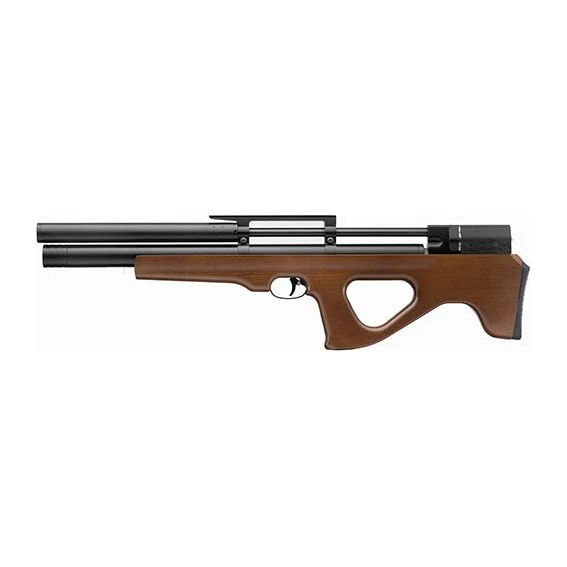
- Design: Compact Bullpup Configuration
- Available Calibers: .177 (4.5mm), .22 (5.5mm), and .25 (6.35mm)
- Barrel Length: 450mm
- Overall Length: Approximately 675mm
- Weight: Approximately 2.0kg
- Air Reservoir Capacity: 265cc
- Maximum Fill Pressure: 250 BAR / 25 MPa
- Pressure Regulator: Integrated
- Magazine Capacity: 11 Shots (.177), 9 Shots (.22), 8 Shots (.25)
- Stock Material: German Beechwood
- Stock Design: Ambidextrous Thumbhole
- Trigger System: Single-Stage
- Safety Mechanism: Manual Safety
- Barrel Design: Shrouded Barrel with Integrated Sound Suppression
- Optics Mounting: Dovetail Rail
- Pressure Monitoring: Built-In Air Pressure Gauge
- Filling System: Quick-Fill Probe Connection
- Recommended Applications: Recreational Target Shooting, Precision Practice, and Lawful Sporting Use
Specifications, power output, accessories, and availability may differ according to caliber, regional regulations, and individual model configuration.
Advanced Bullpup Design for Comfortable Handling
Compact Construction Without Compromising Barrel Length
One of the most recognizable advantages of the Artemis P15 PCP air rifle is found in its compact bullpup architecture. By positioning the action farther toward the rear, a full-length barrel is accommodated within a shorter overall frame.
Consequently, a more portable and manageable shooting platform is provided without requiring a traditional long rifle configuration.
Furthermore, the approximately 675mm overall length is especially appreciated when convenient storage and transportation are prioritized. The lightweight construction also reduces unnecessary carrying weight during extended shooting sessions.
Because the barrel is retained at approximately 450mm, effective use of the compressed-air propulsion system is supported.
Ergonomic German Beechwood Stock
Comfort is further enhanced through the carefully shaped wooden thumbhole stock. A natural grip position is encouraged, while additional support is provided around the shoulder and trigger-hand contact points.
Moreover, the ambidextrous configuration is designed to accommodate different shooting preferences.
The attractive beechwood finish also gives the rifle a traditional sporting appearance despite its modern mechanical layout.
Regulated PCP Performance for Consistent Accuracy
Integrated Pressure Regulator Technology
A major performance advantage is provided by the built-in regulator. Instead of allowing pellet velocity to fluctuate directly with changing reservoir pressure, compressed air is metered more consistently while operating within the regulator’s intended pressure range.
As a result, variation between consecutive shots may be reduced.
Furthermore, dependable accuracy is supported when suitable pellets, proper maintenance, and consistent shooting techniques are combined.
Although actual grouping performance depends on ammunition quality and environmental conditions, the regulated design makes the Artemis P15 PCP an appealing option for precision-focused recreational shooting.
265cc Air Reservoir and 250 BAR Filling Capacity
An integrated 265cc compressed-air reservoir is fitted to the rifle, while a maximum fill pressure of 250 BAR is specified for the standard model.
Consequently, an onboard compressed-air supply is provided without requiring disposable CO₂ cartridges.
A built-in pressure gauge is included to help users monitor remaining reservoir pressure. Additionally, the quick-fill probe arrangement allows the rifle to be replenished using compatible, properly rated PCP filling equipment.
For safety, the manufacturer’s filling procedure and pressure limits must always be followed.
Smooth Side-Lever Action and Multi-Shot Convenience
Reliable Manual Loading Mechanism
A conveniently positioned side-lever cocking system is incorporated into the Artemis P15 PCP. Through this mechanism, pellets are chambered manually from the compatible rotary magazine.
Compared with individually loading every pellet, greater convenience is provided during ordinary target practice.
However, the rifle remains manually operated, and the action must be cycled between shots.
Additionally, the mechanical arrangement is designed to support straightforward handling and controlled operation.
Rotary Magazine Capacity
Different magazine configurations are supplied according to caliber.
The .177 version is commonly equipped with an 11-shot magazine, whereas the .22 version typically accommodates nine pellets. Meanwhile, the .25 configuration generally provides eight shots.
Therefore, magazine capacity can be selected according to the chosen model and preferred sporting application.
Before use, the correct magazine and compatible pellet dimensions should always be verified.
Shrouded Barrel and Reduced Shooting Noise
Integrated Sound-Moderating Construction
A shrouded barrel assembly is fitted to the Artemis P15 PCP to help moderate the sound produced during firing.
Consequently, a more comfortable shooting experience may be achieved compared with an otherwise similar unshrouded configuration.
Nevertheless, actual sound levels are influenced by pellet velocity, caliber, surroundings, and the rifle’s operating condition.
Although sound moderation is incorporated, the rifle should never be considered silent. Appropriate hearing protection and compliance with local sound-moderator regulations remain important.
Artemis P15 PCP Air Rifle – Calibres, FAC Power, Recommended Scopes and Essential Accessories
The Artemis P15 PCP Air Rifle combines lightweight bullpup construction, regulated compressed-air performance, and versatile caliber options. Designed for recreational target shooting and lawful sporting applications, this compact air rifle is offered in several configurations to meet different shooting preferences and regional power regulations.
Furthermore, its integrated regulator, 265cc air reservoir, and manually operated side-lever action provide a practical combination of consistency and convenience.
Available Calibres and Their Performance Characteristics
.177 Calibre (4.5mm) – Precision Target Shooting
The .177 caliber configuration is particularly suitable for recreational target shooting and organized accuracy practice. Because smaller-diameter pellets are used, this version is commonly selected by shooters who prioritize traditional paper-target activities.
Additionally, a wide selection of compatible target pellets is available from established ammunition manufacturers.
The manufacturer’s published specifications list a maximum nominal velocity of approximately 1,000 FPS for certain full-power configurations. However, the actual velocity depends on pellet weight, factory settings, and regional restrictions.
An 11-shot rotary magazine is normally supplied with this configuration.
.22 Calibre (5.5mm) – Versatile Sporting Performance
The .22 version offers a popular balance of pellet diameter, sporting versatility, and practical handling.
Furthermore, a broad variety of commercially manufactured pellets is available, making this caliber suitable for enthusiasts who enjoy comparing ammunition characteristics during supervised range practice.
The manufacturer’s published velocity specification reaches approximately 900 FPS for certain versions, although actual performance varies.
Additionally, a nine-shot rotary magazine is commonly provided.
.25 Calibre (6.35mm) – Larger Pellet Configuration
For users seeking a larger-diameter pellet option, the .25 configuration is available in selected markets.
Its ammunition characteristics differ from those of smaller calibers, particularly in projectile mass and trajectory behavior.
According to published manufacturer specifications, certain full-power versions are rated at approximately 800 FPS.
Furthermore, an eight-shot rotary magazine is generally included.
Local regulations, appropriate shooting facilities, and the exact rifle configuration should determine whether this caliber is suitable.
FAC and Non-FAC Power Versions
What Does FAC Mean?
FAC stands for Firearm Certificate, a term commonly associated with firearms licensing in the United Kingdom.
In England and Wales, air rifles capable of producing muzzle energy greater than 12 ft-lb, approximately 16.3 joules, generally require a Firearm Certificate.
By comparison, appropriately classified air rifles operating at or below this limit may be possessed without an FAC, subject to other legal restrictions.
Importantly, licensing arrangements differ elsewhere in the United Kingdom and internationally.
Non-FAC Versions – Controlled Sporting Power
Where offered, a non-FAC configuration is intended to comply with the applicable low-power classification.
For England and Wales, this generally means a maximum muzzle energy of 12 ft-lb or less.
Consequently, such versions may appeal to qualified recreational shooters using approved target facilities.
However, the power classification must be confirmed for the individual rifle rather than assumed from its product name.
FAC Versions – Higher Factory Power
Higher-powered factory configurations may be available where legally permitted.
These models can exceed the standard non-FAC energy classification and therefore require the appropriate licensing or authorization.
Furthermore, muzzle velocity alone cannot establish whether a particular rifle falls within an FAC category because pellet weight also determines muzzle energy.
The retailer should therefore provide the precise factory energy rating in joules or foot-pounds.
Unauthorized alterations to the pressure system or factory power settings should never be attempted.
Power System, Air Capacity and Regulated Performance
Integrated Pressure Regulation
A factory-integrated regulator is designed to maintain more consistent compressed-air delivery throughout the usable regulated pressure range.
Consequently, variations in pellet velocity may be reduced compared with an unregulated system.
Additionally, consistent air delivery supports predictable recreational target performance when suitable ammunition and proper shooting technique are combined.
Reservoir Capacity and Filling Pressure
A 265cc onboard air reservoir is included in the standard design.
The manufacturer’s published maximum pressure is 250 BAR, equivalent to 25 MPa.
However, some retailer-supplied configurations specify different filling limits. Therefore, the individual rifle’s markings and supplied manual must always be followed.
A built-in pressure gauge provides convenient monitoring, while the quick-fill connection supports replenishment using compatible, properly rated equipment.
Recommended Scopes for the Artemis P15 PCP
Hawke Vantage AO 3-9×40 – Everyday Target Shooting
The Hawke Vantage AO 3-9×40 is a practical optical option for shooters seeking adjustable magnification and convenient target observation.
Its adjustable objective supports parallax correction at suitable shooting distances.
Furthermore, the relatively straightforward optical design makes it appealing for recreational range activities.
Correct mounting rings must be selected for the rifle’s rail and the scope’s tube diameter.
Hawke Airmax 3-9×40 AO – Airgun-Focused Optics
The Hawke Airmax 3-9×40 AO is another suitable option to consider for recreational airgun shooting.
Its airgun-oriented optical design and adjustable objective make it particularly relevant for paper-target observation.
Additionally, the magnification range provides flexibility without requiring an unusually large optical assembly.
Before purchasing, customers should confirm current model specifications, eye relief, and mounting compatibility.
Compact 2-7×32 Scope – Lightweight Configuration
A compact 2-7×32 scope can also complement the rifle’s short bullpup profile.
Because smaller optics generally contribute less additional weight, the manageable handling characteristics of the original platform can be preserved.
However, scope length and eye relief are especially important on bullpup designs. The selected optic must provide a comfortable viewing position when mounted correctly.
Essential Accessories and Equipment
Recommended Accessories for Safe and Convenient Ownership
The following items are worth considering:
- Compatible rotary magazines: Additional manufacturer-approved magazines for the selected caliber.
- PCP filling equipment: A properly rated compressor, certified air cylinder, or compatible hand pump.
- Correct filling probe: A fitting designed for the rifle’s specific filling connection.
- Scope mounting rings: Suitable mounts for the existing optics rail and selected scope tube.
- Quality target pellets: Clean, undamaged ammunition matching the marked caliber.
- Protective shooting glasses: Appropriate eye protection for every shooting session.
- Pellet-rated target trap: A suitable backstop designed to contain projectiles safely.
- Padded rifle case: Protection against minor impacts during lawful transportation.
- Cleaning equipment: Manufacturer-approved materials for external care and barrel maintenance.
- Secure storage cabinet: A locked storage arrangement to prevent unauthorized access.
Selecting Compatible Accessories
Accessory compatibility should always be verified before purchase.
For example, the standard rifle uses a dovetail-style optics rail, but its exact dimensions should be checked before selecting mounting hardware.
Likewise, magazines, filling probes, and replacement components must match the specific production version.
Final Recommendation
The Artemis P15 PCP offers a balanced combination of caliber choice, regulated compressed-air operation, convenient handling, and optical compatibility.
For recreational paper-target shooting, the .177 configuration is particularly worth considering. Meanwhile, the .22 and .25 alternatives provide additional choices for appropriately authorized sporting users.
Ultimately, the best ownership experience is supported by selecting the correct factory power classification, compatible optics, approved filling equipment, and essential safety accessories.
Choose the configuration that meets your shooting requirements, confirm the applicable licensing rules, and enjoy responsible precision shooting with a properly equipped air rifle.
Artemis P15 PCP Caliber Options and Shooting Versatility
.177 Caliber – Recreational Accuracy and Target Practice
The .177 (4.5mm) configuration is frequently selected for recreational target shooting, where small-diameter pellets and precise shot placement are appreciated.
Additionally, a wide selection of compatible target pellets is available in many markets.
.22 Caliber – Balanced Sporting Performance
The .22 (5.5mm) version offers another popular configuration for airgun enthusiasts.
A larger pellet diameter is provided, while practical versatility is maintained for appropriately authorized sporting activities.
.25 Caliber – Larger Pellet Configuration
For users who prefer a larger caliber, a .25 (6.35mm) version is also manufactured.
However, actual muzzle energy, velocity, pellet compatibility, and permitted applications must be verified for the particular rifle and jurisdiction.
Why Choose the Artemis P15 PCP Air Rifle?
Several desirable characteristics are combined in one compact platform.
First, portability is improved through lightweight bullpup construction. Furthermore, regulated air delivery is incorporated to support repeatable shooting performance.
In addition, the wooden ambidextrous stock provides comfortable handling, while the rotary magazine offers practical convenience.
Similarly, the integrated pressure gauge allows reservoir conditions to be monitored without additional measuring equipment.
For customers comparing compact PCP rifles, the combination of a 450mm barrel, 265cc reservoir, regulator, and approximately 2kg weight represents an attractive technical package.
Importantly, practical shooting enjoyment is enhanced when the rifle is paired with suitable optics, quality pellets, and safe target facilities.
Maintenance, Safety, and Long-Term Reliability
To preserve dependable operation, regular external inspections and appropriate maintenance are recommended.
The filling connection should be kept clean, and only compatible high-pressure air equipment should be used. Additionally, correct lubrication and seal care should be performed according to the manufacturer’s instructions.
The rifle must always be treated as loaded until its condition has been safely verified.
Furthermore, shooting should only be conducted toward suitable targets with a secure backstop, in areas where airgun use is permitted.
Protective eyewear, secure storage, and responsible handling are essential for every user.
Final Overview – Artemis P15 PCP Air Rifle
The Artemis P15 PCP Air Rifle brings together compact engineering, attractive wooden craftsmanship, and regulated compressed-air performance in a versatile shooting platform.
Through its lightweight construction, comfortable stock, side-lever operation, and practical multi-shot magazine, an enjoyable recreational shooting experience is supported.
Moreover, the integrated regulator, pressure gauge, and shrouded barrel provide meaningful functional advantages for enthusiasts seeking a well-equipped PCP air rifle.
For customers considering a compact bullpup airgun, the Artemis P15 PCP offers an appealing balance of manageable dimensions, practical features, and precision-oriented design.
Explore the Artemis P15 PCP specifications, select the appropriate caliber, and confirm local legal requirements before purchasing.
Air Rifles, PCP Systems, Calibers, Target Shooting and Popular Models
The world of air arms, air guns, and precision shooting equipment covers everything from recreational target shooting to sporting applications. For newcomers asking what is an air gun, what is an air rifle, what is air rifle, what is a air rifle, what is a airgun, what is an airgun, or what are airguns, the basic principle is straightforward. An air gun uses compressed gas or air to propel a projectile rather than relying on the combustion system associated with conventional firearms.
Understanding how does an air gun work, how does air gun work, how do air guns work, how does an air rifle work, how does air rifle work, and how do air rifle work can help buyers distinguish between the different operating systems available. Depending on the design, power can be supplied by a spring piston, compressed air cylinder, CO2 cartridge, or another pneumatic mechanism.
PCP Air Rifles and Compressed-Air Systems
One of the most popular categories is the pre-charged pneumatic platform. Searches such as what is a pcp air rifle, what is a pcp airgun, what is pcp air rifle, what is a pcp air gun, what is a pcp rifle, what is pcp rifle, what are pcp air rifles, and what is a pre charged pneumatic air rifle all relate to the same fundamental technology. A PCP rifle stores compressed air inside a reservoir and releases a controlled quantity each time the rifle is fired.
For shoppers researching pcp gun meaning, pcp rifle meaning, or pcp air rifle meaning, PCP simply refers to a pre-charged pneumatic system. Air is normally added using a pcp hand pump, dive cylinder, or pcp air compressor. Consequently, an air compressed gun or air compressor rifle can deliver consistent performance without requiring the shooter to manually compress a spring before every shot.
Some searches also include pcp bb gun, although many PCP platforms are primarily designed around pellets rather than traditional BB ammunition. Understanding the intended ammunition is therefore important before selecting accessories, magazines, or loading equipment.
.177 Caliber, .22 Caliber and Pellet Selection
Caliber choice is one of the most frequently researched subjects among airgun buyers. The .177 caliber remains extremely popular for recreational shooting and precision target applications. Products described as a 177 air rifle, 177 bullet, or even 177 cal darts may appear during searches, although ammunition compatibility always needs to be checked against the manufacturer’s specifications.
Questions including 177 or 22, 177 cal vs 22, 177 caliber vs 22, .177 caliber vs .22, .177 pellet vs .22 pellet, and .22 vs .177 pellet generally focus on differences in projectile size, trajectory, energy, and intended use. A smaller .177 pellet is commonly chosen for paper targets and precision shooting, whereas larger calibers may be selected for applications where additional projectile mass is desired.
Understanding bb gun pellet sizes is equally important because BBs and pellets are not automatically interchangeable. Before purchasing ammunition, shooters should confirm the caliber and projectile type specified for their particular pellet rifle, pellet pistol, or bb gun.
Air Arms Rifles and Popular Models
Among established manufacturers, air arms products remain widely searched by enthusiasts interested in precision PCP and spring-powered platforms. Well-known searches include air arms s510, s510, air arms s410, aa s400, pro sport air arms, prosport air arms, tx 200, and tx200.
Variations such as air arm and airarm are also commonly entered by shoppers searching for the brand. Buyers looking specifically for regulated sporting configurations may encounter the air arms s510 ultimate sporter .177 sub 12, a phrase frequently associated with UK-oriented searches for the S510 platform.
Each Air Arms model has its own action, stock design, power configuration, caliber options, and intended shooting environment. Therefore, specifications should always be checked against the exact version being considered rather than assumed from another model in the same family.
FX Impact M3, FX Maverick and Modern PCP Platforms
Premium PCP research frequently includes the fx maverick and the fx impact m3. Buyers may also search for fx impact mk3, fx m3 airgun, fx m3, impact m3, or fx impact m3 air rifle while comparing generations and configurations.
More specific searches such as fx impact m3 .22cal air rifle. 600mm barrel focus on caliber and barrel-length combinations. Meanwhile, international shoppers may search fx impact m3 precio, fx impact m3 precio en usa, or fx impact m3 price when researching current market pricing.
Because FX platforms can be produced in multiple barrel lengths, calibers, power settings, and regional configurations, buyers should verify the exact specification offered in their country before ordering.
Break-Barrel Air Rifles
Another major category is the break barrel air rifle. Anyone asking what is a break barrel air rifle or what is a break barrel pellet gun is usually referring to a rifle in which the barrel is hinged downward to cock the internal powerplant and expose the breech for loading.
Break-barrel designs remain popular because they can provide a self-contained shooting system without an external compressor or air bottle. Models such as a gamo pellet gun are frequently encountered by buyers exploring this category.
Learning how to load pellet gun equipment properly is particularly important. Pellets should match the manufacturer’s recommended caliber and should be loaded in accordance with the owner’s manual while the rifle is pointed in a safe direction and handled under normal shooting-range safety procedures.
CO2, Pellet Pistols and Other Airgun Types
Not every airgun uses PCP or spring power. A co2 powered pellet rifle, for example, uses replaceable CO2 cartridges as its propellant source. CO2 systems can be found in rifles and handguns intended for recreational shooting, training, and target use.
People researching air pistol uses or general pellet gun uses will encounter equipment intended for target practice, recreational plinking, skills training, competition, and other lawful sporting activities. A pellet pistol can offer a compact platform, while rifles generally provide a longer sight radius and additional stability.
Search terms such as pelet guns are also common misspellings of pellet guns and can still represent useful search intent when website content is designed to answer frequently asked buyer questions naturally.
Target Shooting and Airgun Practice
One of the most established uses of airguns is target shooting with air rifles. Dedicated air guns for target shooting may emphasize accuracy, adjustable stocks, match triggers, regulated air delivery, and compatibility with precision optics.
Likewise, airgun target practice and airgun for target practice are common search topics among people looking for an accessible way to develop shooting fundamentals. Proper backstops, eye protection, safe handling practices, and suitable ranges should always be used.
The practical range of air rifle equipment varies considerably according to caliber, muzzle energy, projectile selection, environmental conditions, and the rifle itself. As a result, buyers should use manufacturer specifications and local range rules rather than assuming that every air rifle performs identically.
Hunting Air Rifles and Appropriate Use
Some shooters research air rifles for hunting, hunting air rifles, best air rifle for hunting, pellet gun for rabbits, or even the informal phrase rats gun when looking for equipment designed for lawful pest-control or hunting applications.
Suitability depends heavily on local law, caliber, projectile energy, quarry species, shot placement requirements, and humane hunting standards. Questions such as can a bb gun kill a fox should therefore not be treated simply as equipment-selection questions. Legal restrictions and animal-welfare requirements should be checked first, and low-powered BB guns are not appropriate substitutes for equipment legally and ethically suitable for a particular species.
Similarly, searches for air rifles for deer hunting and big game hunting with air rifle involve specialized legal and ballistic requirements. Large-bore systems such as a 72 caliber air rifle or products associated with bluegrass big bore illustrate how different big-bore pneumatic platforms can be from conventional small-caliber pellet rifles. Local hunting regulations must determine whether such equipment may legally be used.
Licensing and UK Airgun Regulations
Legal requirements differ considerably by jurisdiction. UK-oriented searches frequently include do you need a licence for air rifle, air rifle certificate uk, and 22 rifle uk license. However, the rules governing air rifles, conventional .22 firearms, certificates, age restrictions, possession, transportation, and power limits are not identical.
Consequently, buyers should confirm current legislation with the relevant licensing authority before purchasing or using any regulated equipment. Particular attention should also be paid to whether a rifle is configured below or above applicable power thresholds.
Sportsman, Gamo and Other Popular Searches
Beyond specialist PCP manufacturers, buyers may encounter products such as the sportsman 900 while comparing recreational air rifles. Searches for a gamo pellet gun are also common because Gamo offers numerous spring-powered and pneumatic models across different price points and configurations.
The broader search for best air guns can include everything from affordable recreational platforms to sophisticated regulated PCP rifles. Rather than treating one design as universally superior, buyers should compare caliber, intended application, weight, stock ergonomics, power source, shot capacity, charging equipment, availability of spare parts, and local legal requirements.
Airgun Safety, Home Use and Responsible Ownership
Searches for air guns for home defense do appear online, but an airgun should not automatically be assumed to be suitable for defensive use. Laws vary significantly, and airguns can cause serious injury. Secure storage, lawful ownership, training, safe handling, and avoidance of unnecessary confrontation remain essential.
Whether someone owns an air rifle, pellet rifle, bb gun, or PCP platform, the equipment should always be treated as capable of causing injury. A secure backstop should be used for recreational shooting, the muzzle should remain pointed in a safe direction, and manufacturer instructions should be followed carefully.
Ultimately, understanding the differences between PCP rifles, break-barrel systems, CO2 equipment, caliber choices, and individual models makes it easier to compare the extensive range of modern airguns. From Air Arms platforms to FX rifles and recreational pellet guns, careful specification checking, responsible handling, lawful use, and suitable ammunition selection remain central to getting the right equipment for the intended purpose.
Frequently Asked Questions (FAQs)
1. What makes this air rifle different from traditional air-powered models?
A distinctive combination of compact construction, regulated compressed-air technology, and ergonomic design is provided by this advanced shooting platform. Unlike traditional spring-powered models, compressed air is stored in an onboard reservoir and released during firing. Consequently, the mechanical vibration commonly associated with spring-piston systems is largely eliminated.
Furthermore, a shortened bullpup configuration allows a relatively long barrel to be accommodated within a smaller overall structure. This arrangement improves portability while maintaining practical barrel length.
Additionally, a lightweight wooden stock, magazine-fed action, and pressure-monitoring system are incorporated. These features make the rifle an appealing option for enthusiasts who appreciate modern engineering and manageable handling.
2. Is this model suitable for beginners?
Yes, the rifle may be suitable for responsible beginners who have received appropriate training in safe airgun handling. However, an understanding of compressed-air systems, loading procedures, pressure limitations, and basic shooting fundamentals is essential.
Before the first shooting session, the manufacturer’s instructions should be reviewed carefully. Furthermore, supervision by a qualified instructor is recommended for inexperienced users.
Protective eyewear should always be worn, and a suitable backstop must be provided. Although the compact design is convenient, the rifle remains a potentially dangerous sporting instrument that must be handled responsibly.
3. How does the compressed-air power system work?
The mechanism operates through the controlled release of high-pressure compressed air stored within a dedicated reservoir. When the trigger is activated, a measured quantity of air is released through the valve system to propel the pellet along the barrel.
Unlike CO₂-powered equipment, disposable gas cartridges are not required. Instead, the reservoir is refilled using compatible high-pressure filling equipment.
Moreover, a pressure regulator is incorporated to stabilize the air supplied to the firing mechanism. Consequently, more consistent pellet velocities may be achieved while the reservoir remains within its regulated operating range.
4. What is the purpose of the integrated pressure regulator?
The regulator is designed to deliver compressed air at a more consistent working pressure despite gradual changes in reservoir pressure.
Without regulation, pellet velocity may vary as compressed air is consumed. However, the regulating mechanism helps reduce these fluctuations within its intended operating range.
As a result, more predictable performance may be supported during repeated target-shooting sessions.
Nevertheless, precise accuracy is influenced by several additional factors, including pellet quality, barrel condition, environmental conditions, and shooter technique.
The regulator should therefore be regarded as an important performance feature rather than a guarantee of identical results with every shot.
5. How much compressed air can the reservoir hold?
A reservoir capacity of approximately 265cc is specified for the standard configuration. This provides onboard storage for the compressed air required to operate the firing system.
Furthermore, a maximum filling pressure of 250 BAR is commonly specified for this model.
However, the pressure rating marked on the individual rifle and the manufacturer’s documentation must always take priority over general product information.
Overfilling must never be attempted, because excessive pressure can damage equipment and create a serious safety hazard.
Only clean, dry compressed air and properly rated filling equipment should be used.
6. How many shots can be fired from a full reservoir?
The number of usable shots depends on the selected caliber, factory power setting, pellet characteristics, reservoir pressure, and regulator performance.
Consequently, a single guaranteed shot count cannot be applied to every configuration.
Lower-powered versions may provide a different number of shots than higher-powered alternatives. Additionally, consistent accuracy may be maintained over only part of the total available pressure range.
For realistic expectations, the manufacturer’s performance data for the exact version should be consulted.
During regular practice, reservoir pressure should be monitored, and filling should be performed before the pressure falls below the recommended operating range.
7. Which caliber should be selected for recreational target shooting?
The most appropriate caliber depends on personal preferences, local regulations, shooting distance, and intended sporting activities.
A smaller-diameter pellet is commonly preferred for conventional paper-target practice because suitable target ammunition is widely available.
Meanwhile, medium-caliber versions are often appreciated for their balance of pellet size and sporting versatility.
Larger-caliber options provide another configuration for appropriately authorized users.
Nevertheless, the most suitable choice should be determined by legal requirements, available shooting facilities, and manufacturer-approved specifications rather than caliber alone.
8. Is the rifle lightweight enough for extended shooting sessions?
A weight of approximately 2kg is commonly specified, making the standard model relatively lightweight compared with many full-size compressed-air sporting rifles.
Additionally, its compact bullpup construction concentrates the main components within a shorter overall structure.
Consequently, transportation and handling may be more convenient for users who prefer manageable equipment.
However, perceived comfort depends on individual body proportions, strength, shooting position, and any attached accessories.
A mounted scope and other approved equipment will increase the total weight. Therefore, the complete setup should be considered when evaluating comfort.
9. Can the rifle be used by left-handed shooters?
An ambidextrous wooden stock is incorporated to accommodate both left-handed and right-handed users.
Furthermore, the thumbhole grip is shaped to provide comfortable hand placement for different shooting preferences.
Nevertheless, an ambidextrous stock does not necessarily mean that every mechanical control is equally accessible from either side.
The side-lever location, magazine access, and safety controls should therefore be examined before purchase.
Whenever possible, the rifle should be handled safely to determine whether its configuration suits the user’s preferred shooting orientation.
10. How does the side-lever loading mechanism function?
A manually operated lever is provided to cycle the action and chamber a pellet from the rotary magazine.
This arrangement eliminates the need to place an individual pellet directly into the breech for every shot when a compatible loaded magazine is used.
Additionally, manual cycling allows the user to maintain direct control over the loading process.
The mechanism is not fully automatic, and the action must be operated between shots.
For reliable performance, only manufacturer-approved magazines should be used, and all loading procedures should follow the supplied instruction manual.
11. What is the magazine capacity?
Magazine capacity varies according to caliber.
The standard smaller-caliber configuration commonly accepts eleven pellets, while the medium-caliber version generally accommodates nine.
Meanwhile, the larger-caliber variant is typically supplied with an eight-shot rotary magazine.
However, magazine designs can differ between production versions and regional packages.
Consequently, the exact capacity should be confirmed with the retailer before ordering.
Additional magazines may be available separately, but compatibility must be verified according to caliber and model configuration.
12. Does the shrouded barrel make the rifle completely silent?
No. Although a shrouded barrel is designed to help moderate firing noise, completely silent operation should not be expected.
Sound levels depend on several conditions, including muzzle velocity, pellet characteristics, surrounding surfaces, and the mechanical action.
Furthermore, certain factory configurations may be subject to additional restrictions on sound-moderating equipment.
Therefore, local regulations should be checked before purchasing or using any sound-reduction components.
Appropriate hearing protection should still be considered, particularly when shooting in enclosed environments.
13. Can a telescopic sight be installed?
Yes, a compatible telescopic sight may be mounted using the rifle’s provided optics rail.
Because rail dimensions and mounting arrangements can vary, the correct mounting hardware should be verified before purchase.
A lightweight scope is often preferred by users who wish to preserve the compact handling characteristics of the rifle.
Additionally, adjustable magnification and suitable parallax correction can make recreational target observation more convenient.
Nevertheless, optical equipment should be installed securely according to the manufacturer’s instructions, and safe shooting practices must always be maintained.
14. What type of pellets should be used?
Only pellets matching the caliber marked on the rifle should be selected.
Furthermore, ammunition should be clean, undamaged, and appropriate for the manufacturer’s recommended specifications.
Poorly manufactured or deformed pellets may produce inconsistent results or interfere with normal feeding.
Although different pellet designs are available, compatibility should always be prioritized over appearance or advertising claims.
For organized target shooting, suitable target-grade ammunition may be considered.
The manufacturer’s instructions should also be consulted regarding prohibited ammunition types and pellet dimensions.
15. How should the air reservoir be refilled?
The reservoir must be refilled using compatible, pressure-rated PCP equipment and the correct filling connection.
A suitable high-pressure compressor, certified air cylinder, or approved manual pump may be used where supported by the manufacturer’s instructions.
However, compressed-air filling involves substantial pressure and should be performed only by someone familiar with the required safety procedures.
Furthermore, the reservoir’s pressure rating must never be exceeded.
Filling connections should be inspected for damage, and only clean, dry air should be introduced.
Damaged or questionable equipment should be inspected by a qualified technician before use.
16. How can the rifle be maintained for long-term reliability?
Routine maintenance should include external cleaning, checking accessible components for damage, and following the manufacturer’s recommended servicing schedule.
The barrel should only be cleaned using suitable materials and approved procedures.
Furthermore, the wooden stock should be protected from prolonged moisture exposure and extreme environmental conditions.
Air seals, pressure-related components, and internal mechanical assemblies should not be disassembled without appropriate technical expertise.
If unusual air leakage, mechanical resistance, or inconsistent operation is noticed, use should be discontinued until the problem has been assessed by a qualified airgun technician.
17. Is the wooden stock durable?
The standard beechwood stock is designed to provide a practical balance of structural support, comfort, and traditional sporting appearance.
Nevertheless, natural wood can be affected by humidity, excessive heat, impacts, and poor storage conditions.
Consequently, sensible care is recommended to preserve its finish and structural condition.
The exterior may be cleaned with a soft, dry cloth, while any additional wood-care treatment should be compatible with the manufacturer’s recommendations.
Although normal handling marks may develop over time, suitable storage and regular inspection can help maintain its appearance.
18. Can the rifle be used in different weather conditions?
Outdoor use may be possible under suitable conditions, but excessive moisture, heavy rainfall, dust, and extreme temperatures should be avoided.
The compressed-air system, wooden stock, metal surfaces, and optical accessories can all be affected by environmental exposure.
Furthermore, significant temperature changes may influence pressure readings and shooting consistency.
After outdoor use, exposed surfaces should be inspected and dried where necessary.
The equipment should never be stored wet or placed near intense heat sources.
Manufacturer-specified temperature limits should always be observed.
19. What safety precautions are recommended during use?
Several essential precautions should be followed during every shooting session.
The muzzle must always be directed toward a safe area, and the trigger should remain untouched until firing is intended.
Additionally, a suitable pellet-rated backstop must be provided, and the area beyond the target must be considered.
Protective eyewear is strongly recommended.
The rifle should never be pointed at another person, regardless of its apparent loading condition.
Furthermore, secure storage is necessary to prevent unauthorized access.
All applicable local laws, range requirements, and manufacturer safety instructions must be respected.
20. Does this model require a firearms license?
Licensing requirements depend on the country, region, caliber, and legal power classification of the individual rifle.
In some jurisdictions, certain low-powered air rifles may be purchased without a conventional firearms certificate. However, more powerful versions may be regulated differently.
Additionally, restrictions may apply to possession, transportation, sound moderators, ammunition, and permissible shooting locations.
Consequently, legal requirements must be verified before purchasing or importing the equipment.
The absence of a traditional powder-burning cartridge does not automatically exempt an air rifle from firearms legislation.
21. Is professional servicing recommended?
Yes. Professional servicing is recommended whenever internal pressure-system repairs, regulator problems, valve defects, or significant mechanical issues are suspected.
Because high-pressure air is stored within the reservoir, incorrect disassembly can create serious hazards.
Therefore, specialized internal work should be performed only by technicians with the required training and equipment.
Furthermore, replacement components should be compatible with the exact production version.
Unauthorized alterations may compromise safety, performance, and warranty coverage.
Routine external care can generally be completed by owners in accordance with the instruction manual, but technical repairs should receive qualified attention.
22. How should the rifle be stored when it is not being used?
The rifle should be unloaded, secured against unauthorized access, and stored in a clean, dry location.
A locked cabinet or suitable secure storage arrangement is recommended.
Additionally, pellets and filling equipment should be stored safely according to applicable regulations.
The manufacturer’s recommendations regarding reservoir pressure during long-term storage must be followed.
Extreme temperatures, direct sunlight, excessive humidity, and corrosive environments should be avoided.
Regular inspections are also advisable when the equipment remains unused for extended periods.
23. What should customers check before purchasing?
Several important details should be verified before completing an order.
The selected caliber, factory power classification, magazine capacity, and included accessories should be confirmed.
Furthermore, availability of replacement magazines, approved service parts, and suitable filling equipment should be considered.
Local ownership and import requirements must also be reviewed.
Customers should examine the retailer’s warranty conditions, return policy, product condition, and shipping restrictions.
Where possible, the exact model identification and factory specifications should be supplied by the seller.
These checks help ensure that the selected configuration meets practical requirements and legal obligations.
24. Why is a pressure gauge useful?
A built-in pressure gauge allows the remaining compressed-air pressure to be monitored without relying entirely on estimates.
Consequently, users can determine when the reservoir is approaching the manufacturer’s recommended refilling point.
Furthermore, pressure monitoring supports safer equipment management and more predictable shooting sessions.
However, the gauge should not be regarded as a substitute for correct filling procedures or approved pressure-rated equipment.
If a gauge appears damaged or gives unexpected readings, use should be discontinued until the system has been professionally inspected.
25. What overall benefits can customers expect?
A practical combination of compact dimensions, lightweight construction, regulated power delivery, and convenient magazine operation is offered.
Furthermore, the wooden stock provides an attractive traditional finish, while the modern internal system supports consistent recreational shooting performance.
The integrated pressure gauge and onboard reservoir also contribute to everyday convenience.
Nevertheless, results depend on the selected configuration, proper maintenance, ammunition compatibility, and responsible operating practices.
For customers seeking a manageable compressed-air sporting platform, a well-balanced range of features is provided.
Ultimately, the best experience is achieved when the equipment is purchased from a reputable supplier, maintained correctly, and used within its intended legal and safety limitations.

Reviews
There are no reviews yet.