BSA R-12 CLX Pro Black Pepper – Premium Regulated PCP Air Rifle
The BSA R-12 CLX Pro Black Pepper has been created as a refined flagship PCP air rifle in which classic British gunmaking character is combined with modern engineering. Designed and manufactured at BSA’s Birmingham headquarters, this model has been developed around a regulated mono-block platform, side-lever operation, a 12-shot magazine system, and BSA’s renowned cold hammer-forged barrel technology.
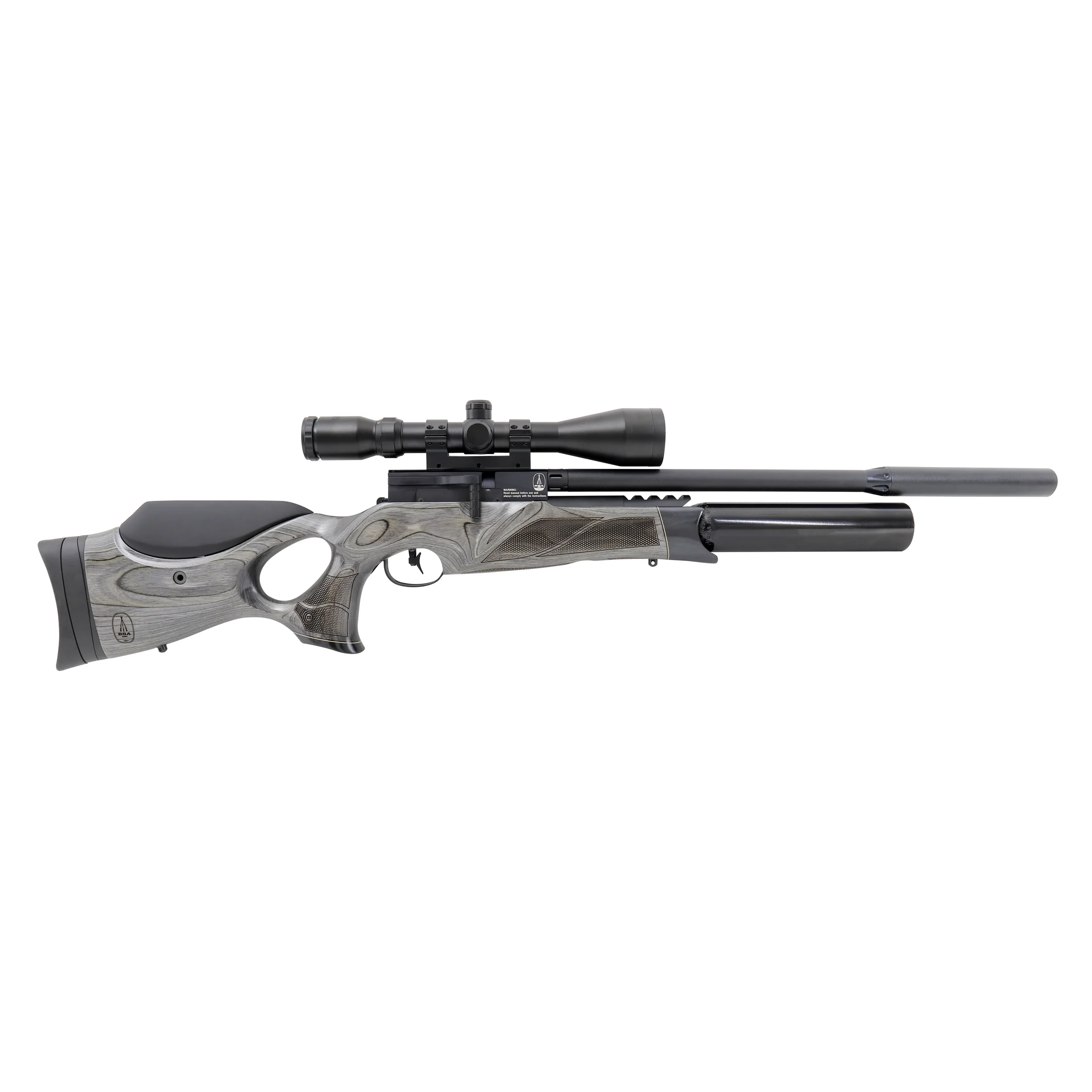
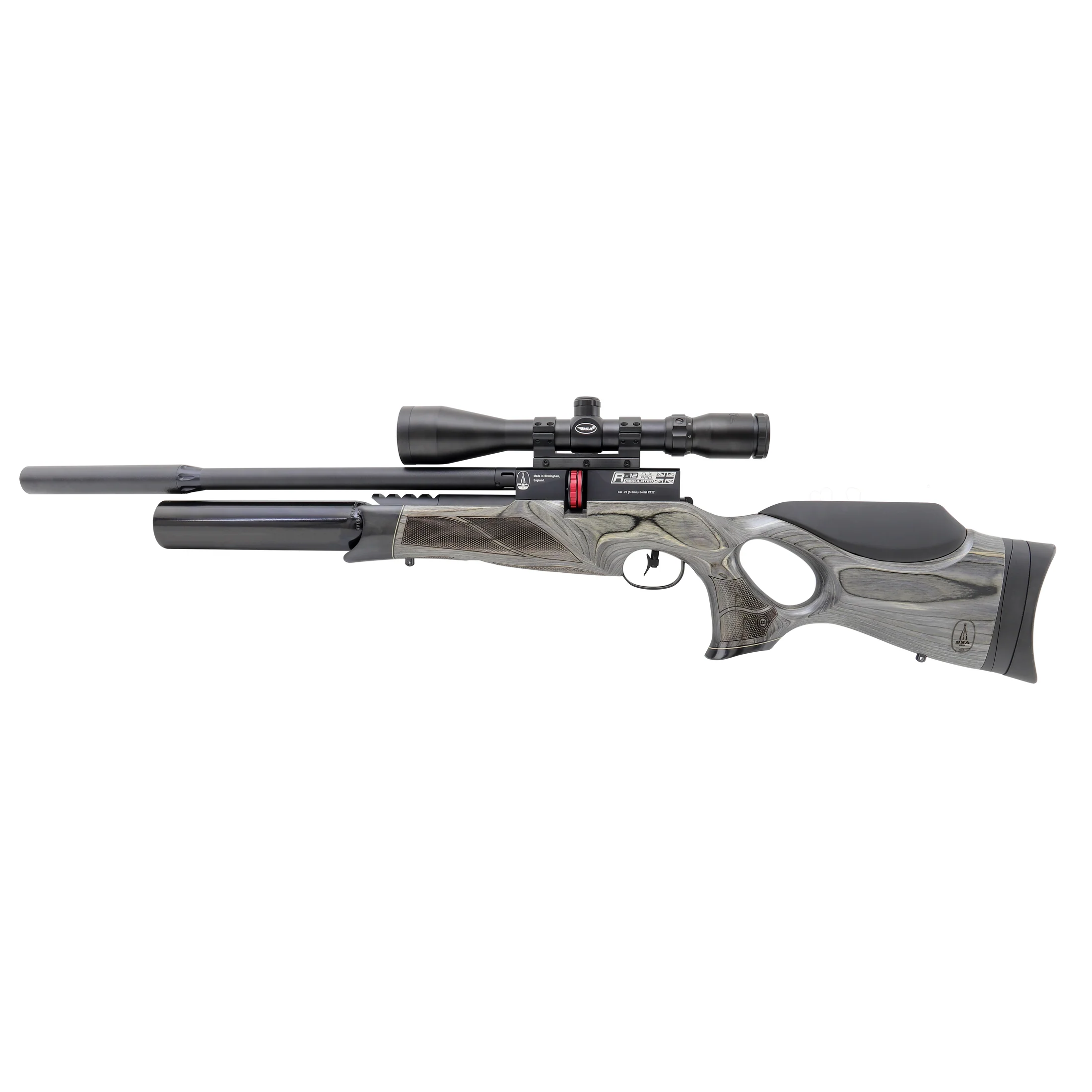
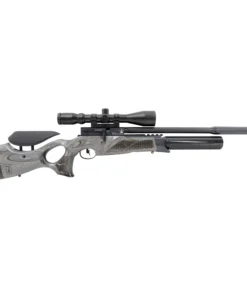
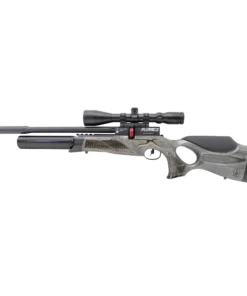
Immediately, attention is drawn to the distinctive Black Pepper laminate thumbhole stock. Crafted by Minelli, the stock has been shaped to provide a secure, comfortable hold while maintaining the familiar styling associated with BSA’s premium sporting rifles. Therefore, impressive aesthetics are paired with practical ergonomics rather than being offered purely for appearance.
For shooters who value consistency, smooth handling, adjustability, and refined construction, the BSA R-12 CLX Pro Black Pepper has been designed to deliver a premium shooting experience.
Why Choose the BSA R-12 CLX Pro Black Pepper?
Rather than simply updating the previous R10 platform, substantial parts of the rifle have been redesigned. A mono-block construction has been introduced so that component count and complexity can be reduced, while reliability and efficiency can be improved. Additionally, an updated regulator system has been incorporated for enhanced shot-to-shot consistency.
Furthermore, the side-lever action has been positioned to provide smooth cycling between shots. Because the rifle is supplied with BSA’s CLX magazine system, up to 12 pellets can be loaded before the magazine needs to be replenished. A visible shot-countdown system has also been integrated so that remaining shots can be monitored more easily.
Consequently, the rifle can be appreciated not only for its visual finish but also for the engineering hidden beneath the stock.
Highlighted Product Features
- Premium Black Pepper laminate thumbhole stock by Minelli
- Regulated pre-charged pneumatic operating system
- Smooth side-lever action
- Modern mono-block construction
- 12-shot CLX rotary magazine
- Integrated magazine shot-countdown indicator
- BSA cold hammer-forged barrel
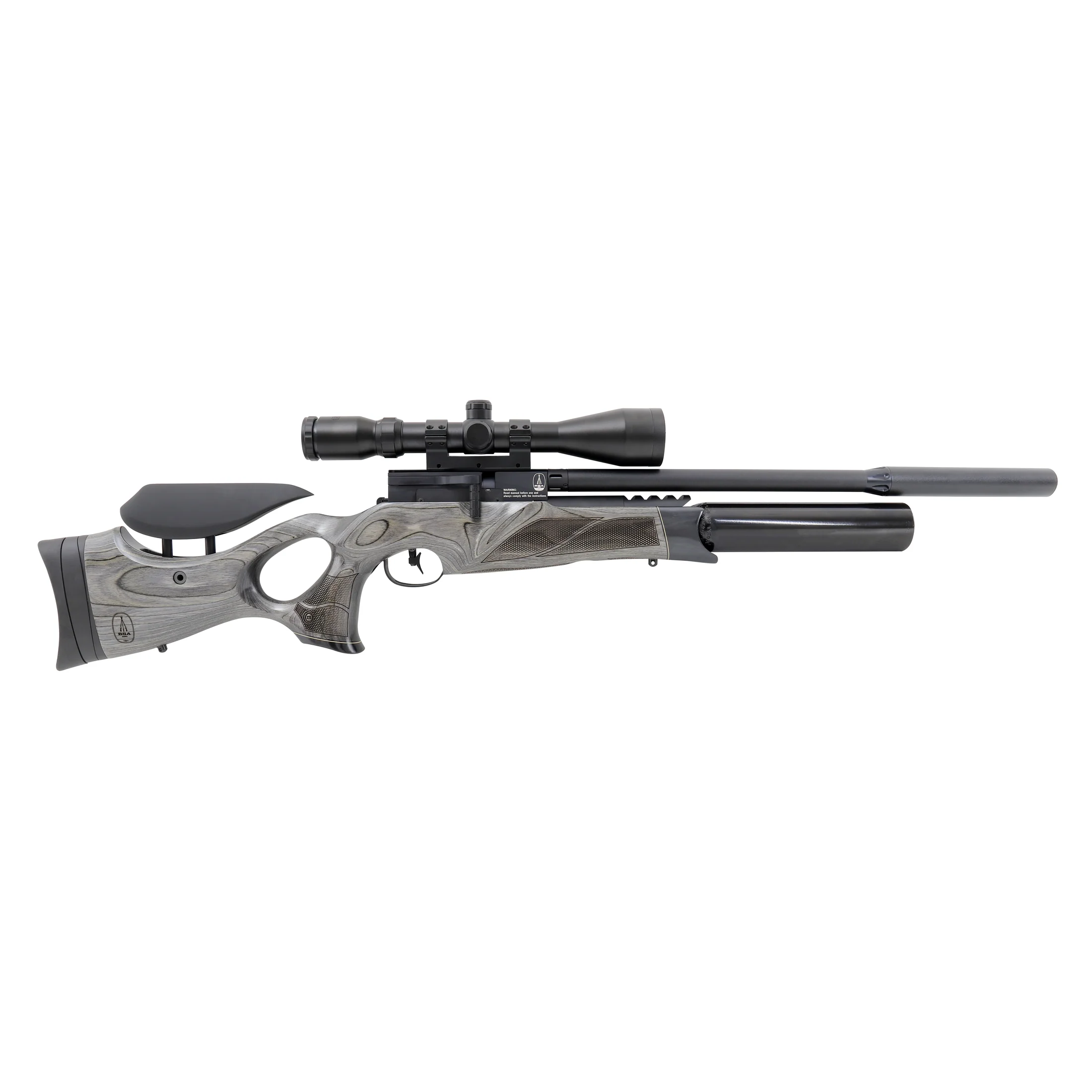
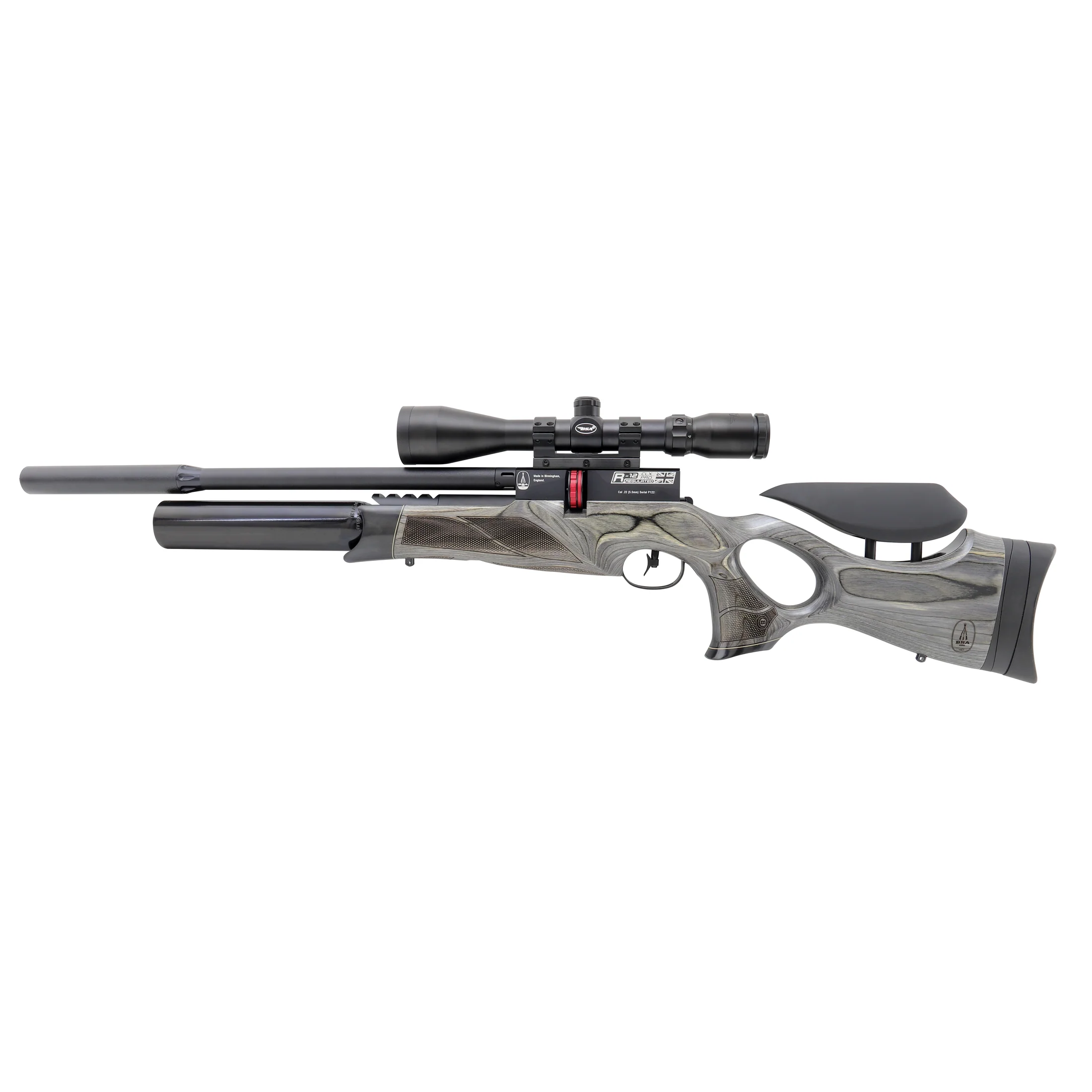
- Adjustable cheekpiece for improved head positioning
- Multi-adjustable shoulder pad
- 288cc air bottle
- Pressure gauge for convenient air monitoring
- Customer Configurable Shroud system
- Pre-fitted sling and bipod mounting points
- Cocked-status indicator
- Available in .177 and .22 configurations
- Designed and manufactured in Birmingham, England
Black Pepper Laminate Thumbhole Stock
One of the most distinctive characteristics of the BSA R-12 CLX Pro Black Pepper is undoubtedly its laminate stock.
Layers of contrasting material have been combined to produce the recognizable Black Pepper appearance, while the stock itself has been shaped by Minelli to preserve the familiar BSA thumbhole profile. The thumbhole is generously proportioned, and additional grip surfaces have been incorporated to provide secure handling.
More importantly, comfort has been made adjustable.
A height-adjustable cheekpiece has been incorporated so that a more natural relationship between the shooter, stock, and optic can be established. Meanwhile, the shoulder pad can be adjusted in multiple directions. As a result, different body types, shooting positions, and individual preferences can be accommodated more effectively.
Consequently, the rifle can be configured around the shooter instead of forcing the shooter to adapt completely to the rifle.
Regulated PCP Performance
Consistency is an important characteristic of any premium PCP platform. Therefore, the BSA R-12 CLX Pro Black Pepper has been fitted with a regulated firing system.
Air is supplied from a 288cc bottle, while pressure can be monitored through the rifle’s gauge. Depending on configuration and calibre, substantial shot counts can be achieved from a fill. Standard-length specifications have been listed by retailers at approximately 250 shots in .177 and 280 shots in .22, although actual performance can vary according to configuration, pressure, ammunition, temperature, and local power specification.
Therefore, extended shooting sessions can be supported without constant interruption for refilling.
Moreover, because pressure delivery is regulated, consistency between successive shots is intended to be maintained over a significant portion of the usable air supply.
BSA Cold Hammer-Forged Barrel
At the heart of the rifle, a BSA cold hammer-forged barrel has been fitted.
Cold hammer forging has long been associated with BSA’s barrel manufacturing, and the process has been retained for the R-12 CLX Pro. During production, rifling geometry is formed with extremely controlled dimensions, helping the finished barrel provide repeatable pellet guidance.
Accordingly, the rifle has been engineered for shooters who place a high value on repeatability and precision.
Naturally, final accuracy can still be influenced by pellet choice, environmental conditions, optic setup, shooting technique, and individual barrel preference. Nevertheless, an exceptionally strong foundation has been provided by the barrel and regulated action.
Smooth 12-Shot CLX Magazine System
Convenience has also been prioritised.
A 12-shot rotary magazine has been incorporated into the BSA R-12 CLX Pro platform. Additionally, a countdown window has been provided so that the number of remaining shots can be checked during use. Once the final chamber has been reached, the operating system has also been designed to provide additional feedback that the magazine requires reloading.
Because the magazine is housed within the action, the upper scope rail remains largely unobstructed. Therefore, greater flexibility can be provided when an optic is positioned for comfortable eye relief.
Combined with the side-lever mechanism, the magazine system gives the rifle a refined and modern operating feel.
Customer Configurable Shroud System
Versatility is further increased through BSA’s CCS, or Customer Configurable Shroud, system.
The barrel assembly can be configured with the shroud arrangement or adapted so that the silencer section is used without the full shroud. Consequently, additional flexibility can be provided for users who prefer a different visual profile or require additional clearance around a larger objective optic.
This feature helps distinguish the BSA R-12 CLX Pro Black Pepper from more conventional fixed-barrel configurations.
Adjustable Trigger and Shooter-Focused Ergonomics
A two-stage adjustable match-style trigger system has been retained from the respected R10 platform. Adjustments can be made to suit individual preferences, allowing a more personalised interface between the shooter and rifle.
At the same time, a clear cocking indicator and conveniently positioned safety system have been incorporated. Therefore, status information can be checked more readily while the rifle is being handled.
Meanwhile, pre-installed sling studs and provision for bipod mounting broaden the rifle’s accessory compatibility. Thus, the setup can be tailored for different lawful sporting, range, and recreational applications.
Available Calibres
The BSA R-12 CLX Pro Black Pepper is commonly offered in:
Different calibre options provide flexibility for different legal shooting disciplines and personal preferences. However, local laws, licensing requirements, power restrictions, and permitted uses should always be checked before purchase or use.
Built as a Flagship BSA PCP
Considerable development work has been invested in the R-12 CLX Pro platform. According to BSA-derived product information, more than 50,000 automated test shots were used during its testing programme.
As a result, the rifle has been positioned as much more than a cosmetic evolution of earlier BSA models.
Modern engineering has been combined with familiar BSA design characteristics, while the Black Pepper laminate finish adds a distinctive premium appearance. In addition, the regulated action, adjustable ergonomics, configurable shroud, high-capacity air system, side lever, and 12-shot magazine contribute to a comprehensive specification.
A Refined Choice for the Discerning Shooter
For buyers searching for a sophisticated PCP platform with traditional styling and contemporary engineering, the BSA R-12 CLX Pro Black Pepper deserves serious consideration.
Its premium laminate stock immediately creates visual impact; however, considerably more is offered beneath the surface. Consistent regulated performance has been prioritised, adjustability has been built into the stock, smooth side-lever operation has been provided, and BSA’s cold hammer-forged barrel technology has been retained.
Furthermore, practical features such as the magazine countdown, pressure gauge, configurable shroud, sling points, bipod provision, adjustable cheekpiece, and adjustable shoulder pad help create a rifle that can be personalised around individual preferences.
Ultimately, the BSA R-12 CLX Pro Black Pepper brings together craftsmanship, engineering, comfort, and unmistakable BSA styling in one premium PCP platform. For shooters seeking a beautifully finished rifle that has been developed with precision, versatility, and long-term enjoyment in mind, it represents one of the most distinctive models within BSA’s modern range.
FX Airguns, PCP Air Rifles, Hatsan Models and Modern Airgun Platforms
Modern airguns cover a wide range of platforms, from a basic pellet gun or BB gun to sophisticated regulated PCP airguns designed for target shooting, sporting applications, and long-range precision. Buyers researching an air rifle and air pistol collection will often encounter manufacturers such as FX and Hatsan because both companies offer extensive selections of air rifles, accessories, configurations, and caliber choices.
FX Airguns Sweden and the FX PCP Rifle Range
FX Airguns has become strongly associated with Swedish airgun engineering. Searches for fx airguns sweden, fx airguns sverige, fxairguns, and fx usa commonly lead enthusiasts toward the manufacturer’s extensive PCP lineup. In the American market, fx airguns usa is another widely searched phrase when people are researching available models, specifications, support, and accessories.
Among fx air rifles, the Impact family remains particularly recognizable. Searches frequently include fx impact, f x impact, fx impact m4, fx m4, impact m4 air rifle, and impact m4 500mm when comparing current configurations. The modular design philosophy associated with the Impact platform has helped make the fx air rifle range popular among shooters who appreciate adjustability and configurable PCP systems.
Earlier generations remain widely researched as well. The fx impact m3, impact m3, fx impact mk3, fx m3, and fx m3 airgun continue to attract attention from owners comparing generations or researching replacement components.
Caliber-specific searches include fx impact m3 .22cal air rifle, fx impact m3 .22cal air rifle. 600mm barrel, and the more general fx impact m3 air rifle. People comparing international pricing may also search fx impact m3 precio, fx impact m3 precio en usa, or fx impact m3 price before checking local regulations, specifications, and availability.
Beyond the Impact series, the FX catalog includes several distinctive designs. The fx leopard and fx leopard airgun are frequently researched alongside fx leopard .22 pcp specs by users interested in specifications and configuration details.
Other notable searches include fx drs, fx drs tactical, fx drs classic, and fx drs pro. These terms reflect interest in the different DRS configurations and their intended shooting styles.
The wider FX family also includes models such as the fx king, fx wildcat, fx panthera, and fx dreamline. Collectively, these platforms demonstrate the variety available to anyone researching a premium pcp air rifle, pellet rifle, or configurable precision air gun.
Some enthusiasts also search fx outdoors when researching outdoor shooting equipment and related products, while marketplaces and information sources such as guns.com may appear during broader online research.
Understanding Pellet Guns and PCP Air Rifles
A traditional pellet gun uses shaped pellets rather than conventional firearm ammunition. The broader term pellet guns can describe spring-powered, CO₂-powered, pneumatic, and PCP platforms.
A PCP air rifle stores compressed air inside a reservoir. This system can provide consistent pressure across multiple shots depending on the rifle’s regulator, reservoir capacity, caliber, and power configuration.
For shooters comparing ammunition sizes, .177 caliber remains one of the most common options. Larger configurations are also available, including the increasingly searched 30 cal air rifle category.
Some users accidentally search pallet gun when looking for pellet-powered equipment. Regardless of terminology, specifications such as energy output, caliber, barrel length, intended range, and local legal requirements should always be reviewed before use.
The practical range of air rifle platforms varies significantly. Pellet weight, velocity, environmental conditions, barrel design, optics, and shooter technique can all affect useful range and accuracy.
Hatsan Air Rifle and PCP Platforms
The hatsan air rifle lineup covers traditional spring-powered designs as well as modern PCP systems. Searches such as hatsanusa, hatsan usa, hatsan air guns, and hatsan pcp are commonly used by enthusiasts researching the company’s models.
One of the most recognizable platforms is the hatsan blitz. Search variations include hatsun blitz, hatzan blitz, hatsan blitz full automatic, hatsan blitz 30 cal, and hatsan blitz .30 cal. Specifications and legal classifications can vary by market, so owners should verify the rules applicable in their jurisdiction.
Another frequently researched model is the hatsan model 95, also searched as hatsan mod 95 and mod 95. This traditional air rifle platform remains familiar to shooters interested in conventional stock designs.
The hatsan 125 is another established model, while the hatsan 135 family attracts shooters researching powerful spring-piston platforms. Related searches include hatsan 135 vortex air rifle, hatsan 135 carnivore, and hatsan big bore carnivore rifle.
Hatsan Sortie, BullBoss and Bullpup Designs
Compact and semi-automatic PCP designs form another part of Hatsan’s catalog. The hatsan sortie is commonly researched alongside hatsan sortie tact, hatsan sortie tact semi-auto pcp, and hatsan sortie accessories.
Bullpup enthusiasts may encounter the hatsan bullboss, bullmaster, and hatsan hercules bully. Their compact layouts are designed to reduce overall length while maintaining useful barrel dimensions.
Other PCP models include the hatsan flash, hatsan flashpup qe, and hatsan invader. These rifles provide additional choices for people comparing conventional and bullpup PCP configurations.
Hatsan Hercules, Piledriver and Large-Caliber Platforms
For people researching larger airgun platforms, hatsan hercules and hatsan piledriver often appear in search results. Large-bore air rifles differ considerably from standard .177 and .22 pellet rifles in projectile size, power output, air consumption, and intended application.
The hatsan harpoon is associated with specialized projectile launching, while an arrow launcher represents another distinct air-powered category. Such equipment can be subject to different legal rules depending on location, so local regulations should be checked before ownership or use.
Additional Hatsan Models
The Hatsan catalog extends well beyond its best-known rifles. The hatsan airtact and hatsan airtact air rifle provide another entry point into the brand’s conventional rifle selection.
Other searches include hatsan zada, hatsan neutron star, hatsan factor rc, hatsan velox, and hatsan jet 2. Each platform serves a somewhat different role, making specifications such as caliber, reservoir capacity, operating system, barrel configuration, and overall dimensions important comparison points.
Shoppers researching discounted equipment may also encounter hatsan refurbished listings or broader searches for refurbished air rifles. Condition, warranty coverage, seals, regulators, reservoirs, and service history should be checked carefully when evaluating previously used or factory-refurbished equipment.
Airgun Optics, Pellets and Accessories
Accessories can significantly affect how an air rifle is configured. A compact 4×20 optic may suit basic shooting applications, while more advanced PCP rifles are frequently paired with adjustable optics.
Pellet choice also matters. Products such as h&n field target trophy bleifrei provide an option for shooters specifically researching lead-free projectile designs. Pellet diameter, weight, head size, and barrel compatibility should all be considered when evaluating accuracy.
Terms such as econ ii may also appear when researching airgun-related equipment and accessories. Compatibility should always be verified against the exact manufacturer, model, and specification rather than relying solely on a product name.
Comparing FX and Hatsan Air Guns
FX and Hatsan approach the modern air rifle market from different directions. FX is particularly well known for highly configurable PCP platforms such as the Impact, Panthera, Wildcat, Dreamline, Leopard, DRS, and King. Hatsan, meanwhile, maintains an exceptionally broad range spanning spring-powered rifles, PCP systems, bullpups, semi-automatic platforms, and larger-caliber airguns.
Whether researching an FX Impact M3, FX Impact M4, FX DRS, Hatsan Blitz, Hatsan Sortie, Hatsan Hercules, or another platform, specifications should be compared carefully. Caliber, operating pressure, reservoir capacity, barrel length, projectile compatibility, optics mounting, overall dimensions, energy output, and regional legal requirements can all influence which configuration is appropriate for a particular lawful sporting or target-shooting application.
Calibres, FAC, Power and Accessories for the BSA R-12 CLX Pro Black Pepper
The BSA R-12 CLX Pro Black Pepper has been developed to give shooters a refined combination of calibre choice, regulated PCP performance, adaptable power specification, and practical accessory compatibility. Because airgun legislation differs considerably between countries, the exact power level and licensing requirements should always be checked against local regulations before purchase or use.
According to BSA’s current specifications, the R12 CLX Pro platform is offered in .177 / 4.5mm, .22 / 5.5mm, and .25 / 6.35mm, although availability can vary by market. BSA lists the UK specification at approximately 12 ft-lb / 16 joules, with a 230-bar fill pressure.
.177 / 4.5mm Calibre
The .177 calibre is commonly selected by shooters who value a relatively flat trajectory and convenient pellet availability. Because the pellets are lighter and smaller in diameter, a higher muzzle velocity can generally be achieved within a given legal-energy limit.
For the BSA R-12 CLX Pro, BSA lists a maximum velocity of approximately 770 ft/s or 235 m/s for the .177 configuration in its stated specification. The manufacturer also lists up to approximately 400 shots per fill, based on its testing conditions and specified ammunition.
As a result, this calibre can be particularly attractive for lawful target shooting, club use, training, and general recreational shooting where its characteristics are suitable.
.22 / 5.5mm Calibre
Alternatively, the .22 calibre provides a larger and generally heavier pellet.
Because more pellet mass is available, the shooting characteristics differ noticeably from the .177 version. At the same time, excellent consistency can still be produced by the regulated PCP action.
BSA publishes a maximum velocity of approximately 590 ft/s or 180 m/s for the .22 model under its listed specification. In addition, the manufacturer lists approximately 440 shots per fill for the current R12 CLX Pro configuration.
Consequently, shooters who prefer the handling and ballistic characteristics of heavier pellets may find the .22 configuration particularly appealing.
.25 / 6.35mm Availability
A .25 / 6.35mm version is also listed in BSA’s current technical specifications, although regional availability should be confirmed before ordering. BSA lists the .25 version at approximately 590 ft/s in its published configuration and gives a stated shot count of about 440 shots per fill.
Because larger-calibre air rifles can be subject to different legal classifications depending on jurisdiction and energy output, buyers should ensure that the specific version being considered is legally permitted where it will be owned and used.
Power and Regulated PCP Performance
At the centre of the BSA R-12 CLX Pro Black Pepper is a fully regulated PCP system.
Instead of relying on an unregulated flow of compressed air, air delivery is controlled by the regulator before each shot. Consequently, pressure supplied to the firing mechanism can remain more consistent throughout a substantial portion of the usable fill.
For the UK-market specification, BSA rates the rifle at approximately 12 ft-lb / 16 joules.
However, specifications can differ between international markets. Therefore, the product listing, proof markings, retailer documentation, and applicable local legislation should be checked rather than assuming that every R12 CLX Pro produces exactly the same energy.
Understanding FAC Versions
The abbreviation FAC generally refers to a Firearm Certificate within the UK firearms-licensing system.
Higher-powered air rifles above the applicable legal threshold can fall within FAC requirements in relevant UK jurisdictions. Consequently, an FAC-rated version should not be treated as interchangeable with a standard sub-12 ft-lb UK configuration.
Licensing rules can also differ between England, Wales, Scotland, Northern Ireland, and international markets. Therefore, buyers should confirm the exact legal classification of the rifle in their location before purchasing, transporting, storing, modifying, or using it.
The rifle should always be kept within the specification and legal power level supplied or authorised for the owner’s jurisdiction.
High-Capacity Air Reservoir
BSA’s current R12 CLX Pro specification includes a removable 480cc carbon-fibre air reservoir and a recommended fill pressure of approximately 230 bar.
This comparatively large reservoir contributes to the rifle’s substantial shot count. Furthermore, a wide-view pressure gauge has been incorporated so that remaining air pressure can be monitored more conveniently.
A protective quick-fill and gauge cover is also incorporated into the design, helping keep the filling area protected when the rifle is being transported or stored.
Actual shot count can vary according to calibre, fill pressure, ammunition, environmental conditions, and the specific market configuration.
Magazine and Loading Accessories
The rifle uses BSA’s 12-shot rotary magazine system. Two magazines are supplied with the rifle according to BSA’s current product specification.
A visible countdown window has also been included so that remaining shots can be monitored more easily.
Useful magazine-related accessories may therefore include:
- Spare genuine BSA 12-shot magazines
- Protective magazine storage cases
- Suitable pellets in the correct calibre
- Pellet storage tins or pouches
- Rifle-specific carrying and storage equipment
Only magazines and ammunition that are compatible with the selected calibre should be used.
Optics and Mounting Accessories
A suitable telescopic sight can be selected according to the intended lawful shooting discipline and preferred setup.
The rifle’s upper mounting arrangement allows compatible optics to be installed, while adequate eye relief and comfortable cheek alignment should be maintained.
Depending on the chosen configuration, useful accessories may include:
- Compatible riflescope
- Correct scope mounts
- Lens covers
- Sunshade where compatible
- Scope level
- Protective optic case
The height-adjustable cheekpiece can then be positioned to help provide a more comfortable head position behind the chosen optic.
Bipods, Slings and Support Accessories
Factory-fitted sling swivel studs are included on the R12 CLX Pro.
Therefore, a compatible sling can be fitted for easier carrying where appropriate.
A suitable bipod may also be used when supported shooting is required. However, accessory weight and balance should be considered so that the rifle remains comfortable and controllable.
Additional practical accessories can include a padded rifle case, cleaning equipment recommended by the manufacturer, filling equipment rated for PCP use, and protective caps for filling connections.
CCS Shroud and Barrel System
The Customer Configurable Shroud, or CCS system, is another important part of the R12 CLX Pro platform. BSA lists the rifle with its CCS shroud and silencer arrangement alongside a cold hammer-forged barrel.
Consequently, the rifle is supplied with a carefully integrated barrel system rather than requiring numerous aftermarket components immediately after purchase.
Any changes to sound-moderating components should nevertheless comply with local legislation because moderators and related components can be regulated differently between jurisdictions.
A Flexible Premium PCP Platform
Overall, the BSA R-12 CLX Pro Black Pepper provides considerable flexibility through its calibre choices, regulated PCP system, large-capacity air reservoir, multi-shot magazines, adjustable ergonomics, and accessory-ready design.
Whether the .177, .22, or market-dependent .25 configuration is selected, the same underlying philosophy is retained: consistent regulated performance, comfortable handling, and premium British engineering.
For buyers comparing configurations, the most important considerations should be the legal power classification, locally permitted calibre, intended lawful shooting discipline, pellet availability, shot-count expectations, and accessory compatibility. Once those factors have been considered, the BSA R-12 CLX Pro Black Pepper can be configured into a highly refined and practical PCP setup.
Practical Use Scenarios
A premium regulated PCP air rifle becomes most valuable when its engineering translates into practical, repeatable performance in real shooting situations. Rather than being appreciated only for its specification sheet, the platform is designed to support a wide range of lawful recreational, sporting, training, and precision-focused applications. Its regulated action, adjustable ergonomics, smooth side-lever system, multi-shot magazine, and large air capacity can all contribute to a more controlled experience when the rifle is used responsibly.
For many shooters, practical value begins at the range. A stable shooting position, predictable trigger response, and consistent air delivery can make a significant difference during extended sessions. Because the rifle is designed around a regulated PCP system, pressure variation between shots is reduced over much of the usable air charge. Consequently, the shooter can concentrate more heavily on breathing control, trigger technique, sight picture, and follow-through rather than constantly compensating for changing performance.
Benchrest and Supported Precision Shooting
One of the clearest practical applications is supported target shooting from a bench.
When the rifle is rested on a suitable front support or compatible bipod, movement can be reduced substantially. This allows the shooter to focus on repeatability. In particular, a consistent cheek position, comfortable shoulder placement, and stable grip can be established before every shot.
The adjustable cheekpiece becomes especially useful in this setting. Once a scope has been installed, the cheekpiece can be positioned so that the eye naturally aligns with the optic. As a result, unnecessary head movement can be reduced.
Similarly, an adjustable shoulder pad can help improve the relationship between the stock and the shooter. If the rifle sits more naturally in the shoulder, less effort may be required to maintain alignment.
During a benchrest session, these details can become increasingly noticeable.
A shooter may begin by firing several groups with different pellet types. Each group can then be compared for consistency and point of impact. Because different barrels can show preferences for specific pellet designs or weights, careful ammunition testing can help identify the most suitable option for a particular rifle.
Once a preferred pellet has been selected, further testing can be carried out at different distances.
The regulated action is particularly valuable here because velocity consistency can contribute to more predictable vertical placement. Although wind, ammunition quality, shooter technique, and environmental conditions still influence results, a consistent power plant provides a strong foundation for accurate testing.
Informal Target Shooting
Not every shooting session needs to involve formal competition or extensive equipment.
For relaxed recreational shooting, the multi-shot magazine system can make the experience significantly more convenient. Instead of manually loading an individual pellet before every shot, several shots can be prepared in advance through the rotary magazine.
This is particularly useful when multiple targets are being engaged during an informal range session.
For example, paper targets, approved reactive targets, or purpose-built airgun targets can be arranged at different distances within a controlled and lawful shooting environment. The shooter can then move between them while practising sight transitions, trigger control, and positional changes.
Because the action is operated by a side lever, follow-up loading can be completed smoothly without excessive disturbance to the firing position. Therefore, rhythm can be maintained more easily.
The magazine countdown feature can also help during recreational sessions. By showing how many shots remain, it becomes easier to know when the magazine needs to be reloaded.
This may appear to be a small convenience, but during extended shooting it can reduce interruptions and help the shooter maintain concentration.
Scope Zeroing and Optic Setup
Another practical use involves sight installation and zeroing.
After a compatible scope has been mounted correctly, the rifle can be placed on a stable support and fired at a suitable target distance. Initial adjustments can then be made to bring the pellet impact closer to the intended point of aim.
As the group becomes centred, finer adjustments can be completed.
Because the stock offers adjustable features, the rifle can also be tailored around the optic rather than forcing the shooter into an uncomfortable position. If the scope is mounted slightly higher, for example, the cheekpiece may be raised so that natural eye alignment can still be achieved.
This can be particularly beneficial during longer sessions.
A poor cheek weld often causes inconsistent head placement, which can contribute to inconsistent sight alignment. By contrast, a properly adjusted stock encourages repeatable positioning.
Once the scope is zeroed, confirmation groups can be fired from several realistic shooting positions. This provides a clearer understanding of how the rifle behaves outside a perfectly supported bench position.
Standing Practice
Unsupported standing shooting is considerably more demanding than benchrest work.
In this situation, balance becomes extremely important.
The rifle must be supported primarily by the shooter’s body rather than external rests. Therefore, unnecessary muscular tension should be avoided where possible.
The shape of the thumbhole stock can provide a secure and comfortable grip, while the adjustable butt section can help the rifle settle naturally into the shoulder.
During standing practice, short sessions are often more productive than long periods of continuous shooting. Fatigue can cause movement to increase, which makes it harder to evaluate technique accurately.
A practical training routine might involve firing several carefully controlled shots, lowering the rifle, resting briefly, and then repeating the exercise.
Attention can be given to breathing rhythm, trigger release, and natural point of aim.
Because each shot should be approached consistently, the smooth trigger and regulated action can help the shooter identify technique-related errors more easily.
Kneeling and Sitting Positions
Alternative shooting positions are also valuable for building practical skill.
The kneeling position provides more support than standing while still requiring good balance and body control. A shooter can practise placing the supporting elbow securely and allowing the skeletal structure to carry as much of the rifle’s weight as possible.
Meanwhile, seated shooting can provide excellent stability without requiring a bench.
These positions can be particularly useful for field-style target disciplines conducted under controlled conditions.
The rifle’s adjustable ergonomics become valuable here because different positions change how the stock meets the body.
For example, the shoulder contact point may shift slightly when moving from standing to kneeling. Therefore, a stock configuration that feels comfortable across several positions can improve overall versatility.
Prone Shooting
When a suitable safe environment is available, prone shooting can provide a very stable platform.
A bipod or other approved support may be used if appropriate. Once properly positioned, the shooter can maintain a low centre of gravity and minimise movement.
However, prone shooting also places greater emphasis on stock fit.
If the cheekpiece is too low or too high, the neck may be forced into an uncomfortable angle. Similarly, an incorrectly positioned butt pad can create unnecessary strain.
By adjusting these components beforehand, the rifle can be made more comfortable for longer supported sessions.
Prone practice is particularly useful for learning how small changes in breathing can move the reticle.
The shooter can observe the natural rise and fall of the sight picture and learn to release the shot during the most stable portion of the breathing cycle.
Pellet Testing and Ammunition Selection
Pellet testing is another practical scenario in which a consistent PCP platform is useful.
Rather than assuming that every pellet will produce identical results, several suitable types can be tested under the same conditions.
Each pellet can be fired in clearly labelled groups.
Group size, point of impact, feeding smoothness, and overall consistency can then be compared.
During this process, only one major variable should ideally be changed at a time. If pellet type, shooting distance, rest position, and scope settings are all altered simultaneously, meaningful comparisons become difficult.
A systematic approach therefore produces more useful information.
Once an accurate and reliable pellet has been identified, future zeroing and practice sessions become more straightforward.
Extended Range Sessions
A large air reservoir can become particularly useful during longer shooting sessions.
Instead of frequently stopping to refill, more shots may be available from a single charge depending on calibre, power specification, and operating conditions.
This can improve continuity during training.
For example, a shooter may spend part of a session checking zero, another section practising groups from a bench, and the remaining time working on standing or kneeling technique.
Because the pressure gauge can be checked easily, the remaining air supply can be monitored throughout the session.
However, the rifle should always be filled according to the manufacturer’s instructions and only with suitable high-pressure equipment.
Club and Range Use
For regular club shooting, reliability and ease of operation are important.
A rifle that can be adjusted to the user’s preferred fit may provide a more comfortable experience when many shots are fired over several hours.
The magazine system can simplify shooting strings, while spare magazines can be prepared in advance where range rules permit.
When several shooters are using nearby lanes, safe muzzle discipline becomes especially important.
The rifle should remain pointed in a safe direction at all times, and the action should be handled in accordance with the range officer’s instructions.
A visible cocking indicator can provide useful status information, but it should never replace normal safe handling procedures.
Training New Shooters
Under appropriate supervision, a predictable PCP platform can also be used to introduce newer shooters to basic marksmanship principles where legally permitted.
A beginner can first be taught safe handling, muzzle awareness, trigger discipline, and correct loading procedures before live shooting begins.
Once these fundamentals are understood, attention can move to posture and sight alignment.
Because recoil is minimal compared with many conventional firearms, an air rifle allows new shooters to concentrate more directly on technique.
Nevertheless, supervision remains essential.
A new shooter should never be encouraged to rush. Instead, each stage should be demonstrated carefully and repeated until the correct procedure becomes familiar.
Accuracy Development
For more experienced users, the rifle can serve as a platform for refining precision.
Small changes in grip pressure, shoulder contact, trigger placement, and breathing can all affect group consistency.
By maintaining the same ammunition, distance, and support system, one technique can be adjusted at a time.
For example, a shooter may experiment with trigger-finger placement while keeping every other variable unchanged.
The resulting groups can then be compared.
Over time, this methodical approach can reveal which technique produces the most consistent results.
Outdoor Recreational Use
Where local laws and site rules permit, outdoor shooting can add environmental variables that are absent from an indoor range.
Wind becomes particularly important.
Even a light crosswind can influence pellet flight, especially at longer distances. Therefore, outdoor practice can help shooters learn how environmental conditions affect point of impact.
Rather than attempting to make large corrections immediately, shooters can observe how groups move under changing conditions.
This can build practical understanding of trajectory and wind sensitivity.
Temperature may also influence equipment behaviour.
Consequently, confirming zero after significant environmental changes is often sensible.
Safe Equipment Transport
Practical use also includes what happens before and after shooting.
A padded rifle case can protect the stock, optic, and barrel assembly during transport. Magazines, pellets, filling equipment, and small accessories can be stored separately so that the rifle remains protected.
Before transport, legal requirements should always be checked.
Depending on jurisdiction, specific storage, case, licensing, or transportation conditions may apply.
Once the rifle reaches the shooting location, it should remain controlled and secured until the designated firing area is ready.
Cleaning and Routine Care
A high-quality air rifle also benefits from sensible maintenance.
External metal surfaces can be wiped after use, particularly if the rifle has been exposed to moisture or handled extensively.
The stock should also be kept clean and dry.
However, unnecessary internal disassembly should be avoided unless it is specifically recommended by the manufacturer or performed by a qualified technician.
The barrel should be maintained according to manufacturer guidance rather than cleaned excessively.
Likewise, seals, regulators, and high-pressure components should not be altered casually.
Correct maintenance helps preserve consistency and long-term reliability.
A Versatile Platform for Regular Shooting
Across these scenarios, the rifle’s greatest practical advantage is its adaptability.
It can be used from a bench for careful group testing, from unsupported positions for marksmanship development, or during longer recreational sessions where magazine capacity and air efficiency become valuable.
Meanwhile, adjustable stock components allow individual preferences to be accommodated more effectively.
The regulated PCP system supports repeatability, while the multi-shot action makes operation convenient.
Therefore, the platform can suit both structured precision practice and relaxed recreational shooting when it is used within appropriate legal and safety requirements.
Ultimately, practical performance is shaped by more than specifications alone. Correct setup, suitable ammunition, consistent technique, responsible maintenance, and a safe shooting environment all contribute to the final experience. When those elements are combined effectively, the rifle can provide a refined and highly adaptable platform for shooters who value precision, comfort, and repeatable performance.



Reviews
There are no reviews yet.