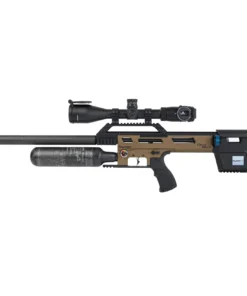
We Deliver Airguns Directly To Your Door
SKU N/A Category

Daystate Red Wolf B Type Walnut

€2,050.00

THE RED WOLF

A WOLF IN WOLF’S CLOTHING

Every now and then an airgun manufacturer will develop a rifle that changes the trajectory of the entire industry.  The Red wolf has over the last 3 years changed the way that people think about electronic airguns. The red wolf is simply a breath-taking picture of elegance on the outside, but the beauty of Red Wolf is also on the inside as its there you will find the latest version of Daystate’s tried and tested MCT technology – yes,  the Red Wolf is a fully electronically fired airgun.

FEATURES AND SPECIFICATIONS OF THE RED WOLF AIR RIFLE

Digitally regulated for a super consistent high shot-count, and sporting a trigger that incorporates adjustability of both release and finger placement, the Red Wolf delivers match-like accuracy at the very extremes of airgun ranges. Its masterfully sculpted stock comes in a variety of colours and materials which include red or blue laminate and a highly practical ‘Safari’ finish. However it’s dressed though, its ambidextrous design caters for a perfect gun fit courtesy of a butt pad and raised cheekpiece, both fully adjustable.

Aiding the Red Wolf’s user-friendly handling is a lightweight carbon-fibre bottle, above which sits a fully-shrouded carbon barrel that helps mute the muzzle report in the field. And, of course, the Red Wolf’s new side lever design marries effortless cocking with speedy loading courtesy of Daystate’s latest generation of higher capacity self-indexing magazines.

In looks, handling and performance, the Red Wolf is pure airgun artistry.

Red Wolf Video Review

Red Wolf Video Review 2

* Scope & mount are for illustration purposes and not included.

SPECIFICATION

Red Wolf B Type Red Wolf HiLite
Overall Length 99.0 cm (39 ins) 99.0 cm (39 ins)
Barrel Length 43 cm (17 ins) 43 cm (17 ins)
Cylinder Capacity 400 or 500 cc 480 cc
Weight (Unscoped) from 3.5 kg (7.5lbs) 3.5 kg (7.5lbs)
Available Calibres .177 inch (4.5 mm), .22 inch (5.5 mm) & .25 inch (6.35 mm) .177 inch (4.5 mm), .22 inch (5.5 mm) & .25 inch (6.35 mm)
Loading Magazine or Single Shot Tray Magazine or Single Shot Tray
Cocking Side Lever action – reversible Side Lever action – reversible
Magazine 10 Shot 10 Shot
Fill Pressure Up to 230 BAR (3,335 psi) Up to 250 BAR (3,625 psi)
Power / Shots Per Charge 0.303 N/A N/A
Power / Shots Per Charge 0.25 50 shots @ 45 ft/lbs 45 shots @ 40 ft/lbs
Power / Shots Per Charge 0.22 510 shots @ 12 ft/lbs, 80 shots @ 35 ft/lbs 475 shots @ 12 ft/lbs, 75 shots @ 35 ft/lbs
Power / Shots Per Charge 0.177 460 shots @ 12 ft/lbs, 195 shots @ 20 ft/lbs 420 shots @ 12 ft/lbs, 165 shots @ 20 ft/lbs
Trigger Electronic release. Adjustable for weight and length of stage. Electronic release. Adjustable for weight and length of stage.
Safety Manual, cross bar, lever open deactivation. Manual, cross bar, lever open deactivation.
Stock Ambidextrous Turkish Walnut or Black Laminate Ambidextrous Turkish Walnut or Black Laminate
Options Silencer, Sling swivels, Gun box, Charging set. Silencer, Sling swivels, Gun box, Charging set.

Precision and Presence Combined in the Daystate Red Wolf B Type Walnut

A premium electronic PCP platform is presented by the Daystate Red Wolf B Type Walnut for shooters who expect match-grade consistency, refined handling, and a traditional walnut aesthetic. Consequently, digitally mapped firing control is paired with a steel buddy-bottle layout so that a high, stable shot count can be delivered across range and field sessions. Moreover, an ambidextrous Turkish walnut stock is fitted so that a comfortable, repeatable hold can be achieved by left- and right-handed users alike. Therefore, the Daystate Red Wolf B Type Walnut is positioned as a conversion-focused choice for hunters, target shooters, and enthusiasts who value both craftsmanship and electronic regulation.

Furthermore, a fully shrouded 17-inch barrel is employed so that muzzle report can be reduced in the field. In addition, a reversible side-lever action is provided so that effortless cycling can be enjoyed without strain. As a result, fast follow-up shots can be taken while the rifle remains quiet and well balanced.

Daystate Redwolf B Type with Walnut Stock - May of London

How Mapped Compensated Technology Is Applied

Mapped Compensated Technology (MCT) is used so that every firing cycle can be monitored and controlled by a digital microprocessor and solenoid valve. Consequently, shot-to-shot consistency is maintained even as cylinder pressure declines. Likewise, an adjustable two-stage electronic trigger is offered so that both release weight and blade position can be tailored. Meanwhile, a manual cross-bar safety with lever-open deactivation is fitted so that the action can be rendered safe during handling and loading.

Additionally, magazine or single-shot-tray loading is supported so that both rapid fire and precision single-pellet work can be practised. Hence, a 10-shot self-indexing magazine is typically supplied (capacity varies slightly by calibre), and a high fill pressure of up to 230 BAR is accepted by the steel 400 cc or 500 cc cylinder.

Highlight Product Listings

The following specifications are published for the Daystate Red Wolf B Type Walnut so that informed comparison can be made:

  • Overall length is listed at 99 cm (39 in)
  • Barrel length is given as 43 cm (17 in)
  • Unscoped weight is stated from 3.5 kg (7.5 lb)
  • Cylinder options are offered as 400 cc or 500 cc steel
  • Calibres available include .177, .22, and .25
  • Fill pressure is rated up to 230 BAR (3,335 psi)
  • Magazine is supplied as a 10-shot self-indexing unit (or single-shot tray)
  • Cocking is performed by a reversible side lever
  • Trigger is an electronic release, adjustable for weight and stage length
  • Safety is a manual cross-bar with lever-open deactivation
  • Stock is ambidextrous Turkish walnut with adjustable cheekpiece and butt pad
  • Typical UK-legal shot counts are quoted around 460 shots in .177 and 510 shots in .22 at 12 ft/lbs (figures vary with pellet, fill, and tune)
  • Higher-power FAC figures are published around 50 shots at 45 ft/lbs in .25 where legally permitted
  • Options commonly listed include silencer, charging set, and gun box

Consequently, a compact, pointable package is created while an unusually large number of consistent shots can still be obtained from a single fill.

Walnut Stock and Inclusive Fit

A masterfully sculpted ambidextrous Turkish walnut stock is used so that a classic sporting profile can be enjoyed without sacrificing modern adjustability. Therefore, a height-adjustable cheekpiece and a fully adjustable rubber butt pad are provided so that length of pull and comb height can be set for different body types, clothing layers, and shooting positions. Moreover, a contoured pistol grip with stippling is shaped so that a secure hold can be maintained in wet or cold conditions. Likewise, fluted forend ridges are incorporated so that the leading hand can be placed consistently.

Calibres, FAC Energy and Supporting Accessories

A lawful, well-matched setup is assembled only after pellet diameter, permitted energy and supporting equipment have all been considered together. Consequently, three common bore sizes are offered on this electronic PCP so that trajectory, impact and shot count can be balanced against local rules. Moreover, a sub-licence configuration is distinguished from a certificate-only high-energy tune so that ownership remains compliant. Therefore, inclusive guidance is set out below for adult shooters of either handedness who must choose a calibre, confirm power status and complete the rifle with practical extras.

Furthermore, published shot counts and energy figures are treated as typical workshop values. Likewise, pellet mass, fill pressure, temperature and individual regulator tune will always shift real-world results. Hence, a dealer chronograph check is recommended after delivery and after any service.

How Bore Size Is Matched to the Task

Three principal calibres are supplied so that different quarry and range demands can be met. Consequently, .177 (4.5 mm) is specified when a flat flight path and a very large number of shots at modest legal energy are required. In addition, .22 (5.5 mm) is selected by many all-round users because a useful compromise between pellet weight and remaining velocity is achieved. Meanwhile, .25 (6.35 mm) is reserved for situations in which greater striking energy at medium field distances is needed and the applicable power limit allows that choice.

A 10-shot self-indexing magazine is normally fitted across these three bores, while a single-shot tray can be substituted whenever deliberate, one-pellet loading is preferred. As a result, both rapid follow-up work and careful grouping practice can be performed on the same action. Additionally, feed reliability is maintained because the current-generation magazine geometry is shared between the listed calibres.

Typical returns from the steel 400 cc or 500 cc bottle at approximately 12 ft/lbs include around 460 shots in .177 and about 510 shots in .22. By contrast, a higher-energy tune produces fewer shots of greater muzzle energy. Therefore, calibre and power are never chosen independently of one another.

FAC Status, Power Bands and Consistency

Two energy families are recognised. First, a configuration held at or below the common 12 ft/lbs (approximately 16 J) ceiling is supplied for markets in which that limit may be used without a Firearms Certificate. Second, higher-output versions are built so that figures in the region of 30–45 ft/lbs (and, where specified, related FAC levels) can be delivered only to holders of a valid certificate.

On the B-type steel-bottle layout, published examples include roughly 50 shots at 45 ft/lbs in .25 where that tune is legally available. Fill pressure remains up to 230 BAR. Consequently, mapped electronic regulation is relied upon so that shot-to-shot velocity stay can still be held as bottle pressure declines. Likewise, the two-stage electronic trigger remains adjustable for weight and blade position regardless of the programmed power band.

Certificate conditions must be read in full. Moreover, purchase, storage, carriage and use of any FAC-rated rifle are restricted to the person and places named on that document. Therefore, a licensed retailer should be asked to confirm markings, paperwork and any local registration steps before the higher-energy variant is ordered.

A highlight summary of power and calibre pairings is kept for quick reference:

  • .177 at legal limit is used when maximum shot count and a flat trajectory are the priority.
  • .22 at legal limit is chosen when a balance of energy and pellet availability is wanted for mixed pest work.
  • .25 at legal limit is specified only where the extra pellet mass is justified and the energy cap still applies.
  • FAC .22 / .25 is reserved for certificate holders who require longer ethical ranges or larger quarry.
  • Fill pressure is kept within the stated 230 BAR maximum so that seals and the regulator are not overstressed.
  • Magazine capacity remains 10 shots in the three standard calibres unless a single-shot tray is fitted.
  • Actual energy is verified with a chronograph after any change of pellet or service.

Accessories Used to Complete a Working Outfit

A short list of factory and compatible extras is added so that the rifle can be carried, filled, silenced and sighted without leaving a practical kit incomplete. Consequently, a ½ UNF moderator can be fitted so that field report is reduced still further. In addition, a charging probe or Foster-style adaptor is kept with a known-good hose so that fills from a dive bottle or compressor remain safe. Meanwhile, spare magazines and a single-shot tray are carried so that a feed fault on one unit does not end the session.

A fitted hard case is employed for vehicle travel so that walnut furniture and the shrouded barrel are protected. Likewise, sling swivels and a comfortable sling are attached when long walks between permissions are expected. Furthermore, a dovetail-to-Picatinny adaptor may be used where a particular optic rail standard is required. Spare batteries and the supplied charger are stored with the rifle so that the electronic action is not left unpowered between outings.

Quality match-grade pellets in the chosen calibre are selected so that the barrel can deliver the grouping for which it was designed. Additionally, a bipod, rear bag or sticks can be packed for range days so that hold error is separated from rifle performance. A scheduled regulator and valve service kit is obtained when the maker’s interval is reached so that consistency is preserved over years of use.

Inclusive fit is preserved when extras are added. Because the cheekpiece and butt pad stay fully adjustable, the same sling, case and optic height can serve left- and right-handed users after a brief reset of comb and length of pull. The reversible side lever is swapped before a guest of the opposite handedness takes the first shot.

Responsible completion of the outfit always includes a safe backstop, eye protection and a written check of local quarry and power rules. When those conditions are met, calibre, energy band and accessories can be combined so that the next lawful session begins with a predictable first pellet.

As a result, a comfortable, repeatable mount can be achieved by a wide range of shooters. In addition, the walnut finish is chosen so that a more understated, traditional appearance can be preferred over high-gloss laminate alternatives. Hence, the Daystate Red Wolf B Type Walnut is equally at home on the range and in the field.

Handling, Balance, and Quiet Operation

A steel bottle layout is adopted on the B Type so that extra air volume and shot count can be gained compared with some lighter carbon-bottle variants. Nevertheless, overall weight is still kept around 3.5 kg unscoped so that the rifle can be carried and held on aim without excessive fatigue. Furthermore, the fully shrouded barrel and optional moderator thread (typically ½ UNF) are arranged so that report can be kept low during pest control or backyard practice where permitted.

Meanwhile, the side lever is engineered so that cocking effort remains light even after many magazines. Therefore, long sessions can be completed with less wrist strain. Additionally, an LCD-style status display is integrated on many examples so that pressure, selected power level, and shot count can be checked at a glance.

Practical Use Across Disciplines

The Daystate Red Wolf B Type Walnut is employed for target work, hunting, and pest control wherever local laws allow. Consequently, sub-12 ft/lbs configurations are favoured for licence-free use in many regions, while FAC-power versions can be specified where higher energy is legally required. Moreover, excellent grouping at 30–50 yards is routinely reported when quality pellets and a stable rest are used. Likewise, the electronic lock time and regulated valve help keep vertical stringing to a minimum as the bottle empties.

In the field, the ambidextrous stock and quiet shroud allow the rifle to be used from either shoulder and from improvised rests. On the range, the huge shot count of the 500 cc option reduces the need for frequent refills during training. Therefore, both the dedicated hunter and the high-volume plinker can be served by the same platform.

Responsible ownership is always required. Local airgun laws, FAC requirements, and safe storage rules must be observed. Additionally, eye protection and a safe backstop should be used on every shot.

Why the Platform Converts Serious Buyers

A combination of electronic regulation, adjustable ergonomics, and classic walnut furniture is rarely offered at this level. Consequently, the Daystate Red Wolf B Type Walnut is frequently chosen when a single rifle must cover both aesthetic preference and technical performance. Furthermore, Daystate’s established service network and multi-year warranty support are valued by owners who intend to keep the rifle for many seasons.

Accessories such as a dedicated silencer, charging set, extra magazines, and a fitted case can be added so that the package can be completed for hunting or competition use. Optics from quality makers can be mounted on the rail so that the inherent accuracy of the ART-developed barrel can be fully exploited.

Daystate Redwolf B Type with Walnut Stock - May of London

Ready for the Next Session

The Daystate Red Wolf B Type Walnut is offered as a complete electronic PCP solution in which consistency, shot count, and fit are all addressed. Therefore, a rifle that looks traditional yet behaves like a modern match gun can be placed in the hands of any responsible adult shooter. Check current calibre, power, and legal status with a licensed dealer, then have the stock and trigger set so that the first magazine already feels like a custom fit. Precision is waiting to be unlocked.

Daystate, Delta Wolf, Alpha Wolf and Premium PCP Air Rifle Accessories

For shooters researching premium PCP platforms, daystate blackwolf, daystate redwolf, delta wolf, huntsman daystate, and daystate alpha wolf frequently appear among the most searched Daystate-related terms. Whether someone searches for wolf delta, day state, daystate delta wolf, blackwolf, deltaw, daysta, or wants to understand the delta wolf meaning, these rifles are commonly associated with modern PCP engineering, electronic control systems, adjustable configurations, and high-end airgun performance.

People asking what is a delta wolf are generally researching the electronic Daystate platform and how it differs from conventional PCP rifles. Related searches often include electronic wolves, firing cycle, lock time, lock timing, short cocking, cocking ball, index pin, and pin magazine. Searches may also focus on configuration-specific components such as an alpha wolf barrel, stock walnut, safari stock, dima stock, stock replacement, rimfire stocks, or a rifle butt pad.

Daystate Red Wolf, Alpha Wolf and Wolverine Searches

The daystate redwolf family remains closely connected with searches for daystate redwolf price, red alpha wolf, alpha red wolf, and the newer daystate blackwolf platform. Some shoppers may also compare these rifles with the daystate wolverine sapphire, wolverine gun, wolveriner, wolf gun, wolfpack armory wolverine, or even search unusual phrases such as can wolverine go on planes while researching transport rules.

Accessories frequently searched alongside these platforms include a rubber butt, rubber butt pad, butt pad rifle, bradley cheek riser, gecko grips, picatinny bag rider, and buddy bottle cover. Cosmetic or clothing-related search phrases such as red bodywarmer and black snood may also appear alongside broader brand searches.

Magazine-related searches include 177 magazine, mag 177, and 25 magazine, while ammunition research can include 177 pellets types, 5.0 mm pellets, and slug pellet. Because pellet suitability depends on the rifle, barrel, legal power level, and intended range use, compatible ammunition should always be selected according to the manufacturer’s specifications.

PCP Air Systems, Moderators and Thread Accessories

Many enthusiasts researching Daystate rifles also search for air rifle compressed air, compressed air rifle, what are pcp air rifles, and what is a pre charged pneumatic air rifle. These searches relate to the fundamental operating principle of PCP systems, in which stored compressed air is used to power each shot.

Common accessory searches include air gun pc, air gun suppressor, air gun suppressors, airgun moderator, air rifle moderator, 0db, 0db moderator, and 0 db moderator. Buyers may also encounter searches for a hogan decimeater silencer, silencer thread adapter, thread protector rifle, and muzzle thread protector when comparing muzzle accessories and compatible threaded components. Local regulations should always be checked before purchasing or fitting sound-moderating equipment.

Maintenance-related searches often include pcp o ring kit, while tuning-oriented users may look for an ats tuner. Search terms such as unfend can also appear in broad airgun keyword datasets, even when the intended product or meaning is unclear.

M-LOK, Picatinny and Rifle Sling Accessories

Accessory compatibility is another major area of interest. Common searches include mlok to picatinny rail adapter, best m-lok to picatinny rail adapter, m-lok to picatinny adapter, and picatinny m lok adapter. These adapters are often researched by users who want to mount compatible optics, rests, bipods, bags, or other permitted accessories on an appropriate rail system.

Sling-related searches include riffle sling, rigle sling, how to put a gun sling on a rifle, how to put a rifle sling on, how to install a rifle sling, how to put sling on rifle, installing a rifle sling, and attaching a sling to a rifle. Because attachment arrangements differ between stocks, rails, swivels, and chassis systems, the correct mounting points should always be confirmed from the manufacturer’s documentation.

Other general mechanical or unrelated search phrases found within broader keyword datasets include how to put extinguisher call back together, weatherby vanguard trigger adjustment, and 3.55kg in lbs. While these terms may appear in search data, they are not necessarily specific to Daystate PCP rifles.

BRK, Brocock and XR Air Rifle Searches

Alongside Daystate products, many buyers compare models produced under the Brocock and BRK families. Popular searches include brocock ltd, brocock sniper xr, brocock commander xr, pathfinder xr, brk ghost, brocock airguns, brocock commander, brk ghost air rifle, and brk sniper xr.

The brocock sniper xr is often researched by shooters comparing compact PCP platforms, while the brocock commander xr and brocock commander searches generally relate to larger tactical-style PCP configurations. Meanwhile, brk ghost and brk ghost air rifle searches reflect growing interest in BRK-branded PCP systems.

Those comparing local purchasing options may also search fx airgun dealer near me, even when their primary interest is Daystate or Brocock. This reflects the way many airgun shoppers compare several premium manufacturers before deciding which PCP platform, stock configuration, calibre, regulator setup, magazine system, and accessory package best matches their intended sporting use.

Additional Daystate and Airgun Search Terms

Broader searches surrounding these rifles may include model alpha gun, griffin gun, and general comparisons involving a wolf gun or other premium PCP platform. Buyers may also investigate different stock materials, rail systems, moderators, magazines, barrel options, butt pads, cheek risers, thread protectors, and compressed-air accessories before completing a build.

Whether someone begins with daystate redwolf, explores the daystate alpha wolf, compares a daystate delta wolf, investigates the daystate blackwolf, or considers a daystate wolverine sapphire, the most useful approach is to verify model compatibility, calibre, pressure specifications, local regulations, and manufacturer-supported accessories before purchasing replacement components or upgrades.

Practical Use Across Range, Field and Everyday Sessions

A regulated electronic PCP platform is put to work most effectively when its consistency, quiet barrel and adjustable furniture are matched to real shooting tasks. Consequently, a wide variety of lawful activities can be supported once local power limits, quarry rules and safe-backstop requirements have been observed. Moreover, an inclusive fit is achieved through the height-adjustable cheekpiece and multi-way butt pad, so that left- and right-handed adults of differing stature can share the same rifle. Therefore, the scenarios that follow are written so that practical decisions can be made before the first magazine is loaded.

Furthermore, pellet choice, fill pressure and rest style remain the largest variables in the field. Likewise, a quality optic, a confirmed zero and a clear understanding of wind are still required even when electronic regulation is employed. Hence, each use case below assumes that eye protection is worn, that a safe backstop is present, and that every shot is taken only where it is legal to do so.

How Zeroing and Range Practice Are Conducted

A stable bench or bipod is first selected so that the inherent grouping of the shrouded barrel can be revealed. Subsequently, a 10-shot magazine is loaded with a single pellet type of known weight so that variables can be reduced. Meanwhile, the electronic trigger is adjusted for a light, predictable second stage so that break-point consistency can be learned. As a result, five-shot and ten-shot groups at 25, 30 and 40 yards are commonly recorded before any hunting zero is trusted.

Additionally, a mid-range zero (often 30 yards for sub-12 ft/lbs use) is applied so that hold-over and hold-under remain modest inside typical pest-control distances. Consequently, a small notebook or phone log is kept so that velocity spread and point-of-impact shift can be compared after each fill. In addition, the onboard pressure and shot-count display is glanced at between strings so that a declining bottle is never a surprise.

A highlight list of range habits is observed by careful shooters:

  • A single pellet brand and weight is used throughout a zeroing session so that grouping can be isolated from ammunition change.
  • A cold-barrel first shot is noted separately so that later hunting first-round impact can be predicted.
  • Wind flags or natural indicators are watched so that lateral drift is not blamed on the rifle.
  • The adjustable comb is locked once a repeatable cheek weld has been found so that head position remains constant.
  • Magazines are numbered and rotated so that any feeding issue can be traced to a single unit.
  • A rear bag is added on longer strings so that vertical stringing from hold variation is reduced.
  • The side lever is cycled fully and smoothly so that the self-indexing magazine is given time to present the next pellet.
  • A short walk between strings is taken so that muscle fatigue is not mistaken for rifle inconsistency.

Therefore, a trustworthy hunting zero is built rather than assumed. Moreover, the large shot count available from a 400 cc or 500 cc steel bottle allows an entire afternoon of practice to be completed from one fill when legal energy is kept modest.

Pest Control Around Buildings, Paddocks and Allotments

Quiet operation is valued when work is carried out near livestock, neighbours or occupied buildings. Consequently, the fully shrouded barrel and an optional moderator are relied upon so that report stays low. Meanwhile, a compact overall length of approximately 39 inches helps the rifle to be carried through gates and along hedgerows without snagging. Likewise, the ambidextrous stock allows either shoulder to be used when a shot must be taken from an awkward angle around a barn corner.

A typical session begins with a pre-dawn or last-light walk so that rats, feral pigeons or rabbits can be located while movement is still limited. Subsequently, a rest is improvised on a gate, feed bin or shooting sticks so that the electronic lock time can be exploited. As a result, a clean, ethical shot is more likely to be placed when the animal is settled. In addition, a second magazine is kept in a pouch so that a follow-up can be delivered without leaving the firing point.

Inclusive technique is practised: the same rifle can be shouldered from the left or right after the lever has been reversed and the comb height confirmed. Therefore, a left-handed family member or a right-handed regular user can share duties on the same evening. Furthermore, wet-weather stippling on the grip helps a secure hold to be retained when gloves are worn.

Legal energy must remain inside the limit that applies to the location. Hence, a sub-12 ft/lbs tune is almost always selected for farmyard and garden work in jurisdictions where that ceiling exists. Moreover, permission from the landowner is obtained in writing wherever required, and every pellet is accounted for so that livestock and property stay safe.

Woodland Edges, Open Fields and Longer Ethical Shots

When distance increases, pellet ballistic coefficient and a confirmed high-power or FAC tune (where a certificate is held) become more important. Consequently, .22 or .25 is often preferred for larger quarry because energy transfer at 40–60 yards is improved. Meanwhile, the regulated valve keeps successive shots close in velocity so that hold-over charts remain valid deeper into the bottle.

A woodland edge stalk is conducted slowly so that the rifle’s balance can be used off-hand or from kneeling. Subsequently, the adjustable butt pad is set for the clothing layer being worn that day so that length of pull does not change between summer shirt and winter coat. Likewise, a sling is fitted so that the rifle can be carried muzzle-down or across the back during long walks between permission boundaries.

Highlight field practices are followed:

  • A first-light or last-light window is chosen so that quarry movement is higher and glare is lower.
  • A natural rest (tree trunk, fence post, backpack) is used whenever possible so that the trigger’s light break is not spoiled by wobble.
  • Wind is read at the target, not only at the firing point, so that drift at 50 yards is not underestimated.
  • A clear backdrop is confirmed before the safety is disengaged so that a miss cannot travel into an unsafe area.
  • Shot placement is restricted to the brain or heart-lung area appropriate to the species so that dispatch remains humane.
  • After a successful shot, the rifle is made safe and the animal is approached only when movement has ceased.
  • The bottle pressure is checked before the walk-out so that enough air remains for a possible follow-up or a second opportunity.

Therefore, the platform is treated as a precision tool rather than a casual plinker once distances stretch. Additionally, FAC holders must still obey every condition printed on the certificate, including permitted locations and quarry..25 caliber brocock sniper xr

Skill Building, Coaching and Shared Use

Because the stock is ambidextrous and fully adjustable, the same rifle can be used for coaching a new adult shooter without a second gun being purchased immediately. Consequently, comb height and length of pull are reset between users so that each person receives a consistent sight picture. Meanwhile, the electronic trigger can be lightened for an experienced shot and then returned to a slightly heavier setting for a beginner so that safety is preserved.

A structured session is organised around short strings rather than endless magazines. Subsequently, dry-fire or empty-chamber handling (where the manual permits) is used to groove the lever stroke before live pellets are introduced. As a result, flinch and anticipation are reduced. In addition, a simple target of decreasing size is employed so that progress can be seen without expensive match targets.

Inclusive language and shared equipment matter on a family permission or club range. Hence, both shoulders are practised, and the side lever is swapped when a left-handed guest arrives. Likewise, hearing and eye protection are issued to every participant so that a single standard of safety is kept.
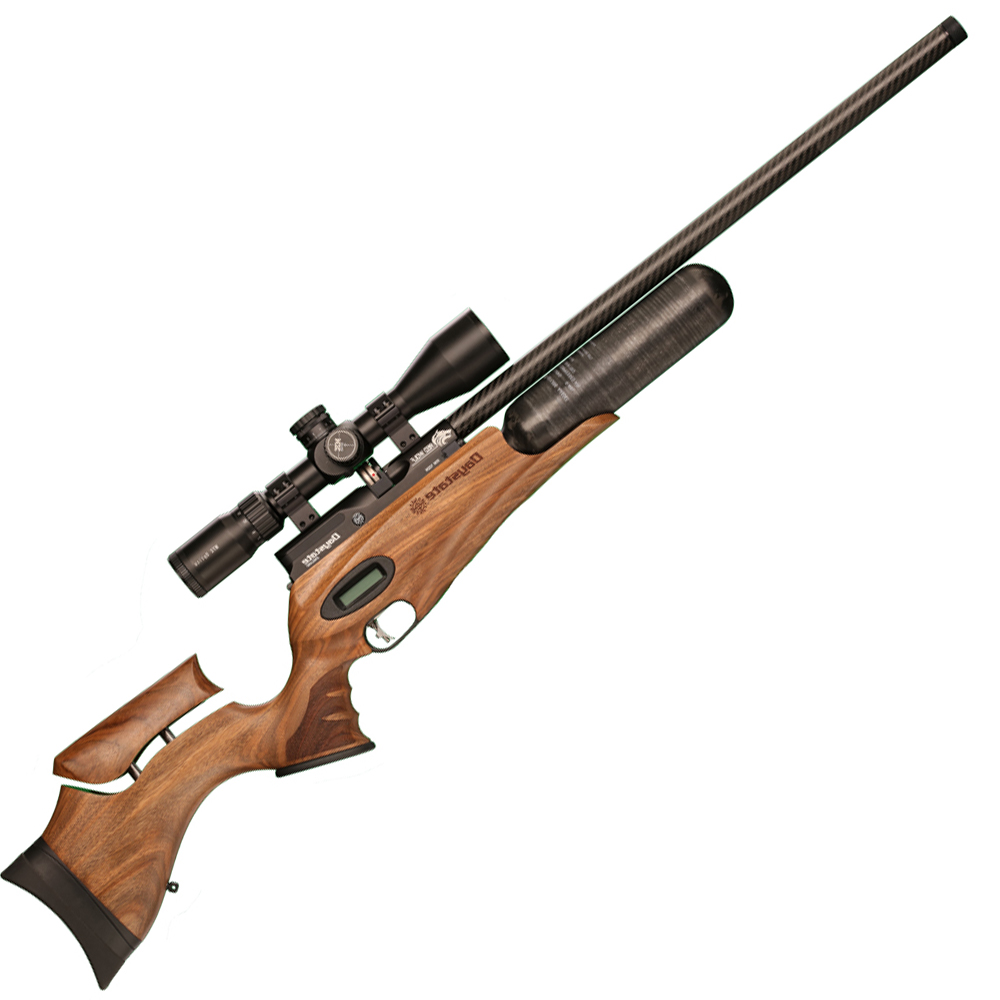
Daystate Redwolf B Type with Walnut Stock - May of London

Seasonal, Weather and Light Conditions

Summer heat can raise bottle pressure slightly after a vehicle journey; therefore, a short wait in the shade is taken before the first hunting shot so that the regulator is not asked to correct a sudden temperature swing. Conversely, winter cold thickens grease and can reduce displayed pressure; consequently, a slightly higher fill or a pocket-warmed battery check is performed before leaving the vehicle.

Rain is managed by keeping the action under a jacket until the shot is built, then drying the walnut and metal before the rifle is cased. Moreover, a matte walnut finish is less reflective than high-gloss laminate when low sun strikes a woodland ride. Dawn and dusk remain the most productive windows for most quarry, so a modest-powered lamp or a good optic with decent low-light glass is paired with the rifle rather than relying on the action alone.

Wind is the greatest outdoor variable. Accordingly, a hold-off chart for the chosen pellet is memorised or taped inside the lid of the gun box so that last-light decisions stay quick. Furthermore, open-field shots beyond 40 yards are declined when gusts exceed the shooter’s ability to read them, because regulation cannot correct a pellet that has already left the muzzle.

Transport, Storage and Care Between Outings

A fitted hard case is used so that the walnut stock and shrouded barrel are protected from knocks in a vehicle. Subsequently, the rifle is transported unloaded, with the magazine removed and the safety applied, in accordance with local carriage rules. Meanwhile, the battery compartment in the grip is checked periodically so that the electronic system is not left discharged for months.

Between sessions the bore is inspected, the magazine is emptied, and a light wipe of the metalwork is given so that moisture from a damp evening is not left overnight. Additionally, the fill probe and bottle O-rings are examined so that the next charge remains leak-free. A scheduled service interval recommended by the maker is respected so that the solenoid valve and regulator continue to deliver the consistency that field use depends upon.

Long-term storage is carried out in a locked cabinet, separate from pellets and with the bottle at a moderate pressure rather than completely empty or at maximum fill, following the handbook. Therefore, seals stay healthy and the next permission day can begin with a predictable first shot.

When these habits are observed, the rifle is ready for another lawful outing—whether that outing is a quiet paddock circuit, a measured range evening, or a careful woodland stalk. Precision in use is produced by preparation, not by the action alone.

Frequently Asked Questions for Everyday Ownership and Use

Clear answers are provided so that calibre, legal power, fit and day-to-day handling can be understood before a purchase is completed. Consequently, each reply is written in inclusive language for left- and right-handed adult shooters. Moreover, transition-rich explanations are used so that related points can be followed without abrupt jumps. Therefore, local law must still be checked, because energy limits and certificate rules differ by country and region.

Furthermore, factory figures are treated as typical values. Likewise, pellet weight, fill pressure, temperature and individual tune will always influence real velocity and shot count. Hence, a dealer chronograph test is recommended after delivery.

Caliber

.177,, .22, .25,

Reviews

There are no reviews yet.

Be the first to review “Daystate Red Wolf B Type Walnut”

Related Products

FAQ

  • Spring-Piston (Break-Barrel or Underlever): Cock by compressing a spring. Reliable, no external air source needed, but can have more recoil (“spring twang”) and require technique to shoot accurately.
  • Pre-Charged Pneumatic (PCP): Filled from a scuba tank, compressor, or pump. High power, low recoil, multiple shots per fill. Popular for precision and hunting.
  • CO₂: Powered by disposable cartridges. Good for pistols and semi-auto/repeaters, but performance drops in cold weather.
  • Multi-Pump Pneumatic: Hand-pumped to build pressure. Versatile but requires effort.
  • Gas Ram (Nitro Piston): Uses compressed gas instead of a metal spring. Smoother than traditional springers.

Calibers: Most common are .177 (4.5mm) for speed/flat trajectory and general use, and .22 (5.5mm) for better hunting knockdown power. Larger “big bore” (.25, .30, .357+) exist for hunting bigger game where legal.

Yes, many modern PCP and springers deliver enough energy for small game (rabbits, squirrels, birds) and even larger game in some areas. Muzzle energy (in ft-lbs or joules) matters more than velocity alone. Always match caliber, pellet weight, and energy to the game and check local hunting regs.

Treat every airgun as if it is loaded.

  • Always point the muzzle in a safe direction.
  • Keep your finger off the trigger until ready to shoot.
  • Know your target and what is beyond it (pellets can ricochet or travel far).
  • Wear eye protection.
  • Store unloaded, out of reach of children/untrained users, and ideally locked.
  • Never shoot at hard surfaces or in areas where pellets could escape your property.

Follow these rules strictly—airguns cause real injuries.

Laws differ dramatically by country, state/province, and even city. Always verify current local laws before buying, owning, transporting, or using an airgun. Age restrictions (often 18+) are common.

Examples (summaries only; check official sources):

  • UK: Air rifles ≤12 ft-lbs (16.3 joules) and pistols ≤6 ft-lbs generally do not require a license (FAC needed above that).
  • USA: Varies by state. Some treat powerful airguns as firearms; others do not. Many states now allow big-game hunting with air rifles.
  • Canada: Some airguns classified as firearms if they exceed velocity/energy thresholds.
  • Australia: Often treated as firearms; licensing/registration required in most states.
  • EU/France/Belgium/etc.: Varies; many allow low-power (<20J) guns freely to adults, with higher power needing permits. Germany has strict ~7.5J limits in some contexts.
  • Other countries: Some have no restrictions below certain energies; others ban or heavily regulate them.

Resources: Wikipedia “Air gun laws”, airgun forums, or official government sites. For travel, research transit laws carefully.

Consider:

  • Purpose: Plinking/backyard → lower power springer or CO₂. Hunting/precision → PCP.
  • Budget: Entry-level springers are affordable; PCPs need a fill system (extra cost).
  • .177 vs .22: .177 easier for beginners/targets; .22 better for hunting.
  • Power source: Convenience vs performance.
  • Test pellets in your gun—accuracy varies.

Buy from reputable dealers and consider warranties.

  • Clean barrel periodically (especially if accuracy drops) with patches and appropriate tools/solvents. Avoid over-oiling.
  • Lubricate moving parts and seals with airgun-specific oil (not general gun oil). Springers need piston seal oil occasionally.
  • Check screws, seals for leaks (PCP), and safety mechanisms regularly.
  • Store in a cool, dry place, ideally in a case. Avoid leaving cocked for long periods.

Follow your model’s manual. Basic care extends life significantly.

International shipping may be available for select products. Customers are responsible for understanding and complying with their local import laws and regulations before ordering.

Yes. Customers are required to confirm their order number through WhatsApp or Live Chat before orders are processed and shipped.

If local laws prevent shipment to your area, your order may be canceled and refunded according to our store policy.

Processing typically takes 1–3 business days after payment confirmation. Delivery times vary depending on destination, carrier, and product availability.


  • Wrong pellets for your barrel/caliber.
  • “Death grip” or poor shooting form (especially with springers—let the gun recoil naturally).
  • Loose scopes or mounts.
  • Ignoring safety or local laws.
  • Over-oiling or shooting with obstructions.


Pellets are the most common projectile (lead or lead-free). Match them to your gun, caliber, and purpose—test several brands as accuracy varies by barrel.

  • Domed (Round-Head): Best all-rounder. Excellent accuracy, ballistic coefficient, and energy retention. Ideal for target shooting, field target, and general hunting (e.g., JSB Exact, Air Arms Diabolo Field, H&N Field Target Trophy).
  • Wadcutter (Flat-Head): Clean holes in paper. Best for close-range target/plinking (under 20-25 yards).
  • Hollow Point: Expands on impact for better energy dump. Good for small game hunting (e.g., Predator Polymag, H&N Terminator).
  • Pointed: More penetration, but often less accurate than domed.
  • Slugs: Heavier, more aerodynamic for high-power PCPs at longer ranges (better for big game where legal).

Tips: Heavier pellets in .22/.25 for hunting (better momentum). Lighter in .177 for speed/flat trajectory. Always check head size fit (e.g., 4.51-4.53mm variants).

Muzzle energy (ft-lbs or joules) matters more than velocity. Ethical shots require precise placement (head/heart-lung) within effective range.

Rough Guidelines (adjust for distance, pellet, and local laws):

  • Small game (squirrels, rabbits, birds): 9-20+ FPE, .177/.22.
  • Medium (raccoons, etc.): 25+ FPE, .22/.25 recommended.
  • Larger game: 40-100+ FPE in .30+ calibers (up to big bore for deer/hogs where permitted).

PCPs dominate serious hunting due to power and shot count. Springers/gas rams work well for small game but require skill. Always prioritize clean kills and check seasons/species rules.

  • Barrel Cleaning: Use a pull-through kit or rod with patches. Avoid brushes that could damage rifling. Clean when accuracy drops or after 500-1000 shots.
  • Lubrication: Airgun-specific silicone oil for seals/O-rings (sparingly—excess causes dieseling in springers). Springers may need piston lube periodically.
  • PCP Specific: Check for leaks (soapy water test), monitor regulator/hammer settings, and keep fill systems clean. Don’t exceed rated pressure.
  • General: Tighten stock screws, inspect for wear, store properly. Chronograph shots to track consistency.

Common Issues:

  • Inconsistent velocity → dirty barrel, bad pellets, or seal problems.
  • Spring “twang” → tuning or proper hold.
  • Low power → worn seals or under/over-pumping.

Toggle Content

  • Scopes: Airgun-rated (hold zero under recoil). 3-9x or 4-12x common.
  • Fill Systems: Hand pumps, compressors, or tanks for PCPs.
  • Safety Gear: Eye/ear protection, targets with backstops.
  • Noise: Airguns quieter than firearms, but moderators help further.

Budget Tip: Start with a quality springer (~$150-400) before investing in PCP setup.

Airgunning offers endless depth—from backyard plinking to precision competition and ethical hunting. Prioritize safety, legality, and practice. If you want specifics (e.g., recommendations for a country, budget, hunting small game, or a particular type like PCP vs springer), let me know for more targeted info! Shoot responsibly.

Tuning improves accuracy, reduces noise/recoil, or increases power (within legal limits).

  • Springers: Lighter springs, guides, seals, or custom tuning kits for smoother shot cycle. “V-Mach” or similar professional tunes popular.
  • PCPs: Regulator tuning, hammer spring adjustments, valve work for efficiency and shot count. Some add electronic systems.
  • Accessories: Suppressors (often unregulated on airguns), better triggers, stocks, and scopes.

Caution: Check laws—power increases may reclassify your gun. DIY only if experienced; professional tuners recommended.

You must be at least 18 years old to purchase any airgun or related accessories from our store. By placing an order, you confirm that you meet the legal age requirements in your state or country.

Yes. Orders may require age verification before processing and shipping. In some cases, we may request a valid government-issued ID to confirm eligibility.