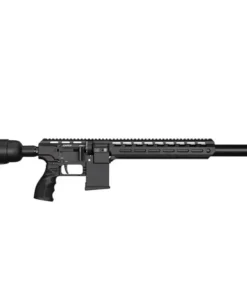
FX Crown MKII Compact Synthetic – Premium Compact PCP Air Rifle
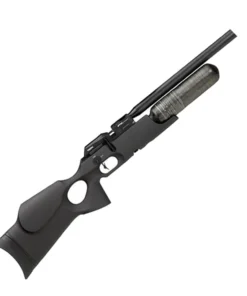
The FX Crown MKII Compact Synthetic has been developed for shooters who want the refined feel of a traditional sporting rifle while benefiting from modern PCP technology, compact dimensions, and extensive adjustability. Designed by FX Airguns in Sweden, this compact configuration brings together an ergonomic synthetic stock, advanced air management, an interchangeable barrel system, and externally accessible performance adjustments.
Rather than forcing shooters to choose between portability and sophisticated engineering, the FX Crown MKII Compact Synthetic combines both qualities within one carefully balanced platform. Consequently, it can be comfortably handled in locations where a longer rifle may feel cumbersome while still retaining the premium features associated with the Crown family.
Most importantly, the MKII generation was upgraded with increased plenum capacity, revised porting, and a larger valve. According to FX Airguns, the MKII plenum was increased by approximately 28% compared with the previous Crown platform. A 6.5 mm valve was also incorporated into the system to support improved airflow.
Why Choose the FX Crown MKII Compact Synthetic?
Versatility has always been central to the Crown platform. However, the FX Crown MKII Compact Synthetic takes that concept further by combining a shortened barrel configuration with a lightweight synthetic stock.
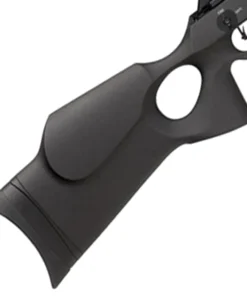
Because the synthetic stock is ambidextrous, comfortable handling can be enjoyed by both right- and left-handed shooters. Furthermore, an adjustable recoil pad helps the rifle to be positioned more naturally against the shoulder.
A thumbhole stock profile has also been incorporated. Therefore, positive hand positioning can be maintained while the rifle retains the recognizable lines of a traditional sporting rifle.
Meanwhile, the compact barrel keeps overall dimensions manageable. FX identifies the Compact configuration with a 380 mm barrel, although exact configurations and availability can vary by market.
Highlighted Product Features
- Premium FX Crown MKII PCP platform
- Compact 380 mm barrel configuration
- Lightweight synthetic soft-touch stock
- Ambidextrous thumbhole stock design
- Adjustable recoil pad
- FX Smooth Twist X / STX barrel technology
- Interchangeable barrel liner system
- Interchangeable caliber capability
- Externally adjustable AMP regulator
- Hammer spring power adjustment
- Airflow power adjustment
- High-capacity removable magazine
- Smooth sidelever cocking system
- Adjustable match-style trigger
- Dual pressure gauges
- Built-in barrel shroud
- Foster quick-disconnect filling system
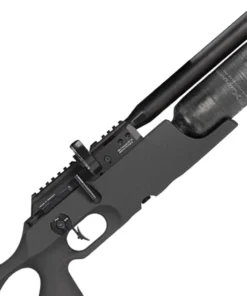
- 20 MOA Picatinny optics rail
- Removable carbon-fiber air bottle on applicable configurations
Compact Design Without Sacrificing Premium Features
Compact rifles are often selected because they are easier to transport and maneuver. However, reduced dimensions should not automatically mean reduced sophistication.
With the FX Crown MKII Compact Synthetic, the shortened configuration has been paired with the same adjustment philosophy that helped establish the Crown series.
In particular, the rifle provides separate external controls for hammer spring tension and airflow. Therefore, compatible factory-approved configurations can be optimized according to ammunition selection, caliber, applicable regulations, and the intended shooting application.
Additionally, an externally adjustable AMP regulator is incorporated into the system. Because regulator performance influences how air is delivered from shot to shot, this feature forms an important part of the Crown MKII platform.
Any adjustment should, of course, remain within manufacturer recommendations and the power limits that apply in the owner’s jurisdiction.
FX Smooth Twist X Barrel Technology
Accuracy potential depends heavily on a consistent barrel system. For this reason, FX equips the Crown MKII family with its Smooth Twist X technology.
With the interchangeable liner concept, greater flexibility can be achieved without replacing the entire rifle. Barrel liners and compatible components can be changed where appropriate, allowing the platform to accommodate different configurations.
Furthermore, interchangeable caliber capability has been built into the Crown architecture. FX lists the Crown MKII platform in .177, .22, .25 and .30 calibers, although the exact Compact options available can differ according to market and regulatory requirements.
As a result, the rifle can remain relevant even when a shooter’s preferences change over time.
Improved MKII Air System
One of the most significant differences between the original Crown and the Crown MKII can be found inside the air-delivery system.
A larger plenum was introduced for the second-generation model. Specifically, FX states that plenum volume was increased by approximately 28%. Revised porting and a larger 6.5 mm valve were also introduced.
Consequently, greater airflow capability was provided to support the enhanced performance objectives of the MKII platform.
At the same time, two pressure gauges allow important air-system information to be monitored. One gauge is intended for bottle pressure, while the second is used for regulator pressure.
Therefore, essential information can be checked without compromising the Crown’s clean sporting-rifle appearance.
20 MOA Picatinny Optics Rail
Another important MKII upgrade can be found above the action.
A 20 MOA angle is built into the Picatinny scope rail. The angled rail was introduced to provide additional usable scope elevation when the platform is configured for longer-distance shooting.
Moreover, the Picatinny interface provides broad compatibility with appropriate rings and optics.
The result is a mounting arrangement that complements both the rifle’s adjustability and its modern PCP architecture.
High-Capacity Magazine and Sidelever Operation
Fast, comfortable operation is supported by the Crown MKII’s sidelever cocking mechanism. Because the lever can be operated smoothly from the shooting position, follow-up loading is kept straightforward.
A removable high-capacity magazine is also provided.
FX lists magazine capacities of up to 22 rounds in .177, 18 rounds in .22, 16 rounds in .25 and 13 rounds in .30, depending on configuration.
Accordingly, fewer interruptions may be required during longer shooting sessions.
Lightweight Synthetic Stock
Practicality is enhanced further by the synthetic stock.
Unlike heavier traditional materials, the synthetic configuration helps keep overall weight down while providing a durable exterior suitable for regular use. FX lists the synthetic Crown MKII at approximately 2.8 kg / 6.2 lb, although individual configurations can vary.
Moreover, the soft-touch surface provides a secure and comfortable contact point.
Combined with the compact barrel, the reduced weight contributes to easier carrying, quicker repositioning, and improved handling.
Designed Around Shooter Comfort
Comfort has not been treated as an afterthought.
An ambidextrous stock allows the platform to accommodate a broader range of shooters. Meanwhile, the adjustable recoil pad can be positioned according to individual preference.
Furthermore, the thumbhole layout promotes consistent hand placement.
Together, these features help the rifle feel composed whether it is being used from supported positions or handled during longer recreational shooting sessions.
A Highly Adaptable Premium PCP Platform
Ultimately, the FX Crown MKII Compact Synthetic stands apart because numerous premium systems have been combined within a relatively compact traditional-rifle format.
From its 380 mm Compact barrel and synthetic stock to its adjustable regulator, dual external power controls, interchangeable barrel technology, high-capacity magazine, dual gauges, and 20 MOA Picatinny rail, considerable flexibility has been incorporated throughout the platform.
Equally important, the Crown MKII does not abandon traditional ergonomics in pursuit of modern technology. Instead, classic rifle handling has been combined with contemporary PCP engineering.
For shooters seeking a premium compact platform that can be configured around different preferences and shooting disciplines, the FX Crown MKII Compact Synthetic offers an impressive combination of portability, refinement, adjustability, and proven FX engineering.
Availability, caliber options, muzzle energy, and configuration can vary by country. Always follow local airgun laws and manufacturer-approved settings.
FX Airguns, PCP Air Rifles, Hatsan Models and Modern Airgun Platforms
Modern airguns cover a wide range of platforms, from a basic pellet gun or BB gun to sophisticated regulated PCP airguns designed for target shooting, sporting applications, and long-range precision. Buyers researching an air rifle and air pistol collection will often encounter manufacturers such as FX and Hatsan because both companies offer extensive selections of air rifles, accessories, configurations, and caliber choices.
FX Airguns Sweden and the FX PCP Rifle Range
FX Airguns has become strongly associated with Swedish airgun engineering. Searches for fx airguns sweden, fx airguns sverige, fxairguns, and fx usa commonly lead enthusiasts toward the manufacturer’s extensive PCP lineup. In the American market, fx airguns usa is another widely searched phrase when people are researching available models, specifications, support, and accessories.
Among fx air rifles, the Impact family remains particularly recognizable. Searches frequently include fx impact, f x impact, fx impact m4, fx m4, impact m4 air rifle, and impact m4 500mm when comparing current configurations. The modular design philosophy associated with the Impact platform has helped make the fx air rifle range popular among shooters who appreciate adjustability and configurable PCP systems.
Earlier generations remain widely researched as well. The fx impact m3, impact m3, fx impact mk3, fx m3, and fx m3 airgun continue to attract attention from owners comparing generations or researching replacement components.
Caliber-specific searches include fx impact m3 .22cal air rifle, fx impact m3 .22cal air rifle. 600mm barrel, and the more general fx impact m3 air rifle. People comparing international pricing may also search fx impact m3 precio, fx impact m3 precio en usa, or fx impact m3 price before checking local regulations, specifications, and availability.
Beyond the Impact series, the FX catalog includes several distinctive designs. The fx leopard and fx leopard airgun are frequently researched alongside fx leopard .22 pcp specs by users interested in specifications and configuration details.
Other notable searches include fx drs, fx drs tactical, fx drs classic, and fx drs pro. These terms reflect interest in the different DRS configurations and their intended shooting styles.
The wider FX family also includes models such as the fx king, fx wildcat, fx panthera, and fx dreamline. Collectively, these platforms demonstrate the variety available to anyone researching a premium pcp air rifle, pellet rifle, or configurable precision air gun.
Some enthusiasts also search fx outdoors when researching outdoor shooting equipment and related products, while marketplaces and information sources such as guns.com may appear during broader online research.
Understanding Pellet Guns and PCP Air Rifles
A traditional pellet gun uses shaped pellets rather than conventional firearm ammunition. The broader term pellet guns can describe spring-powered, CO₂-powered, pneumatic, and PCP platforms.
A PCP air rifle stores compressed air inside a reservoir. This system can provide consistent pressure across multiple shots depending on the rifle’s regulator, reservoir capacity, caliber, and power configuration.
For shooters comparing ammunition sizes, .177 caliber remains one of the most common options. Larger configurations are also available, including the increasingly searched 30 cal air rifle category.
Some users accidentally search pallet gun when looking for pellet-powered equipment. Regardless of terminology, specifications such as energy output, caliber, barrel length, intended range, and local legal requirements should always be reviewed before use.
The practical range of air rifle platforms varies significantly. Pellet weight, velocity, environmental conditions, barrel design, optics, and shooter technique can all affect useful range and accuracy.
Hatsan Air Rifle and PCP Platforms
The hatsan air rifle lineup covers traditional spring-powered designs as well as modern PCP systems. Searches such as hatsanusa, hatsan usa, hatsan air guns, and hatsan pcp are commonly used by enthusiasts researching the company’s models.
One of the most recognizable platforms is the hatsan blitz. Search variations include hatsun blitz, hatzan blitz, hatsan blitz full automatic, hatsan blitz 30 cal, and hatsan blitz .30 cal. Specifications and legal classifications can vary by market, so owners should verify the rules applicable in their jurisdiction.
Another frequently researched model is the hatsan model 95, also searched as hatsan mod 95 and mod 95. This traditional air rifle platform remains familiar to shooters interested in conventional stock designs.
The hatsan 125 is another established model, while the hatsan 135 family attracts shooters researching powerful spring-piston platforms. Related searches include hatsan 135 vortex air rifle, hatsan 135 carnivore, and hatsan big bore carnivore rifle.
Hatsan Sortie, BullBoss and Bullpup Designs
Compact and semi-automatic PCP designs form another part of Hatsan’s catalog. The hatsan sortie is commonly researched alongside hatsan sortie tact, hatsan sortie tact semi-auto pcp, and hatsan sortie accessories.
Bullpup enthusiasts may encounter the hatsan bullboss, bullmaster, and hatsan hercules bully. Their compact layouts are designed to reduce overall length while maintaining useful barrel dimensions.
Other PCP models include the hatsan flash, hatsan flashpup qe, and hatsan invader. These rifles provide additional choices for people comparing conventional and bullpup PCP configurations.
Hatsan Hercules, Piledriver and Large-Caliber Platforms
For people researching larger airgun platforms, hatsan hercules and hatsan piledriver often appear in search results. Large-bore air rifles differ considerably from standard .177 and .22 pellet rifles in projectile size, power output, air consumption, and intended application.
The hatsan harpoon is associated with specialized projectile launching, while an arrow launcher represents another distinct air-powered category. Such equipment can be subject to different legal rules depending on location, so local regulations should be checked before ownership or use.
Additional Hatsan Models
The Hatsan catalog extends well beyond its best-known rifles. The hatsan airtact and hatsan airtact air rifle provide another entry point into the brand’s conventional rifle selection.
Other searches include hatsan zada, hatsan neutron star, hatsan factor rc, hatsan velox, and hatsan jet 2. Each platform serves a somewhat different role, making specifications such as caliber, reservoir capacity, operating system, barrel configuration, and overall dimensions important comparison points.
Shoppers researching discounted equipment may also encounter hatsan refurbished listings or broader searches for refurbished air rifles. Condition, warranty coverage, seals, regulators, reservoirs, and service history should be checked carefully when evaluating previously used or factory-refurbished equipment.
Airgun Optics, Pellets and Accessories
Accessories can significantly affect how an air rifle is configured. A compact 4×20 optic may suit basic shooting applications, while more advanced PCP rifles are frequently paired with adjustable optics.
Pellet choice also matters. Products such as h&n field target trophy bleifrei provide an option for shooters specifically researching lead-free projectile designs. Pellet diameter, weight, head size, and barrel compatibility should all be considered when evaluating accuracy.
Terms such as econ ii may also appear when researching airgun-related equipment and accessories. Compatibility should always be verified against the exact manufacturer, model, and specification rather than relying solely on a product name.
Comparing FX and Hatsan Air Guns
FX and Hatsan approach the modern air rifle market from different directions. FX is particularly well known for highly configurable PCP platforms such as the Impact, Panthera, Wildcat, Dreamline, Leopard, DRS, and King. Hatsan, meanwhile, maintains an exceptionally broad range spanning spring-powered rifles, PCP systems, bullpups, semi-automatic platforms, and larger-caliber airguns.
Whether researching an FX Impact M3, FX Impact M4, FX DRS, Hatsan Blitz, Hatsan Sortie, Hatsan Hercules, or another platform, specifications should be compared carefully. Caliber, operating pressure, reservoir capacity, barrel length, projectile compatibility, optics mounting, overall dimensions, energy output, and regional legal requirements can all influence which configuration is appropriate for a particular lawful sporting or target-shooting application.
Calibres, FAC, Power and Accessories
The FX Crown MKII Compact Synthetic has been engineered as a highly adaptable PCP platform, allowing different calibre, power and accessory configurations to be selected according to the shooter’s intended application and local regulations. Rather than being restricted to one fixed setup, the Crown MKII platform provides considerable flexibility while maintaining the compact handling characteristics associated with this version.
FX currently lists the Crown MKII in .177, .22, .25 and .30 calibre, although exact Compact configurations can vary according to country and dealer availability.
Available Calibres
The calibre selected can significantly influence the way the rifle performs. Projectile weight, trajectory, energy and intended shooting discipline should therefore be considered before a particular configuration is chosen.
.177 / 4.5 mm is generally suited to target shooting and situations where a flatter trajectory with lighter pellets is preferred. Because the pellets are smaller and lighter, economical shooting and relatively high magazine capacity can also be enjoyed.
.22 / 5.5 mm provides a useful balance between projectile weight, efficiency and trajectory. Consequently, it remains a popular general-purpose calibre among PCP shooters.
.25 / 6.35 mm accommodates heavier projectiles and provides increased energy potential when the rifle is supplied in an appropriate higher-power configuration.
Meanwhile, .30 / 7.62 mm represents the largest factory calibre currently listed for the Crown MKII platform. It is intended for configurations where heavier projectiles and greater energy are required.
Another important advantage is the Crown MKII’s interchangeable calibre system. In compatible configurations, barrels, liners and relevant components can be changed rather than requiring an entirely separate rifle. FX also retains its Superlight Smooth Twist X barrel and liner system on the Crown MKII.
FAC and Sub-12 Configurations
Power classification depends heavily on the country in which the rifle is sold and used.
For example, FX lists both Full Power and Sub-12 FPE options for the Crown MKII. Therefore, not every Crown MKII Compact Synthetic will leave the factory with the same muzzle-energy specification.
In markets such as the United Kingdom, the term FAC is commonly used for air rifles operating above the statutory non-FAC limit. Consequently, buyers should verify the exact legal requirements that apply before purchasing, possessing or modifying a higher-power configuration.
A Sub-12 model may be supplied where lower power is required by local legislation, while full-power variants may be offered in jurisdictions where licensing or other legal requirements permit them.
Accordingly, advertised maximum figures should never automatically be assumed to represent the specification of every individual rifle.
Crown MKII Power System
Power delivery is one of the areas in which the MKII generation was substantially revised.
FX increased the Crown MKII plenum volume by approximately 28% compared with the previous generation. The larger plenum operates together with revised porting and a new 6.5 mm valve, allowing greater airflow capability to be provided.
Moreover, three external adjustment systems are incorporated into the Crown platform.
The front airflow power adjuster controls airflow through the system. Meanwhile, a separate hammer spring adjuster provides another means of altering the rifle’s operating characteristics. The externally adjustable AMP regulator forms the third part of the adjustment system. FX’s Crown MKII manual identifies these external controls as part of the rifle’s power-management architecture.
These controls provide substantial tuning flexibility, although adjustments should always be performed according to FX instructions and within the legal power limit applicable to the rifle.
Power Potential by Calibre
Actual muzzle energy depends on configuration, ammunition, barrel specification and regulatory settings. Earlier Crown factory specifications illustrate the broader platform’s potential at approximately:
- .177 / 4.5 mm – up to around 18 ft-lb / 24 J
- .22 / 5.5 mm – up to around 30 ft-lb / 41 J
- .25 / 6.35 mm – up to around 47 ft-lb / 65 J
- .30 / 7.62 mm – up to around 75 ft-lb / 102 J
FX specifically notes that stated maximum energy figures can be reduced depending on local regulations.
Therefore, these figures are better understood as examples of the platform’s potential rather than guaranteed output for every Compact Synthetic rifle.
Accessories for the FX Crown MKII Compact Synthetic
A broad selection of accessories can be used to customize the rifle for different shooting applications.
Optics and Mounting Equipment
The MKII incorporates a 20 MOA Picatinny scope rail, which was introduced to provide increased usable scope elevation for longer-distance shooting.
Suitable accessories can therefore include:
- Rifle scopes
- Picatinny scope rings
- Scope levels
- Flip-up lens covers
- Sunshades
- Rangefinding equipment
Optic dimensions and mounting height should always be selected carefully so comfortable eye alignment is maintained.
Magazines and Loading Accessories
The Crown MKII uses FX’s removable high-capacity magazine system.
Spare magazines can be particularly useful during longer shooting sessions because another loaded magazine can be kept ready when appropriate.
FX also currently lists Mega Magazines and metal magazine lids among Crown-compatible accessories.
Air-Filling Equipment
Because the rifle operates from compressed air, suitable charging equipment is essential.
Depending on the owner’s setup, useful accessories may include:
- PCP hand pump
- High-pressure compressor
- Charging cylinder
- Foster-compatible filling connector
- Fill hoses
- Pressure-rated adapters
- Protective fill-port accessories
Only pressure-rated PCP equipment should be used.
Additional Useful Accessories
Further accessories may include a quality rifle case, shooting bags, cleaning equipment, approved barrel-care products, spare seals and service components.
FX also offers Crown service kits containing commonly replaced seals and wear components. Carbon-fibre bottle options are listed among FX accessories as well, including several bottle capacities depending on compatibility.
Ultimately, the combination of four factory calibre options, Sub-12 and Full Power configurations, adjustable air-management systems, interchangeable barrel technology and extensive accessory compatibility makes the FX Crown MKII Compact Synthetic an exceptionally adaptable PCP platform. Whether configured for precision target use or another lawful shooting application, the rifle can be tailored around the shooter’s preferences while retaining the compact, refined character of the Crown series.
Practical Use Scenario
A compact premium PCP air rifle becomes most valuable when its engineering translates into easier handling, better consistency, and greater adaptability in real shooting environments. While specifications are important, practical performance is determined by how comfortably the rifle can be carried, positioned, aimed, adjusted, and used across different shooting situations.
For shooters who want a platform that feels refined without becoming unnecessarily bulky, a compact configuration can provide a strong balance between maneuverability and stability. The shorter overall format is particularly useful when space is limited, when equipment needs to be transported regularly, or when a lighter and more responsive rifle is preferred.
Target Shooting and Precision Practice
One of the most natural applications for this type of rifle is precision target shooting.
Because PCP systems are designed to deliver consistent air pressure from shot to shot, repeated practice can be carried out with reduced disturbance between shots. When the rifle is correctly set up and paired with suitable ammunition, predictable performance can be maintained across extended shooting sessions.
At a private range or approved shooting facility, the rifle can be used for paper targets, reactive targets, zeroing exercises, group testing, and general marksmanship development.
Furthermore, the compact profile makes the rifle easier to position on a bench. Less overall length can be beneficial when shooting from smaller benches or when equipment such as rests, chronographs, spotting scopes, and ammunition trays are being used nearby.
A stable front rest or shooting bag can be added for group testing. Once the rifle is supported correctly, the shooter can concentrate more closely on trigger control, breathing, sight alignment, and consistency.
For shooters who enjoy evaluating different pellet types, the adjustable nature of the platform also provides additional flexibility. Different ammunition can be tested methodically to determine which option performs most consistently in a particular configuration.
Benchrest Shooting
Benchrest shooting places considerable emphasis on repeatability.
Therefore, a rifle with predictable handling and a refined trigger system can be particularly useful. Once the rifle has been positioned on front and rear supports, small inconsistencies in technique can be reduced.
The synthetic stock also works well in this environment because it is practical, durable, and generally less sensitive to ordinary changes in weather than traditional wood.
During a typical benchrest session, the shooter may first check air pressure, confirm optic settings, load the magazine, and fire a small number of shots to verify zero.
Afterwards, formal groups can be shot at measured distances.
Because the platform uses a sidelever loading system, reloading can be carried out without significantly changing the shooting position. This allows attention to remain focused on the target rather than on repeated repositioning.
As a result, the rifle is well suited to methodical practice where small differences in ammunition, setup, and technique are being evaluated.
Supported Outdoor Shooting
Outdoor shooting often introduces factors that are less noticeable on an indoor range.
Wind, changing light, temperature, uneven ground, and shooting position can all affect practical accuracy.
A compact rifle can be particularly helpful in these situations because it can be repositioned more easily. Whether the shooter is working from a portable bench, bipod, bag, or other legal support, less overall length may make the rifle feel more manageable.
The Picatinny optics interface also makes it possible to install a suitable scope and mounting system based on the intended use.
For example, a moderate-magnification optic may be preferred for general shooting, while higher magnification may be selected for precision target work.
An adjustable objective or side-focus system can also be valuable because it allows parallax to be corrected at different distances.
When used outdoors, careful attention should still be given to safe backstops, surrounding property, local laws, and weather conditions.
Carrying and Transport
Transport is another area where compact proportions become especially useful.
A shorter rifle can fit into smaller cases and may be easier to move between a vehicle, storage area, range, or legal shooting location.
For shooters who regularly travel with their equipment, this can make the entire setup more convenient.
A padded rifle case should normally be used to protect the optic, stock, barrel, and air system from impact during transport.
Additional accessories such as magazines, fill equipment, ammunition, tools, and cleaning supplies can be stored separately so they do not contact the rifle directly.
Because the stock is synthetic, routine transport can also be less concerning than with highly polished wooden furniture. Minor environmental exposure is generally easier to manage, although the rifle should still be kept dry, clean, and properly maintained.
Use From Different Shooting Positions
A well-balanced PCP rifle should not be limited to one position.
Practical shooting may involve standing, kneeling, seated, prone, bench-supported, or improvised supported positions.
In the standing position, reduced weight and shorter dimensions can make the rifle easier to hold for a reasonable period. Good balance is especially important because excessive front weight can cause the muzzle to drop during aiming.
When kneeling or seated, the compact design makes it easier to position the rifle without the barrel extending unnecessarily far forward.
Prone shooting may also benefit from a shorter overall platform because movement around low obstacles or shooting mats becomes easier.
Meanwhile, supported positions allow the rifle’s precision potential to be used more effectively because less movement is introduced by the shooter.
Plinking and Recreational Shooting
Recreational target shooting is another practical application.
For many owners, not every shooting session is focused on formal competition or group measurement. Sometimes the goal is simply to enjoy accurate, controlled shooting at safe targets in a lawful environment.
Steel targets designed specifically for airgun use, paper targets, resetting targets, and other approved reactive targets can provide enjoyable practice.
The magazine system is useful in this context because multiple shots can be prepared in advance.
This reduces interruptions and allows the shooter to maintain a smooth rhythm during recreational sessions.
At the same time, the adjustable trigger and comfortable stock can make longer periods of shooting more enjoyable.
Ammunition Testing and Rifle Setup
A major part of practical PCP ownership involves finding the ammunition that works best with the individual rifle.
Even high-quality barrels can show preferences for specific pellet weights, head sizes, or projectile designs.
Therefore, careful testing is worthwhile.
A practical testing session can begin by selecting several suitable factory-made ammunition types.
The rifle can then be fired from a stable bench at the same distance while group size and consistency are observed.
Only one variable should ideally be changed at a time.
For example, ammunition can be changed while the optic, support, shooting distance, and rifle configuration remain consistent.
This makes comparisons more meaningful.
Once a preferred ammunition type has been identified, zero can be confirmed and further practice can be carried out using the same setup.
Optic Setup and Zeroing
Correct optic setup can have a major influence on the shooting experience.
The scope should be mounted securely and positioned so that a full sight picture is obtained without stretching or compressing the shooting position.
Eye relief should be checked before the rings are fully tightened.
After mounting, the rifle can be zeroed at a suitable distance based on its intended use.
Initial adjustments should be made from a stable position.
A small group is generally more informative than a single shot because it provides a clearer indication of the actual point of impact.
Once zero has been confirmed, turret positions can be recorded if required.
Shooters who use their rifles at more than one distance may also choose to create a simple trajectory reference based on their actual ammunition and setup.
Air Management During Shooting Sessions
Because the rifle operates on compressed air, good air management forms part of practical use.
Before shooting begins, the reservoir pressure should be checked.
The shooter should also confirm that filling equipment is in good condition and rated for the required pressure.
During longer sessions, pressure should be monitored periodically.
As reservoir pressure decreases, the rifle will eventually reach a point where another fill is required.
Planning ahead helps prevent unnecessary interruption.
A portable air cylinder or suitable compressor can therefore be useful for shooters who spend several hours at a range.
A quality hand pump may also be suitable for some users, particularly when portability is more important than rapid refilling.
Adjustable Features in Real-World Use
External adjustments provide valuable flexibility, but they should be approached carefully.
Rather than changing several controls at once, each adjustment should be understood and documented.
Factory recommendations should always be followed.
A shooter may find one configuration more suitable for casual target shooting and another manufacturer-approved setup better suited to a different compatible ammunition weight.
However, any changes must remain within the rifle’s safe operating range and within the legal limits that apply in the user’s location.
Keeping written notes can be particularly helpful.
Regulator pressure, ammunition type, optic settings, fill pressure, and any approved adjustments can all be recorded.
This makes it easier to return to a known configuration later.
Weather and Environmental Conditions
Outdoor conditions can influence both the shooter and the equipment.
Wind is often the most noticeable factor because even relatively light air movement can affect pellet flight.
Therefore, shooting in changing wind conditions provides useful practice in reading environmental factors.
Temperature can also influence equipment behavior and shooter comfort.
Whenever the rifle is used in damp conditions, moisture should be removed before storage.
The external surfaces should be dried carefully, while the barrel and action should be inspected for contamination.
The rifle should never be stored wet inside a sealed case.
Maintenance After Practical Use
Regular maintenance supports reliability.
After a normal shooting session, the rifle can be wiped down with a clean cloth and checked for loose mounts, damaged seals, debris, or unusual wear.
The filling connection should remain clean because dirt introduced into a high-pressure air system can create problems.
Magazines should also be inspected and kept free from excessive dust or grit.
Barrel cleaning should only be carried out when required and according to manufacturer guidance.
Over-cleaning can sometimes be unnecessary, especially when accuracy remains consistent.
Likewise, internal high-pressure components should not be disassembled without appropriate technical knowledge.
Professional servicing is preferable when regulator, valve, reservoir, or other pressure-system work is required.
Everyday Practicality
Ultimately, the strongest advantage of a compact premium PCP platform is that it can adapt to many ordinary shooting routines without becoming difficult to handle.
It can be used from a bench for careful accuracy testing, carried easily between legal shooting locations, configured with suitable optics, supported from different positions, and enjoyed during both structured practice and casual recreational sessions.
The combination of manageable dimensions, adjustable ergonomics, magazine-fed operation, PCP consistency, and accessory compatibility provides a versatile foundation for shooters who value both performance and practicality.
When it is used responsibly, maintained correctly, and kept within local legal requirements, the rifle can serve as a highly capable platform for precision practice, recreational shooting, equipment testing, and general marksmanship development.
Practical Use Scenario
A compact PCP rifle is most useful when its design translates into better handling, easier transport, and consistent performance in real shooting environments. Rather than being limited to one type of activity, this kind of platform can be adapted for target shooting, recreational practice, supported outdoor shooting, ammunition testing, and general marksmanship development.
Its shorter overall format is especially useful where space is limited or where a full-length rifle may feel less convenient. At the same time, the combination of regulated air delivery, adjustable ergonomics, magazine-fed operation, and modern optics compatibility provides a practical balance between portability and precision.
Target Shooting and Accuracy Practice
Precision target shooting is one of the most suitable applications for this type of rifle.
From a bench or other stable shooting position, consistent air delivery allows the shooter to concentrate on trigger control, breathing, sight alignment, and follow-through. When suitable ammunition is used, repeated groups can be compared more effectively because the rifle is designed to provide predictable shot-to-shot performance.
Paper targets can be used for zeroing, group testing, and general practice. Approved reactive targets may also be used where permitted.
Because the rifle has a compact layout, it can be positioned comfortably on smaller shooting benches. A front rest or shooting bag may also be used to increase stability during accuracy testing.
Recreational and Informal Shooting
Not every shooting session needs to involve formal competition.
For recreational use, the rifle can provide an enjoyable and controlled shooting experience at approved ranges or other lawful shooting locations.
Magazine-fed operation allows several shots to be prepared in advance. Consequently, less time is spent manually loading individual pellets between every shot.
This can make casual target sessions more fluid while still encouraging careful shot placement.
The relatively compact format is also easy to handle when moving between shooting stations or changing positions.
Benchrest and Supported Shooting
Benchrest shooting places a strong emphasis on repeatability.
When the rifle is supported correctly, unnecessary movement can be reduced and greater attention can be given to ammunition performance and group consistency.
A stable front support can be combined with a rear bag where appropriate. This creates a repeatable shooting position and makes it easier to evaluate how well different ammunition types perform.
The synthetic stock is also practical in this environment because it provides durable handling without requiring the same cosmetic care that may be associated with highly finished wooden furniture.
Ammunition Testing
Different barrels can show preferences for different pellet weights, shapes, and designs.
For this reason, ammunition testing can form an important part of practical ownership.
Several suitable factory-made pellet types can be tested from the same distance under similar conditions. Ideally, only one variable should be changed at a time.
For example, the shooter may keep the same support, scope settings, distance, and fill pressure while testing different ammunition.
Groups can then be compared to determine which pellet produces the most consistent results.
Once a preferred option is identified, the rifle can be zeroed specifically for that ammunition.
Outdoor Shooting Conditions
Outdoor use introduces several factors that may not be present indoors.
Wind, changing light, temperature, and uneven shooting surfaces can all influence the experience.
A shorter rifle can be easier to reposition when shooting from a portable bench, seated position, or other supported setup.
Wind should also be considered carefully because lighter projectiles can be affected noticeably by crosswinds.
Therefore, outdoor practice can help shooters understand how environmental conditions influence pellet flight.
Safe backstops and local shooting regulations must always be considered before firing.
Optics and Zeroing
A correctly installed scope can greatly improve practical usability.
The optic should be mounted so that a clear sight picture is obtained from a natural shooting position. Eye relief should be checked before the rings are fully secured.
Initial zeroing is best performed from a stable support.
Instead of making adjustments after every individual shot, small groups can be fired so the average point of impact can be identified more accurately.
Once the rifle is properly zeroed, the shooter can record settings for future reference.
Air Management
PCP rifles depend on compressed air, so air management is an important part of every shooting session.
Reservoir pressure should be checked before shooting begins.
During longer sessions, pressure should also be monitored periodically so the rifle does not fall below its recommended operating range.
Suitable filling equipment may include a PCP compressor, charging cylinder, or manufacturer-approved hand pump.
All filling equipment should be pressure-rated and compatible with the rifle’s charging system.
Transport and Storage
Compact dimensions can make the rifle easier to transport than many longer configurations.
A properly padded case should be used to protect the barrel, action, optic, and stock during transport.
Magazines, ammunition, fill equipment, and tools are best carried separately so they do not damage the rifle.
After outdoor use, moisture and dirt should be removed before storage.
The rifle should be kept in a dry, secure location and stored in accordance with applicable local regulations.
Routine Maintenance
Regular inspection supports long-term reliability.
After shooting, external surfaces can be wiped clean while the magazine, filling connection, optic mounts, and visible seals are checked for dirt or damage.
Barrel cleaning should be performed only when needed and according to manufacturer guidance.
High-pressure internal components should not be dismantled casually. If regulator, valve, reservoir, or other pressure-system servicing is required, qualified professional assistance is preferable.
Overall, this type of rifle is well suited to shooters who want a practical balance of compact handling, precision capability, adjustable ergonomics, and PCP efficiency. Whether used from a bench, during structured target practice, or for recreational shooting at an approved location, its design allows different shooting routines to be approached with comfort, control, and consistency.




Reviews
There are no reviews yet.