We Deliver Airguns Directly To Your Door
SKU N/A Category

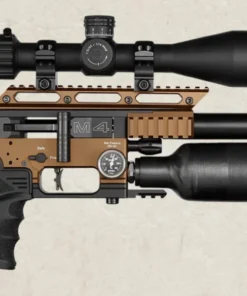
FX Impact M4 Standard Copper

€1,620.00

FX Impact M4 Standard Copper

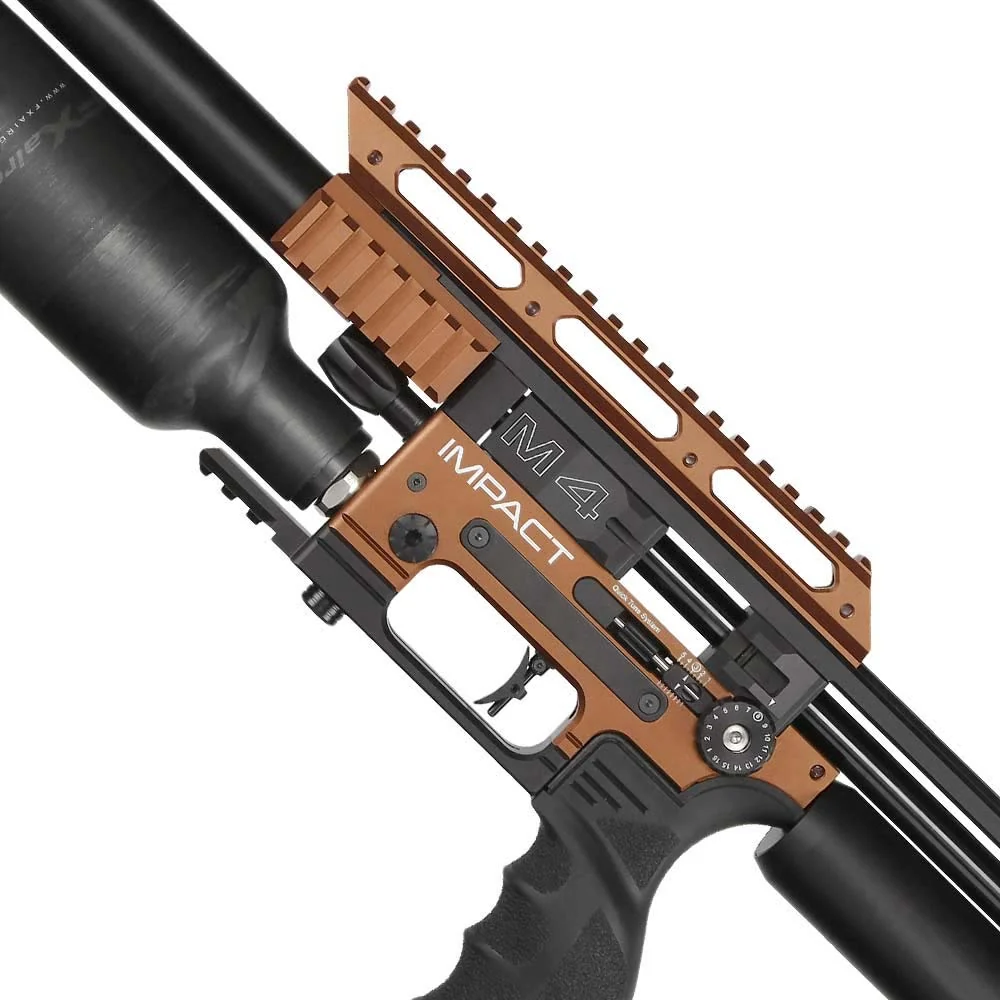
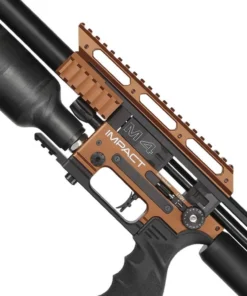
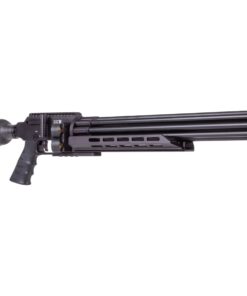
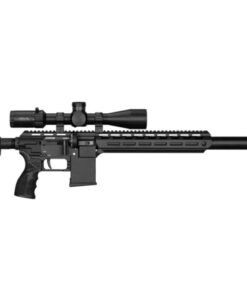
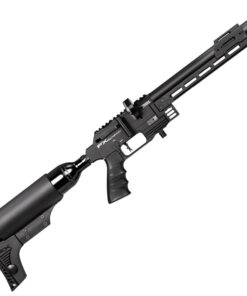
The FX Impact M4 is the latest iteration in the hugely successful Impact series, pushing precision and shooting capability in the airgun industry. This airgun is available in two distinct colours – the original all-black version or the bronze version to give it just that little extra. As well as this, the gun is available in multiple configurations, including a compact and standard version, sniper, or extended for every use. The Impact has a new design throughout without deviating too far from the M3. This has allowed improvements in all areas without changing the overall aesthetics or feel of the system.

The FX Impact M4 has a completely redesigned high-capacity magazine which are now made from much stronger materials and include a new internal mechanism to ensure the inner drum will rotate smoother even when loading the heaviest slugs available on the market. The Impact M4 also now comes standard with a new brass piston regulator that is stronger and has faster refresh rates. A far more consistent and easily handled higher bottle pressures with a max pressure of 170bar.

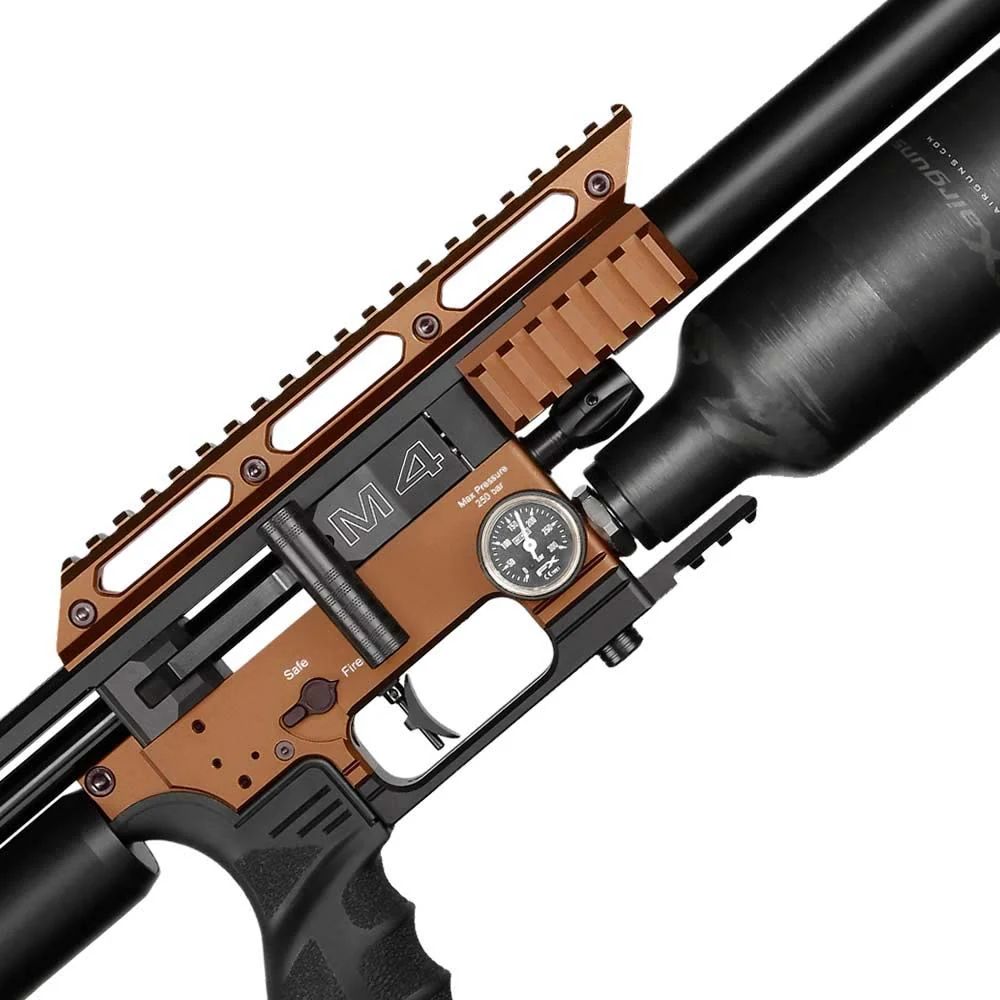
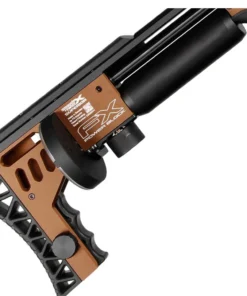
To further enhance the performance and shooting experience, FX have improved the overall rigidity of the Impact M4 by designing a new top plate that is much stronger and thicker which brings more strength and rigidity throughout the entire platform. The new QS trigger unit and top rail introduced have increased the comfort of shooting the Impact, as well as the all new FX grip that is more defined and comfortable to grip to.

The first major upgrade to the Impact M4 is a completely new trigger system. The FX quick set trigger has been adjusted to allow the user to change from standard, hunter, or match-grade, all with the change of one screw.

Scopes not included,

Specifications

Calibre .177
.22
Length 640mm (25″) – Compact
860mm (34″) – Standard
Weight 2.8kg (6.10lbs) – Compact
3.1kg (6.85lbs) – Standard
Barrel Length 500mm – Compact
600mm – Standard
Barrel Superior STX
Fill Pressure 250 Bar
Air Capacity 300cc – Compact
480cc – Standard
Plenum Sub12 Limited Plenum
Regulator Brass Piston AMP MKII
Trigger Quick Set Trigger
Grip FX UG1 Grip AR15 Style
Safety Switch Style
Optics Rail 30MOA Picatinny
Cocking System Reversible Smooth Side Lever
Magazine 34 Shots – .177
28 Shots – .22
Shot Capacity 475 Shots – .177
500 Shots – .22
Energy Up to 12ft/lbs
Gun Condition   New
Gun Maker   FX
Gun Model   FX Impact M4
Gun Type   Air Rifle
Gun Style   Air Rifle
Barrel Length   500mm
Moderator   No

FX Impact M4 Standard Copper

Precision, modularity, and a distinctive copper finish are combined in the FX Impact M4 Standard Copper so that target, hunting, and field work can be approached with one tunable PCP platform. Consequently, consistent air delivery, a compact bullpup layout, and a 600 mm Superior STX barrel are offered without an oversized overall length. Moreover, shooters of every experience level are invited to dial power, trigger feel, and optic placement to the task at hand.

Why the FX Impact M4 Standard Copper Is Chosen

A refined fourth-generation Impact architecture is used so that rigidity, magazine reliability, and regulator consistency are improved while the familiar handling of earlier Impacts is retained. Therefore, the Standard configuration is positioned as the balanced choice: a 600 mm barrel and 480 cc carbon bottle are paired at approximately 860 mm overall length and about 3.1 kg. In addition, a copper anodized finish is applied so that the rifle is easily distinguished on the range or in the field.

Furthermore, legal power limits and intended use vary by region. Accordingly, factory energy figures must always be confirmed locally, and responsible ownership plus applicable FAC or national rules must be observed before any high-power setup is used.

Core Platform Advantages

  • A compact bullpup layout is employed so that a 600 mm barrel is carried in a 34-inch-class package.
  • A 480 cc carbon-wrapped bottle is filled to 250 bar so that useful shot strings are supported.
  • An externally adjustable brass-piston AMP MKII regulator is fitted so that working pressure up to 170 bar can be set from outside the action.
  • A Power Plenum 750 (75 cc) is placed after the regulator so that airflow and consistency are increased.
  • A Quick Set Trigger is provided so that hunter, standard, or match-style pull can be selected with simple adjustment.
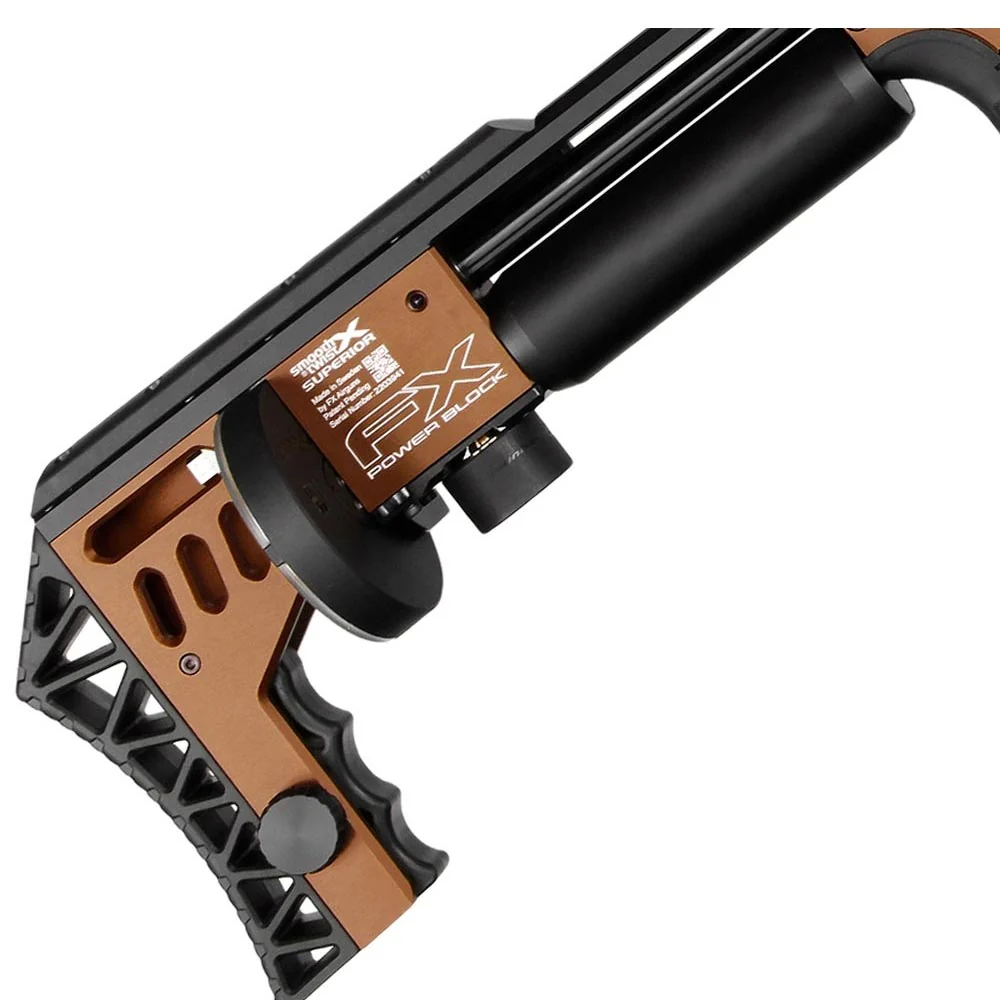
  • An FX UG1 AR15-style grip and a vertically adjustable recoil pad are included so that a repeatable hold can be established.
  • A reversible smooth sidelever is mounted so that left- or right-hand operation can be arranged.
  • A sliding 30 MOA Picatinny rail on a milled dovetail is used so that eye relief and optic type can be matched.
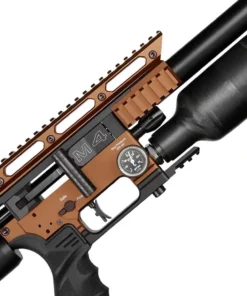
  • Dual WIKA gauges are fitted so that bottle and regulator pressures can be monitored at a glance.
  • A 1/2×20 UNF muzzle thread is provided so that a moderator can be attached.
  • High-capacity Side Shot magazines are supplied in caliber-specific capacities so that fewer mid-session reloads are required.

Design, Finish, and Handling of the FX Impact M4 Standard Copper

A thicker, stronger top plate is used so that flex is reduced and a sliding optic rail can be supported. Meanwhile, the copper finish is anodized across the chassis so that a distinctive look is achieved without a change to the core mechanical layout. Additionally, accessory Picatinny sections are placed on the sides and under the forend so that bipods, lights, or bags can be mounted when needed.

Consequently, short-eye-relief optics and thermal or night units can be positioned more freely because the rail can be slid rather than locked in a single spot. Likewise, the UG1 grip and adjustable pad allow a comfortable interface to be found whether the rifle is used from a bench, sticks, or a kneeling rest.

Smooth Twist X Barrel and Caliber Flexibility

A Superior STX liner inside a 600 mm shrouded barrel is specified on the Standard model so that pellets and many slugs can be stabilized. Moreover, the liner and, when required, the full barrel assembly can be exchanged so that caliber or twist can be changed without discarding the chassis. On applicable calibers, dual transfer ports marked for pellets and slugs are provided so that airflow can be matched to projectile type by rotating the barrel.

Typical magazine capacities that are published for the platform are as follows:

  • .177 — 34 shots
  • .22 — 28 shots
  • .25 — 25 shots
  • .30 — 23 shots
  • .35 — 18 shots

Approximate shot-count guidance from a 250 bar fill on the Standard 480 cc bottle is often listed near 375 (.177), 330 (.22), 160 (.25), 105 (.30), and 45 (.35), though actual strings depend on regulator setting, projectile weight, and power level. Therefore, a chronograph and a written log are recommended whenever a new tune is established.

Regulator, Plenum, and Tuning on the FX Impact M4 Standard Copper

Shot-to-shot consistency is supported by the AMP MKII brass-piston regulator. Subsequently, the plenum is refilled to the set pressure as long as bottle pressure remains above that setting. In addition, hammer-spring tension can be trimmed with macro and micro Quick Tune controls so that valve dwell can be matched to the chosen regulator pressure.

As a result, a mild target tune or a higher FAC-oriented setup can be approached on the same rifle, provided local law allows it. Maximum published energy figures on longer barrels with slug kits should not be assumed for the Standard 600 mm configuration; instead, they should be treated as platform ceilings that are confirmed only after a legal, measured tune.

Quick Set Trigger and Safety Controls

A Quick Set Trigger unit is installed so that pull weight and character can be moved among hunting, general, and match preferences. Furthermore, blade reach, height, and angle can be adjusted so that a consistent finger placement is encouraged. A switch-style safety is located for ready access, and safe handling habits must still be followed on every shot.

Practical Use of the FX Impact M4 Standard Copper

Field target, hunter field target, pest control, and hunting roles can all be served because power, magazine capacity, and optic placement can be adapted. Meanwhile, the Standard length keeps the rifle handy in hides and vehicles compared with Sniper or Extended variants, yet more barrel and air volume are retained than on Compact models.

Inclusive use is supported by the reversible sidelever and sliding rail, so left- and right-handed shooters and users of different optics can share the same platform. Nevertheless, hearing protection, eye protection, a safe backstop, and local airgun laws must be observed on every outing.

Calibres, FAC Power, and Accessories for the FX Impact M4 Standard Copper

Multiple projectile options, tunable air delivery, and a wide accessory ecosystem are built around the FX Impact M4 Standard Copper so that target work, pest control, and hunting roles can be matched with care. Consequently, calibre choice, local power limits, and supporting parts should be planned together rather than treated as separate afterthoughts. Moreover, published energy figures must be read as platform guidance, because actual output on a Standard 600 mm barrel depends on regulator setting, projectile weight, transfer-port selection, and national law.

Calibres Available on the FX Impact M4 Standard Copper

A modular Smooth Twist X barrel system is used so that several popular PCP calibres can be supported on the same chassis. Typically, .177, .22, .25, .30, and in many markets .35 are offered, while exact dealer listings should be confirmed before an order is placed. Therefore, the intended game, target distance, and legal energy cap should guide the first calibre decision.

High-capacity Side Shot magazines are supplied in calibre-specific counts so that fewer mid-session reloads are required. Common published capacities are:

  • .177 — 34 shots
  • .22 — 28 shots
  • .25 — 25 shots
  • .30 — 23 shots
  • .35 — 18 shots

Additionally, magazine interiors have been enlarged so that longer slugs can be cycled more reliably than on earlier Impact generations. Nonetheless, older compatible Side Shot magazines can often still be used, provided feed lips and drum rotation are inspected.

Approximate shot-count guidance from a 250 bar fill on the Standard 480 cc bottle is frequently listed near 375 rounds in .177, 330 in .22, 160 in .25, 105 in .30, and 45 in .35. However, those strings fall when regulator pressure, hammer spring, or projectile mass is raised. Accordingly, a chronograph log should be kept whenever a new tune is established.

How Each Calibre Is Commonly Applied

A .177 setup is often selected when high shot count and flat indoor or short-range target trajectories are desired. Meanwhile, .22 remains the most versatile all-rounder for mixed pest and precision work. In contrast, .25 is frequently chosen when more downrange energy is wanted without the recoil and air use of the larger bores. Subsequently, .30 and .35 are reserved for FAC-oriented hunting and slug work where law and ethics allow that level of power.

On applicable mid-to-large calibres, dual transfer ports marked for pellets and slugs are provided. Consequently, the barrel can be rotated so that airflow is matched to the projectile family being used.

FAC, Legal Power, and Realistic Energy

Power is not a single factory number on this platform. Instead, output is shaped by the AMP MKII regulator, Power Plenum 750, hammer-spring Quick Tune, transfer port, barrel length, and ammunition. Therefore, two very different rifles can exist inside the same FX Impact M4 Standard Copper chassis: a legal-limit target gun and a high-power FAC hunting gun.

In the United Kingdom and some other restricted markets, sub-12 ft/lb setups are commonly supplied, sometimes with compact barrels or limited plenums. Elsewhere, FAC or equivalent certificates may be required before higher energy is lawful. For that reason, local airgun statutes, storage rules, and transport limits must be checked before any high-power configuration is requested or built.

Manufacturer energy ceilings that are often quoted for the wider Impact M4 family include approximately:

  • .177 — up to about 47 J / 35 ft/lb
  • .22 — up to about 117 J / 87 ft/lb
  • .25 — up to about 135 J / 100 ft/lb
  • .30 — up to about 169 J / 125 ft/lb
  • .35 — up to about 211 J / 156 ft/lb

Those peaks are typically associated with slug ammunition, a slug power kit, and longer Sniper or Extended barrels. Consequently, they should not be assumed as standard output from a 600 mm Standard Copper rifle on pellets. A measured, legal tune on the actual rifle remains the only reliable figure.

Tuning Power Without Guesswork

An externally adjustable brass-piston AMP MKII regulator is fitted so that working pressure up to about 170 bar can be set while the rifle remains assembled. Meanwhile, the 75 cc plenum stores regulated air for each shot so that refresh and consistency are improved. In addition, macro and micro hammer-spring dials allow valve dwell to be trimmed after regulator pressure is chosen.

As a result, a mild competition string or a stronger field string can be approached on the same action. Inclusive use is supported because left- and right-handed shooters can reverse the sidelever and slide the 30 MOA rail to match eye relief, regardless of the power level selected. Still, hearing protection, a safe backstop, and correct projectile selection remain mandatory.

Accessories That Complete the FX Impact M4 Standard Copper

A modular accessory list is offered so that the rifle can be refined after the first range session. Typically included items are a fitted hard case, one magazine, a 1/2×20 UNF moderator, and a Foster-style fill adapter. Scope and rings are not included, so an optic matched to intended distance should be budgeted separately.

Useful additions that are commonly paired with this rifle include:

  • Extra high-capacity magazines in the chosen calibre
  • STX liner or complete barrel kits for calibre changes
  • Slug power kits where lawful and appropriate
  • Additional 1/2×20 moderators or muzzle devices
  • 30 MOA-friendly scopes, short-eye-relief glass, or thermal mounts
  • Bipods, M-LOK or Picatinny bags, and sling points
  • Larger or spare carbon bottles on compatible Impact fittings
  • Alternate grips, cheek pieces, and recoil-pad heights
  • External weights or rail accessories for bench stability
  • Quality pellets and slugs matched to the liner twist

Furthermore, dual WIKA gauges already allow bottle and regulator pressure to be watched, so a fill whip, moisture-free air source, and burst-disk-safe compressor or tank should be treated as essential support gear rather than optional extras.

Building a Coherent Setup

Calibre, FAC status, and accessories should be chosen as one package. For example, a legal-limit .22 Standard Copper with a mid-range optic and extra magazines suits mixed target and pest work. Conversely, an FAC .30 or .25 slug-oriented build benefits from a confirmed power kit, robust mounts, and a moderator selected for the higher report. In every case, the copper finish and Standard 600 mm layout keep the rifle distinctive and handy while the tuning system does the performance work.

A well-supported FX Impact M4 Standard Copper is therefore less a finished product than a platform. When calibre, lawful power, and accessories are aligned, consistent groups and ethical field use can be pursued with confidence.

What Is Typically Included

A fitted hard case, a magazine, a threaded moderator, and a Foster-style fill adapter are commonly packed with the rifle. Scope and rings are not included, so an optic matched to the intended range should be chosen separately.

Specifications Snapshot

  • Configuration: FX Impact M4 Standard Copper
  • Barrel: 600 mm Superior STX
  • Overall length: approximately 860 mm / 34 in
  • Weight: approximately 3.1 kg / 6.85 lb
  • Air bottle: 480 cc carbon, 250 bar fill
  • Regulator: brass-piston AMP MKII, externally adjustable (max working pressure commonly listed at 170 bar)
  • Plenum: Power Plenum 750
  • Optics: sliding 30 MOA Picatinny on dovetail
  • Cocking: reversible sidelever
  • Grip: FX UG1 AR15 style
  • Muzzle: 1/2×20 UNF

Ready to Add the FX Impact M4 Standard Copper to the Range Bag?

A tunable, competition-proven PCP is offered in a distinctive copper Standard package so that accuracy work and field use can be covered with one rifle. Therefore, caliber, local power limits, and optic choice should be confirmed next, after which a responsible, well-supported setup can be built around the FX Impact M4 Standard Copper.

FX Airguns, PCP Air Rifles, Hatsan Models and Modern Airgun Platforms

Modern airguns cover a wide range of platforms, from a basic pellet gun or BB gun to sophisticated regulated PCP airguns designed for target shooting, sporting applications, and long-range precision. Buyers researching an air rifle and air pistol collection will often encounter manufacturers such as FX and Hatsan because both companies offer extensive selections of air rifles, accessories, configurations, and caliber choices.

FX Airguns Sweden and the FX PCP Rifle Range

FX Airguns has become strongly associated with Swedish airgun engineering. Searches for fx airguns sweden, fx airguns sverige, fxairguns, and fx usa commonly lead enthusiasts toward the manufacturer’s extensive PCP lineup. In the American market, fx airguns usa is another widely searched phrase when people are researching available models, specifications, support, and accessories.

Among fx air rifles, the Impact family remains particularly recognizable. Searches frequently include fx impact, f x impact, fx impact m4, fx m4, impact m4 air rifle, and impact m4 500mm when comparing current configurations. The modular design philosophy associated with the Impact platform has helped make the fx air rifle range popular among shooters who appreciate adjustability and configurable PCP systems.

Earlier generations remain widely researched as well. The fx impact m3, impact m3, fx impact mk3, fx m3, and fx m3 airgun continue to attract attention from owners comparing generations or researching replacement components.

Caliber-specific searches include fx impact m3 .22cal air rifle, fx impact m3 .22cal air rifle. 600mm barrel, and the more general fx impact m3 air rifle. People comparing international pricing may also search fx impact m3 precio, fx impact m3 precio en usa, or fx impact m3 price before checking local regulations, specifications, and availability.

Beyond the Impact series, the FX catalog includes several distinctive designs. The fx leopard and fx leopard airgun are frequently researched alongside fx leopard .22 pcp specs by users interested in specifications and configuration details.

Other notable searches include fx drs, fx drs tactical, fx drs classic, and fx drs pro. These terms reflect interest in the different DRS configurations and their intended shooting styles.

The wider FX family also includes models such as the fx king, fx wildcat, fx panthera, and fx dreamline. Collectively, these platforms demonstrate the variety available to anyone researching a premium pcp air rifle, pellet rifle, or configurable precision air gun.

Some enthusiasts also search fx outdoors when researching outdoor shooting equipment and related products, while marketplaces and information sources such as guns.com may appear during broader online research.

Understanding Pellet Guns and PCP Air Rifles

A traditional pellet gun uses shaped pellets rather than conventional firearm ammunition. The broader term pellet guns can describe spring-powered, CO₂-powered, pneumatic, and PCP platforms.

A PCP air rifle stores compressed air inside a reservoir. This system can provide consistent pressure across multiple shots depending on the rifle’s regulator, reservoir capacity, caliber, and power configuration.

For shooters comparing ammunition sizes, .177 caliber remains one of the most common options. Larger configurations are also available, including the increasingly searched 30 cal air rifle category.

Some users accidentally search pallet gun when looking for pellet-powered equipment. Regardless of terminology, specifications such as energy output, caliber, barrel length, intended range, and local legal requirements should always be reviewed before use.

The practical range of air rifle platforms varies significantly. Pellet weight, velocity, environmental conditions, barrel design, optics, and shooter technique can all affect useful range and accuracy.

Hatsan Air Rifle and PCP Platforms

The hatsan air rifle lineup covers traditional spring-powered designs as well as modern PCP systems. Searches such as hatsanusa, hatsan usa, hatsan air guns, and hatsan pcp are commonly used by enthusiasts researching the company’s models.

One of the most recognizable platforms is the hatsan blitz. Search variations include hatsun blitz, hatzan blitz, hatsan blitz full automatic, hatsan blitz 30 cal, and hatsan blitz .30 cal. Specifications and legal classifications can vary by market, so owners should verify the rules applicable in their jurisdiction.

Another frequently researched model is the hatsan model 95, also searched as hatsan mod 95 and mod 95. This traditional air rifle platform remains familiar to shooters interested in conventional stock designs.

The hatsan 125 is another established model, while the hatsan 135 family attracts shooters researching powerful spring-piston platforms. Related searches include hatsan 135 vortex air rifle, hatsan 135 carnivore, and hatsan big bore carnivore rifle.

Hatsan Sortie, BullBoss and Bullpup Designs

Compact and semi-automatic PCP designs form another part of Hatsan’s catalog. The hatsan sortie is commonly researched alongside hatsan sortie tact, hatsan sortie tact semi-auto pcp, and hatsan sortie accessories.

Bullpup enthusiasts may encounter the hatsan bullboss, bullmaster, and hatsan hercules bully. Their compact layouts are designed to reduce overall length while maintaining useful barrel dimensions.

Other PCP models include the hatsan flash, hatsan flashpup qe, and hatsan invader. These rifles provide additional choices for people comparing conventional and bullpup PCP configurations.

Hatsan Hercules, Piledriver and Large-Caliber Platforms

For people researching larger airgun platforms, hatsan hercules and hatsan piledriver often appear in search results. Large-bore air rifles differ considerably from standard .177 and .22 pellet rifles in projectile size, power output, air consumption, and intended application.

The hatsan harpoon is associated with specialized projectile launching, while an arrow launcher represents another distinct air-powered category. Such equipment can be subject to different legal rules depending on location, so local regulations should be checked before ownership or use.

Additional Hatsan Models

The Hatsan catalog extends well beyond its best-known rifles. The hatsan airtact and hatsan airtact air rifle provide another entry point into the brand’s conventional rifle selection.

Other searches include hatsan zada, hatsan neutron star, hatsan factor rc, hatsan velox, and hatsan jet 2. Each platform serves a somewhat different role, making specifications such as caliber, reservoir capacity, operating system, barrel configuration, and overall dimensions important comparison points.

Shoppers researching discounted equipment may also encounter hatsan refurbished listings or broader searches for refurbished air rifles. Condition, warranty coverage, seals, regulators, reservoirs, and service history should be checked carefully when evaluating previously used or factory-refurbished equipment.

Airgun Optics, Pellets and Accessories

Accessories can significantly affect how an air rifle is configured. A compact 4×20 optic may suit basic shooting applications, while more advanced PCP rifles are frequently paired with adjustable optics.

Pellet choice also matters. Products such as h&n field target trophy bleifrei provide an option for shooters specifically researching lead-free projectile designs. Pellet diameter, weight, head size, and barrel compatibility should all be considered when evaluating accuracy.

Terms such as econ ii may also appear when researching airgun-related equipment and accessories. Compatibility should always be verified against the exact manufacturer, model, and specification rather than relying solely on a product name.

Comparing FX and Hatsan Air Guns

FX and Hatsan approach the modern air rifle market from different directions. FX is particularly well known for highly configurable PCP platforms such as the Impact, Panthera, Wildcat, Dreamline, Leopard, DRS, and King. Hatsan, meanwhile, maintains an exceptionally broad range spanning spring-powered rifles, PCP systems, bullpups, semi-automatic platforms, and larger-caliber airguns.

Whether researching an FX Impact M3, FX Impact M4, FX DRS, Hatsan Blitz, Hatsan Sortie, Hatsan Hercules, or another platform, specifications should be compared carefully. Caliber, operating pressure, reservoir capacity, barrel length, projectile compatibility, optics mounting, overall dimensions, energy output, and regional legal requirements can all influence which configuration is appropriate for a particular lawful sporting or target-shooting application.

Practical Use Scenarios

Everyday shooting is supported by a compact bullpup layout, a mid-length shrouded barrel, a regulated air system, and a sliding optic rail, so that one rifle can be moved from the zeroing bench to a hide, a competition lane, or a quiet evening of pest work. Consequently, practical success depends less on a single factory setting and more on how hold, ammunition, power, and optics are matched to the job. Moreover, inclusive handling is encouraged because the sidelever can be reversed and the rail can be slid to suit different eyes, shoulders, and shooting positions.

Preparing the Rifle Before the First Live Session

A safe, documented setup is established before any field use is attempted. Therefore, the bottle is filled to the approved working pressure with dry air, both gauges are checked, and the magazine is loaded only after the muzzle has been pointed in a safe direction. In addition, the safety is confirmed, the moderator is seated on the muzzle thread, and the optic is mounted far enough forward or back that a full sight picture can be obtained without crowding the eyebrow.

A chronograph string is then recorded so that velocity spread can be seen rather than assumed. Meanwhile, regulator pressure and hammer-spring tension are noted in a small log, because later changes are much easier when the starting point has been written down. Subsequently, a paper target at a known distance is used so that zero, group size, and point-of-impact shift between pellet lots can be observed.

Useful pre-session checks include:

  • A confirmed legal power level for the country or estate being visited
  • A clean crown and a securely fitted moderator
  • Magazines that rotate freely when fully loaded
  • An optic whose parallax and eye relief match the intended positions
  • Hearing and eye protection that will actually be worn
  • A written zero for the ammunition that will be carried

As a result, surprises on the first outing are reduced, and later practical scenarios can be judged against a known baseline.

Zeroing for Mixed Distances

A single 25- or 30-yard zero is often chosen for close pest work, while a 40- or 50-yard zero is preferred when longer lanes will dominate the day. Consequently, holdover marks or a simple turret chart should be built after groups have been shot at several distances. Furthermore, pellet and slug zeros must not be treated as interchangeable; a separate confirmation string is required whenever projectile type is changed.

Bench, Bag, and Club-Range Practice

Controlled practice is where the platform’s consistency is most easily seen. Therefore, a rest or bag is used so that shooter error can be separated from rifle error. Meanwhile, the vertically adjustable pad and AR-style grip allow elbow and shoulder height to be settled before a string is begun.

Slow-fire groups are first shot so that trigger character can be learned. After that, timed strings are introduced so that sidelever cycling and magazine changes can be rehearsed without rushing the shot itself. Inclusive club use is supported because left-handed members can have the lever swapped, and shorter-statured shooters can slide the rail until a comfortable head position is found.

A productive range session often includes:

  • Five-shot groups at the primary zero distance
  • Confirmation groups at the nearest and farthest expected field ranges
  • A magazine-change drill from the shoulder
  • A cold-bore first shot after the rifle has sat for ten minutes
  • A note of temperature and fill pressure for later comparison

Consequently, the rifle is not merely sighted in; it is learned as a handling system.

Competition-Style Lanes

Field-target and hunter-field-target style lanes reward a quiet trigger and a repeatable hold. Accordingly, the quick-set trigger is moved toward a lighter, cleaner break for standing and kneeling targets, then returned to a slightly heavier setting if gloves or cold fingers will be used on a hunt. In addition, the compact overall length helps when a lane is shot from a tight doorway, a tree line, or a seated position against a bag.

Wind calls still matter. Therefore, a mid-weight pellet or a well-chosen slug is selected for the day’s conditions rather than for catalogue energy alone. Subsequently, missed targets are treated as data: hold, cant, and follow-through are checked before regulator pressure is blamed.

Pest Control Around Buildings and Small Holdings

Close-range pest work is one of the most common practical roles for a mid-length regulated bullpup. A short overall package can be carried through gates and along fence lines without the muzzle leading the shooter by a full-length barrel. Meanwhile, a moderator and a legal-limit tune keep disturbance down when neighbours or livestock are nearby.

Shots are taken only when a safe backstop is present and the quarry is clearly identified. Moreover, magazines are loaded with the same pellet that was zeroed, because mixed lots at dusk produce avoidable misses. Inclusive use on a family holding is possible when each authorised person has been shown the safety, the magazine release, and the fill procedure, rather than being handed a “ready” rifle with no briefing.

Typical pest-control habits that improve results include:

  • A dawn or dusk walk of likely runs before the rifle is uncased
  • A 20- to 35-yard zero confirmed on paper the same week
  • Two magazines kept identical so a swap does not change point of impact
  • A red-dot or compact scope for tight sheds and loft hatches
  • Immediate unloading when the session ends and people or animals enter the area

As a result, humane, legal dispatch is more likely, and the rifle spends less time being adjusted in poor light.

From Vehicle to Hide

Transport between paddocks is easier when the overall length stays modest. Therefore, a fitted case is used so that the optic is not levered against a door frame. After arrival, a minute is spent checking that the bottle still holds pressure and that the moderator has not loosened on the thread. Subsequently, the first shot is a confirmation on a safe target or a known natural mark, not a rushed attempt at live quarry.

Hunting and Longer Field Shots

Where law allows higher energy, the same chassis can be tuned for ethical hunting distances. Nevertheless, energy on paper is not a substitute for shot placement. Consequently, a heavier projectile, a confirmed slug or pellet zero, and a rest are treated as part of the hunt plan rather than as optional extras.

Sticks, a bipod, or a pack are used so that the compact action can be steadied without a long forend. Meanwhile, the sliding rail lets a higher-magnification scope or a night unit be placed where eye relief is comfortable in a seated or kneeling position. Furthermore, extra magazines and a small kit of identical ammunition are carried, because a successful first shot still requires a follow-up capability.

Ethical field use is supported when these limits are respected:

  • A maximum distance that has already been grouped on paper
  • A projectile that has been tested in that rifle, not merely recommended online
  • A clear view of the vital zone and what sits behind it
  • Weather and wind that remain inside the shooter’s practiced hold
  • Immediate recovery and a second shot ready if the first is uncertain

Therefore, the rifle’s power and magazine capacity are used to finish a planned shot, not to stretch into untested ranges.

Night and Thermal Outings

Short-eye-relief and clip-on night optics are easier to position because the rail can be moved. Consequently, a cheek weld can be kept while a bulky unit is mounted. In addition, the compact length helps inside a vehicle hide or a tight high seat. Still, batteries, lens caps, and a dimmable display must be checked before last light, and local rules on night shooting must be followed without exception.

Training New Shooters and Shared Club Rifles

Inclusive training is practical on this layout because length and weight stay manageable for a wide range of body sizes. A coach can stand close without a long barrel sweeping the line. Meanwhile, the safety and magazine can be demonstrated slowly, and the first live shots can be taken from a rest until trigger press is steady.

A shared club rifle benefits from a simple written card: current zero distance, pellet brand, regulator setting, and which shoulder the lever is set for. Subsequently, each user resets nothing without recording the change. As a result, the next person is not left to discover a surprise point of impact.

Helpful training drills include:

  • Dry-fire or snap-cap-safe trigger presses if the mechanism allows it
  • Loading and unloading on a clear range with the muzzle downrange
  • Changing magazines without dropping the butt off the shoulder
  • Shooting the same five-target plate from standing, kneeling, and seated
  • Ending every session with an empty magazine and an open, safe action

Consequently, competence is built around habits rather than around a single impressive group.

All-Weather and Seasonal Use

Cold air, wet rest bags, and gloved hands change practical results. Therefore, trigger pull may be left a little heavier in winter, and seals plus fill probes should be kept clean and dry. Meanwhile, copper-coloured surfaces still need the same wipe-down as any other anodised chassis; moisture is not left in the case overnight.

Summer heat raises bottle pressure after a fill in a hot vehicle. Accordingly, the rifle is allowed to settle in the shade and gauges are rechecked before a hunt string is begun. In every season, a burst-safe air source and a known fill pressure remain non-negotiable.

After the Shot: Carry, Clean, and Store

Practical use does not end when the last target falls. Magazines are emptied, the action is left safe, and the bottle is not stored at an unknown high pressure for months without a gauge check. Furthermore, the moderator is removed or dried so that condensation is not trapped against the crown.

A short clean of the exterior and a visual check of rail screws, pad height, and lever screws prevent the next outing from starting with a loose part. Inclusive households benefit when the rifle is locked away to a standard that every authorised adult understands, not only the person who zeroed it.

When these scenarios are treated as a system—range confirmation, legal power, matched ammunition, and honest distance—the compact regulated bullpup becomes a dependable working tool rather than a collection of features. Consistent groups in practice are then more likely to transfer to the hide, the competition lane, and the field.

Frequently Asked Questions

Clear answers are provided below so that calibre choice, legal power, tuning, magazines, optics, and everyday handling can be planned with fewer surprises. Consequently, each reply is written for first-time buyers and experienced owners alike. Moreover, local law always overrides catalogue figures, and a measured tune on the actual rifle remains the only reliable performance guide.

Buying, Legal Power, and First Setup

Which calibre should be chosen first?

A primary use case should be named before a calibre is selected. Therefore, high shot count and flatter short-range trajectories are often served by .177, while mixed pest and precision work is commonly assigned to .22. In contrast, .25 is frequently chosen when more downrange energy is wanted without the air use of the largest bores. Subsequently, .30 and .35 are reserved for lawful FAC-oriented hunting and slug work. Inclusive households benefit when the first calibre matches the distances and quarry that will actually be shot, not the highest number on a chart.

Is a firearms certificate or equivalent required?

Legal status depends on country, energy, and sometimes muzzle velocity. Accordingly, a sub-limit target configuration may be lawful without a certificate in one region, while the same chassis at higher output may require FAC or an equivalent permit elsewhere. Furthermore, storage, transport, and age rules can apply even when the rifle itself is unlicensed. A dealer or official guidance source in the destination country should therefore be consulted before a high-power setup is ordered.

How much energy can realistically be expected?

Published family maximums are often measured with slug kits and longer barrels. Consequently, those peaks should not be assumed for a mid-length standard barrel on ordinary pellets. Instead, regulator pressure, hammer-spring tension, transfer-port setting, projectile weight, and temperature all shape the result. A chronograph string after filling is the correct way to confirm output. Meanwhile, ethical hunting distance is set by grouped accuracy, not by a brochure joule figure.

What should be checked before the first range trip?

A safe fill, a confirmed moderator fit, a mounted optic with usable eye relief, and a written note of regulator and hammer settings are established first. In addition, the magazine is loaded only with the muzzle pointed in a safe direction. Hearing protection, eye protection, and a solid backstop are treated as part of the rifle, not as optional extras.

Useful first-session items include:

  • Dry, correctly rated air and a known fill pressure
  • The same pellet or slug lot that will be used in the field
  • A notebook for velocity, group size, and temperature
  • Tools for rail and pad adjustment
  • A clear understanding of local power limits

Air System, Tuning, and Consistency

How does the regulator help practical shooting?

A regulated pressure is delivered to the plenum for each shot so that velocity stays more stable while bottle pressure remains above the set point. Therefore, holdover stays more predictable through a longer string. Moreover, external adjustment allows working pressure to be changed without a full strip. Still, a setting that is too high for the chosen projectile can waste air and open groups, so changes are made one step at a time.

What role is played by the plenum and hammer-spring dials?

Air that has already been regulated is stored in the plenum so that each shot is fed more consistently. Meanwhile, macro and micro hammer-spring controls allow valve dwell to be trimmed after regulator pressure is chosen. As a result, a mild target string or a stronger field string can be approached on the same action. Inclusive club use is easier when those numbers are written on a card that travels with the rifle.

How often should a fill be planned?

Shot count falls as power and projectile mass rise. Typical published guidance for a mid-size carbon bottle is generous in .177 and .22 at modest settings, then drops sharply in .30 and .35 or at FAC-level tunes. Consequently, a personal string from 250 bar down to the point where the rifle leaves the regulator should be recorded. After that, hunts and matches are planned around that real number rather than around a best-case chart.

Caliber

.177,, .22,, .25, , .30,

Reviews

There are no reviews yet.

Be the first to review “FX Impact M4 Standard Copper”

Related Products

FAQ

  • Spring-Piston (Break-Barrel or Underlever): Cock by compressing a spring. Reliable, no external air source needed, but can have more recoil (“spring twang”) and require technique to shoot accurately.
  • Pre-Charged Pneumatic (PCP): Filled from a scuba tank, compressor, or pump. High power, low recoil, multiple shots per fill. Popular for precision and hunting.
  • CO₂: Powered by disposable cartridges. Good for pistols and semi-auto/repeaters, but performance drops in cold weather.
  • Multi-Pump Pneumatic: Hand-pumped to build pressure. Versatile but requires effort.
  • Gas Ram (Nitro Piston): Uses compressed gas instead of a metal spring. Smoother than traditional springers.

Calibers: Most common are .177 (4.5mm) for speed/flat trajectory and general use, and .22 (5.5mm) for better hunting knockdown power. Larger “big bore” (.25, .30, .357+) exist for hunting bigger game where legal.

Yes, many modern PCP and springers deliver enough energy for small game (rabbits, squirrels, birds) and even larger game in some areas. Muzzle energy (in ft-lbs or joules) matters more than velocity alone. Always match caliber, pellet weight, and energy to the game and check local hunting regs.

Treat every airgun as if it is loaded.

  • Always point the muzzle in a safe direction.
  • Keep your finger off the trigger until ready to shoot.
  • Know your target and what is beyond it (pellets can ricochet or travel far).
  • Wear eye protection.
  • Store unloaded, out of reach of children/untrained users, and ideally locked.
  • Never shoot at hard surfaces or in areas where pellets could escape your property.

Follow these rules strictly—airguns cause real injuries.

Laws differ dramatically by country, state/province, and even city. Always verify current local laws before buying, owning, transporting, or using an airgun. Age restrictions (often 18+) are common.

Examples (summaries only; check official sources):

  • UK: Air rifles ≤12 ft-lbs (16.3 joules) and pistols ≤6 ft-lbs generally do not require a license (FAC needed above that).
  • USA: Varies by state. Some treat powerful airguns as firearms; others do not. Many states now allow big-game hunting with air rifles.
  • Canada: Some airguns classified as firearms if they exceed velocity/energy thresholds.
  • Australia: Often treated as firearms; licensing/registration required in most states.
  • EU/France/Belgium/etc.: Varies; many allow low-power (<20J) guns freely to adults, with higher power needing permits. Germany has strict ~7.5J limits in some contexts.
  • Other countries: Some have no restrictions below certain energies; others ban or heavily regulate them.

Resources: Wikipedia “Air gun laws”, airgun forums, or official government sites. For travel, research transit laws carefully.

Consider:

  • Purpose: Plinking/backyard → lower power springer or CO₂. Hunting/precision → PCP.
  • Budget: Entry-level springers are affordable; PCPs need a fill system (extra cost).
  • .177 vs .22: .177 easier for beginners/targets; .22 better for hunting.
  • Power source: Convenience vs performance.
  • Test pellets in your gun—accuracy varies.

Buy from reputable dealers and consider warranties.

  • Clean barrel periodically (especially if accuracy drops) with patches and appropriate tools/solvents. Avoid over-oiling.
  • Lubricate moving parts and seals with airgun-specific oil (not general gun oil). Springers need piston seal oil occasionally.
  • Check screws, seals for leaks (PCP), and safety mechanisms regularly.
  • Store in a cool, dry place, ideally in a case. Avoid leaving cocked for long periods.

Follow your model’s manual. Basic care extends life significantly.

International shipping may be available for select products. Customers are responsible for understanding and complying with their local import laws and regulations before ordering.

Yes. Customers are required to confirm their order number through WhatsApp or Live Chat before orders are processed and shipped.

If local laws prevent shipment to your area, your order may be canceled and refunded according to our store policy.

Processing typically takes 1–3 business days after payment confirmation. Delivery times vary depending on destination, carrier, and product availability.


  • Wrong pellets for your barrel/caliber.
  • “Death grip” or poor shooting form (especially with springers—let the gun recoil naturally).
  • Loose scopes or mounts.
  • Ignoring safety or local laws.
  • Over-oiling or shooting with obstructions.


Pellets are the most common projectile (lead or lead-free). Match them to your gun, caliber, and purpose—test several brands as accuracy varies by barrel.

  • Domed (Round-Head): Best all-rounder. Excellent accuracy, ballistic coefficient, and energy retention. Ideal for target shooting, field target, and general hunting (e.g., JSB Exact, Air Arms Diabolo Field, H&N Field Target Trophy).
  • Wadcutter (Flat-Head): Clean holes in paper. Best for close-range target/plinking (under 20-25 yards).
  • Hollow Point: Expands on impact for better energy dump. Good for small game hunting (e.g., Predator Polymag, H&N Terminator).
  • Pointed: More penetration, but often less accurate than domed.
  • Slugs: Heavier, more aerodynamic for high-power PCPs at longer ranges (better for big game where legal).

Tips: Heavier pellets in .22/.25 for hunting (better momentum). Lighter in .177 for speed/flat trajectory. Always check head size fit (e.g., 4.51-4.53mm variants).

Muzzle energy (ft-lbs or joules) matters more than velocity. Ethical shots require precise placement (head/heart-lung) within effective range.

Rough Guidelines (adjust for distance, pellet, and local laws):

  • Small game (squirrels, rabbits, birds): 9-20+ FPE, .177/.22.
  • Medium (raccoons, etc.): 25+ FPE, .22/.25 recommended.
  • Larger game: 40-100+ FPE in .30+ calibers (up to big bore for deer/hogs where permitted).

PCPs dominate serious hunting due to power and shot count. Springers/gas rams work well for small game but require skill. Always prioritize clean kills and check seasons/species rules.

  • Barrel Cleaning: Use a pull-through kit or rod with patches. Avoid brushes that could damage rifling. Clean when accuracy drops or after 500-1000 shots.
  • Lubrication: Airgun-specific silicone oil for seals/O-rings (sparingly—excess causes dieseling in springers). Springers may need piston lube periodically.
  • PCP Specific: Check for leaks (soapy water test), monitor regulator/hammer settings, and keep fill systems clean. Don’t exceed rated pressure.
  • General: Tighten stock screws, inspect for wear, store properly. Chronograph shots to track consistency.

Common Issues:

  • Inconsistent velocity → dirty barrel, bad pellets, or seal problems.
  • Spring “twang” → tuning or proper hold.
  • Low power → worn seals or under/over-pumping.

Toggle Content

  • Scopes: Airgun-rated (hold zero under recoil). 3-9x or 4-12x common.
  • Fill Systems: Hand pumps, compressors, or tanks for PCPs.
  • Safety Gear: Eye/ear protection, targets with backstops.
  • Noise: Airguns quieter than firearms, but moderators help further.

Budget Tip: Start with a quality springer (~$150-400) before investing in PCP setup.

Airgunning offers endless depth—from backyard plinking to precision competition and ethical hunting. Prioritize safety, legality, and practice. If you want specifics (e.g., recommendations for a country, budget, hunting small game, or a particular type like PCP vs springer), let me know for more targeted info! Shoot responsibly.

Tuning improves accuracy, reduces noise/recoil, or increases power (within legal limits).

  • Springers: Lighter springs, guides, seals, or custom tuning kits for smoother shot cycle. “V-Mach” or similar professional tunes popular.
  • PCPs: Regulator tuning, hammer spring adjustments, valve work for efficiency and shot count. Some add electronic systems.
  • Accessories: Suppressors (often unregulated on airguns), better triggers, stocks, and scopes.

Caution: Check laws—power increases may reclassify your gun. DIY only if experienced; professional tuners recommended.

You must be at least 18 years old to purchase any airgun or related accessories from our store. By placing an order, you confirm that you meet the legal age requirements in your state or country.

Yes. Orders may require age verification before processing and shipping. In some cases, we may request a valid government-issued ID to confirm eligibility.