We Deliver Airguns Directly To Your Door
SKU N/A Category

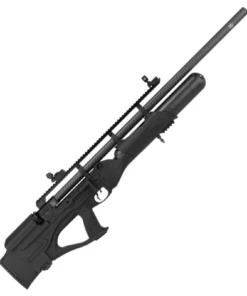
Hatsan Hercules Bully 777 PCP Rifle

€820.00

The Hatsan Hercules Bully has been Hatsan’s most popular powerhouse for years!
The new 777 series is built for even more power than its already powerful predecessor.

This powerful PCP air rifle is designed to pack a lot of power into a relatively compact package.
Thanks to the sidelever loading system, you can quickly and easily load a new shot from a rotating magazine.


Longer barrel and more air

The Hatsan Hercules Bully 777 shoots its heavy pellets or slugs through a longer barrel for more power and efficiency.
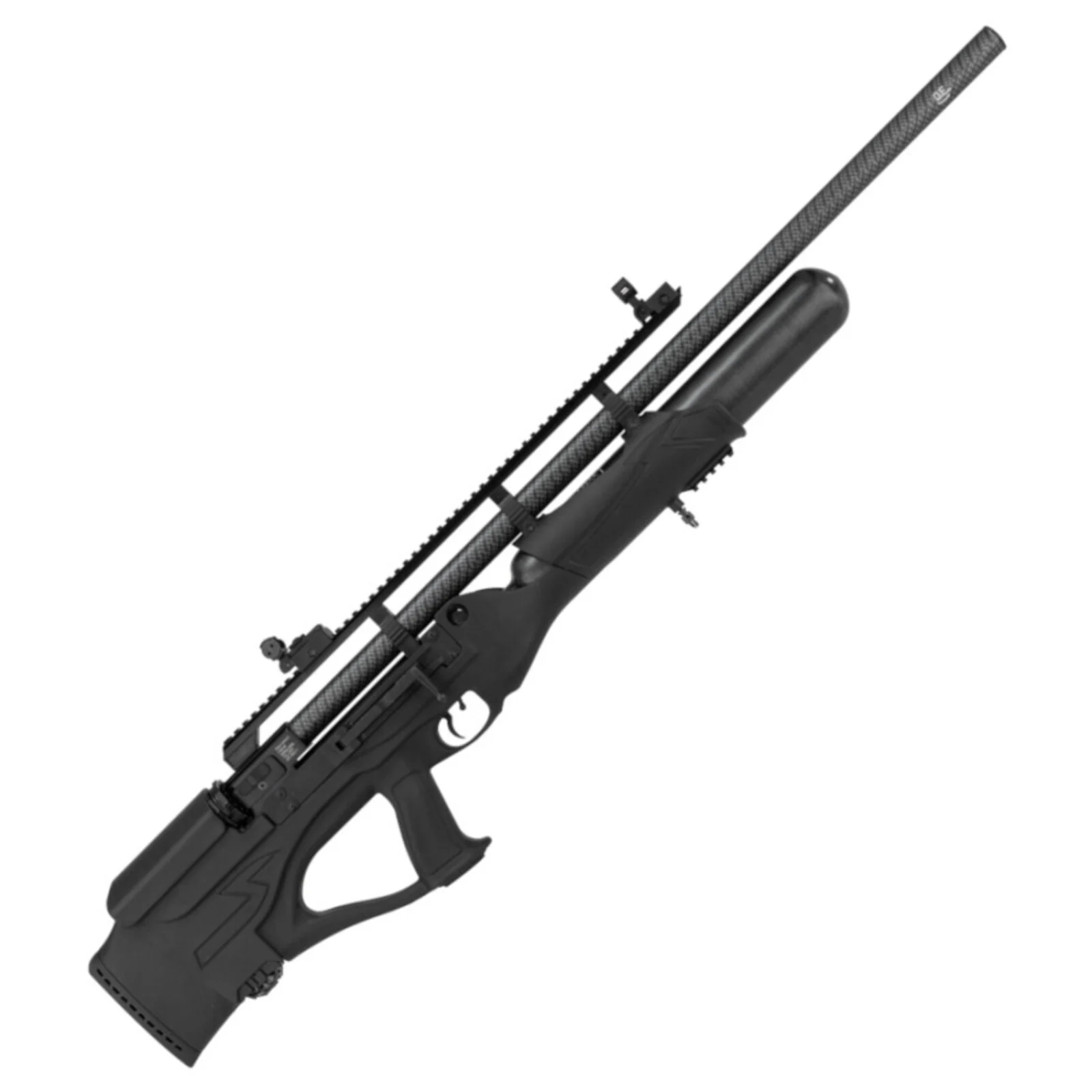
The barrel is in Hatsan’s QE (quiet energy) barrel shroud. This shroud protects the barrel and has a slight sound-moderating effect.

To supply the power, the air reservoir has also been expanded!
From the 480cc at 250 bar, the Bully 777 is equipped with a large 700cc carbon bottle at 300 bar!
Thanks to this high filling pressure, you get enough shots from one filling (in addition to a lot of power). Do you need more? Then you can simply leave the hose of your 300 bar source bottle tethered in the gun and shoot all afternoon.


Bullpup stock

The Hatsan Hercules Bully 777 has a bullpup design. This means that the magazine and mechanism are in the back of the stock.
Here the Bully remains relatively compact, despite the long full-size barrel!

The sturdy plastic stock has a comfortable design and has a height-adjustable cheek piece so you can always properly align it with the rifle scope.
There is also a compartment under the stock for 2 spare magazines.


Optics and accessories

On top of the Bully 777 is Hatsan’s double rail. These rails have the option to mount optics with both 11mm and 22mm optic clamps.

Power source: Pre compressed pneumatic (PCP)
Caliber: 7.62mm (.30) | 9mm (.35)
Muzzle energy: 200 | 275 joules
Fill pressure: 300 bar
Air capacity: 700cc
Regulator: No
Operating system: Sidelever
Magazine: 10 | 9 shots
Max. projectile length: 13mm
Optic mounting: 11mm dovetail & 22mm picatinny/weaver
Weight: 5,3 kg
Length: 1080mm
Barrel length:
Muzzle: QE shroud
Accessories: 3 magazines, fill probe

Hatsan Hercules Bully 777 PCP Rifle — Compact Bullpup Powerhouse for Serious Field Performance

Exceptional knockdown capability is delivered by the Hatsan Hercules Bully 777 PCP rifle through a compact bullpup platform that was engineered for hunters, pest controllers, and precision shooters who demand high energy without excessive overall length. Consequently, a longer 760 mm QuietEnergy-shrouded barrel is paired with a large 700 cc carbon-fiber air reservoir so that substantial muzzle energy and usable shot count can be maintained in a relatively maneuverable package.

Uncompromising Power Architecture of the Hatsan Hercules Bully 777 PCP Rifle

High fill pressure of 300 BAR is supported by the 700 cc carbon-fiber bottle so that extended shooting sessions can be completed before a refill is required. Therefore, approximately 100 shots per fill in .22 caliber and 96 shots in .25 caliber are typically obtained, while 40 and 32 shots at optimal velocity are respectively achieved depending on pellet weight and conditions.

Moreover, muzzle velocities of up to 333 m/s (approximately 1,100 fps) with 32-grain slugs in .22 and 325 m/s (approximately 1,075 fps) with 45-grain slugs in .25 are produced, resulting in energies of up to 116 J (86 ft-lbs) and 156 J (115 ft-lbs). Additionally, larger-caliber configurations offered by some markets allow even greater impact for bigger game or longer-range pest work. As a result, authoritative terminal performance is provided across a wide range of ethical hunting and control applications when local laws and FAC requirements are observed.

Furthermore, a precision-rifled and choked barrel is employed so that consistent grouping can be realized once a suitable pellet or slug is selected. In addition, an integrated QuietEnergy sound-moderation system is incorporated, by which report is reduced by approximately 50 percent compared with an unshrouded barrel. Consequently, field discretion is improved and neighbor-friendly shooting is facilitated.

Key Performance Highlights

  • 700 cc carbon-fiber air reservoir filled to 300 BAR for high shot capacity
  • 760 mm (30″) QuietEnergy fully shrouded barrel for accuracy and reduced report
  • Side-lever, manual-repeating action with anti-double-feed protection
  • Detachable multi-shot magazines: 14-round (.22) / 13-round (.25) plus spare-magazine storage in the stock
  • Two-stage adjustable trigger for travel and pull weight
  • Ambidextrous tactical polymer bullpup stock with integrated pistol grip and EasyAdjust cheek piece
  • Combination 11 mm / 22 mm optic rail plus underside Picatinny rail for bipod or accessories
  • Built-in pressure gauge, sling swivels, and folding fiber-optic sights

Ergonomics and Handling Designed for All-Day Use

Comfort during extended sessions is enhanced by the advanced polymer tactical bullpup stock. Therefore, a compact overall length of 1,080 mm (42.5″) is achieved despite the full-length barrel, while an average weight of 5.3 kg (11.7 lbs) remains manageable for most adult shooters. Likewise, an elevation-adjustable cheek piece is provided so that proper eye alignment with optics can be obtained by users of varying stature.

In addition, an ambidextrous layout is adopted, by which both left- and right-handed operators are accommodated without compromise. Subsequently, spare magazines can be stored in dedicated stock slots so that rapid magazine changes can be performed in the field. Meanwhile, a manual safety and anti-double-pellet-feed mechanism are included, through which safe operation is supported when proper handling procedures are followed.

Moreover, a two-stage adjustable trigger is fitted so that individual preference for first-stage travel and second-stage break can be set. As a result, consistent shot release is encouraged once the rifle has been zeroed and the shooter has become familiar with its characteristics.

Practical Field Applications and Responsible Ownership

Versatile use is enabled by the Hatsan Hercules Bully 777 PCP rifle across target practice, pest control, and hunting of appropriately sized game where airgun hunting is legal. Consequently, mid-range precision work is well served by the .22 and .25 offerings, while heavier calibers available in certain markets deliver greater energy for larger pests when ethical shot placement and local regulations are respected.

Nevertheless, fill equipment capable of 300 BAR, quality pellets or slugs matched to the barrel, and regular maintenance of O-rings and the fill probe are required so that consistent performance can be maintained. Furthermore, local airgun laws, FAC or equivalent licensing, and safe storage practices must always be observed. Inclusive participation in the shooting sports is encouraged when newcomers receive proper instruction and experienced shooters continue to prioritize safety and ethical use.

Therefore, a complete package of power, compactness, and user-adjustable features is presented by the Hatsan Hercules Bully 777 PCP rifle. Ultimately, a capable platform is offered to shooters who value high energy, a quieter report, and a bullpup layout that remains practical in the field. Responsible owners who pair the rifle with suitable optics, a reliable filling source, and quality ammunition will find a durable tool that rewards careful setup and disciplined shooting.
Hatsan Hercules Bully 777 PCP rifle

Premium Airgun Selection, PCP Power Systems, Big Bore Rifles, and Performance Accessories

A wide selection of modern air-powered platforms is available for shooters who are looking for precision, power, and advanced technology. From compact PCP designs to high-energy big bore systems, today’s market includes everything from a bintac aea harpoon platform to powerful semi-automatic and full-automatic options designed for experienced airgun enthusiasts.

High-performance models such as the bintac t9 full auto, bintac mcar 457, and aea terminator represent the latest generation of regulated air-powered rifles built for maximum performance. These systems are developed with high-pressure air technology, durable construction, and innovative firing mechanisms that provide excellent consistency. For users searching for extreme power, anti air tanks, large-capacity air reservoirs, and an air tank for pcp airguns can provide extended shooting sessions and reliable pressure management.

Big bore enthusiasts often look toward powerful platforms such as the zeus 72 cal air rifle price, aea harpoon air gun, and other large-caliber options designed for serious applications. These rifles combine impressive energy output with modern PCP engineering, making them popular among those searching for an airgun shotgun, automatic air gun, or an air powered 50 cal rifle.

Popular models including the aea megalodon for sale, hatsan blitz, and hatsan air rifle lineup have gained attention due to their combination of power, accuracy, and reliability. The Hatsan family includes several well-known platforms such as the hatsan sortie air rifle, hatsan model 95, hatsanusa, hatsan harpoon, hatsan hercules, and hatsan piledriver, offering solutions for different shooting styles and preferences.

For shooters interested in tactical PCP designs, options like the hatsan sortie tact semi-auto pcp, hatsan sortie accessories, hatsan 135, hatsan bullboss, and hatsan refurbished models provide excellent flexibility. These rifles are designed for users who value adjustable power, ergonomic handling, and dependable performance.

The Hatsan range also includes advanced models such as the hatsan hercules bully, hatsan airtact air rifle, hatsan flash, hatsan invader, hatsan flashpup qe, hatsan neutron star, and hatsan zada. Each platform offers unique features, from compact bullpup configurations to high-powered regulated systems.

For those searching for powerful hunting options, rifles like the hatsan 135 carnivore, hatsan hercules, and other big bore air rifles provide increased impact energy. The market also includes a wide variety of air rifles, airguns, and accessories suitable for target shooting, pest control, recreational shooting, and outdoor applications.

Models such as the hatsun blitz, hatsan mod 95, hatsan sortie tact, hatsan 125, and hatsan blitz full automatic continue to attract attention from shooters looking for reliable performance. Precision accessories including 4×20 scopes, hatsan velox, hatsan jet 2, mod 95, and econ ii components help improve accuracy and customization.

High-quality ammunition choices such as h&n field target trophy bleifrei and h&n field target trophy pellets are often selected by shooters who demand consistency and accuracy. Meanwhile, powerful configurations like the hatsan blitz 30 cal, hatsan air guns, hatsan airtact, hatsan factor rc, and hatsan 135 vortex air rifle provide a broad range of performance choices.

For shooters interested in larger calibers, options such as a hatsan big bore carnivore rifle, 30 cal air rifle, and hatsan blitz .30 cal deliver increased power compared with traditional small-caliber platforms. Available choices include .177 caliber systems for precision shooting, along with specialized platforms designed for different shooting disciplines.

Additional air-powered products include pallet gun options, arrow launcher systems, refurbished air rifles, and accessories designed to enhance the shooting experience. A complete air rifle range can include everything from compact beginner-friendly models to advanced tactical systems like blitz guns, blitz 777, and semi auto pellet gun platforms.

The AEA and BinTac range has also become popular among enthusiasts searching for innovative PCP technology. Products such as the bintac t9, bintac, bintac llc, bin tac, bintacllc, aea airguns, bintac t 50, bintac m50, bintac mcar, and bintac s45 provide different configurations for shooters seeking powerful air-powered solutions.

The aea harpoon for sale, aea harpoon price, bintac m50 for sale, and bintac t9 price are commonly searched terms by buyers comparing availability and specifications. Other popular platforms include the aea megalodon, bintac t50, bintac mcar air rifle, and advanced PCP systems designed for maximum output.

Whether searching for a compact hunting rifle, a tactical PCP platform, or a high-powered big bore solution, modern airgun technology offers a wide range of choices. From hatsan jet 2 accessories, invader auto, semi automatic pellet gun, and sniper long configurations to performance upgrades such as hatsan aftermarket parts, shooters can customize their setup based on their individual needs.

With options ranging from 1000x.25 ammunition specifications to models like the hatsan mod 65, co2 pellet rifle, air gun, hatsan jet 2, hatsan blitz bullpup, jet ii, and advanced PCP platforms, today’s airgun market provides solutions for beginners, collectors, hunters, and experienced shooters looking for reliable performance.

Practical Use Scenarios in the Field

Meaningful results are obtained when a compact, high-capacity bullpup PCP platform is matched to realistic distances, appropriate projectiles, and disciplined shot selection. Consequently, the following scenarios are presented so that hunters, pest managers, and recreational marksmen of every background can picture how power, quiet operation, and a short overall length are put to work without unnecessary complexity.

Hatsan Hercules Bully 777 PCP rifle

Woodland Stalking and Close-Cover Hunting

Movement through thick timber is simplified when overall length is kept modest while a full-length barrel is retained. Therefore, a side-lever action can be cycled from a kneeling or seated position without the muzzle being driven into brush. Meanwhile, a QuietEnergy-style shroud is relied upon so that report is reduced and game is less likely to be alerted after the first shot.

Moreover, mid-caliber slugs or heavy pellets are typically chosen for ethical harvest of medium pests and small game where local regulations permit airgun hunting. As a result, sufficient energy is delivered at woodland distances of 25–50 metres once a stable rest is found against a trunk or a compact bipod is deployed from the underside rail. In addition, spare magazines stored in the stock are drawn so that a follow-up can be chambered quickly if a second opportunity is presented.

Furthermore, an adjustable cheek piece is raised or lowered until a consistent sight picture is achieved with a compact hunting optic. Subsequently, the two-stage trigger is set so that a predictable break is felt under gloves or in cold weather. Inclusive practice is encouraged: newcomers are advised to begin with shorter ranges and confirmed zero, while experienced hunters continue to verify trajectory with the exact projectile that will be used on the day.

Nevertheless, fill pressure must be monitored on the onboard gauge before a stalk is begun. Consequently, a 300-bar-capable source is kept nearby so that the large carbon bottle can be topped after a long session. Responsible use is completed only when shot placement, legal seasons, and landowner permission have all been confirmed.

Hide, Barn, and Farmyard Pest Control

Quiet, repeatable shots from a static position are favoured when rats, rabbits, or similar pests are managed around buildings. Therefore, a bullpup layout is rested on a sandbag, windowsill, or folding rest so that the muzzle remains inside the hide line. Likewise, reduced report is valued because livestock and neighbours are less disturbed.

Additionally, magazine capacity is used so that several targets can be addressed before a reload is required. As a result, a 13- or 14-round magazine, depending on caliber, is kept ready while two extras remain in the stock slots. Transitioning between shots is then accomplished with a short side-lever stroke rather than a long cocking motion that might bump the hide.

Meanwhile, fibre-optic emergency sights can be unfolded if an optic fogs or a close opportunity appears inside a barn. However, a low-power variable scope or red-dot is usually preferred so that identification of the target is completed before the trigger is pressed. Inclusive teams—family members, farm staff, or club volunteers—are able to share the same rifle once the cheek piece and trigger are reset to each user’s preference.

Furthermore, anti-double-feed protection is relied upon so that a second projectile is not chambered if a cycle is incomplete. Consequently, stoppages are reduced during dim-light sessions. After the session, residual pressure is noted, the rifle is made safe, and it is stored separately from projectiles in accordance with local rules.

Open-Field and Fence-Line Work

Longer sight lines are encountered along paddocks and crop edges. Therefore, the 760 mm barrel is allowed to contribute to velocity and stability while the bullpup stock keeps the shooter’s silhouette lower than a conventional rifle of similar barrel length. In addition, a bipod on the forward Picatinny rail is extended so that a prone or seated position can be held for several minutes.

Moreover, folding fibre-optic sights remain available if an optic fails, yet most field users mount glass on the long combination rail. An adjustable cheek piece is already integrated; aftermarket pads are seldom required unless a very high-mounted scope is chosen.

Furthermore, sound-moderation is built into the QuietEnergy shroud, so an extra muzzle device is optional and must be compatible with local suppressor law. Anti-double-feed design reduces the need for exotic magazine gadgets, provided magazines are kept clean and springs are not left compressed for months.

In summary, calibre, legal power and accessories must be treated as one system. When the correct magazine, a verified projectile, a 300 BAR fill and optics suited to the distance are combined—and when FAC or national joule limits are respected—the platform is used as intended: as a compact, high-capacity bullpup whose output is defined as much by paperwork and preparation as by the numbers printed in a brochure.

Moreover, heavier projectiles in .25 or larger market calibers are selected when wind is present and extra momentum is desired. As a result, drift is reduced compared with very light pellets, provided the ballistic coefficient of the chosen slug is understood. Subsequently, dope is confirmed on paper at 40, 60, and 80 metres before live pest work is attempted.

Transition words such as “meanwhile” and “thereafter” describe the sequence: zero is confirmed, wind flags or grass movement are observed, and only then is a shot taken. Inclusive language applies here as well—shooters of different physical builds can share the same platform because length of pull is largely determined by the bullpup geometry rather than a long conventional stock.

Nevertheless, shot count at optimal velocity is finite. Consequently, the gauge is checked after every magazine so that the power curve is not ridden into a steep drop. A spare tank or portable compressor capable of 300 BAR is therefore staged at the vehicle.

Range Development and Skill Building

Consistent groups are developed when the same rifle is used for both practice and field work. Therefore, a formal zeroing session is conducted from a bench or shooting bag before any hunting trip. Likewise, the two-stage trigger is adjusted in small increments until first-stage take-up and second-stage weight suit the individual.

Additionally, magazine feeding is practised so that the lever stroke becomes automatic. As a result, fumbled reloads are reduced when time is limited. Spare magazines are rotated so that springs remain healthy and feed lips are inspected for wear.

Furthermore, different projectile weights are tested because choked barrels often show a clear preference. Consequently, a small log is kept of velocity, group size, and point of impact for each tin. Inclusive clubs can run the same drill for new members and veterans alike: five-shot groups at 25 metres, then 50 metres, then a cold-bore confirmation after the rifle has been allowed to rest.

Meanwhile, sling swivels allow a simple carry or a hasty shooting sling. Thereafter, the combination rail accepts both 11 mm rings and 22 mm mounts so that existing optics can be transferred from other airguns. Quiet operation on an indoor or suburban range is appreciated by other shooters, provided backstops and club rules are respected.

Seasonal and Weather Considerations

Performance in heat, cold, and humidity is affected by air density and lubricant behaviour. Therefore, fill pressure is verified more frequently in cold weather because usable shots can decrease. Conversely, summer sessions may show slightly higher velocity until the power curve is mapped again.

Moreover, the synthetic stock is chosen because it is less affected by rain than wood. As a result, the rifle can be wiped down and returned to a dry case without swelling or finish damage. An adjustable cheek piece is checked after temperature swings because polymer can shift slightly; a quick height confirmation restores the same sight picture.

Additionally, seals and the fill probe are inspected after dusty farm work. Consequently, a small kit of O-rings and a drop of manufacturer-approved oil is carried. Inclusive preparation means every member of a hunting party knows how the gauge is read and how the safety is applied.

Ethical Shot Selection and Legal Compliance

Power is useful only when it is applied within the law and within the capability of the shooter. Therefore, local licensing, FAC or equivalent limits, and permitted species lists are confirmed before any outing. Likewise, minimum energy and caliber rules that apply in some jurisdictions are respected even when the platform is capable of more.

Furthermore, a shot is taken only when a clear background, a stable position, and a vital-zone presentation are all present. As a result, wounded game is minimised. Follow-up shots are prepared by keeping a loaded spare magazine at hand, yet the first shot remains the priority.

Meanwhile, transport is completed with the rifle unloaded, magazines removed, and the action made safe. Inclusive communities benefit when experienced owners mentor newcomers on these habits rather than treating them as optional. After the hunt, a brief inspection of crown, shroud, and stock screws is performed so that the next outing begins with a known-good rifle.

Typical Day-in-the-Field Sequence

A practical day is organised as follows. First, the bottle is filled to the recommended 300 BAR and the gauge reading is noted. Next, magazines are loaded with the tested projectile and seated fully. Then, a short confirmation group is fired at a known-distance target.

Thereafter, the hide or stalk route is occupied. Meanwhile, wind and light are observed. Subsequently, opportunities are taken only inside the previously confirmed envelope. After several magazines, pressure is checked again. Finally, the rifle is unloaded, wiped, and cased.

Highlighted field checklist:

  • Fill to specified pressure and record the gauge reading
  • Confirm zero with the exact projectile that will be used
  • Carry spare magazines in the stock slots
  • Deploy bipod or pack rest before long waits
  • Recheck safety and chamber status after every move
  • Respect local seasons, permissions, and energy limits
  • Clean shroud ports and inspect seals after dusty or wet use

Sharing the Platform Across Skill Levels

A single high-power bullpup can serve a household or club if adjustments are documented. Therefore, cheek height and trigger settings are written on a small card kept in the case. Likewise, a lighter training projectile can be used on the range while heavier hunting slugs are reserved for the field, provided impact shift is understood.

Moreover, new shooters are started at reduced distance until groups are consistent. As a result, confidence is built without wasted air or frustration. Experienced users then demonstrate wind calls and follow-through so that knowledge is transferred rather than gated.

In conclusion, practical success is produced when compact handling, high stored energy, moderated report, and adjustable ergonomics are combined with preparation, legal awareness, and honest assessment of one’s own skill. The scenarios above can be adapted to woodland, farm, and range environments by any shooter who values careful setup as much as raw power.

Calibres, FAC Considerations, Power Output and Accessories

A wide performance envelope is created when calibre choice, legal energy limits and supporting equipment are aligned with the intended task. Consequently, the information below is organised so that hunters, pest controllers and target shooters of every experience level can match projectile size, stored air and accessories to local rules rather than to marketing figures alone.

Available Calibres and Magazine Fitment

Factory listings for the updated 777-series bullpup concentrate on .22 (5.5 mm) and .25 (6.35 mm), while selected distributors also list .30 (7.62 mm) and, in some markets, configurations related to the wider Hercules family. Therefore, magazine capacity is typically quoted as 14 rounds in .22 and 13 rounds in .25; larger bores, where offered, use correspondingly fewer chambers. Spare magazines are stored in recesses within the polymer stock so that a second or third magazine can be kept ready without extra pouches.

Moreover, projectile length is limited by magazine depth. As a result, standard diabolo pellets and many hunting slugs are accepted, yet extra-long projectiles must be checked for reliable feeding before a hunt is planned. Inclusive practice is recommended: every user of a shared rifle should confirm that the magazine in use matches the barrel calibre, because mixed magazines from different bore sizes will not interchange.

Furthermore, choked, precision-rifled barrels are employed on the common mid-calibres so that a preferred pellet or slug can be identified through grouping tests. Subsequently, a single tin that prints consistently is reserved for field use while other weights remain on the range for comparison.

Power Figures and the Reality of FAC or Local Limits

Published velocities and energies assume a full 300 BAR fill in the 700 cc carbon-fibre bottle and a specified test projectile. Accordingly, up to approximately 333 m/s (about 1,100 fps) with a 32-grain slug and energies approaching 116 J (86 ft-lbs) are cited for .22, while .25 figures of about 325 m/s (1,075 fps) with a 45-grain slug and energies approaching 156 J (115 ft-lbs) are listed. Shot counts of roughly 100 / 96 per fill and 40 / 32 at optimal velocity are associated with those two calibres under favourable conditions.

However, those numbers are not available in every jurisdiction. In the United Kingdom, air rifles that exceed 12 ft-lbs (16.3 J) are treated as firearms and a Firearm Certificate (FAC) is required; power may then be set by the certificate conditions rather than by the rifle’s mechanical maximum. Likewise, many European countries impose 7.5 J, 16 J, 24 J or similar ceilings, and some listings explicitly note that export versions are limited (for example to 24 J). Therefore, the same platform can be supplied as a high-power FAC rifle in one market and as a restricted-power sporting airgun in another.

Additionally, velocity is affected by projectile weight, temperature, elevation and remaining bottle pressure. As a result, a chronograph session after each fill is the only reliable way to know what energy is actually being produced on a given day. Inclusive ownership means that newcomers are shown how to read the onboard gauge and how to stop shooting when pressure falls out of the useful band, rather than assuming every shot equals the catalogue maximum.

Matching Calibre to Task Within the Law

Mid-range pest work and small-game hunting, where legal, are commonly served by .22 when a flatter trajectory and higher shot count are preferred. Conversely, .25 is often selected when extra momentum and a larger wound channel are desired on tougher pests at moderate woodland distances. Larger bores, where legally sold, are reserved for applications that demand still greater energy, always within the limits printed on the certificate or national regulation.hatsan pcp

Hatsan Hercules Bully 777 PCP rifle

Nevertheless, ethical harvest depends on shot placement more than on peak joules. Consequently, a well-zeroed .22 used inside its confirmed envelope can be more effective than a more powerful calibre used beyond the shooter’s skill. Clubs and family groups are encouraged to document which calibre, projectile and zero distance belong to which user so that the rifle can be shared safely.hatsan usa

Accessories That Complete a Working Outfit

A 300 BAR-capable filling source is essential because the carbon bottle is specified for that pressure. Therefore, a quality stirrup pump with a suitable output, a carbon buddy bottle, or an electric compressor rated for 300 BAR is paired with the supplied quick-fill probe (commonly 1/8″ BSPP). Spare O-rings for the probe and bottle valve are carried so that a leak can be corrected in the field.

Highlighted accessory list:

  • Extra calibre-correct magazines (two additional magazines are typically supplied or stored in the stock)
  • Combination 11 mm dovetail / 22 mm Picatinny optic rail already fitted on the receiver
  • Underside Picatinny rail for a compact bipod or accessory light
  • Low- to mid-power variable scope or compact red-dot suited to 25–80 m pest distances
  • Quality slugs or heavy pellets matched by grouping tests, not by box claims alone
  • Sling attached to the factory swivels for carry between stands
  • Hard or padded case that protects the shroud and adjustable cheek piece
  • Chronograph and notebook for FAC holders who must stay inside certificate energy limits
  • Manufacturer-approved lubricant and a small seal kit.bullmaster

Moreover, folding fibre-optic sights remain available if an optic fails, yet most field users mount glass on the long combination rail. An adjustable cheek piece is already integrated; aftermarket pads are seldom required unless a very high-mounted scope is chosen.

Furthermore, sound-moderation is built into the QuietEnergy shroud, so an extra muzzle device is optional and must be compatible with local suppressor law. Anti-double-feed design reduces the need for exotic magazine gadgets, provided magazines are kept clean and springs are not left compressed for months.range of air rifle.crow magnum.hatzan blitz

In summary, calibre, legal power and accessories must be treated as one system. When the correct magazine, a verified projectile, a 300 BAR fill and optics suited to the distance are combined—and when FAC or national joule limits are respected—the platform is used as intended: as a compact, high-capacity bullpup whose output is defined as much by paperwork and preparation as by the numbers printed in a brochure.bee bee gun rifle.air pellet gun

Caliber

.22, .25

Reviews

There are no reviews yet.

Be the first to review “Hatsan Hercules Bully 777 PCP Rifle”

Related Products

FAQ

  • Spring-Piston (Break-Barrel or Underlever): Cock by compressing a spring. Reliable, no external air source needed, but can have more recoil (“spring twang”) and require technique to shoot accurately.
  • Pre-Charged Pneumatic (PCP): Filled from a scuba tank, compressor, or pump. High power, low recoil, multiple shots per fill. Popular for precision and hunting.
  • CO₂: Powered by disposable cartridges. Good for pistols and semi-auto/repeaters, but performance drops in cold weather.
  • Multi-Pump Pneumatic: Hand-pumped to build pressure. Versatile but requires effort.
  • Gas Ram (Nitro Piston): Uses compressed gas instead of a metal spring. Smoother than traditional springers.

Calibers: Most common are .177 (4.5mm) for speed/flat trajectory and general use, and .22 (5.5mm) for better hunting knockdown power. Larger “big bore” (.25, .30, .357+) exist for hunting bigger game where legal.

Yes, many modern PCP and springers deliver enough energy for small game (rabbits, squirrels, birds) and even larger game in some areas. Muzzle energy (in ft-lbs or joules) matters more than velocity alone. Always match caliber, pellet weight, and energy to the game and check local hunting regs.

Treat every airgun as if it is loaded.

  • Always point the muzzle in a safe direction.
  • Keep your finger off the trigger until ready to shoot.
  • Know your target and what is beyond it (pellets can ricochet or travel far).
  • Wear eye protection.
  • Store unloaded, out of reach of children/untrained users, and ideally locked.
  • Never shoot at hard surfaces or in areas where pellets could escape your property.

Follow these rules strictly—airguns cause real injuries.

Laws differ dramatically by country, state/province, and even city. Always verify current local laws before buying, owning, transporting, or using an airgun. Age restrictions (often 18+) are common.

Examples (summaries only; check official sources):

  • UK: Air rifles ≤12 ft-lbs (16.3 joules) and pistols ≤6 ft-lbs generally do not require a license (FAC needed above that).
  • USA: Varies by state. Some treat powerful airguns as firearms; others do not. Many states now allow big-game hunting with air rifles.
  • Canada: Some airguns classified as firearms if they exceed velocity/energy thresholds.
  • Australia: Often treated as firearms; licensing/registration required in most states.
  • EU/France/Belgium/etc.: Varies; many allow low-power (<20J) guns freely to adults, with higher power needing permits. Germany has strict ~7.5J limits in some contexts.
  • Other countries: Some have no restrictions below certain energies; others ban or heavily regulate them.

Resources: Wikipedia “Air gun laws”, airgun forums, or official government sites. For travel, research transit laws carefully.

Consider:

  • Purpose: Plinking/backyard → lower power springer or CO₂. Hunting/precision → PCP.
  • Budget: Entry-level springers are affordable; PCPs need a fill system (extra cost).
  • .177 vs .22: .177 easier for beginners/targets; .22 better for hunting.
  • Power source: Convenience vs performance.
  • Test pellets in your gun—accuracy varies.

Buy from reputable dealers and consider warranties.

  • Clean barrel periodically (especially if accuracy drops) with patches and appropriate tools/solvents. Avoid over-oiling.
  • Lubricate moving parts and seals with airgun-specific oil (not general gun oil). Springers need piston seal oil occasionally.
  • Check screws, seals for leaks (PCP), and safety mechanisms regularly.
  • Store in a cool, dry place, ideally in a case. Avoid leaving cocked for long periods.

Follow your model’s manual. Basic care extends life significantly.

International shipping may be available for select products. Customers are responsible for understanding and complying with their local import laws and regulations before ordering.

Yes. Customers are required to confirm their order number through WhatsApp or Live Chat before orders are processed and shipped.

If local laws prevent shipment to your area, your order may be canceled and refunded according to our store policy.

Processing typically takes 1–3 business days after payment confirmation. Delivery times vary depending on destination, carrier, and product availability.


  • Wrong pellets for your barrel/caliber.
  • “Death grip” or poor shooting form (especially with springers—let the gun recoil naturally).
  • Loose scopes or mounts.
  • Ignoring safety or local laws.
  • Over-oiling or shooting with obstructions.


Pellets are the most common projectile (lead or lead-free). Match them to your gun, caliber, and purpose—test several brands as accuracy varies by barrel.

  • Domed (Round-Head): Best all-rounder. Excellent accuracy, ballistic coefficient, and energy retention. Ideal for target shooting, field target, and general hunting (e.g., JSB Exact, Air Arms Diabolo Field, H&N Field Target Trophy).
  • Wadcutter (Flat-Head): Clean holes in paper. Best for close-range target/plinking (under 20-25 yards).
  • Hollow Point: Expands on impact for better energy dump. Good for small game hunting (e.g., Predator Polymag, H&N Terminator).
  • Pointed: More penetration, but often less accurate than domed.
  • Slugs: Heavier, more aerodynamic for high-power PCPs at longer ranges (better for big game where legal).

Tips: Heavier pellets in .22/.25 for hunting (better momentum). Lighter in .177 for speed/flat trajectory. Always check head size fit (e.g., 4.51-4.53mm variants).

Muzzle energy (ft-lbs or joules) matters more than velocity. Ethical shots require precise placement (head/heart-lung) within effective range.

Rough Guidelines (adjust for distance, pellet, and local laws):

  • Small game (squirrels, rabbits, birds): 9-20+ FPE, .177/.22.
  • Medium (raccoons, etc.): 25+ FPE, .22/.25 recommended.
  • Larger game: 40-100+ FPE in .30+ calibers (up to big bore for deer/hogs where permitted).

PCPs dominate serious hunting due to power and shot count. Springers/gas rams work well for small game but require skill. Always prioritize clean kills and check seasons/species rules.

  • Barrel Cleaning: Use a pull-through kit or rod with patches. Avoid brushes that could damage rifling. Clean when accuracy drops or after 500-1000 shots.
  • Lubrication: Airgun-specific silicone oil for seals/O-rings (sparingly—excess causes dieseling in springers). Springers may need piston lube periodically.
  • PCP Specific: Check for leaks (soapy water test), monitor regulator/hammer settings, and keep fill systems clean. Don’t exceed rated pressure.
  • General: Tighten stock screws, inspect for wear, store properly. Chronograph shots to track consistency.

Common Issues:

  • Inconsistent velocity → dirty barrel, bad pellets, or seal problems.
  • Spring “twang” → tuning or proper hold.
  • Low power → worn seals or under/over-pumping.

Toggle Content

  • Scopes: Airgun-rated (hold zero under recoil). 3-9x or 4-12x common.
  • Fill Systems: Hand pumps, compressors, or tanks for PCPs.
  • Safety Gear: Eye/ear protection, targets with backstops.
  • Noise: Airguns quieter than firearms, but moderators help further.

Budget Tip: Start with a quality springer (~$150-400) before investing in PCP setup.

Airgunning offers endless depth—from backyard plinking to precision competition and ethical hunting. Prioritize safety, legality, and practice. If you want specifics (e.g., recommendations for a country, budget, hunting small game, or a particular type like PCP vs springer), let me know for more targeted info! Shoot responsibly.

Tuning improves accuracy, reduces noise/recoil, or increases power (within legal limits).

  • Springers: Lighter springs, guides, seals, or custom tuning kits for smoother shot cycle. “V-Mach” or similar professional tunes popular.
  • PCPs: Regulator tuning, hammer spring adjustments, valve work for efficiency and shot count. Some add electronic systems.
  • Accessories: Suppressors (often unregulated on airguns), better triggers, stocks, and scopes.

Caution: Check laws—power increases may reclassify your gun. DIY only if experienced; professional tuners recommended.

You must be at least 18 years old to purchase any airgun or related accessories from our store. By placing an order, you confirm that you meet the legal age requirements in your state or country.

Yes. Orders may require age verification before processing and shipping. In some cases, we may request a valid government-issued ID to confirm eligibility.