Kral NP-02 Marine PCP Air Rifle – Premium Design, Compact Construction & Reliable Engineering
Kral NP-02 Marine – A Distinctive PCP Air Rifle with Premium Marine Finish
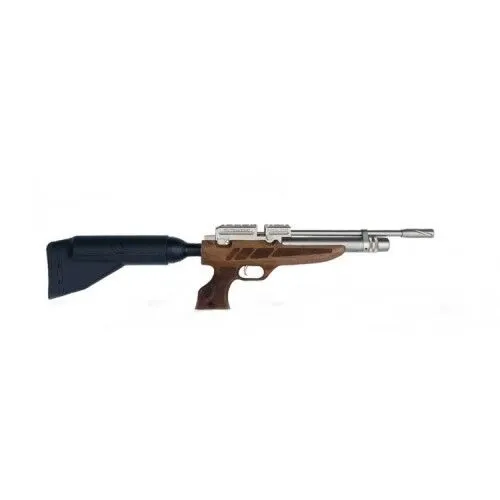
The Kral NP-02 Marine has been designed to combine compact dimensions, distinctive styling, and established pre-charged pneumatic engineering. Manufactured by Kral Arms, this model is distinguished by its marine-finished metal components, traditional stock styling, and carefully arranged air system. Furthermore, its recognizable construction makes it an interesting option within the Kral Puncher family of PCP air rifles.
A balance between traditional craftsmanship and modern pneumatic technology is reflected throughout the design. In particular, the metalwork has been given a distinctive finish, while the ergonomic stock arrangement has been developed to provide a comfortable handling experience. Consequently, the rifle is frequently recognized for its combination of visual appeal and practical construction.
Unlike many conventional full-length designs, a compact overall profile has been incorporated into the NP-02 platform. Additionally, a side-lever mechanism has been fitted, alongside a detachable magazine system and manual safety.
The Kral NP-02 Marine PCP Air Rifle is offered in several market-specific configurations. Therefore, exact specifications, permitted muzzle energy, included accessories, and other details should always be checked against the particular version being supplied.
Key Features of the Kral NP-02 Marine
The following features are associated with the NP-02 Marine platform and its documented configurations.
-
Pre-Charged Pneumatic System: Compressed air is stored within the rifle’s integrated reservoir arrangement.
-
Distinctive Marine Finish: A marine-style finish is applied to selected metal components, giving the model its recognizable appearance.
-
Compact Design: A relatively short overall configuration has been adopted for the NP-02 family.
-
Side-Lever Action: A side-operated cocking mechanism is incorporated into the design.
-
Traditional Stock Styling: Turkish walnut furniture is featured on documented Marine variants, while other NP-02 configurations may use different materials.
-
Detachable Magazine: A removable magazine system is provided, with capacity determined by calibre.
-
Manual Safety: A manually operated safety mechanism is integrated into the rifle.
-
Adjustable Components: Certain trigger and other adjustments are specified by the manufacturer.
-
Optics Mounting Provision: A mounting interface is described in manufacturer literature, although fittings may differ between production years.
-
Established Manufacturer: The rifle is produced by Kral Arms, a Turkish manufacturer with an extensive airgun catalogue.
These features have been documented across manufacturer literature and retailer listings. However, production variations should be verified before specifications are published for a particular unit.
Marine Finish and Exterior Construction
A Distinctive Combination of Metalwork and Traditional Styling
One of the most recognizable characteristics of the Kral NP-02 Marine is its exterior presentation. A marine-style metallic finish has been incorporated into the design, providing a contrasting appearance when paired with the stock.
In addition, carefully shaped furniture is featured on traditional versions of the model. The combination of finished metal surfaces and wood contributes to an appearance that distinguishes the Marine variant from standard black-finished configurations.
A polished appearance is not the only consideration, however. The quality of exterior finishing, the alignment of assembled components, and the condition of the stock should also be examined when evaluating an individual rifle.
Although the Marine designation refers to a particular finish, complete waterproofing or universal saltwater resistance should not be assumed. Instead, appropriate cleaning, drying, and storage practices should continue to be observed.
Compact Dimensions and Balanced Construction
Compact proportions are central to the design philosophy of the NP-02 family. Through the arrangement of its pneumatic components, a shorter overall format is achieved than that of many traditional sporting air rifles.
Furthermore, the stock and action are positioned to create a recognizable silhouette. The rear-mounted air bottle arrangement featured on several NP-02 configurations also contributes to the model’s distinctive appearance.
Handling characteristics will nevertheless depend on the installed accessories, stock configuration, and individual user’s physical requirements.
Pre-Charged Pneumatic Technology
An Established Compressed-Air Operating System
A pre-charged pneumatic operating principle is used by the Kral NP-02 Marine. Within this system, compressed air is retained in an appropriate pressure-rated reservoir and subsequently used to operate the rifle.
Unlike spring-powered air rifles, a conventional spring-piston powerplant is not required. Consequently, a different internal mechanical arrangement is provided.
A maximum filling pressure of 200 bar is described in manufacturer documentation. However, published reservoir capacities and configurations are not entirely consistent across different NP-02 Marine references. Therefore, the markings and manufacturer’s instructions for the exact version should be treated as authoritative.
The air system should be inspected and maintained only in accordance with the manufacturer’s instructions. Furthermore, damaged pressure vessels, incompatible filling equipment, and unauthorized modifications should be avoided.
Magazine System and Mechanical Features
A detachable magazine system has been included in the NP-02 Marine design. Capacity varies by calibre, and different regional configurations may be supplied.
The side-lever mechanism is positioned as part of the rifle’s characteristic layout. Additionally, an adjustable trigger assembly has been described in Kral Arms documentation.
For user safety, any mechanical adjustments should be performed only within the manufacturer’s stated limits and by appropriately qualified personnel where required.
A manual safety is also provided. Nevertheless, the safety mechanism should never be treated as a substitute for proper handling, secure storage, or established airgun safety procedures.
Stock Design, Ergonomics and Handling
Traditional Materials and Considered Proportions
Traditional styling has been preserved through the use of wood furniture on documented Marine configurations. A shaped grip area and corresponding stock surfaces are provided to support handling.
The natural variation of wood grain may also distinguish one example from another. Accordingly, minor differences in colour and grain pattern can be expected when natural timber components are used.
The exterior finish and stock should be protected from unnecessary exposure to moisture, extreme temperatures, and abrasive surfaces.
Considerations for Different Users
The suitability of any air rifle is influenced by individual handling requirements, local regulations, and intended sporting activities.
For example, stock dimensions and overall weight should be evaluated before a particular configuration is selected. Moreover, the manual safety and operating controls should be understood before the rifle is handled.
Appropriate instruction and supervision should be provided wherever required. Protective equipment and an approved shooting environment should also be used.
Product Specifications and Important Details
The following information summarizes the general NP-02 Marine platform. Specifications may differ between production years and regional versions.
| Feature |
Description |
| Manufacturer |
Kral Arms |
| Model |
Puncher NP-02 Marine |
| Operating system |
Pre-Charged Pneumatic (PCP) |
| Action |
Side-lever |
| Exterior finish |
Marine-style metallic finish |
| Stock |
Turkish walnut on documented versions |
| Safety |
Manual |
| Magazine |
Detachable, calibre-dependent capacity |
| Air system |
Manufacturer-specified pressure-rated reservoir |
| Maximum stated fill pressure |
200 bar, subject to exact model verification |
| Optics mounting |
Varies by production configuration |
| Accessories |
Vary according to supplier and package |
Manufacturer documentation and current retailer descriptions differ in some details, particularly concerning reservoir configuration and mounting equipment. These specifications should therefore be confirmed using the exact product’s manual and identification markings.
Quality, Maintenance and Long-Term Ownership
Protecting the Exterior Finish
Appropriate maintenance is essential for preserving the condition of the Kral NP-02 Marine.
After exposure to ordinary handling conditions, exterior surfaces should be inspected for moisture, accumulated dirt, and visible damage. Moreover, cleaning materials should be compatible with the finish and recommended by the manufacturer.
A clean, dry storage environment is particularly important. Prolonged exposure to damp conditions may affect metallic and wooden components, regardless of their decorative treatment.
Responsible Storage and Inspection
Before storage, the rifle should be placed in the condition specified by its manufacturer. Access should also be restricted through suitable secure storage arrangements.
Periodic inspections may be required to identify deterioration, damaged seals, or other maintenance concerns. Any suspected pressure-system problem should be referred to a qualified airgun technician.
Additionally, relevant laws concerning possession, transportation, use, and servicing must be followed in the applicable jurisdiction.
Understanding the Kral NP-02 Marine Within the Puncher Range
The NP-02 Marine occupies a recognizable position within the wider Kral Puncher range. Its compact layout and distinctive marine-style exterior separate it visually from many more conventional sporting configurations.
Meanwhile, the broader NP-02 family has been produced with several stock and finish options. As a result, differences between walnut, laminated, synthetic, and Marine-labelled versions may be encountered.
The most appropriate comparison should therefore be based on exact factory specifications rather than appearance alone.
For collectors and sporting-airgun enthusiasts, production year, original documentation, finish condition, and supplied equipment may all be relevant considerations.
Kral NP-02 Marine – Conclusion
The Kral NP-02 Marine PCP Air Rifle brings together a distinctive exterior, compact proportions, and established pneumatic construction within the Kral Puncher family.
Its side-lever mechanism, traditional design elements, and recognizable metal finish are among its defining characteristics. Furthermore, the availability of different factory configurations reflects the wider development of the NP-02 series.
For an accurate product listing, the individual rifle’s calibre, air reservoir, stock material, supplied accessories, and applicable legal classification should be confirmed before publication.
Ultimately, the Kral NP-02 Marine can be described as a distinctive example of Kral Arms’ PCP engineering, combining traditional visual design with modern compressed-air technology.
Gamo Air Rifles, PCP Airguns, Pellet Pistols and Modern Airgun Systems
Choosing the right gamo air rifle depends on how the rifle will be used, the preferred caliber, the powerplant, and the shooter’s experience level. Gamo produces a broad range of recreational, target, and sporting airguns, so buyers searching for a gamo pellet gun, gamo air rifles, or a traditional gamo pellet rifle can compare several operating systems before deciding which configuration best fits their needs.
One of the most familiar designs is the break barrel air rifle. This platform remains popular because it combines straightforward operation with a self-contained powerplant. Shooters comparing high powered air rifles or a high power air rifle should consider much more than headline velocity. Pellet weight, caliber, barrel length, trigger quality, consistency, and shooting conditions all affect practical performance.
Models chambered as a gamo 177 configuration are frequently selected for target shooting and recreational use because .177 pellets generally offer a flatter trajectory than heavier calibers. Likewise, a gamo break barrel rifle provides the simplicity many shooters want without the need for a separate compressed-air charging system.
Break-Barrel Rifles and Pistols
People researching the best air rifles frequently encounter spring-powered and gas-piston break-barrel platforms. Search terms such as brake barrel bb gun are also common, although pellet rifles and BB guns are technically different categories and may use different ammunition and barrel designs.
Compact airguns include the break barrel pellet pistol, break barrel air pistol, and break barrel pistol. Larger-caliber searches may include a 22 caliber break barrel air pistol, while buyers may also look for a break action pellet pistol, the best break barrel pellet pistol, or a 22 pellet pistol for recreational shooting.
Power-oriented shoppers sometimes search for the most powerful break barrel pellet gun. However, raw velocity should never be the only specification considered. Accuracy, appropriate ammunition, safe handling, and local laws are equally important. A phrase such as bee bee gun pistol may be used informally by shoppers, but users should confirm whether a particular handgun actually fires steel BBs, lead pellets, or another compatible projectile.
Gamo Swarm Multi-Shot Air Rifles
Gamo’s magazine-fed break-barrel systems have helped popularize multi-shot operation in a category that historically required a pellet to be loaded manually after every shot.
The gamo swarm magnum 10x gen3i is closely associated with this concept, while searches for the gamo swarm magnum, gamo swarm maxxim gen 3, and swarm magnum gen3i reflect interest in different Swarm generations and configurations. Another commonly researched model is the gamo swarm magnum pro 10x gen3i.
The broader gamo magnum gen3i category appeals to shooters who want high-energy break-barrel performance together with magazine-fed convenience. Gamo’s multi-shot technology is also frequently found through searches for gamo 10x, multi shot pellet gun, gamo swarm, gamo swarm 10x, and pellet gun with magazine.
A magazine system can make repeated target sessions more convenient because pellets can be prepared before shooting begins. Nevertheless, users should always verify magazine compatibility, pellet length, pellet diameter, and model generation before ordering replacements.
Gamo Arrow PCP Air Rifles
Shooters interested in pre-charged pneumatic technology may encounter the gamo arrow range. The gamo arrow pcp combines a PCP powerplant with a lightweight sporting format, while the full term gamo arrow pcp air rifle is commonly used when comparing it with conventional spring or gas-piston rifles.
Related searches include pcp arrow guns, arrow rifle, pcp arrow gun, arrow rifles, and arrow air rifle. These phrases generally reflect interest in compact PCP-style sporting rifles rather than traditional break-barrel platforms.
Caliber-specific buyers may search for a gamo arrow .22, while the gamo arrow classic may appeal to shooters looking for another Arrow-series configuration.
PCP technology uses stored compressed air rather than relying on a spring or piston being compressed for each shot. This can produce a smooth firing cycle, reduced mechanical movement, and consistent shot-to-shot performance when the rifle is properly filled and maintained.
Understanding PCP Airguns
A pcp air rifle uses a reservoir filled with high-pressure air. PCP stands for precharged pneumatic, and the technology is widely used in modern sporting and precision airguns.
Searches for pcp air rifles, pcp rifle, pcp guns, pcp rifles, and pcp air gun generally refer to this same basic operating principle. Some buyers describe the platform as an air rifle compressed air system, while others search for a pcp pellet rifle or use the reversed phrase rifle pcp.
PCP rifles usually require additional filling equipment such as a suitable hand pump, compressor, or certified high-pressure cylinder. Users should follow the manufacturer’s recommended fill pressure because overfilling a reservoir can be unsafe and may also reduce performance.
Gas-Piston and Lever-Operated Airguns
A common beginner question is what is a gas piston air rifle. Instead of using a traditional coiled steel spring, a gas-piston system compresses gas inside a sealed cylinder. When the trigger is released, the piston moves rapidly and compresses air behind the pellet.
Other mechanical airgun designs include under lever air rifles, the singular underlever air rifle, and the alternative spelling under lever air rifle. In these designs, a separate lever positioned beneath the barrel is used to cock the mechanism.
Shooters may also research a side lever air gun or side lever air rifle, where the cocking lever operates from the side of the receiver. These fixed-barrel layouts can provide a different shooting experience compared with conventional break-barrel systems.
Search terms such as lever action pellet gun, air gun thumb lever, and lever action air rifle can refer to several different mechanisms, so buyers should check the specific manufacturer’s action type rather than assuming every lever-operated airgun works identically.
Gamo Shadow and High-Velocity Searches
Long-running Gamo product lines continue to generate searches including gamo shadow 1000, shadow 1000 gamo, and gamo 1000 shadow. Another associated search phrase is 1000/4.5, which is often used by shoppers researching 4.5 mm or .177-class air rifles.
Velocity-focused buyers may also search for a gamo 1800 fps air rifle. Advertised velocity can vary according to pellet composition and weight, so actual shooting performance may differ when standard lead pellets are used.
Likewise, shoppers researching gamo 1800 fps air rifle price should compare the exact model number, caliber, powerplant, bundled optic, warranty, and regional specification rather than relying solely on a velocity figure.
Other unusual search terms such as shotgun pellet gun may describe an airgun with styling inspired by a shotgun rather than a conventional pellet rifle. Searches for pellet guns that can kill should be approached from a safety perspective: airguns are not toys, and even relatively modest-powered models can cause severe or fatal injuries. Every airgun should therefore be handled with the same disciplined muzzle and trigger control expected of potentially dangerous sporting equipment.
Air Pistols, Pellet Pistols and CO2 Systems
The air pistol category includes many different operating systems, and modern air pistols may use springs, gas pistons, CO2 cartridges, or pre-charged pneumatic reservoirs.
For pellet-firing handguns, common searches include pellet pistols, pellet pistol, pistol pellet gun, pellet handgun, pellet gun pistol, pellet gun pistols, pistol air, and air pellet pistol.
CO2-powered handguns form another major category. A co2 pistol typically uses a disposable carbon-dioxide cartridge to propel BBs or pellets. Buyers may also search for pistol co2, co2 pistols, or the commonly mistyped c02 pistol.
Related searches include co2 air pistols, co2 gun, c02 guns, guns co2, and co 2 gen. Regardless of spelling, the key consideration is ammunition compatibility and the correct cartridge type specified by the manufacturer.
CO2 performance can be affected by ambient temperature because pressure changes as the cartridge becomes warmer or colder. For that reason, shooters should expect some variation in velocity during different environmental conditions.
Target Shooting and 10-Meter Airgun Use
Precision shooting requires appropriate targets and a safe backstop. A 10m rifle is generally associated with structured 10-meter air-rifle shooting, where accuracy, repeatability, shooting position, and trigger control are emphasized.
Recreational shooters may use pellet gun targets, while rifle users commonly search for air rifle targets, targets for air rifle, and airgun targets. The term air gun targets is another broad variation covering both rifle and pistol applications.
Dedicated practice setups can include air rifle shooting targets and airgun shooting targets designed to provide clear aiming points and easy scoring. Depending on the shooting discipline, an air rifle target may use small scoring rings intended for precision practice.
Handgun shooters may choose air pistol targets, whereas a pellet rifle target should be paired with a backstop capable of safely containing the pellets used by the particular rifle.
Airgun Cleaning and Maintenance
Regular airgun maintenance helps preserve reliability, accuracy, and safe function. Although airguns generally require less bore cleaning than many powder-burning firearms, seals, external metalwork, fasteners, magazines, and moving components still need periodic inspection.
A pellet rifle cleaning kit can contain cleaning rods, pull-through systems, suitable patches, and other airgun-safe tools. Likewise, a pellet gun cleaning kit can help remove accumulated debris when cleaning is genuinely required.
Proper air gun maintenance also involves checking stock screws, inspecting seals, keeping optics securely mounted, and following the manufacturer’s lubrication guidance. Excessive oil should be avoided because unsuitable lubricants can damage seals or cause unwanted combustion inside some spring-piston airguns.
For PCP equipment, reservoir condition, fill fittings, O-rings, and pressure gauges should also be inspected periodically. Magazine-fed models should be kept clean so pellets feed smoothly without deformation.
Ultimately, the best choice depends on the intended use. A traditional break-barrel rifle offers simplicity, a Gamo Swarm platform adds multi-shot convenience, and a PCP system provides a smoother firing cycle with an external filling requirement. Comparing caliber, powerplant, ergonomics, ammunition, maintenance demands, and safe target equipment makes it much easier to select an airgun that delivers dependable performance for responsible recreational or target shooting.
Frequently Asked Questions (FAQs)
General Information and Product Features
1. What makes this pre-charged pneumatic air rifle different from conventional models?
A distinctive combination of compact engineering, traditional styling, and modern pneumatic technology is offered through this design. Unlike conventional spring-powered models, compressed air is used to power the operating system, eliminating the need for a traditional spring-piston mechanism.
Furthermore, a side-lever action, detachable magazine, and carefully arranged stock configuration have been incorporated into the platform. These features contribute to its recognizable appearance and mechanical characteristics.
Additionally, the exterior has been given a distinctive metallic finish, while selected configurations feature natural wood furniture. Consequently, traditional visual characteristics are combined with modern construction methods.
2. Is this model suitable for beginners?
Suitability depends on the individual’s experience, physical capabilities, local regulations, and access to appropriate training.
Although the controls may be familiar to experienced sporting-airgun owners, safe operation of a compressed-air system requires an understanding of pressure limitations, mechanical safety mechanisms, and handling procedures.
Therefore, supervised instruction should be completed by inexperienced adult users before independent operation is considered.
Moreover, the manufacturer’s operating manual should be reviewed carefully. Any uncertainty about filling, inspection, or maintenance should be addressed by a qualified professional.
3. What materials are used in its construction?
A combination of metallic components, pressure-rated pneumatic parts, and stock materials is used throughout the construction.
On documented traditional configurations, Turkish walnut furniture is included. However, stock materials and finishing details may vary between production batches and regional offerings.
The action incorporates machined metal components, while the air reservoir is manufactured for use within its specified pressure limits.
Additionally, seals and internal components are incorporated to support the pneumatic operating system.
Exact material specifications should always be confirmed using the relevant manufacturer’s documentation.
4. Does the marine-style exterior provide complete protection against rust?
Complete corrosion protection should not be assumed from the decorative finish alone.
Although selected metal surfaces receive a distinctive finish, continued maintenance is required to protect exposed components against environmental deterioration.
Furthermore, high humidity, prolonged moisture exposure, and unsuitable storage conditions can contribute to corrosion.
After exposure to damp environments, external surfaces should be inspected and maintained according to the manufacturer’s recommendations.
Appropriate storage conditions are particularly important because metallic components and natural wood may be affected differently by changes in humidity.
5. Is the rifle compact enough for convenient storage?
A relatively compact overall layout is incorporated into the design, particularly when compared with many conventional full-length sporting air rifles.
Nevertheless, actual dimensions can differ according to stock configuration and installed accessories.
Before a storage case or cabinet is selected, the complete external dimensions should be checked.
Furthermore, secure storage remains essential regardless of overall size.
A locked storage arrangement that complies with applicable local regulations should be used, and access by unauthorized individuals should be prevented.
Compressed-Air System and Mechanical Operation
6. How does the pre-charged pneumatic system work?
Compressed air is stored inside a designated pressure-rated reservoir. During normal operation, the rifle’s internal mechanism releases a controlled quantity of that air.
Consequently, a spring-piston powerplant is not required.
The operating pressure, reservoir configuration, and permitted service procedures are determined by the manufacturer.
Additionally, only approved filling equipment should be used.
Pressure-system components should never be altered or substituted without appropriate manufacturer authorization.
7. What is the maximum recommended filling pressure?
A maximum filling pressure of 200 bar is specified in documentation for several configurations within this product family.
However, the correct pressure must always be confirmed from the exact rifle’s markings and official manual.
Different production versions may have different reservoir arrangements, and assumptions based on another model should be avoided.
Furthermore, overfilling can create serious safety hazards.
Any damaged, leaking, or incorrectly marked pressure reservoir should be inspected by a qualified airgun specialist before further use.
8. Can the air reservoir be replaced?
Replacement possibilities depend on the manufacturer’s design, availability of approved components, and the condition of the original reservoir.
Pressure-bearing parts should never be replaced with improvised or incompatible alternatives.
Instead, authorized service procedures should be followed.
Moreover, any replacement reservoir must meet the specifications applicable to the particular model.
Where uncertainty exists, inspection and replacement should be entrusted to a qualified professional with experience in compressed-air equipment.
9. Does the rifle include a pressure gauge?
A pressure gauge is described on various configurations within this product family.
Nevertheless, the location, design, and availability of the gauge may differ between versions.
Its presence should therefore be confirmed from the individual product’s official specifications.
A gauge provides information about reservoir pressure, but it should not be considered a substitute for correct filling procedures.
Furthermore, any unusual pressure indication should be investigated before further operation.
10. What type of cocking mechanism is included?
A side-lever cocking system is incorporated into documented configurations.
This mechanism is part of the rifle’s repeating-action design and is associated with the detachable magazine arrangement.
However, the precise operating sequence should be learned directly from the manufacturer’s instructions.
Care should also be taken to understand the manual safety mechanism and other controls before the product is handled.
Any stiffness, unusual resistance, or mechanical malfunction should be assessed by a qualified technician rather than corrected through excessive force.
Performance, Calibres and Accessories
11. Are different calibre versions available?
Different calibre options have been offered within this product family, although availability is influenced by regional legislation and production specifications.
The exact calibre should be confirmed through the manufacturer’s documentation and the markings on the individual product.
Furthermore, magazine capacity and certain components may differ between calibre versions.
Legal classifications can also vary depending on the jurisdiction and the configuration being supplied.
Therefore, compatibility assumptions should not be made solely because two products share similar external styling.
12. Is a telescopic sight included as standard?
A telescopic sight is not necessarily included with every factory or retailer package.
Some configurations may be supplied as standalone products, while others may be offered with additional equipment.
Consequently, the package contents should be checked before purchase.
Where an optical accessory is included, its manufacturer, model, condition, and warranty coverage should be identified.
Furthermore, the mounting interface must be verified to ensure that any additional equipment is compatible with the specific version.
13. Can accessories from other models be used?
Compatibility depends on the dimensions, mounting interfaces, factory specifications, and intended application of each accessory.
Although certain components may appear interchangeable, external similarity does not guarantee mechanical compatibility.
For this reason, original manufacturer-approved accessories are generally preferable.
Moreover, pressure-system components and safety-critical mechanical parts should never be substituted without professional verification.
Before an accessory is acquired, the individual product’s identification details should be checked against the supplier’s compatibility information.
14. Does the product produce noticeable mechanical noise?
Mechanical noise is influenced by several factors, including the design of the pneumatic system, internal components, and surrounding environment.
Unlike spring-piston designs, a traditional mainspring mechanism is not incorporated into this operating system.
However, audible sound is still produced during operation.
Consequently, a completely silent experience should never be expected.
Sound levels may also differ between factory configurations and regulatory markets.
Appropriate hearing protection should be considered wherever recommended, and all activities should be conducted only in suitable, authorized environments.
15. Is the trigger adjustable?
Adjustable trigger features have been described in manufacturer documentation for this product family.
However, the available adjustments and permitted servicing procedures may differ between production versions.
Any adjustment should remain within the specifications provided by the manufacturer.
Furthermore, unauthorized changes to safety-critical components should be avoided.
Where professional adjustment or maintenance is required, an appropriately qualified technician should be consulted.
Maintenance, Cleaning and Storage
16. How frequently should the rifle be maintained?
Maintenance intervals depend on usage conditions, storage environment, manufacturer recommendations, and the condition of the individual product.
Routine visual inspections are recommended to identify moisture, damaged exterior surfaces, loose components, or other visible problems.
Additionally, periodic servicing may be required for seals and pneumatic components.
However, the precise service schedule should be determined from the official operating manual.
A maintenance record may also be useful for tracking inspections, authorized repairs, and replacement components.
17. Can ordinary household cleaning products be used?
Ordinary household chemicals should not automatically be considered suitable for finished metal, wooden furniture, or pneumatic components.
Certain cleaning agents may damage coatings, remove protective treatments, or affect sensitive materials.
Therefore, only products recommended for the relevant surfaces should be considered.
Furthermore, abrasive cleaning methods should be avoided unless specifically approved by the manufacturer.
Natural wood may require different care from metallic surfaces.
When product compatibility is uncertain, guidance should be requested from the manufacturer or an authorized service provider.
18. How should the rifle be stored when not in use?
A secure, dry, and appropriately ventilated storage environment should be selected.
Access should be restricted to authorized individuals, and all applicable storage regulations should be followed.
Furthermore, the manufacturer’s instructions concerning the condition of the pneumatic reservoir during storage should be observed.
Protection against excessive humidity, direct heat, and accidental physical damage is also important.
If a protective case is used, its internal materials should be clean and dry.
Regular inspections may help identify deterioration before more extensive maintenance becomes necessary.
19. What should be done if an air leak is suspected?
Any suspected air leak should be treated as a potential pressure-system safety concern.
The product should not be used until the problem has been properly assessed.
Furthermore, attempts to dismantle pressurized components without suitable training and approved equipment should be avoided.
Damaged seals, connectors, or reservoirs may require inspection or replacement by a qualified technician.
For safe servicing, the manufacturer’s official procedures must be followed.
Unauthorized repairs may also affect warranty coverage and product safety.
20. Can replacement parts be obtained?
Replacement-part availability depends on production year, regional distribution, and manufacturer support.
Common service components may be obtainable through authorized dealers, although availability cannot be guaranteed for every version.
Before parts are ordered, the exact model designation and relevant identification information should be confirmed.
Furthermore, genuine, manufacturer-approved components should be prioritized, particularly for pressure-bearing and safety-critical assemblies.
Authorized service centers may also be able to advise on compatibility, inspection requirements, and supported repair options.
Ownership, Legal Requirements and Warranty
21. Is this product legal in every country?
Legal requirements differ substantially between countries and sometimes between regions within the same country.
Classification may be influenced by calibre, muzzle energy, licensing provisions, age restrictions, and other regulatory conditions.
Consequently, ownership or use that is permitted in one jurisdiction may be restricted elsewhere.
Before acquisition, the applicable legislation should be reviewed through an official government or regulatory source.
Importation, transportation, storage, and authorized sporting use may also be subject to separate legal requirements.
22. Does the product come with a manufacturer’s warranty?
Warranty coverage depends on the manufacturer, distributor, retailer, and country of purchase.
Some products may receive limited manufacturer-backed coverage, while additional retailer policies may apply.
However, the precise warranty duration and conditions should never be assumed.
Before a purchase decision is made, the written warranty terms should be reviewed.
Coverage exclusions may apply to unauthorized modifications, misuse, improper maintenance, accidental damage, or repairs completed outside approved service channels.
23. What should be inspected when receiving the product?
An external condition inspection should be performed before the product is accepted for use.
The finish, stock, supplied documentation, packaging, and included accessories should be checked against the product listing.
Additionally, visible damage or evidence of mishandling during transportation should be documented.
Any concerns about the reservoir, controls, or mechanical condition should be referred to an authorized professional.
The manufacturer’s identification markings should also correspond to the supplied documentation.
24. Is professional servicing recommended?
Professional servicing is particularly important whenever safety-critical or pressure-bearing components require attention.
Although routine external care may be described in the operating manual, more extensive internal maintenance may require specialist knowledge.
Furthermore, certified equipment and manufacturer-approved replacement components may be necessary.
Authorized servicing can help ensure that the equipment remains consistent with its intended design.
Service documentation should be retained where available, especially when warranty eligibility or future maintenance history may be relevant.
25. What should be considered before choosing this model?
Several important factors should be evaluated, including legal eligibility, physical suitability, documented specifications, service availability, and the condition of the product.
Additionally, any included accessories should be identified accurately, rather than assumed to be part of the standard package.
A clear understanding of the warranty, maintenance obligations, and local ownership requirements is equally important.
Finally, the individual product’s documentation should be reviewed to verify its original configuration.
An informed decision is best supported by accurate manufacturer information, appropriate professional guidance, and responsible ownership practices.

Reviews
There are no reviews yet.