MOD 135QE Carnivore Big Bore Vortex
The MOD 135QE Carnivore Big Bore Vortex is designed as a powerful break-barrel air rifle platform that combines a large-calibre configuration with modern gas-piston technology. Rather than relying on a conventional coiled spring, the rifle is powered by a Vortex gas-piston system, through which a smoother firing cycle and consistent operation are intended to be provided.
Throughout its design, durability, controllability, and practical handling have been emphasized. In addition, a QuietEnergy barrel system is incorporated so that muzzle noise can be moderated during appropriate sporting or recreational use. Because substantial energy may be produced by big-bore air rifles, responsible handling, secure storage, suitable backstops, and compliance with local legislation should always be prioritized.
MOD 135QE Carnivore Big Bore Vortex Design
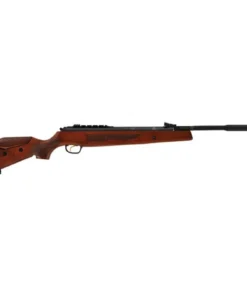
A substantial platform has been created around the MOD 135QE Carnivore Big Bore Vortex. Consequently, the rifle is generally associated with users who prefer a full-sized air rifle rather than a lightweight compact platform.
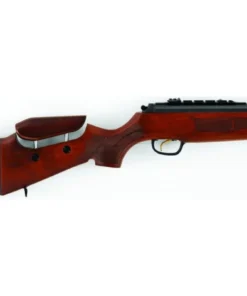
The stock has been shaped to provide a stable shoulder position, while grip surfaces have been incorporated to support controlled handling. Furthermore, the overall configuration has been designed so that the rifle can be supported consistently during deliberate shooting.
Instead of decorative complexity being prioritized, functional construction has largely been emphasized. Therefore, the rifle is suited to shooters who value straightforward mechanical operation.
Vortex Gas-Piston Power System
One of the principal characteristics of the MOD 135QE Carnivore Big Bore Vortex is its Vortex gas-piston mechanism.
With a traditional spring-powered rifle, energy is stored inside a compressed metal spring. By contrast, compressed gas is used within the Vortex system. As a result, several characteristics commonly associated with spring vibration can be reduced.
Furthermore, the gas-piston system is designed so that operating consistency can be maintained without the same spring fatigue characteristics associated with conventional coil springs.
A firm cocking stroke should nevertheless be expected because considerable energy is being stored. Therefore, correct technique should be used whenever the action is prepared for firing.
QuietEnergy Barrel Technology
Noise management has also been incorporated into the design.
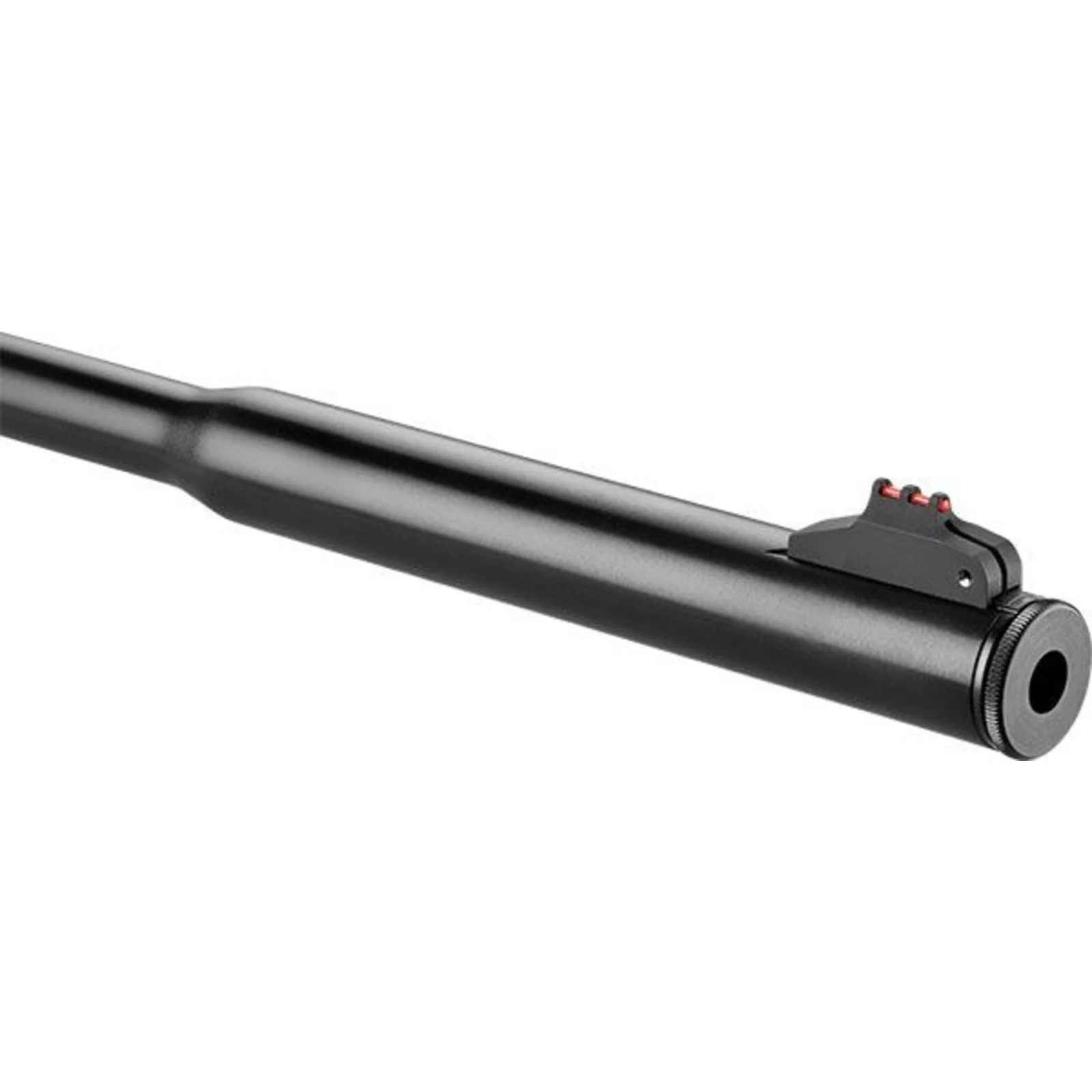
A QuietEnergy system is integrated around the barrel assembly, through which muzzle report can be reduced compared with an equivalent unmoderated configuration. However, the rifle should never be regarded as silent.
Additionally, mechanical sound and projectile impact remain present during operation. Suitable hearing protection should therefore be considered whenever circumstances require it.
Rifled Barrel Construction
A rifled barrel is used so that rotational stability can be imparted to the projectile as it travels down the bore. Consequently, repeatable projectile placement can be supported when appropriate ammunition, technique, and shooting conditions are combined.
Accuracy should not be judged exclusively by velocity. Instead, projectile compatibility, shooter technique, trigger control, environmental conditions, and sight configuration should all be considered.
Key MOD 135QE Carnivore Big Bore Vortex Features
Important characteristics commonly associated with this platform include:
- Big-bore air-rifle configuration
- Vortex gas-piston operating system
- Break-barrel action
- QuietEnergy barrel technology
- Rifled barrel construction
- Full-sized stock configuration
- Manual cocking operation
- Adjustable sighting provisions depending on configuration
- Optics mounting capability depending on model specification
- Textured gripping surfaces for controlled handling
- Mechanical safety provisions
- Robust construction intended for long-term sporting use
Specifications can vary by calibre, production run, country, and distributor. Therefore, the manufacturer’s documentation should be checked before technical figures are relied upon.
Handling and Ergonomics
Because the MOD 135QE Carnivore Big Bore Vortex is constructed as a substantial air rifle, its handling characteristics differ from those of lightweight plinking rifles.
A stable shooting position is encouraged by the rifle’s dimensions and stock geometry. Meanwhile, deliberate rather than hurried operation is generally favored by the break-barrel loading system.
Before every use, the bore should be confirmed as unobstructed, the correct projectile should be selected, and the surrounding area should be checked carefully.
Trigger and Shooting Control
Trigger control plays an important role in practical accuracy.
Rather than the trigger being pulled abruptly, steady rearward pressure should be applied while a consistent sight picture is maintained. Additionally, the rifle should be supported consistently from shot to shot.
Because powerful piston air rifles can react differently from PCP platforms, excessive gripping force may negatively affect consistency. Therefore, familiarity should be developed gradually in a controlled environment.
Sight and Optics Compatibility
Depending upon the exact MOD 135QE configuration, provisions may be supplied for mechanical sights, optical sights, or both.
Where an optical sight is legally and appropriately fitted, equipment rated for powerful piston air rifles should be selected. Significant bidirectional recoil forces can be generated by piston-powered systems; consequently, unsuitable optics may lose zero or become damaged.
Furthermore, mounting hardware should be checked regularly so that loosening can be detected before accuracy is affected.
Build Quality and Maintenance
Routine care can significantly influence the service life of any air rifle.
After use, exterior metal surfaces should be kept dry and clean. Moreover, abrasive contaminants should be prevented from accumulating around moving components.
Excess lubrication should be avoided unless it is specifically recommended by the manufacturer. In particular, unsuitable oils should not be introduced into high-pressure components.
Whenever internal maintenance is required, work should be completed by a qualified technician familiar with the platform.
Storage Considerations
Secure storage is essential.
The MOD 135QE Carnivore Big Bore Vortex should be stored unloaded and inaccessible to unauthorized individuals. Projectiles should also be stored separately where required by local regulations or responsible-storage practices.
In addition, prolonged exposure to moisture should be prevented. A dry, secure storage environment should therefore be maintained to protect both metal and stock components.
Responsible Use of the MOD 135QE Carnivore Big Bore Vortex
The power associated with big-bore air rifles means they should always be treated with the same seriousness given to other potentially lethal projectile-launching equipment.
A safe direction should always be maintained. Likewise, a proper backstop should be used, and the area beyond the intended target should be understood before a shot is taken.
Local laws can differ substantially regarding permitted calibre, muzzle energy, licensing, ownership, transportation, hunting, and land-use requirements. Consequently, regulations applicable to the user’s jurisdiction should be verified before the rifle is possessed or used.
Protective eyewear should also be considered standard equipment.
Who Is the MOD 135QE Carnivore Big Bore Vortex Designed For?
From a technical perspective, this platform is oriented toward experienced adult air-rifle users who understand the additional responsibility associated with powerful break-barrel equipment.
It should not be treated as a toy or casual backyard shooting device. Instead, controlled sporting environments and suitably prepared ranges provide more appropriate conditions for familiarization.
For new shooters, professional instruction can be valuable because safe loading, cocking, handling, sight alignment, trigger control, and storage procedures can all be demonstrated correctly.
MOD 135QE Carnivore Big Bore Vortex Overview
Overall, the MOD 135QE Carnivore Big Bore Vortex combines traditional break-barrel operation with a modern gas-piston powerplant and a large-calibre air-rifle platform.
Its Vortex operating system has been incorporated to provide gas-piston performance, while QuietEnergy technology has been integrated to moderate muzzle noise. Additionally, a substantial stock and barrel arrangement has been provided to support deliberate handling.
Most importantly, the rifle’s capabilities require responsible ownership. Safe handling procedures, appropriate protective equipment, secure storage, suitable shooting locations, and compliance with all applicable laws should therefore remain central to its use.
For readers researching the MOD 135QE Carnivore Big Bore Vortex, its defining characteristics can be summarized as a powerful gas-piston break-barrel architecture, big-bore configuration, integrated sound-moderating barrel technology, and robust construction intended for experienced sporting-airgun users.
BinTac, AEA, Hatsan and High-Performance Airgun Selection
Explore a broad selection of modern airguns and specialist platforms covering bintac aea harpoon, bintac t9 full auto, bintac mcar 457, aea terminator, anti air tanks, bintac t9 price, bee bee gun rifle, zeus 72 cal air rifle price, air tank for pcp airguns, aea harpoon air gun, airgun shotgun, automatic air gun, air powered 50 cal rifle, and aea megalodon for sale. These search terms reflect growing interest in powerful PCP systems, semi-automatic designs, full-auto platforms, big-bore configurations, compressed-air equipment, and specialized sporting airgun technology.
The Hatsan range is also widely searched by enthusiasts looking for models such as hatsan blitz, hatsan air rifle, hatsan sortie, air rifle, hatsan model 95, hatsanusa, hatsan usa, hatsan harpoon, hatsan hercules, hatsan piledriver, hatsan sortie tact semi-auto pcp, hatsan sortie accessories, hatsan 135, hatsan bullboss, hatsan refurbished, hatsan hercules bully, hatsan airtact air rifle, hatsan flash, hatsan invader, hatsan flashpup qe, hatsan neutron star, hatsan zada, and hatsan 135 carnivore. Buyers comparing air rifles may also encounter searches for hatsun blitz, hatsan mod 95, hatsan sortie tact, airguns, hatsan 125, hatsan blitz full automatic, and hatsan pcp.
Accessories, optics, pellets, and compact platforms are represented through searches such as 4×20, hatsan velox, hatsan jet 2, mod 95, econ ii, h&n field target trophy bleifrei, hatsan blitz 30 cal, hatsan air guns, hatsan airtact, hatsan factor rc, hatsan 135 vortex air rifle, hatsan big bore carnivore rifle, hatzan blitz, bullmaster, range of air rifle, 30 cal air rifle, and .177 caliber. Additional enthusiast searches include hatsan blitz .30 cal, pallet gun, arrow launcher, refurbished air rifles, air rifle range, blitz guns, jet ii, blitz 777, air pellet gun, crow magnum, hatsan jet 2 accessories, invader auto, and semi auto pellet gun.
Customers researching long-range or performance-oriented configurations may also search for sniper long, hatsan aftermarket parts, 1000x.25, hatsan mod 65, co2 pellet rifle, air gun, hatsan blitz bullpup, and h&n field target trophy. Together, these terms cover PCP rifles, spring-powered designs, CO2 platforms, pellet ammunition, replacement components, bullpup layouts, large-caliber systems, compact pistols, semi-automatic actions, and full-automatic airgun configurations.
For BinTac and AEA-specific searches, popular terms include bintac t9, bintac, bintac llc, bin tac, bintacllc, aea airguns, bintac t 50, bintac m50, aea harpoon, bintac mcar, bintac t50, aea megalodon, bintac s45, aea harpoon for sale, aea harpoon price, bintac m50 for sale, and bintac mcar air rifle. These phrases help shoppers compare different BinTac and AEA platforms while researching specifications, availability, pricing, configurations, and compatible airgun equipment.
Practical Use Scenarios
A powerful break-barrel air rifle can serve several legitimate sporting and recreational purposes when it is handled responsibly, operated within local laws, and used in an environment that provides an appropriate backstop. Because this type of rifle delivers considerably more energy than a lightweight plinking model, practical use should always be approached with preparation rather than spontaneity.
Its substantial construction, gas-piston operating system, moderated barrel design, and full-sized stock make it especially suitable for deliberate shooting sessions where stability, consistency, and controlled handling matter. However, its weight, cocking effort, and firing behavior mean that it is generally better suited to experienced adult shooters than to complete beginners.
Structured Range Practice
One of the most appropriate environments for using this rifle is a properly established shooting range.
At a controlled range, the shooter can concentrate on technique without the uncertainty associated with unsuitable surroundings. Backstops, clearly marked firing points, target frames, and range rules help create a predictable environment in which the rifle can be handled responsibly.
During range sessions, shooters can work on maintaining a consistent stance, improving trigger control, refining sight alignment, and learning how the rifle responds during the firing cycle.
Because gas-piston break-barrel rifles can react differently from pre-charged pneumatic platforms, consistency in technique becomes especially important. The rifle should therefore be held in the same manner from shot to shot so that unnecessary movement is minimized.
Longer practice sessions can also help the shooter determine which supporting position feels most natural. Some people may prefer shooting from a bench, while others may practice from standing, kneeling, or seated positions where permitted.
Instead of chasing maximum velocity, attention can be placed on repeatable accuracy. Group size, shot placement, comfort, and consistency provide more useful information about practical performance than raw power figures alone.
Benchrest Accuracy Testing
Benchrest shooting provides another useful scenario because it allows the rifle’s mechanical performance to be assessed with fewer variables.
When the rifle is supported correctly, the shooter can evaluate projectile compatibility, sight zero, trigger behavior, and general consistency. A stable bench also makes it easier to determine whether a change in point of impact has been caused by the rifle, the ammunition, or the shooter.
Different pellet or slug designs may perform differently depending on calibre and barrel characteristics. Consequently, carefully controlled testing can help identify the combination that delivers the most repeatable results.
A proper backstop should always be used because powerful air-rifle projectiles can retain significant energy beyond the target.
The shooter should also avoid resting the barrel directly on a hard surface. Instead, support should generally be provided in a way that allows the rifle to react naturally during firing.
Regular bench testing can be particularly useful after an optic has been mounted, after transport, or after the rifle has been stored for an extended period.
Outdoor Target Shooting
Outdoor target shooting can provide a more realistic assessment of the rifle because wind, temperature, lighting, and distance all influence practical accuracy.
In calm indoor conditions, projectile flight is relatively predictable. Outdoors, however, environmental variables become part of the shooting experience.
Wind can shift the point of impact, particularly at longer ranges. Therefore, outdoor practice can help shooters develop a better understanding of how conditions affect shot placement.
Rather than extending range immediately, users can begin at a comfortable distance and gradually increase it after consistent accuracy has been established.
Reactive targets should only be used when they are specifically designed for air-rifle use and positioned safely. Hard surfaces, rocks, water, and unsuitable metal objects should never be used as informal targets because ricochets may occur.
Paper targets remain one of the safest and most useful options for evaluating accuracy, provided that an appropriate backstop is positioned behind them.
Zeroing an Optical Sight
Where an optic is fitted, zeroing becomes an important practical task.
The process allows the point of aim to be matched with the projectile’s point of impact at a selected distance. Because the rifle produces a strong firing impulse, an optic and mounting system designed for powerful piston air rifles should be used.
Zeroing should be completed from a stable position.
Initially, several shots can be fired to establish a group before adjustments are made. This approach is generally more reliable than making corrections after every individual shot.
Once a consistent group has been formed, elevation and windage adjustments can be made gradually.
After zero has been confirmed, mounting screws should be checked periodically because vibration can loosen hardware over time.
A properly zeroed sight does not eliminate the need for careful shooting technique. Instead, it provides a dependable reference point from which the shooter can evaluate changes caused by distance and environmental conditions.
Recreational Plinking in Controlled Areas
Recreational target shooting can be enjoyable when it is conducted in a secure and appropriate area.
However, a high-powered air rifle should not be treated like a low-energy backyard plinker. The shooting location must be large enough to contain projectiles safely, and the shooter must understand what lies behind and beyond the target.
Where local law permits recreational shooting on private property, a purpose-built pellet trap or reinforced earthen backstop may be required.
Because noise can still be produced despite barrel moderation, the proximity of neighboring properties should also be considered.
Safe target selection remains essential. Paper targets, purpose-built spinners, and rated airgun targets are preferable to improvised objects.
Bottles, stones, and other hard materials should be avoided because fragments and ricochets can create unnecessary risk.
Field Position Training
Practical shooting often involves positions other than the traditional benchrest.
Field-position practice can therefore help users become more comfortable with the rifle’s weight and balance.
Standing shots require greater body control because the rifle must be supported entirely by the shooter. Kneeling and seated positions usually offer greater stability, while prone shooting may provide the most support where terrain and range rules allow it.
Because the rifle is relatively substantial, shooters may find that short, controlled practice sessions are more effective than extended unsupported shooting.
The purpose of this training should not be speed.
Instead, emphasis should be placed on establishing a stable position, maintaining a consistent cheek weld, controlling breathing, and applying smooth trigger pressure.
With practice, the shooter can learn which positions provide the best balance between comfort and stability.
Familiarization With Gas-Piston Behavior
Shooters transitioning from conventional spring-powered rifles may notice differences in the firing cycle.
A gas-piston system generally produces a different recoil sensation and eliminates the movement associated with a traditional coiled spring. Nevertheless, significant mechanical movement may still occur.
Practical familiarization helps the shooter understand how much grip pressure should be applied and how firmly the rifle should be shouldered.
Overly rigid handling can sometimes reduce consistency with powerful piston rifles. Therefore, a repeatable but relaxed hold is usually preferable.
Careful practice also makes it easier to recognize unusual changes in firing behavior.
A sudden difference in sound, cocking resistance, vibration, or accuracy should be investigated before continued use.
Controlled Sporting Applications
In jurisdictions where specific sporting uses are legal, a powerful air rifle may be used within regulated disciplines or approved field environments.
The exact rules can vary significantly between countries and regions. Some locations impose limits on calibre or muzzle energy, while others require licensing or restrict use to registered ranges.
Users should therefore confirm all applicable requirements before transporting or operating the rifle.
For organized sporting activities, range officers and club rules provide additional guidance.
Participation in structured events can also help shooters improve safety habits because loading procedures, firing commands, and ceasefire rules must be followed consistently.
Lawful Pest-Control Contexts
In some regions, suitably powerful air rifles may be permitted for lawful pest management by authorized adults.
Such use should only be considered where the relevant species, location, calibre, power level, and method are legal.
Humane considerations are equally important.
A shooter must have sufficient skill to place shots accurately and should understand the limitations of both the rifle and the selected projectile.
Property boundaries, livestock, buildings, roads, and neighboring land must be considered before any field use occurs.
If there is uncertainty about whether the activity is permitted, local wildlife authorities or relevant regulatory agencies should be consulted before the rifle is used.
Equipment Familiarization Before Field Use
Before any serious sporting or field session, the rifle should be checked carefully.
Fasteners, sights, stock screws, and mounting hardware should be inspected to ensure that nothing has loosened during storage or transportation.
The bore should be checked for obstruction, while the exterior should be inspected for corrosion or damage.
The shooter should also confirm that the correct calibre of projectile is being used.
Protective eyewear should be worn, and hearing protection can be considered depending on the shooting environment.
Familiarization sessions should always be completed before relying on new accessories.
If a scope, mount, sling, or other component has recently been installed, its behavior should first be evaluated in controlled conditions.
Training New Shooters Under Supervision
Although a high-powered break-barrel rifle is generally better suited to experienced users, supervised familiarization may be appropriate for responsible adults who are learning air-rifle handling.
Instruction should begin with safety rather than shooting.
The new user should understand muzzle discipline, trigger discipline, loading procedures, safe directions, backstop selection, and the importance of treating the rifle as loaded until personally confirmed otherwise.
Because cocking effort can be substantial, beginners should not be encouraged to force the action if they cannot control it safely.
A qualified instructor or experienced supervisor can demonstrate the correct method.
Only after these fundamentals have been understood should live firing begin.
Maintenance After Practical Use
Every shooting session should be followed by basic inspection and maintenance.
Exterior surfaces can be wiped down to remove fingerprints, moisture, dust, and debris.
Moving parts should be inspected, but lubrication should only be applied according to manufacturer recommendations.
Excessive oil can create problems in powerful air rifles, so unnecessary application should be avoided.
The optic and mounts should also be checked for movement.
After outdoor use, the rifle should be allowed to dry completely before being placed into long-term storage.
Storage should always take place with the rifle unloaded and secured against unauthorized access.
Practical Ownership Considerations
The most effective use of a powerful gas-piston air rifle comes from understanding its strengths and limitations.
It is not designed primarily for rapid firing. Instead, its break-barrel mechanism encourages a deliberate shooting rhythm in which each shot is manually prepared.
That characteristic can make the rifle particularly suitable for shooters who enjoy methodical target practice and precision-focused recreational shooting.
Its substantial construction also favors users who are comfortable handling a full-sized platform.
Meanwhile, the moderated barrel can make shooting more manageable from a sound perspective, although the rifle remains far from silent.
Most importantly, practical ownership involves more than firing the rifle.
Safe transportation, controlled storage, regular inspection, suitable ammunition, proper backstops, responsible shooting locations, and legal compliance are all essential parts of the experience.
When those considerations are combined with disciplined technique, the rifle can provide a capable platform for lawful range practice, outdoor target shooting, equipment testing, and other regulated sporting applications.
For experienced adult shooters, its most appropriate role is therefore one of deliberate, controlled use. Rather than being treated as a casual recreational device, it is best approached as serious sporting equipment that rewards consistency, preparation, maintenance, and responsible handling.
Calibres, FAC Power and Accessories
The MOD 135QE Carnivore Big Bore Vortex is distinguished primarily by its large-bore configuration and high-output gas-piston architecture. Unlike many conventional break-barrel air rifles that are commonly offered in smaller calibres, the Carnivore version is centered around .30 calibre / 7.62 mm, giving the platform its characteristic big-bore identity. Current specifications for the Carnivore 135 Vortex consistently list the rifle in .30 calibre, rather than presenting it as a multi-calibre platform.
.30 Calibre / 7.62 mm Configuration
The principal calibre associated with this rifle is .30 inch, equivalent to approximately 7.62 mm.
This larger bore allows heavier projectiles to be used than those typically associated with .177, .22, or .25 calibre sporting air rifles. Consequently, projectile behavior, recoil characteristics, trajectory, and overall handling differ noticeably from smaller-calibre break-barrel platforms.
Because the rifle is a single-shot design, each projectile is loaded manually after the barrel has been broken open and the Vortex gas-piston system has been cocked. This deliberate loading sequence makes the rifle particularly suited to controlled target shooting and other lawful sporting applications where shot placement and consistency are prioritized.
Projectile dimensions and weight should always correspond with the manufacturer’s specifications. In addition, only ammunition specifically intended for the correct calibre should be used.
FAC Power and Energy
FAC terminology is commonly encountered in European and UK airgun discussions. Broadly, it refers to higher-powered configurations that exceed the energy limits applicable to non-FAC air rifles in certain jurisdictions.
The unrestricted .30-calibre Carnivore 135 Vortex has been listed at approximately 45 joules, or roughly 33–34 ft-lb, depending on the specification source and ammunition used. Maximum listed velocity is approximately 170 metres per second, or 550 fps, although actual velocity varies according to projectile mass, projectile design, temperature, rifle condition, and other factors.
Understanding Power Figures
Velocity alone should not be interpreted as the complete measure of performance.
A heavier projectile traveling at moderate velocity can retain substantial kinetic energy. Therefore, muzzle energy provides a more useful representation of the output produced by a big-bore configuration.
At the same time, published figures should always be viewed as maximum or reference values rather than guarantees for every rifle and projectile combination. Manufacturers and distributors commonly note that actual velocity can vary significantly depending upon projectile shape and weight.
Furthermore, some markets offer restricted-energy versions to comply with national legislation. For example, certain European distributors list domestically compliant models limited to 17 joules while separately identifying the higher-output FAC specification for reference.
Consequently, owners should always verify the legal classification of the exact rifle supplied in their jurisdiction.
Vortex Gas-Piston Powerplant
Power is generated through the Vortex gas-piston system rather than through a conventional coiled mainspring.
Compressed gas is used to drive the piston during the firing cycle. As a result, spring torque and several vibration characteristics normally associated with traditional spring-powered rifles can be reduced.
Furthermore, the gas-piston arrangement is intended to provide a relatively smooth and repeatable firing cycle.
Nevertheless, considerable cocking effort is associated with this high-output platform. One specification source lists approximately 50 lb of cocking effort, emphasizing that the rifle should be controlled carefully whenever it is prepared for firing.
Optical Sight Accessories
One of the most useful accessory categories for the rifle is an appropriately rated optical sight.
The platform has been listed with both 11 mm dovetail and Weaver/Picatinny-compatible mounting provisions, providing flexibility for suitable scope mounts.
However, not every scope is appropriate for a powerful piston-powered air rifle.
Because piston rifles can produce distinctive bidirectional recoil forces, optics specifically rated for magnum spring or gas-piston air rifles should be prioritized. Likewise, secure mounts and an appropriate recoil stop can help prevent unwanted movement.
Open Sights
An optic is not mandatory.
The rifle is also commonly equipped with adjustable TruGlo-style fibre-optic sights, allowing conventional open-sight shooting. These sights can provide useful visibility in varying lighting conditions and allow the rifle to remain functional without additional optical equipment.
Appropriate Supporting Accessories
Several general accessory categories can complement responsible ownership without altering the rifle’s core operating system.
Useful equipment may include:
- Airgun-rated scope and compatible mounts
- Protective shooting glasses
- Suitable hearing protection where required
- Correct .30-calibre projectiles
- Purpose-built pellet or projectile traps
- Paper targets and rated target holders
- Secure rifle case for lawful transportation
- Lockable storage equipment
- Non-abrasive cleaning cloths
- Manufacturer-approved cleaning equipment
- Range bag for organizing shooting equipment
- Shooting rest for controlled accuracy testing
Accessory compatibility should always be confirmed against the exact production version of the rifle.
QuietEnergy Barrel System
Another integral feature is the QE, or QuietEnergy, barrel system.
The rifle uses a rifled steel barrel approximately 270 mm / 10.6 inches long, together with an integrated sound-moderating arrangement. Distributor specifications state that the QE system is intended to reduce muzzle report compared with an equivalent unmoderated barrel.
Nevertheless, moderated does not mean silent. Mechanical noise, projectile flight, and target impact remain audible.
Therefore, safe shooting-location selection continues to matter.
Stock and Ergonomic Equipment
The Carnivore 135 is also associated with a substantial Turkish walnut stock on commonly listed configurations.
An adjustable cheekpiece helps accommodate different sighting arrangements, while a rubber recoil pad assists with shoulder comfort. The stock is described as ambidextrous by current specification listings, making the rifle usable by both right- and left-handed shooters.
These features become particularly important because the rifle is relatively heavy. Published specifications place overall weight at approximately 4.35–4.4 kg, while overall length is around 1200 mm / 47.2 inches.
Calibre and FAC Considerations
Ultimately, the defining technical combination is straightforward: .30 calibre, Vortex gas-piston power, break-barrel operation, and approximately 45-joule unrestricted performance.
However, power limits and licensing requirements vary substantially between jurisdictions. The term FAC does not carry identical legal consequences everywhere, so applicable local legislation should always be checked before possession, transportation, or use.
When properly configured and legally operated, the rifle combines a substantial big-bore calibre with a robust gas-piston platform, integrated QuietEnergy barrel technology, open-sight capability, and flexible optics mounting options. These characteristics make its calibre, power system, and accessory compatibility central elements of the overall MOD 135QE Carnivore Big Bore Vortex design.
Frequently Asked Questions
What type of air rifle is this model?
This model is a high-powered, single-shot break-barrel air rifle built around a gas-piston operating system. Instead of using a traditional coiled mainspring, compressed gas is used within the powerplant. As a result, the firing cycle can feel different from that of a conventional spring-powered rifle. The platform is designed for experienced adult users who value deliberate shooting, substantial build quality, and large-calibre performance. Because considerable energy can be generated, it should always be treated as serious sporting equipment rather than as a casual backyard plinker.
What calibre is commonly associated with the Carnivore configuration?
The Carnivore version is most commonly associated with .30 calibre, or approximately 7.62 mm. This large-bore configuration distinguishes it from smaller-calibre air rifles such as .177, .22, and .25 models. Larger projectiles are generally heavier and can retain substantial energy, so appropriate targets and reliable backstops are especially important. Only ammunition of the correct calibre and type should be used, and the manufacturer’s recommendations should always be followed.
Is this rifle powered by a traditional metal spring?
No. A Vortex-style gas-piston system is used instead of a conventional coiled spring. Compressed gas stores the energy required for the firing cycle. Consequently, several characteristics associated with spring vibration and spring torque can be reduced. The firing impulse is still substantial, however, and users should expect noticeable movement from a powerful piston-powered platform. Consistent technique remains important for reliable accuracy.
What is the advantage of a gas-piston system?
A gas-piston arrangement can offer several practical benefits. Mechanical spring vibration is reduced, while a smoother firing cycle may be experienced compared with some conventional spring rifles. Additionally, the absence of a coiled mainspring eliminates certain spring-fatigue concerns. Nevertheless, gas-piston technology does not automatically make a rifle easier to shoot accurately. Proper hold, trigger control, sight alignment, and projectile selection still play major roles in overall performance.
What does QE mean?
QE generally refers to a QuietEnergy barrel system. This design incorporates sound-moderating technology around the barrel assembly so that muzzle report can be reduced compared with an equivalent unmoderated configuration. However, the rifle should never be described as completely silent. Mechanical action noise, projectile movement, and target impact remain audible. Local rules concerning moderated airguns may also differ, so owners should confirm relevant regulations before use.
How powerful is this type of air rifle?
Full-power versions are generally positioned in the high-energy category for break-barrel air rifles. Depending on the exact market specification, projectile weight, and ammunition used, output can be significantly greater than that of conventional recreational plinking rifles. Some unrestricted versions have been listed around the mid-40-joule range. Actual performance may vary, and certain markets may receive restricted-energy versions. Published figures should therefore be treated as reference values rather than guaranteed results for every individual rifle.
What does FAC mean when discussing this rifle?
FAC terminology is commonly used in the United Kingdom and some European airgun discussions to describe rifles that exceed specific legal energy thresholds and therefore require additional licensing or authorization. The precise meaning depends on jurisdiction. A rifle considered FAC-rated in one country may be regulated differently elsewhere. Consequently, owners should never assume that a particular legal classification applies internationally. Local firearm or airgun laws should always be checked before possession, transportation, modification, or use.
Is this rifle suitable for beginners?
It is generally better suited to experienced adult shooters. The rifle’s weight, large calibre, substantial cocking effort, and strong firing cycle can make it demanding for a new user. Beginners who intend to learn on a powerful break-barrel platform should receive instruction from an experienced and responsible shooter or qualified range professional. Safe muzzle direction, loading procedures, trigger discipline, backstop awareness, and correct cocking technique should be understood before live firing begins.
Is the rifle single-shot or magazine-fed?
The platform uses a single-shot break-barrel action. The barrel is opened, the powerplant is cocked, and one projectile is inserted before the barrel is returned to the firing position. This operating method promotes a deliberate shooting rhythm rather than rapid follow-up firing. Because each shot must be prepared individually, users often have more opportunity to focus on sight alignment, breathing, and trigger technique.
How difficult is the rifle to cock?
High-powered break-barrel rifles typically require considerably more cocking effort than lightweight recreational models. The exact effort can vary with configuration and condition. The barrel should therefore be controlled throughout the cocking process, and the user should never force the mechanism. If an individual cannot operate the action safely and comfortably, the rifle may not be suitable for that person. Correct body positioning can also help reduce unnecessary strain.
Can a scope be mounted?
Yes, suitable configurations provide mounting provisions for optical sights. However, a scope should be rated specifically for powerful piston-powered air rifles. Gas-piston and spring-powered rifles can produce a distinctive bidirectional recoil impulse that may damage optics designed only for low-recoil platforms. Secure mounts are equally important because repeated firing can cause unsuitable hardware to shift. Mounting screws should therefore be inspected periodically.
Can the rifle be used with open sights?
Yes. Common configurations include fibre-optic-style open sights, allowing the rifle to be used without a telescopic sight. Open sights are useful for familiarization, shorter-distance target work, and users who prefer a simpler sighting arrangement. They can also provide a useful backup if an optic is removed. Proper sight alignment and a consistent cheek position remain essential for accurate shooting.
What type of ammunition should be used?
Only correctly sized .30-calibre projectiles that are suitable for the barrel and power level should be used. Different projectile shapes and weights can produce noticeably different results. Accuracy, velocity, energy, and point of impact may all change when ammunition is changed. Rather than assuming that the heaviest or fastest option will perform best, shooters should focus on consistent grouping and manufacturer compatibility.
Does heavier ammunition always provide better performance?
No. Projectile weight is only one part of the performance equation. Heavier projectiles may retain energy differently, while lighter ones may achieve greater velocity. However, the most important factor for target shooting is usually consistent accuracy. Barrel compatibility, projectile design, fit, and shooting conditions can all influence results. Users should avoid evaluating ammunition solely by advertised velocity.
How accurate can the rifle be?
Practical accuracy depends on several variables. Barrel quality, projectile compatibility, optic setup, trigger control, shooter technique, wind, and distance all influence group size. Powerful piston-powered rifles can also be sensitive to how they are held. Therefore, a consistent grip and support position are important. Bench testing with appropriate targets is one of the safest ways to evaluate repeatability without introducing excessive shooter movement.
Why does hold technique matter with a gas-piston rifle?
The rifle moves during its firing cycle before the projectile fully exits the barrel. Consequently, inconsistent grip pressure can change how the rifle reacts from one shot to another. Excessively rigid handling may not always provide the best results. Instead, many experienced shooters focus on using a repeatable, controlled hold. The exact technique can be developed gradually through structured range practice.
Can the rifle be used for recreational target shooting?
Yes, provided that target shooting is legal in the chosen location and an appropriate backstop is available. A purpose-built range is generally the best environment. Where private-property shooting is permitted, adequate distance, safe target placement, surrounding buildings, neighboring property, roads, and the area beyond the target must all be considered. Hard surfaces and improvised targets should be avoided because ricochets may occur.
Is this model suitable for pest control or hunting?
That depends entirely on local legislation, the species involved, landowner authorization, licensing requirements, and the shooter’s competence. Some jurisdictions allow certain air rifles for specific pest-management or hunting applications, while others prohibit or tightly regulate those activities. Humane considerations are also essential. Anyone considering such use should consult the relevant wildlife and firearms regulations before proceeding.
What safety equipment should be used?
Protective shooting glasses are strongly recommended. Hearing protection may also be appropriate depending on the range environment and local rules. In addition, a reliable backstop, secure target system, and safe storage arrangement are essential pieces of supporting equipment. Safety should be considered part of the shooting system rather than an optional extra.
How should the rifle be stored?
It should be stored unloaded in a secure location that cannot be accessed by unauthorized individuals. Depending on local law, a lockable cabinet, safe, or other approved storage method may be required. Ammunition should be stored appropriately and separately where regulations demand it. Moisture should also be controlled because prolonged exposure can damage metal components and wooden stock surfaces.
How should the exterior be maintained?
After handling, metal surfaces can be wiped with a clean, non-abrasive cloth to remove moisture, dust, and fingerprints. Excessive oil should be avoided. Any lubrication used should be suitable for the specific air-rifle mechanism and applied according to manufacturer instructions. Incorrect lubricants can damage seals or cause undesirable behavior in high-pressure components. Internal servicing should be left to qualified technicians.
Does the barrel need frequent cleaning?
Air-rifle barrels generally do not require the same cleaning routine as powder-burning firearms. Cleaning should be performed only when necessary and with equipment suitable for the bore. Aggressive cleaning techniques can damage the rifling or crown. If accuracy suddenly changes, loose mounts, ammunition differences, stock screws, and shooting technique should also be checked before assuming that the barrel requires cleaning.
Why might accuracy suddenly change?
Several factors can cause a shift in point of impact or group size. Scope mounts may loosen, stock screws may move, different ammunition may have been introduced, environmental conditions may have changed, or shooter technique may be inconsistent. A sudden mechanical change in sound or cocking behavior should also be investigated. If an unusual fault is suspected, firing should stop until the rifle has been checked.
Can ordinary firearm scopes be used?
Not necessarily. Some firearm optics are designed primarily to withstand recoil in one direction. Powerful piston air rifles can generate forces in both directions during the firing cycle. Consequently, an optic specifically rated for spring or gas-piston air rifles is preferable. Compatibility should always be confirmed with the optic manufacturer rather than assumed from appearance or magnification alone.
Is the rifle lightweight?
No. It is generally considered a substantial, full-sized platform. Its weight can improve stability when supported, but unsupported shooting may become tiring during extended sessions. A bench or appropriate shooting rest can therefore be useful for controlled accuracy testing. The rifle’s size should be considered before choosing it for any sporting activity that requires prolonged carrying.
What accessories are useful for responsible ownership?
Practical accessories include protective eyewear, a secure storage solution, an appropriate rifle case, purpose-built targets, a safe projectile trap or backstop, correctly sized ammunition, and manufacturer-approved maintenance equipment. An airgun-rated scope and secure mounts may also be useful where optical sights are preferred. Accessories should improve safe, controlled use rather than interfere with the rifle’s operating system.
Can the power level vary between different versions?
Yes. Air rifles are frequently supplied in different energy configurations depending on national regulations. Therefore, two rifles with the same general model designation may not necessarily produce identical output. Owners should check the documentation supplied with their specific rifle rather than relying exclusively on online specifications. Legal power limits should also be verified within the jurisdiction where the rifle will actually be used.
What should be checked before each shooting session?
Before firing, the rifle should be inspected for obvious damage, loose components, bore obstruction, and sight movement. The correct ammunition should be confirmed, while the shooting area and backstop should be evaluated carefully. Eye protection should be worn, and everyone present should understand when the range is active. If any component appears damaged or the action behaves unusually, the rifle should not be fired until it has been inspected.
What is the most important consideration for long-term ownership?
Responsible handling is more important than any individual specification. Power, calibre, optics, and construction quality only become useful when the rifle is operated safely. Consistent maintenance, lawful transportation, secure storage, correct ammunition, suitable shooting locations, and disciplined technique all contribute to reliable long-term ownership. By treating the rifle as serious sporting equipment and following the manufacturer’s guidance, users can better preserve both its mechanical condition and safe operating characteristics.








Reviews
There are no reviews yet.