Frequently Asked Questions
General Questions About This Regulated PCP
What type of air rifle is being described?
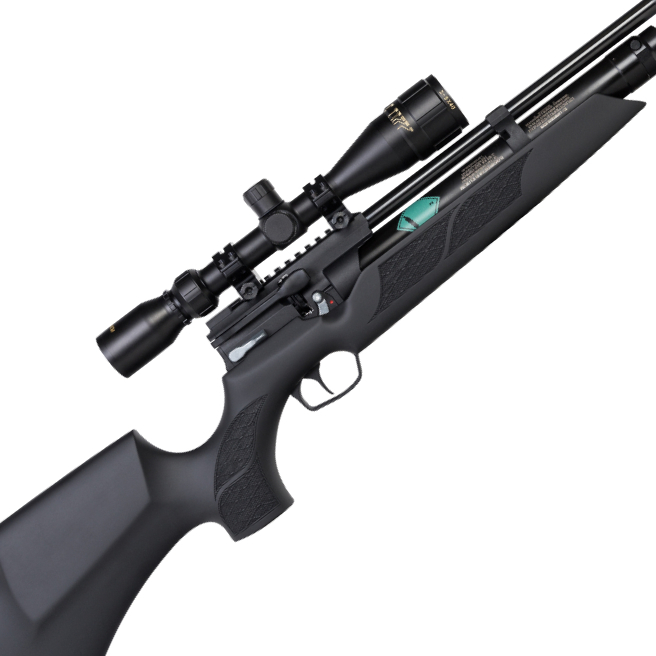
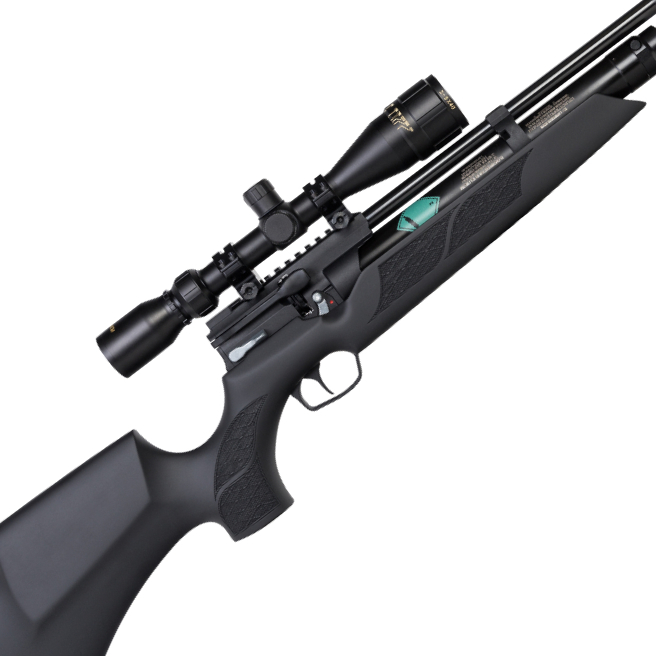
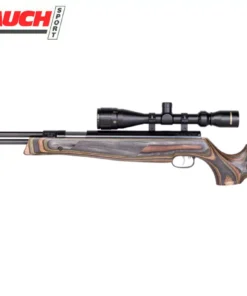
A pre-charged pneumatic, multi-shot sporting rifle is described. Compressed air is stored in a built-in cylinder, and a mechanical regulator is used so that each shot is delivered with even velocity. Side-lever operation is employed, and a rotary magazine is indexed so that repeating can be completed quickly. Vibration-free shot release is provided because a spring piston is not used. Consequently, hold and follow-through are simplified for a wide range of users.
Who is this platform intended for?
Target shooters, pest-control users, and field sports enthusiasts are served. Inclusive handling is supported by an ambidextrous stock, so left-handed and right-handed shooters are accommodated without a separate furniture set being required in most cases. Beginners who are ready for a regulated multi-shot system are welcomed, while experienced marksmen who want German barrel quality and a predictable trigger are equally well served. Therefore, a single design can be shared across households and clubs.
How does this model relate to the maker’s flagship PCP line?
A more accessible, polymer-action sibling of the premium flagship PCP is offered. Similar philosophy—regulation, a match-style trigger, and a precise barrel—is retained, yet a lighter, more modern soft-touch stock and a fixed cylinder layout are used. As a result, a high standard of consistency is delivered at a more approachable specification and price point. Meanwhile, many shooting habits learned on one platform transfer cleanly to the other.
Calibers, Power, and Legal Versions
Which calibers are offered?
.177, .20, and .22 are commonly listed. A flatter trajectory and a high pellet count are typically associated with .177, so paper punching and small pests at modest ranges are favoured. Extra impact energy is usually associated with .22, so hunting use is often preferred where the law allows. A middle path is provided by .20 where that chambering is stocked. Quality diabolo pellets of the matching caliber must be selected; unsuitable projectiles should not be loaded.
Is a legal-limit version available as well as a higher-power version?
Yes. Sub-12 ft-lbs (approximately 16 J) versions are supplied in markets where that ceiling applies. Higher-energy FAC versions are also manufactured where a licence or local rules permit. Velocity and muzzle energy on FAC examples are published at substantially higher figures, depending on caliber and tune. Local law must be checked before purchase, and the correct factory power level should be specified so that compliance is maintained.
How many consistent shots can be expected from one fill?
On typical legal-limit rifles, about 110 regulated shots in .177 and roughly 130–140 shots in .22 are commonly reported from a 200 bar fill. Exact figures are influenced by pellet weight, ambient temperature, fill technique, and regulator condition. On FAC examples, fewer shots at higher energy are usual because more air is used per discharge. A flat power curve is the design goal, so usable consistency is stretched across the string rather than a sharp drop being felt after a handful of shots.
Action, Magazine, and Trigger
How is the rifle cocked and loaded?
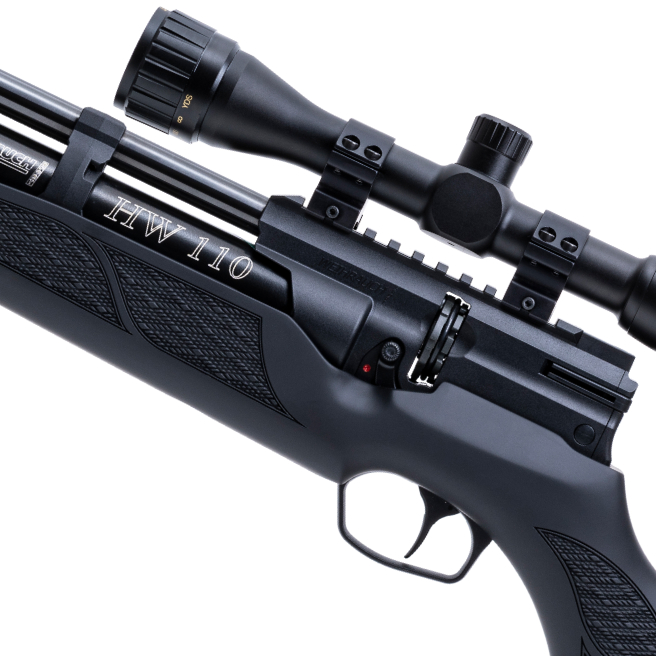
A side-lever is used. After the lever is cycled, the next chamber of the 10-shot rotary magazine is aligned, and the rifle is readied without the butt being dropped from the shoulder. Fast follow-up shots are therefore supported. Two magazines are normally supplied so that a spare can be kept loaded. Smooth, low-effort movement is intended, so fatigue during a long session is reduced.
What kind of trigger is fitted?
A two-stage adjustable match trigger is fitted. First-stage travel can be set to personal preference, after which a clean, defined break is produced. Snatching is discouraged, and group size is improved when the break is learned. A manual safety is provided so that the action can be made safe during carries, waits, and storage. Inclusive use is helped because the controls can be reached by shooters of different hand sizes once a comfortable hold is established.
Is the shot described as recoilless?
A very low-vibration release is produced by the regulated PCP system. Spring-piston jump is absent, so the sight picture is disturbed far less. Consequently, tighter groups are easier to obtain from a rest or from a well-practised standing or kneeling position. Quiet report is further supported when a dedicated moderator is fitted.
Air System, Filling, and Maintenance
What fill pressure is specified?
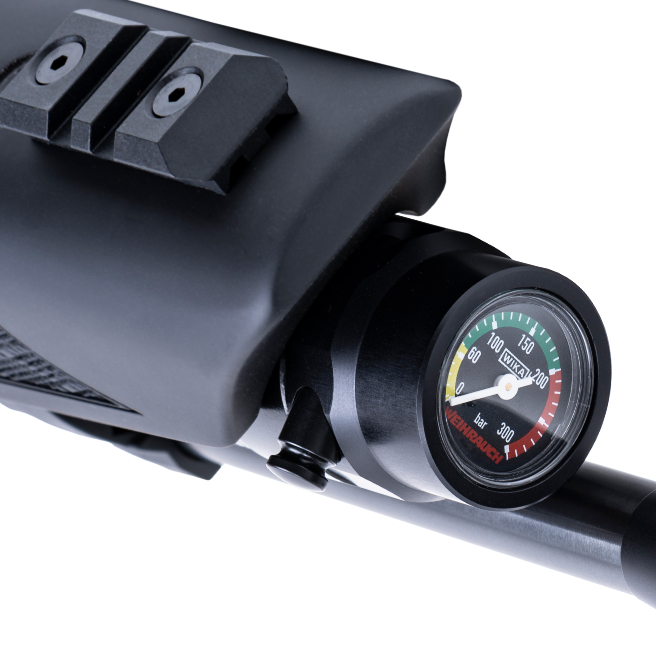
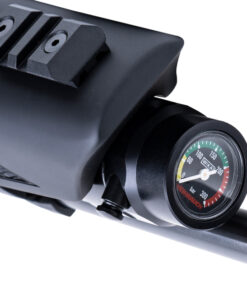
A maximum of 200 bar (approximately 2,900 psi) is specified. Dry, breathing-quality air must be used. Overfilling must be avoided. An integral pressure gauge is mounted so that remaining air can be read at a glance, and a quick-fill probe interface is provided so that charging from a bottle, compressor, or hand pump remains straightforward. A 200 bar regulator must be used if a higher-pressure source is employed.
Can the air cylinder be unscrewed like some other PCP bottles?
No. A built-in cartridge is used. The cylinder is not intended to be removed for filling or swapping in the field. Manufacturer filling and inspection instructions must be followed. Periodic inspection of the pressure vessel is required after a set number of years in many jurisdictions; authorised service should be arranged rather than unofficial work being attempted.
What routine care is recommended?
The rifle should be kept clean and dry. Correct-caliber pellets only should be loaded. The magazine should be treated gently and kept free of grit. After shooting, a light wipe-down is advised, and the rifle should be stored unloaded and secured. Official service intervals for seals, regulator, and cylinder should be observed. Inclusive safety practice is expected from every user: muzzle discipline, eye protection, and safe backstops apply to all skill levels.
Stock, Size, and Optics
Is the stock suitable for both left- and right-handed shooters?
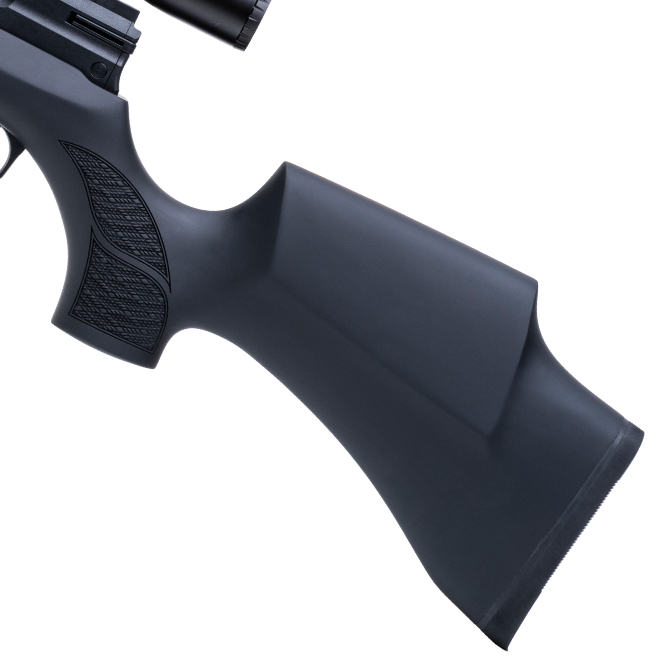
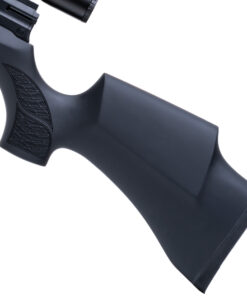
An ambidextrous black soft-touch sporter stock is fitted. Checkering or texture is applied at the grip and forend so that a secure hold is kept in wet or cold weather. A rubber buttpad is used so that shoulder contact remains comfortable. A dedicated left-hand action can still be ordered against extra charge where that option is listed. Inclusive language is matched by inclusive furniture: the same rifle can be shared.
What are the typical size and weight figures?
Unscoped weight is commonly listed around 3.1–3.4 kg for standard-length examples. Overall length is often given near 900–920 mm, with a barrel length of about 410 mm. Carbine variants are shorter and lighter, with a reduced shot count in exchange for easier handling in tight cover. Enough mass is retained for a stable hold, yet the package remains practical for walking and hide work.
How is a scope mounted?
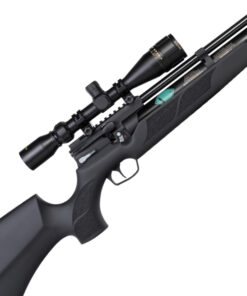
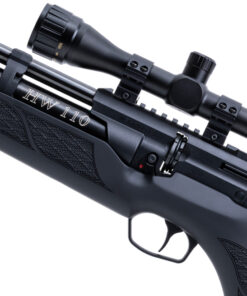
A Weaver / Picatinny rail is provided on the action. Secure rings can be used so that optic shift is minimised. Iron sights are not typically fitted, so a quality scope is recommended. Once zero is established, the regulated action and rigid rail are intended to keep that zero through a hunting season or a competition block.
Is a moderator included or compatible?
A Weihrauch-style moderator is widely fitted or offered. Report is reduced to a subdued note, which is valued on club ranges and for discreet pest control. Thread or bonded arrangements vary by exact variant, so the listing should be checked. Aftermarket silencers of the correct thread can often be used where the muzzle is prepared.
Calibers, FAC Power Levels, and Accessories
A choice of chambering, a choice of power band, and a practical accessory set are offered so that this regulated PCP can be matched to local law, quarry, and shooting style. Inclusive use is supported because the same action philosophy is shared across calibers, while left-handed and right-handed shooters are welcomed by ambidextrous furniture and reachable controls. Consequently, a single platform can be specified for club targets, pest control, or licensed field work.
Available Calibers and How Each Is Typically Used
Three common chamberings are listed: .177 (4.5 mm), .20 (5.0 mm), and .22 (5.5 mm). A flatter trajectory and a high pellet count are usually associated with .177, so paper punching, plinking, and small pests at modest ranges are favoured. Extra impact energy and a slightly more forgiving wind profile on heavier pellets are typically associated with .22, so hunting and longer-range pest work are often preferred where the law allows. A middle path is provided by .20 where that caliber is stocked, combining a useful ballistic curve with respectable energy.
Quality waisted diabolo pellets of the matching caliber must be selected. Steel darts, balls, or damaged ammunition should not be loaded. Because each barrel can show a preference, a short pellet test is recommended after the rifle is received. Inclusive practice includes sharing those results within a household or club so that every shooter benefits from the same data.
Caliber selection at a glance
- .177 is chosen when trajectory and shot count are the priority
- .20 is chosen when a balanced middle ground is wanted
- .22 is chosen when impact energy on suitable quarry is the priority
- Premium diabolo pellets only are specified for accuracy and safety
- Local rules must be checked before a hunting caliber is used in the field
Legal-Limit Power Versus FAC Versions
Two power families are encountered in the marketplace. Sub-12 ft-lbs versions (about 16 J) are supplied in countries where that ceiling applies without a firearms certificate. Higher-energy FAC versions are manufactured for markets and owners who hold the correct authority. Therefore, the listing must be read carefully so that the factory power level matches the buyer’s legal position.
On typical legal-limit rifles, muzzle energy is set near 11–12 ft-lbs. From a 200 bar fill, roughly 110 consistent shots in .177 and about 130–140 shots in .22 are commonly reported, although pellet weight, temperature, and regulator condition affect the exact string. A mechanical regulator is used so that velocity remains even rather than falling away after a few magazines.
FAC examples are published with substantially higher figures. Velocities around 1050 fps in .177, about 968 fps in .20, and about 948 fps in .22 have been listed for some high-power variants, with muzzle energies in the low-to-mid 20s ft-lbs in .177/.20 and around 30 ft-lbs in .22 on certain FAC rifles. Shot count per fill is lower because more air is used per discharge. Inclusive, responsible ownership requires that FAC energy is used only where it is licensed, and that humane ranges and suitable quarry are observed.
Power and fill points to confirm before purchase
- Maximum fill is specified at 200 bar / approximately 2,900 psi
- Dry breathing-quality air must be used; overfilling must be avoided
- Legal-limit versions are intended for unlicensed or low-power markets
- FAC versions require the correct certificate or local equivalent
- Regulator consistency is the design goal in both power bands
Barrel length and overall length can differ between standard and carbine stocks, and some high-power listings quote a longer barrel than the compact legal-limit sporter. Weight remains in a practical band (commonly about 3.1–3.4 kg unscoped on many ST examples), so all-day carry is still realistic. A carbine trades some shot count and barrel length for easier movement in hides and vehicles.
Accessories Included and Accessories Worth Adding
A working starter set is normally supplied with the rifle. Two 10-shot rotary magazines are typically included so that a spare can be kept loaded. A quick-fill probe (often 1/8″ BSPP style) is provided so that charging from a bottle, compressor, or hand pump can begin immediately. An integral manometer is fitted on the cylinder so that remaining pressure can be read without extra gauges. A manual safety and a two-stage adjustable match trigger are part of the rifle itself rather than optional extras.
A Weaver / Picatinny rail is mounted on the action so that a scope can be locked down securely. Iron sights are not usually fitted; therefore a quality optic and matching rings should be budgeted. A Weihrauch-style moderator is widely fitted or offered as a bonded or threaded unit, and quiet report is one of the platform’s practical advantages. Aftermarket silencers of the correct thread can often be used where the muzzle is prepared.
Typical factory supply
- Two 10-shot magazines
- Quick-fill probe
- Integral pressure gauge on the 200 bar cylinder
- Picatinny / Weaver optics rail
- Ambidextrous soft-touch stock and rubber buttpad
- Two-stage adjustable match trigger and manual safety
Recommended additions for a complete setup
- A scope matched to intended range (target, HFT-style, or hunting)
- Quality rings for the Picatinny rail
- A 200 bar charging source (pump, compressor, or bottle with a regulator)
- A tin of proven diabolo pellets in the chosen caliber
- Eye protection and a secure lockable storage solution
- A bipod or sling only if the rail and sling studs on the specific variant allow them
Inclusive accessory choices matter. Rings that fit smaller hands, a scope with generous eye relief, and a sling that shares weight across the body help more shooters enjoy long sessions. Left-hand actions can be ordered against extra charge where listed, while the standard ambidextrous stock already allows many left-shoulder users to shoot comfortably.
Filling accessories must respect the 200 bar limit. A pressure-reducing regulator is required if a 300 bar bottle is used. Official inspection of the built-in cylinder after the maker’s service interval should be arranged; unofficial modifications must not be attempted. When caliber, power band, and accessories are specified together, a quiet, regulated sporting rifle is ready for the range or the permission—provided local law, safe handling, and ethical shot placement are observed by every user.
Performance, Pellets, and Practical Use
What accuracy can reasonably be expected?
Match-grade grouping at 30–50 yards is regularly described when a pellet that suits the individual barrel is selected. Sub-coin groups from a rest are reported by many testers on legal-limit rifles. FAC examples extend useful range when energy and pellet choice are matched to the quarry and the law. Consistency from the regulator is as important as raw group size, because holdover remains predictable from the first shot to the last usable shot on the fill.
Which pellets are recommended?
High-quality waisted diabolo pellets in the correct caliber are recommended. Premium match or field pellets from established makers are typically favoured. Steel darts, balls, or damaged ammunition should not be used. A short pellet test is advised after purchase, because each barrel can show a preference. Inclusive practice includes sharing that test data within a club so that newcomers are not left guessing.
Can this rifle be used for hunting as well as targets?
Yes, where local law, licence, and ethics allow. Quiet operation, a fast side-lever, and a reliable magazine support pest control and small-game use. Legal-limit energy is suitable for appropriate quarry at responsible ranges. FAC energy, where legally held, extends capability. Humane shot placement, range estimation, and a safe backstop remain mandatory. Target and HFT-style use are equally well supported by the trigger and barrel.
What is included in a typical package?
The rifle, two 10-shot magazines, and a fill probe are commonly included. A scope is not usually included. A charging source, rings, pellets, and eye protection must be added. Combination packages from retailers may add a tested optic and mounts; the product page should be read so that expectations are clear.
Safety, Law, and Buying Decisions
What safety features are present?
A manual, resettable safety is fitted. A two-stage trigger reduces accidental discharge when it is set correctly. Safe handling, however, cannot be replaced by a mechanical catch. The rifle must be treated as loaded until it is proven otherwise. Inclusive safety culture means every person on the range or in the field is protected by the same rules.
Are there legal points that should be checked before purchase?
Power level, age limits, storage rules, transport rules, and hunting permissions vary by country and region. FAC versions require the correct authority where they are sold. Cylinder inspection dates and fill-pressure limits must be respected. A retailer who understands local airgun law should be used. Responsible ownership is expected from every buyer.
How should a first-time PCP buyer prepare?
A charging method that can deliver dry air to 200 bar should be arranged. A suitable scope and rings should be chosen. Basic maintenance and fill technique should be learned from the handbook. Club coaching is recommended so that trigger control and range safety are practised with others. Inclusive clubs welcome newcomers; questions about filling and magazines are normal and should be asked.
When is a shorter carbine version preferable?
Tight hides, vehicle work, and smaller-statured shooters often benefit from a carbine. Reduced overall length and weight are gained, while a lower shot count is accepted. Standard-length rifles favour shot count and a slightly longer sight radius. Both layouts share the same regulated action philosophy.
What should be considered if a left-hand action is wanted?
An ambidextrous stock already allows a left-shoulder hold for many users. A true left-hand side-lever and ejection layout can be ordered where the factory lists that option, usually at extra cost and with longer lead time. Inclusive fitting is the goal: the rifle should fit the shooter, not the other way around.
How is long-term reliability supported?
German manufacturing standards, a simple magazine, and a regulated valve system are relied upon. Official parts and authorised service should be used. The pressure vessel must not be modified. With correct air quality and timely inspection, a long service life is expected. Conversion-focused advice is simple: buy the correct power variant, fit a solid optic, and practise with one pellet type until groups settle.
Is this rifle a good step up from a springer?
Yes, for many shooters. Recoil management is no longer the main skill to learn. Instead, fill discipline, magazine handling, and a finer trigger are practised. Shot count per fill rewards a session at the club or a morning on permissions. Transition words in training plans help: first the hold is settled, then the first stage is taken up, then the break is squeezed. Inclusive coaching treats every new PCP owner as capable of that sequence.
What final checks are advised before an order is placed?
Caliber, power level (legal-limit or FAC), stock length (standard or carbine), and included accessories should be confirmed. Local law should be verified. A charging plan should be in place. When those points are settled, a quiet, regulated, ambidextrous sporting PCP is ready to be put to work—on paper, on the club line, or in the field—by shooters who value consistency and responsible use.



Reviews
There are no reviews yet.