Weihrauch HW77 Full Length: Classic Fixed-Barrel Underlever Precision
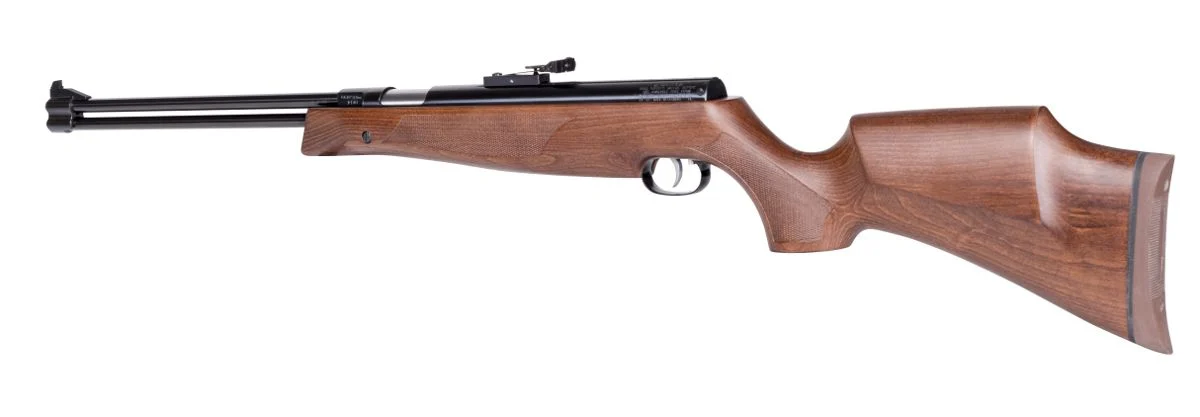
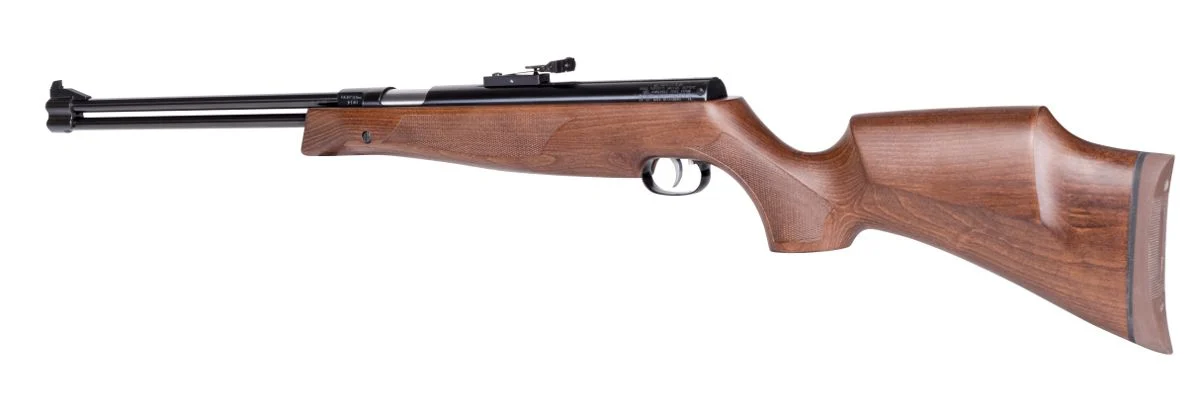
Maximum power, fixed-barrel consistency, and legendary German craftsmanship are combined in the Weihrauch HW77 Full Length. Long-range target work, small-game hunting, and dedicated spring-piston training are supported by this iconic underlever air rifle. Performance without gas cylinders or batteries is delivered, while an ambidextrous hardwood stock, Rekord match trigger, and 470 mm barrel are provided for shooters of every background.
Consequently, the Weihrauch HW77 Full Length continues to be chosen by enthusiasts who value a rigid barrel, repeatable groups, and a lifetime of mechanical reliability.
Why the Weihrauch HW77 Full Length Is Still Chosen
A spring-piston underlever action with a truly fixed barrel is used. Therefore, barrel droop associated with break-barrel designs is avoided. As a result, scope zero is preserved shot after shot. Moreover, a longer 470 mm barrel and 1,120 mm overall length are offered in the full-length configuration, so sight radius and muzzle stability are increased compared with the shorter HW77 K carbine.
In addition, an automatic safety is engaged as the underlever is cocked. Meanwhile, a two-stage Rekord trigger is fitted so break weight and first-stage travel can be refined. Furthermore, an elegant beech hardwood stock with cheekpieces on both sides is supplied, therefore left-handed and right-handed shooters are equally accommodated.
Core Advantages That Are Repeatedly Praised
- Fixed-barrel underlever action is employed so point of impact remains consistent.
- Rekord two-stage match trigger is fitted and can be adjusted for a crisp, predictable release.
- Automatic safety is activated during cocking for added control.
- Ambidextrous hardwood stock with dual cheekpieces and checkering is provided.
- Rubber buttplate is fitted so recoil is cushioned and shouldering is secured.
- Removable front sight and four-notch micrometer rear sight are included for open-sight use.
- 11 mm dovetail rail is machined so optics can be mounted when preferred.
- Single-shot loading is used so pellet seating can be felt and verified.
- German steel cylinder, piston, and rifled barrel are manufactured for long service life.
- Spring-piston powerplant is used so no PCP filling equipment is required.
Design, Handling, and Build Quality
A total length of approximately 1,120 mm and a barrel length of 470 mm are specified. Consequently, a longer sight line and extra leverage on the underlever are obtained. Weight of about 4.10 kg (around 9 lbs) is carried; therefore a stable hold is encouraged, although all-day field carry may be found more demanding by some users.
Meanwhile, checkering on the pistol grip and forend is cut so a secure hold can be maintained in wet or cold conditions. Additionally, a Monte Carlo–style comb with cheekpieces on both sides is shaped so scope or iron-sight alignment can be achieved without strain. A rubber buttplate is fitted, hence felt recoil is reduced and the rifle can be stood safely against a rest.
Furthermore, the underlever is locked beneath the barrel until released. After the lever is drawn through its arc, the sliding compression chamber is retracted, the breech is exposed, and a pellet can be seated flush. Afterward the lever is returned and locked. As a result, a clean, single-shot cycle is completed without barrel movement.
Sighting Options That Are Built In
Open sights are supplied as standard. A removable blade-and-ramp front sight is fitted, while a micrometer rear sight with four interchangeable notches is provided. Windage and elevation can therefore be adjusted without tools in many field situations. Alternatively, the 11 mm dovetail is used so a compact or full-size scope can be mounted when longer-range work is planned.
Calibers, Power, and Practical Performance
The Weihrauch HW77 Full Length is offered in several calibers, depending on market and specification. Typical options include .177, .20, .22, and .25. Export or FAC-level velocities in the region of 280 m/s in .177 and about 210–230 m/s in .22 are commonly quoted by the manufacturer, while UK-legal examples are generally held near 10.8–12 ft-lbs. Exact output is always confirmed against local law before purchase.
Because a spring-piston system is used, consistent energy is produced without tanks or regulators. Cocking effort of roughly 28 lbs is typical; nevertheless the longer full-length lever provides useful mechanical advantage compared with shorter carbine versions. Medium report is generated, so a suitable backstop and local noise considerations should always be observed.
Suggested Uses by Caliber
- .177 is often selected when flatter trajectory and paper or spinner work are prioritized.
- .22 is frequently preferred when small-game hunting and pest control at typical field distances are intended.
- .20 and .25 (where available) are chosen when a specific ballistic preference or local availability is required.
Pellet selection remains essential. Quality wadcutters, domes, and hunting pellets should be tested so the most accurate combination for each individual rifle can be identified.
Practical Field and Range Use
Target practice, club shooting, and field target-style sessions are well supported by the fixed barrel and Rekord trigger. Consequently, groups that reward good form are regularly reported when quality pellets and a consistent hold are used. Pest control and small-game hunting at ethical ranges can also be undertaken where legal, provided power level, caliber, and local regulations are respected.
Because no air tank is required, the rifle can be taken afield with only pellets and a safe backstop. After sessions, a light wipe of the metalwork and periodic inspection of stock screws are recommended so the action remains tight. Spring-piston rifles benefit from a consistent hold; therefore a firm but relaxed grip and follow-through are encouraged so harmonic variation is minimized.
Inclusive design is reflected in the ambidextrous stock. Left-handed and right-handed shooters, as well as those who share a rifle within a household or club, can therefore use the same platform without a dedicated opposite-hand stock.
Calibres, FAC, Power and Accessories for the Weihrauch HW77 Full Length
A choice of pellet diameters is offered on the Weihrauch HW77 Full Length so different disciplines can be matched. Consequently, trajectory, energy transfer, and legal classification can be aligned with local rules. Moreover, spring-piston output is produced without a reservoir, therefore filling gear is not required. In addition, an 11 mm dovetail and standard open sights are provided so optics and iron-sight use can both be supported. Inclusive language is used throughout because left-handed and right-handed shooters, as well as shared household or club use, are equally considered.
Available Calibres and Typical Ballistics
Four common calibres are listed by the manufacturer for the Weihrauch HW77 Full Length platform: .177 (4.5 mm), .20 (5.0 mm), .22 (5.5 mm), and .25 (6.35 mm). Availability of each option depends on market, importer, and current production. Therefore, stock and legal specification should be confirmed before an order is placed.
On the official Weihrauch data, approximate muzzle velocities for the full-length model are quoted as follows: about 280 m/s in .177, about 215 m/s in .20, about 210 m/s in .22, and about 165 m/s in .25. These figures are indicative only. Actual speed is influenced by pellet mass, skirt fit, lubrication, temperature, and whether a UK-legal or higher-output spring is fitted. As a result, a chronograph check after purchase is recommended whenever legal limits must be respected.
.177 is frequently selected when a flatter path and paper or spinner work are prioritized. Groups at club distances can often be tightened when a well-matched dome or wadcutter is used. .22 is widely preferred when small-game hunting and pest control at typical field ranges are intended, because a heavier pellet can retain energy more usefully on target. .20 is chosen by some shooters who want a middle path between speed and pellet weight. .25, where offered, is selected when a larger wound channel or a specific regional preference is required, although trajectory drop is greater and pellet cost may be higher.
Single-shot loading is used on every calibre. Consequently, each pellet can be seated by feel. Oversize or damaged ammunition can therefore be rejected before the shot is taken. Quality pellets from established makers should be tested in small batches so the most accurate combination for that individual barrel is identified.
FAC, Legal Power and Market Versions
Power classification is not identical in every country. In the United Kingdom, most Weihrauch HW77 Full Length rifles that are sold over the counter are held at or below the 12 ft-lb (approximately 16.3 J) air-rifle limit. Typical UK-legal examples are reported in the region of 10.8–11.8 ft-lbs when suitable pellets are used. Therefore, an FAC is not required for those standard sporting versions, provided other firearms rules on age, storage, and land permission are observed.
In other markets, higher-output or “export” springs may be supplied. Manufacturer velocity figures near 280–290 m/s in .177 correspond to energies that can exceed 12 ft-lbs, depending on pellet weight. Those stronger versions may be classified as FAC or equivalent licensed air weapons. Local law must always be checked. Possession, transport, and use of an over-limit rifle without the correct certificate can result in serious legal consequences.
Because a spring-piston system is employed, energy is produced by a single cocking stroke. No regulator or air tank is present. Cocking effort of about 28 lbs is commonly quoted; nevertheless the longer full-length underlever provides useful leverage compared with the shorter HW77 K. Felt recoil remains moderate for a rifle of this power class, and a rubber buttplate is fitted so the shoulder is cushioned. Medium report is generated. A proper backstop and consideration of neighbours should therefore be arranged for every session.
Power can change slightly as a new rifle is run in. After several hundred shots, velocity often settles. A later spring or seal service may restore or slightly alter output. Any work that could raise a UK rifle above 12 ft-lbs should only be undertaken where an FAC and lawful specification allow it.
Accessories That Complement the Weihrauch HW77 Full Length
A wide range of supporting items can be fitted or carried with the Weihrauch HW77 Full Length. The 11 mm dovetail is machined into the cylinder, so two-piece or one-piece mounts of appropriate height can be used. Compact 3–9× or 4–12× scopes with a forgiving eye box are often chosen for hunting. Higher-magnification target optics can be mounted for range work, provided the spring-piston recoil pulse is respected and quality mounts with a recoil pin or stop are selected. After installation, zero should be confirmed at the intended distance.
Open sights remain available. A removable front sight and a four-notch micrometer rear sight are supplied from the factory. Windage and elevation can therefore be adjusted in the field without an optic. When a scope is fitted, the rear sight can usually be left in place or removed according to mount height.
Pellets in the matching calibre are essential. Tins of quality domes, hollow-points, and wadcutters should be kept so different tasks can be covered. A pellet pouch or tin holder on the belt keeps ammunition accessible during single-shot use.
Sound moderation on the full-length HW77 is less straightforward than on the HW97 K, which carries a factory muzzle assembly. Clamp-on or specially designed underlever-compatible moderators are sometimes used, but barrel harmonics and legality of extra length should be considered. Where a moderator is not fitted, hearing protection and a suitable shooting location remain important.
A quality gun slip or hard case protects the hardwood stock and blued steel in transit. Sling studs can be added by a competent gunsmith if a carrying sling is desired; care must be taken so the underlever path is not obstructed. Bipods are used less often on underlevers because the cocking lever travels beneath the barrel. If a rest is needed, a front bag or a carefully placed Harris-style rest that does not foul the lever is preferred.
Maintenance accessories include a soft cloth, a suitable springer-safe lubricant used sparingly, and a barrel-cleaning kit with the correct jag size. Stock-screw checks after the first range sessions are advised because wood can settle. Spare mainsprings, piston seals, and breech seals can be sourced from Weihrauch specialists for future service. Eye protection should be worn by every person on the firing point.
Mounts, pellets, a slip, and a well-chosen scope turn the Weihrauch HW77 Full Length into a complete field or club outfit. When calibre, legal power, and accessories are matched to the intended use, a durable German springer is ready for years of precise, self-contained shooting.
Ownership Considerations and Responsible Use
Legal power limits, licensing, and transport rules vary by country and region. Consequently, local airgun legislation should be verified before any purchase or use. Safe storage, muzzle awareness, and a proper backstop must always be observed. Eye protection is recommended whenever shooting takes place.
Maintenance is straightforward. After use, moisture should be removed from steel surfaces. Stock screws can be checked periodically. Professional servicing is advised if the mainspring or seals eventually require replacement. With ordinary care, decades of service are commonly expected from Weihrauch spring-piston actions.
Ready to Add a Proven Classic?
A rare combination of fixed-barrel accuracy, match-grade trigger feel, and self-contained spring power is offered by the Weihrauch HW77 Full Length. Whether open sights or a quality scope will be used, a platform that rewards practice is provided. Explore available calibers and stock the matching pellets, mounts, and a suitable optic so the rifle can be set up for the intended discipline.
When a lifetime springer with German build quality is sought, the Weihrauch HW77 Full Length remains a compelling choice for target shooters, hunters, and anyone who prefers a mechanical air rifle that does not depend on a compressor.
Weihrauch HW100X Karbine, Thumbhole PCP Air Rifle, HW35, HW45, HW97K, HW70, HW40, HW30, HW80, HW95, HW98, HW77, HW50S, HW44 and HW90, while explaining differences between PCP, spring piston, underlever, break-barrel, compressed-air rifles and air pistols. It can also incorporate comparison phrases such as Weihrauch HW77 vs HW97, HW77 vs break barrel air rifle, HW77 Green Laminate vs HW97 comparison, and informational searches including what are air rifles, what are air pistols, what is a PCP air rifle, and precision shooting airgun.
For the HW77 specifically, the content can discuss the Weihrauch HW77 air rifle, HW77 Green Laminate rifle, Weihrauch underlever air rifle, HW77 spring piston air rifle, German precision air rifle, Weihrauch HW77 accuracy review, Weihrauch HW77 Green Laminate price and specs, is Weihrauch HW77 good for beginners, air rifle with low recoil, durable air rifle for outdoor use, reliable air rifle for long term use, top rated underlever air rifle, best Weihrauch air rifles, and most accurate air rifle for target shooting.
Broader terminology can also be integrated naturally, including german air rifle, accurate air rifles, compressed air rifles, air rifle makes, spring piston, air pistols, rifles de aire, high quality German airguns, affordable premium air rifle, hw100 airgun, Weihrauch HW100, Weihrauch HW95, Weihrauch HW50S, Weihrauch HW44, Weihrauch HW98, Weihrauch HW70, Weihrauch HW30, HW30S, HW50, HW50 S, HW40, HW44, HW70, HW98, HW100, HW97K, HW97K, HW35 air rifle, HW77 air rifle, Weihrauch English, Weihrauch Englisch, H45, SK X rifles, and air shot gun.
Commercial search expressions such as Weihrauch HW35E for sale, Weihrauch HW77 for sale, buy Weihrauch HW77 Green Laminate online, best price Weihrauch HW77, where to buy Weihrauch HW77, and Weihrauch HW77 in stock can be discussed as examples of common buyer search terminology without directing readers toward acquiring a weapon.
Practical Use Scenarios
A self-contained spring-piston underlever with a fixed barrel is taken afield or to the club whenever a compressor, air tank, or battery pack cannot be relied upon. Consequently, a single cocking stroke and a tin of pellets are enough for a complete session. Moreover, an ambidextrous hardwood stock is provided, therefore left-handed and right-handed shooters, as well as shared household or club use, can be accommodated without a second dedicated stock. In addition, open sights and an 11 mm dovetail are fitted, so iron-sight practice and scoped work can both be planned.
Legal power, land permission, and local airgun rules must always be confirmed before any shot is fired. A safe backstop, eye protection, and muzzle awareness are required in every scenario that follows.
Zeroing and Familiarisation on Permitted Ground
A new rifle is first taken to a private garden range, a club 25-metre lane, or other land where shooting is allowed. Thereafter a solid rest or front bag is used so the hold can be learned without fatigue. Because the barrel does not hinge, point of impact is expected to remain more stable than on many break-barrel designs. Consequently, a preliminary zero at 20 or 25 metres can often be established with fewer wasted pellets.
Open sights may be used first. The removable front blade and four-notch rear unit are adjusted for windage and elevation until a consistent group is printed on paper. Afterward a compact scope can be mounted if longer sessions or smaller targets are planned. Quality two-piece mounts with a stop are preferred so the optic is not walked by the spring pulse. Once the optic is fitted, the same 25-metre zero is confirmed, then a 30- or 35-metre confirmation group is added so holdover can be noted.
Pellet brands and weights are compared in short strings. A dome that groups tightly at 25 metres is often retained for hunting practice, while a wadcutter may be reserved for card punching. Temperature and lubrication affect spring rifles, therefore notes on weather and shot count are useful. After fifty to one hundred shots, screws on the stock and mounts are checked because timber can settle.
Club Range and Informal Competition
Weekly club nights are well suited to this platform. A single-shot cycle slows the shooter in a useful way: each pellet is seated by feel, the lever is returned, and a deliberate trigger press is made. The Rekord-style two-stage unit rewards a surprise break. As a result, flinching is more easily spotted and corrected.
Paper targets at 20, 25, and 30 metres form the backbone of practice. Spinners, falling plates, and reactive targets can be added once groups are consistent. Standing, kneeling, and seated positions are rotated so field-target style shots are rehearsed. Because the rifle is relatively long and front-weighted, standing groups demand a firm but relaxed hold and a consistent cheek weld. The dual cheekpieces help both shoulders to be used during positional work.h 45
Inclusive club use is straightforward. A left-handed member can shoulder the same stock as a right-handed member. Young adult shooters under supervision can be coached on cocking technique: the lever is kept under control throughout the stroke, the breech is shown clearly, and the automatic safety is pointed out before the first live shot.
After the session, the action is wiped, the barrel is left unobstructed, and the rifle is cased for the journey home. No cylinder pressure needs to be bled. That simplicity is often appreciated on winter evenings when clubhouses close promptly.
Field-Target Style Practice and Positional Shooting
Although a dedicated field-target stock is not fitted, many of the same skills can be trained. Knockdown targets at unknown distances between 15 and 45 metres reward a known trajectory. A simple range card is prepared after chrono and group testing. Holdover or mildot values are written for the chosen pellet at 20, 25, 30, 35, and 40 metres.
Kneeling on a pad, sitting with a knee rest, and unsupported standing are practised in rotation. The longer barrel and underlever add muzzle mass, which can steady a supported shot yet punish a rushed standing shot. Therefore a slower rhythm is adopted. Follow-through is held until the pellet is heard or seen to strike.
Wind reading is learned on open club ground. Spring-piston rifles launch at modest velocity compared with high-power PCP guns, so drift is more visible. Flags, grass, and mirage are watched. When conditions are gusty, a heavier pellet in .22 is sometimes preferred even if the rifle is also available in .177.
Pest Control on Farm and Permission Land
Where the law allows and written permission is held, rats around barns, rabbits on field margins, and feral pigeons on outbuildings can be addressed at ethical ranges. A .22 pellet is frequently chosen for this work because energy transfer on small quarry is more reliable at 20–30 metres. A .177 rifle can still be used on close rats if placement is precise and local rules are met.
Stalking is done on foot. The rifle is carried broken from the shoulder or in a slip until the shooting position is reached. Cocking is performed only when a shot is likely, so the automatic safety remains relevant. A quiet approach matters more than raw power. The report is medium, not silent; therefore shots near houses or livestock are planned with neighbours and animals in mind.
A solid rest is taken from a gatepost, straw bale, or backpack when possible. Offhand shots are reserved for short range and a clear backstop. After a successful shot, the quarry is approached only when it is safe to do so. Uneaten carcasses are disposed of according to the landowner’s wishes and local hygiene rules.hw 44
Evening sessions around grain stores require a lamp or a low-light optic that can survive spring recoil. Batteries for lights are packed; the rifle itself still needs none. After the outing, mud is removed from the stock checkering and metalwork before the rifle is stored.
Small-Game Hunting Where Lawful
On land where small-game hunting with an air rifle is legal, the same fixed-barrel consistency is used for rabbits and similar quarry at modest distances. A pre-planned maximum range is set after grouping tests—often 25 to 30 metres for a sub-12 ft-lb rifle, depending on pellet and shooter skill. Shots beyond that distance are declined.hw 98
Camouflage clothing, slow movement, and use of hedgerows replace any need for extreme velocity. The hardwood stock is less noisy against clothing than some synthetic designs when a prone crawl is required. A sling, if fitted without fouling the underlever, frees the hands for binoculars or a gate latch.hw 40
Game is retrieved promptly. The rifle is uncocked or left on safe during the walk-up. Weatherproofing is limited to wiping rain from steel; prolonged storms are better waited out in a vehicle than fought with a wooden stock.
Teaching, Sharing, and Family Club Days
Because cheekpieces exist on both sides of the comb, a single rifle can be passed between left- and right-handed learners. A coach stands to the side, watches the lever hand, and confirms that the breech is clear before each shot. Cocking effort is significant for some new shooters; therefore shorter sessions and a rest for the forend are used until stamina improves.
Dry practice with snap caps is not typical on this action; instead, the trigger’s second stage is discussed on an empty, uncocked rifle, then live fire is introduced at close paper. Inclusive language and unhurried coaching keep the session safe and welcoming for every participant.weihrauch hw90
Seasonal and All-Weather Notes
Summer heat can slightly raise velocity on a freshly lubricated springer; winter cold can do the opposite. Groups are re-checked when the season changes. Condensation on a scope is wiped before the first shot. Gloves with light palms preserve trigger feel. Checkering on grip and forend remains useful when hands are damp.weihrauch hw 95
Autumn leaf litter and spring mud both hide safe backstops. Extra time is taken to walk the fallow area behind the target. A bright pellet catcher or a natural bank is preferred over a thin wooden fence.weihrauch hw80
Travel, Storage, and End-of-Day Routine
The rifle is transported unloaded, in a locked case or slip, in accordance with local law. No air is stored under pressure, which simplifies air travel restrictions that apply to PCP cylinders—though air rifles themselves remain subject to airline and customs rules that must be researched separately.weihrauch hw 30
At home the action is stored securely, out of sight, and away from minors. A light film of protection is left on blued steel after a wet day. Stock screws are given a periodic check. When a future spring service is due, the rifle is taken to a competent technician rather than stripped without the correct tools.weihrauch hw45.hw 70.hw 97k
Across garden zeroing, club competition, permission pest control, and lawful small-game outings, the same qualities are relied upon: a barrel that does not hinge, a trigger that can be refined, a stock that serves both shoulders, and a powerplant that asks only for a firm cocking stroke. When those traits are paired with permission, a safe backstop, and practised marksmanship, a classic full-length underlever remains a practical companion for many years of deliberate shooting.



Reviews
There are no reviews yet.