We Deliver Airguns Directly To Your Door
SKU N/A Category

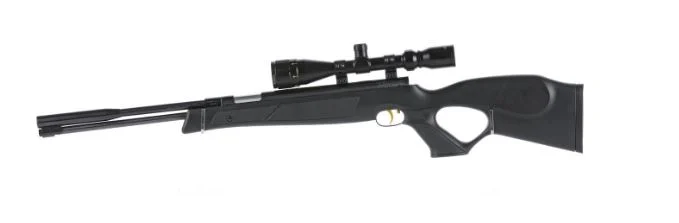
Weihrauch HW97K

Price range: €380.00 through €500.00

Weihrauch HW97K Spring-Piston Underlever Air Rifle

Precision field-target performance is delivered by the Weihrauch HW97K, a German-made spring-piston underlever that has been engineered for shooters who want a fixed-barrel carbine rather than a break-barrel compromise. Accuracy is prioritized over raw spectacle, and a compact 40-inch overall length is combined with adult-sized mass so that recoil is settled and follow-through is protected. Consequently, consistent groups are produced at sporting distances when quality pellets and a properly mounted scope are used.

Why the Weihrauch HW97K Is Chosen by Target and Field Shooters

A rigid, non-pivoting barrel is retained by the underlever design, and pellet alignment is therefore kept true shot after shot. Moreover, a sliding breech is opened when the lever is drawn down, so a single pellet is seated directly into the barrel without a break-barrel hinge that can introduce point-of-impact shift. In addition, an integrated muzzle weight is fitted at the muzzle, and muzzle flip is reduced while the underlever latch is housed in the same assembly.

Furthermore, the legendary Rekord two-stage match trigger is fitted as standard. First-stage take-up is adjusted independently of break weight, and a clean, repeatable release is therefore obtained after a short running-in period. An automatic safety is engaged when the action is cocked, and the rifle is made ready only after the safety is released by the shooter. As a result, deliberate handling is encouraged for every session, whether the rifle is used on the range or in the field.

Weihrauch HW97K

Build Quality That Is Built to Last

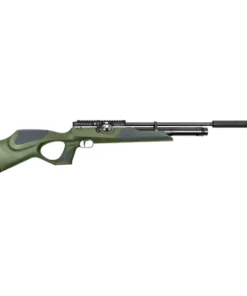
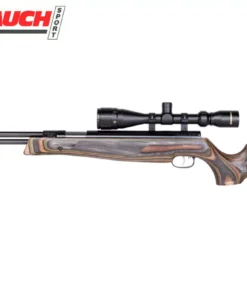
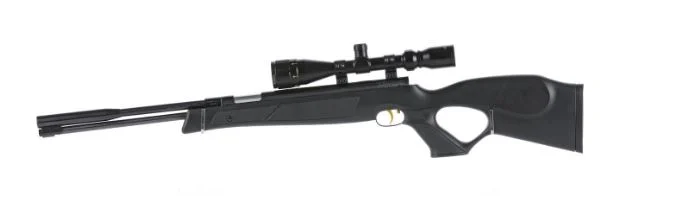
Deep bluing is applied to the metalwork, and a hardwood Monte Carlo stock—available in beech, walnut, or laminate, including thumbhole options—is finished with checkering or stippling on the grip and forend. A raised comb is shaped for scope use, and an ambidextrous layout is provided so that left- and right-handed shooters are equally well served. A rubber buttpad is fitted to manage recoil and to stabilize the shoulder pocket. No open sights are supplied; 11 mm dovetail grooves are machined on the receiver so that optics can be mounted quickly and a stop-pin hole can be used to resist scope creep.

Calibers, Power, and What Can Be Expected Downrange

The Weihrauch HW97K is offered in .177 and .22 as standard, with .20 and .25 available to special order. UK-legal examples are typically set just under 12 ft-lbs, and measured energy around 11.1–11.7 ft-lbs is commonly recorded with mid-weight pellets. Higher-power export specifications are listed by some retailers at up to approximately 930 fps in .177 with light alloy pellets; practical lead-pellet velocities in the 800–850 fps class in .177 and the mid-500s to low-600s in .22 are more representative of everyday hunting and target loads.

Consistency is a hallmark. Single-figure to low-teen fps spreads over ten-shot strings are frequently reported after a modest break-in. Accuracy at 25–35 yards is routinely described as quarter-inch to half-inch clusters with favored pellets such as JSB Exact, Air Arms Diabolo Field, H&N Field Target Trophy, and Daystate Li. At longer sporting distances, sub-inch groups remain realistic from a rested or well-practiced standing position because the fixed barrel and mass of the rifle work together to keep the sight picture stable.

Cocking effort is significant—around 35 lb is typical—yet the stroke is relatively short and smooth for an underlever of this power class. Technique matters more than brute force: the rifle is supported at the forend, the latch is depressed, and the lever is drawn through a controlled arc. Subsequently, the breech is loaded and the lever is returned until it locks. Repeated cycling is therefore manageable for adult shooters once a consistent method is adopted.

Highlight Product Features

  • Action: Spring-piston, single-shot underlever with fixed barrel and sliding breech
  • Overall length: Approximately 1020 mm / 40 in (carbine “K” configuration)
  • Barrel length: 300 mm / 11.8 in with integral muzzle weight
  • Unscoped weight: Approximately 4.0–4.3 kg / 8.8–9.3 lb depending on stock
  • Trigger: Adjustable two-stage Rekord match unit
  • Safety: Automatic, engaged on cocking
  • Rail: 11 mm dovetail; scope-only (no iron sights)
  • Stock: Ambidextrous Monte Carlo or thumbhole; beech, walnut, laminate, or synthetic options
  • Calibers: .177 and .22 standard; .20 and .25 special order
  • Typical UK energy: ~11–12 ft-lbs; export velocities higher by specification
  • Primary uses: Field target, HFT practice, precision plinking, pest control, and small-game hunting where legal

Practical Use Scenarios and Handling Tips

Field-target and hunter-field-target practice is where the Weihrauch HW97K is most often praised. A high comb and scope-centric stock allow a low, repeatable cheek weld, and parallax error is reduced when a quality optic is zeroed at the intended distance. Meanwhile, the modest report and muzzle weight make backyard or club-range sessions more neighbor-friendly than many unmoderated springers, although the integral weight is better described as a stabilizer than a true silencer.weihrauch hw90

Pest control and small-game work are supported when local laws and humane ranges are observed. In .22, heavier pellets carry energy into the 11–12 ft-lb window with a flatter enough trajectory for typical farm-yard distances; in .177, flatter flight and higher pellet counts on paper are preferred by many target-oriented owners. Inclusive language applies here: the rifle is intended for responsible adult shooters of any background who will confirm local airgun regulations, use appropriate backstops, and wear eye protection.hw 98

Maintenance remains straightforward. A light wipe of the exterior after use is recommended, and a drop of quality springer-safe lubricant on the pivot points is applied sparingly. The mainspring and piston seal last for many thousands of shots when dry-firing is avoided and the rifle is stored uncocked. Consequently, decades of service are commonly expected from a factory Weihrauch action that has been treated with ordinary care.

Weihrauch HW97K

Who Will Get the Most from This Rifle

Experienced springer shooters who already understand hold sensitivity will extract the finest groups, yet newcomers who are willing to learn a consistent artillery hold are equally well served. The weight that tames recoil also means the rifle is best enjoyed from a supported standing, kneeling, or bench position rather than as a lightweight walkabout carbine. Therefore, it is positioned as a precision instrument rather than an all-day carry gun.

Conversion-minded buyers should note that optics, mounts with a recoil stop, and a pellet brand that the individual barrel prefers are not optional extras—they complete the system. Once that combination is found, few production spring-piston rifles match the Weihrauch HW97K for out-of-the-box manners, trigger quality, and long-term durability.

Ready to add German fixed-barrel accuracy to the collection? The Weihrauch HW97K is offered in multiple stock and caliber configurations so that the right example can be selected for range work, field craft, or both. Check current availability, confirm legal power limits in your jurisdiction, and pair the rifle with a scope that matches the intended distances. Precision is waiting to be earned, one carefully loaded pellet at a time.

Calibres, FAC Status, Power Output, and Accessories for the Weihrauch HW97K

Calibre choice is treated as a core decision when the Weihrauch HW97K is specified, because trajectory, pellet mass, and intended use are all shaped by that selection. Standard production is offered in .177 and .22. Additionally, .20 and .25 are supplied to special order through authorised dealers. Consequently, a single platform is adapted to paper-punching, hunter field target practice, and lawful small-game or pest work without a change of action type.

How Each Calibre Is Typically Employed

Flat flight and high shot density on paper are associated with .177. Mid-weight match pellets in the 8.4–10.3 grain class are commonly favoured, and velocities in the region of 800–850 fps are recorded on many UK-legal examples. Export listings sometimes quote higher figures with light alloy pellets, yet everyday lead performance remains the more useful planning number. Moreover, wind drift is reduced relative to very light projectiles, and grouping potential at 25–35 yards is widely regarded as excellent when a barrel-friendly pellet is identified.

Greater sectional density and a more authoritative strike on small pests are associated with .22. Velocities in the mid-500s to low-600s fps are typical on sub-12 ft-lb rifles with 14–16 grain domed pellets, and energy is retained usefully inside sporting ranges. In addition, .20 is valued by owners who want a middle path: less drop than .22 with more mass than many .177 loads. Finally, .25 is reserved for specialised orders where maximum pellet weight is preferred and legal power allows it; trajectory is steeper, so range estimation is practised more carefully.

FAC, Legal Limits, and What “Power” Means on This Platform

A clear distinction is drawn between factory specification and local law. In the United Kingdom, most Weihrauch HW97K rifles are supplied below the 12 ft-lb threshold so that a Firearms Certificate is not required for possession. Measured energy on reviewed examples commonly falls between about 11.1 and 11.7 ft-lbs with quality lead pellets, and shot-to-shot variation of roughly 8–18 fps over a ten-shot string is frequently published after a short running-in period. Therefore, the rifle is positioned as a premium non-FAC springer for the majority of UK buyers.weihrauch hw100

Higher-output FAC versions can be commissioned where a certificate is held and the dealer is authorised to supply them. Export and North American listings advertise higher muzzle velocities—figures around 930 fps in .177 with light pellets appear in retail copy—yet those numbers should be read as specification maxima rather than a guarantee with hunting-weight lead. Inclusive practice requires that local airgun statutes, transport rules, and hunting seasons are verified by every purchaser before the rifle is ordered or used. Power without compliance is not performance.hw 40

Cocking effort of approximately 35 lb is accepted as part of the design. The stroke itself is relatively short and smooth for an underlever of this class, and technique is emphasised over strength so that adult shooters of varied stature can cycle the action repeatably. Recoil is present but is damped by the 4.0–4.3 kg unscoped mass and by the fixed barrel, so hold sensitivity is managed rather than eliminated.

Accessories That Complete the Weihrauch HW97K System

A scope is not optional. Open sights are omitted by design, and 11 mm dovetail grooves plus a recoil-stop pin hole are machined into the receiver. Consequently, a one-piece or two-piece mount with a vertical stop is strongly recommended so that the optic is not walked by spring recoil. Medium-profile rings are commonly chosen to keep the sight line close to the high comb. Side-focus or adjustable-objective scopes in the 3–12× or 4–16× class are well matched to field-target and hunting distances; parallax is set to the primary zero so that aiming error is reduced.weihrauch hw45.hw 97k

Pellet selection is treated as an accessory in its own right. JSB Exact, Air Arms Diabolo Field, H&N Field Target Trophy, H&N Baracuda, and Daystate Li lots are repeatedly cited in published groups. A tin of two or three candidate weights is purchased first, and a 25-yard ladder is shot so that the individual barrel’s preference is discovered. Chronograph use is encouraged during that process so that energy and consistency are documented rather than assumed.weihrauch hw80

Further useful items are listed below for a complete, conversion-ready setup:

  • Mounts: 11 mm dovetail rings or a one-piece rail with recoil pin
  • Optics: Compact to mid-size airgun-rated scopes with adjustable parallax
  • Ammunition: Matched-weight domed pellets in the chosen calibre
  • Protection: Fitted hard case or quality slip to protect the bluing and stock
  • Sling: Quality swivel studs and a sling if supported standing shots are planned
  • Maintenance: Springer-safe lubricant for pivots; avoid over-oiling the piston seal
  • Optional tuning: Aftermarket springs, guides, and piston seals fitted by a competent smith if a smoother cycle is desired
  • Range tools: Chronograph, target cards, and a solid rest for zeroing.hw 30

A dedicated Weihrauch-style muzzle weight is already integral; aftermarket silencers are not universally compatible and should be confirmed against the specific barrel and latch geometry before purchase. Bipods can be fitted to some forends, yet spring-piston recoil and hold sensitivity mean that a bipod is used with caution and is not a substitute for a learned artillery hold.

When calibre, legal power, and accessories are specified together, the Weihrauch HW97K is transformed from a fine factory rifle into a personal precision instrument. Stock the correct pellets, mount a stable optic, and confirm that the energy level matches the licence held. Accuracy is then available to every responsible shooter who is prepared to practise.

Weihrauch HW100X Karbine, Thumbhole PCP Air Rifle, HW35, HW45, HW97K, HW70, HW40, HW30, HW80, HW95, HW98, HW77, HW50S, HW44 and HW90, while explaining differences between PCP, spring piston, underlever, break-barrel, compressed-air rifles and air pistols. It can also incorporate comparison phrases such as Weihrauch HW77 vs HW97, HW77 vs break barrel air rifle, HW77 Green Laminate vs HW97 comparison, and informational searches including what are air rifles, what are air pistols, what is a PCP air rifle, and precision shooting airgun.weihrauch hw 95

For the HW77 specifically, the content can discuss the Weihrauch HW77 air rifle, HW77 Green Laminate rifle, Weihrauch underlever air rifle, HW77 spring piston air rifle, German precision air rifle, Weihrauch HW77 accuracy review, Weihrauch HW77 Green Laminate price and specs, is Weihrauch HW77 good for beginners, air rifle with low recoil, durable air rifle for outdoor use, reliable air rifle for long term use, top rated underlever air rifle, best Weihrauch air rifles, and most accurate air rifle for target shooting.hw 44.hw 70

Broader terminology can also be integrated naturally, including german air rifle, accurate air rifles, compressed air rifles, air rifle makes, spring piston, air pistols, rifles de aire, high quality German airguns, affordable premium air rifle, hw100 airgun, Weihrauch HW100, Weihrauch HW95, Weihrauch HW50S, Weihrauch HW44, Weihrauch HW98, Weihrauch HW70, Weihrauch HW30, HW30S, HW50, HW50 S, HW40, HW44, HW70, HW98, HW100, HW97K, HW97K, HW35 air rifle, HW77 air rifle, Weihrauch English, Weihrauch Englisch, H45, SK X rifles, and air shot gun.h 45

Weihrauch HW97K

Commercial search expressions such as Weihrauch HW35E for sale, Weihrauch HW77 for sale, buy Weihrauch HW77 Green Laminate online, best price Weihrauch HW77, where to buy Weihrauch HW77, and Weihrauch HW77 in stock can be discussed as examples of common buyer search terminology without directing readers toward acquiring a weapon

Practical Use Scenarios and Field Technique

Everyday performance is shaped less by brochure figures than by how the rifle is carried, cocked, held, and recovered after each shot. A fixed-barrel underlever rewards patience. Consequently, sessions that begin with a short zero check and a consistent hold produce tighter groups than sessions that rush the first magazine of pellets. Inclusive practice is assumed throughout: adult shooters of any stature or dominant hand can apply the same methods once a safe backstop, eye protection, and local regulations have been confirmed.

Preparing the Rifle Before the First Shot

A visual inspection is completed before the action is cocked. The muzzle weight and underlever latch are checked for debris, the dovetail is confirmed to be free of oil that could loosen rings, and the automatic safety is verified to engage when the lever is drawn. Meanwhile, pellets of a known lot are counted into a pouch so that mixed weights are not introduced mid-session. A scope that has already been zeroed is preferred; if the optic has been removed, a fresh confirmation group is fired at the primary distance before any hunting or competition string is begun.

Cocking is performed with the forend supported, never with the muzzle used as a lever against the ground. The latch is depressed, the underlever is drawn through a controlled arc, and the sliding breech is presented. A single pellet is seated flush—never forced—and the lever is returned until it locks. Subsequently, the safety is released only when the muzzle is pointed at the intended target. That sequence is repeated identically so that muscle memory, not improvisation, governs every cycle.

Zeroing, Holds, and the Artillery Principle

Spring-piston rifles are hold-sensitive. Therefore, a light, repeatable artillery hold is adopted rather than a death grip. The forend is rested on a flattened palm or on a soft bag, the butt is settled into the shoulder pocket without extra pressure, and the trigger hand remains relaxed until the Rekord unit breaks. Follow-through is held for a full second after the shot so that the piston’s residual movement is not fought by a premature lift of the head.

Zero distance is chosen to match the day’s work. Twenty-five yards is a practical starting point for pest and plinking sessions; thirty to thirty-five yards is more typical for field-target practice. Additionally, a second confirmation group is fired from the position that will actually be used—sitting or kneeling—because a bench zero can print high or low when the rifle is later supported only by the body. Wind flags or natural indicators are watched; even a modest crosswind moves a mid-weight pellet enough to miss a kill zone at thirty-five yards if the hold is not adjusted.

Club Range and Field-Target Practice

A typical club morning is built around position work rather than raw volume. Five-shot groups from the bench establish that the pellet and the barrel still agree. Afterwards, sitting and kneeling strings are fired at knockdowns or printed targets placed at unknown distances between twenty and forty-five yards. The high comb is used to keep the eye centred in the scope, and parallax is set to the expected band so that aiming error is reduced when the target is not at the exact zero.

Time between shots is used productively. The rifle is stood safely, the underlever is left uncocked, and notes are made on which pellet printed the tightest cluster. In contrast, rushing ten shots in a minute invites vertical stringing as fatigue changes the hold. Rest periods of a minute or two are therefore built into the string. When metallic silhouettes or resettable knockdowns are available, a “hit and hold” routine is practised: the sight picture is recovered immediately after recoil so that a follow-up shot could be taken if the first were a miss in the field.

Hunter-field-target style lanes reward the same discipline. Distances are estimated, a hold-over or turret adjustment is applied, and the shot is only released when the breathing pause coincides with a still sight picture. Consequently, the rifle’s mass—often felt as a drawback on a long walk—becomes an advantage: muzzle flip is reduced and the sight picture returns quickly.

Garden, Permission Ground, and Pest Control

Quiet, legal pest work is one of the most common adult uses of a sub-12 ft-lb underlever. A garden or farmyard session begins with a walk of the boundary so that neighbours, livestock, and public paths are accounted for. A solid backstop—earth bank, thick timber, or purpose-made trap—is arranged behind every expected shot line. Moreover, shots are taken only when the animal is stationary and a humane aiming point is presented. Chasing running quarry with a single-shot springer is avoided; patience is substituted for volume.

Typical ranges for rats, feral pigeon, and similar species remain inside thirty yards when energy is kept in the UK-legal window. A .22 pellet is often chosen for these tasks because remaining energy and wound channel are more forgiving of slight range error; .177 is chosen when a flatter trajectory and a denser paper group are preferred on the same ground. In either case, a single well-placed shot is the ethical standard. Follow-up capability exists only after a full recock and reload, so the first shot is not taken unless it is expected to be sufficient.

Lighting changes through the evening. Therefore, a scope with adequate light transmission and a simple reticle is favoured over an overly busy Christmas-tree design that disappears at dusk. Automatic safety discipline is maintained even when the shooter is alone; the habit protects visitors who may enter the garden unexpectedly.

Small-Game Hunting Where It Is Lawful

Where statute and landowner permission allow, the same rifle is used on small game at ranges that keep energy adequate for a clean dispatch. Approach is made slowly so that a supported sitting or kneeling shot can be taken rather than a hurried offhand poke. Wind is read at the target, not only at the muzzle. Additionally, shot placement is practised on paper at the same distance and from the same position that will be used in the field; a beautiful bench group is not accepted as proof that a sitting shot will land in the vitals.

After a successful shot, the rifle is made safe before the quarry is approached. The underlever is left down only if the action is still cocked and the safety is on—an uncommon and discouraged state. Normally the rifle is uncocked for the retrieve. Game is handled with respect, and unused permission days are used for dry-practice of the cocking stroke and the hold so that live opportunities are not wasted on rust.

Walking the Ground and Managing Weight

Unscoped mass near four kilograms, plus optic and mounts, means the carbine is not a featherweight walkabout tool. A quality sling is fitted if long approaches are planned, yet the rifle is still carried muzzle-down or across the body with the action uncocked. Pauses are used to rest the support arm. Consequently, a circuit of several hundred metres with frequent glassing is more realistic than a continuous three-hour hike with the rifle at the shoulder.

When a shot opportunity appears, the sling is slipped, a stable position is taken, and the cocking cycle is completed only then. Premature cocking on a long stalk increases fatigue and raises the chance that the rifle will be put down still charged. Inclusive coaching applies: shooters with less upper-body strength simply take more time on the lever and use the knee or a fence post as a brace for the forend—not as a rest for the muzzle.

Weather, Maintenance in the Field, and End-of-Day Routine

Light rain is tolerated if the action is wiped and the rifle is dried before storage. Heavy rain or immersion is avoided; water in the compression tube is not a planned feature of a spring-piston design. Cold weather stiffens grease; a few sighters are fired so that the first “real” shot is not the one that reveals a change in point of impact. Heat is less dramatic, yet scopes can shift if mounts were not torqued evenly, so a confirmation group is still fired after a long drive in a hot vehicle.

A small field kit is carried: a microfibre cloth, a few pellets of the chosen lot, a hex key for the mount screws, and lens covers. Oil is not applied in the field except for a wipe of the latch pivot if it has become gritty. Over-lubrication of the piston is avoided because dieseling changes both power and point of impact.

At the close of the session the rifle is uncocked, the bore is left empty, and a dry patch is not routinely pushed through unless leading is suspected. The exterior is wiped, the stock is checked for new dings, and the rifle is stored in a case, horizontally or as recommended by the maker, away from heat sources. Notes from the day—best pellet, wind calls that worked, positions that printed high—are written while they are still remembered. Subsequent sessions then start from data rather than from guesswork.

Building Skill Across a Season

Progress is measured in smaller groups and cleaner field shots, not in the number of tins emptied. A weekly plan might alternate a bench night for pellet testing with a positional night on knockdowns and a permission morning for live quarry or paper at unknown distance. Furthermore, dry-firing is never used as a shortcut; the mechanism is designed to be fired with a pellet. Visualization of the hold and of the trigger break can be practised safely with the rifle empty and the lever at rest.

Community ranges and clubs remain the fastest way to shorten the learning curve. Advice from other springer shooters is listened to, then verified on paper, because every barrel and every hold is slightly different. Ultimately, the rifle rewards the shooter who treats each shot as a complete cycle: inspect, cock, load, settle, break, follow through, make safe. When that cycle is automatic, practical accuracy at sporting distances becomes the normal result rather than a lucky exception.

Responsible enjoyment is the point of every scenario above. Laws are checked, bystanders are considered, and the shot is taken only when the outcome can be predicted with honesty. Precision is then available to anyone willing to practise the unglamorous parts—the hold, the wait, and the identical reload—until they feel ordinary.
Stock

wood, Synthetic Black, Wood Thumbhole, Synthetic Stainless

caliber

.177, .22, .20

Reviews

There are no reviews yet.

Be the first to review “Weihrauch HW97K”

Related Products

FAQ

  • Spring-Piston (Break-Barrel or Underlever): Cock by compressing a spring. Reliable, no external air source needed, but can have more recoil (“spring twang”) and require technique to shoot accurately.
  • Pre-Charged Pneumatic (PCP): Filled from a scuba tank, compressor, or pump. High power, low recoil, multiple shots per fill. Popular for precision and hunting.
  • CO₂: Powered by disposable cartridges. Good for pistols and semi-auto/repeaters, but performance drops in cold weather.
  • Multi-Pump Pneumatic: Hand-pumped to build pressure. Versatile but requires effort.
  • Gas Ram (Nitro Piston): Uses compressed gas instead of a metal spring. Smoother than traditional springers.

Calibers: Most common are .177 (4.5mm) for speed/flat trajectory and general use, and .22 (5.5mm) for better hunting knockdown power. Larger “big bore” (.25, .30, .357+) exist for hunting bigger game where legal.

Yes, many modern PCP and springers deliver enough energy for small game (rabbits, squirrels, birds) and even larger game in some areas. Muzzle energy (in ft-lbs or joules) matters more than velocity alone. Always match caliber, pellet weight, and energy to the game and check local hunting regs.

Treat every airgun as if it is loaded.

  • Always point the muzzle in a safe direction.
  • Keep your finger off the trigger until ready to shoot.
  • Know your target and what is beyond it (pellets can ricochet or travel far).
  • Wear eye protection.
  • Store unloaded, out of reach of children/untrained users, and ideally locked.
  • Never shoot at hard surfaces or in areas where pellets could escape your property.

Follow these rules strictly—airguns cause real injuries.

Laws differ dramatically by country, state/province, and even city. Always verify current local laws before buying, owning, transporting, or using an airgun. Age restrictions (often 18+) are common.

Examples (summaries only; check official sources):

  • UK: Air rifles ≤12 ft-lbs (16.3 joules) and pistols ≤6 ft-lbs generally do not require a license (FAC needed above that).
  • USA: Varies by state. Some treat powerful airguns as firearms; others do not. Many states now allow big-game hunting with air rifles.
  • Canada: Some airguns classified as firearms if they exceed velocity/energy thresholds.
  • Australia: Often treated as firearms; licensing/registration required in most states.
  • EU/France/Belgium/etc.: Varies; many allow low-power (<20J) guns freely to adults, with higher power needing permits. Germany has strict ~7.5J limits in some contexts.
  • Other countries: Some have no restrictions below certain energies; others ban or heavily regulate them.

Resources: Wikipedia “Air gun laws”, airgun forums, or official government sites. For travel, research transit laws carefully.

Consider:

  • Purpose: Plinking/backyard → lower power springer or CO₂. Hunting/precision → PCP.
  • Budget: Entry-level springers are affordable; PCPs need a fill system (extra cost).
  • .177 vs .22: .177 easier for beginners/targets; .22 better for hunting.
  • Power source: Convenience vs performance.
  • Test pellets in your gun—accuracy varies.

Buy from reputable dealers and consider warranties.

  • Clean barrel periodically (especially if accuracy drops) with patches and appropriate tools/solvents. Avoid over-oiling.
  • Lubricate moving parts and seals with airgun-specific oil (not general gun oil). Springers need piston seal oil occasionally.
  • Check screws, seals for leaks (PCP), and safety mechanisms regularly.
  • Store in a cool, dry place, ideally in a case. Avoid leaving cocked for long periods.

Follow your model’s manual. Basic care extends life significantly.

International shipping may be available for select products. Customers are responsible for understanding and complying with their local import laws and regulations before ordering.

Yes. Customers are required to confirm their order number through WhatsApp or Live Chat before orders are processed and shipped.

If local laws prevent shipment to your area, your order may be canceled and refunded according to our store policy.

Processing typically takes 1–3 business days after payment confirmation. Delivery times vary depending on destination, carrier, and product availability.


  • Wrong pellets for your barrel/caliber.
  • “Death grip” or poor shooting form (especially with springers—let the gun recoil naturally).
  • Loose scopes or mounts.
  • Ignoring safety or local laws.
  • Over-oiling or shooting with obstructions.


Pellets are the most common projectile (lead or lead-free). Match them to your gun, caliber, and purpose—test several brands as accuracy varies by barrel.

  • Domed (Round-Head): Best all-rounder. Excellent accuracy, ballistic coefficient, and energy retention. Ideal for target shooting, field target, and general hunting (e.g., JSB Exact, Air Arms Diabolo Field, H&N Field Target Trophy).
  • Wadcutter (Flat-Head): Clean holes in paper. Best for close-range target/plinking (under 20-25 yards).
  • Hollow Point: Expands on impact for better energy dump. Good for small game hunting (e.g., Predator Polymag, H&N Terminator).
  • Pointed: More penetration, but often less accurate than domed.
  • Slugs: Heavier, more aerodynamic for high-power PCPs at longer ranges (better for big game where legal).

Tips: Heavier pellets in .22/.25 for hunting (better momentum). Lighter in .177 for speed/flat trajectory. Always check head size fit (e.g., 4.51-4.53mm variants).

Muzzle energy (ft-lbs or joules) matters more than velocity. Ethical shots require precise placement (head/heart-lung) within effective range.

Rough Guidelines (adjust for distance, pellet, and local laws):

  • Small game (squirrels, rabbits, birds): 9-20+ FPE, .177/.22.
  • Medium (raccoons, etc.): 25+ FPE, .22/.25 recommended.
  • Larger game: 40-100+ FPE in .30+ calibers (up to big bore for deer/hogs where permitted).

PCPs dominate serious hunting due to power and shot count. Springers/gas rams work well for small game but require skill. Always prioritize clean kills and check seasons/species rules.

  • Barrel Cleaning: Use a pull-through kit or rod with patches. Avoid brushes that could damage rifling. Clean when accuracy drops or after 500-1000 shots.
  • Lubrication: Airgun-specific silicone oil for seals/O-rings (sparingly—excess causes dieseling in springers). Springers may need piston lube periodically.
  • PCP Specific: Check for leaks (soapy water test), monitor regulator/hammer settings, and keep fill systems clean. Don’t exceed rated pressure.
  • General: Tighten stock screws, inspect for wear, store properly. Chronograph shots to track consistency.

Common Issues:

  • Inconsistent velocity → dirty barrel, bad pellets, or seal problems.
  • Spring “twang” → tuning or proper hold.
  • Low power → worn seals or under/over-pumping.

Toggle Content

  • Scopes: Airgun-rated (hold zero under recoil). 3-9x or 4-12x common.
  • Fill Systems: Hand pumps, compressors, or tanks for PCPs.
  • Safety Gear: Eye/ear protection, targets with backstops.
  • Noise: Airguns quieter than firearms, but moderators help further.

Budget Tip: Start with a quality springer (~$150-400) before investing in PCP setup.

Airgunning offers endless depth—from backyard plinking to precision competition and ethical hunting. Prioritize safety, legality, and practice. If you want specifics (e.g., recommendations for a country, budget, hunting small game, or a particular type like PCP vs springer), let me know for more targeted info! Shoot responsibly.

Tuning improves accuracy, reduces noise/recoil, or increases power (within legal limits).

  • Springers: Lighter springs, guides, seals, or custom tuning kits for smoother shot cycle. “V-Mach” or similar professional tunes popular.
  • PCPs: Regulator tuning, hammer spring adjustments, valve work for efficiency and shot count. Some add electronic systems.
  • Accessories: Suppressors (often unregulated on airguns), better triggers, stocks, and scopes.

Caution: Check laws—power increases may reclassify your gun. DIY only if experienced; professional tuners recommended.

You must be at least 18 years old to purchase any airgun or related accessories from our store. By placing an order, you confirm that you meet the legal age requirements in your state or country.

Yes. Orders may require age verification before processing and shipping. In some cases, we may request a valid government-issued ID to confirm eligibility.