Discover Unmatched Power and Precision with the AEA CHALLENGER ELITE
Are you searching for a big-bore PCP air rifle that delivers consistent performance, exceptional accuracy, and serious hunting capability in a compact package? The AEA CHALLENGER ELITE stands ready to elevate your shooting experience. This regulated bullpup air rifle combines refined engineering with raw power, making it an outstanding choice for dedicated hunters, precision shooters, and enthusiasts who value reliability.
Furthermore, the AEA CHALLENGER ELITE brings together advanced regulation technology, a high-capacity air system, and a beautifully crafted walnut stock. Consequently, shooters enjoy shot-to-shot consistency that few competitors can match. Moreover, its design prioritizes usability so that people of varying experience levels can appreciate its capabilities.
Why Choose the AEA CHALLENGER ELITE?
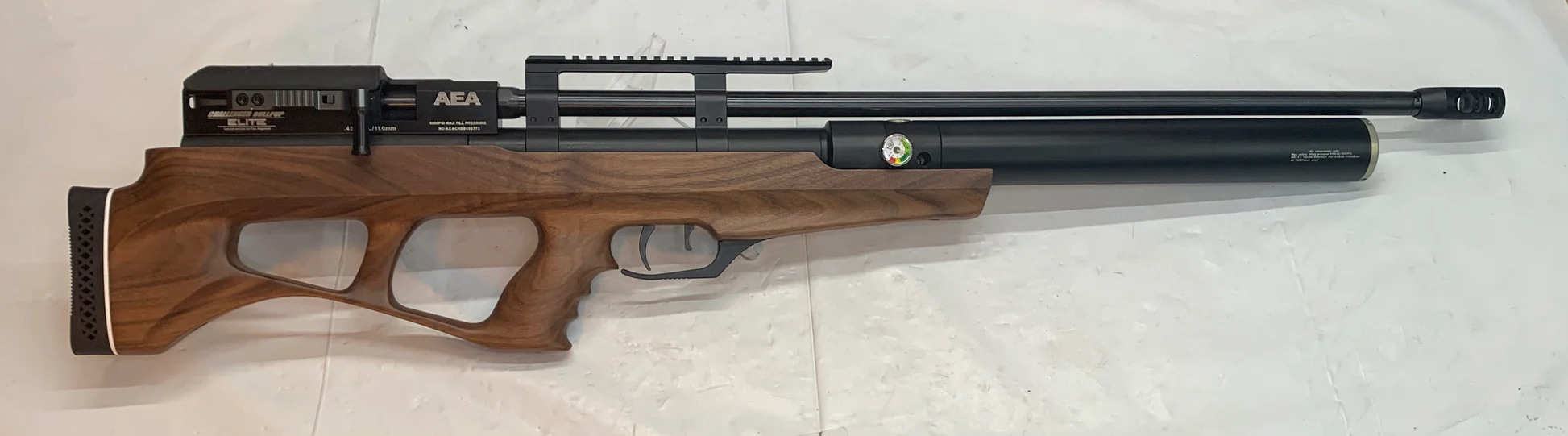
The AEA CHALLENGER ELITE represents a significant upgrade over standard models in the Challenger lineup. In particular, it features an externally adjustable regulator paired with a substantial plenum. This combination stabilizes pressure and delivers smooth, repeatable energy output. As a result, accuracy improves dramatically across a string of shots.
Additionally, the side-lever bolt action offers smooth operation and quick follow-up capability. The integrated muzzle brake helps manage recoil and muzzle rise, allowing shooters to stay on target more easily. Meanwhile, the Picatinny rail provides ample space for optics, red dots, or other accessories.
The AEA CHALLENGER ELITE is available in popular big-bore calibers including .35, .45/.457, .50, and .51. Therefore, users can select the configuration that best matches their intended quarry and preferred projectile weights. Power levels typically range from approximately 250 FPE in .35 caliber up to 450–500+ FPE in the larger options, depending on projectile and regulator settings. These figures make the rifle suitable for medium to large game hunting where legal.
Key Features and Benefits of the AEA CHALLENGER ELITE
Here is a clear overview of what the AEA CHALLENGER ELITE brings to the range or field:
- Externally adjustable regulator with large plenum for excellent shot-to-shot consistency
- Side-lever bolt action that is both smooth and reliable
- High-capacity 500cc air tube with a maximum fill pressure of 4500 PSI
- Precision 30-inch barrel for strong velocity and accuracy potential
- Overall length of approximately 42 inches in a compact bullpup layout
- Attractive walnut wooden stock with cheek rest for improved ergonomics
- Included muzzle brake to reduce felt recoil and muzzle jump
- Picatinny optics rail for easy mounting of scopes or other sights
- Magazine-fed design (typically 10 rounds in .35 caliber and 6 rounds in larger calibers) with single-shot capability as well
- Upgraded trigger for a cleaner break
Furthermore, the walnut stock offers both visual appeal and functional comfort. In addition, the bullpup configuration keeps the overall length manageable while preserving a full-length barrel. Consequently, the AEA CHALLENGER ELITE balances power, portability, and handling in a way that many traditional long rifles cannot.

Performance That Inspires Confidence
When shooters put the AEA CHALLENGER ELITE to the test, they frequently report impressive accuracy at 50, 65, and even 100 yards when paired with quality slugs. Moreover, the regulated system helps maintain velocity consistency throughout the usable shot string. Therefore, holdover and trajectory become more predictable, which is especially valuable for ethical hunting shots.
In addition, the large air reservoir supports a practical number of full-power shots before a refill is needed. Meanwhile, the external regulator adjustment allows users to fine-tune performance for different projectile weights or preferred power levels. However, proper technique and quality ammunition remain essential for extracting the best results from any precision air rifle, including the AEA CHALLENGER ELITE.
The rifle also accommodates a range of popular big-bore projectiles, from lighter options for flatter trajectories to heavier slugs for maximum energy transfer. As a result, many owners enjoy experimenting to find their ideal load.
Designed for Real-World Use
Whether you pursue deer-sized game where regulations allow, enjoy long-range target practice, or simply want a capable big-bore platform, the AEA CHALLENGER ELITE delivers. Furthermore, its robust construction and thoughtful features support regular use in varied conditions. In addition, the side-lever action and magazine system enable faster follow-up shots compared with many single-shot big-bore designs.
Moreover, the compact bullpup layout improves maneuverability in blinds, blinds, or tighter terrain. Consequently, the AEA CHALLENGER ELITE feels more agile than its power level might suggest. At the same time, the weight distribution and stock design help promote stable shooting positions for a wide range of body types and shooting styles.
Inclusive design considerations appear in the adjustable nature of the regulator and the forgiving ergonomics of the stock. Therefore, both newer and more experienced shooters can find a setup that works well for them with some practice and careful load development.
What’s Included and What to Expect
Most packages featuring the AEA CHALLENGER ELITE include the rifle itself with walnut stock, muzzle brake, magazines, fill probe, and basic documentation. Additionally, the externally adjustable regulator arrives ready for fine-tuning once the rifle is filled and chronographed. Users should always follow safe filling practices and never exceed the recommended maximum pressure.
Furthermore, pairing the AEA CHALLENGER ELITE with quality optics, a reliable PCP compressor or hand pump capable of reaching 4500 PSI, and appropriate big-bore ammunition will maximize enjoyment. In addition, regular maintenance—keeping the rifle clean, checking seals, and storing it properly—helps ensure long-term performance.
Elevate Your Airgunning Experience Today
The AEA CHALLENGER ELITE offers a compelling blend of power, consistency, and practical design. Moreover, its regulated system, quality components, and proven accuracy potential make it a strong contender in the competitive big-bore PCP market. Consequently, many shooters who invest in this platform report high satisfaction with both the performance and the overall ownership experience.
If you value reliable energy delivery, solid accuracy potential, and a well-finished package, the AEA CHALLENGER ELITE deserves serious consideration. Furthermore, its versatility across calibers allows you to choose the right balance of velocity, energy, and magazine capacity for your specific needs. In addition, the combination of walnut aesthetics and modern features creates a rifle that looks as capable as it performs.
Take the next step toward more consistent and powerful airgunning. Explore available configurations of the AEA CHALLENGER ELITE, select your preferred caliber, and prepare to experience what a properly regulated big-bore bullpup can deliver. With thoughtful setup and responsible use, this rifle can become a trusted companion for years of rewarding shooting.
Bintac, AEA Airguns, PCP Platforms and Model Terminology
Bintac and AEA Airguns are names commonly associated with large-caliber PCP airgun discussions, including models and search terms such as bintac t9, bintac, bintac llc, bin tac, bintacllc, aea airguns, bintac t 50, bintac m50, bintac mcar, bintac t50, and bintac s45.
Enthusiasts researching these platforms may also encounter terminology including bintac t9 full auto, bintac mcar air rifle, bintac mcar 457, bintac m50 pistol, bintac t50 extreme, bintac m50 pump action, aea bintac t50 extreme, and automatic air gun. These terms generally describe particular configurations, operating systems, calibers, or model families and should always be understood in the context of applicable local airgun laws and safe handling requirements.
AEA Harpoon and Related Search Terms
The AEA Harpoon family is frequently discussed alongside phrases such as bintac aea harpoon, aea harpoon, aea harpoon magnum, aea harpoon gun, aea harpoon cartridge, aea .50 harpoon, aea harpoon air gun, harpoon air gun, and the commonly mistyped aa harpoon.
Because specifications can differ between generations and configurations, prospective researchers should verify caliber, energy output, compatible air systems, ammunition type, and manufacturer documentation rather than relying solely on model-name searches.
AEA Megalodon and Large-Caliber PCP Airguns
Another commonly researched platform is the AEA Megalodon, appearing under terms including aea megalodon, megalodon air rifle, aea megalodon 58 cal, aea megalodon .58 cal, aea megalodon air rifle, and aea megalodon 50 caliber.
Large-caliber PCP platforms are also associated with broader terms such as air powered 50 cal rifle, air tank for pcp airguns, and airgun shotgun. Because high-powered PCP equipment can store substantial compressed-air pressure and generate significant projectile energy, tanks, fittings, valves, and charging equipment should be used only within their certified operating limits.
AEA Defender and Terminator Platforms
Other AEA terminology includes aea defender, aea defender 2, aea defender 3, aea terminator, aea terminator gen 3, and the broader phrase aea guns. Different generations may vary substantially in action type, dimensions, magazine arrangement, air capacity, caliber, and operating pressure.
Anyone comparing these systems should therefore check the exact model designation and generation before comparing technical specifications.
PCP Air Systems and Supporting Equipment
PCP airguns depend on compressed-air storage systems. Search terms such as anti air tanks and air tank for pcp airguns may refer to high-pressure cylinders or charging equipment. Only pressure-rated equipment designed for the intended system should be used.
Other broad search phrases, including bee bee gun rifle, airgun shotgun, and automatic air gun, describe different categories of air-powered equipment rather than one standardized product type.
Additional Large-Caliber Airgun Terminology
Researchers may also encounter terms including zeus 72 cal air rifle, b&w m50, bintac t9, bintac m50, bintac t50, bintac s45, and bintac mcar. Model names alone do not establish compatibility, legality, operating pressure, caliber, or performance, so manufacturer documentation remains the appropriate source for technical specifications.
For all Bintac, AEA Airguns, and large-caliber PCP systems, safe storage, responsible handling, appropriate protective equipment, and compliance with local laws should remain central considerations.
Frequently Asked Questions About the AEA Challenger Elite
What makes this regulated big-bore bullpup stand out from other PCP air rifles?
This model combines an externally adjustable regulator with a large plenum, a high-capacity air reservoir, and a precision side-lever action inside a compact bullpup layout. The result is consistent shot-to-shot performance, strong energy delivery, and practical handling in the field. Many shooters appreciate how the design balances power with usability, allowing people of different experience levels to achieve reliable results once they match the rifle to suitable projectiles and optics.
Which calibres are available?
You can choose from .35, .45/.457, .50, and .51. Each option serves different priorities. The smaller chambering offers higher magazine capacity and a flatter trajectory for certain applications, while the larger ones prioritise energy transfer for bigger quarry. The same core platform supports all these options, so the fundamental handling and regulation characteristics remain consistent across the range.
How much power can I expect from each calibre?
Power varies with projectile weight, regulator setting, and exact configuration. Typical figures fall in the region of 250–300 foot-pounds for the .35, around 400–450 for the .45/.457, approximately 425–500 for the .50, and 450–600 or more for the .51 when using heavier projectiles. Because the system is regulated, velocity stays far more consistent across a string of shots than with unregulated designs. Owners often fine-tune the regulator to match their preferred load and any legal limits that apply in their area.
Does this rifle require a Firearm Certificate?
In the United Kingdom and jurisdictions that follow similar rules, any air rifle producing more than 12 foot-pounds of muzzle energy needs a Firearm Certificate. This platform exceeds that threshold in every available calibre, so ownership is restricted to certificate holders. Applicants normally need to show a genuine requirement, such as permission to shoot on suitable land, and must satisfy the police regarding secure storage. Always check the latest local regulations, because rules can differ by country and sometimes by region. In places without an FAC system, other licensing, hunting, or transport laws may still apply.
What is the magazine capacity?
Capacity depends on calibre. The .35 version typically holds ten rounds, while the larger options hold six. The rifle also accepts single-shot loading for those who prefer it. Extra magazines are a popular addition because they speed up reloading and keep sessions flowing smoothly.
What are the key dimensions and weight?
The barrel measures 30 inches and the overall length is approximately 42 inches thanks to the bullpup configuration. Weight generally sits between 12 and 14 pounds depending on exact specification and any added accessories. The compact layout improves manoeuvrability compared with traditional full-length rifles of similar power, while the walnut stock helps with balance and comfort during longer sessions.
How does the externally adjustable regulator work?
A hex key adjusts the regulator pressure. Turning the adjuster in one direction increases output pressure and the other decreases it. You cannot safely lower pressure while the system is charged; the reservoir must be emptied first and residual air cleared by dry-firing. Increases can be made under pressure, but changes should be made gradually—usually no more than a quarter turn at a time—followed by testing with a chronograph. This flexibility lets owners optimise performance for different projectile weights or bring the rifle into line with any certificate conditions.
What air capacity and fill pressure does the system use?
The air tube holds 500 cc and fills to a maximum of 4500 PSI (approximately 310 bar). A quality compressor or large high-pressure tank with the correct filling adapter is essential. Proper filling technique and regular inspection of seals help maintain reliability and safety over time.
Is this rifle suitable for hunting?
Many owners use it successfully for medium to larger quarry where local laws permit. The combination of high energy, consistent regulation, and solid accuracy potential supports ethical shots when the shooter does their part with range estimation, shot placement, and suitable projectiles. Always confirm legal energy requirements, seasons, and land permissions before hunting. Responsible use and thorough practice remain essential regardless of the platform.
How accurate is the rifle in practical use?
With quality projectiles and a properly mounted optic, many shooters report tight groups at 50 yards and usable accuracy out to 100 yards or more under good conditions. The regulated system reduces velocity variation, which improves predictability. Results still depend on the shooter’s skill, the chosen load, environmental factors, and how well the optic is zeroed. Spending time with a chronograph and different projectile weights usually pays dividends.
What accessories are recommended?
A robust scope or red-dot sight on the Picatinny rail is almost essential. Extra magazines, a reliable high-pressure air source, a chronograph, a bipod or rest, and a protective case are frequent additions. Some users fit further sound-reduction devices where legal. Matching high-quality big-bore projectiles to the chosen calibre is equally important. A basic maintenance kit with appropriate lubricant and cleaning tools helps keep the rifle performing well.
How does the Elite version differ from the standard model?
The Elite adds an externally adjustable regulator and a larger plenum for improved consistency. It also features a walnut stock rather than beech, a larger-diameter air tube, and a muzzle brake as standard. These upgrades deliver smoother shot strings and refined ergonomics compared with the non-regulated versions.
What kind of maintenance does the rifle need?
Keep the rifle clean, especially the barrel and action area, and follow the manufacturer’s guidance on lubrication. Inspect seals periodically and avoid over-pressurising the system. Store the rifle in a dry, secure location, preferably uncocked and with the pressure managed according to best practice. Regular chronograph checks help confirm that performance remains within expected parameters.
Can beginners use this platform effectively?
While the rifle is powerful and benefits from careful load development, its consistent regulation and manageable side-lever action make it accessible once the fundamentals are in place. New owners should prioritise safe handling, proper zeroing, and gradual familiarisation with the recoil and report characteristics. Inclusive design elements such as the adjustable regulator and supportive stock help people of varying physical builds find a comfortable setup.
What warranty and support can I expect?
Most retailers and the manufacturer provide a limited warranty, commonly one year, covering defects in materials and workmanship under normal use. Registering the rifle and retaining proof of purchase simplifies any future claims. Authorised dealers can often supply parts, magazines, and advice on setup or troubleshooting.
How should I choose the right calibre and setup for my needs?
Start with your primary purpose—hunting specific quarry, longer-range target work, or general high-power shooting. Consider magazine capacity, preferred projectile weights, local legal limits, and how much air and accessory investment you are prepared to make. Testing different loads with a chronograph after acquiring the rifle is the most reliable way to lock in optimal performance. Consulting experienced owners or a knowledgeable dealer can also narrow the options efficiently.
Are there any special storage or transport requirements?
In FAC jurisdictions the rifle must be stored securely according to the conditions of the certificate, usually in an approved cabinet. When transporting, use a suitable case and keep the rifle unloaded and separate from ammunition where required by law. Even in less regulated areas, responsible storage protects both the equipment and those around it.
What projectiles work best?
Quality big-bore slugs and heavy pellets designed for the chosen calibre generally deliver the best combination of accuracy and energy transfer. Hollow-point designs are popular for hunting, while solid or specialised target projectiles suit range work. Experimentation within safe pressure and velocity limits is the standard approach for finding the most consistent load.
These answers address the most common questions that arise when people consider or begin using this regulated big-bore bullpup. Taking time to match calibre, power setting, optics, and accessories to your specific requirements leads to the most satisfying results. Always prioritise safety, legal compliance, and thorough practice so that every outing remains both enjoyable and responsible.
Practical Use Scenarios
Imagine stepping into a woodland edge just after first light. The air is cool, visibility is good, and a suitable animal stands within ethical range. You settle into a supported position, confirm the distance, and take the shot. The projectile leaves the barrel with authority, the follow-through feels controlled, and the result is clean and decisive. Later the same week you are on a formal range, working systematically from 50 to 100 yards, adjusting for wind and refining your hold. In both settings the same platform delivers the consistency and energy you need.
In hunting situations the compact bullpup layout proves especially practical. Moving through dense cover or settling into a high seat becomes easier because the overall length stays manageable without sacrificing barrel performance. The side-lever action allows quiet, positive cycling between shots, while the regulated system keeps velocity stable across a string. This predictability helps with trajectory estimation and shot placement, two factors that matter greatly when the goal is a humane outcome. Larger chamberings provide the energy required for medium to bigger quarry where local rules permit, while the smaller option offers a useful balance of capacity and flatter flight for different terrain or species.
Range sessions reveal another side of the same capability. Because pressure remains consistent shot after shot, groups tighten more readily once the optic is zeroed and a suitable projectile is chosen. Shooters can focus on breathing, trigger control, and reading conditions rather than compensating for large velocity swings. A solid bipod or rested position further stabilises the rifle, and the Picatinny rail accepts a wide range of optics so that magnification and reticle choice can match the distances being practised. Many people find that recording velocities with a chronograph during these sessions accelerates load development and builds confidence for field use.
Everyday practicality extends beyond the moment of firing. Filling the high-capacity reservoir from a compressor or bulk tank is straightforward with the correct probe, and the externally adjustable regulator lets owners tailor output to specific projectiles or any legal limits that apply. Spare magazines keep the action moving during longer outings, while a well-fitted sling or compact case simplifies transport between home, vehicle, and shooting ground. The walnut stock offers a comfortable interface for a wide range of body types and shooting styles, reducing fatigue during extended periods of observation or waiting.
Preparation remains central to success in every scenario. Confirming local regulations, including any certificate conditions that govern power and permitted use, is an essential first step. Matching projectile weight and design to the chosen chambering, verifying zero at realistic distances, and practising supported and unsupported positions all contribute to reliable performance when it counts. Secure storage and careful handling protect both the equipment and the people around it, ensuring that every outing stays safe and enjoyable.
Whether the day involves careful stalking, patient waiting in a hide, or structured practice on paper and reactive targets, the combination of regulated consistency, usable power, and compact handling supports confident decision-making. Shooters of varying experience levels can adapt the setup—optic, rest, projectile, and pressure—to their physical needs and preferred style. Over time the platform becomes a familiar partner: dependable enough for serious field work and precise enough to reward careful marksmanship on the range.
These real-world applications highlight how thoughtful design translates into practical advantage. When energy delivery stays predictable, when the rifle remains manoeuvrable in tight spaces, and when accessories integrate smoothly, the focus shifts from managing the equipment to executing the shot. That shift is what turns capable hardware into a genuinely useful tool across the situations that matter most to dedicated airgun users.



Reviews
There are no reviews yet.