We Deliver Airguns Directly To Your Door

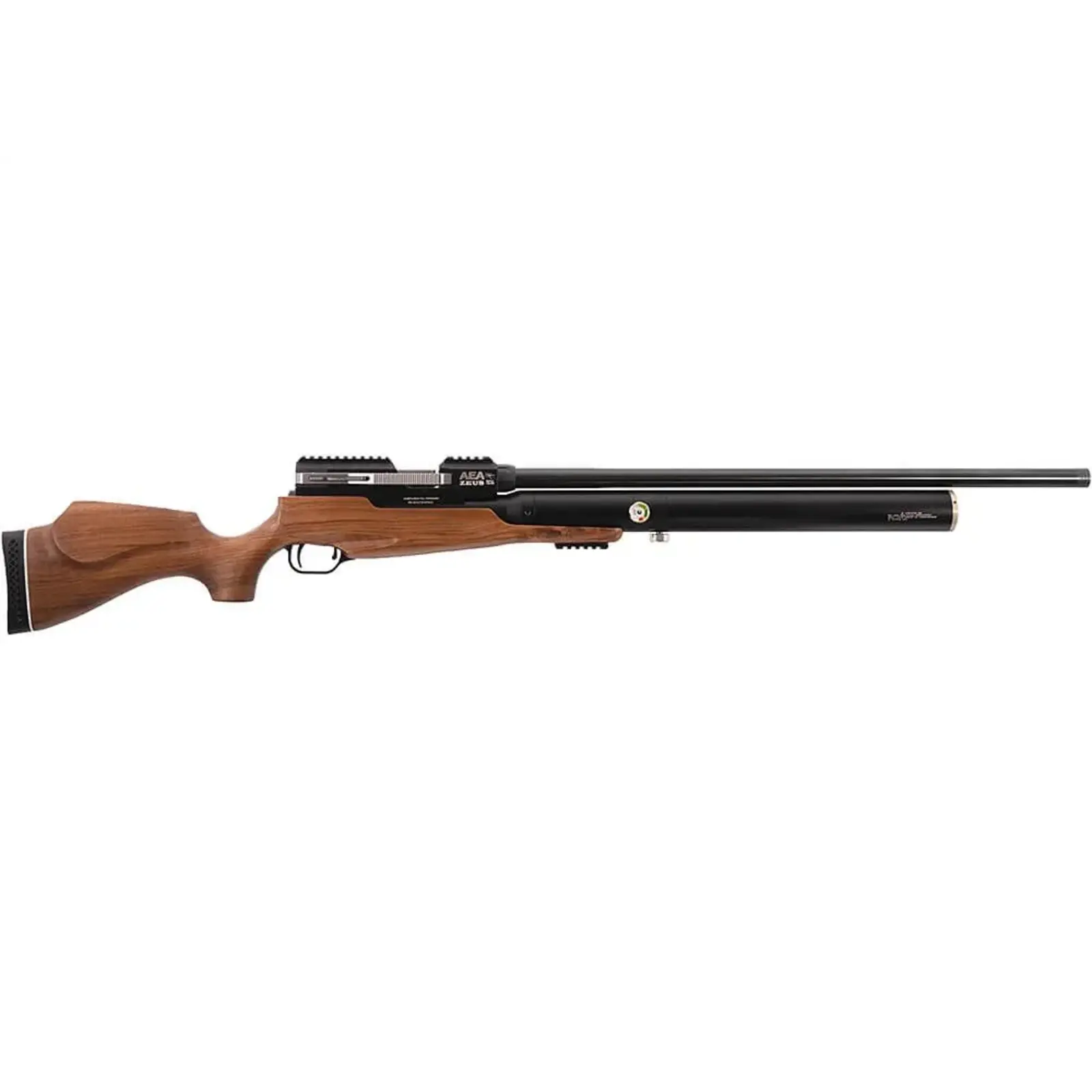
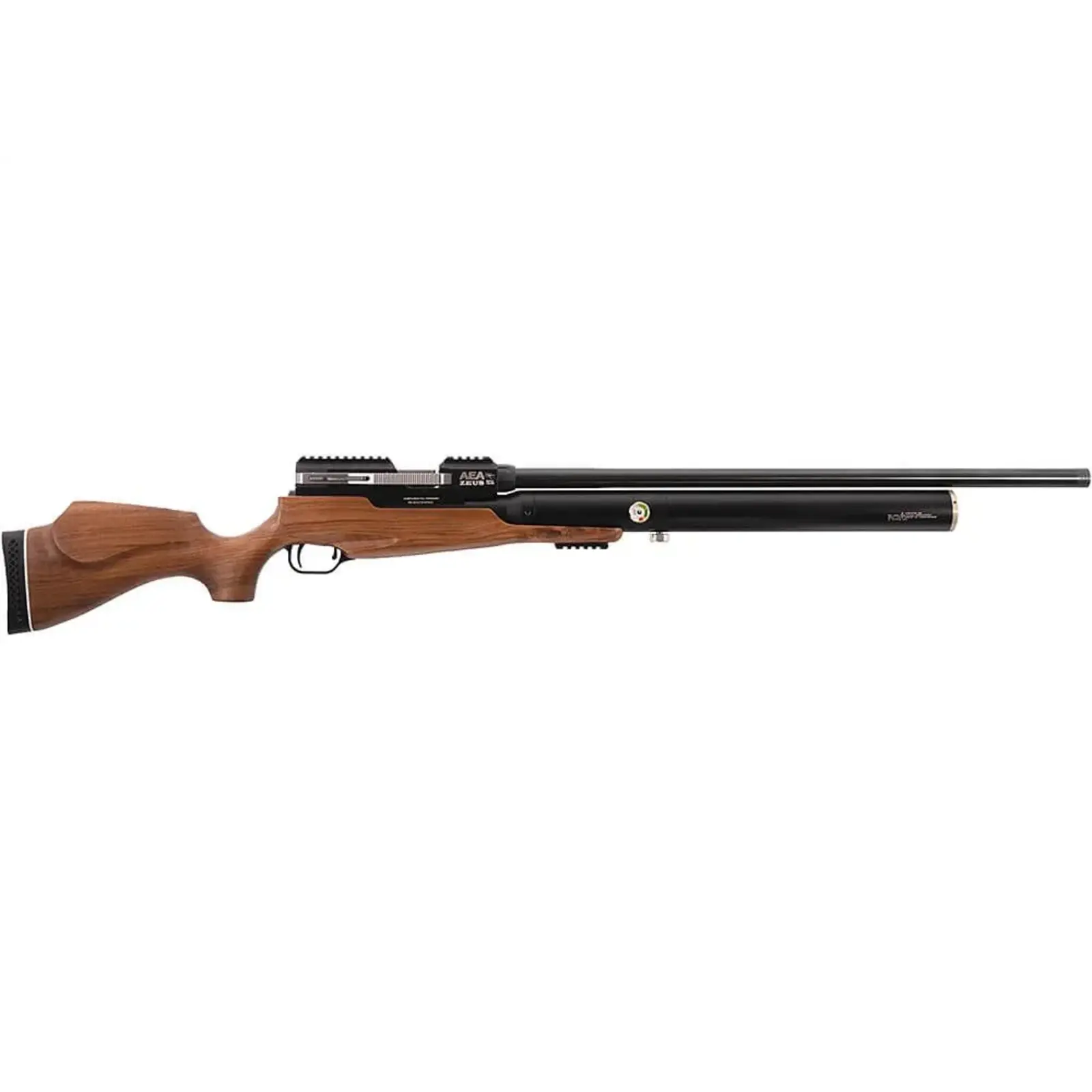
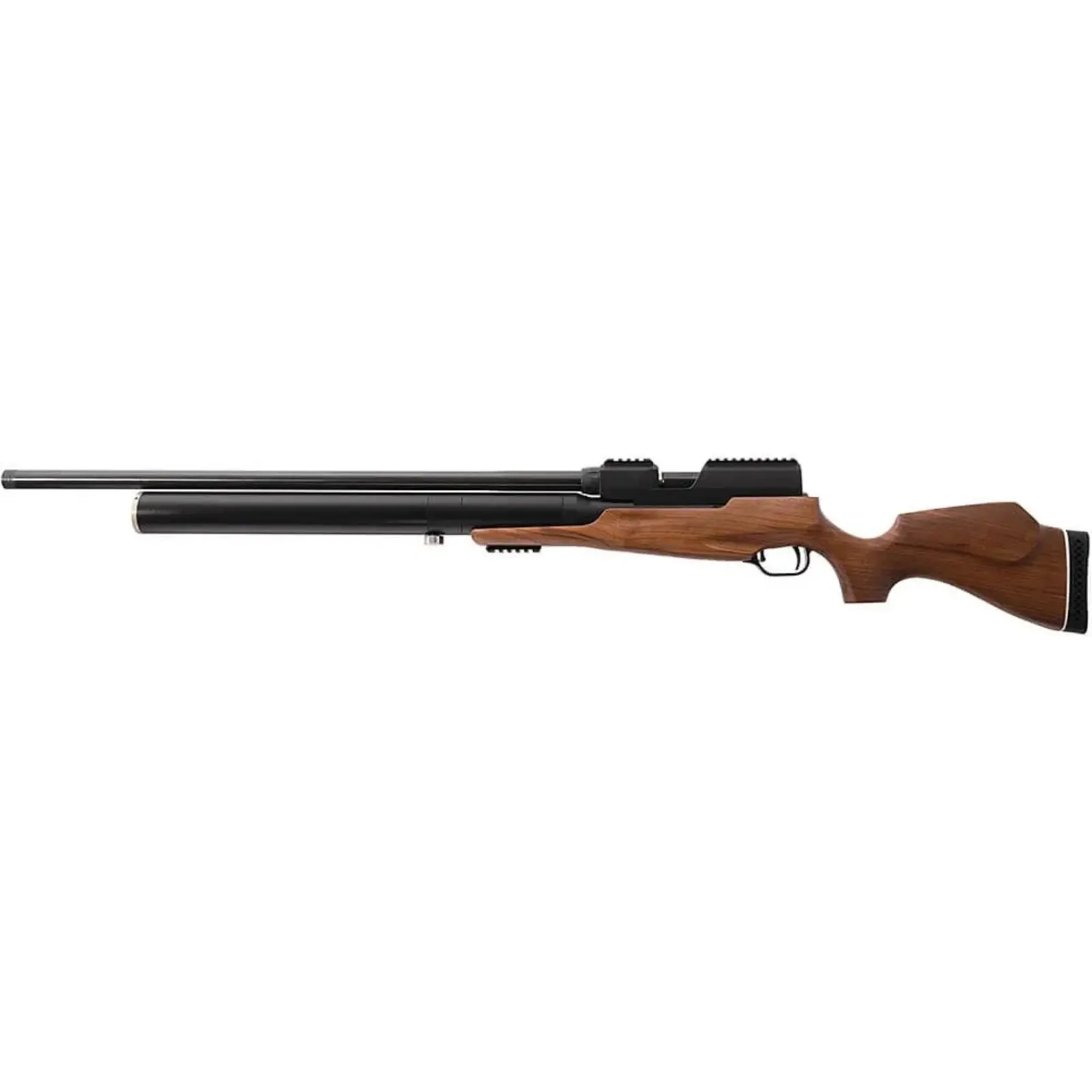
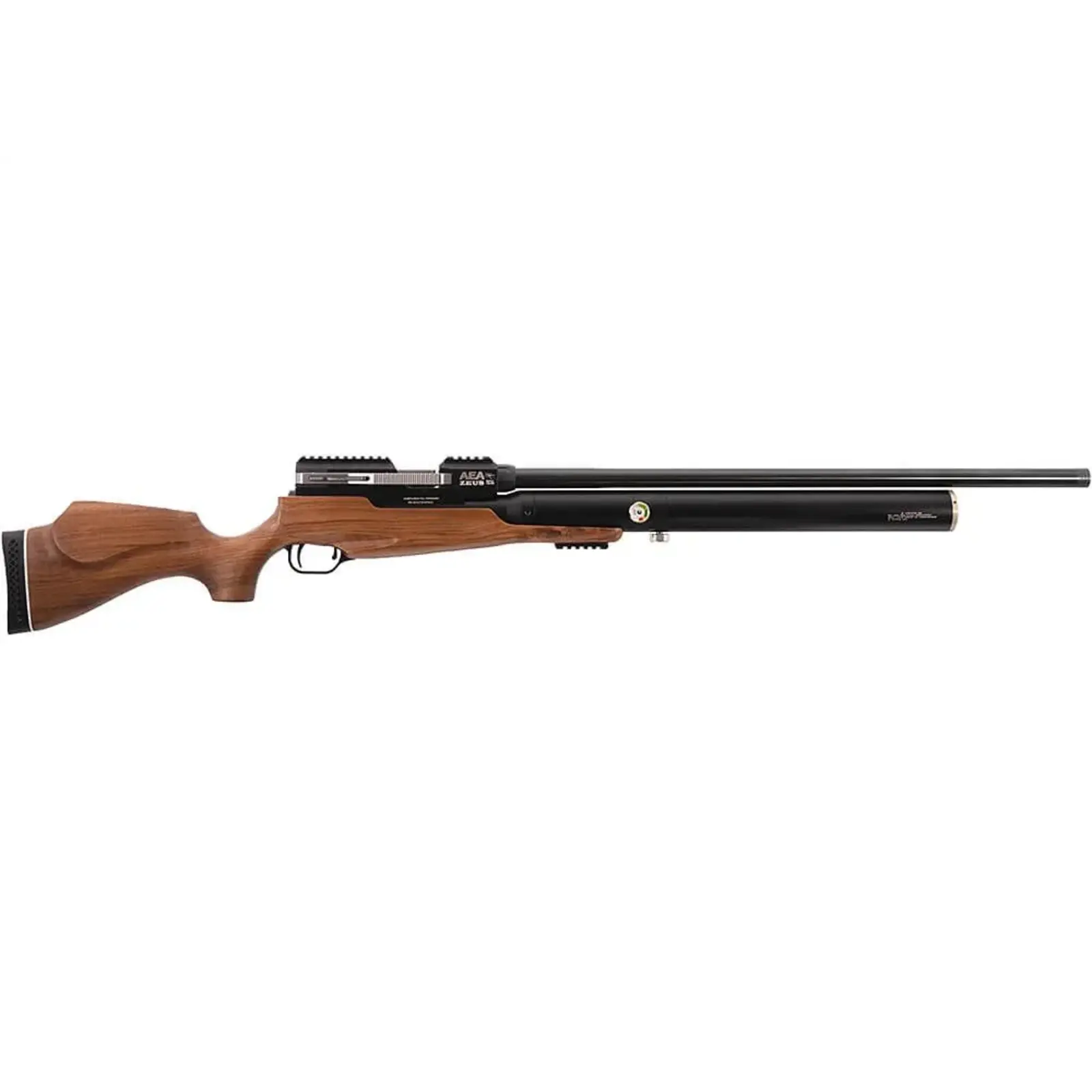
AEA Zeus PCP Rifle | .72 (18,3mm) | 32″ barrel

€1,225.00

AEA Zeus PCP Rifle | .72 (18,3mm) | 32″ barrel

The AEA Zeus PCP Rifle | .72 (18,3mm) | 32″ barrel stands as one of the most powerful production pre-charged pneumatic air rifles available today. Designed for serious big-bore enthusiasts, this single-shot PCP delivers exceptional muzzle energy—commonly cited in the range of up to approximately 2000 joules or around 1500 foot-pounds depending on projectile and conditions—while offering the precision and craftsmanship expected from AEA Precision Airguns. Whether you pursue ethical big-game hunting where regulations allow air rifles, long-range steel targets, or simply demand maximum impact from an air-powered platform, this configuration provides a compelling combination of caliber, barrel length, and air capacity.

Exceptional Power Delivered Through Smart Engineering

At the heart of the AEA Zeus PCP Rifle | .72 (18,3mm) | 32″ barrel lies a carefully balanced system built around a large .72-caliber (18.3 mm) bore and a full 32-inch (approximately 813 mm) rifled barrel. The extended barrel length allows heavy projectiles—often in the 500- to 850-grain range—to develop impressive velocity and energy. Shooters report velocities that can exceed 850–920 fps with suitable heavy slugs, translating into the kind of terminal performance that sets this rifle apart from conventional PCP airguns.

Furthermore, the rifle features a substantial 660 cc air reservoir that can be filled to a maximum of 300 bar (approximately 4350–4500 PSI). This generous capacity typically supports several full-power shots per fill when operated within recommended pressure ranges. Importantly, manufacturers and retailers consistently advise never firing the rifle below about 150 bar, as the powerful hammer impact could otherwise stress the valve system. By respecting this guidance, users help ensure long-term reliability and consistent performance.

In addition, the side-lever cocking mechanism provides smooth, deliberate operation suited to a single-shot precision platform. The absence of a multi-shot magazine keeps the design focused on maximum energy transfer and simplicity, which many experienced shooters prefer for hunting or extreme target work.

Thoughtful Design Features for Real-World Use

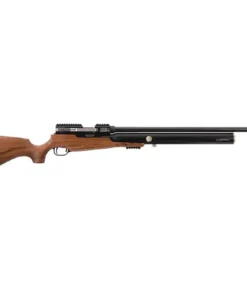
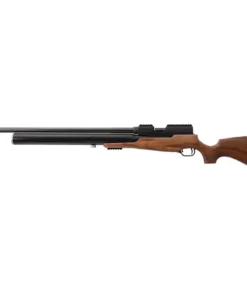
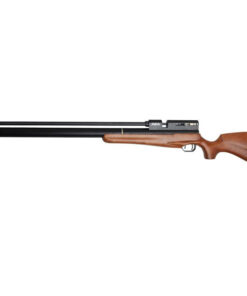
The AEA Zeus PCP Rifle | .72 (18,3mm) | 32″ barrel is housed in a well-finished wooden stock that offers both traditional aesthetics and functional ergonomics. Rails are typically provided for bipod mounting, while a two-piece Picatinny/Weaver-style rail on the action allows secure installation of robust optics. Because the rifle is intended for longer-range or high-impact applications, open sights are not included—scope mounting is expected and strongly recommended.

Overall length measures approximately 1270 mm (about 50 inches), and weight sits around 5.26 kg (roughly 11.6 lbs). These dimensions give the rifle substantial presence and help manage recoil and muzzle rise. The ambidextrous-friendly stock layout and solid construction make the platform accessible to a wide range of shooters who value power without unnecessary complexity.

Key product highlights include:

  • Caliber: .72 (18.3 mm) for substantial projectile mass and energy delivery
  • Barrel length: 32″ (813 mm) precision-rifled for optimized performance with heavy slugs
  • Air capacity: 660 cc reservoir
  • Maximum fill pressure: 300 bar / ~4500 PSI
  • Operating system: Side-lever, single-shot
  • Optics mounting: Picatinny/Weaver rail
  • Stock: Beautifully finished wood with bipod rail provisions
  • Approximate weight: 5.26 kg
  • Approximate overall length: 1270 mm
  • Muzzle threading: Often M23x1 for potential accessories
  • Power potential: Up to ~2000 joules / ~1500 FPE (projectile- and condition-dependent)

Performance That Inspires Confidence

What truly distinguishes the AEA Zeus PCP Rifle | .72 (18,3mm) | 32″ barrel is the sense of capability it provides. Heavy .72-caliber projectiles carrying this level of energy offer deep penetration and significant impact—qualities that experienced big-bore airgunners seek for appropriate game or challenging reactive targets. At the same time, the platform remains an air rifle, delivering a unique experience that many describe as both challenging and deeply satisfying.

Accuracy potential is another strong point. With quality ammunition and a properly mounted optic, the rifle is capable of tight groups at practical hunting or target distances. The combination of a long, rigid barrel and substantial mass contributes to inherent stability. Transitioning from smaller-caliber PCP rifles, many users notice how the Zeus rewards careful load selection and consistent technique.

Moreover, the single-shot nature encourages deliberate shooting. Each shot is prepared thoughtfully, reinforcing good habits and maximizing the effectiveness of every fill of high-pressure air. This approach appeals to shooters who prioritize quality of experience over rapid follow-up capability.

Built for Dedicated Enthusiasts Across Skill Levels

The AEA Zeus PCP Rifle | .72 (18,3mm) | 32″ barrel welcomes both seasoned big-bore hunters and advanced target shooters who are ready for a high-performance platform. Its design emphasizes power and reliability rather than lightweight portability or high shot counts. Consequently, it suits individuals who value maximum energy delivery and are comfortable managing a larger, heavier air rifle with the appropriate support equipment—such as a high-pressure air source (compressor, tank, or pump) and hearing protection, given the substantial report.

Inclusive of different shooting preferences, the rifle’s straightforward operation and solid construction make it approachable once basic PCP handling and safety practices are understood. Clear pressure guidelines, a robust side-lever action, and accessible optics mounting help users of varying experience levels get the most from the platform safely and effectively.

Why Choose This Configuration?

Selecting the 32-inch barrel version of the Zeus prioritizes energy potential. Shorter barrels exist in the broader Zeus family for those seeking a more compact package, yet the full-length barrel maximizes the performance envelope of the .72-caliber system. When paired with appropriate heavy projectiles, the result is one of the highest power outputs available in a production PCP air rifle.

Additionally, the combination of traditional wood furniture and modern PCP engineering creates a distinctive aesthetic and tactile experience. The rifle feels substantial and purposeful in the hands—qualities that many owners appreciate during extended range sessions or field use.

Transitioning to ownership also means joining a community of airgunners who push the boundaries of what pre-charged pneumatic rifles can achieve. Support from specialized retailers, availability of .72-caliber projectiles, and ongoing discussion among users further enhance the ownership experience.

Ready to Experience True Big-Bore Capability?

The AEA Zeus PCP Rifle | .72 (18,3mm) | 32″ barrel represents a serious commitment to power, precision, and the unique satisfaction that only a high-energy air rifle can provide. From its commanding 32-inch barrel and large-caliber bore to its generous air capacity and refined wooden stock, every element is oriented toward delivering exceptional performance when it matters most.

If you are seeking a production PCP air rifle capable of generating extraordinary energy levels while remaining accurate and controllable, this configuration deserves close consideration. Ensure local regulations permit its use for your intended applications, obtain the necessary high-pressure air infrastructure, and pair it with quality optics and projectiles suited to the .72 caliber.

Discover the capabilities of the AEA Zeus for yourself. The combination of scale, power, and purposeful design continues to set a high benchmark in the big-bore PCP category—making the AEA Zeus PCP Rifle | .72 (18,3mm) | 32″ barrel a standout choice for those ready to step into the upper tier of air-powered performance.

Calibres, FAC Requirements, Power Output and Recommended Accessories for the AEA Zeus PCP Rifle

The AEA Zeus PCP Rifle is engineered as a true big-bore platform, and its available calibres, legal classification, power potential and supporting accessories all play a central role in how owners use and enjoy the rifle. Understanding these elements helps shooters choose the right configuration and equip it properly for safe, effective performance.

Available Calibres

The Zeus family is primarily offered in two main production calibres, with additional options available through special order or custom work.

  • .72 calibre (18.3 mm) – This is the flagship and most powerful configuration. It launches heavy projectiles, typically in the 500- to 850-grain range, and is the version most often associated with the highest energy figures. The 32-inch barrel model in .72 is particularly sought after for maximum impact.
  • .58 calibre (approximately 14.7 mm) – A slightly smaller but still substantial big-bore option. It delivers strong energy levels while offering a modest increase in shot count and slightly milder recoil compared with the .72. Many shooters select .58 when they want high performance with a bit more practicality for repeated shooting sessions.
  • Additional options – Certain retailers and special-order channels list or can supply .95 calibre versions for extreme applications. AEA has also indicated that custom calibres are possible within a broader big-bore range, allowing experienced users to match the rifle more closely to specific projectiles or hunting needs.

Each calibre is paired with different barrel lengths (commonly 16″, 24″, 30″ or 32″ depending on generation and market). Longer barrels generally extract more energy from the heavy projectiles, which is why the 32-inch .72 configuration remains the power benchmark.

FAC and Legal Considerations (United Kingdom Focus)

In the United Kingdom the AEA Zeus falls firmly into the FAC category. UK law sets a clear threshold: any air rifle that produces more than 12 foot-pounds (approximately 16.3 joules) of muzzle energy is classified as a Section 1 firearm and requires a valid Firearms Certificate issued by the local police force.

Because even the lower-powered Zeus configurations far exceed this limit—often by a factor of 50 or more—ownership in England, Wales and Northern Ireland requires an FAC. In Scotland an Air Weapon Certificate is needed for lower-powered airguns, but the Zeus still demands a full FAC due to its energy output. Prospective owners must therefore:

  • Apply for and hold a current FAC that lists the rifle (or the appropriate calibre and power level).
  • Demonstrate secure storage arrangements that meet police requirements.
  • Comply with all conditions attached to the certificate regarding use, transport and ammunition.

Buyers outside the UK should always check local regulations, as power limits, licensing and import rules vary widely by country. Responsible ownership begins with confirming legal eligibility before purchase.

Power Output and Performance Expectations

Power is the defining characteristic of the AEA Zeus. Published figures and independent testing consistently place the .72-calibre 32-inch barrel version in the region of 1500 foot-pounds (approximately 2000 joules) under favourable conditions with suitable heavy projectiles. Shorter barrels and the .58 calibre produce correspondingly lower but still exceptional energy levels—typically ranging from around 700 FPE on the lightest .58 configurations up to 1300–1500 FPE on the longer .72 barrels.aea megalodon for sale

Real-world performance depends on several factors: projectile weight and design, fill pressure (maximum 300 bar / 4500 PSI), ambient temperature, and the number of shots taken from a full charge. Most users report three strong shots from a full fill on the larger-capacity models, after which velocity drops. Manufacturers and experienced owners strongly recommend never firing the rifle below approximately 150 bar, as the powerful hammer can damage the valve if the residual pressure is too low.

This level of energy places the Zeus among the most powerful production PCP air rifles available. It is intended for applications where substantial terminal performance is required—large-game hunting where air rifles are legally permitted, long-range steel targets, or extreme testing—rather than high-volume plinking or pest control at modest ranges.

Essential and Recommended Accessories

A high-powered big-bore rifle benefits greatly from carefully chosen accessories that improve safety, consistency, comfort and versatility.

Filling equipment A dedicated high-pressure air source is essential. Most owners use a PCP compressor capable of 300–450 bar, a large scuba or carbon-fibre tank with a suitable regulator and whip, or a robust hand pump for emergency top-ups. The rifle typically comes with or requires a proprietary fill probe (often 7 mm or 8 mm depending on the exact model generation). Keeping a spare probe and a quality Foster-style quick-disconnect adapter is highly practical.

Optics and mounting The Zeus is supplied without open sights and features a Picatinny/Weaver rail (often a two-piece design). A robust, high-quality riflescope with sufficient elevation travel and a reticle suited to longer ranges is strongly recommended. Because of the rifle’s power and potential recoil impulse, mounts should be steel or high-grade aluminium and properly torqued. Many shooters prefer scopes in the 3-12× or 4-16× range with a 30 mm or 34 mm tube for durability and light transmission.

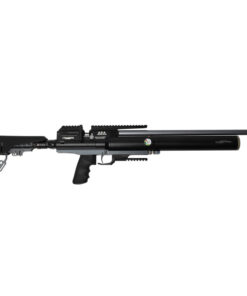
Stability and support The wooden stock usually includes rails or attachment points for a bipod. A sturdy, adjustable bipod or a quality shooting rest significantly improves accuracy during range work or hunting from a fixed position. Aftermarket tactical chassis kits are also available for owners who prefer a more modular, AR-style interface with adjustable stocks and additional rail space.

Muzzle devices and sound management Many Zeus barrels feature an M23×1 thread at the muzzle. This allows the fitting of a suitable big-bore moderator or muzzle brake where local laws permit. Moderators designed specifically for large-calibre air rifles can reduce report and help manage muzzle blast, although the rifle remains loud and hearing protection is always advised.zeus 72 cal air rifle price

Projectiles and maintenance items Heavy .72 or .58 calibre slugs matched to the barrel’s twist rate are critical for accuracy and energy transfer. A supply of cleaning pellets or a proper cleaning kit suitable for big-bore rifled barrels helps maintain performance. Spare O-rings, a chronograph for monitoring velocity, and a reliable pressure gauge complete a practical accessory list.

Optional enhancements Tactical rail clamps that mount around the air tube provide extra Picatinny real estate for lights, lasers or additional bipods. Some owners add rear air bottles for increased capacity or switch to aftermarket stocks for improved ergonomics.

By selecting the appropriate calibre, ensuring full legal compliance (particularly FAC requirements in the UK), understanding the rifle’s substantial power envelope, and equipping it with the right accessories, owners can unlock the full potential of the AEA Zeus PCP Rifle safely and effectively. This combination of extreme capability and thoughtful support equipment makes the platform a serious tool for dedicated big-bore enthusiasts.

Bintac, AEA Airguns, PCP Platforms and Model Terminology

Bintac and AEA Airguns are names commonly associated with large-caliber PCP airgun discussions, including models and search terms such as bintac t9, bintac, bintac llc, bin tac, bintacllc, aea airguns, bintac t 50, bintac m50, bintac mcar, bintac t50, and bintac s45.

Enthusiasts researching these platforms may also encounter terminology including bintac t9 full auto, bintac mcar air rifle, bintac mcar 457, bintac m50 pistol, bintac t50 extreme, bintac m50 pump action, aea bintac t50 extreme, and automatic air gun. These terms generally describe particular configurations, operating systems, calibers, or model families and should always be understood in the context of applicable local airgun laws and safe handling requirements.bintac s45 for sale

AEA Harpoon and Related Search Terms

The AEA Harpoon family is frequently discussed alongside phrases such as bintac aea harpoon, aea harpoon, aea harpoon magnum, aea harpoon gun, aea harpoon cartridge, aea .50 harpoon, aea harpoon air gun, harpoon air gun, and the commonly mistyped aa harpoon.

Because specifications can differ between generations and configurations, prospective researchers should verify caliber, energy output, compatible air systems, ammunition type, and manufacturer documentation rather than relying solely on model-name searches.aea harpoon price

AEA Megalodon and Large-Caliber PCP Airguns

Another commonly researched platform is the AEA Megalodon, appearing under terms including aea megalodon, megalodon air rifle, aea megalodon 58 cal, aea megalodon .58 cal, aea megalodon air rifle, and aea megalodon 50 caliber.

Large-caliber PCP platforms are also associated with broader terms such as air powered 50 cal rifle, air tank for pcp airguns, and airgun shotgun. Because high-powered PCP equipment can store substantial compressed-air pressure and generate significant projectile energy, tanks, fittings, valves, and charging equipment should be used only within their certified operating limits.aea harpoon for sale

AEA Defender and Terminator Platforms

Other AEA terminology includes aea defender, aea defender 2, aea defender 3, aea terminator, aea terminator gen 3, and the broader phrase aea guns. Different generations may vary substantially in action type, dimensions, magazine arrangement, air capacity, caliber, and operating pressure.bintac t9 amazon

Anyone comparing these systems should therefore check the exact model designation and generation before comparing technical specifications.

PCP Air Systems and Supporting Equipment

PCP airguns depend on compressed-air storage systems. Search terms such as anti air tanks and air tank for pcp airguns may refer to high-pressure cylinders or charging equipment. Only pressure-rated equipment designed for the intended system should be used.

Other broad search phrases, including bee bee gun rifle, airgun shotgun, and automatic air gun, describe different categories of air-powered equipment rather than one standardized product type.

Additional Large-Caliber Airgun Terminology

Researchers may also encounter terms including zeus 72 cal air rifle, b&w m50, bintac t9, bintac m50, bintac t50, bintac s45, and bintac mcar. Model names alone do not establish compatibility, legality, operating pressure, caliber, or performance, so manufacturer documentation remains the appropriate source for technical specifications.bintac m50 for sale.bintac t50 for sale

For all Bintac, AEA Airguns, and large-caliber PCP systems, safe storage, responsible handling, appropriate protective equipment, and compliance with local laws should remain central considerations.bintac t9 price.aea megalodon 50 cal price

Practical Use Scenarios for the AEA Zeus PCP Rifle | .72 (18,3mm) | 32″ barrel

The AEA Zeus PCP Rifle | .72 (18,3mm) | 32″ barrel is purpose-built for situations that demand exceptional energy delivery, deliberate shot placement, and confidence in terminal performance. Its combination of large calibre, extended barrel length and substantial air capacity makes it suitable for a focused range of applications rather than everyday plinking or high-volume shooting. Below are detailed practical scenarios that illustrate how experienced users put this platform to work in the field and on the range.

Large-Game Hunting Where Air Rifles Are Legally Permitted

In regions where high-powered air rifles are authorised for hunting medium to large game, the AEA Zeus PCP Rifle | .72 (18,3mm) | 32″ barrel offers a distinctive option. The .72-calibre projectile, when driven by the energy produced by the 32-inch barrel, carries substantial momentum and penetration potential. Hunters who choose this rifle typically target species such as wild boar, deer or similar-sized animals in jurisdictions that explicitly allow air-powered big-bore rifles.

Preparation begins long before the hunt. The single-shot nature of the rifle encourages a methodical approach: the shooter loads one carefully selected heavy slug, confirms the pressure reading remains well above the recommended minimum, and takes the shot only when a clear, ethical opportunity presents itself. Because the rifle typically delivers only a handful of full-power shots from a full 660 cc fill, hunters plan their stalks and positioning carefully. Many prefer elevated stands, blinds or carefully chosen ground positions that allow a stable rest, because the overall length of approximately 50 inches and weight of around 11.6 pounds make offhand shooting more demanding than with lighter carbines.

The extended barrel contributes to velocity and energy retention, which helps maintain effective performance at the moderate ranges commonly used for ethical air-rifle hunting—often inside 80–100 yards depending on local conditions and projectile choice. Shooters who have spent time developing a dope card for their chosen slug weight find that the trajectory, while rainbow-like compared with centre-fire rifles, remains predictable enough for precise placement when range is known. The wooden stock provides a solid cheek weld and the Picatinny rail accepts a scope robust enough to hold zero under the rifle’s recoil impulse.

Safety and legal compliance remain paramount. In the United Kingdom the rifle requires a Firearms Certificate, and similar licensing frameworks apply in many other countries. Hunters must also confirm that the specific calibre and energy level are permitted for the intended species and that all other local regulations—such as minimum energy thresholds or prohibited projectile types—are observed. When these conditions are met, the AEA Zeus PCP Rifle | .72 (18,3mm) | 32″ barrel delivers a unique hunting experience that many describe as both challenging and deeply satisfying.

Long-Range Steel and Reactive Target Shooting

On private ranges or organised big-bore events, the same rifle finds a second natural home. Steel targets, especially those designed for high-energy impact, reward the substantial momentum of a .72-calibre slug. Shooters set plates or silhouette targets at distances from 50 to 150 yards and work on consistent shot-to-shot performance. Because the rifle is single-shot, each engagement becomes a deliberate sequence of loading, settling, aiming and firing—skills that translate directly back to field use.

The 32-inch barrel helps stabilise heavy projectiles, and many users report that groups tighten noticeably once the optimal slug weight and seating depth are identified. A quality bipod mounted on the stock rail or an aftermarket chassis reduces shooter-induced movement and allows the rifle’s inherent accuracy to show. Chronographing each string is common practice; knowing the exact velocity of the first, second and third shots from a full fill helps the shooter decide when to top up the air reservoir.

Noise and blast are significant. Hearing protection is essential, and many ranges require or recommend the use of a suitable big-bore moderator where local rules allow. The M23×1 muzzle thread found on many examples accepts such devices, reducing the report and making the shooting experience more neighbour-friendly on private land. Even with a moderator, the rifle remains loud enough that bystanders should stand well clear of the muzzle blast zone.

Extreme Power Demonstration and Testing

Some owners acquire the AEA Zeus PCP Rifle | .72 (18,3mm) | 32″ barrel specifically to explore the upper limits of production air-rifle performance. Ballistic gel testing, water jug arrays, and other reactive media are used to visualise energy transfer. These sessions are usually conducted under controlled conditions with proper backstops and safety protocols. The results often surprise first-time observers: the combination of large frontal area and high residual energy produces dramatic effects that smaller-calibre air rifles simply cannot match.

Such testing also serves a practical purpose. By recording velocity and impact behaviour across different projectile designs, shooters refine their load selection for hunting or competition. The data gathered—retained energy at various distances, expansion characteristics, and penetration depth—informs ethical decision-making in the field.

Field Practicality and Operational Considerations

The physical characteristics of the rifle shape how it is carried and deployed. At roughly 11.6 pounds and 50 inches overall, it is not a rifle that most people choose for long hikes through dense cover. Instead, it tends to be transported by vehicle to a predetermined location, then moved the final distance on foot with the aid of a sling or carried in a protective case until needed. Once in position, the weight becomes an advantage: it dampens movement and helps the shooter stay steady during the aiming process.

Air management is another practical reality. A full fill at 300 bar typically yields three strong shots before velocity begins to fall off noticeably. Experienced users therefore treat every fill as a limited resource. They carry a portable high-pressure source—whether a compact compressor, a carbon-fibre bottle with a suitable whip, or both—and top up between strings or after a successful stalk. Monitoring the onboard pressure gauge and never firing below the manufacturer’s recommended minimum protects the valve system and maintains consistency.

Weather and temperature influence performance. Cold conditions reduce air density and can lower velocity, while extreme heat may affect seals and pressure readings. Shooters who operate in varied climates often keep a log of chronograph results under different ambient temperatures so they can adjust expectations or loads accordingly.

Training and Skill Development

Because the rifle demands deliberate operation, it functions well as a training tool for marksmanship fundamentals. The single-shot cycle forces the shooter to focus on breath control, trigger press and follow-through without the distraction of rapid follow-up shots. Many owners set up regular practice sessions at known distances, working on positional shooting—prone, seated, or from a bipod—until the process becomes automatic. The substantial recoil impulse, while mild compared with many centre-fire rifles of similar energy, still requires proper technique to manage effectively.

New users often begin with lighter projectiles or reduced fill pressures to become familiar with the rifle’s handling characteristics before progressing to full-power loads. This staged approach builds confidence and reduces the risk of developing flinch or poor habits.

Integration with Support Equipment

In every practical scenario the rifle benefits from a well-chosen support system. A robust scope with generous elevation adjustment and a clear reticle allows precise aiming at the ranges where the .72-calibre projectile remains effective. A sturdy bipod or shooting rest transforms the rifle from a challenging offhand tool into a stable precision platform. Quality heavy slugs matched to the barrel’s rifling are non-negotiable; inconsistent ammunition produces inconsistent results regardless of the rifle’s inherent capability.

For hunters, a reliable rangefinder and a pre-calculated ballistic card complete the package. Knowing the exact distance and the corresponding hold or turret adjustment removes guesswork and supports ethical shot placement. For range shooters, a chronograph and a notebook form the foundation of load development and long-term performance tracking.

Summary of Practical Strengths and Boundaries

The AEA Zeus PCP Rifle | .72 (18,3mm) | 32″ barrel excels when the task prioritises energy, penetration and deliberate precision over speed or high shot volume. It is well suited to legal large-game hunting, long-range steel work, and controlled power testing. It is less suited to rapid-fire scenarios, dense-cover stalking that requires a compact carbine, or casual backyard plinking.

Users who approach the rifle with realistic expectations—respecting its weight, limited shot count, significant report and legal requirements—find that it delivers a level of performance few other production air rifles can match. When paired with appropriate optics, ammunition, air supply and safety practices, the platform becomes a specialised and highly capable tool for the scenarios described above. Careful preparation, ongoing practice and strict adherence to local regulations ensure that every outing remains both productive and responsible.

Reviews

There are no reviews yet.

Be the first to review “AEA Zeus PCP Rifle | .72 (18,3mm) | 32″ barrel”

Related Products

FAQ

  • Spring-Piston (Break-Barrel or Underlever): Cock by compressing a spring. Reliable, no external air source needed, but can have more recoil (“spring twang”) and require technique to shoot accurately.
  • Pre-Charged Pneumatic (PCP): Filled from a scuba tank, compressor, or pump. High power, low recoil, multiple shots per fill. Popular for precision and hunting.
  • CO₂: Powered by disposable cartridges. Good for pistols and semi-auto/repeaters, but performance drops in cold weather.
  • Multi-Pump Pneumatic: Hand-pumped to build pressure. Versatile but requires effort.
  • Gas Ram (Nitro Piston): Uses compressed gas instead of a metal spring. Smoother than traditional springers.

Calibers: Most common are .177 (4.5mm) for speed/flat trajectory and general use, and .22 (5.5mm) for better hunting knockdown power. Larger “big bore” (.25, .30, .357+) exist for hunting bigger game where legal.

Yes, many modern PCP and springers deliver enough energy for small game (rabbits, squirrels, birds) and even larger game in some areas. Muzzle energy (in ft-lbs or joules) matters more than velocity alone. Always match caliber, pellet weight, and energy to the game and check local hunting regs.

Treat every airgun as if it is loaded.

  • Always point the muzzle in a safe direction.
  • Keep your finger off the trigger until ready to shoot.
  • Know your target and what is beyond it (pellets can ricochet or travel far).
  • Wear eye protection.
  • Store unloaded, out of reach of children/untrained users, and ideally locked.
  • Never shoot at hard surfaces or in areas where pellets could escape your property.

Follow these rules strictly—airguns cause real injuries.

Laws differ dramatically by country, state/province, and even city. Always verify current local laws before buying, owning, transporting, or using an airgun. Age restrictions (often 18+) are common.

Examples (summaries only; check official sources):

  • UK: Air rifles ≤12 ft-lbs (16.3 joules) and pistols ≤6 ft-lbs generally do not require a license (FAC needed above that).
  • USA: Varies by state. Some treat powerful airguns as firearms; others do not. Many states now allow big-game hunting with air rifles.
  • Canada: Some airguns classified as firearms if they exceed velocity/energy thresholds.
  • Australia: Often treated as firearms; licensing/registration required in most states.
  • EU/France/Belgium/etc.: Varies; many allow low-power (<20J) guns freely to adults, with higher power needing permits. Germany has strict ~7.5J limits in some contexts.
  • Other countries: Some have no restrictions below certain energies; others ban or heavily regulate them.

Resources: Wikipedia “Air gun laws”, airgun forums, or official government sites. For travel, research transit laws carefully.

Consider:

  • Purpose: Plinking/backyard → lower power springer or CO₂. Hunting/precision → PCP.
  • Budget: Entry-level springers are affordable; PCPs need a fill system (extra cost).
  • .177 vs .22: .177 easier for beginners/targets; .22 better for hunting.
  • Power source: Convenience vs performance.
  • Test pellets in your gun—accuracy varies.

Buy from reputable dealers and consider warranties.

  • Clean barrel periodically (especially if accuracy drops) with patches and appropriate tools/solvents. Avoid over-oiling.
  • Lubricate moving parts and seals with airgun-specific oil (not general gun oil). Springers need piston seal oil occasionally.
  • Check screws, seals for leaks (PCP), and safety mechanisms regularly.
  • Store in a cool, dry place, ideally in a case. Avoid leaving cocked for long periods.

Follow your model’s manual. Basic care extends life significantly.

International shipping may be available for select products. Customers are responsible for understanding and complying with their local import laws and regulations before ordering.

Yes. Customers are required to confirm their order number through WhatsApp or Live Chat before orders are processed and shipped.

If local laws prevent shipment to your area, your order may be canceled and refunded according to our store policy.

Processing typically takes 1–3 business days after payment confirmation. Delivery times vary depending on destination, carrier, and product availability.


  • Wrong pellets for your barrel/caliber.
  • “Death grip” or poor shooting form (especially with springers—let the gun recoil naturally).
  • Loose scopes or mounts.
  • Ignoring safety or local laws.
  • Over-oiling or shooting with obstructions.


Pellets are the most common projectile (lead or lead-free). Match them to your gun, caliber, and purpose—test several brands as accuracy varies by barrel.

  • Domed (Round-Head): Best all-rounder. Excellent accuracy, ballistic coefficient, and energy retention. Ideal for target shooting, field target, and general hunting (e.g., JSB Exact, Air Arms Diabolo Field, H&N Field Target Trophy).
  • Wadcutter (Flat-Head): Clean holes in paper. Best for close-range target/plinking (under 20-25 yards).
  • Hollow Point: Expands on impact for better energy dump. Good for small game hunting (e.g., Predator Polymag, H&N Terminator).
  • Pointed: More penetration, but often less accurate than domed.
  • Slugs: Heavier, more aerodynamic for high-power PCPs at longer ranges (better for big game where legal).

Tips: Heavier pellets in .22/.25 for hunting (better momentum). Lighter in .177 for speed/flat trajectory. Always check head size fit (e.g., 4.51-4.53mm variants).

Muzzle energy (ft-lbs or joules) matters more than velocity. Ethical shots require precise placement (head/heart-lung) within effective range.

Rough Guidelines (adjust for distance, pellet, and local laws):

  • Small game (squirrels, rabbits, birds): 9-20+ FPE, .177/.22.
  • Medium (raccoons, etc.): 25+ FPE, .22/.25 recommended.
  • Larger game: 40-100+ FPE in .30+ calibers (up to big bore for deer/hogs where permitted).

PCPs dominate serious hunting due to power and shot count. Springers/gas rams work well for small game but require skill. Always prioritize clean kills and check seasons/species rules.

  • Barrel Cleaning: Use a pull-through kit or rod with patches. Avoid brushes that could damage rifling. Clean when accuracy drops or after 500-1000 shots.
  • Lubrication: Airgun-specific silicone oil for seals/O-rings (sparingly—excess causes dieseling in springers). Springers may need piston lube periodically.
  • PCP Specific: Check for leaks (soapy water test), monitor regulator/hammer settings, and keep fill systems clean. Don’t exceed rated pressure.
  • General: Tighten stock screws, inspect for wear, store properly. Chronograph shots to track consistency.

Common Issues:

  • Inconsistent velocity → dirty barrel, bad pellets, or seal problems.
  • Spring “twang” → tuning or proper hold.
  • Low power → worn seals or under/over-pumping.

Toggle Content

  • Scopes: Airgun-rated (hold zero under recoil). 3-9x or 4-12x common.
  • Fill Systems: Hand pumps, compressors, or tanks for PCPs.
  • Safety Gear: Eye/ear protection, targets with backstops.
  • Noise: Airguns quieter than firearms, but moderators help further.

Budget Tip: Start with a quality springer (~$150-400) before investing in PCP setup.

Airgunning offers endless depth—from backyard plinking to precision competition and ethical hunting. Prioritize safety, legality, and practice. If you want specifics (e.g., recommendations for a country, budget, hunting small game, or a particular type like PCP vs springer), let me know for more targeted info! Shoot responsibly.

Tuning improves accuracy, reduces noise/recoil, or increases power (within legal limits).

  • Springers: Lighter springs, guides, seals, or custom tuning kits for smoother shot cycle. “V-Mach” or similar professional tunes popular.
  • PCPs: Regulator tuning, hammer spring adjustments, valve work for efficiency and shot count. Some add electronic systems.
  • Accessories: Suppressors (often unregulated on airguns), better triggers, stocks, and scopes.

Caution: Check laws—power increases may reclassify your gun. DIY only if experienced; professional tuners recommended.

You must be at least 18 years old to purchase any airgun or related accessories from our store. By placing an order, you confirm that you meet the legal age requirements in your state or country.

Yes. Orders may require age verification before processing and shipping. In some cases, we may request a valid government-issued ID to confirm eligibility.