Hatsan Nova Star Compact PCP
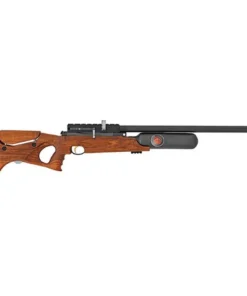
The Hatsan Nova Star Compact PCP is presented as a compact pre-charged pneumatic air rifle engineered around controlled handling, practical ergonomics, and Hatsan’s established PCP platform. Because a shorter overall configuration has been incorporated, easier maneuverability can be achieved without the rifle being made unnecessarily cumbersome for range or sporting environments.
Throughout the platform, a combination of mechanical construction, adjustable features, and user-focused controls has been incorporated. Consequently, the Hatsan Nova Star Compact PCP can be considered by experienced adult airgun users who value a more compact format while still expecting the familiar characteristics associated with modern PCP equipment.
Compact PCP Design and Practical Handling
A compact configuration has been emphasized throughout the Hatsan Nova Star Compact PCP. Therefore, the rifle can be handled more comfortably where reduced overall length is preferred. At the same time, its PCP operating system has been designed to provide a consistent shooting experience when the rifle is used within applicable laws, range regulations, and manufacturer guidance.
Rather than being developed solely around size, the platform has also been shaped around balance. As a result, the rifle can be positioned naturally during supported target shooting and other lawful sporting applications.
Furthermore, because compressed air is used as the primary power source, the firing cycle is generally associated with the smoother characteristics expected from PCP technology. Mechanical spring movement is avoided, while recoil behavior is reduced compared with many conventional spring-powered designs.
PCP Performance Engineering
With the Hatsan Nova Star Compact PCP, compressed-air performance has been integrated into a relatively manageable platform. Air is stored within the rifle’s reservoir and is released during the firing cycle according to the rifle’s internal operating system.
Consequently, repeatable performance can be supported when correct fill pressure, suitable ammunition, proper maintenance, and manufacturer-recommended operating practices are followed.
Moreover, because PCP rifles operate differently from traditional spring-piston models, reduced mechanical disturbance can generally be experienced during firing. Therefore, stable sight alignment can be easier to maintain when proper shooting technique is applied.
However, actual velocity, energy, shot count, and performance can vary according to caliber, regional specification, projectile selection, environmental conditions, maintenance status, and factory configuration. Manufacturer data should always be consulted for the exact version being considered.
Ergonomic Stock and Shooter-Focused Layout
Practical ergonomics have been incorporated into the Hatsan Nova Star Compact PCP so that the rifle can be positioned comfortably during extended range sessions. Controls are arranged around a conventional sporting layout, while the compact proportions are intended to help reduce unnecessary bulk.
Additionally, the stock geometry has been designed to support repeatable positioning. A consistent shoulder position can therefore be established more easily when the rifle is correctly adjusted and handled.
Key Product Highlights
- Compact PCP configuration for more manageable handling
- Pre-charged pneumatic operating system designed around compressed-air power
- Reduced firing-cycle disturbance compared with many spring-powered air rifles
- Ergonomic sporting layout intended to support comfortable positioning
- Multi-shot configuration may be offered, depending on caliber and regional specification
- Accessory mounting options may be provided depending on the exact factory version
- Adjustable shooting features may be included according to model specification
- Hatsan engineering and construction incorporated throughout the platform
- Designed for lawful adult sporting and recreational use
- Multiple caliber or power configurations may be available, subject to local regulations
Trigger Control and Shooting Consistency
A controlled trigger system is an important component of any precision-oriented PCP rifle. Accordingly, the Hatsan Nova Star Compact PCP has been developed with attention being given to trigger feel and repeatable operation.
Depending on the exact model specification, adjustment features may be provided. Therefore, the trigger should always be configured strictly according to Hatsan’s official instructions.
A predictable trigger release can contribute to better consistency because unnecessary movement can be reduced at the moment a shot is released. Nevertheless, safe muzzle direction, proper backstops, eye protection, and responsible handling remain essential during every shooting session.

Air Reservoir and PCP Operation
Compressed air is stored inside the rifle’s reservoir before operation. Consequently, repeated firing can be performed without a manual spring or piston being cocked for every shot.
However, only suitable high-pressure filling equipment should be used. Manufacturer pressure limits must never be exceeded, and reservoirs, fittings, hoses, gauges, and charging equipment should regularly be checked for condition.
Furthermore, filling procedures should only be carried out by people who understand high-pressure pneumatic equipment. Appropriate instructions should therefore be reviewed before the rifle is charged or serviced.
Accuracy-Oriented Construction
Precision has traditionally been an important consideration in PCP air-rifle design. Accordingly, the Hatsan Nova Star Compact PCP incorporates features intended to support repeatable projectile delivery when compatible ammunition and proper technique are used.
Barrel condition, projectile weight, projectile design, air pressure, environmental conditions, optics, and shooter technique can all influence grouping performance. Therefore, different ammunition should be evaluated responsibly at an approved range before conclusions about accuracy are made.
Because every barrel can behave somewhat differently, a particular pellet or projectile should not automatically be assumed to deliver the best results in every rifle.
Optics and Accessory Compatibility
Depending on the exact version, mounting provisions may be incorporated for compatible sighting equipment. Consequently, an appropriate optic can be fitted when permitted by the manufacturer and applicable regulations.
Accessory compatibility should always be confirmed before installation. Mount dimensions, recoil requirements, eye relief, weight, clearance, and intended application should all be considered.
Meanwhile, unnecessary accessory weight can be avoided so that the principal advantage of the compact configuration is retained.
Build Quality and Maintenance
The service life of any PCP air rifle is strongly influenced by maintenance. Therefore, the Hatsan Nova Star Compact PCP should be kept clean, correctly stored, and inspected periodically.
External surfaces should be protected from prolonged moisture exposure. Likewise, seals and pneumatic components should only be serviced using products approved by the manufacturer.
Improvised lubricants or unauthorized modifications should not be used. Instead, professional servicing should be obtained whenever internal pneumatic, trigger, valve, or pressure-bearing components require attention.
Suitable Sporting Applications
The Hatsan Nova Star Compact PCP can be considered for controlled target practice and other lawful adult airgun sports where its specification is permitted.
Because regulations vary significantly between jurisdictions, caliber, muzzle energy, licensing requirements, storage rules, transport restrictions, and permissible uses should be verified locally before ownership or operation.
Furthermore, a suitable backstop should always be used. Projectiles must never be discharged where people, animals, buildings, vehicles, roads, or other unintended targets could be placed at risk.
Why the Hatsan Nova Star Compact PCP Stands Out
A combination of compact dimensions, PCP operation, ergonomic construction, and Hatsan engineering has been brought together in the Hatsan Nova Star Compact PCP.
For users who prefer equipment that feels less cumbersome than some full-length platforms, the compact format can be particularly appealing. Meanwhile, the pneumatic operating system provides the smooth firing characteristics for which PCP rifles are generally known.
Ultimately, the model is best evaluated according to its exact factory specification rather than broad performance assumptions. Caliber, power output, reservoir specification, magazine capacity, dimensions, weight, and included equipment should therefore be verified against the current Hatsan documentation for the specific market version.
Hatsan Nova Star Compact PCP Summary
The Hatsan Nova Star Compact PCP combines a shortened sporting configuration with modern pre-charged pneumatic technology. Controlled handling has been prioritized, practical ergonomics have been incorporated, and PCP operation has been used to provide a relatively smooth firing cycle.
Additionally, compatibility with modern sighting and shooting equipment may be provided depending on the particular model. Because several specifications can vary by market, prospective owners should confirm the exact configuration and local legal requirements before acquisition or use.
When responsibly operated, correctly maintained, and used within an appropriate sporting environment, the Hatsan Nova Star Compact PCP can serve as a capable platform for adult recreational and target-oriented airgun activities.
Bintac, AEA Airguns, PCP Platforms and Model Terminology
Bintac and AEA Airguns are names commonly associated with large-caliber PCP airgun discussions, including models and search terms such as bintac t9, bintac, bintac llc, bin tac, bintacllc, aea airguns, bintac t 50, bintac m50, bintac mcar, bintac t50, and bintac s45.
Enthusiasts researching these platforms may also encounter terminology including bintac t9 full auto, bintac mcar air rifle, bintac mcar 457, bintac m50 pistol, bintac t50 extreme, bintac m50 pump action, aea bintac t50 extreme, and automatic air gun. These terms generally describe particular configurations, operating systems, calibers, or model families and should always be understood in the context of applicable local airgun laws and safe handling requirements.
AEA Harpoon and Related Search Terms
The AEA Harpoon family is frequently discussed alongside phrases such as bintac aea harpoon, aea harpoon, aea harpoon magnum, aea harpoon gun, aea harpoon cartridge, aea .50 harpoon, aea harpoon air gun, harpoon air gun, and the commonly mistyped aa harpoon.
Frequently Asked Questions
What type of air rifle is this model?
This model is a pre-charged pneumatic air rifle designed around compressed-air operation. Instead of relying on a traditional spring-piston firing system, compressed air is stored in an onboard reservoir and released during each shot. Because of this design, the firing cycle is generally smoother and less mechanically disruptive than that of many conventional spring-powered rifles.
The overall platform is intended for adult sporting and recreational use where ownership and operation are permitted by law. Exact specifications can vary between calibers and regional versions, so the product documentation for the specific rifle should always be checked before purchase.
What does the compact configuration offer?
The compact format is intended to provide easier handling and a more manageable overall profile. Because the rifle is shorter than some traditional full-length configurations, it can feel more balanced when being carried, stored, or positioned at a shooting bench.
Additionally, reduced overall length can be useful for shooters who prefer equipment that feels less cumbersome. However, dimensions, weight distribution, and stock configuration should still be checked against individual preferences because comfort can vary from one shooter to another.
Is this rifle suitable for target shooting?
Yes, the platform can be well suited to recreational target shooting when it is used within an appropriate and legally permitted environment. The pneumatic firing system helps reduce the mechanical movement normally associated with spring-powered rifles, which can contribute to a steadier shooting experience.
Nevertheless, accuracy is influenced by many factors. Ammunition quality, barrel condition, optics, environmental conditions, shooter technique, maintenance, and the exact factory configuration can all affect results.
Is the rifle available in different calibers?
Availability can vary according to market and distributor. Certain versions may be offered in multiple calibers, while others may be limited by national or regional regulations.
Because caliber selection can influence projectile weight, air consumption, energy output, trajectory, and intended sporting application, buyers should review the manufacturer’s current specifications before making a choice. Local licensing or power restrictions should also be checked.
Does the caliber affect performance?
Yes. Caliber can influence several aspects of performance, including projectile mass, velocity, energy, air efficiency, and trajectory characteristics. A smaller projectile may behave differently from a larger one even when both are fired from rifles belonging to the same platform.
However, raw performance figures should not be considered in isolation. Consistency, accuracy, ammunition compatibility, shot count, and intended application can be equally important when selecting a suitable version.
How is the rifle powered?
The rifle operates using compressed air stored within an integrated reservoir. Once the reservoir has been charged within the manufacturer’s approved pressure limits, that stored air is used during the firing cycle.
Because high-pressure air is involved, proper filling equipment must always be used. Owners should follow the manufacturer’s instructions carefully and should never exceed the stated maximum pressure. Damaged hoses, connectors, cylinders, or pressure components should not be used.
What equipment is required to fill the air reservoir?
A suitable high-pressure charging system is required. Depending on the owner’s setup, compatible filling equipment may include an approved hand pump, high-pressure compressor, or charging cylinder designed for PCP equipment.
Compatibility should always be confirmed before use. Connectors, hoses, gauges, and adapters must be suitable for the required pressure range. Improvised filling systems should be avoided because incorrectly rated equipment can create a serious safety risk.
How many shots can be obtained from a full air charge?
Shot count depends on the exact caliber, power setting, reservoir capacity, pressure range, projectile selection, temperature, and factory configuration.
For that reason, a single universal number should not be assumed for every version. Official specifications for the exact rifle should be consulted. In real-world use, shooters may also notice changes in shot count depending on environmental conditions and how the rifle is maintained.
Does air pressure affect consistency?
Yes. PCP rifles depend on controlled air delivery, so reservoir pressure can influence performance. As pressure changes throughout a shooting session, the behavior of the rifle may also change depending on the design of its internal pneumatic system.
Consistent maintenance and operation within the manufacturer’s recommended pressure range are therefore important. Owners should monitor the pressure gauge and avoid operating the rifle outside the specified limits.
Is the trigger adjustable?
Certain versions may include adjustable trigger features, although the exact adjustment range should be confirmed from the manufacturer’s specifications.
Any trigger adjustment should be completed strictly in accordance with the official manual. Excessively light or improperly configured trigger settings can create a safety hazard. Therefore, internal trigger modifications should not be attempted without suitable knowledge and authorization.
Can an optic be fitted?
The rifle may include mounting provisions for compatible optics, depending on the exact version. A suitable scope can therefore be selected according to the type of recreational or target shooting being undertaken.
Before installation, buyers should confirm mounting dimensions, eye relief, ring compatibility, optic weight, and available clearance. Accessories should also be fitted securely and checked regularly.
Does the rifle come with iron sights?
Included sighting equipment can vary according to the exact model and market package. Some PCP platforms are designed primarily for use with an optic, while others may include alternative sighting arrangements.
For this reason, the retailer’s product listing should be checked carefully before purchase. Any accessory shown in promotional imagery should not automatically be assumed to be included unless it is specifically listed in the package contents.
What type of ammunition should be used?
Only ammunition that matches the correct caliber and is suitable for the rifle should be used. Projectile quality, weight, shape, and manufacturing consistency can influence accuracy and reliability.
Different barrels can also show different ammunition preferences. Therefore, owners may find that some compatible projectiles group more consistently than others. Manufacturer guidance should always take priority when selecting ammunition.
Can poor-quality ammunition affect accuracy?
Yes. Inconsistent projectile weight, damaged skirts, irregular dimensions, or poor manufacturing tolerances can negatively affect grouping performance.
High-quality ammunition that fits the barrel correctly can help improve repeatability. However, even premium ammunition may perform differently from one rifle to another, so responsible testing at a suitable range is usually the best way to evaluate compatibility.
How important is barrel maintenance?
Barrel condition can have a significant influence on consistency. However, over-cleaning can also be unnecessary and, when performed incorrectly, may cause damage.
Cleaning should therefore be carried out only when required and with materials appropriate for airgun barrels. Abrasive tools and aggressive chemicals should be avoided unless specifically approved by the manufacturer.
What routine maintenance is recommended?
Routine maintenance generally includes checking external fasteners, inspecting seals and fittings, keeping the rifle dry, protecting exposed metal surfaces, and monitoring the condition of the air system.
The rifle should also be stored in an appropriate environment away from excessive humidity. Internal pneumatic components should only be serviced by someone who understands PCP systems. Unauthorized disassembly can damage seals, alter performance, or create safety problems.
Should special lubricant be used?
Only lubricants approved for the specific component should be applied. High-pressure pneumatic systems require particular care because unsuitable oils or greases may not be compatible with seals or compressed-air components.
General-purpose lubricants should therefore not be added to fill ports or internal pneumatic systems unless the manufacturer specifically recommends them. If servicing is required, professional assistance is the safer option.
Is the rifle affected by weather conditions?
Environmental conditions can influence air-rifle performance. Temperature changes may affect reservoir pressure, while wind can influence projectile flight. Humidity can also contribute to corrosion if the rifle is stored without adequate protection.
Consequently, equipment should be dried after exposure to moisture and stored in a clean, controlled environment. Performance expectations should also account for changing weather conditions.
Is it suitable for beginners?
The platform may be manageable for some responsible adult users, but PCP equipment requires an understanding of high-pressure charging, safe handling, storage, and local regulations.
A new shooter should therefore become familiar with the manufacturer’s manual and receive suitable safety instruction before use. Beginners should also learn fundamental range procedures, including muzzle discipline, safe backstop selection, and proper eye protection.
Is the compact design suitable for smaller-framed shooters?
A shorter rifle can sometimes feel easier to manage, but overall comfort depends on more than length alone. Weight, balance, stock dimensions, reach to the trigger, optic position, and shooting posture should all be considered.
Whenever possible, buyers should compare the published dimensions with equipment they already find comfortable. Adjustable features, where provided, can also help tailor the setup.
Can accessories be added?
Compatible accessories may be fitted where suitable mounting points are provided. Optics and other sporting accessories should be selected according to the manufacturer’s recommendations and the legal requirements of the user’s jurisdiction.
Excessive accessory weight can change the rifle’s balance, so additions should be chosen carefully. Any mounted component should also be checked periodically to ensure it remains secure.
Does the rifle require frequent servicing?
Service frequency depends on usage, storage conditions, maintenance practices, and component condition. A properly cared-for PCP rifle can provide long service intervals, although seals and other pneumatic parts will eventually experience normal wear.
Changes in air retention, unusual sounds, inconsistent performance, or visible damage should be investigated promptly. Pressure-bearing components should not be repaired through improvised methods.
What should be done if the rifle starts losing air?
If unexplained air loss occurs, use should be discontinued until the cause has been identified. Leaks can originate from seals, valves, fill fittings, or other pneumatic components.
Because the rifle contains high-pressure air, internal repair should be left to a qualified technician unless the manufacturer explicitly provides a safe owner-service procedure. Continuing to operate a damaged pressure system can create unnecessary risk.
How should the rifle be stored?
The rifle should be stored securely, responsibly, and in accordance with local laws. Unauthorized access, particularly by children or untrained persons, should be prevented.
The storage location should also be dry and protected from extreme temperature changes. Ammunition and accessories may need to be stored separately depending on local regulations.
Can the rifle be transported easily?
Its compact dimensions may make transportation more convenient than that of some longer rifles. Nevertheless, transport laws differ considerably between countries, states, and regions.
A suitable protective case should be used, and the rifle should be transported in the condition required by local law. Owners should confirm regulations before travelling with any airgun.
Is the rifle quiet?
PCP rifles are generally associated with a relatively smooth mechanical firing cycle, although actual sound level varies according to caliber, power specification, projectile, barrel configuration, and regional version.
Local noise rules and shooting restrictions should always be respected. Hearing protection may also be appropriate depending on the specific equipment and environment.
Can its performance be modified?
The rifle should remain within the manufacturer’s approved specification and the legal limits applicable in the owner’s jurisdiction. Altering internal pressure, valves, regulators, or other power-related components can affect safety, reliability, warranty coverage, and legal classification.
Any permitted servicing or configuration changes should therefore be carried out by a suitably qualified professional.
Does the rifle require a license?
That depends entirely on local law. Airgun regulations can be based on muzzle energy, caliber, age, intended use, location, or other criteria.
Potential owners should verify current legal requirements before purchasing, possessing, transporting, or using the rifle. Retailers and relevant local authorities can provide jurisdiction-specific guidance.
What should buyers check before ordering?
Buyers should confirm the exact caliber, regional power specification, package contents, dimensions, weight, warranty conditions, accessory compatibility, and applicable legal requirements.
They should also check whether filling adapters, magazines, optics, cases, or other accessories are included or sold separately. Reviewing these details beforehand can prevent compatibility problems after purchase.
Why can specifications differ between retailers?
Manufacturers may produce different versions for different markets. In addition, retailers can sell packages containing different accessories or configurations.
Therefore, specifications shown on one website may not always match another listing. The model code, caliber, regional specification, and included equipment should be compared carefully before a purchase is completed.
Who is this rifle best suited for?
It is most appropriate for responsible adult users seeking a compact PCP platform for lawful recreational or target-oriented use. Its pneumatic operating system, manageable proportions, and sporting configuration can make it appealing to users who value smooth operation and practical handling.
However, the best choice ultimately depends on individual preferences, local regulations, intended application, and the exact factory specification being considered.
Because specifications can differ between generations and configurations, prospective researchers should verify caliber, energy output, compatible air systems, ammunition type, and manufacturer documentation rather than relying solely on model-name searches.
AEA Megalodon and Large-Caliber PCP Airguns
Another commonly researched platform is the AEA Megalodon, appearing under terms including aea megalodon, megalodon air rifle, aea megalodon 58 cal, aea megalodon .58 cal, aea megalodon air rifle, and aea megalodon 50 caliber.
Large-caliber PCP platforms are also associated with broader terms such as air powered 50 cal rifle, air tank for pcp airguns, and airgun shotgun. Because high-powered PCP equipment can store substantial compressed-air pressure and generate significant projectile energy, tanks, fittings, valves, and charging equipment should be used only within their certified operating limits.
AEA Defender and Terminator Platforms
Other AEA terminology includes aea defender, aea defender 2, aea defender 3, aea terminator, aea terminator gen 3, and the broader phrase aea guns. Different generations may vary substantially in action type, dimensions, magazine arrangement, air capacity, caliber, and operating pressure.
Anyone comparing these systems should therefore check the exact model designation and generation before comparing technical specifications.
PCP Air Systems and Supporting Equipment
PCP airguns depend on compressed-air storage systems. Search terms such as anti air tanks and air tank for pcp airguns may refer to high-pressure cylinders or charging equipment. Only pressure-rated equipment designed for the intended system should be used.
Other broad search phrases, including bee bee gun rifle, airgun shotgun, and automatic air gun, describe different categories of air-powered equipment rather than one standardized product type.
Additional Large-Caliber Airgun Terminology
Researchers may also encounter terms including zeus 72 cal air rifle, b&w m50, bintac t9, bintac m50, bintac t50, bintac s45, and bintac mcar. Model names alone do not establish compatibility, legality, operating pressure, caliber, or performance, so manufacturer documentation remains the appropriate source for technical specifications.
For all Bintac, AEA Airguns, and large-caliber PCP systems, safe storage, responsible handling, appropriate protective equipment, and compliance with local laws should remain central considerations.



Reviews
There are no reviews yet.